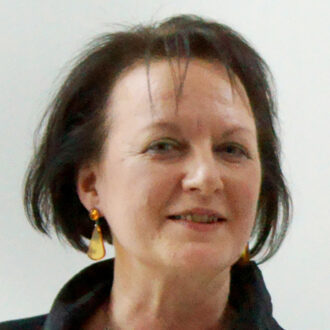
Amanda Phillips is an Associate Professor at Georgetown University, affiliated with the Departments of English, Film and Media Studies, Women’s and Gender Studies, and American Studies. Their research focuses on feminist and queer theory in digital media, with a particular emphasis on critical game studies and digital humanities. Selected publications include Gamer Trouble: Feminist Confrontations in Digital Culture and co-editing the Queer/Trans/Digital book series. Their scholarship appears in journals such as ROMchip , Feminist Media Histories , and Games and Culture . Research Interests: Digital media and gender politics Queer theory in gaming contexts Decolonial and anti-racist digital humanities Critical analysis of game mechanics Digital labor and precarity Affective histories of gaming Scientific Awards: Mellon/ACLS Dissertation Completion Fellow Academic Leadership: Former chair of the American Studies Association Digital Humanities Caucus Co-founder of the #transformDH Collective Editorial work on special issues of Game Studies and Antares: Letras e Humanidades Previous Institutions: IMMERSe Postdoctoral Fellow at University of California, Davis Ph.D. recipient from University of California, Santa Barbara with emphasis in Feminist Studies
Jae Eun Chung is a Professor in the Department of Communication Studies at Howard University's School of Communications. Her research focuses on new media technologies, their psychosocial impacts, and health communication, with a particular emphasis on community engagement and digital discourse. Ph.D. in Communication from the University of Southern California M.A. in Telecommunications from Indiana University at Bloomington Dr. Chung's work explores the intersection of social media and health, analyzing how digital platforms influence public health perceptions, patient-doctor interactions, and health equity. She has published extensively in journals like Journal of Communication , Computers in Human Behavior , and Health Communication , often employing community-based participatory research (CBPR) to address disparities in asthma care, maternal health, and HPV-associated cancer awareness. Recent publications highlight trends in leveraging social media for health interventions, examining misinformation dynamics during crises like the COVID-19 pandemic, and analyzing digital ecosystems. Her methodological approaches include network analysis, narrative studies, and assessments of digital engagement metrics. Howard University RCMI Grant: Enhancing recruitment of African-Americans and Hispanics in health research NSF HDR Grant: Collaborative research on data analytics for community enrichment PACRI Grant: Improving health outcomes for asthmatic children in public housing Bezos Earth Fund: Indoor environmental quality disparities in underserved communities Dr. Chung collaborates with interdisciplinary teams, including public health experts and data scientists, to advance health communication strategies. She has mentored students and researchers in projects analyzing social media's role in health promotion, digital privacy, and community-academic partnerships.
Professor Andrew Chadwick is a leading scholar in political communication and digital media studies at Loughborough University, where he directs the Online Civic Culture Centre (O3C). He holds a BSocSc from Birmingham, MSc and PhD from the London School of Economics. His research focuses on hybrid media systems, disinformation dynamics, and digital politics. Key contributions include conceptualizing hybrid media events and analyzing misinformation in personal messaging platforms. His work has been recognized with prestigious awards, including the APSA Best Book Award. He supervises numerous PhD students exploring topics like social media influence, public opinion, and digital disinformation. Current projects include the Leverhulme-funded Everyday Misinformation Project examining numerical disinformation on messaging apps. His media engagements span BBC Radio 4 to The Washington Post. Research highlights include studies on misinformation warnings' ineffectiveness, vaccine hesitancy, and the role of celebrities in political representation. O3C serves as a hub for interdisciplinary research on digital civic culture. Chadwick’s academic leadership includes roles in editorial boards for top journals and international conference keynotes.
Matthew Kay is an Associate Professor in the Department of Communication Studies at Northwestern University's School of Communication, with a secondary appointment in Computer Science. He serves as Co-Director of Graduate Studies for the PhD in Technology and Social Behavior program. His research focuses on human-computer interaction and information visualization, specializing in uncertainty communication, usable statistics, and personal informatics. He employs mixed-method approaches including behavioral analysis, interactive system development, and visualization technique evaluation to address real-world data interpretation challenges. Analysis of his recent publications reveals dominant themes in visualization literacy development, uncertainty representation for decision-making, and health informatics applications. His work consistently bridges theoretical frameworks with practical implementations, particularly in educational assessment tools and election forecast visualizations. Professor Kay co-directs the Midwest Uncertainty Collective (MU collective), a research group advancing uncertainty communication methodologies. Previously faculty at the University of Michigan School of Information, he maintains active contributions to visualization tool development including the ggdist R package for uncertainty visualization.
Felicity McArdle is a Professor in the Department of Early Childhood Education within the Faculty of Education at Queensland University of Technology. With a distinguished career spanning over two decades, her work centers on reimagining early childhood pedagogy through critical lenses of social justice, art education, and play-based learning. Her research has significantly influenced Australian early childhood policy and practice. McArdle's research interests demonstrate a consistent commitment to transformative education. She critically examines how art and play function as vehicles for social justice, challenging neoliberal discourses in early childhood education. Her work on refugee children's artistic expression and anti-bias curriculum development reveals her dedication to equity-oriented pedagogy. Through collaborative drawing methodologies and visual research approaches, she has pioneered innovative ways of understanding children's perspectives. Her publication trends reveal a sophisticated evolution from foundational work on visual arts in education (2001-2010) toward increasingly critical examinations of power, policy, and social justice (2011-2021). The consistent citation impact of her work—particularly her 2002 paper 'Early Childhood Art Education: A Palimpsest' with over 13,000 citations—demonstrates her field-defining contributions to reconceptualizing art education as critical praxis. McArdle has held significant editorial roles including co-editing the influential 2013 volume 'Young Children, Pedagogy and the Arts' and serving on the editorial board of Australian Journal of Early Childhood. Her collaborations with leading scholars like Susan Grieshaber, Jennifer Sumsion, and Linda Knight have produced seminal work on intentional teaching and play-based learning. Her research methodology expertise centers on visual and arts-based approaches, particularly collaborative drawing techniques that engage children as active research participants. This methodological innovation reflects her commitment to ethical research practices that honor children's agency while generating meaningful insights about early childhood experiences.
Elaine M. Huang is an Associate Professor of Human-Computer Interaction at the Department of Informatics, University of Zurich, where she has served since 2010. She also leads the People and Computing Lab, focusing on the dynamic interplay between human practices and technological advancements. Her academic background includes: PhD in Computer Science, Georgia Institute of Technology (2006) Dr. Huang's research centers on human-computer interaction, examining the bidirectional relationship between technology and human practices. She is particularly known for her work on gender equality in technology, challenging assumptions about innate gender differences and investigating how AI systems may perpetuate biases. Her research also spans sustainable interaction design, mental health technologies, and chronic disease management, always emphasizing empirical data over intuition. Analysis of her recent publications (2023-2025) reveals a strong trajectory toward socially impactful HCI, with significant focus on health technologies (diabetes management, mental health), cultural sensitivity in design, and the ethical challenges of AI. Her methodology often involves field studies to understand real-world technology use, countering the industry's reliance on intuition. As head of the People and Computing Lab, Dr. Huang oversees a research group dedicated to designing and evaluating technologies that address complex human needs. The lab's work frequently involves co-design with diverse user communities to ensure relevance and inclusivity in technological solutions.
Professor Gene Bawden is a communication designer and Head of the Department of Design at Monash University’s Faculty of Art, Design and Architecture (MADA). He holds a PhD in Design focusing on Australian domestic spaces and cultural identity. His work bridges design practice and research, emphasizing gender equity in urban environments through collaborative projects like the XYX Lab. Key contributions include developing design thinking curricula, leading the D-Lab’s material tools for spatial inquiry, and co-designing safety initiatives for public transport and urban spaces. Education: PhD in Design (2015), Monash University, specializing in 'Comfort and Judgement: Nineteenth Century Advice Manuals and the Scripting of Australian Identity'. Research Interests: Gendered spatial practices, design thinking methodologies, material and visual narratives of belonging, and co-design strategies for mitigating urban gender inequity. His projects include the 'Safer Cities Crowd Mapping' initiative and the WHO-guided 'Design for Impact' toolkit. Awards: Recipient of the 2018 Dean’s Award for Research Impact, 2020 Good Design Award for 'Yours, Mine, Ours', and multiple recognitions for urban design projects addressing gender safety. Advising: Graduate supervisor for design research students. Grants: Principal investigator on projects totaling over AUD 2M, including the 'Gender-sensitive training for safe communities' and 'Co-designing health futures' initiatives. Labs/Teams: Founding director of D-Lab and core member of XYX Lab, which focus on design-driven solutions for gender equity in urban environments. Notable collaborations include the 'HyperSext City' exhibition and 'Keep Running' public safety campaigns.
Professor Emily S. Cross is a cognitive and social neuroscientist holding dual appointments at the University of Glasgow's School of Psychology & Neuroscience (UK) and Western Sydney University's MARCS Institute (Australia). She directs the Social Brain in Action Laboratory (SoBA), specializing in how embodied experiences shape social perception. Cross earned a BA in psychology and dance from Pomona College, MSc from University of Otago as a Fulbright Fellow, and PhD in cognitive neuroscience from Dartmouth College, followed by postdoctoral training at University of Nottingham and Max Planck Institute. Her research explores experience-dependent plasticity through dance, robotics, and neuroimaging techniques (fMRI, TMS), focusing on four key areas: neural signatures of embodied expertise, neuroaesthetics, visual learning across lifespan, and social engagement with robots. This interdisciplinary work bridges neuroscience, performing arts, and robotics. Cross's research shows strong focus on human-robot interaction dynamics, cultural perceptions of robotics, and the neural correlates of aesthetic experiences. Recent work investigates how social experience shapes human-robot interaction, cross-cultural differences in robot acceptance, and computational approaches to movement analysis. Publications consistently demonstrate methodological innovation through VR, economic games, and large-scale motion capture libraries. Honors & Awards: Jacob Brownowski Award (British Science Association, 2017) Philip Leverhulme Prize in Psychology (2018) World's 50 Most Renowned Women in Robotics (2020) Elected member: Young Academy of Europe Elected member: Royal Society of Edinburgh's Young Academy of Scotland Her ERC Starting Grant funds groundbreaking work on human-robot interaction. Cross leads the Social Brain in Action Lab with focus on mentoring next-generation scientists and research ethics training. The lab employs neuroimaging, training paradigms, and diverse methodologies to study action observation across dance, music, and robotics domains.
Professor Ruth Holliday holds the position of Professor of Gender and Culture at the University of Leeds since 2006, where she has also served as Director of Studies for the Centre for Interdisciplinary Gender Studies, Director of Research and Innovation, and Director of Recruitment and Admissions for the School of Sociology and Social Policy. Previously, she worked at Staffordshire University and Birmingham City University, and served as a Visiting Professor at the University of Technology Sydney (UTS). Her research expertise spans cultural sociology, body studies, material culture, medical tourism, and gender relations, with a focus on low fertility and East Asian cultural contexts. Her academic qualifications include a PhD in Sociology and a BA in Electronics and Management Science. She has contributed to over 50 articles and 7 books, including the award-winning Beautyscapes (2019), which explored global cosmetic surgery tourism and won the Foundation for the Sociology of Health and Illness Book Prize in 2020. Her work on kitsch aesthetics and visual methodologies has also been influential, particularly in understanding class, gender, and race through taste politics. Ruth’s current research projects include studying low fertility cultures’ impacts on gender identities and a project on the cultural meaning of the penis in gender construction. She teaches modules such as Theorizing Gender and Contested Bodies at the MA level, emphasizing critical approaches to gender and embodiment. Key Projects: ESRC-funded 'Building Capacity in Visual Research' and collaborative work on medical tourism in East Asia and Europe. Awards: 2020 Foundation for the Sociology of Health and Illness Book Prize. Supervision: Active in mentoring PhD students researching the body, intimacy, and low fertility in China and Korea. Her interdisciplinary approach bridges sociology, cultural studies, and visual methodologies, with a commitment to ethnographic fieldwork and global comparative analysis.
Professor Michael Burke holds a full professorship in Rhetoric at Utrecht University (Faculty of Humanities) and teaches at University College Roosevelt (UCR) in Middelburg. Previously, he served as UU Honours Dean (2016–2021). His research focuses on rhetoric, stylistics, cognitive aspects of language, and education. He earned his Ph.D. in English Language and Literature from the University of Amsterdam, where he also completed his undergraduate studies. Research interests span written, oral, and digital rhetoric, emphasizing pedagogical, cognitive, stylistic, and neuroscientific dimensions. He has held visiting roles at institutions like the University of Cambridge and University of Bologna. Editorial roles include series editor for Routledge’s 'Research Monographs in Linguistics' and board memberships with journals like Language and Literature . Teaching includes undergraduate courses on classical rhetoric, argumentation, and public speaking at UCR, plus leadership and interdisciplinary research modules for Utrecht’s Honours College. He supervises PhD students in the UiL-OTS linguistics research school. Notable publications include The Routledge Handbook of Stylistics (2023) and studies on critical thinking, digital literacy, and cognitive literary science. Professional activities include keynote speaking at conferences like PCST and EARS, and contributions to projects such as ‘Undergraduate Research in the Netherlands’. His work bridges rhetoric, cognitive science, and education, emphasizing practical applications for students and educators.
Dr. Naseem Choudhury is a Professor of Psychology and Neuroscience at Ramapo College of New Jersey, affiliated with the School of Social Science and Human Services (SSHS). She holds a Ph.D. in Experimental Psychology from the University of Vermont. Her research focuses on the neural basis of infant information processing, particularly how perceptual abilities influence typical and atypical development, with an emphasis on familial and sociocultural factors. Her work spans auditory processing in infants at risk for developmental language disorders, electrophysiological studies in children with autism, and cross-cultural analyses of artistic perception. She directs the Palestroni Integrated Neuroscience Lab, exploring neural mechanisms underlying cognitive development. Dr. Choudhury has published extensively in journals like Journal of Neuroscience and Developmental Cognitive Neuroscience , with over 50 peer-reviewed articles since 2002. Her studies often involve ERP and EEG methodologies to track developmental milestones and intervention efficacy in high-risk populations. Her research demonstrates that early auditory experiences shape prelinguistic acoustic mapping and that neuroplasticity interventions improve outcomes for language-impaired children. She collaborates internationally on projects linking sensory perception to linguistic outcomes, particularly in Italian and bilingual populations. Dr. Choudhury’s contributions bridge basic neuroscience and clinical applications, emphasizing early screening and preventive strategies for developmental disorders.
Masood Masoodian is an Associate Professor in the Department of Art and Media at Aalto University, Finland. He leads the Visual Communication Design research group, focusing on interactive visualization for health, energy, and sustainability contexts. Previously, he held roles at the University of Waikato (2000-2016), University of Southern Denmark, and Massey University. Education: Doctoral degree in Other disciplines from the University of Waikato (1999) Research interests include design thinking, visualization of complex data, and creative aging interventions. Notable projects include the EU-funded INT-ACT initiative (2024-2026) addressing intangible cultural heritage. He has received an award for collaborative work on video game ludonarrative analysis (2019). Recent activities include organizing workshops on map-based interfaces, co-creating cultural heritage methods, and delivering public talks on digital design. Supervised two theses and contributed to 131 peer-reviewed outputs, emphasizing human-centered design and sustainability. Grants: Principal investigator for multiple EU projects totaling over 3 years of active funding. Awards: Prize for 'Comedy in the Ludonarrative of Video Games' (2019). Labs/Teams: Visual Communication Design group, collaborating internationally on projects like INT-ACT's cultural heritage mapping.
Mariane C. Ferme is a Professor in the Department of Anthropology at the University of California, Berkeley. Her research focuses on sociocultural dynamics in West Africa, particularly Sierra Leone, with expertise in political anthropology, legal studies, and material culture. She holds a PhD in Anthropology from the University of Chicago and has taught at prestigious institutions including the University of Cambridge and École des Hautes Études en Sciences Sociales. Education : PhD in Anthropology (University of Chicago), MA in Political Science (University of Milano), BA in Anthropology (Wellesley College). Ferme’s research spans the political imagination in conflict zones, agrarian transformations, and the interplay between humanitarian law and local justice systems. Her work has been supported by major grants from the National Science Foundation and the France-Berkeley Fund. She has published extensively on Sierra Leone’s post-war societies and the socio-cultural dimensions of the Ebola outbreak. Scientific awards include funding from the National Science Foundation, Hellman Family Faculty Fund, France-Berkeley Fund, Harvard Academy for International and Area Studies, and the Carter Woodson Institute for African and African-American Studies.
Sarah Wilson is Professor of Modern and Contemporary Art at The Courtauld Institute of Art, University of London. She has been a faculty member since 1982 and has held leadership roles including Head of the Modern and Contemporary Section (2005-2008) and Head of Diploma programmes (2014-2015). She is internationally recognized as the English-language expert on Post-War European art and has held visiting positions at Paris-IV Sorbonne and the University of Versailles-Saint Quentin. Wilson was educated at the University of Oxford (BA English Literature) and at the Courtauld Institute of Art (MA and PhD). She was awarded the title Chevalier des Arts et des Lettres in 1997 for services to French art and culture, and received the International Association of Art Critics' Award for Distinguished Contribution to Art Criticism in 2015. She has held visiting professorships at Paris-IV Sorbonne (2002-2004), École Nationale Supérieure des Beaux-Arts (2006-2007), and University of Versailles-Saint Quentin (2012-2013). Sarah Wilson's research spans post-war and Cold War European art, contemporary global art practices, and the intersections between conceptual art, political theory, and visual culture. Her work extends from European avant-gardes to contemporary art across the former Soviet Union and Asia. She is particularly known for her expertise in French Stalinism, neo-Marxism and the arts, and conceptual art practices beyond the 'first world.' Wilson has initiated important academic programs such as the 'Global Conceptualism' MA course with Boris Groys, which connects Anglo-American conceptual art with practices from Moscow and beyond. She has also expanded her research to include modern and contemporary Asian art since 2013. Her extensive publication record shows a consistent focus on European art history with increasing engagement with global perspectives, particularly Asian contemporary art since 2013. Wilson's scholarship bridges art historical analysis with philosophical inquiry, especially regarding French theory and its visual manifestations. Her major publications include 'Paris, Capital of the Arts, 1900-1968' (2002) and 'The Visual World of French Theory: Figurations' (2010), with a second volume 'The Visual World of French Theory II: Interventions' in preparation. Chevalier des Arts et des Lettres (1997) International Association of Art Critics' Award for Distinguished Contribution to Art Criticism (2015) Marie Curie Actions – RBUCE-UP, Chaire d'excellence, Université de Versailles-Saint Quentin (2012-2013) Professor Wilson has supervised 36 PhD students to completion and over 230 MA dissertations, creating what she describes as 'a unique English-language archive in the field of post-1945 European and global art history.' Her former students now hold prominent positions in major institutions worldwide including Tate, the British Museum, Design Museum, Scottish National Gallery of Modern Art, British Council, Centre Georges Pompidou, Kunsthalle Bremen, and universities across Europe and North America. She has received significant research funding including a Marie Curie Actions grant for her project 'Globalisation before globalisation: avant-gardes, academies, revolutions.' Wilson is actively involved with the Courtauld alumni's former East Wing Collection (now VS1, Vernon Square) and has contributed to the Research Forum's programmes. She has curated numerous exhibitions including the 'Global Conceptualism'-related projects and served on the curatorial team of the 1st Asian Biennale (China-Guangzhou) in 2014. Her commitment to women artists has led to early exhibitions of artists like Zofia Kulik and Alina Szapocznikow before their international prominence. She is involved with CCRAC (Cambridge-Courtauld Russian Art Centre), Calvert 22, and Pushkin House in London, reaching out to Russia and Eastern Europe.
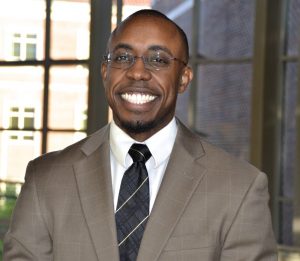
Dr. Darryl Dickerson is an Assistant Professor in the Department of Mechanical and Materials Engineering at Florida International University (FIU), part of the College of Engineering. His research focuses on mechanical characterization of biological interfaces, design of bioinspired materials, and advancing inclusive engineering education practices. He holds a Ph.D. (details not explicitly provided in text). Research Interests: Dr. Dickerson’s work bridges biomechanics and biomaterials engineering with social equity in education. Key areas include: Mechanical properties of biological interfaces (e.g., bone-cartilage junctions) Development of biomaterials for tissue repair using 3D printing and electrospinning Anti-marginalization strategies in engineering education, particularly for Black and Brown students Publications Trends: Recent work emphasizes dual themes: (1) Biomedical innovation through advanced material fabrication and (2) Inclusive pedagogy addressing systemic inequities in STEM education. Notable contributions include scaffold designs for osteochondral repair and frameworks for reducing microaggressions in team-based learning. Grants and Advising: No specific grants or advisees listed in the provided text. His work appears to be grant-funded through NIH/National Science Foundation pathways common in biomaterials and education research. Labs and Teams: While not explicitly stated, his research likely involves collaborations with FIU’s Center for Engineering and Computing’s diversity initiatives and biomaterials labs focusing on tissue engineering applications.