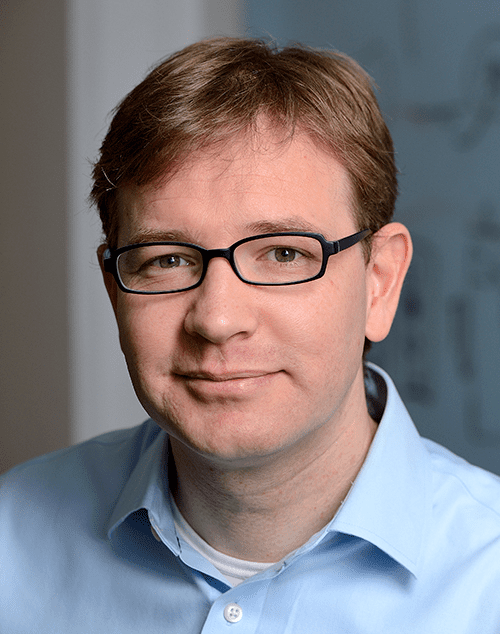
Mark W. Newman is an Associate Professor in the School of Information at the University of Michigan, with a joint appointment in the EECS Department. His research focuses on human-computer interaction, ubiquitous computing, and health informatics, emphasizing the design of technologies that integrate seamlessly into everyday life. He teaches courses on user experience research, programming, and application development, contributing to curriculum design efforts such as the User Experience Design track and programming curricula for undergraduate and graduate programs. His work spans smart home technologies, mobile health interventions, and collaborative health management systems. Notably, he collaborates across disciplines to address challenges in healthcare technology, including patient-generated data integration and sustainable energy solutions. Newman actively mentors students and leads design projects that prioritize user-centered approaches, such as the UX Research & Design Specialization on Coursera. His recent scholarship explores adaptive mHealth interventions, context-aware systems, and participatory design methods to enhance health equity.
Professor Emma Rich is affiliated with the University of Bath as a Professor of Physical Activity and Health Pedagogy and Director of the SPHERE Research Centre (Centre for Sport, Physical Activity and Health Equality). Her work bridges sociology and education , focusing on intersections between digital health technologies , body politics , and health inequities in educational and sport contexts. University: University of Bath Role: Professor & Research Centre Director Research Interests : Emma’s expertise spans critical pedagogy , digital health studies , obesity policy critique , and gendered body narratives . She pioneers feminist new materialist approaches to analyze how digital platforms shape health identities and practices among youth. Recent Publications examine digital health’s impact on body dissatisfaction , teacher mind maps , and spatial dynamics in digitized health education. These works emphasize datafication and quantified self trends in adolescent health behaviors. Awards & Recognition : Elected Fellow of the Academy of Social Sciences (2022) Nominated for FSHI Book Prize (2024) Bristol Bath Healthcare Research Impact Award (2019) Leadership & Collaborations : She leads international projects like the Wellcome Trust-funded Digital Health Generation and DigiHealthPE (UNA Europa), collaborating with institutions across the UK, Australia, and New Zealand. Her work integrates UN Sustainable Development Goals , particularly those addressing health equity and digital inclusion .
Dr. Luke Robinson is an Associate Professor in Film Studies at the University of Sussex's School of Media, Arts and Humanities, where he has been since 2014. Previously, he taught at the University of Nottingham's Department of Culture, Film and Media. He holds a BA from the University of Cambridge, an MA and PhD from SOAS (University of London), and a certificate from the Hopkins-Nanjing Center. His research focuses on Chinese independent cinema, film festivals as sites of cultural translation, and the global circulation of documentary media. Robinson is co-editor of influential volumes like Chinese Independent Cinema and Chinese Film Festivals , and his work bridges cultural studies, visual anthropology, and media policy analysis. He maintains the Chinese Independent Film Archive and has published widely on topics ranging from Taiwanese subimperialism to the cultural politics of Sundance and CNEX. His teaching spans global cinema studies, film festival curating, and East Asian media aesthetics. Education: BA, History, University of Cambridge MA, Chinese Studies, School of Oriental and African Studies (SOAS), London PhD, Film and Media Studies, SOAS Certificate in Chinese Studies, The Hopkins-Nanjing Center Research Themes: Chinese independent film ecosystems, transnational film festival circuits, documentary as public culture, and the intersection of politics with audiovisual media. Recent work examines humanitarian intervention narratives in documentaries and the evolving role of non-state cultural agents in soft power dynamics.
Dr. Karen Cochrane is an Assistant Professor at the University of Waterloo, specializing in Human-Computer Interaction (HCI) with a focus on wearable and tangible computing for mental health and accessibility. Her research integrates soma design, autoethnography, and design fiction to address the needs of underrepresented communities, particularly those with disabilities. Key projects include developing assistive technologies for queer/crip identities, accessible gaming wearables, and tactile interfaces for sensory exploration. She explores embodied experiences through multidisciplinary approaches, blending traditional craft practices with modern computational tools. Her work prioritizes participatory design methodologies, collaborating with occupational therapists, disabled communities, and neurodivergent individuals to co-create inclusive technologies. Recent innovations include VARitouch (a haptic feedback device), Breathing Scarf (for emotional regulation), and adaptive switches for children with motor disabilities. Her research extends into sensory narratives, exploring how fabric and data can articulate bodily experiences through projects like Sensory Data Dialogues and Queer/Crip Body Mapping. While no formal grants or awards are listed, her publications reflect a strong focus on ethical technology, accessibility, and embodied interaction. Current projects emphasize the intersection of wearable tech with identity expression, mindfulness practices, and neuromotor rehabilitation. She actively designs prototypes that bridge clinical needs with creative technology solutions, though specific lab affiliations or team collaborations are not detailed in available texts.
Catherine Polling is an NIHR Clinical Lecturer in General Psychiatry at King’s College London (KCL), affiliated with the Institute of Psychiatry, Psychology & Neuroscience (IoPPN) and the Health Inequalities Research Group . Her work focuses on mental health inequities, self-harm epidemiology, and mixed-methods research, particularly in urban and marginalized communities. Education: MBBS from University College London, MSc in Epidemiology from the London School of Hygiene and Tropical Medicine, PhD from KCL's Department of Psychological Medicine Research Interests: Catherine investigates health disparities in mental health services using advanced statistical methods (multi-level modeling, Bayesian disease mapping) and GIS-based data visualization. Her clinical work with the South London and Maudsley NHS Foundation Trust complements her academic focus on systemic racism and mental health outcomes. Teaching & Engagement: She lectures on urban mental health for KCL’s Urban Informatics MSc and co-leads training on racism in mental health services. She also facilitates reflective practice groups accredited by the Balint Society and contributes to curriculum reform via the Maudsley Cultural Psychiatry Group. Scientific Awards: NIHR Clinical Lecturer Fellowship Wellcome Training Fellowship Research Trends: Her publications emphasize self-harm risk factors, pandemic impacts on healthcare workers, ethnic disparities in mental health services, and the intersection of urban environments with mental health outcomes. She integrates large-scale clinical datasets, qualitative interviews, and spatial analysis to address systemic inequities.
Jing Zeng is an Assistant Professor of Computational Communication Science at the University of Zurich, Switzerland. She holds a PhD in Media and Communication from Queensland University of Technology (2017), an MSc in Social Science of the Internet from the Oxford Internet Institute (2013), and a BA in International Communications from the University of Nottingham (2012). Her research focuses on digital platforms, computational social science, AI governance, and misinformation dynamics. She has held academic appointments at Utrecht University (2022–2024) and fellowships at institutions including the Max Planck Institute for the History of Science and the Weizenbaum Institute. Zeng is a leader in digital media research, serving on editorial boards for journals such as Big Data & Society and Convergence , and co-editing the Technology, Power & Society book series. Her work bridges critical platform studies with empirical analyses of conspiracy theories, climate communication, and TikTok culture. Zeng’s research has been recognized through awards including the ICA Computational Methods Interest Group Top Paper (2020) and the Utrecht University Teaching Award (2023). She actively engages in public discourse through media commentaries in The Guardian , The Atlantic , and Science|Business , addressing topics like AI ethics, platform governance, and disinformation. Her current projects explore AI imaginaries, visibility moderation on TikTok, and cross-cultural digital activism. Education: PhD (QUT), MSc (Oxford), BA (Nottingham) Affiliations: Association of Internet Researchers (AoIR Executive Board), IPIE Scientific Network
Dr Stella Bolaki is Reader in American Literature and Medical Humanities at the School of English, University of Kent, and Co-Director of the Centre for Health and Medical Humanities. She has been a faculty member since 2011, after holding positions at the University of Glasgow and the University of Edinburgh, where she also held a postdoctoral fellowship at the Institute for Advanced Studies in the Humanities (IASH). Her educational background includes a BA from Athens and an MSc and PhD from the University of Edinburgh. BA, Athens MSc, University of Edinburgh PhD, University of Edinburgh Stella’s research spans interdisciplinary fields including contemporary American literature, medical humanities, disability studies, and Black feminist theory. Her work critically examines narratives of illness, chronic conditions, self-care, and the intersection of art and health. She has pioneered research on artists’ books as tools for wellbeing, testimony, and community engagement, particularly in contexts of trauma and social injustice. Her recent publications and projects reveal a consistent focus on expanding narrative forms in medical humanities—moving beyond traditional literary modes to include photography, performance, film, and digital storytelling. Themes of inequality, mental health, climate anxiety, and embodiment recur across her work, especially in her ongoing monograph on self-care. Fellow of the Higher Education Academy Wellcome Trust funding recipient British Academy funding recipient Research England grant awardee Kent’s AHRC Impact Acceleration Account funding Stella supervises doctoral research across a wide range of interdisciplinary topics and has co-supervised a CHASE-funded project on health zines. She contributes to teaching in American literature and medical humanities at the Kent and Medway Medical School. Her professional service includes editorial roles for Contemporary Cultural Studies in Illness, Health and Medicine and the Journal of Literary & Cultural Disability Studies , and leadership in the Eastern Arc Medical and Health Humanities Network and the Kent Medical Humanities Network. She leads public-facing research through creative workshops, exhibitions, and events such as ‘Artists’ Books and the Medical Humanities’ and ‘Mending the Psyche: Art as Reparation’, often in collaboration with NHS partners and community organizations.
Dr. Isaias Fanlo serves as University Lecturer in Modern Iberian Literary and Cultural Studies within the Spanish & Portuguese Department of the Faculty of Modern and Medieval Languages and Linguistics at the University of Cambridge. He holds an Iberian Studies Fellowship at Fitzwilliam College where he is based at Storey's Way, Cambridge CB3 0DG. His research specializes in contemporary Iberian cultures with emphases on: Queer theory applied to theatrical and performative events in Spain Intersections of race, class, citizenship and HIV status in urban spaces Catalan and Spanish literatures from the 19th century to present Toponormativity and resistance against gentrification Archival studies of HIV/AIDS through performance Analysis of his 15 most recent publications reveals dominant trends in spatial politics and queer resistance, with 60% focusing on theatrical responses to urban gentrification and normative space usage. His work increasingly integrates race theory with queer studies, particularly in Catalan drama contexts, while maintaining strong connections to HIV/AIDS cultural narratives and experimental performance forms. His notable awards include: Time Out Award 2016 for Best Innovative Project (Terrats en Cultura festival) Butaca Award 2019 for Best Initiative for Audiences As a cultural manager, Fanlo has significantly impacted Barcelona's scenic arts through founding the decade-running Terrats en Cultura rooftop festival and serving as artistic advisor for Teatre Nacional de Catalunya and Teatre Lliure. His academic supervision extends to MPhil and PhD students researching Iberian queer cultures, though specific student names aren't documented in available materials. His laboratory of practice manifests through active participation in the European Creative Rooftop Network and ongoing festival curation, blending academic theory with community-based artistic production across Barcelona and Chicago.
Claire Robins serves as Professor of Museology and Art at University College London's Institute of Education, leading the Art, Design & Museology Academic Group and acting as Department Graduate Tutor for the Department of Culture, Communication and Media. Her work critically bridges art practice, museum studies, and educational theory to advance democratic engagement in cultural institutions. Education: PhD in Museum Education, University of London (2009) Master's degree in Gallery/Museum Education, University of London Bachelor's degree in Fine Art, St Martins School of Art (now University of the Arts London) Research Focus: Robins investigates the intersection of artists' practices with critical pedagogy, emphasizing progressive education and avant-gardist strategies in twentieth-century knowledge production. Her scholarship examines how contextual forces shape learning definitions in museums, with particular attention to materialities, pedagogic forms, and democratic potential within institutional frameworks. This work consistently challenges conventional museum narratives through artist-led interventions. Publication Trends: Her 15 most recent publications (2012-2025) reveal sustained exploration of museology-art education synergies, highlighting pedagogic innovation through artists' interventions, critical assessment frameworks, and democratic museum practices. Key thematic threads include narrative disruption in galleries, sustainability in art education assessment, and the transformative role of fiction in reimagining museum epistemologies. Advising & Leadership: Robins has supervised PhD/EdD students since 2010 and directed the MA Art Education, Culture and Practice program (2011-2023). She currently teaches MA modules in Museums and Galleries in Education and leads the Education and Curation component, while mentoring MA dissertations. Her leadership extends to developing gallery-based short courses with Engage. Professional Engagement: As editorial board member for Arts & Communication and Engage , and active participant in ICOM and NSEAD, Robins shapes global discourse through international keynotes (e.g., Korean Society for Education in the Arts, 2019) and curated seminars like Soft Subjects: Material Practice in Gallery Education (2024). Her review work for Routledge and Intellect Books further demonstrates scholarly stewardship.
Irene Albers is a full Professor at Free University of Berlin's Department of Philosophy and Humanities, holding dual appointments at the Peter Szondi Institute for General and Comparative Literature and Institute for Romance Philology since 2004. She chairs both the Examination Board and Doctoral Committee for General and Comparative Literature, serves as Trustee of Studienstiftung des deutschen Volkes since 2004/05, and has been Principal Investigator for the Friedrich-Schlegel Graduate School for Literary Studies and Cluster Languages of Emotion since 2007. Her research bridges comparative literature, anthropology, and visual culture with institutional leadership spanning editorial projects and international conferences. Her educational background includes: Born in Bremen (1967) Romance Studies, Philosophy, and German Studies at Universities of Tübingen, Tours, and Konstanz M.A. from University of Konstanz (1993) Ph.D. from University of Konstanz (1999) on literature and photography in Émile Zola, Proust, and Claude Simon Albers' core research examines literary anthropology through colonial/postcolonial lenses, focusing on French literary engagement with Africa, surrealism, and literature-photography intersections. She pioneered studies on Michel Leiris' ethnological poetics and Claude Simon's photographic techniques, extending to historical emotion research (anatomy of affects, body language) and romance novella traditions. Her work consistently challenges Eurocentric literary canons through primitivism critique and heteronomy aesthetics, emphasizing textual restitution and cultural reclamation. Recent publications (2018-2025) reveal a sharp turn toward colonial restitution ethics, particularly in oral literature provenance. Articles increasingly analyze literature as colonial loot, connecting French modernism with African/Caribbean contexts through collaborative projects with anthropologists like Eléonore Devevey. This trajectory builds from earlier surrealist studies to concrete frameworks for decolonizing literary scholarship, spotlighting institutional complicity in cultural appropriation while advancing symmetrized modernity revisions. Scientific awards include: Senior Fellow and Prize Winner of the Zukunftskolleg, University of Konstanz (2009) Albers supervises master's and doctoral students through dedicated AVL colloquia while securing major research funding as Principal Investigator for Friedrich-Schlegel Graduate School (2007-present) and Cluster Languages of Emotion (2007-2012). Her current DFG-funded project 'Literature as Colonial Loot?' with Andreas Schmid pioneers philological provenance research. Earlier, she contributed to Collaborative Research Center 511 'Literature and Anthropology' (Konstanz, 1999-2002) and DFG-funded conferences on Claude Simon. She leads the DramaNet research project and co-edits the 'machina' series at transcript Verlag since 2010. As board member (2007-2009) and deputy (2008-2012) of Cluster Languages of Emotion, she coordinates Area D 'Cultural Codings of Emotions'. Her Zukunftskolleg fellowship (2012-2013) and Marcel Proust Society collaborations underscore sustained engagement with literary anthropology networks.
Narelle Lemon is a Professor of Education and Vice Chancellor’s Professorial Research Fellow at Edith Cowan University , affiliated with the School of Education . She previously served as Associate Dean (Education) at Swinburne University of Technology. Her research areas include: Wellbeing literacy for educators and students Creative research methods (poetry, visual narratives) Digital literacy in academic contexts Pedagogy of Belonging framework Positive psychology applications Recent publications focus on: Self-care practices during pandemic Time as a wellbeing resource Academic collaboration through creative methods Teacher resilience and institutional care Notable awards: 2021 Citizenship Award (Swinburne) 2020 AUUT National Teaching Citation 2018 VC Team Award for Diversity & Inclusion Multiple early/mid-career research recognitions She supervises PhD students in topics like: Autistic student voice in education Academic staff capabilities in Communities of Practice Gender equity in decision-making Connect via email , ORCID , or @rellypops on social media. Her podcast Teachers Supporting Teachers is available on Apple Podcasts and Spotify .
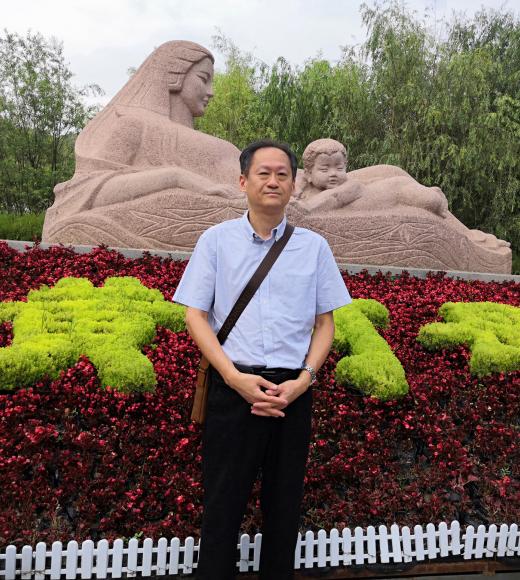
Sheldon Lu is a Distinguished Professor of Comparative Literature at the University of California, Davis. He holds affiliations with East Asian Studies, Performance Studies, Cultural Studies, Film and Media Studies, Critical Theory, and Environmental Humanities. His academic career includes roles as Chair of the Department of Comparative Literature, Director of the Graduate Program in Comparative Literature, and Founding Co-Director of the Film Studies Program. Lu has taught at institutions including the University of Pittsburgh and Beijing Normal University, and served as a Fulbright scholar in Ukraine (2004-2005). Education: B.A. (1984) and Ph.D. (1990) in Comparative Literature from Indiana University and University of Wisconsin-Madison, respectively. His research bridges literary studies, visual culture, film, and China studies. Key publications include Contemporary Chinese Cinema and Visual Culture (2021, BAFTSS Honorable Mention) and Chinese Modernity and Global Biopolitics (2007). He edited the Critical Interventions book series (2009-2019). Lu's work has appeared in journals like New Literary History , Journal of World Literature , and Cinema Journal . Awards include the 2005 Choice Award for Chinese-Language Film: Historiography, Poetics, Politics . He has organized special journal issues on topics ranging from ecocinema to transnational Chinese cinemas. Teaching focuses on Asian literature, film studies, critical theory, and urban culture. Notable courses include World Cinema and East-West Literary Relations .
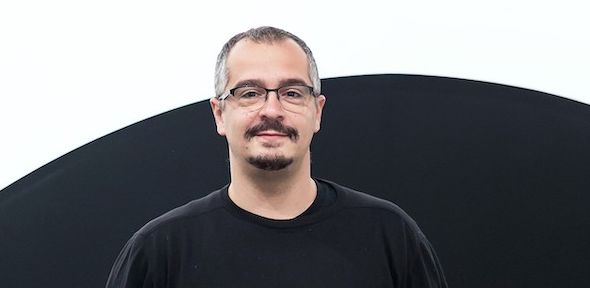
Christopher Honey is an Associate Professor in the Department of Psychological & Brain Sciences at Johns Hopkins University, affiliated with the Krieger School of Arts & Sciences. His research focuses on computational cognitive neuroscience, exploring how the brain processes sequential information such as language and memory. He holds a PhD from Indiana University and has held positions at Princeton University and the University of Toronto before joining JHU in 2016. Education: PhD in Psychological and Brain Sciences, Indiana University Postdoctoral Fellowship at Princeton University with Uri Hasson Bachelor’s in Applied Mathematics and English Literature, University of Cape Town Research Interests: Neural dynamics of memory and perception Temporal processing in the brain Cognitive modeling using computational methods Neuroimaging data standards (e.g., BIDS) Publications highlight his work on brain state fluctuations, neuroimaging data structures, and memory enhancement. His lab develops tools for analyzing fMRI and EEG data, emphasizing real-world applications like smartphone-based cognitive interventions. Lab and Collaborations: Active projects on narrative processing and hippocampal replay Development of open-source neuroscience tools like iELVis Focus on translational research for aging populations
Professor Lydia Bourouiba is a faculty member at the Massachusetts Institute of Technology (MIT), affiliated with the Department of Civil and Environmental Engineering and the Institute for Medical Engineering and Science (IMES). Her research focuses on the intersection of fluid dynamics and disease transmission, with a strong emphasis on biophysics, interfacial flows, turbulence, and multiphase systems. Ph.D. in Applied Mathematics from McGill University (2008) Research on fluid fragmentation, droplet/bubble dynamics, and pathogen transport Co-Founder and Associate Director of the NSF Center for Pandemic Prevention (APPEX) Her work spans fundamental and applied domains, including: Biophysics of pathogen transport in air and water Turbulent multiphase flows in respiratory events Fluid-plant interactions in agricultural disease Nonlinear dynamics in public health contexts Key article trends highlight: Biomedical fluid mechanics Climate and environment-driven disease modeling High-risk/high-reward public health innovations Interdisciplinary approaches combining physics, biology, and engineering Scientific awards include: Fellow of the American Physical Society (2021) American Institute for Medical and Biological Engineering Fellow (2022) Smith Family Foundation Odyssey Award for biomedical research Ole Madsen Mentoring Award She serves as Associate Editor for the journal FLOW and has founded conferences like the Gordon Research Conference on Fluids in Disease Transmission. Her lab (Fluids and Health Network) develops experimental and theoretical frameworks to address contamination, pandemic control, and fluid-health-environment interactions.
Dr. Chien-Ming Huang is the John C. Malone Assistant Professor in the Department of Computer Science at Johns Hopkins University. He leads the Intuitive Computing Laboratory and is affiliated with the Malone Center for Engineering in Healthcare, Laboratory for Computational Sensing and Robotics, Institute for Assured Autonomy, and Data Science and AI Institute. His research focuses on human-robot interaction, human-computer interaction, and artificial intelligence applications in healthcare and education. BS in Computer Science, National Chiao Tung University (2006) MS in Computer Science, Georgia Institute of Technology (2010) PhD in Computer Science, University of Wisconsin–Madison (2015) Postdoctoral Research, Yale University (2015-2017) Dr. Huang's work bridges human-robot interaction, robotics, and AI to develop technologies that enhance social, physical, and behavioral support for diverse populations. His research includes adaptive robot systems for autism intervention, aging care technologies, and explainable AI frameworks for medical decision support. Current projects focus on end-user robot programming, socially aware navigation, and conversational agents for health management. His publications span major venues like Science Robotics , HRI, CHI, and ICRA, with recent emphasis on robot error awareness, small talk in collaboration, and AI explanation design for healthcare. Dr. Huang has received numerous accolades including the NSF CAREER Award and John C. Malone Endowed Chair. 2022 NSF CAREER Award John C. Malone Endowed Chair 2013 RSS Best Paper Runner-Up 2012 Human-Robot Interaction Pioneer Dr. Huang mentors PhD, postdoctoral, and undergraduate researchers, emphasizing interdisciplinary collaboration and technical rigor. He serves as Associate Editor for ACM Transactions on Human-Robot Interaction and has organized key conferences including HRI and ICMI. His lab develops systems for robotic assistance in surgical training, home healthcare, and educational contexts.