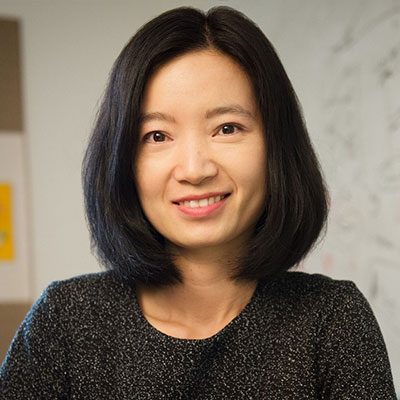
Professor Yizhou Sun is affiliated with the University of California Los Angeles (UCLA) and the Henry Samueli School of Engineering and Applied Science . Her academic work focuses on Machine Learning , Artificial Intelligence , and Graph Neural Networks within the Computer Science department. Her research spans High-Level Synthesis , Causal Inference , and Computational Biology , with recent publications addressing neural network compression, language model safety, and dynamical system modeling. The trends in her recent 2025 and 2024 publications emphasize Deep Learning , Graph Theory , and Language Model Optimization , reflecting interdisciplinary applications in Biomedical Data , Hardware Design , and Physical Simulation .
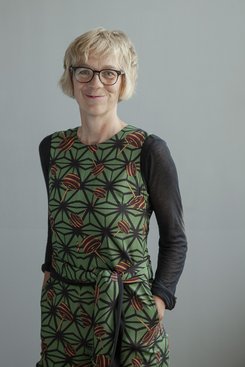
Prof. Dr. Andrea Sick is Professor of Cultural and Media History/Theory at the University of the Arts Bremen (HfK Bremen) where she leads the Digital Media study program. She founded the Binational Artistic PhD Program, collaborating with institutions including Leiden University, University of Groningen, and University of Gothenburg. Her research explores intersections between technology, art, and cultural production through both academic and curatorial work. Education includes studies in German Studies, Political Science, Cultural Studies, and Art History at Heidelberg, Bremen, and Hamburg universities, culminating in a 2001 PhD from Universität Hamburg on cartographic knowledge systems. She co-directs the art-science project thealit Frauen.Kultur.Labor , producing exhibitions, conferences, and publications. Research focuses span: Technological media's impact on artistic production Art-biology-information technology intersections Performance art history/theory Queer Studies frameworks Artistic research methodologies Generative AI in cultural analysis Her work critically examines how digital tools transform cultural documentation and archival practices. Recent projects include: Latent Museums (AI analysis of museum collections) The Dynamic Archive (ongoing digital archiving project) Re Capitulating.Queer (2024-2026 curatorial project) Administrative roles include: Dean of Art and Design (2012-2018) Co-Rector for Research & International Affairs (2018-2023) Lead of Binational Artistic PhD Program (since 2022) Awards include the Heinrich-Böll-Stiftung doctoral scholarship (1998-2001). She mentors 12+ PhD students in artistic research, including projects on sonic archaeology, queer archives, and decolonial practices.
John Finn serves as Associate Professor and Department Chair of the Department of Sociology, Social Work and Anthropology at Christopher Newport University's College of Arts and Sciences. He holds joint appointments with the Honors Program, Center for Crime Equity and Justice Research and Policy, and Center for Sustainability in Education. PhD in Geography, Arizona State University MA in Geography, University of Missouri BA in International Studies, University of Missouri Finn's research examines the socioeconomic, environmental, and health consequences of persistent racial segregation in the United States, with particular focus on Hampton Roads, Virginia and Latin American contexts including Cuba and Brazil. His work integrates urban geography, environmental justice, and human-environment interaction through field research methods. His 2024 solo exhibition 'Living Apart: Geography of Segregation in the 21st Century' at the Virginia Museum of Contemporary Art demonstrates his innovative approach to translating academic research into public engagement. Finn's recent publications reveal strong thematic focus on urban renewal impacts, environmental justice mapping, and Latin American geographies, with increasing emphasis on climate gentrification and spatial epidemiology. 2024 SCHEV Outstanding Faculty Award (Virginia's highest faculty honor) 2021 Alumni Society Award for Teaching and Mentoring 2020 Faculty Excellence Award in Scholarship Class of 2013 Faculty Development Award (2019) Finn has secured over $200,000 in research funding and delivered more than 100 invited lectures across North America, Latin America, and Europe. His work bridges academic research and practical applications through partnerships with medical schools, planning associations, and environmental organizations. He maintains active research teams focused on mapping segregation patterns and analyzing environmental health disparities in coastal Virginia.
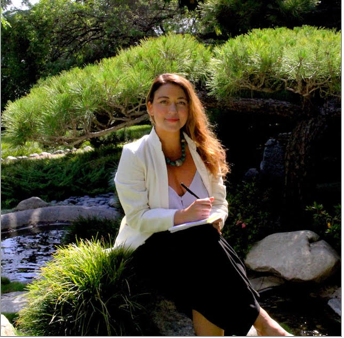
Dr. Kara Miller is an Assistant Professor of Applied Anthropology in the Department of Anthropology at California State University - Long Beach (CSULB). Her work focuses on medical anthropology, body politics, and eco-social well-being, employing holistic approaches to address health equity through ethnography and empowerment-based methodologies. Education: PhD in Anthropology, University of California, Riverside (2017) MA in Anthropology, Louisiana State University (2010) BA in Anthropology & Applied Visual Arts, North Carolina State University (2006) Research Interests: Dr. Miller investigates embodied ecologies, toxic industrial practices, and health sovereignty. Her projects include studies on reproductive health policies in East Africa, mental health systems in New Orleans, migrant healthcare access in California, and a NIH-funded study on integrative medicine in Uganda. She emphasizes feminist epistemologies, health humanities, and critical social theory to explore how bodies interact with lifeworlds and environmental conditions. Teaching: She teaches courses such as Practicing Anthropology, Applied Anthropology, Ethnographic Methods, and Health and Healing. Past courses include Biological Approaches to Medical Anthropology and Embodied Futures. Current Projects: Dr. Miller’s ongoing work examines local environmental entanglements and community-based conservation strategies, linking embodiment to ecological health and justice.
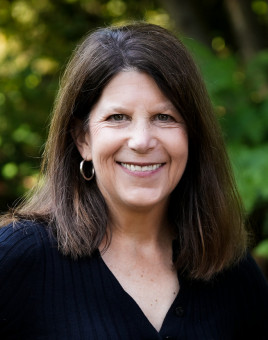
Jennifer Hubbert is a Professor of Anthropology and Asian Studies at Lewis & Clark College. She holds a PhD and MA from Cornell University and a BA from Stanford University. Her research focuses on the anthropology of the state, Chinese soft power, and gun culture in the U.S., with notable work examining Confucius Institutes, the Shanghai Expo, and evolving demographics of gun ownership. Hubbert has been awarded grants including a 2023 National Endowment for the Humanities grant for her project on liberal gun ownership and its implications for citizenship and emancipatory democracy. Her academic contributions span books like China in the World: An Anthropology of Confucius Institutes, Soft Power, and Globalization (2019) and over 20 peer-reviewed articles. She has held prestigious fellowships, including the 2018-2020 USC Center on Public Diplomacy Research Fellowship. Hubbert’s recent NEH-funded research explores how non-traditional gun owners reimagine citizenship through gun ownership, aligning with humanities perspectives on technology’s societal impact. Her work bridges global-local dynamics, analyzing how institutions like Confucius Institutes shape cultural perceptions, and how urban events like the Beijing Olympics construct national identity. Her teaching includes courses on power and resistance, China’s representation in media, and ethnographic research methods.
Dr. Marguerite Muller is a Lecturer in Education and Society at King's College London, leading the MA Education Management program. She holds degrees including a PhD in Higher Education Studies (University of the Free State, 2016) and a BA in Fine Arts (University of Pretoria, 2004). Her research focuses on arts-based methodologies, educator subjectivity, and social justice in education, employing post-qualitative, narrative, and participatory approaches. Teaching Responsibilities include modules on Education Leadership, Gender, Power, and Inequality in Education Leadership (MA level), and 'Education for the 21st Century: A Global Perspective' (BA level). She actively supervises PhD students exploring arts-based research, decolonial education, and social justice. Key affiliations include the Centre for Public Policy Research at King's College London and prior roles at the University of the Free State (South Africa). Her work emphasizes interdisciplinary collaboration, global South perspectives, and accessible, socially engaged scholarship. Notable recognitions include the NRF South Africa Y Rating (2023). Current research projects explore educator identity, participatory arts-based inquiry, and decolonization in higher education.
Prof. Maosong Sun is a Professor at the Department of Computer Science and Technology, Tsinghua University, China. He holds additional leadership roles including Executive Vice Dean of the Institute for Artificial Intelligence and Deputy Director of the National Engineering Laboratory for Cyberlearning and Intelligent Technology. His research focuses on natural language processing (NLP), artificial intelligence, machine learning, and computational education. He leads interdisciplinary projects in computational humanities, knowledge graphs, and MOOC platforms like XuetangX, which has over 58.8 million registered learners. Key contributions include pioneering work in Chinese NLP tools, poetry generation systems like Jiuge, and large-scale research initiatives funded by Chinese and Singaporean programs. Awards include the Tsinghua University Education Award (2019) and the National Outstanding Practitioner Award (2007). Established NLP and Computational Humanities & Social Sciences Lab (2008) Co-director of the Joint Research Center for Extreme Search (2011-present) Over 200 publications with 11,000+ citations (h-index 47)
Mark D. Gross is a Professor of Computer Science and Director of the ATLAS Institute at the University of Colorado Boulder. His research focuses on modular robotics, tangible interaction design, digital fabrication, and computational design. He co-founded Modular Robotics and Blank Slate Systems, leveraging his expertise in educational technology and maker culture. Education: PhD in Design Theory & Methods from MIT. Academic history includes roles at Carnegie Mellon University and University of Washington Seattle. His work spans architecture, robotics, and human-computer interaction. Research Interests: Modular robotics and computationally enhanced construction kits Tangible interaction and e-textiles Shape-changing interfaces and swarm robotics Sketch-based interaction and digital fabrication Publications highlight advancements in collaborative AR systems, shape-changing interfaces (e.g., LiftTiles, ShapeBots), and accessible technologies like FluxMarker. His work bridges computational tools and creative design processes. Advising: Guided students such as Ryo Suzuki (PhD '20). Entrepreneurial ventures include companies spun off from research. Labs/Teams: Leads projects at the ATLAS Institute, emphasizing interdisciplinary collaboration in robotics, design, and human-centered computing.
Didar Zowghi is a Senior Principal Research Scientist and Science Team Leader at CSIRO Data61, Australia's national science agency. His work focuses on advancing ethical AI systems, data quality frameworks, and requirements engineering methodologies. He leads research initiatives addressing challenges in AI governance, diversity/inclusion in technology, and human-centered AI development. Research interests include AI ethics, data completeness in healthcare systems, and the application of machine learning in requirements engineering. His contributions span theoretical frameworks for responsible AI patterns, empirical studies on user perceptions of AI tools like M365 Copilot, and analysis of AI's role in global diplomatic practices. Zowghi has published extensively on topics ranging from blockchain in supply chains to pedagogical innovations in software engineering education. His work often bridges technical systems and societal impacts, emphasizing real-world implementation challenges through collaborative industry-academia projects. Notable outputs include the Responsible AI Pattern Catalogue and studies examining barriers to data quality in IoT platforms. He has pioneered frameworks linking innovation initiatives to occupational skill requirements and developed tools like Elica for dynamic requirements knowledge extraction in agile teams.
A. Alperen Günay is an Assistant Professor in the Department of Mechanical Engineering at Bilkent University . He previously served as an Assistant Professor at METU (2021-2023) and as a researcher at The University of Tokyo (2019-2021). Günay earned his PhD and MS in Mechanical Engineering from the University of Illinois at Urbana-Champaign under Dr. Nenad Miljkovic. Current Affiliation: Bilkent University Prior Affiliations: METU, University of Tokyo Education: PhD (UIUC), MS (UIUC), BS (METU) Research Focus : Developing green passive thermal devices through nanomaterials and phase change technologies. Key areas include radiative cooling , thermophotovoltaic systems , and nanomaterial-based heat sinks . His work spans energy conversion, thermal management, and optical property characterization. Scientific Awards : TÜBİTAK 2232-B Award Laboratory Leadership : Dr. Günay directs the Thermal Research & Optics Laboratory (TROL), focusing on projects like metal-organic framework systems , passive evaporative cooling , and greenhouse films for year-round thermal regulation .
Rick Busselle is an Associate Professor at Bowling Green State University (BGSU), affiliated with the School of Media & Communication within the College of Arts & Sciences. His research focuses on how mediated narratives influence perceptions of social issues like poverty and crime, emphasizing engagement, perceived realism, and the social construction of reality through media. He holds a B.S. in Journalism from BGSU, an M.A. in Telecommunication, and a Ph.D. in Mass Media, both from Michigan State University. Dr. Busselle’s work appears in journals like Communication Theory and Media Psychology , with a focus on narrative engagement, media effects, and psychophysiological responses. He has served on editorial boards for Media Psychology , The Journal of Broadcasting & Electronic Media , and co-edited Media Psychology . His courses include Media Effects, Quantitative Research Methods, and Strategic Communication. His scholarship bridges narrative theory and audience psychology, exploring how stories shape social realities. Recent publications (2022–2008) highlight themes like epistemic monitoring in stories, narrative persuasion, and the cultivation of perceived realism. His research underscores the interplay between cognitive processes and media influence, with applications in communication studies and journalism. Busselle’s contributions extend to editorial leadership and academic mentorship, shaping discourse in media psychology and communication theory without explicit awards but recognized through peer contributions and publication impact.
Dr. Teresa Wang is a Senior Lecturer in Data Science at Monash University's Faculty of Information Technology, specializing in entity/user modeling, relational/structural machine learning, and graph/network analysis. She holds a Ph.D. from the University of Queensland and degrees from Nanjing University. Currently, she directs the Master of Data Science Program and teaches courses like FIT5201 Machine Learning. Her research focuses on social, e-commerce, and health data modeling, with notable projects including the Knowledge Enriched Approach for Effective Personalization (2025–2027) and collaborations on AI in Mental Health and Site Safety. Dr. Wang has co-authored over 59 publications, emphasizing areas like ontology matching and multimodal data analysis. She actively supervises PhD students and contributes to initiatives like the CSIRO Next Generation Graduates Program for clean energy and sustainability. Education: Ph.D. in Computer Science (2017), University of Queensland Master of Computer Science (2013), Nanjing University Bachelor of Software Engineering (2010), Nanjing University Research Interests: Entity modeling, spatio-temporal data analysis, graph mining, recommender systems, and health/medical records mining. She explores applications in social media, e-commerce, and healthcare sectors. Projects: "Knowledge Enriched Approach for Effective Personalization" (2025–2027) "AI for Clean Energy and Sustainability" (2023–2027) "CSIRO Next Generation Graduates Program: AI in Mental Health" (2023–2027) "Large-scale multimodal knowledge management" (2022–2025) Grants & Collaborations: Engaged with CSIRO, Crank Group, and Pola Practice Pty Ltd. Her work aligns with UN SDGs in education and sustainable energy systems. Labs/Teams: Part of the Monash Energy Institute and Monash Data Futures Institute, contributing to interdisciplinary AI and energy research.
Sara Nabil is an Assistant Professor at Queen's University's School of Computing within the Faculty of Arts and Science. She leads the HCI Design Studio and previously held a postdoctoral position at Carleton University's Creative Interactions Lab. Her research focuses on integrating interior design, fashion, and product design with interactive technologies, emphasizing e-textiles, smart materials, and shape-changing interfaces. She holds a PhD from Newcastle University and prior experience as an HCI Lecturer, interior designer, and senior software developer. Education: PhD in Computing, Newcastle University (2019) MSc in Computing BSc in Computing Research interests include designing computational spaces, wearable technology, and e-textile interactions. Her work explores sustainable fabrication methods, user-centered design for smart environments, and bridging traditional crafts with digital technologies. Notable projects include exhibitions like 'Living with Adaptive Architecture' and 'Persuasive Pharmacy Space,' showcasing interactive wearables and spaces. Her recent articles (2023–2025) emphasize e-textile innovations, sustainable design, and human-building interactions. Key themes include smart materials in fashion, modular wearables, and community-driven interaction systems. Awards: None explicitly mentioned. Advising/Grants: No details provided. Labs/Teams: Head of HCI Design Studio and part of iStudio Lab, focusing on interioraction design.
Kurt Sengul is a Macquarie University Research Fellow (MQRF) in the School of Communication, Society and Culture. He holds a PhD in Media and Communications from the University of Newcastle (2022). His research focuses on media populism, far-right movements, and critical discourse analysis, with projects exploring the nexus between media and far-right politics in Australia. He has taught at the University of Sydney and University of Newcastle, specializing in political communication, social media, and digital cultures. Research interests include far-right communication strategies, media populism's impact on democracy, critical discourse studies, and anti-gender movements. His work examines topics like far-right humor, online radicalization via platforms like X/Twitter Spaces, and the discursive construction of victimhood. He has published in journals such as Critical Discourse Studies , Television & New Media , and Communication Research and Practice . Professional roles include serving as NSW Representative for ANZCA and secretary of APSA’s Queer Caucus. Media engagements include commentary for The New York Times , The Guardian Australia , and The Sydney Morning Herald . His forthcoming monograph Far-Right Populism in Australia (Bloomsbury) explores communication and discourse strategies of Australian far-right groups.
Dr. Timothy Fraser is a Computational Social Scientist serving as Ezra Systems Research Associate in Cornell University's Systems Engineering Program and Coordinator for the Center for Transportation, Environment, & Community Health (CTECH). Holding a PhD in Political Science from Northeastern University (2022), he focuses on climate change adaptation, disaster resilience, and energy policy using big data analytics, GIS, and AI. His work bridges computational methods with societal challenges, emphasizing community engagement and policy impact. Education: PhD in Political Science, Northeastern University (2022) MA in Political Science, Northeastern University BA in International and Global Studies, Middlebury College Research Interests: Fraser’s research integrates computational social science with environmental policy, exploring how social networks and governance structures influence cities' climate adaptation strategies. Key areas include renewable energy adoption, disaster evacuation dynamics, and pandemic response mechanisms. He employs mixed methods such as network analysis, statistical modeling, and fieldwork. Grants & Awards: Fulbright Fellowship (2016), Kyushu University Japan Foundation Doctoral Fellowship (2020) USDOT Multimillion Grant Administrator (2022-2023) Teaching & Mentorship: Fraser teaches statistical methods and research design at Cornell, advising over 30+ students in projects published in leading journals. He coordinates capstone teams and mentors researchers in data science and policy analysis. Labs & Projects: Leads the Climate Action in Transportation dashboard initiative (Gao Labs), developing tools for emissions visualization. Collaborates on UNDP social capital mapping projects in Mexico and Paraguay, applying spatial analysis techniques for vulnerable communities.