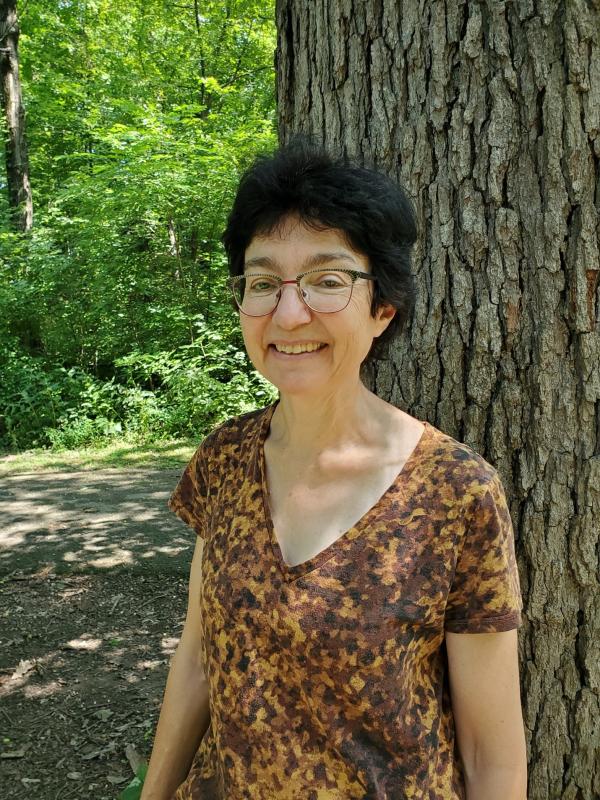
Patricia Sieber is a Professor of Chinese Literature in the Department of East Asian Languages and Literatures at The Ohio State University. She holds a Ph.D. and M.A. in Chinese literature from the University of California, Berkeley. Her research focuses on print culture, performance culture, and transcultural studies, with emphasis on traditional Chinese drama's global afterlives. She directs the Translation and Interpreting Program and leads the Chinese Theater Collaborative project funded by OSU's Arts and Humanities Grant. Notable works include Theaters of Desire (2003) and editorial work on How To Read Chinese Drama (2022). Awards include the 2023 Ratner Teaching Award. She has held fellowships at the Library of Congress, Princeton Library, and Taipei's National Central Library. Active in scholarly societies, she serves on editorial boards for journals like Journal of Chinese Literature and Culture . Her teaching spans traditional Chinese literature, translation theory, and interdisciplinary courses. She pioneered experiential learning initiatives including a drama translation residency with Amy Ng. Her research has been supported by NEH, ACLS, Chiang Ching-Kuo Foundation, and DAAD grants. Public outreach includes collaborations with the Royal Shakespeare Company and media appearances (BBC, New York Times).
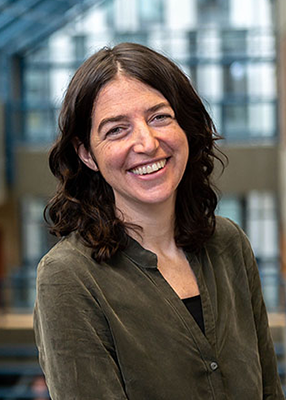
Dr. Lauren Emberson (she/her/hers) is an Associate Professor in the Department of Psychology at the University of British Columbia, Faculty of Arts. She directs the Baby Learning Lab, which is part of UBC's Early Development Research Group, a consortium focused on infant and child development. Prior to her position at UBC, Dr. Emberson was an Assistant Professor at Princeton University where she co-founded and co-directed the Princeton Baby and Princeton Kid Labs. Education: Postdoctoral Associate, University of Rochester (PI Aslin) Ph.D, Cornell University (PIs Amso, Goldstein, Spivey) B.Sc, University of British Columbia Dr. Emberson's research focuses on learning, perception (audition, vision, crossmodal or multisensory), language development, face/object perception, and attention in infants. She investigates these capacities using behavioral and neuroimaging techniques, particularly fNIRS (functional near infrared spectroscopy), working primarily with very young infants (birth through 1 year) and preterm/premature infants. Her work examines how infants' learning capacities contribute to rapid development of perception in ecological contexts, with implications for understanding how early life experiences affect later outcomes. Analysis of Dr. Emberson's recent publications reveals a consistent focus on infant perception, learning mechanisms, and neuroimaging methodology. Her work increasingly incorporates advanced fNIRS techniques while maintaining focus on fundamental questions about how infants learn from their environment. There's a growing emphasis on individual differences, cross-cultural comparisons, and applications to infants facing developmental challenges. Dr. Emberson serves on the editorial board of Infancy (journal of the International Congress of Infancy Studies) and is a consulting editor for the Journal of Cognitive Neuroscience . Her research has been published in top journals including PNAS, Current Biology, Psychological Science, Cognition, Developmental Science, and the Journal of Neuroscience. Dr. Emberson has secured significant research funding from prestigious organizations including the Bill and Melinda Gates Foundation, James S. McDonnell Foundation, Natural Sciences and Engineering Research Council (NSERC), Canadian Institutes of Health Research (CIHR), and the National Institutes of Health (NIH). She collaborates with clinicians at BC Women's and Children's Hospitals to understand how different early life experiences impact learning and brain development. Dr. Emberson is currently accepting graduate students into her research program. The Baby Learning Lab, under Dr. Emberson's direction, is part of UBC's Early Developmental Research Group and collaborates with multiple institutions. The lab strives to provide interactive research experiences for infants and families while advancing scientific understanding of early cognitive development. The lab acknowledges that it operates on the traditional, ancestral, and unceded territory of the xʷməθkʷəy̓əm (Musqueam) people.
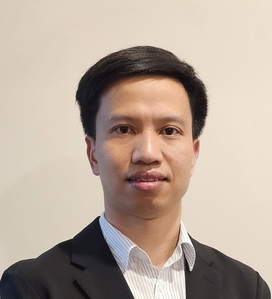
Associate Professor Sonny Pham leads research in artificial intelligence at Curtin University's School of EECMS. His work balances theoretical foundations with practical applications in computer vision, data mining, and deep learning. As head of the IAMAI research group, he collaborates with industry partners on security systems, healthcare AI, and sustainable technologies. His research explores: Computationally efficient deep learning architectures Compressed sensing for high-dimensional data Robust statistical methods for real-world problems Applications in computer vision and industrial automation Recent publications demonstrate a focus on medical imaging interpretation and efficient neural networks, with applications spanning radiology report generation, semantic segmentation for autonomous systems, and cybersecurity. His team's work consistently bridges theoretical AI advancements with industrial applications. Honors include: Multiple WANMA Awards (2021-2024) for industry-impactful research INCITE Award for social impact technology (2024) IEEE Young Author Best Paper Award (2010) Over $5M in competitive research funding including MRFF and DFAT grants He leads the IAMAI research group with 12+ graduate students and coordinates Curtin's Master of Artificial Intelligence program. Industry collaborations include Alcoa Australia, iCetana, and HyprFire.
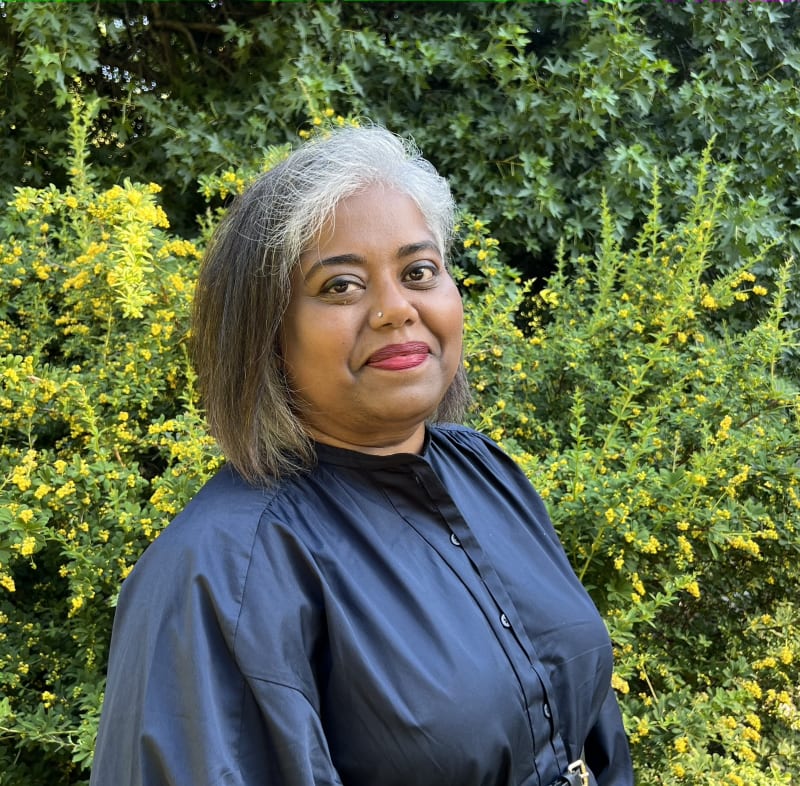
Dr. Jingyun Wang is an Assistant Professor in the Department of Computer Science at Durham University. Previously, she held an Assistant Professor position at Kyushu University, Japan. Her primary affiliations include the Centre for Neurodiversity & Development and the Artificial Intelligence and Human Systems Group (AIHS), as well as the Pedagogical Innovation in Computer Science Group (PICS). She is a Fellow of the Higher Education Academy and has led or contributed to research projects funded by JSPS, JST, NICT, Innovate UK, and industry partners. Her research focuses on AI-driven educational technologies, including AI-based feedback systems, computational thinking education, game-based learning, and ontology techniques. She actively contributes to editorial boards (e.g., Computers & Education: Artificial Intelligence ) and serves as a conference chair for AIED, ICCE, and LTLE. Current research includes adaptive learning systems for mathematics education, serious games for cybersecurity training, and visualization tools for e-learning. Her scientific contributions span over 50 peer-reviewed publications, with recent work emphasizing learning analytics, multimodal systems, and digital health interventions. She advises multiple PhD students and mentors in professional recognition pathways. Key projects include developing the BETTER speech training system, the MEMORABLE cybersecurity game framework, and ontology-based language learning platforms.
Dr. Rathna Ramanathan is a leading academic and practitioner in intercultural communication and alternative publishing. Currently serving as Provost of Central Saint Martins and UAL Executive Dean for Global Affairs , she has previously held deanships at Central Saint Martins and the Royal College of Art. Based in London but originally from Chennai, India, her work bridges South Asian and global design practices. University of Reading - PhD in Typography and Graphic Communication Central Saint Martins - MA in Communication Design University of Madras - BA Fine Art Her research focuses on intercultural communication and alternative publishing in the Global South, examining how marginalized voices can be amplified through design. She explores the tension between tangible/intangible heritages and contemporary design, and investigates how form, media, and content interact in addressing social/political issues. Recent publications highlight her design research trends in decolonial publishing, critical typography, and intercultural book design. As a design educator , she emphasizes listening, cross-cultural learning, and sustainable practices. Her supervision includes postgraduate research students working on topics like female printers in India, exhibition design, and architectural lettering. Key scientific collaborations include major projects with Tara Books (international design awards), British Council-funded initiatives (Crafting Futures, Going Global Partnership), and the Murty Classical Library of India (Harvard University Press partnership). She consults on Indic typeface design with Adobe and Monotype. Her design lab at Central Saint Martins (M9Design) works with international networks of editors, translators, and type designers. Current team projects focus on digital/print transitions, bilingual typography, and preserving endangered typographic practices through innovative publishing formats.
Sophie McCall is a Professor in the Department of English at Simon Fraser University (SFU), specializing in Indigenous literatures. Her research focuses on decolonization, resurgence, and the ethics of collaborative authorship, particularly examining how Indigenous writers challenge settler colonialism through storytelling. She holds a BA from Queen’s University, an MA from UBC, and a PhD from York University. McCall is the author of First Person Plural: Aboriginal Storytelling and the Ethics of Collaborative Authorship (2011), which received critical acclaim, and editor of foundational texts like Devil in Deerskins: My Life with Grey Owl (2014). She co-edits Read, Listen, Tell: Indigenous Stories from Turtle Island (2017) and directs SFU’s Masters of Arts for Teachers of English (MATE) program. Her work bridges literary criticism and activism, addressing residential school narratives, Indigenous-Black solidarity, and the politics of reconciliation. She co-chairs the Indigenous Voices Awards and leads SSHRC-funded projects exploring Indigenous-led literary collaborations. Key themes in her scholarship include textualizing orality, ethical representation, and multidisciplinary Indigenous arts. Awards: Gabrielle Roy Prize finalist (2011), Canada Prize finalist (2011) Projects: SSHRC-funded collaboration with NunatuKavut scholar Kristina Bidwell Roles: Director of MATE, Co-chair Indigenous Voices Awards McCall’s publications span scholarly articles, edited collections, and anthologies, emphasizing Indigenous agency in storytelling. Her teaching and research prioritize decolonizing methodologies and amplifying Indigenous voices across disciplines.
Vassilios Tzerpos is an Associate Professor at the Lassonde School of Engineering, York University, where he has been since 2001. He holds a Ph.D. in Computer Science from the University of Toronto (2001). His research focuses on audio processing for musical applications, deep learning, digital signal processing, machine listening, and software engineering education. He directs the APTLY lab exploring music-technology intersections and leads the LaSSoftE lab developing socially-oriented software solutions. Education: Ph.D. in Computer Science, University of Toronto, 2001 Research Highlights: Dr. Tzerpos' work spans music information retrieval (e.g., automatic music classification), synthetic speech detection using neural networks, and software engineering pedagogy. His recent projects include Music-STAR for audio re-instrumentation and OER-based learning path creation systems. He has pioneered methods in design pattern detection and software clustering evaluation. Grants & Labs: Leads two research groups: APTLY (music-tech) and LaSSoftE (social impact software). Active in developing adaptive cybersecurity solutions against DoS attacks and refining software architecture recovery techniques. Key Themes in Publications: Recent work emphasizes machine learning applications in music technology and cybersecurity, with foundational contributions to software clustering methodologies and design pattern detection algorithms. His work bridges theoretical computer science with practical applications in education and creative industries.
Dr. Julie Markant is an Associate Professor in the Department of Psychology at Tulane University and a Faculty Associate in the Tulane Brain Institute. Her research focuses on the interplay between selective attention and learning in infants and young children, emphasizing developmental and neurobehavioral perspectives. She uses behavioral, eye-tracking, genetic, MRI, and fNIRS methods to explore how attention control influences learning efficacy and vice versa. Education: Ph.D., 2010, University of Minnesota Her research interests include developmental attention mechanisms, perceptual learning, and how biological and contextual factors shape cognitive outcomes. Key themes involve understanding how infants and children selectively attend to information and how this attention drives learning processes. Recent work explores caregiver influence on attention, prenatal factors affecting infant attention, and the role of competing information in school-aged learning. Dr. Markant leads the Learning and Brain Development Lab , which investigates cognitive and neural mechanisms underlying attention and learning. She is actively recruiting graduate students from Tulane’s Psychology and Neuroscience Ph.D. programs. Her publications reflect a focus on attention biases, developmental learning dynamics, and methodological innovations like remote infant studies. Awards and honors are not explicitly listed in the provided text.
Krista Lynes is a Professor of Communication Studies at Concordia University, holding the Canada Research Chair in Feminist Media Studies and directing the Feminist Media Studio. Their research focuses on intersectional frameworks addressing feminist media studies, queer theory, migration studies, critical race studies, environmental humanities, and infrastructure studies. Lynes employs research-creation methodologies to interrogate systems of power and mobility. Thesis supervision: Media Studies (MA), Communication (PhD), Humanities (PhD) Labs/Teams: Director of the Feminist Media Studio, a space for interdisciplinary art and activism Recent work examines vital energy in greenhouse infrastructures, queer migrant activisms, and decolonizing corporeal representations in art. Their scholarship bridges media theory with global social justice concerns, emphasizing transnational circuits and planetary aesthetics.
John Richardson is a Professor of Philosophy at New York University, specializing in 19th and 20th century continental philosophy, particularly Nietzsche and Heidegger, and 19th-century American philosophy, including Emerson. He holds a PhD from UC Berkeley (1981) and undergraduate degrees from Harvard (1972) and Oxford (1974). His research focuses on Nietzsche's value theory, Heidegger's existential epistemology, and the intersection of philosophy with Darwinism and media studies. Key publications include Nietzsche's Values (2020), The Oxford Handbook of Nietzsche (2013), and Heidegger (2012). He has also contributed to interdisciplinary works on music and digital media aesthetics. Richardson’s work bridges traditional philosophy with contemporary debates, emphasizing Nietzsche’s critique of morality and Heidegger’s phenomenology. His analyses often integrate scientific perspectives, as seen in Nietzsche's New Darwinism (2004), which explores evolutionary themes in Nietzsche’s thought.
Dr. Jay Yoon is an Associate Professor at Department of Human Centered Design , College of Human Ecology , Cornell University . He leads the Meta Design & Technology Lab which focuses on creating products that enhance both momentary and long-term user experiences through human-centered design , human-computer interaction , and positive psychology principles. Education : BA & BE in Industrial Design & Computer Science, Handong University (South Korea) MSc in Design for Interaction, Delft University of Technology (Netherlands) PhD in Emotion-driven Design, Delft University of Technology His research demonstrates how emotional granularity and positive emodiversity in technology interactions can significantly improve user well-being. He has developed multiple design tools like the EmotionPrism and Positive Emotional Granularity Cards. Industry collaborations include smart home services , airport crew centers , museum tours , and brand loyalty programs . Notable publications span International Journal of Design , She Ji: The Journal of Design, Economics, and Innovation , and International Journal of Human-Computer Interaction . Scientific Awards : Sloan Recent Alumni Achievement Award His design projects have been exhibited at international conferences including Design & Emotion and Dutch Design Week . Current research explores technology-mediated well-being through hedonic and eudaimonic experience design.
Robert L. Chard is a Professor of Chinese Classics and Tutorial Fellow in Chinese at St Anne's College, University of Oxford. He is affiliated with the China Centre, a leading institution for East Asian studies. His research focuses on the cultural history of Confucianism, Confucian ritual studies (禮學), and the intersection of religion, politics, and military history in early China and premodern East Asia. He teaches courses on classical Chinese texts, historical methodologies, and Chinese religious traditions. His recent scholarship explores Confucian ritual authority in early China, the role of Confucian temples in Japanese domain (han) education systems during the Tokugawa period, and transnational intellectual exchanges between China and Japan. He has published extensively on topics such as ritual practices, temple symbolism, and the socio-political dimensions of Confucian learning. While no specific grants or awards are listed, his work demonstrates deep engagement with primary sources and cross-cultural analysis. He advises students in classical Chinese studies and oversees tutorial programs at St Anne's College.
Nicole Smith is a Lecturer in Museum Education at the University of Glasgow's School of Education, specializing in museum education and the intersection of digital humanities with heritage studies. She currently serves as Acting Depute Lead for the CLIP RTG and co-leads the Clippings events programme. Her research focuses on participatory methodologies in community archaeology, co-design approaches in museum partnerships, and the impact of creative practices in heritage interpretation. She has led projects such as the Glencoe Project and the Dear Green Bothy evaluation initiative, emphasizing co-creative practices and digital technologies. She holds roles in the AHRC Peer Review College and UKRI Early Career Researcher Network. Nicole has extensive experience in field archaeology, museum collaborations, and digital heritage projects, including VR/AR applications for cultural exhibits. Her work often integrates experimental methods to bridge academic research and public engagement. Her research interests include community-driven heritage recording, the Anthropocene's influence on archaeological narratives, and the evaluation of arts-based interventions. Nicole has collaborated with organizations like the National Trust, York Museums Trust, and Indigenous communities in digitization projects. She is actively involved in supervising PhD students exploring topics like digital archives, museum education, and participatory design. Nicole’s recent projects include the AHRC-funded DiNAR initiative, which explored immersive storytelling in museums, and the Discovering England’s Burial Spaces project, funded by Historic England. She has published widely on digital heritage, co-edited key handbooks, and contributed to exhibitions such as the British Museum’s Viking Legacy exhibition. Her work emphasizes ethical and participatory approaches to cultural heritage, ensuring marginalized voices are included in co-design processes.
Jianjun (Jan) Shi is the Carolyn J. Stewart Chair and Professor at the H. Milton Stewart School of Industrial and Systems Engineering (ISyE) and holds a joint appointment with the George W. Woodruff School of Mechanical Engineering at Georgia Institute of Technology. He previously served as the G. Lawton and Louise G. Johnson Chair Professor of Engineering at the University of Michigan. His research focuses on system informatics and control for manufacturing and service systems, with notable contributions to quality improvement, cyber-physical systems, and data-driven methodologies. B.S. & M.S. in Electrical Engineering, Beijing Institute of Technology (1984–1987) Ph.D. in Mechanical Engineering, University of Michigan (1992) Dr. Shi’s research interests include process modeling, control systems, and quality engineering. He pioneered methodologies for in-process quality improvement and developed advanced frameworks for high-dimensional data analysis in manufacturing. His work integrates statistical methods, machine learning, and system informatics to enhance operational efficiency and product quality. He has published over 150 peer-reviewed papers and secured $19 million+ in research grants from NSF, DOE, and industry partners. His lab, the System Informatics and Control Group, collaborates with automotive, aerospace, and pharmaceutical sectors. Shi leads initiatives such as the Quality Science Center at the Chinese Academy of Sciences and serves on editorial boards of journals like IIE Transactions and ASME Transactions . Recipient of the IIE Albert G. Holzman Distinguished Educator Award (2011) Fellow of INFORMS, ASME, and IIE Academician of the International Academy for Quality Shi advises 26 Ph.D. graduates, many of whom hold faculty positions or leadership roles in industry. His research group’s innovations have been implemented in global manufacturing systems, yielding significant economic impacts. Current work includes 4D printing, cyber-physical system resilience, and federated learning for industrial data.
Yang Zhang is a Visiting Assistant Professor in the Department of Mathematics at the University of California, Irvine (UCI), working under Prof. Katya Krupchyk. His research focuses on inverse problems in imaging sciences, nonlinear hyperbolic equations, and medical imaging applications. He previously held a postdoctoral position at the University of Washington, Seattle, under Prof. Gunther Uhlmann. His work integrates microlocal analysis and partial differential equations to address challenges in wave propagation, nonlinear acoustics, and elasticity. Education & Career: PhD from Purdue University (advisor: Prof. Plamen Stefanov) Postdoc: University of Washington, Seattle (2020–2024) Research Interests: Dr. Zhang's work spans inverse problems for nonlinear hyperbolic equations, acoustic imaging, and integral transforms in medical contexts. He develops novel methodologies using multi-fold linearization, wave interactions, and advanced calculus techniques. His studies on Rayleigh and Stoneley waves in elasticity further demonstrate his expertise in microlocal analysis. Key Contributions: His research bridges theoretical mathematics and applied imaging, with notable publications on inverse scattering, damping effects in wave equations, and Compton camera imaging. He is an active member of the Inverse Problems International Association (IPIA). Grants & Collaborations: Collaborations with prominent figures like Prof. Gunther Uhlmann and Prof. Katya Krupchyk highlight his network in inverse problems. His work often involves both analytical and computational approaches, with applications in medical diagnostics and geophysics.