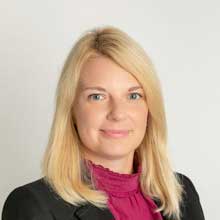
Matteo Saveriano is an Associate Professor at the University of Trento , affiliated with both the Department of Industrial Engineering and the Department of Information Engineering and Computer Science . His work focuses on Robotics , Control Systems , and Machine Learning , with applications in robotic manipulation, locomotion, and human-robot interaction. Email: matteo.saveriano@unitn.it Research interests include antifragile control systems, dynamic movement primitives, reinforcement learning, biomechanical characterisation, and motion planning on discrete manifolds. His teaching covers Automatic Control and Robotics , with a hybrid theoretical-practical approach using Python simulations. Recent publications explore topics such as neuro-symbolic robotics, radiation effects on embedded GPUs, surface defect identification with Bayesian filtering, and reactive navigation using control barrier functions. These works highlight interdisciplinary trends at the intersection of robotics , machine learning , and control theory .
Daria Arkhipova serves as Associate Professor in the Department of Management at Ca' Foscari University of Venice's Venice School of Management. Specializing in Business Economics (ECON-06/A), she maintains an active research profile centered on sustainability accounting and digital transformation in financial practices. Her academic work bridges theoretical frameworks with practical applications in evolving regulatory environments. Professor Arkhipova's research interests focus on ESG reporting mechanisms , non-financial disclosure practices , and digital technologies' impact on accounting professions . Her recent publications analyze European sustainability frameworks including CSRD implementation challenges, double materiality assessments, and big data applications in financial risk management. Current work examines how stakeholder pressures influence corporate ESG disclosure strategies across diverse industrial sectors. Her five most recent publications (2023-2025) reveal consistent thematic development toward understanding regulatory-compliance dynamics in sustainability reporting. Key trends include the integration of digital tools in ESG data verification, cross-border comparison of disclosure practices, and the evolving role of management accountants in sustainability governance structures. Professor Arkhipova actively contributes to academic knowledge through collaborative research projects. Her current work 'Fostering sustainability mindset' investigates how non-financial disclosure and corporate risk assessment drive ESG value creation, involving a multi-institutional research team examining European corporate practices. Available contact information includes university email (daria.arkhipova@unive.it) and office hours at San Giobbe campus (Fridays 13:45-15:45 by appointment). While specific teaching assignments aren't detailed, her expertise suggests involvement in graduate-level courses on sustainability accounting and digital transformation in financial management.
Barbara Marana is a Researcher in Topography and Cartography at the University of Bergamo, School of Engineering, Department of Engineering and Applied Sciences (DISA). She has maintained an active academic career since 2003, progressing from Research Fellow to Confirmed Researcher in 2008, while also serving as an Adjunct Professor for Information Systems for the Territory and Topography courses from 2015-2023. Her educational background includes a Doctorate in Geodetic and Topographic Sciences from the Polytechnic University of Turin (1993-1997) and a Degree in Electronic Engineering with specialization in Automatic Control from the Polytechnic University of Milan (1991). She possesses strong English language skills and has authored over 60 scientific publications throughout her career. Dr. Marana's research focuses on the application of Geomatics technologies to cultural heritage preservation, environmental monitoring, and urban planning. Her work demonstrates particular expertise in GIS applications, LIDAR technology, 3D scanning, and photogrammetry for documenting and analyzing historical sites, military landscapes, and natural environments. She has developed innovative approaches for integrating these technologies to create detailed spatial analyses that support conservation efforts and sustainable development initiatives. Her recent work shows increasing emphasis on interdisciplinary applications, particularly in environmental monitoring and cultural heritage documentation. Analysis of her publication record reveals consistent thematic development across multiple domains: Early work focused on 3D modeling and documentation of archaeological sites in Central Sicily Mid-career publications expanded into military archaeology and LIDAR visualization techniques Recent research demonstrates sophisticated integration of multiple geospatial technologies for environmental applications, including air pollution analysis and climate change impact assessment Dr. Marana has received recognition for her contributions to geospatial science education through innovative teaching methods including challenge-based learning approaches to digital mapping instruction. Her educational work aligns with Sustainable Development Goals 4 (Quality Education) and 11 (Sustainable Cities and Communities). She leads research projects focused on cultural heritage documentation, particularly using 3D scanning and BIM technologies for historical structures, and maintains active collaborations on projects involving the Grotto of Saints in Enna and the Necropolis of Realmese in Calascibetta. Her methodology consistently combines traditional surveying techniques with advanced technologies including terrestrial laser scanning, UAV systems, and multispectral imagery.
Anna Mongibello is an Associate Professor of English Language and Translation at the Department of Literary, Linguistic and Comparative Studies, University of Naples L'Orientale, where she also serves as Coordinator of the Master's Degree Course in Intercultural Communication in the Euro-Mediterranean Area. Her academic career includes a Visiting Professorship at the University of Toronto (2023-2024) and previous positions as RTDB Researcher at the same university. She leads the Interuniversity Research Center I-Land and participates in multiple research networks including the PRIN 2021 UNITE project focused on inclusive technologies for English language learning. Her research focuses on Social Media Discourse from linguistic and multimodal perspectives, digital communication in English, Media and News Discourse, sociolinguistic aspects of contemporary English (identity, power, ideologies) through Critical Discourse Analysis and Corpus Linguistics methodologies. She explores gender and ethnic representations, e-learning, virtual worlds, intercultural communicative competence, digital tools for English teaching, translation, multilingualism, and Indigenous studies. Her work often intersects with Canadian and Indigenous studies, examining representation, resistance, and digital activism. Her recent publications analyze political deepfakes, Indigenous resistance in digital spaces, media representations of surrogacy, and cross-cultural discourse analysis between Italian and Canadian contexts. Her research demonstrates a consistent focus on discourse analysis methodologies applied to contemporary digital communication phenomena, with particular attention to power dynamics, representation, and identity construction. Doctoral Student Research Award (International Council for Canadian Studies, 2012) Research Travel Grant (University of Naples L'Orientale, 2011) Professor Mongibello actively supervises numerous bachelor's and master's theses on topics ranging from media discourse analysis to sociolinguistic phenomena in English-speaking contexts. She has received research funding for projects including UNITE (Universally Inclusive Technologies to practice English), which explores dialogue systems for EFL learning, particularly for students with disabilities. Her teaching responsibilities span multiple degree programs, focusing on English language, discourse analysis, and intercultural communication. She leads the Interuniversity Research Center I-Land, which focuses on inclusive digital learning environments, and participates in the ERASMUS+ project 'Freedom of movement at play: EU citizens' identity and transnational discourses.' Her research group examines negative solidarities, hate speech, and digital communication ethics in the Anglophone globalized public sphere.