Mark Carey is a Professor in Environmental Studies and Geography at the University of Oregon , where he leads research at the Glacier Lab ( glacierlab.uoregon.edu ). His work bridges environmental history, glaciology, and climate justice, focusing on the intersections of glaciers, society, and climate change in the Andes and Arctic. Research Interests Environmental History Glaciology and Society Climate Change Adaptation Environmental Justice Latin American Environmental Policy Arctic and Andean Cryospheric Studies Mark Carey’s recent publications emphasize sociocryospheric systems, glacial lake outburst flood (GLOF) risks, and climate litigation. His interdisciplinary work combines historical analysis with contemporary climate science, highlighting vulnerabilities in mountain cryospheres and advocating for community-centered adaptation strategies. He has authored influential works like The Routledge Handbook of Environmental History (2023) and developed frameworks for analyzing climate justice in glacial regions. His Glacier Lab at the University of Oregon fosters collaborative research on global cryospheric changes, with a focus on Andean and Arctic regions. Carey’s career spans decades of CNH-funded research (2010) and leadership in integrating environmental history with climate policy, emphasizing the need for decolonized research methodologies and gender-inclusive adaptation strategies.
Travis B. Thompson, Ph.D. is an Assistant Professor in the Department of Mathematics and Statistics at Texas Tech University, leading the TM4 (Texas Tech Translational and Theoretical Mathematical Modeling and Machine Learning in Medicine) research group. His academic journey includes postdoctoral work at Rice University, Simula Research Laboratory, and the University of Oxford, focusing on mathematics applied to neurodegenerative diseases. Education: Ph.D. in Mathematics from Texas A&M University (2013) Dr. Thompson develops theoretical mathematical models and applies scientific computing and machine learning to study neurological pathologies, particularly Alzheimer’s disease. His work explores complex biological processes on networks, translational healthcare applications, and nutritional security implications. Current research trends integrate neuroimaging data with finite element simulations to model tau progression , amyloid beta dynamics , and glymphatic clearance in age-related diseases. Scientific awards and honors were not explicitly mentioned in the provided materials. Dr. Thompson’s interdisciplinary approach connects computational neuroscience with biomedical engineering , utilizing techniques like diffusion tensor imaging and level set methods to analyze pathological protein spread and brain tissue mechanics . The TM4 research group focuses on network neurodegeneration , personalized medicine , and machine learning diagnostics . Their work spans from microfluidic cancer detection to computational modeling of brain clearance mechanisms , addressing challenges in both neurodegenerative diseases and biomedical engineering through rigorous mathematical frameworks.
Kyle Rawlins is a Professor in the Department of Cognitive Science at Johns Hopkins University (JHU), where he heads the Semantics Lab located in Krieger Hall 105. His research focuses on semantics, pragmatics, syntax, and their intersections, often collaborating with labs like the Van Durme Lab in Computer Science. The Semantics Lab facilitates weekly meetings for discussing research, structured as seminars or traditional lab sessions, and co-organizes projects such as the Decomp Project and MegaAttitude Project . Current lab members include PhD students Karl Mulligan and Natalia Talmina. Notable collaborators: Ilaria Frana (University of Enna), Barbara Landau (JHU), Ben Van Durme (JHU CS), and Aaron Steven White (Rochester). His research spans topics like: Questions Under Discussion (QUD) frameworks Evidentiality and bias in language Multimodal semantic parsing Decompositional semantics Pragmatic particles in Italian Recent publications analyze polar questions, neural network representations, and discourse particles. The lab maintains a mailing list for event announcements, emphasizing collaborative research in semantics and computational linguistics.
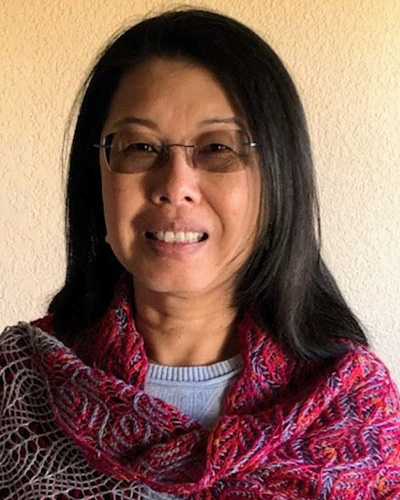
Sue Hum serves as Professor of English in the Department of English at the University of Texas at San Antonio (UTSA), College of Liberal and Fine Arts, where she has held significant administrative roles including Undergraduate Advisor of Record and Assistant Dean of Assessment for the Quality Enhancement Plan. Her research critically examines intersections of race, gender, and digital media through visual rhetoric and quantitative literacy frameworks. She investigates how racialized gazes operate in cultural artifacts like Disney's Mulan while developing pedagogical approaches for integrating numerical reasoning into professional writing instruction, bridging theoretical composition studies with practical classroom applications. Publications reveal consistent thematic evolution from foundational work in Asian American rhetoric (2006-2010) toward contemporary explorations of quantitative literacy in technical writing (2017), demonstrating sustained engagement with critical race theory's application to writing pedagogy and digital communication environments. Scientific Awards: President's Distinguished Award for Core Curriculum Teaching (2015) As Undergraduate Advisor of Record, she guided English majors through degree requirements while contributing to institutional assessment through the Quality Enhancement Plan. Her teaching portfolio spans undergraduate courses in composition and popular culture to graduate seminars on race/rhetoric and e-composition theory, reflecting deep commitment to curriculum development across educational levels.
Dr. Antony McCabe is a Lecturer in Computer Science who divides his time between academia and the Computational Biology Facility. His work focuses on bridging artificial intelligence with biomedical challenges through software development, data analysis, and user interface design. Lecturer in Computer Science Member of Computational Biology Facility Research Interests McCabe specializes in applying AI techniques like neural networks and large language models to biomedical problems. His contributions include: Developing the lcmsWorld 3D visualization software for mass spectrometry Advancing the Allele Frequency Net Database for HLA diversity analysis Creating immunoinformatics tools for ethnicity-specific vaccine design Building infrastructure for biomedical data processing and storage Research Trends His publications reveal a consistent focus on computational biology infrastructure (4/6 papers), AI applications in immunology (3/6), and software development for proteomics (2/6). Key themes include data standardization, ethnic diversity considerations, and visualization techniques. Current Projects He is currently tuning large language models to analyze biological literature through a Biotechnology & Biological Science Research Council (BBSRC) grant (2024-2026). Teaching McCabe co-ordinates the COMP222 module on computer game design while also teaching algorithmic game theory, programming languages, and human-centric computing.
Dr. Yuhan Jiang is an Assistant Professor in the Department of Built Environment at North Carolina A&T State University's College of Science and Technology. He serves as the Founding Director of the HUD Center of Excellence for Innovation in Affordable Housing and Sustainable Communities (CIAHSC). Dr. Jiang leads a multidisciplinary research team focused on integrating robotics, artificial intelligence, and Building Information Modeling in construction operations and infrastructure management. Ph.D. in Civil Engineering from Marquette University M.M. in Construction Management from Guangzhou University Additional Construction Management degree from Guangzhou University Dr. Jiang's research primarily focuses on artificial intelligence applications in architecture, engineering, construction, and operations (AECO). His work integrates robotics and remote sensing for data collection, computer vision and machine learning for data processing, and BIM, GIS, and AR/VR for data visualization. His research enables more efficient construction operations, building inspection, and infrastructure management. Additionally, he has extensive experience in community redevelopment planning and complex systems simulation, including investigating urban village formation mechanisms. Analysis of Dr. Jiang's recent publications reveals a strong focus on applying drone technology, computer vision, and deep learning to construction and infrastructure challenges. His work spans multiple domains including façade modeling, pavement evaluation, sidewalk inspection, earthwork calculation, and 3D reconstruction. A consistent theme across his research is the development of automated systems that improve efficiency, accuracy, and safety in construction and infrastructure management through AI and robotics. N.C. A&T and CoST Junior Faculty Teaching Excellence Award 2024-25 N.C. A&T and CoST Rookie Researcher of the Year Award 2024 ASCE Journal of Architectural Engineering Best Paper Award 2022 ASCE CI & CRC Joint Conference Best Paper Award 2024 AAAS HBCU Making and Innovation Showcase 1st Place 2024 CoST SciTech Week Innovation Challenge awards (2023-2025) N.C. A&T Provost's Faculty Fellow (2023 & 2024) Dr. Jiang has successfully secured over $4.5 million in research funding as PI or Co-PI, including a $2.5 million HUD Center of Excellence grant. He has mentored students who won 1st and 3rd place in the 2023 & 2024 Sci-Tech Week Innovation Challenge competitions and 1st place at the 2024 AAAS HBCU Making and Innovation Showcase. His funded projects span AI-driven BIM education tools, smart farming with robotics, drone-based façade modeling, and digital twin applications for infrastructure management. As Founding Director of the HUD Center of Excellence for Innovation in Affordable Housing and Sustainable Communities (CIAHSC), Dr. Jiang leads a multidisciplinary team focused on innovative approaches to affordable housing and sustainable community development. His lab work integrates drone technology, computer vision, and AI to create practical solutions for real-world construction and infrastructure challenges.
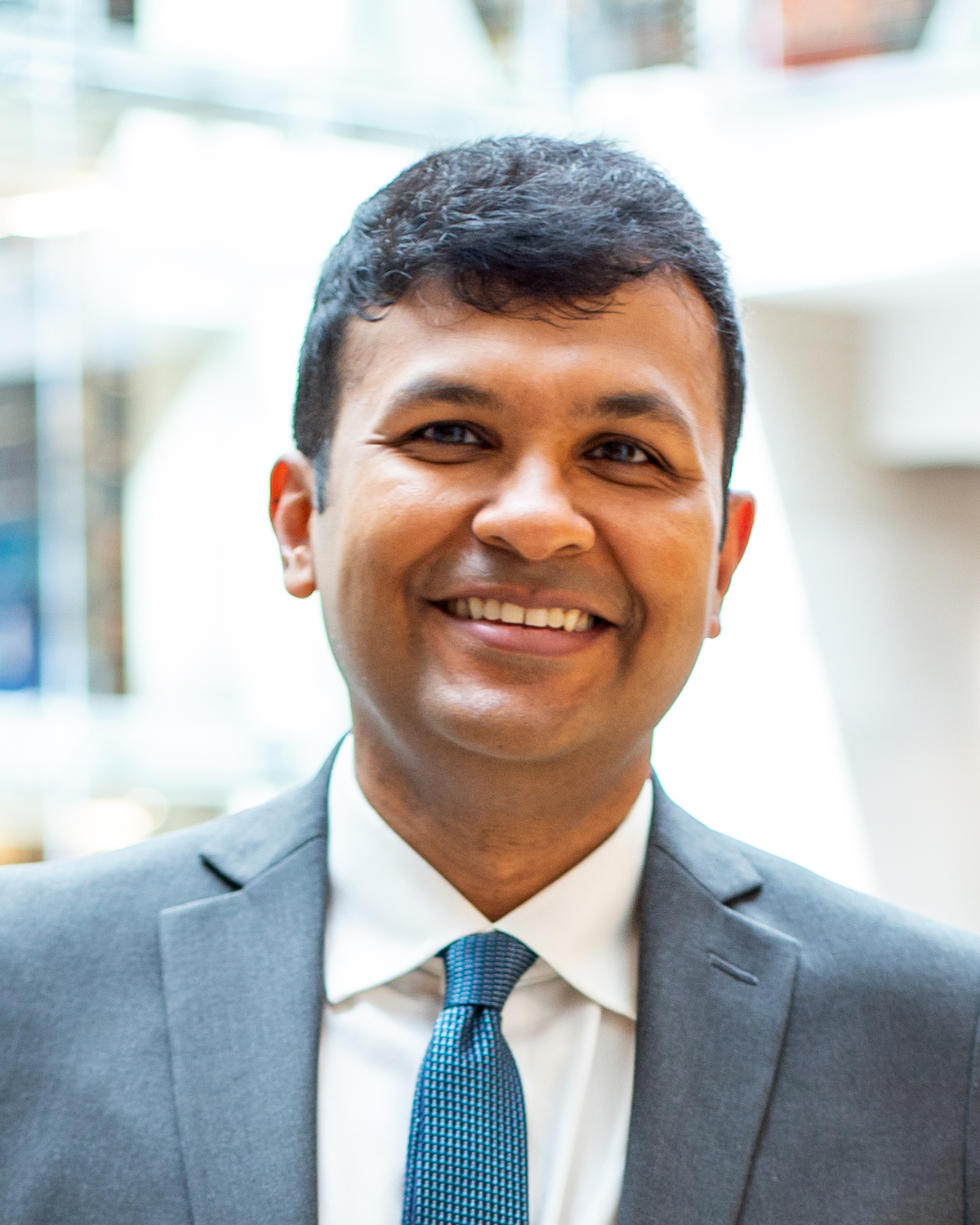
Dinesh Manocha is a Distinguished University Professor of Computer Science at the University of Maryland, with joint appointments in the Department of Electrical and Computer Engineering and the University of Maryland Institute for Advanced Computer Studies (UMIACS). He is also affiliated with the Maryland Robotics Center and the Institute for Systems Research. His educational background includes a Ph.D. in Computer Science from the University of California at Berkeley (1992) and a B. Tech in Computer Science and Engineering from the Indian Institute of Technology, Delhi, India (1987). Professor Manocha's research spans multiple domains with significant emphasis on: Computer Graphics and Visualization Robotics and Motion Planning Virtual and Augmented Reality Systems Geometric Computing Algorithms AI Applications for Autonomous Systems High Performance Computing His extensive publication record shows consistent innovation in multi-agent navigation, collision avoidance algorithms, and applications in virtual environments. Recent work focuses on trajectory prediction for autonomous vehicles and physics-based simulation for immersive experiences, with algorithms integrated into industry-standard systems like ROS (Robot Operating System). Among his numerous honors, Professor Manocha is recognized as: ACM, IEEE, AAAS, and AAAI Fellow Member of the IEEE VGTC Virtual Reality Academy Recipient of the Pierre Bézier Award from the Solid Modeling Association University of Maryland Distinguished University Professor Multiple best paper awards across premier conferences He has supervised 54 PhD students throughout his career and currently advises numerous graduate researchers. His research has attracted significant funding from NSF, Google, Amazon, Facebook, and industry partners. Notably, he co-founded Impulsonic, a company developing physics-based audio simulation technologies acquired by Valve Corporation in 2016. Professor Manocha leads the GAMMA research group, which continues to advance geometric algorithms with applications across multiple disciplines.
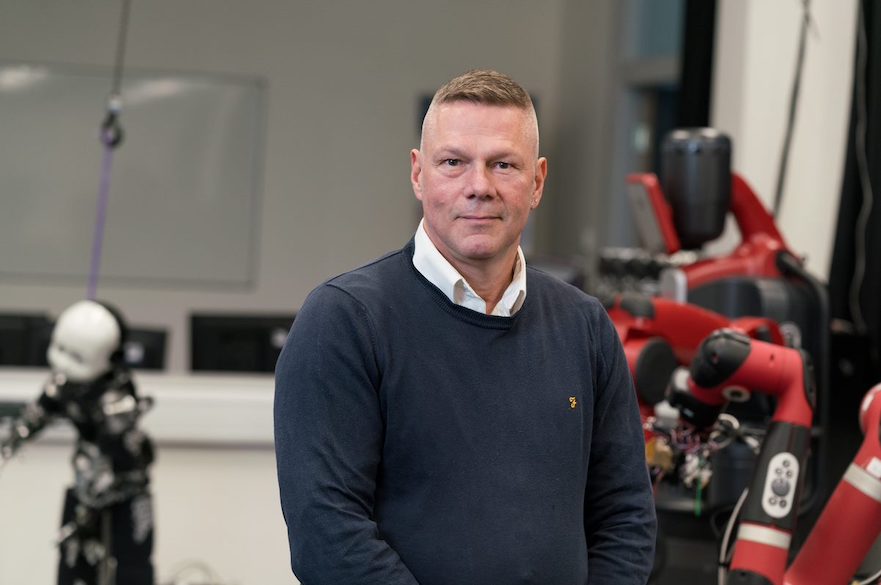
David Brown is a Professor in Interactive Systems for Social Inclusion at Nottingham Trent University's School of Science & Technology, Department of Computer Science. He serves as Director of the Computing and Informatics Research Centre (CIRC) and Research Group Leader for the Interactive Systems Research Group (ISRG). Director, Computing and Informatics Research Centre Research Group Leader, Interactive Systems Research Group Governor, Oak Field School for students with severe learning disabilities Conference Chair, International Conference on Disability, Virtual Reality and Associated Technology (ICDVRAT21) Associate Editor, Frontiers: Virtual Reality in Medicine Professor Brown's research focuses on developing inclusive technologies for people with disabilities. His work spans accessibility for students with learning, physical and sensory impairments; virtual reality applications for rehabilitation; multimodal affect recognition systems; social robotics for education; accessible visual programming toolkits; and serious games for developing physical and cognitive skills. His research is characterized by strong interdisciplinary collaboration and practical application in educational and healthcare settings. His recent publications demonstrate a consistent focus on applying emerging technologies like virtual reality, machine learning, and social robotics to address real-world challenges in accessibility and inclusion. The research shows a clear trajectory toward increasingly sophisticated multimodal systems that can detect user states and adapt accordingly, with applications ranging from autism support to mental health interventions. Extensive EU-funded research projects including Horizon 2020, Erasmus+, and EPSRC grants Notable projects: DIVERSIA, MaTHiSiS, Pathway, AI-TOP, EDUROB, No One Left Behind, Real Life, RISE Professor Brown has supervised numerous PhD students and collaborates extensively with international partners across Europe and Asia. His work bridges computer science, psychology, education, and healthcare to create technologies that promote social inclusion and improve quality of life for people with disabilities.
Andrea Di Falco serves as Professor and Director of Impact at the School of Physics and Astronomy, University of St Andrews. He leads the Centre for Biophotonics and maintains an active research group focused on cutting-edge photonics research. His institutional affiliations include editorial work for Photonics and Nanostructures: Fundamentals and Applications journal since 2013. University of St Andrews - School of Physics and Astronomy (Current) Centre for Biophotonics (Current) Photonics and Nanostructures: Fundamentals and Applications (Editor since 2013) Professor Di Falco's research spans multiple photonics domains with particular expertise in nano-photonics, metamaterials, plasmonics, and biophotonics. His work bridges fundamental optical physics with practical applications, especially in metasurface technology and flexible photonics. The research demonstrates strong interdisciplinary connections between physics, materials science, and biomedical applications, contributing to multiple UN Sustainable Development Goals. His recent publication portfolio shows a clear trend toward increasingly sophisticated metasurface applications, with growing integration of machine learning techniques for photonic design. The research spans fundamental optical physics, novel material development, and practical biomedical applications, demonstrating remarkable breadth while maintaining technical depth in photonics. EPSRC Fellowship (2010) for flexible metamaterials and plasmonics research ERC Consolidator Grant (2019) for biophotonic applications of optically trapped photonic membranes Professor Di Falco actively supervises postgraduate research students and has led numerous significant research projects, including the current Holographic Integrated Photonic Platform project (2024-2025). His research program has secured substantial funding from EPSRC, European Research Council, and Medical Research Council, demonstrating strong recognition of his work's significance and potential impact. His group maintains the SynthOpt research website as a hub for their collaborative work. The SynthOpt research group operates within the School of Physics and Astronomy at St Andrews, maintaining strong connections with both theoretical and experimental photonics researchers. The team focuses on developing novel photonic structures with applications ranging from fundamental optics to biomedical sensing and human-computer interaction technologies.
Tyler L Cocker is an Associate Professor in the Department of Physics & Astronomy at Michigan State University , pioneering ultrafast terahertz nanoscopy. His research focuses on developing lightwave-driven THz-STM to capture femtosecond-scale electron dynamics at atomic resolution, with recent work revealing molecular orbital dynamics and black phosphorus heterostructures. Education: Ph.D., University of Alberta (2012) B.Sc., University of Victoria (2006) His group explores ultrafast processes in quantum materials using complementary techniques like s-SNOM and THz spectroscopy, addressing fundamental questions about nanoscale charge transport and elementary excitations. Recent publications include Nature Photonics and Nature Nanotechnology papers on atomic-scale THz spectroscopy and interlayer transport in 2D materials. Awards include the 2024 DOE Early Career Award, 2021 ARO Young Investigator Award, and 2020 IRMMW-THz Young Scientist Award. Scientific Awards: DOE Early Career Award (2024) MSU Teaching Award (2023) ARO Young Investigator Award (2021) IRMMW-THz Young Scientist Award (2020) Jerry Cowen Endowed Chair (2019) The group has secured multiple grants from ONR, AFOSR, and DURIP, supporting development of third-generation THz-STM systems. Former students like S. Eve Ammerman (first PhD graduate, 2022) and Vedran Jelic (now at NRC Ottawa) have received prestigious fellowships and awards.
Professor Marilyn Lennon is a leading academic in the Department of Computer and Information Sciences at the University of Strathclyde , holding the title of Professor in Digital Health and Care. She founded and directs the Digital Health and Wellness Group (DHaWG) , focusing on multidisciplinary research for designing, evaluating, and implementing digital technologies that enhance individual and population health and wellbeing. First class BSc in Psychology (University of Glasgow, 1998) PhD in Computing Science (University of Glasgow, 2002) Postgraduate diploma in academic practice (Fellow of Higher Education Academy) With over two decades of experience in Human-Computer Interaction (HCI) , usability, and user-centered design, her research spans wearable and mobile technologies for home healthcare, including remote monitoring (predictive falls monitoring), remote diagnosis (colon capsule technology evaluations), and smart home solutions for social care. She specializes in addressing technical and social barriers to real-world health technology implementation, emphasizing robust yet rapid evaluation methods. Recent publications highlight her work in 3D healthcare visualization, telehealth implementation, and medication management systems. Her research combines lab-based usability testing with real-world ('in the wild') evaluations of technologies like smart home systems and telehealth solutions. Key trends include cross-disciplinary collaboration, accessibility for sensory-impaired individuals, and AI-driven healthcare innovations. Scientific Awards MyCity: Glasgow - Gamechanger Award (Gold Medal) 2025 Images of Research 2025 Shortlist Emerald Outstanding Paper Award 2013 Best Paper Award (most replicable scientific paper) 2013 As course director for the Masters in Digital Health Systems , she has supervised 5 PhD students (2 completed) and over 100 honors projects. Current projects include the No Need to Fall initiative funded by the Health Foundation (£400k) and the PREMIO project co-creating clinical trials in advanced breast cancer. She maintains active collaborations with NHS, charities, and international institutions like the University of Waterloo.
Arnab Nandi is a Professor in the Department of Computer Science & Engineering at The Ohio State University. His work bridges human interaction with data infrastructure, focusing on database systems, LLM-augmented analytics, and immersive query interfaces. Education: PhD in Computer Science & Engineering from the University of Michigan Leadership: Co-founder of OHI/O Hackathon Program and STEAM Factory interdisciplinary network Research spans human-in-the-loop data analytics , vibe querying (natural language + gestural interfaces), LLM integration into education, and climate response systems . Key projects include Omni (multimodal exploration), GestureDB , and Icarus (clinical pipelines). Recent publications analyze LLM-driven query stacks (HILDA 2025), video analytics (SIGMOD 2022), and data sunglasses for cognitive limits (HILDA 2025). Awards include NSF CAREER Google Faculty Research Award IEEE TCDE Early Career Award ACM Distinguished Member Advises students in database innovation , with alumni at Amazon, AWS, Roblox, and Meta. Teaches CSE 3241 (Database Systems), CSE 5889 (Software Startups), and CSE 5242 (Advanced Databases).
Valentino Catricalà is a scholar and contemporary art curator specializing in the relationship between artists and new technologies and media. He serves as a Lecturer in Curating at Manchester Metropolitan University's School of Digital Arts (SODA) and is the curator of the SODA gallery (Modal) in Manchester. His professional affiliations include director of the Art Section of the Maker Faire – The European Edition (the largest creativity and innovation event in Europe) and Art Consultant at Paris Sony CS Lab. Dr. Catricalà received his PhD from Roma Tre University and has been a visiting lecturer at prestigious institutions including ZKM (Karlsruhe), Tate Modern (London), University of Dundee, and LIMA (Amsterdam). His early career included founding and serving as artistic director of the Rome Media Art Festival at MAXXI Museum in Rome, promoted by Fondazione Mondo Digitale. His research focuses on media art, contemporary art practices involving emerging technologies, virtual reality, artificial intelligence, and the historical relationship between art and technology. Catricalà examines how technological developments reshape artistic practices and human perception, with particular attention to the critical perspectives artists bring to technological innovation. His work often explores themes of posthumanism, media archaeology, and the ethical dimensions of digital culture. His recent publications reveal a clear trajectory toward increasingly sophisticated examinations of AI and VR in artistic contexts. The 2022 article 'HyperInterfaces - HyperMedia' represents his most current thinking on AI beyond anthropocentrism, while his 2021 book 'The Artist as Inventor' reframes artists as active participants in technological innovation rather than passive recipients. His work consistently bridges historical perspectives with cutting-edge technological developments. Member of the advisory board of the Media Art History Conference As an independent curator, Catricalà has worked with major institutions including the Hermitage (St. Petersburg), Minnesota Street Project (San Francisco), New York Media Center, Fondazione Stelline (Milan), MAXXI Museum (Rome), Palazzo delle Esposizioni (Rome), Ca' Foscari (Venice), and international venues in India and Romania. His curatorial practice is deeply integrated with his academic research, creating a feedback loop between theoretical investigation and practical artistic engagement.
Emily Oh Navarro is a Continuing Lecturer in the Department of Informatics at the Donald Bren School of Information and Computer Sciences, University of California, Irvine. She has been actively involved in software engineering education, focusing on innovative teaching methods and simulation-based learning environments. Dr. Navarro earned her Ph.D. in Information and Computer Sciences from UC Irvine in 2006, with her dissertation titled "SimSE: A Software Engineering Simulation Environment for Software Process Education." She also holds an M.S. in Information and Computer Sciences and a B.S. in Biological Sciences, both from UC Irvine. Dr. Navarro's research primarily focuses on software engineering education, particularly using simulation and game-based approaches to teach software processes. Her work centers around SimSE, an educational software engineering simulation environment designed to help students learn and practice software engineering processes in an interactive, graphical setting. She has extensively explored how learning theories can be applied to improve software engineering education, investigating various educational approaches and their effectiveness. Her research demonstrates how simulation environments can overcome the limitations of traditional lectures and small-scale class projects by allowing students to experience complex software engineering processes that would be infeasible to practice in real-world academic settings. Dr. Navarro's publications reveal a consistent focus on simulation-based learning tools for software engineering education. Her work spans from theoretical explorations of learning theories to practical implementations of educational tools like SimSE and Problems and Programmers. She has conducted multi-site evaluations of her educational tools, demonstrating their effectiveness across different institutions and student populations. Her research shows progression from conceptual frameworks to practical implementations and rigorous evaluations, establishing her as a significant contributor to the field of software engineering education. Dr. Navarro teaches numerous courses in software engineering and design, including: Informatics 43: Introduction to Software Engineering Informatics 113: Requirements Analysis and Engineering Informatics 117: Project in Software System Design Informatics 121: Software Design I Informatics 122: Software Design II Informatics 191: Senior Design Project ICS 45J: Programming in Java ICS 139W: Critical Writing on Information Technology SWE 241P: Applied Data Structures and Algorithms SWE 245P: GUI Programming SWE 246P: Mobile Programming SWE 272P: Project Management Her teaching methodology reflects her research interests, emphasizing practical experience with software engineering processes through simulation-based learning. While specific information about her advising and grants is limited in available materials, her extensive research on educational methods suggests involvement in educational research projects and likely mentorship of students in software engineering projects. Dr. Navarro's primary research contribution is the SimSE project, which has evolved through multiple iterations and evaluations. This simulation environment represents a significant innovation in software engineering education, addressing the critical gap between theoretical knowledge and practical application in software process management. Her work continues to influence how software engineering is taught at UC Irvine and potentially at other institutions through her multi-site evaluations.
Allen Hsiao MD, FAAP, FAMIA is Professor of Pediatrics, Biomedical Informatics and Data Science, and Emergency Medicine at Yale School of Medicine. He serves as Chief Health Information Officer (CHIO) for Yale School of Medicine and Yale New Haven Health System, and as Vice Chair of Clinical Systems in Biomedical Informatics & Data Science. BA in Biomedical Ethics and MD from Brown University Pediatrics residency at Yale-New Haven Children's Hospital Fellowships in Pediatric Emergency Medicine and Medical Informatics at Yale His research focuses on leveraging health information technology to improve care delivery, with emphasis on electronic health records, clinical decision support, natural language processing, and AI applications. He actively explores how informatics can optimize systems, improve transitions of care, and advance health equity through diverse clinical trial participation. His work spans pediatric emergency medicine, gastroenterology, child abuse detection, and opioid safety. Dr. Hsiao's recent publications demonstrate leadership in AI-augmented clinical decision support, EHR-based machine learning models, and pandemic response infrastructure. His team has developed innovative tools for child abuse identification, gastrointestinal bleeding risk prediction, and collaborative research data platforms. 56 Hospital and Health System CMIOs and CNIOs to Know (Becker's Healthcare, 2023) Healthcare Diversity Leader Award (National Diversity Council, 2023) 48 CMIOs and CNIOs to Know (Becker's Hospital Review, 2022) Norman J. Siegel Faculty Award (Yale School of Medicine, 2022) As principal investigator and co-investigator on NIH and AHRQ-funded grants, he examines health information technology's impact on healthcare quality. He co-directs Yale's CTSA Informatics Core, working with Yale Center for Clinical Investigations to equip researchers with EHR (Epic) and clinical trials management (OnCore) tools. His leadership extends to national committees including American Academy of Pediatrics, HIMSS, and Children's Hospitals Association.