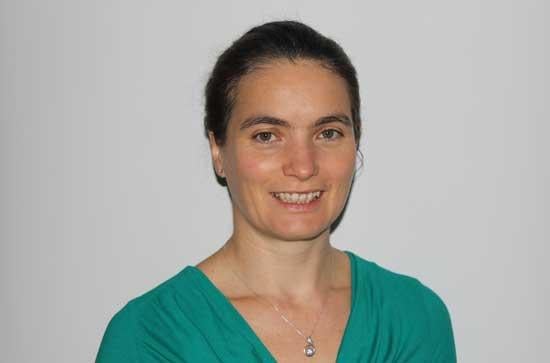
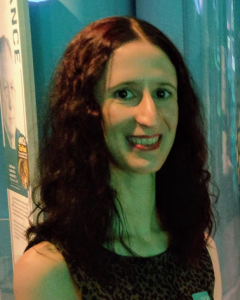
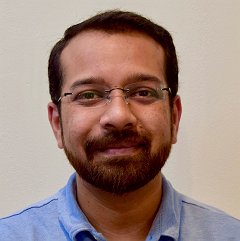
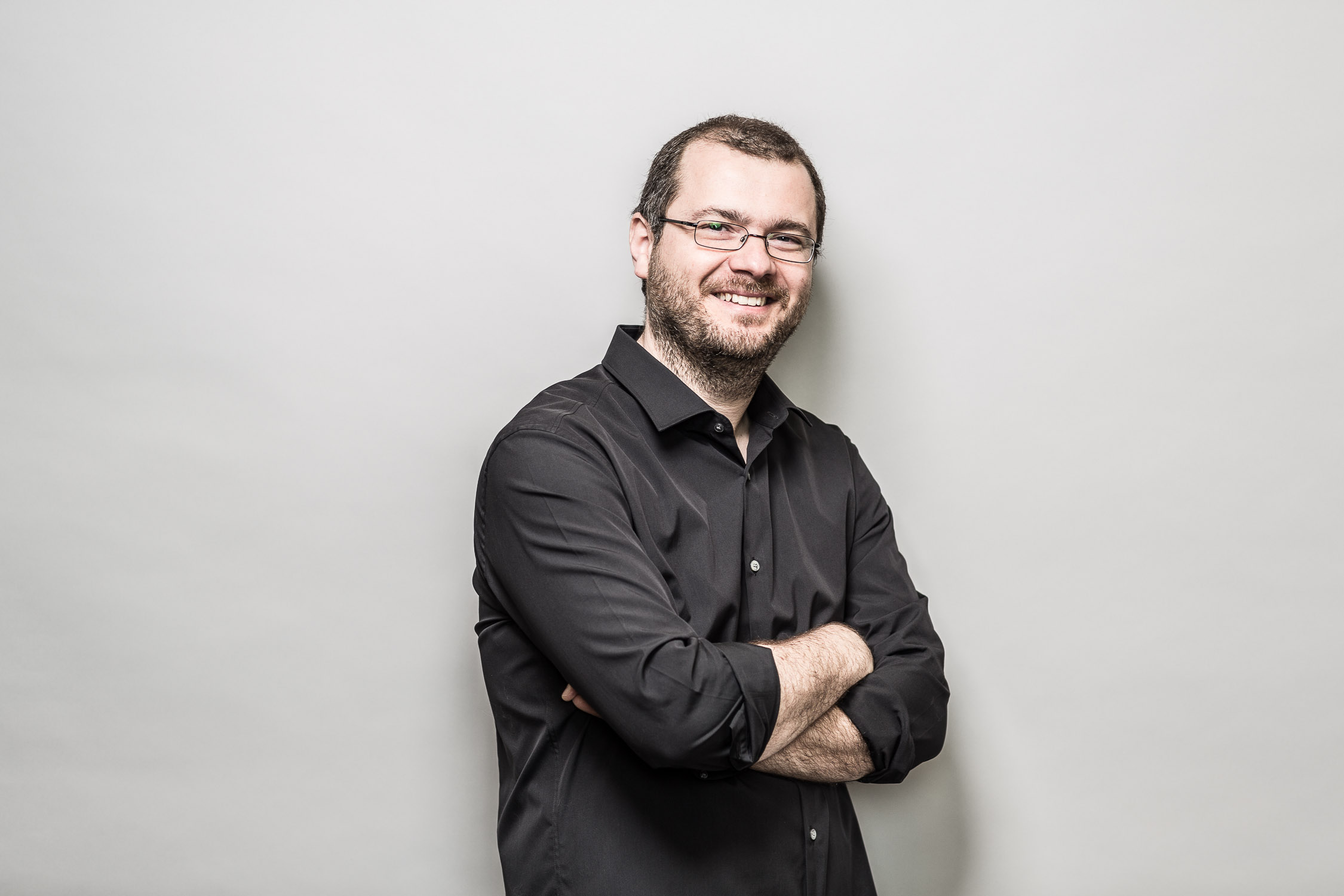
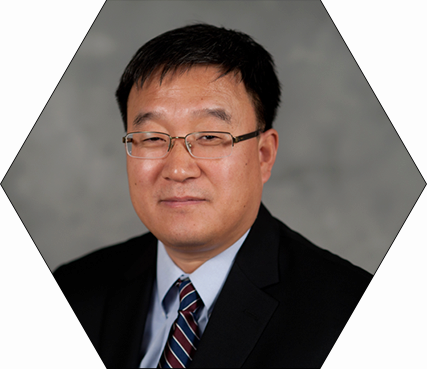
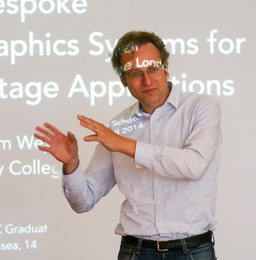
Prof. Dr.-Ing. Ahmad Osman is a Professor at the Saarland University of Applied Sciences (htw saar), specializing in Test Technologies and Test Methods within the Faculty of Engineering. He also holds an Adjunct Professor position at Laval University in Quebec, Canada, in the Department of Electrical Engineering and Computer Science. His research focuses on Artificial Intelligence applications in Signal and Image Processing for Non-destructive Testing (NDT) , with extensive work on Deep Learning , 3D Ultrasound Tomography , and Sensor Data Fusion in industrial contexts. Engineering Artificial Intelligence Signal Processing Image Processing Non-destructive Testing Quality Control Augmented Reality Osman leads the AutomaTiQ research group and serves as Head of the Algorithms/Signal and Data Processing Department at Fraunhofer IZFP . His recent publications (2017–2022) emphasize Deep Learning for defect detection in CFRP , Terahertz Imaging for artwork diagnostics, and Acoustic Sensors for agricultural quality control. He has organized international conferences on Structural Health Monitoring and contributed to Springer books on NDT technologies. His projects include ComforTex-AI (2024) and development of 3D positioners for ultrasound measurements. Collaborations span institutions in Germany, Canada, Italy, and Brazil, with advisory roles in the German Society for NDT and technical committees for conferences in Montreal and Egypt.
Rosemary Monahan is a Professor in the Department of Computer Science at Maynooth University and an affiliate of the Hamilton Institute. She holds BSc and MSc degrees from University College Dublin and a PhD from Dublin City University. As Maynooth University's institutional lead for ADAPT (SFI Research Centre for AI-Driven Digital Content Technology), she focuses on advancing software dependability through formal methods and AI integration. Her research interests include safety-critical systems, dependable software, formal verification, and computational thinking education. She co-founded the VerifyThis competition series and leads projects such as MAIVV (Modular AI Verification and Visualisation) funded by SFI, and VALU3S (Verification and Validation of Automated Systems) funded by Horizon 2020. She has secured over €2.5M in EU funding for the Erasmus Mundus programs in dependable software systems. Monahan’s educational contributions include pioneering computational thinking resources (CoCoA and InSPECT projects) and teaching modules on software verification and rigorous software processes. She supervises PhD students in data science and advanced networks and collaborates with institutions like INRIA, Microsoft Research, and Amazon Web Services. Her professional roles include editorships in journals like Science of Computer Programming and leadership in conferences like iFM and FMICS. She actively promotes gender equality in computing through initiatives like INGENIC and TechMate toolkits.
Joachim Weickert is a Professor of Mathematics and Computer Science at Saarland University where he heads the Mathematical Image Analysis Group since 2001. He received his diploma and Ph.D. in mathematics from the University of Kaiserslautern (1991, 1996), and a habilitation degree in computer science from the University of Mannheim (2001). Prior to his current position, he worked as a research assistant at the University of Kaiserslautern, as a post-doctoral researcher at the universities of Utrecht and Copenhagen, and as an assistant professor at the University of Mannheim. His research focuses on image processing, computer vision, and scientific computing, with special emphasis on techniques based on partial differential equations, variational principles, wavelets, morphological and nonlocal methods, as well as neuroexplicit approaches. He has developed mathematical models and efficient numerical algorithms for image restoration, enhancement, segmentation, compression, optic flow computation, stereo reconstruction, shape from shading, and signal processing methods for tensor fields. These ideas have been successfully applied in industry, biomedical image analysis, and other fields. Analysis of his recent publications reveals a strong trend toward combining traditional PDE-based methods with modern deep learning approaches, particularly in the areas of image inpainting and compression. His work increasingly explores the connections between numerical algorithms for partial differential equations and neural network architectures, demonstrating how mathematical foundations can inform cutting-edge AI techniques while maintaining strong theoretical guarantees. Gottfried Wilhelm Leibniz Prize (2010), considered the most important research award in Germany ERC Advanced Grant (2017) for "Inpainting-based Compression of Visual Data" Elected member of Academia Europaea - The Academy of Europe Jan Koenderink Prize for Fundamental Contributions in Computer Vision (2014) Multiple DAGM Prizes and Best Paper Awards throughout his career AAIA Fellow (2021) and Highly Ranked Scholar (2024) distinctions Professor Weickert has supervised over 250 bachelor's and master's theses and initiated the Master Programme in Visual Computing at Saarland University, the first of its kind in Germany taught in English. He has established numerous interdisciplinary collaborations with colleagues from medicine, bioinformatics, pharmacy, physics, mechatronics, and mechanical engineering. As Principal Investigator for Visual Computing within the Multimodal Computing and Interaction Cluster of Excellence, and former dean of the Faculty of Mathematics and Computer Science (2008-2010), he has played a significant leadership role in advancing visual computing research and education. He heads the Mathematical Image Analysis Group, which has been at the forefront of developing mathematical methods for image analysis. The group maintains strong connections with both theoretical mathematics and practical applications, bridging the gap between fundamental research and real-world implementation across various domains including medical imaging, industrial inspection, and multimedia processing.
Olivia Di Matteo serves as an Assistant Professor in the Department of Electrical and Computer Engineering within UBC's Faculty of Applied Science, leading the Quantum Software and Algorithms Research (QSAR) group since her January 2022 appointment. Her academic foundation includes a BSc from Lakehead University and MSc/PhD in Physics (Quantum Information) from the University of Waterloo, completed in 2019. Dr. Di Matteo's research centers on quantum software engineering , with pioneering work in quantum compilation , circuit optimization , and debugging tools . She champions open-source quantum frameworks and develops accessible educational resources to democratize quantum computing. Analysis of her 15 most recent publications (2021-2025) reveals dominant trends in quantum programming infrastructure, particularly circuit analysis (33%), bug classification (20%), and qubit network optimization (15%), with strong emphasis on practical software tooling over theoretical physics. No scientific awards were documented in the source materials. She advises graduate students in the QSAR group while contributing to open-source quantum ecosystems through projects like PennyLane and The Ionizer transpiler, and teaches courses including CPEN 400Q (Gate-model quantum computing) and ELEC 221 (Signals and Systems). The QSAR group operates at the intersection of quantum software development and education, focusing on making quantum programming accessible through visual tools, real-time debugging environments, and hardware-agnostic compilation techniques.
Samuel Jean Bassetto is an Associate Professor in the Department of Mathematics and Industrial Engineering at Polytechnique Montréal. He serves as Director of the Continuous Improvement Laboratory (LABAC) and holds membership in multiple prestigious research groups including the Research Group on Globalisation and Management of Technology (GMT), Poly-Industries 4.0 Laboratory, Interuniversity Research Centre on Enterprise Networks, Logistics and Transportation (CIRRELT), and Institute for Data Valorization (IVADO). Dr. Bassetto's research spans multiple disciplines, focusing on continuous improvement through the integration of engineering, artificial intelligence, cognitive science, psychology, and design. His primary sphere of excellence is in New Frontiers in Information and Communication Technologies, with secondary expertise in Modeling and Artificial Intelligence and Human Health. He develops tools that place humans at the center of technology to enhance organizational performance while respecting human rhythms and cognitive limitations. His recent publication portfolio reveals a strong interdisciplinary approach, with research bridging industrial engineering, cognitive neuroscience, and AI ethics. His work addresses practical challenges in lean manufacturing assessment, racial bias in medical AI systems, cognitive data collection in natural environments, and condition monitoring for industrial machinery. The research consistently demonstrates a commitment to developing practical solutions that integrate human factors with technological innovation. NSERC Synergy Prize for Innovation recipient Principal investigator on multiple research grants from NSERC, FRQ, and MITACS Collaborations with over a dozen institutions across multiple countries Supervision of over 150 highly qualified personnel throughout his career Dr. Bassetto teaches specialized courses including CAP7011 (Creativity in Research), IND8444 (Continuous Improvement), IND8203 (Industrial Launch), and previously taught IND8178 (Production). His teaching philosophy emphasizes practical application, with courses featuring hands-on exercises, real-world scenarios, and gamification techniques to enhance learning. His supervision portfolio includes numerous Ph.D. and Master's students working on topics ranging from human-technology collaboration to reinforcement learning for production management. Through LABAC, Dr. Bassetto leads research initiatives focused on developing human-centered tools for continuous improvement in organizational settings. The laboratory conducts projects related to industrial IoT applications, cognitive aspects of process improvement, and the development of practical frameworks for organizations to enhance performance while maintaining respect for human rhythms and cognitive capabilities.
Changjian Li is an Assistant Professor in the School of Informatics at the University of Edinburgh. He leads the GraphViX Group (Graphics, Vision and X) and is a member of the Institute of Perception, Action and Behaviour (IPAB). His research spans computer graphics, computer vision, and human-computer interaction with a focus on 3D generation and analysis. Education: Bachelor's Degree from Shandong University (2014) Ph.D. from the University of Hong Kong (2019) under Prof. Wenping Wang Postdoc at University College London (UCL) with Prof. Niloy Mitra Starting Researcher position at Inria with Dr. Adrien Bousseau Research Interests: Changjian's research focuses on sketch-based 3D modeling, CAD modeling, point cloud processing, and medical imaging applications. He develops systems that bridge intuitive sketching with precise CAD workflows, enhances 3D animation pipelines, and applies neural methods to sparse medical data reconstruction. Scientific Recognition: Best Paper Honorable Mention Award (MICCAI 2021) CADTalk selected as Highlight (CVPR 2024 top 10%) ACM SIGGRAPH Asia 2018 cover image selection ACM SIGGRAPH Asia 2015 technical paper highlight CVPR 2019 poster highlighted in 'Computer Vision News' Advising & Collaborations: He mentors postdocs and PhD students including Duolikun Danier, Haocheng Yuan, Ankan Bhunia, and Lei Zhong. Former advisees include Salvatore Esposito (now at Edinburgh), Guangshun Wei (Shandong University), and Mingjun Yang (University of Melbourne). Collaborates with Oisin Mac Aodha, Hakan Bilen, and Niloy Mitra. Professional Service: Currently serves as Associate Editor for IEEE TVCG and participates in program committees for SIGGRAPH Asia, SIGGRAPH, EuroGraphics, and Geometry Design and Computing (GDC) conferences.
Muhammad Ali Gulzar is an Assistant Professor in the Computer Science Department at Virginia Tech and an Amazon Scholar at Amazon Web Services. His research focuses on improving developer productivity through automated debugging and testing for applications in emerging domains, including data-intensive software such as dataflow programs, ML/AI applications, and computational notebooks. Education Ph.D. in Computer Science from University of California, Los Angeles (Google Ph.D. Fellow 2017-2020) Research Interests Gulzar's research spans three primary areas: (1) automated tracking-code localization techniques in web applications, (2) re-engineering testing and debugging for data-intensive applications, and (3) advancing current testing and debugging practices in Federated Learning Applications. His work addresses the challenges of debugging in complex systems where traditional approaches fail due to the scale and distributed nature of modern applications. His research has significant implications for improving software quality, developer productivity, and accessibility in web applications. Research Trends Recent publications demonstrate a strong focus on debugging and testing challenges in emerging application domains. His work bridges traditional software engineering with machine learning, data-intensive systems, and web technologies. Notably, he has made significant contributions to Federated Learning debugging (FedDebug), accessibility challenges in ad-driven web applications, and semantic caching for Large Language Models. His approach often combines novel algorithmic insights with practical implementations that address real-world challenges in software development and maintenance. Scientific Awards Google Ph.D. Fellow (2017-2020) $1.1 million NSF award for Federated Learning research ACM CCS 2024 Distinguished Artifact Award Advising and Grants Gulzar leads a productive research group with multiple students contributing to publications in top-tier venues. His NSF-funded research on Federated Learning demonstrates his ability to secure competitive funding for innovative projects. His advising style appears to emphasize practical impact alongside theoretical contributions, with students often taking lead roles in publications. Current research directions include debugging techniques for Large Language Models, accessibility challenges in modern web applications, and novel testing approaches for distributed data processing systems.
Esa Rahtu is a Professor in the Department of Computer Science at Aalto University, Finland. His research focuses on computer vision, machine learning, and deep learning applications. He leads projects in image coding, neural networks, 3D reconstruction, object pose estimation, and anomaly detection. Rahtu has contributed to over 98 research outputs since 2017, with recent work emphasizing Gaussian splatting for SLAM, neural radiance fields, and hybrid video codecs for human-machine compatibility. His expertise spans visual-inertial odometry (e.g., ADVIO dataset), LiDAR-based place recognition, and manufacturing quality control systems. Key areas include: 3D scene reconstruction using Gaussian splatting techniques Deep learning models for anomaly detection in industrial processes Hybrid video codecs optimizing human perception and machine processing Multi-sensor fusion for robotic navigation and indoor mapping Notable datasets include ADVIO for visual-inertial odometry and FIORD for 3D reconstruction benchmarking. His research aligns with UN SDG 9 (Industry, Innovation & Infrastructure) and SDG 4 (Quality Education) through advancements in smart manufacturing and educational technology. Rahtu has received continuous research funding, including a grant period from April to June 2018. His work emphasizes practical applications, collaborating on real-world challenges like paper manufacturing quality control and smartphone-based 3D reconstruction.
Dr. Yelda Turkan is an Associate Professor in the School of Civil and Construction Engineering at Oregon State University, where she leads research in automation, computer vision, and machine learning for sustainable infrastructure. She holds a PhD from the University of Waterloo and dual BS degrees in Civil Engineering and Geomatics Engineering from Istanbul Technical University. Her work focuses on leveraging lidar, digital twins, and BIM to improve construction operations and decision-making in the built environment. She has secured over $4M in grants from NSF, FHWA, and other agencies, and currently leads the NSF Convergence Accelerator-funded 'Deep Reality' project for AI-driven infrastructure management. Education: Ph.D., Civil Engineering, University of Waterloo, 2012 M.S., Engineering Informatics & Remote Sensing, Istanbul Technical University, 2006 B.S., Civil Engineering (double major in Geomatics Engineering), Istanbul Technical University, 2005/2003 Professional Roles: Vice President, International Association for Automation and Robotics in Construction (IAARC) Chair, ASCE Computing Division Education Committee Associate Editor, ASCE OPEN Journal Her research emphasizes automation in construction quality control, infrastructure inspection via drones and lidar, and immersive education tools using VR/AR. Recent projects include automated curb ramp compliance analysis, wildfire impact modeling, and digital twin development for timber structures. She has published over 80 peer-reviewed articles and actively promotes computing integration in civil engineering education and professional practice.
Dr. Guangliang Cheng is an Associate Professor in the Department of Computer Science at the University of Liverpool. His research focuses on deep learning, computer vision, and perception algorithms with applications in remote sensing, medical imaging, and autonomous systems. Prior to his current role, he served as a vice research director in the Autonomous Driving Group at SenseTime and completed postdoctoral research at the Aerospace Information Research Institute, Chinese Academy of Sciences. Ph.D. in Pattern Recognition from the National Laboratory of Pattern Recognition (NLPR), Institute of Automation, Chinese Academy of Sciences (CASIA) Postdoctoral Researcher at Aerospace Information Research Institute, Chinese Academy of Sciences (2017–2019) Dr. Cheng’s research integrates computer vision and deep learning to address challenges in semantic segmentation, domain adaptation, and robust detection. Recent work explores wavelet-based multimodal fusion for remote sensing and attention-guided architectures for medical imaging. His 2025 publications span journals like GIScience & Remote Sensing and Knowledge-Based Systems , emphasizing scalable solutions for geospatial and biomedical applications. In 2025, Dr. Cheng’s article trends highlight remote sensing semantic segmentation, cross-domain medical imaging, and drone-based fire detection. His collaborations span institutions such as SenseTime, Chinese Academy of Sciences, and University of Liverpool teams, focusing on frequency-domain fusion, attention mechanisms, and GPU optimization. As a supervisor, Dr. Cheng seeks highly motivated PhD students to join projects supported by scholarships including the Centres for Doctoral Training (CDT) and Duncan Norman Scholarship. He serves as Module Co-ordinator for COMP338: Computer Vision (2024–2025) and actively reviews for top-tier journals and conferences.
Inigo Flores Ituarte is a Research Professor at Tampere University's Faculty of Engineering and Natural Sciences, affiliated with the Automation Technology and Mechanical Engineering department. He leads the Digital Design and Manufacturing (D2M) research lab, focusing on sustainable manufacturing and twin-transition strategies integrating digital and green technologies. His work emphasizes optimization-driven design, additive manufacturing innovations, and AI-driven expert systems to enhance energy efficiency and reduce environmental impacts. Key research pillars include: Pillar 1: Twin-transition in Engineering Design and Manufacturing Processes, addressing sustainable manufacturing and intelligent systems Pillar 2: Development of open D2M systems and Process-Structure-Property-Performance (PSPP) linkages in advanced materials His research explores multi-disciplinary optimization combining model-based simulations and data-driven techniques. Notable contributions include generative AI integration in CAD systems, cognitive manufacturing systems, and cost-effective process monitoring using CNN-based methods. Inigo's work emphasizes environmental sustainability, with a focus on reducing manufacturing's energy consumption (54% of global use) and CO2 emissions. He advocates for interconnected material systems, smart manufacturing processes, and AI-assisted decision-making to achieve cognitive intelligence in industrial operations. His D2M lab's overarching goal is to maximize product/process performance while improving cost-effectiveness and minimizing environmental footprints. Recent projects include railway bogie demonstrators via multi-material deposition and sensor systems leveraging IoT and ChatGPT integration.
Vassilios Tzerpos is an Associate Professor at the Lassonde School of Engineering, York University, where he has been since 2001. He holds a Ph.D. in Computer Science from the University of Toronto (2001). His research focuses on audio processing for musical applications, deep learning, digital signal processing, machine listening, and software engineering education. He directs the APTLY lab exploring music-technology intersections and leads the LaSSoftE lab developing socially-oriented software solutions. Education: Ph.D. in Computer Science, University of Toronto, 2001 Research Highlights: Dr. Tzerpos' work spans music information retrieval (e.g., automatic music classification), synthetic speech detection using neural networks, and software engineering pedagogy. His recent projects include Music-STAR for audio re-instrumentation and OER-based learning path creation systems. He has pioneered methods in design pattern detection and software clustering evaluation. Grants & Labs: Leads two research groups: APTLY (music-tech) and LaSSoftE (social impact software). Active in developing adaptive cybersecurity solutions against DoS attacks and refining software architecture recovery techniques. Key Themes in Publications: Recent work emphasizes machine learning applications in music technology and cybersecurity, with foundational contributions to software clustering methodologies and design pattern detection algorithms. His work bridges theoretical computer science with practical applications in education and creative industries.
Jianjun (Jan) Shi is the Carolyn J. Stewart Chair and Professor at the H. Milton Stewart School of Industrial and Systems Engineering (ISyE) and holds a joint appointment with the George W. Woodruff School of Mechanical Engineering at Georgia Institute of Technology. He previously served as the G. Lawton and Louise G. Johnson Chair Professor of Engineering at the University of Michigan. His research focuses on system informatics and control for manufacturing and service systems, with notable contributions to quality improvement, cyber-physical systems, and data-driven methodologies. B.S. & M.S. in Electrical Engineering, Beijing Institute of Technology (1984–1987) Ph.D. in Mechanical Engineering, University of Michigan (1992) Dr. Shi’s research interests include process modeling, control systems, and quality engineering. He pioneered methodologies for in-process quality improvement and developed advanced frameworks for high-dimensional data analysis in manufacturing. His work integrates statistical methods, machine learning, and system informatics to enhance operational efficiency and product quality. He has published over 150 peer-reviewed papers and secured $19 million+ in research grants from NSF, DOE, and industry partners. His lab, the System Informatics and Control Group, collaborates with automotive, aerospace, and pharmaceutical sectors. Shi leads initiatives such as the Quality Science Center at the Chinese Academy of Sciences and serves on editorial boards of journals like IIE Transactions and ASME Transactions . Recipient of the IIE Albert G. Holzman Distinguished Educator Award (2011) Fellow of INFORMS, ASME, and IIE Academician of the International Academy for Quality Shi advises 26 Ph.D. graduates, many of whom hold faculty positions or leadership roles in industry. His research group’s innovations have been implemented in global manufacturing systems, yielding significant economic impacts. Current work includes 4D printing, cyber-physical system resilience, and federated learning for industrial data.
Tim Weyrich is Professor of Visual Computing (part-time) at University College London and Professor of Digital Reality at Friedrich-Alexander University Erlangen-Nürnberg. He leads the Digital Reality Lab and has affiliations with the Virtual Environments and Computer Graphics group at UCL, Eurographics, and the EPSRC Doctoral Training Centre (SEAHA). Previously, he held a Postdoctoral Teaching Fellowship at Princeton University. Research Interests: Content creation and computational photography Appearance modeling and fabrication Point-based graphics and cultural heritage analysis Digital humanities and 3D printing Article Trends: Recent work focuses on neural radiance fields (FruitNeRF++), 3D Gaussian splatting, mmWave radar inverse rendering, and texture anomaly detection. Applications span autonomous systems, cultural heritage, and medical imaging. Scientific Awards: Best Paper Honourable Mention (BMVC 2022) Best Student Paper Award (EG Workshop on GCH 2014) Honorable Mention (Eurographics 2011) Best Student Paper Honourable Mention (BMVC 2018) ACM SIGCHI Best Paper Honourable Mention (CHI 2013)
Nabil Aouf is a Professor of Robotics and Autonomous Systems in the Department of Electrical and Electronic Engineering at City, University of London, a position he has held since January 2019. Previously, from 2006 to 2018, he was Professor of Autonomous Systems at Cranfield University’s Defence and Security campus, where he also served as Head of the System and Autonomy Group and Research Lead of the Centre of Electronic Warfare, Information and Cyber. He earned his PhD in Electrical Engineering from McGill University Faculty of Engineering between 1999 and 2002. His research focuses on Robotics, Autonomous Systems, UAV Navigation, Computer Vision, and Fault-Tolerant Control . Key areas include visual odometry, sensor fusion (vision/IMU, RGBD, thermal-visible), robust control for UAVs, fault diagnosis in inertial systems, 3D perception, and autonomous landing. His work integrates theoretical control methods with real-time implementation in aerospace and defense contexts. His recent publications reflect a strong emphasis on robust optimization, multispectral vision, and real-time autonomous navigation. Trends indicate a focus on enhancing autonomy under uncertainty—through illumination-invariant stereo matching, L∞ optimization, and robust feature matching—particularly for UAVs operating in challenging environments. Nabil Aouf has collaborated extensively with researchers such as M. Richardson, O. Araar, T. Mouats, and M. Boulekchour across numerous projects in UAV control, sensor fusion, and autonomy. While no scientific awards are listed in the provided text, his leadership roles and sustained publication record in high-impact journals and conferences underscore his academic contributions. He has supervised or collaborated with several advisees including S.H. Almutairi, L. Chermak, I. Vitanov, and D. Nam, contributing to both theoretical developments and practical implementations in autonomous systems. His work has applications in aerospace, defense, planetary exploration, and critical infrastructure inspection.