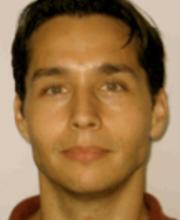
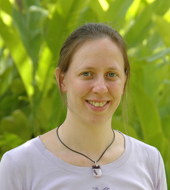
Maxim Romanov heads 'The Evolution of Islamic Societies' project at University of Hamburg's Asia-Africa-Institut, funded by DFG's Emmy Noether Program. Former positions include senior research fellow at KITAB Project and University of Vienna. Research reconstructs social history of Islamic world (c.600-1600 CE) through computational analysis of Arabic chronicles and biographical collections. Research Focus: Digital humanities approaches to premodern Islamic history including OCR development for Arabic manuscripts, corpus linguistics, and geospatial modeling of historical data. Technical Contributions: Developed OpenITI corpus infrastructure, al-Ṯurayyā gazetteer system, and computational methods for large-scale historical text analysis. Recent work enhances NLP for classical Arabic with OCR accuracy exceeding 90%.
Vanessa Bowden is a Senior Lecturer in the School of Psychological Science at The University of Western Australia. She serves as Graduate Research Coordinator for the School, Deputy Director of the Master of Industrial and Organisational Psychology program, and Co-Director of the Human Factors and Applied Cognition Laboratory. Her academic credentials include a PhD from The University of Western Australia and a Graduate Diploma in Human Factors and Safety Management Systems from the University of South Australia. Dr. Bowden's research expertise spans multiple domains within human factors and cognitive psychology. Her primary research interests include: Human interaction with technological systems Automation design and human-automation interaction Driver distraction and transportation safety Cognitive processes in complex work settings Situation awareness and workload management Prospective memory in applied contexts Her recent research has focused on understanding how humans interact with automated systems across various domains, from driving to air traffic control. Dr. Bowden has developed computational models of human decision-making with automated advice and has investigated the impact of automation transparency on operator performance. Her work has important implications for designing safer technological systems that optimize human performance. Dr. Bowden has received significant research funding, including an Australian Research Council Discovery grant (2024) for $924,198 for "A Unified Computational Model of How Humans Use Automated Advice" and multiple Department of Defence grants. Her research has been published extensively in top-tier journals in human factors and cognitive psychology. She has supervised numerous research students and currently accepts PhD and other Higher Degree by Research students. Dr. Bowden teaches several courses including Psychology of Training (PSYC5573), Industrial and Organisational Psychology (PSYC3309), and Perception and Sensory Neuropsychology (PSYC3318).
**FENG Mengling** is an Associate Professor at the National University of Singapore (NUS) and holds primary affiliation with the Saw Swee Hock School of Public Health. She serves as the Domain Leader for the Biostatistics, Modelling, AI and Data Analytics (B.MAD) Domain and Director of the AI for Public Health (AI4PH) Program. Her academic credentials include a Senior Post-doc from Harvard-MIT Health Science Technology Division, a PhD from Nanyang Technological University (2009), and a Bachelor's degree (2003) from NTU. Research & Teaching: Her research focuses on causal inference for evidence-based medicine, generative models for medical time-series analysis, and healthcare data analytics. She teaches courses on big data technologies for healthcare problems and healthcare data analytics. Professional Roles & Awards: She has led the Biomedical and Healthcare Analytics Lab at the Institute for Infocomm Research (2014–2015) and currently serves as an Affiliate Scientist at Harvard-MIT. Notable accolades include the MIT Teaching & Learning Laboratory Kaufman Teaching Certificate and recognition as a finalist in MIT’s 2013 Innovation Showcase. Her work has been featured in prominent media outlets like The Straits Times and Channel NewsAsia, highlighting breakthroughs such as AI nurses and Singlish-speaking healthcare assistants. Publications & Impact: Over 50 peer-reviewed publications span AI-driven clinical decision support, medical imaging analysis, and predictive modeling in critical care. Key contributions include frameworks like MedDreamer (reinforcement learning for EHR analysis) and DivScore (LLM-generated text detection). Her research bridges causal inference, generative AI, and scalable healthcare solutions. Labs & Initiatives: As a leader in NUS’s Public Health AI Innovation Center (launching early 2025), she drives initiatives like FxMammo (AI for breast cancer screening) and the Biomedical and Healthcare Analytics Lab. Her work emphasizes ethical AI deployment and cross-disciplinary collaboration in healthcare.
Marc Olano is an Associate Professor in the Department of Computer Science and Electrical Engineering at the University of Maryland, Baltimore County (UMBC), and serves as the Associate Dean of Academic Programs and Learning in the College of Engineering and Information Technology. He leads the Computer Science Game Development Track and co-directs the VANGOGH lab. His research focuses on interactive 3D computer graphics, programmable shading, graphics hardware, and surface appearance modeling, with contributions to foundational graphics technologies like procedural shading and normal mapping. Research Interests: Olano’s work spans real-time rendering, GPU algorithms, texture compression, and procedural shading. He has pioneered techniques such as LEAN mapping and variable bitrate texture compression, significantly impacting game development and real-time graphics. His research often explores the intersection of hardware capabilities and algorithmic innovation, with applications in medical visualization, visualization of scientific data, and haptic interaction. Key Contributions: Olano’s accomplishments include pioneering procedural shading on graphics hardware, developing homogeneous rendering techniques, and advancing normal mapping. His work on GPU-based curvature estimation and BT volumes for volume rendering exemplifies his focus on leveraging GPU parallelism for real-time visualization challenges. He has also contributed to standards in shading languages and GPU programming. Teaching & Mentorship: Olano teaches courses in computer graphics, game development, and advanced computer architecture. He mentors students in independent studies and has advised numerous MS theses exploring topics like GPU random number generation, volume rendering, and soft shadow algorithms. His students’ work often bridges theoretical research and practical GPU implementations. Labs & Projects: The VANGOGH lab under his co-direction focuses on advanced visualization and graphics research, including real-time rendering techniques, GPU algorithms, and interactive data visualization. His research collaborations span industry partners like Firaxis Games, contributing to titles such as Civilization V through texture compression innovations.
Yihao Ding is a Research Fellow at the School of Physics, Mathematics and Computing at The University of Western Australia. He holds a Ph.D. in Computer Science from the University of Sydney, awarded on November 11, 2024. Dr. Ding's educational background includes: Doctor of Philosophy in Computer Science, Visually Rich Document Understanding and Intelligence, University of Sydney (March 1, 2021 - November 11, 2024) His research focuses on multimodal large language models, deep learning-based document analysis, information retrieval, question answering, and interdisciplinary applications of deep learning. Dr. Ding has published extensively in leading conferences and journals, including ACL, CVPR, AAAI, IJCAI, SIGIR, ECML-PKDD, COLING, and CIKM. His current work spans visual document understanding, multimodal learning, natural language processing, and interdisciplinary applications including geographic information systems. Dr. Ding's recent publications demonstrate a strong focus on visually-rich document understanding, multimodal learning, and interdisciplinary applications. His work ranges from developing novel multimodal models for form document understanding to creating comprehensive datasets for visual question answering and applying machine learning to environmental challenges like lithium recovery from water sources. His research shows a consistent pattern of addressing complex multimodal problems with innovative deep learning approaches. Dr. Ding is an active member of the AI community, having organized workshops, tutorials, and competitions at top-tier venues such as AAAI, IJCAI, and CIKM. He has also served as a Chair or Reviewer for major conferences including IJCAI, ARR Rolling, ICLR, ACMMM, CVPR, ICCV, WACV and IJCNN.
Gustav Henter is an Assistant Professor in Intelligent Systems at KTH Royal Institute of Technology, specializing in Machine Learning. He is affiliated with the Division of Speech, Music and Hearing (TMH) within the School of Electrical Engineering and Computer Science. His research focuses on deep generative models for applications like speech synthesis, 3D character animation, and human-computer interaction. He holds a Docent degree from KTH and has held post-doctoral positions at the University of Edinburgh and the National Institute of Informatics in Tokyo. Education: PhD in Electrical Engineering (KTH, 2013), MSc in Engineering Physics (KTH, 2007). He supervises doctoral students in areas like gesture synthesis and multimodal interaction. His work is supported by grants from the Wallenberg AI, Autonomous Systems, and Software Program (WASP) and South Korea's MOTIE. He co-founded Motorica AB to commercialize motion synthesis research. Awards include Best Paper Awards at ICMI 2020 and IVA 2020, and recognition for student theses. His research spans generative AI, perceptual evaluation, and robust statistical models. He organizes the GENEA Challenge and Workshop series for gesture generation benchmarking.
Eric TOTEL is a Professor at Telecom SudParis, specializing in cybersecurity and network security. His research focuses on intrusion detection systems, graph-based anomaly detection, machine learning applications in security, and data confidentiality in distributed systems. He has contributed to projects such as DAMS (DDoS mitigation using deep reinforcement learning), Sec2Graph (novelty detection on graph-structured data), and DAEMON (dynamic autoencoder-based anomaly detection). His work emphasizes scalable solutions for multi-step attack detection and privacy-preserving infrastructure for encrypted DNS logs. Key contributions include developing correlation engines for distributed systems, formalizing invariant-based attack detection in web applications, and exploring static analysis for information flow control. He has authored over 50 peer-reviewed publications and served on program committees for conferences like RAID, CRiSIS, and EuroS&P. His HDR (2012) formalized error-detection techniques applied to intrusion detection. Advising and grants: He collaborates on projects funded by French national research agencies and has mentored students in cybersecurity, AI for defense (CAID conferences), and cloud infrastructure security. His research often bridges theoretical models and practical implementations, with tools like STARLORD for 3D graph visualization of security data.
Sagar Samtani is an Associate Professor and Weimer Faculty Fellow at the Kelley School of Business , Indiana University. He serves as Director of the Kelley’s Data Science and Artificial Intelligence Lab (DSAIL) . His research focuses on Artificial Intelligence for Cybersecurity , including cyber threat intelligence, deep learning, and dark web analytics. He holds a PhD from the University of Arizona (2018), and has received prestigious awards such as the Indiana University Outstanding Junior Faculty Award (2023) and IEEE Big Data Security Junior Research Award (2023). Education : PhD in Information Systems, University of Arizona, 2018 MSMIS, University of Arizona, 2014 BSBA, University of Arizona, 2013 Research Interests : Samtani’s work addresses cybersecurity challenges through AI, including proactive threat detection, vulnerability assessment, and healthcare analytics. He emphasizes explainable AI (XAI) for transparency in cybersecurity systems. Grants & Awards : NSF Grant: CyberCorps SFS Program ($2.3M, 2020–2025) NSF Grant: AI4Cyber Research Education ($300K, 2020–2022) Multiple teaching awards, including the Trustees Teaching Award (2023) and recognition as one of Top 50 Undergraduate Professors (2022) Labs & Teams : Leads the DSAIL lab, focusing on AI-driven solutions for business and cybersecurity. Collaborates with NSF-funded initiatives on cyber AI education and threat intelligence.
Chris Thomas is an Assistant Professor in the Department of Computer Science at Virginia Tech’s College of Engineering. His research focuses on computer vision, cross-modal retrieval, and multimodal knowledge representation, with applications in information extraction, fake news detection, and AI safety. He leads the Sanghani Center for Artificial Intelligence and Data Analytics and has received grants from the Commonwealth Cyber Initiative and a Google Research Scholar award. Education: Ph.D. (2020) and B.S. (2013) in Computer Science, University of Pittsburgh. Research Interests: Developing robust cross-modal systems that bridge vision and language. Key areas include fine-grained visual entailment, multimodal inconsistency detection, and defending AI models against adversarial attacks. His work emphasizes practical applications like fact-checking and cybersecurity. Recent Contributions: Led the development of JourneyBench (a vision-language benchmark) and the Semantic Shield defense framework. Recent grants include cybersecurity for embodied agents and safer multimodal web agents. Awards: Google Research Scholar Award (2025), multiple Commonwealth Cyber Initiative grants (2024–2025). Advising & Grants: Advises students like Hani Alomari (ACL 2025) and collaborates with institutions like Columbia University and UCLA. His work integrates multimodal data to address real-world challenges in AI safety and information integrity. Labs/Teams: Active in Virginia Tech’s AI initiatives, focusing on interdisciplinary research at the intersection of vision, language, and security.
Çağlar Akçay is a Senior Lecturer in the School of Life Sciences at Anglia Ruskin University, part of the Faculty of Science and Engineering. He holds a PhD in Animal Behavior from the University of Washington, alongside an MA in Cognition and Perception and a BS in Biology and Psychology from Middle East Technical University. His research focuses on behavioral ecology, particularly the evolution of animal communication and social cognition in songbirds. He investigates how animals adapt to anthropogenic environments, including effects of urbanization on signaling and aggression. Key research areas include animal communication systems, social interactions mediated by vocal signals, and the impact of environmental changes on behavior. He leads the Bird Lab, studying the interplay between communication and social behavior in birds, with projects on Darwin’s finches and song sparrow territorial dynamics. His work emphasizes field studies combined with experimental approaches, such as acoustic manipulations and observational tracking. Member of the Behavioral Ecology Research Group Recipient of Turkish Science Academy Early Career Fellowship (2019-2021) Teaching responsibilities include BSc programs in Animal Behaviour and Zoology, and an MSc in Animal Behaviour Applications for Conservation Recent publications highlight topics like survival processing effects in memory, avian behavioral plasticity in urban settings, and the role of acoustic signals in territorial disputes. His interdisciplinary work bridges ecology, cognition, and conservation, with a focus on translating findings into wildlife management strategies.
Bill Howe is an Associate Professor at the University of Washington's Information School, with adjunct appointments in Computer Science & Engineering and Electrical Engineering. He serves as Founding Program Director and Faculty Chair of the UW Data Science Masters Degree, Founding Associate Director and Senior Data Science Fellow at the UW eScience Institute, Director of the Urbanalytics Lab, and Co-Founding Director of the Center for Responsible AI Systems and Experiences. He also co-founded Urban@UW and created the first Data Science MOOC through Coursera. His research focuses on making data science accessible in public sector applications with emphasis on equity, privacy, and compliance. Current interests include: Algorithmic fairness in urban and social contexts Privacy-preserving synthetic data generation Machine learning for heterogeneous data Database systems and high-performance computing Human-computer interaction for data systems Responsible AI development and deployment Publication analysis reveals strong focus on responsible data science, with recent work emphasizing differential privacy, COVID-19 data equity, urban mobility fairness, and relational data systems. Earlier foundational work established contributions to scientific workflow systems and data pricing models. Awards and Honors: Runner-up Best Paper Award (VLDB 2023) Best Paper Award (SIGMOD 2019) Best Paper Award (VIs 2019) Best Paper Award (InfoVis 2018) He leads the Urbanalytics Lab and advises multiple students including An Yan (fairness in urban mobility), Sean Yang (machine learning embeddings), and Dominik Moritz (visualization systems). His projects span EZLearn for automatic claim validation, privacy-preserving synthetic data, and Myria middleware for polystores.
George Alvarez is a Professor of Psychology in the Faculty of Arts and Sciences at Harvard University, where he leads the Vision Sciences Laboratory. His research lies at the intersection of cognitive science, neuroscience, and computational modeling, focusing on how the human visual system efficiently encodes and processes information through mechanisms such as attention, memory, and statistical learning. His research interests center on the cognitive and computational foundations of visual intelligence. Specifically, he investigates attentional selection , visual and working memory storage , fluid resource allocation , and ensemble coding . A key focus is understanding how the brain extracts regularities from visual input to form efficient representations. He explores whether detailed visual memory recall involves reactivation in the primary visual cortex, how learning statistical covariances alters object representations in the ventral visual stream, and where in the visual hierarchy ensemble statistics first emerge. His lab combines behavioral studies , fMRI , neurostimulation , and deep neural network models to probe these questions and bridge human and machine vision. Alvarez is affiliated with Harvard’s Mind, Brain, and Behavior (MBB) consortium and actively contributes to interdisciplinary research. He mentors students and researchers in the Vision Sciences Laboratory, fostering innovation in cognitive and computational neuroscience. While no specific awards or grants are listed in the provided text, his work is supported through institutional and research funding mechanisms at Harvard. His lab collaborates across disciplines, leveraging AI advances to refine models of human visual cognition. The lab maintains active participation in public science through platforms like TestMyBrain.org and MechanicalTurk.com, enabling large-scale behavioral data collection. Future work aims to deepen the integration between artificial and biological vision systems, uncovering fundamental principles of perception and cognition.
Karine Charry is a Professor at the Louvain School of Management (LSM) within the University of Louvain (UCLouvain), affiliated with the Louvain Research Institute in Management and Organizations (LouRIM) . Her work focuses on behavioral responses to marketing strategies in health and sustainability contexts. Email: karine.charry@uclouvain.be Office: Building B, Floor 02, Office B207, Chaussée de Binche 151, 7000 Mons Research Interests: Behavioral impact of sustainability labels and nudges Effectiveness of environmental NGO campaigns Role of social media influencers in dietary and ecological behaviors Prosocial communication via platforms like Twitter Co-branding and packaging strategies for child-targeted products Key Article Trends (2006-2025): Her publications span food marketing ethics, social media dynamics, threat appeals in youth campaigns, gamification for health apps, and sustainability labeling. Notably, she investigates how social norms and digital engagement shape pro-environmental and healthy eating behaviors in children and adolescents.
Dr. Sabine Graf is a Full Professor at the School of Computing and Information Systems, Athabasca University. She holds a PhD in Computing and Information Systems from Vienna University of Technology (2007) and has been a faculty member since 2009. Her research focuses on user adaptive systems, learning/academic analytics, personalization, and game-based learning, with over $2.3M in external funding and 130+ peer-reviewed publications (cited 8,200+ times). She leads the OMEGA+ educational game project and the User Adaptive Systems (UAS) research cluster. Education: PhD in Computing and Information Systems, Vienna University of Technology, 2007 MSc in Computing and Information Systems, University of Vienna, 2003 Research Interests: Dr. Graf specializes in making learning systems more intelligent through adaptive interfaces, AI-driven recommendations, and data analytics. Her work bridges educational technology, artificial intelligence, and collaborative learning. Recent projects include developing OMEGA+, analyzing student behavior in online courses, and enhancing adaptive learning systems with context-aware features. Grants & Funding: NSERC Discovery Grant ($205,000), 2020 CFI John R. Evans Leaders Fund ($164,573), 2020 AU IDEA Lab Grant ($5,000), 2021 Multiple Mitacs Globalink Internships, NSERC awards, and AU-funded projects. Advising & Team: Dr. Graf has mentored over 30 students, including PhD, MSc, and postdoctoral fellows. Notable advisees include Moustafa Mahmoud (NSERC Scholar) and Mohammad Belghis-Zadeh (3MT Competition winner). The research team collaborates globally, with members from Brazil, Taiwan, Spain, and beyond. Labs & Initiatives: The Academic Analytics Tool (AAT) project and the OMEGA+ game platform are central to her work. The UAS cluster connects researchers worldwide to advance adaptive systems research.
Professor Richard Allen holds the position of Professor of Cognitive Psychology at the University of Leeds, School of Psychology. He joined the university in 2008 as a Lecturer, became Associate Professor in 2015, and was promoted to full Professor in 2025. His academic journey includes a BSc and PhD in Psychology from the University of York, followed by postdoctoral research at the University of Bristol and University of York with renowned psychologists Alan Baddeley and Graham Hitch. He is an Associate Editor of Psychonomic Bulletin & Review (2019–2024) and previously served at Memory (2013–2019). He organized the 4th International Conference on Working Memory (2024) and is involved in international memory conferences. His research focuses on memory function across populations, including mechanisms of binding in working memory, attentional control, and aging. Key projects include ESRC-funded work on cognitive ageing and ARC-funded studies on cognitive offloading in children. He leads the Working Memory and Cognition (WoMCog) and Psychology of Ageing at Leeds (PAL) research groups, and his work is supported by grants from ESRC, ARC, and others. He has supervised over 20 PhD students and teaches at all levels in the School of Psychology. Research interests emphasize memory binding, attention-memory interactions, and applications to education/clinical settings. His work explores how information is encoded, maintained, and retrieved across modalities, with a focus on lifespan development and neurodegenerative conditions. Recent studies include detecting long-term forgetting in epilepsy and improving memory strategies for older adults. He has pioneered concepts like 'visuospatial bootstrapping' and 'strategic prioritization' in memory research.