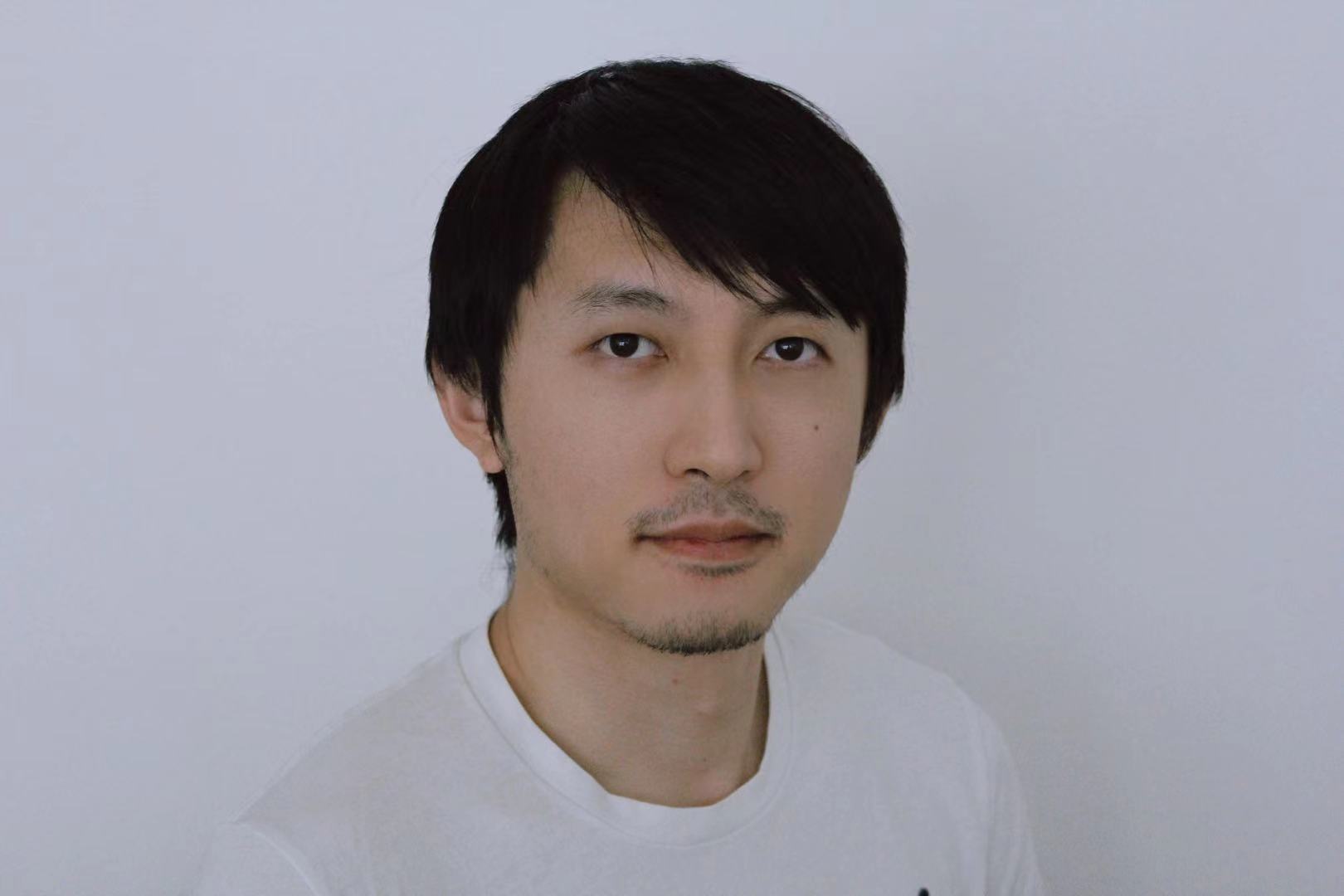
Paweł Tarnowski is a researcher at the Institute of the Theory of Electrical Engineering, Measurement and Information Systems , Faculty of Electrical Engineering, Warsaw University of Technology. His work focuses on biomedical signal processing, emotion recognition, and machine learning applications in affective computing and human-computer interaction. Research areas include Information and Communication Technology (ICT) Electrical and Electronic Engineering Artificial Intelligence Neuroscience Human Factors His recent publications highlight trends in emotion recognition using multimodal physiological signals (EEG, EOG, GSR), driver fatigue detection, and deep learning techniques like 1D-CNN for medical diagnostics. Articles also address urban traffic monitoring and neuromarketing research via EEG analysis. At Warsaw University of Technology, he supervises thesis projects and contributes to interdisciplinary research in biomedical engineering and signal processing. Labs/Teams: Institute of the Theory of Electrical Engineering, Measurement and Information Systems .
Markus Enzweiler serves as Professor of Computer Science and Autonomous Systems at Esslingen University of Applied Sciences within the Department of Computer Science and Engineering. He concurrently holds the leadership position of Director at the Institute for Intelligent Systems, where he oversees research initiatives focused on intelligent systems development for real-world autonomous applications. His research program centers on computer vision for autonomous systems , with specialized expertise in visual-inertial SLAM, collective perception, and neural rendering techniques. Key investigation areas include environmental robustness across agricultural and urban settings, real-time processing constraints for embedded systems, sensor fusion methodologies (particularly camera-radar integration), and the application of generative models for perception enhancement. His work consistently addresses practical implementation challenges such as computational efficiency and sensor calibration in unstructured environments. Analysis of his 2023-2025 publications reveals three dominant research trajectories: (1) Advancement of lightweight perception systems through stixel-based representations and neural rendering; (2) Development of infrastructure-supported collective perception frameworks with datasets like CoopScenes and OPNV; and (3) Rigorous benchmarking of SLAM components in domain-specific contexts including agricultural robotics and multi-season navigation. His recent systematic review on LLM-based vulnerability detection also demonstrates expanding interest in software security for autonomous systems. As Director of the Institute for Intelligent Systems, Prof. Enzweiler leads a research ecosystem focused on translating theoretical advances into practical autonomous vehicle technologies. His team develops specialized datasets (Rover, OPNV) and software stacks for smart city environments, emphasizing the integration of novel perception approaches with vehicle dynamics modeling and real-time operational constraints.
Jie Song is a postdoctoral researcher at ETH Zurich affiliated with the Advanced Interactive Technologies lab. Their work bridges structured information and deep learning pipelines, with applications in hand/body-pose estimation, 3D human reconstruction, and view synthesis. Research Interests: Deep Learning, Computer Vision, 3D Reconstruction, Human Pose Estimation, Motion Capture, 6D Pose Estimation Affiliation: ETH Zurich, Advanced Interactive Technologies lab Jie's recent publications (2023-2025) focus on monocular video-based 3D human modeling, Gaussian rendering, and motion synthesis. Collaborations span institutions like ETH Zurich and MPI Tuebingen, with applications in robotics, augmented reality, and sports analytics. Scientific Awards: 3DV Best Paper Award (2017), Qualcomm Innovation Fellowship Finalist (2015), Swisscom Innovation Award (2014), Birkigt Scholarship (2013), National Scholarship (2009/2010) Jie has supervised multiple student projects, including personalized neural avatars and skeleton-based motion modeling. They serve as a Teaching Assistant for courses like Visual Computing and Machine Perception at ETH Zurich.
Riccardo Bonazza is a Professor in the Department of Mechanical Engineering at the University of Wisconsin-Madison, affiliated with the College of Engineering and the Nuclear Engineering & Engineering Physics program. His research focuses on experimental investigations of impulsive fluid flows, shock-interface interactions, and shock-driven mixing phenomena with applications in inertial confinement fusion, combustion systems, and aerospace engineering. Bonazza holds a PhD (1992) and MS (1985) from Caltech, and a Laurea in Mechanical Engineering (1983 cum laude) from Università di Ancona. His experimental work uses advanced techniques like planar Mie scattering, laser-induced fluorescence (PLIF), and particle image velocimetry (PIV) in the Wisconsin Shock Tube Laboratory. Key research areas include Richtmyer-Meshkov instability dynamics, shock-accelerated vortex rings, and reactive shock flows. His studies explore both detrimental mixing effects in fusion applications and beneficial mixing enhancement in supersonic combustion systems. Recent experiments involve shock-bubble interactions, reshock phenomena, and turbulent mixing quantification. Notable awards include the 2016 Leaders in Engineering & Diversity Scholar Award and 2011 Outstanding Instructor Award. His 2023 work includes novel bovine thermodynamic models and advanced shock tube diagnostics. Bonazza teaches courses in aerodynamics, gas dynamics, rocket propulsion, and independent research supervision. Key facilities: Wisconsin Shock Tube Laboratory. Active collaborations include CFD validation, laser diagnostics development, and multi-phase flow studies.
Dr. Andreu Català Mallofré is a Full Professor at the Universitat Politècnica de Catalunya (UPC), affiliated with the Department of Systems, Automatic and Industrial Informatics Engineering. He serves as the principal investigator at the CETpD - Centre d'Estudis Tecnològics per a l'Atenció a la Dependència i la Vida Autònoma (Technical Research Center for Dependency Care and Autonomous Living) and leads the TOC - Tecnologia Orientada a la Comunitat (Community-Oriented Technology) research group. With an academic career spanning over 30 years, he specializes in assistive technologies, human-computer interaction, and biomedical data analysis. His research interests focus on Wearable health monitoring systems Parkinson's disease management solutions Frailty assessment algorithms Emotion-driven computing Community-embedded technology Gerontechnology applications These areas have produced 367 academic outputs including 59 indexed journal articles, 148 conference papers, and 66 competitive R&D projects. Recent publications demonstrate a clear trend toward multimodal health monitoring combining inertial sensors with biometric data for aging populations . Key application areas include freezing-of-gait detection in Parkinson's patients and distress estimation during assisted mobility. His 2024 work explores agricultural sustainability through data-driven fertilizer optimization. Scientific recognition includes UPC Social Council Award (2013) 20+ years as conference committee member Multiple competitive R&D grants 23391773000 Scopus ID Orcid 0000-0001-8775-1955 As academic advisor, he has mentored 3 PhD candidates including Daniel Manuel Rodriguez-Martin (Human Movement Analysis, 2020) Leonid Ivonin (Physiological Signal Processing, 2014) John Neal Abram Brown (Calm Computing, 2014) His teams operate within Vilanova i la Geltrú's School of Engineering, with strong industry and healthcare sector collaborations.
Haiyang Chao is an Associate Professor at the Department of Aerospace Engineering, College of Engineering, University of Kansas. His research focuses on Unmanned Aircraft Systems (UAS) with emphasis on control systems, wind estimation, remote sensing, and cooperative UAV operations. Recent work includes FireCrowdSensing for prescribed fire monitoring Wake vortex hazard estimation for airport UAS operations Thermal imaging for fire spread measurement Vertical wind velocity analysis in fire plumes System identification techniques for flying-wing UAVs Honors include the 2016 Summer Faculty Fellowship at Air Force Research Lab. He leads the Cooperative Unmanned Systems Lab (CUSL) and collaborates with NASA on gust sensing projects. Teaching interests include Avionics, Control Systems, and Autonomous Aerospace Vehicles.
Mahanth Gowda is an Associate Professor in the Department of Computer Science and Engineering, leading a prolific research program at the intersection of mobile systems, wireless sensing, and human-computer interaction. His work has been continuously funded by the U.S. National Science Foundation since 2019, serving as Principal Investigator on four awards and Co-PI on two others, collectively spanning edge computing for XR, sign-language recognition, next-generation wireless networking, and healthcare-oriented wearables. Research Interests Millimetre-wave and ultra-wideband sensing for 3-D finger motion tracking and speech eavesdropping Edge-IoT platforms for real-time sign-language recognition and translation Neural-augmented game streaming and super-resolution on commodity mobile devices Open-source wearable systems for sports analytics and rehabilitative healthcare Security and privacy implications of motion sensors in smartphones and IoT devices Over the past five years his publication trajectory has concentrated on leveraging emerging radio modalities—especially millimetre-wave radar, Wi-Fi, and UWB—to extract fine-grained human-centric information such as finger gestures, facial micro-motions, and spoken content. A complementary thread develops edge-native machine-learning frameworks that push intelligence to resource-constrained devices, enabling immersive AR/VR experiences and assistive technologies for the Deaf and hard-of-hearing communities. Grants & Projects CAREER: Sign-to-Speech – NSF, $500k, 2021-2026; Edge-IoT platform for real-time ASL recognition. SHF: Medium: Next-Gen XR Edge Platform – NSF, $1.2M, 2022-2025; Co-PI with Das, Sivasubramaniam, Kandemir. CNS Core: IoTScope – NSF, $450k, 2020-2025; Sensing physical materials via low-cost IoT radios. CNS Core: Medium: ML-driven Next-G Wireless – NSF, $800k, 2020-2024; Co-PI with Yang and Mahdavi. I-Corps: Smart Ring for Healthcare Analytics – NSF, $50k, 2023-2025; Commercialization of finger-motion wearables. Labs & Teams Gowda directs a research group that operates at the confluence of wireless networking, embedded systems, and applied machine learning. The lab maintains active collaborations with faculty in computer architecture, augmented reality, and accessibility studies, and routinely mentors graduate researchers whose work appears in top-tier venues such as ACM MobiCom, IEEE INFOCOM, ISCA, and ACM IoTDI.
Dr. Daniele Cattaneo is a Junior Research Group Leader at the Robot Learning Lab (University of Freiburg, Germany). He specializes in autonomous robotics, deep learning for perception and localization, and sensor fusion. His research focuses on embodiment-agnostic and environment-agnostic systems for robots, with applications in autonomous driving and healthcare robotics. Education: Ph.D. in Computer Science, Università degli Studi di Milano-Bicocca (2016–2020) M.Sc. and B.Sc. in Computer Science, Università degli Studi di Milano-Bicocca (2013–2016, 2010–2013) Research Interests: His work addresses challenges in LiDAR-camera calibration, SLAM (Simultaneous Localization and Mapping), unsupervised domain adaptation, and multimodal fusion for robust perception. Key projects include CMRNext (LiDAR-camera matching), Syn-Mediverse (healthcare scene understanding), and Continual SLAM (long-term autonomy). Awards & Grants: He leads funded projects like AI-Drive (next-gen autonomous driving algorithms) and iSUOR (operating room video analysis). Collaborations include work with the AIS Group and Robotic Learning Lab . Students & Labs: Supervises 12+ students in topics like LiDAR localization, HD maps, and radar-based navigation. Active in the Robot Learning Lab at Freiburg, contributing to open-source datasets and tools for robotics research.
François Chaumette is a Senior Research Scientist (Directeur de recherche) at Inria, affiliated with IRISA and the Centre Inria de l'Université de Rennes. He has been a key researcher in robotics and computer vision since 1990 and led the Lagadic research team from 2004 to 2017. His research interests are centered on robot vision, particularly visual servoing and active perception . He has made foundational contributions to image-based and position-based visual servoing, and his work integrates control theory, computer vision, and robotics. His research spans applications in mobile robotics, aerial systems, medical robotics, space robotics, and soft object manipulation. The recent publications highlight a consistent focus on visual servoing under complex constraints—such as motion blur, occlusions, and deformations—applied to drones, cable-driven robots, and space systems. There is a strong emphasis on robustness , stability analysis , and hybrid sensing (e.g., vision + proximity, vision + force). His work with the RemoveDebris mission demonstrates real-world impact in space robotics. AFCET/CNRS Prize for best Ph.D. in Automatic Control Best paper awards at RFIA 1996 & 2004 Best paper in IEEE T-RA (2002) Best paper in IEEE RA-L (2019) Best paper in IEEE RAM (2020) IEEE Fellow (2013) He has advised over 30 Ph.D. students, many of whom have become active researchers in robotics. He has served in editorial roles for top journals including IEEE Transactions on Robotics , IEEE Robotics and Automation Letters , and the International Journal of Robotics Research . He was elected to the IEEE RAS Administrative Committee (2016–2018) and served on ERC grant panels for robotics. Chaumette is the main developer of ViSP (Visual Servoing Platform), a widely used C++ library for visual tracking and servoing. His leadership in both theoretical advances and software tools has significantly shaped the visual servoing community.
Andreas Fender is a researcher at the Visualization Institute of the University of Stuttgart (VISUS), affiliated with the Schmalstieg Working Group. He has held postdoctoral positions at ETH Zurich (Switzerland) and the University of Sussex (England), following his PhD at Aarhus University (Denmark) with an internship at Microsoft Research (USA). His research focuses on Human-Computer Interaction, particularly in Augmented and Virtual Reality (AR/VR) and camera networks. He develops novel input methods for productivity and artistic expression in Mixed Reality environments, creating hybrid physical-digital systems like OptiBasePen, PressurePick, InfinitePaint, and DeltaPen. Recent work includes contributions to Mixed Reality input methods (UIST 2024, CHI 2022) and collaborative systems (Asynchronous Reality). Projects like GuitarPie (UIST 2025) and OptiBasePen (UIST 2024) demonstrate his focus on mobile interaction and ergonomic design. Scientific accolades include the Best paper award at CHI 2022 Best application paper award at ISS 2019 . At VISUS, he collaborates with Dieter Schmalstieg and leads hiring for PhD students and PostDocs exploring physical-digital workflows, artistic tools, and critical AI engagement. His work integrates machine learning, hardware prototyping, and spatial user interfaces to redefine future workplaces.
Markus Enzweiler serves as Professor of Computer Science and Autonomous Systems and Director of the Institute for Intelligent Systems at Esslingen University of Applied Sciences, Germany, within the Department of Computer Science and Engineering. His leadership role positions him at the forefront of intelligent systems research in applied academic settings. His research spans autonomous systems, computer vision, and robotics with emphasis on visual-inertial SLAM, semantic segmentation, and collective perception. Key contributions address real-world challenges in unstructured environments like agricultural fields and urban settings through efficient perception systems. Recent work focuses on lightweight monocular solutions, sensor fusion techniques, and computational efficiency optimization for autonomous vehicles. Analysis of his 2024-2025 publications reveals strong trends in collective perception infrastructure, NeRF/Gaussian Splatting integration for SLAM, and multi-sensor dataset development. His research consistently benchmarks computational costs against accuracy improvements while creating valuable resources like the OPNV public transportation dataset and Rover multi-season SLAM corpus. As Director of the Institute for Intelligent Systems, Enzweiler leads initiatives advancing autonomous driving technologies through practical implementations and industry-relevant research frameworks.
Dr. Annette Stahl is a Professor at the Department of Engineering Cybernetics, Norwegian University of Science and Technology (NTNU). She is an Onsager Fellow and leads the Robot Vision Group, overseeing the AILARON project funded by the Research Council of Norway. Her roles include affiliation with NTNU AMOS and the SFI AutoShip Centre for Research-based Innovation. Stahl holds a PhD in Applied Mathematics (Computer Vision) from Heidelberg University. Affiliations: NTNU AMOS, SFI AutoShip, and AILARON project leadership Research Focus: Robotic vision, autonomous systems, underwater exploration, and aquaculture monitoring Education: PhD in Applied Mathematics (Computer Vision) – Heidelberg University Research Interests: Her work spans robotic and computer vision, control theory, autonomous vehicles, mathematical image analysis, and machine learning applications in aquaculture and maritime systems. Key focus areas include underwater SLAM, sensor fusion for autonomous ships, and plankton detection using AI. Articles: Recent publications emphasize underwater robotic systems, sensor fusion for autonomous navigation, and AI-driven aquaculture monitoring. Key themes include 3D reconstruction, visual SLAM, and maritime tracking algorithms. Grants & Projects: AILARON (FRINATEK/IKTPLUSS) AUTOSIGHT (IKTPLUSS) AROS (IKTPLUSS) SFI AutoShip (SFI) Advising: Main supervisor for 10+ PhD candidates (e.g., Trym Nygård, Mauhing Yip) Co-advisor for projects like INDISAL (fish identification) Labs/Teams: Robot Vision Group at NTNU Collaborations with SINTEF Ocean and Zebop AS
Dr. Maryam Banitalebi Dehkordi is a Senior Lecturer in Robotics and AI at the University of Hertfordshire, UK. She holds a PhD in Perceptual Robotics from Scuola Superiore Sant'Anna (Italy) and a master's in Mechatronics from University Technology Malaysia. Her career spans academia and industry, with roles at institutions like Technical University of Munich and NavVis GmbH, as well as industry projects such as the Innovate UK-funded AgriRobot. Her research focuses on Human-Robot Interaction (HRI) , Explainable Robotics , Assistive Robotics , and autonomous systems . Key projects include DOC (navigation aid for visually impaired individuals) and AgriRobot (precision agricultural robotics). She has expertise in activity recognition via smartphone sensors, navigation systems, and social robotics interfaces. Publications (2012–2025) emphasize explainable AI in robotics, feature selection for activity recognition, and social behavior interpretation. Her work bridges theoretical robotics with real-world applications in healthcare, agriculture, and accessibility. No awards are explicitly listed, but her extensive collaboration network (Italy, Germany, UK) reflects interdisciplinary impact. She advises on robotics projects and has contributed to both academic journals and industry collaborations.
Pascal Morin serves as a University Professor at Sorbonne University within the Faculty of Science and Engineering. He is an active member of the ASIMOV research team at the Intelligent and Robotic Systems Institute (ISIR), located at 4 Place Jussieu in Paris. His office H17 serves as the base for his research activities in advanced robotics and control systems. Professor Morin's research focuses on cutting-edge robotics applications, particularly in unmanned aerial vehicle navigation and control systems. His work spans nonlinear control theory, visual servoing techniques, and micro air vehicle development. Key interests include homography estimation for image stabilization, thermal anemometry for airflow sensing, and obstacle avoidance algorithms for precision robotics. His publications demonstrate consistent innovation in combining theoretical control frameworks with practical robotic implementations. Analysis of his 15 most recent publications reveals strong thematic continuity in UAV navigation systems, with increasing integration of deep learning techniques since 2020. His work consistently addresses GPS-denied environments and sensor fusion challenges, with notable contributions to thermal-based odometry and visual-inertial navigation systems. The research trajectory shows progression from theoretical control frameworks toward increasingly complex real-world applications including power line inspection and microscopy manipulation. Professor Morin actively collaborates with major aerospace institutions including ONERA and DLR, as evidenced by his participation in the EuRoC challenge. His editorial work on MAV navigation special collections demonstrates leadership in the micro air vehicle research community. While specific grant details aren't provided in the source material, his sustained publication output across multiple high-impact journals indicates successful funding acquisition. As a core member of the ASIMOV team at ISIR, Professor Morin contributes to Sorbonne University's leadership in robotics research. The team maintains strong industry connections through publications in Aerospace Lab and collaborations with organizations like AIAA. Current research directions appear focused on thermal sensor integration for MAVs and nonlinear control solutions for challenging operational environments.
Kaiyan Yu is an Associate Professor in the Mechanical Engineering Department at Binghamton University. She holds a BS from Nankai University (2010) and a PhD from Rutgers University (2017). Her research focuses on autonomous robotic systems, mechatronics, and motion control with applications to nano/micro-particle manipulation, biomedical systems, and Lab-on-a-Chip technologies. She leads the Automated Control Systems and Robotics Lab and has been recognized with an NSF CAREER Award for her work in nanobot research. Education: BS in Intelligent Science and Technology, Nankai University (2010) PhD in Mechanical and Aerospace Engineering, Rutgers University (2017) Research Interests: Autonomous robotic systems Electrophoresis-based micro/nano manipulation Dynamic systems and control Motion planning and control Biomedical engineering applications Her publications emphasize nanowire control in fluid suspensions, adaptive control strategies, and robotic systems for civil infrastructure. Recent work includes physics-informed neural networks for vehicle dynamics and ensemble control for nanomanipulation. She actively collaborates on NSF-funded projects and has pioneered techniques for 3D pose identification of micro/nanoparticles under bright-field microscopy. Awards: NSF CAREER Award (2024) Her lab develops advanced control systems for biomedical and industrial applications, focusing on precision manipulation at micro/nano scales. Current projects involve autonomous crack-filling robots for infrastructure maintenance and novel electrophoresis-based microfluidic platforms.