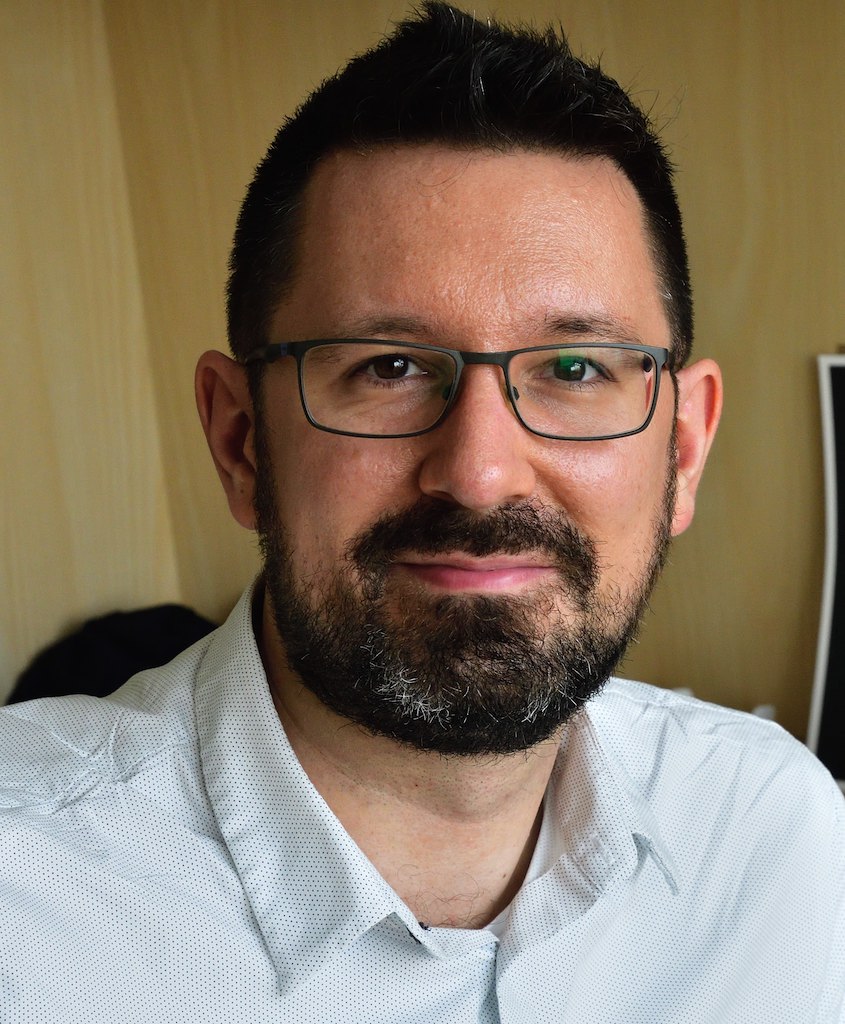
Nikola Mišković is a Full Professor at the Department of Control and Computer Engineering, Faculty of Electrical Engineering and Computing, University of Zagreb. His work focuses on marine robotics and autonomous systems. Marine Robotics Autonomous Underwater Vehicles (AUV) Human-Robot Interaction Control Systems Sonar Data Processing His research explores underwater localization, formation control, and sensor integration with applications in aquaculture and environmental monitoring. Projects include EU-funded initiatives like FP7 CADDY , H2020 EXCELLABUST , and subCULTron . Key collaboration networks involve institutions in Croatia, Israel, and EU marine robotics consortia. His work demonstrates strong integration of simulation (Gazebo, LabVIEW) and real-world deployment.
Maj Timothy I. Machin is an Assistant Professor in the Department of Electrical Engineering at the Air Force Institute of Technology (AFIT), part of Air University, Wright-Patterson Air Force Base, Ohio. He holds a Ph.D. and M.S. in Electrical Engineering from AFIT and a B.S. from Purdue University. Ph.D., Electrical Engineering, AFIT (2023) M.S., Electrical Engineering, AFIT (2016) B.S., Electrical Engineering, Purdue University (2014) His research focuses on autonomous navigation systems, particularly in GNSS-denied environments. Key areas include belief space planning, vision-aided navigation, and real-time implementation for small UAVs. His work integrates robotics, control theory, and sensor fusion to enhance autonomy under uncertainty. The recent publications reflect a strong trend in autonomous systems, with emphasis on planning algorithms, navigation robustness, and real-time embedded solutions. Topics span from theoretical frameworks like planning taxonomies to practical implementations in fixed-wing UAVs using monocular vision and inertial systems. No scientific awards are listed in the provided text. There is no public information available on student advising or research grants. However, his role as an Assistant Professor suggests involvement in mentoring graduate students and leading research projects within AFIT’s engineering programs. While specific lab affiliations are not mentioned, his research aligns closely with AFIT’s Autonomous Navigation and Robotics research groups, likely involving collaboration with the Department of Electrical Engineering’s UAV and navigation laboratories.
Dr. Alice Sweeting is a Research Fellow at Victoria University's College of Sport, Health & Engineering, with a co-appointment at the Western Bulldogs Football Club. Her work bridges sport science, wearable technology, and data analytics to enhance athletic performance in team sports such as Australian Football and netball. PhD, Victoria University, 2017 BAppSc (Hons), Victoria University, 2012 Her research focuses on using wearable sensors, inertial measurement units, and machine learning to analyze athlete movement, skilled behavior, and performance under various constraints. She applies ecological dynamics and the constraints-led approach to understand how individual, task, and environmental factors shape performance in real-world contexts. Her recent publications reveal a strong trend in the application of advanced statistical methods (e.g., change point analysis), machine learning for movement classification, and the development of representative training designs. She frequently publishes in high-impact journals such as Journal of Sports Sciences and Frontiers in Physiology , often collaborating with experts in biomechanics, sports analytics, and motor learning. Alice is actively involved in research supervision, currently co-supervising six postgraduate students on projects related to kicking performance, player tracking, and tactical behavior in AFL. She has secured competitive research funding, including a Fusion Sport Innovation Connections grant focused on health and fitness monitoring in racquet sports. Member, Course Advisory Committee (CAG), 2025 She is also engaged in professional outreach through her blog on programming in R, Twitter, and LinkedIn, demonstrating a commitment to knowledge translation and open science.
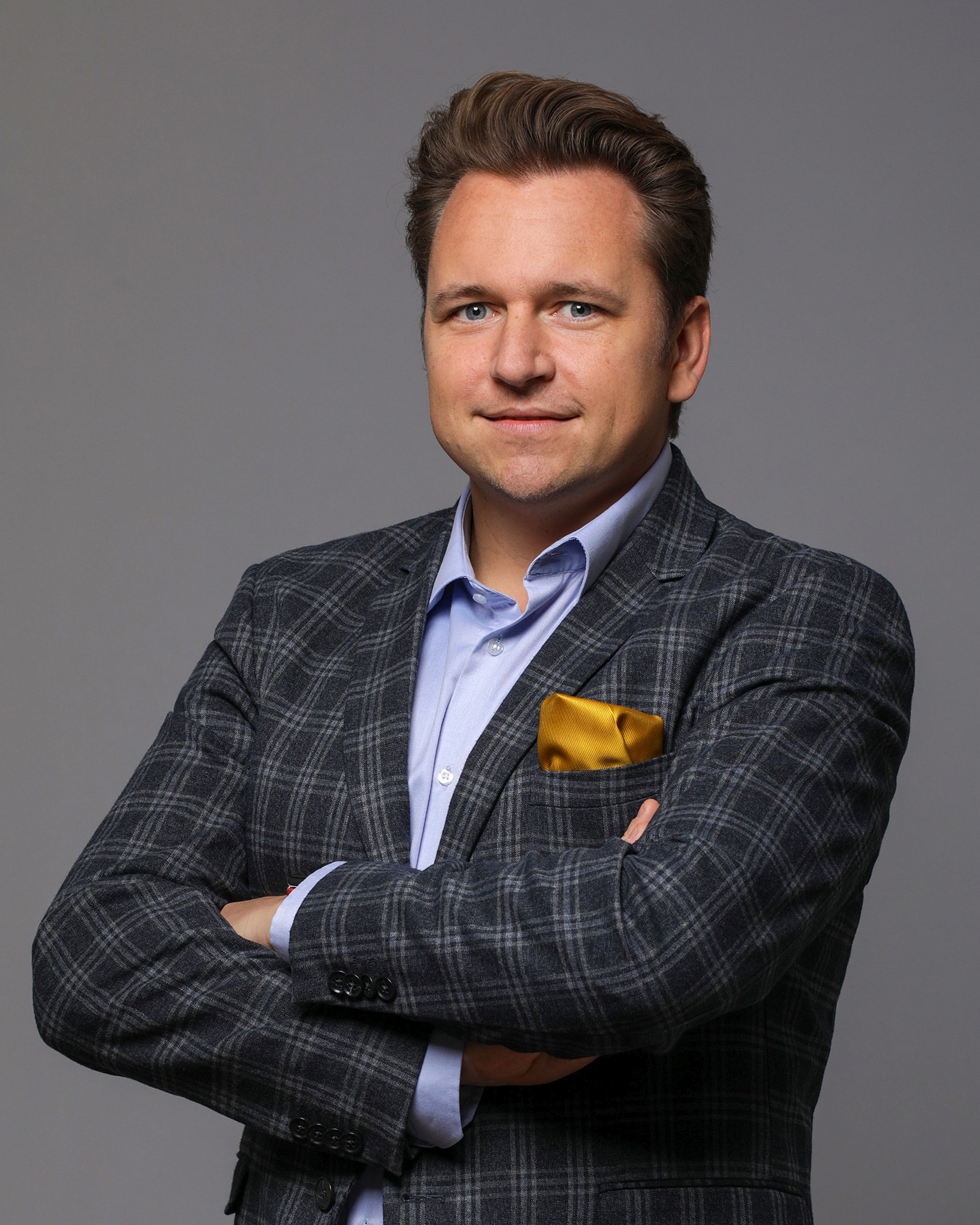
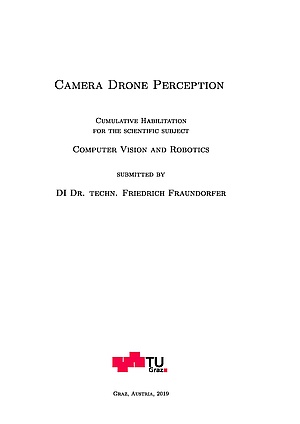
Friedrich Fraundorfer is a Professor at Graz University of Technology, specializing in 3D Computer Vision and Autonomous Systems at the Institute of Computer Graphics and Vision (ICG). He has held academic positions at institutions including ETH Zurich, University of North Carolina at Chapel Hill, and Technische Universität München, where he served as Deputy Director of the Chair of Remote Sensing Technology. Research : Focuses on Micro Aerial Vehicle (MAV) autonomy, Visual-Inertial Fusion, and Multi-View Geometry. Projects : Led EU-funded SFly (autonomous MAVs for search-and-rescue), SNF MAV (camera-only 3D mapping), and VCharge (vision-based self-driving cars). Teaching : Offers courses like 'Camera Drones' and 'Mathematical Principles in Vision.' His Pixhawk project created open-source MAV platforms adopted globally. Key Collaborations : With NVIDIA, Volkswagen AG, University of Zurich, and German Space and Aerospace Center (DLR). His students (e.g., Dominik Hirner, Rafael Weilharter) have published on lightweight CNNs for stereo vision and self-supervised 3D reconstruction.
Jesús Tordesillas Torres is an Assistant Professor in the Department of Electronics, Automation, and Communications at the School of Engineering, Comillas Pontifical University. He joined the institution in June 2024, bringing extensive experience from postdoctoral research at MIT and ETH Zurich, and prior academic training from MIT and the Polytechnic University of Madrid. Education: PhD in Aeronautics and Astronautics, Massachusetts Institute of Technology (MIT), 2022 MS in Aeronautics and Astronautics, MIT, 2019 MS in Industrial Engineering, Polytechnic University of Madrid, 2019 BS in Industrial Engineering, Polytechnic University of Madrid, 2016 His research focuses on robotics, particularly autonomous navigation, trajectory planning, and optimization under uncertainty. He integrates deep learning and control theory to develop systems capable of safe, fast, and perception-aware navigation in dynamic and unknown environments. His work spans aerial and ground robots, multiagent systems, and challenging terrains, with strong emphasis on real-world deployment and robustness. The recent publications highlight a consistent trend in trajectory optimization, perception-aware planning, and multiagent coordination. His work bridges theoretical advances in optimization and learning with practical robotic applications, especially in safety-critical and communication-constrained scenarios. Scientific Awards: Best Paper Award, IEEE ICRA 2023 1st Place, Urban Circuit, DARPA Subterranean Challenge (2020) 2nd Place, Tunnel Circuit, DARPA Subterranean Challenge (2021) Finalist, Best Paper, IEEE IROS 2019 Jesús Tordesillas Torres has been actively involved in research grants and projects, including the ADS FERRARI WP-2 Project funded by Airbus Defence and Space (2025–2025). He mentors students and collaborates with leading institutions such as MIT, ETH Zurich, and the University of Pennsylvania. He also serves as a reviewer for top-tier journals including IEEE Transactions on Robotics , International Journal of Robotics Research , and IEEE Robotics and Automation Letters , as well as major conferences like ICRA and IROS. He leads and participates in research teams focused on autonomous systems, with affiliations to the Institute for Research in Technology (IIT) at Comillas. His invited talks at ETH Robotics Summer School and University of Pennsylvania reflect his growing influence in the robotics community.
Arif Tanju Erdem serves as Professor of Computer Science and Vice Rector for Academic Affairs at Ozyegin University, Istanbul. He joined the university in 2009 after 18 years at Eastman Kodak Research Laboratories and as CTO of Momentum, A.S., a digital media technologies company he co-founded. His leadership roles include Dean of the School of Engineering (2014-2018) and Head of Computer Science Department (2012-2014). His academic credentials feature: Ph.D. in Electrical Engineering, University of Rochester (1990) M.S. in Electrical Engineering, University of Rochester (1988) Dual B.S. degrees in Electrical & Electronics Engineering and Physics, Boğaziçi University (1986) Erdem's research centers on digital video processing and computer graphics with expanding applications in computer vision and machine learning. His foundational work in bispectrum analysis and video compression evolved into modern applications including face recognition systems, augmented reality tracking, and sensor fusion. Current investigations focus on overcoming data labeling challenges in biometric systems and developing robust motion tracking solutions for immersive technologies. Analysis of his recent publications (2012-2023) reveals three dominant research trajectories: (1) Advancements in face recognition using curriculum and semi-supervised learning techniques, (2) Precision sensor fusion for augmented reality through IMU-camera calibration and occlusion handling, and (3) Educational technology innovations through gamified learning systems. His work consistently bridges theoretical signal processing with practical implementations in medical monitoring, entertainment, and education. Professional service highlights include ISO-MPEG committee membership (1991-1998), IEEE Signal Processing Society leadership roles across Rochester, Turkey, and Region 8 chapters, and editorial contributions to Signal Processing: Image Communication. He has organized major conferences including the 3DTV Conference (2011) and IEEE Turkey Signal Processing Conference (2012).
Michele Taragna is a Tenured Associate Professor in the Department of Electronics and Telecommunications (DET) at the Polytechnic University of Turin, actively teaching across degree programs: Experimental Modeling for PhD students in Electrical, Electronic and Communications Engineering (2019-2025), Estimation and System Identification for Mechatronic Engineering Master's program (2019-2026), and Automatic Control for Computer Engineering Bachelor's program (2019-2026) as course holder or collaborator. His research centers on Systems and Control Engineering , with primary interests in data-driven control for autonomous vehicles and fleets, direct virtual sensors, and machine learning-enhanced system identification. Key areas include Set Membership methods for robustness under bounded noise, computational complexity reduction in Nonlinear Model Predictive Control (NMPC), sensor fusion for robotics, and applications in automotive suspensions. This work aligns with ERC sectors PE7_1 (Control engineering), PE1_20 (Control theory), and PE6_12 (Scientific computing). Trends in his publications (2024-2004) reveal sustained innovation in applying Set Membership identification to NMPC for autonomous vehicles, achieving real-time feasibility through search domain reduction. Sensor fusion techniques using Kalman filters for mobile manipulators and data-driven filter design for uncertain LTI systems with bounded noise are recurring themes, emphasizing practical implementation and computational efficiency. Scientific awards: None documented in provided materials. Advising and research funding: Supervised PhD student Mattia Boggio (2020-2024) in Electrical, Electronic and Communications Engineering; thesis on Real-time Nonlinear Model Predictive Control with domain reduction. Led the nationally funded PRIN project Controllo ad alte prestazioni a partire dai dati sperimentali (2007-2009) as Scientific Responsible. He is a core member of the Automatica research group within DET, focusing on system identification, control design, and validation for dynamic systems with applications in automotive and robotics domains.
Armin Alaghi serves as a Research Scientist at Oculus Research (Redmond, WA) and holds an Affiliate Assistant Professor position at the University of Washington. His dual affiliation enables valuable knowledge transfer between cutting-edge industrial research and academic pursuits in computer systems engineering. Dr. Alaghi's research spans the intersection of embedded systems, digital circuits, and mathematics. His primary focus involves building low-power augmented reality (AR) and virtual reality (VR) systems while developing novel computation methods for unreliable beyond-CMOS technologies. His previous research contributions include significant work in stochastic computing (where he developed the STRAUSS synthesis methodology), reliable Network on chip (NoC) design, FPGA testing methodologies, NoC testing techniques, artificial neural networks implementations, asynchronous circuit design, and multi-valued logic systems. He has made his spectral-transform-based synthesis tool publicly available on GitHub, demonstrating commitment to open research. Analysis of Dr. Alaghi's publication record reveals a clear research trajectory from foundational circuit-level work toward practical applications in AR/VR systems. His publications from 2020-2025 demonstrate expertise spanning computer architecture, security for immersive technologies, neural network compression techniques, and homomorphic encryption methods. A recurring theme throughout his work is the exploration of quality-energy tradeoffs and error-resilient computing approaches, with increasing focus on security aspects of AR/VR systems in his most recent work. Dr. Alaghi maintains active connections with the broader research community, as evidenced by his Erdős number of 3 (Armin Alaghi John P. Hayes Frank Harary Paul Erdős) and his ongoing contributions to open-source research tools. His GitHub repository for stochastic computing synthesis shows community engagement with multiple contributors. At Oculus Research, Dr. Alaghi applies his theoretical expertise to practical challenges in next-generation AR/VR system development. His work bridges academic research with real-world product development, particularly in addressing energy efficiency challenges for wearable computing platforms through innovative circuit design approaches.
Torsten Sattler is a Senior Researcher at the Czech Institute of Informatics, Robotics and Cybernetics (CIIRC) at the Czech Technical University in Prague (CTU), where he heads the Spatial Intelligence group. Previously, he was a tenured Associate Professor at Chalmers University of Technology in Sweden and spent five years as a PostDoc and Senior Researcher at ETH Zurich in Switzerland. He received his PhD from RWTH Aachen University in Germany. His research focuses on the intersection of 3D computer vision and machine learning, with specific interests in image-based localization, 3D mapping and reconstruction, neural scene representations, and applications in robotics and AR/VR. He aims to make localization and mapping algorithms more robust by incorporating higher-level scene understanding. Dr. Sattler has published extensively at top computer vision conferences including CVPR, ICCV, and ECCV, with recent papers focusing on robust visual localization in changing environments, neural scene representations, and 3D reconstruction. His work has direct applications in autonomous systems and augmented reality. Best Paper Candidate at CVPR 2021 Best Paper Award at Photogrammetric Image Analysis 2019 Multiple Outstanding Reviewer Awards from 2015-2021 Ranked among top-10 computer scientists in Czech Republic by Research.com He currently supervises five PhD students and has served in various leadership roles including program chair for ECCV 2024, general chair for 3DV 2022, and area chair for multiple major conferences. His lab benefits from connections to the RICAIP Centre, one of the largest EU projects in AI and Industry 4.0, providing access to state-of-the-art infrastructure and industrial collaborations.
Dr. Marco Tognon is an Assistant Professor in the Department of Mechanical and Process Engineering at ETH Zurich, specializing in aerial robotics with a particular focus on tethered systems and physical interaction capabilities. Born in Italy in 1989, he completed his doctoral studies at INSA Toulouse in 2018 under the supervision of Antonio Franchi and Juan Cortés. His academic journey has taken him through LAAS-CNRS for postdoctoral research before establishing his independent research group at ETH Zurich. Dr. Tognon's research interests center on aerial robotics, particularly tethered aerial vehicles and their physical interaction capabilities. His work spans control theory for aerial robots, motion planning, human-robot collaboration, and aerial manipulation systems. He has developed novel approaches for cable-suspended load transportation, physical human-aerial robot interaction, and specialized aerial platforms like the Geranos tilted-rotors system for pole transportation. His research bridges theoretical control frameworks with practical implementation in real-world scenarios, especially in industrial and agricultural applications. His publication record demonstrates consistent productivity with numerous high-impact publications in IEEE Transactions on Robotics, IEEE Robotics and Automation Letters, and major conferences like ICRA and IROS. Recent work (2023-2025) shows particular emphasis on agricultural applications (tree shaking), specialized aerial platforms, and advanced control techniques for physical human-robot interaction. His research group maintains strong international collaborations, particularly with institutions in France, Italy, and Switzerland. Specialized aerial manipulation systems for agricultural tasks Novel aerial platforms for specific transportation needs Advanced control frameworks for physical human-robot interaction Rigorous theoretical foundations with experimental validation Dr. Tognon's work exemplifies the integration of theoretical control principles with practical robotics applications, with increasing focus on real-world implementation in agricultural and industrial settings. His research group provides students with opportunities to work at the cutting edge of aerial robotics while addressing practical challenges in physical interaction scenarios.
Thanh Nguyen Canh is a Lecturer at University of Engineering and Technology, Vietnam National University (UET VNU) and Teaching/Research Assistant at Japan Advanced Institute of Science and Technology (JAIST), School of Information Science. Primary affiliation is with the Robotics Lab at both institutions where he conducts research in SLAM systems and computer vision. PhD in Information Science at JAIST (2024.10-present) MS in Information Science at JAIST (2022.9-2024.9) BS in Robotics Engineering at UET VNU (2018.8-2022.8) Research focuses on advancing SLAM technologies through semantic understanding and active exploration. Key specialties include Visual-inertial odometry , probabilistic semantic mapping , and multi-sensor fusion for UAV navigation. Current projects integrate deep learning with traditional SLAM pipelines to create robust environmental representations. Publication activity centers on practical robotics applications, with the 2023 ICCAIS paper demonstrating object-oriented semantic mapping for UAV navigation. Research output emphasizes implementable solutions with active GitHub repositories showing continuous development in SLAM systems and reinforcement learning. Supervision involves teaching robotics curriculum at UET while mentoring research assistants at JAIST. Current projects provide hands-on experience with ROS, point cloud processing, and deep learning frameworks. Laboratory work occurs within the Robotics Lab environment at JAIST/UET, utilizing GitHub-hosted tools like probabilistic_semantic_mapping and S3M_SLAM for collaborative development. The lab maintains strong focus on real-world robotics applications with particular emphasis on aerial vehicle navigation systems.
Adriano Jorge Cardoso Moreira is an Associate Professor with Habilitation at the Department of Information Systems, School of Engineering, University of Minho, Portugal. He holds multiple leadership roles including Scientific Coordinator of Urban Computing at Centro de Computação Gráfica and Director of the MAP-tele PhD Program. His research is conducted primarily through the Urban Computing Lab , focusing on smart place technologies. Education: PhD in Electrical Engineering (1997) and Bachelor's in Electronic and Telecommunications Engineering (1989), both from University of Aveiro, Portugal. Research Focus: His work spans indoor positioning, mobile/context-aware systems, urban computing, and wireless network simulation. Key innovations include fingerprinting algorithms for localization, multi-sensor fusion techniques, and human mobility analysis. Research outputs consistently address real-world industrial challenges such as warehouse management, factory automation, and urban infrastructure. Research Output Trends: Recent publications (2021-2023) emphasize practical applications of Wi-Fi/LoRaWAN fingerprinting, machine learning for sensor calibration, and industrial vehicle tracking. Over 70% of recent works involve experimental validation in real environments, reflecting a strong applied research focus. Key thematic clusters include radio map optimization, multi-sensor datasets, and scalability of positioning systems. Awards & Recognition: First Prize, EvAAL-ETRI Indoor Localization Competition (Off-site track, 2015 & 2017) Second Prize, EvAAL-ETRI Indoor Localization Competition (2016) IEEE Senior Member status Patent in computational geometry Projects & Funding: He leads/participates in numerous EU/national projects including: ORIENTATE (2021-2023): Low-cost indoor positioning for factories Lab4U&Spaces (2021-2023): Urban space solutions AR WARE (2018-2022): AR for warehouse management SAMU (2015-2018): Smart autonomous mobile units Lab & Team: He established/leads the Urban Computing Lab developing technologies for smart environments. Previously headed the Computer Communications and Pervasive Media Group (until 2016). Current team includes PhD/Master students working on wireless positioning and mobility analysis.
Dr. Hunmin Kim serves as Assistant Professor in the Department of Electrical and Computer Engineering at Mercer University's School of Engineering, specializing in security and operational resilience of cyber-physical systems with applications in autonomous vehicles, UAVs, and smart grids. His educational background includes: PhD in Electrical Engineering from Pennsylvania State University (2018) BSE in Mechanical Engineering from Pusan National University (2012) Dr. Kim's research centers on developing attack/fault detection mechanisms, robust control frameworks, and path planning algorithms for cyber-physical systems operating in dynamic environments. His work addresses critical security vulnerabilities and coordination challenges in multi-agent systems, with emphasis on verifiable safety guarantees for autonomous operations. Analysis of his 2023-2025 publications reveals strong thematic convergence in resilient control under adversarial conditions, motion planning in complex environments, and assistive technology applications. His work consistently bridges theoretical control systems with practical implementations in autonomous vehicles and UAVs, featuring increasing integration of machine learning techniques for adaptive security. Professional recognition includes: Nomination for 2024 Clayton R. Paul Teaching Excellence Award Dr. Kim actively mentors undergraduate researchers through Mercer's Bear Day events and honors projects, guiding student teams in developing gesture-based drone controls, EMG signal processors, and assistive navigation devices for visually impaired individuals. He maintains extensive peer review commitments across 45+ journals/conferences annually including IEEE Transactions on Automatic Control and Automatica. He contributes to the Collaborative Center for Computing at Mercer University and serves on the IEEE CSS Technology Conferences Editorial Review Board.