Kären Wigen is the Frances and Charles Field Professor in History at Stanford University, specializing in Japanese history and the history of cartography. She holds a Ph.D. in Geography from the University of California, Berkeley (1990). Her research spans: Historical geography of East Asia Early modern Japanese regional economies Geographies of the imagination Transnational maritime histories Critical cartography and spatial analysis Her publications include eight major works from 1992-2025 analyzing spatial transformations in Japan and global metageography, with recent projects focusing on temporal dimensions in cartographic representation. She co-edited Seascapes (2007) and Cartographic Japan (2016), and serves as Director of Stanford’s Mellon Fellowship of Scholars in the Humanities since 2022.
Sanjay Subrahmanyam is Distinguished Professor of History and Irving & Jean Stone Endowed Chair in Social Sciences at UCLA's Department of History. A globally recognized historian of the early modern period (15th-18th centuries), he previously held prestigious positions at the Collège de France (2013-2021), University of Oxford (2002-2004), and Ecole des Hautes Etudes en Sciences Sociales in Paris (1995-2002). He founded UCLA's Center for India and South Asia (2005-2011) and maintains significant academic engagement in France through media appearances and lectures. His educational background includes: M.A. in Economics (First Rank with Gold Medal), Delhi School of Economics (1982) Ph.D. in Economic History, Delhi School of Economics (1987) Honorary D.Litt., University of Calcutta (2015) Doctorat honoris causa, Université catholique de Louvain (2017) Subrahmanyam's research revolutionized global historical methodology through his pioneering concept of 'connected histories,' which challenges Eurocentric periodization and emphasizes horizontal connections across regions. His work spans South Asian political culture, Indian Ocean trade networks, Iberian imperial systems, and Mughal court dynamics, consistently integrating multilingual archives and visual sources. He demonstrates exceptional mastery in synthesizing Portuguese, Spanish, Persian, Tamil, and Sanskrit materials to reconstruct non-Western perspectives on early modern globalization. His recent publications reveal intensified focus on transcultural encounters, maritime archaeology, and the material dimensions of empire. Works like Across the Green Sea (2024) and Mirrors of Empire (2026) showcase his shift toward analyzing ego-documents and visual culture to explore identity formation in frontier zones. The consistent thread remains his critique of civilizational boundaries and emphasis on fluid cultural exchanges across the Indian Ocean world. His scientific recognition includes: Infosys Humanities Prize (2012) Dan David Prize for History (2019) Prix International de l'Histoire (2020) Fellowship in American Academy of Arts and Sciences (2009) Corresponding Fellowship in British Academy (2016) Guggenheim Fellowship (2011-12) Subrahmanyam has mentored nine doctoral students to completion, maintaining active collaborations with Muzaffar Alam (University of Chicago), Velcheru Narayana Rao (University of Wisconsin), and David Shulman (Hebrew University). His editorial leadership includes co-editing The Cambridge World History (2015) and serving over a decade as Joint Managing Editor of the Indian Economic and Social History Review . He currently directs major international projects on Indo-Persian travel writing and Mughal intellectual networks. Though not leading a traditional laboratory, he coordinates the 'Connected Histories' research initiative across UCLA, Collège de France, and University of Chicago, fostering interdisciplinary teams examining early modern knowledge circulation. His public engagement includes regular contributions to French media (France 24, France Info) and curated exhibitions like the Codex Casanatense project.
Professor Helen Kennedy is a leading scholar in digital society at the School of Sociological Studies, Politics and International Relations , University of Sheffield . She holds the title of Professor of Digital Society and is Director of the £4 million ESRC Digital Good Network. A Fellow of the British Academy (FBA) and the Academy of Social Sciences (FacSS), her work bridges academia and public policy through collaborations with the BBC, DWP, and international media organizations. Her educational background includes a BA in English and American Studies from the University of Birmingham, an MA in Cultural Studies from the Birmingham Centre for Contemporary Cultural Studies (CCCS), and a PhD from the University of East London (2002) on digital identity and multimedia. Helen's research centers on digital inequality, datafication, algorithmic culture, data ethics, and public engagement with data . She investigates how non-expert publics experience and interpret data, visualizations, and AI, with a focus on fairness, transparency, and resistance. Her work also examines data visualization in society , particularly in news media, and the emotional and cultural dimensions of data engagement. Her recent publications reveal a consistent trend in exploring public perceptions of data practices , the politics of data visualization , and ethical dimensions of data use across journalism, public services, and digital platforms. Themes include trust, fairness, emotion, and the socio-political shaping of data systems. Fellow of the British Academy (FBA) Fellow of the Academy of Social Sciences (FacSS) Helen has led numerous major grants from the ESRC, AHRC, Nuffield Foundation, and EPSRC , including projects like Living With Data , Generic Visuals in the News , and Seeing Data . She supervises PhD students on topics ranging from algorithmic bias to digital self-tracking and has completed 13 PhD supervisions. She actively collaborates with policy makers (DWP, BBC, DCMS) , media organizations (Financial Times, Reach PLC) , and NGOs to translate research into impact, particularly in web accessibility and data governance. She leads the Living With Data research programme and is involved in the Everyday Life and Critical Diversities and Science, Technology and Medicine in Society research groups. Her work with the ESRC Digital Good Network brings together academics, practitioners, and civil society to envision equitable digital futures.
Professor Andrew Chadwick is a leading scholar in political communication and digital media studies at Loughborough University, where he directs the Online Civic Culture Centre (O3C). He holds a BSocSc from Birmingham, MSc and PhD from the London School of Economics. His research focuses on hybrid media systems, disinformation dynamics, and digital politics. Key contributions include conceptualizing hybrid media events and analyzing misinformation in personal messaging platforms. His work has been recognized with prestigious awards, including the APSA Best Book Award. He supervises numerous PhD students exploring topics like social media influence, public opinion, and digital disinformation. Current projects include the Leverhulme-funded Everyday Misinformation Project examining numerical disinformation on messaging apps. His media engagements span BBC Radio 4 to The Washington Post. Research highlights include studies on misinformation warnings' ineffectiveness, vaccine hesitancy, and the role of celebrities in political representation. O3C serves as a hub for interdisciplinary research on digital civic culture. Chadwick’s academic leadership includes roles in editorial boards for top journals and international conference keynotes.
Tina Dacin is a Professor of Strategy and Organizational Behavior at the Smith School of Business, Queen's University, Canada. She holds the Stephen J.R. Smith Chair and serves as Director of the Community Impact Research Program. Her roles include former Director of the Smith School’s Centre for Social Impact, former University Senate member, and former Chair of the Principal’s Innovation Fund Committee. She co-founded the Community of Social Innovation Chair and holds affiliations with the Academy of Management and Informs. Education: Ph.D. (1993) in Business Administration from the University of Toronto and M.A. in Psychology from the University of New Brunswick. Research focuses on cultural heritage, social innovation/entrepreneurship, strategic alliances, and globalization. Key themes include custodianship, tradition preservation, place-making, and institutional dynamics. Recent work explores craft-based ventures, place-sensitive organizational practices, and institutional renewal in crises like the Detroit water wars. Awards: None explicitly listed, though her chair position reflects academic distinction. Teaching includes courses on global social impact and analytics/ethics policy. Labs/Teams: Leadership in the Community Impact Research Program and the Scotiabank Centre for Customer Analytics.
Claus Lamm is a Full Professor of Biological Psychology at the University of Vienna , where he leads the Social, Cognitive and Affective Neuroscience Unit (SCAN-Unit) . He serves as Vice Dean for Research and Advancement of Early Career Researchers at the Faculty of Psychology and holds affiliations with the Vienna Cognitive Science Hub , Environment & Climate Change Hub , and Austrian Academy of Sciences . His academic career spans international collaborations and formative research experience abroad. Scientific Focus: Lamm investigates the neural underpinnings of empathy and prosocial behavior , employing multi-modal approaches combining neuroimaging, psychopharmacology, and psychoneuroendocrinology . His work extends to comparative studies with ravens and dogs, and explores environmental social neuroscience through climate change decision-making research. Recent publications show trends in cross-cultural psychology , machine learning applications , and neurobiological pathways related to social behavior. Awards & Grants: Recipient of the APS Mentor Award for his support of early career researchers. Funded by European Research Council , Austrian Science Fund , Vienna Science and Technology Fund , and intramural grants exceeding €10 million. Key projects include "Unravelling the opioid system in empathy" and "Comparative dog-human fMRI" . Media Engagement: A prominent public science communicator, Lamm has appeared in Nature , Science Magazine , and Austrian media outlets like Ö1 Mittagsjournal and ORF2 , discussing topics from pandemic psychology to social media effects . He maintains active outreach through Science TV and educational programs .
Carlos Jáuregui is Professor of Spanish at the University of Notre Dame, with concurrent appointments in Anthropology and faculty fellowships at the Kellogg Institute for International Studies and Institute of Latino Studies. His research focuses on colonial Latin American cultural studies, biopolitics, and visual culture, bridging literary analysis with historical anthropology. Education includes: Ph.D. Hispanic Languages and Literatures, University of Pittsburgh (2001) Graduate Certificate in Latin American Studies, University of Pittsburgh (2000) M.A. Spanish American Literature, West Virginia University (1997) Law Degree, Universidad Externado de Colombia (1993) Research explores colonial power dynamics through frameworks like biopolitics and postcolonial theory, examining how historical narratives conceal violence while invoking spectral 'returns' of suppressed alterity. Recent work analyzes visual sovereignty in revolutionary iconography (e.g., Emiliano Zapata) and theological justifications of Spanish colonialism. Publications consistently engage with paradoxes of memory, resistance, and representation across 500 years of Latin American cultural production. Awards highlight transnational recognition: 2024 Emiliano Zapata Catedra distinction 2023 Dolores Huerta Book Award Premio Casa de las Américas (2005) Multiple Fulbright and NEH fellowships Advising includes doctoral students now faculty at University of Florida, Concordia College, Carleton College, and Furman University. Current book projects examine colonial renegades in Yucatán and monumental forgetting of Hernán Cortés in Mexico (1524-2024).
Neil Selwyn is a Professor in the Faculty of Education at Monash University with over 30 years of research experience focusing on the integration of digital technology into educational settings. His work centers on the 'real-life' constraints and problems faced when implementing technology-based education, with expertise in AI, automation, data-driven education, and digital degrowth. His primary research interests span digital technology and society, the use of digital technologies in educational settings, digital sociology of education, and environmental sustainability issues associated with digital technology use. Professor Selwyn is recognized internationally for his critical approach to educational technology and has led numerous nationally-funded projects examining educational data, learning analytics, and AI technologies. His recent publications reflect a growing focus on the environmental implications of AI in education, digital degrowth, and the practical challenges teachers face when implementing AI tools in classrooms. This work demonstrates a shift toward examining the sustainability and ethical dimensions of educational technology. Fellow of the Academy of Social Sciences in Australia (2024) Professor Selwyn serves as a media commentator for major outlets including the NYT, WSJ, CNN, Guardian, BBC, and ABC, and hosts the 'Education Technology Society' podcast. He maintains significant international collaborations, currently holding visiting positions at Lund University (2025), University of Oxford (2023-2027), and previously at the University of Gothenburg (2016-2017).
Dr. Sara Caputo is a British Academy Postdoctoral Fellow at the Department of History and Philosophy of Science and an Affiliated Lecturer at the Faculty of History, University of Cambridge. She serves as Director of Studies in History, History and Politics, and History and Modern Languages at Magdalene College. Her research spans transnational maritime history, the history of medicine, cartography, and imperial history. Education: PhD in History from the University of Cambridge (Robinson College), MSc in History from the University of Edinburgh, BA (Hons) in History from Cardiff University. Career Highlights: Lumley Junior Research Fellow (2019–2022), Senior Research Fellow (2022–present) at Magdalene College, Scouloudi Fellow (2018–2019), Lewis-AHRC Scholarship (2015–2018), Honorary Vice-Chancellor’s Scholar (2015–2018). Research Focus: Dr. Caputo explores maritime mobilities, knowledge exchange, and the instability of national boundaries in the British and European navies. Her work integrates transnational perspectives into the study of a quintessentially national institution, challenging notions of Britishness and foreignness. She combines qualitative and quantitative methodologies to analyze legal, social, and cultural contexts of naval service and cartographic practices. Notable Articles: Recent publications include studies on British naval medicine, the evolution of ship tracks into surveillance tools, and the transnational dimensions of naval exploration. Her articles span journals like Past & Present , English Historical Review , and Social History of Medicine , with chapters in edited volumes on transport history and postwar naval recruitment. Scientific Awards: Royal Historical Society Whitfield Prize (2024) British Commission for Maritime History Boydell & Brewer Prize (2020) Fachverband Medizingeschichte wissenschaftlichen Förderpreis (2022) International Committee for History of Technology Maurice Daumas Prize (2021) Scottish History Society Rosebery Prize (2020) Teaching and Outreach: Dr. Caputo teaches courses on the Global Eighteenth Century, Union and Disunion in Britain, and Mediterranean history. She actively participates in outreach programs with the Cambridge University Admissions Office and The Brilliant Club, focusing on widening participation in history education.
Clare Harris serves as Professor of Visual Anthropology and Head of the School of Anthropology and Museum Ethnography at the University of Oxford, concurrently holding curatorship of Asian Collections at the Pitt Rivers Museum and a Fellowship at Magdalen College. Her academic leadership spans institutional administration, museum curation, and doctoral supervision within Oxford's anthropological ecosystem. Her educational foundation includes a BA from the University of Cambridge and MA/doctorate from SOAS, University of London. Early career roles comprised Lecturer in Anthropology of Art at the University of East Anglia (1994-1998) before her Oxford appointment. Harris pioneers research at the intersection of visual anthropology, Tibetan studies, and museum decolonization. Her work critically examines Himalayan visual culture, colonial/post-colonial photography, and museum representation politics, evolving toward digital repatriation and community-centered curation. She integrates anthropological fieldwork (conducted in Tibetan diaspora communities since the 1990s) with art historical analysis and archival research. Her 13 recent publications (2004-2022) reveal a progressive trajectory from Tibetan art history toward urgent museum decolonization debates, with consistent focus on photographic practices and cross-cultural representation. Key thematic developments include the shift from historical analysis to active digital repatriation projects and increased engagement with contemporary artists. Harris's accolades include: Fellowship of the British Academy (2019) E. Gene Smith Prize for The Museum on the Roof of the World (2014) Visual Anthropology Prize for In the Image of Tibet (2000) She currently supervises five DPhil students while examining over 25 completed doctorates globally. Research funding spans British Academy personal grants, Leverhulme Trust support, and major collaborative projects including AHRC, Wenner-Gren Foundation, and EU grants—most notably the current AHRC-funded Decolonising the Museum: Digital Repatriation of the Gaidinliu Collection . At the Pitt Rivers Museum, Harris leads high-impact curatorial initiatives including the Abramović collaboration ( Gates and Portals ), Nyema Droma's Performing Tibetan Identities , and community projects like My Tibet Museum , establishing innovative frameworks for museum-public engagement.
Professor Matthias Mann is a world-leading scientist serving as Director of the Proteomics and Signal Transduction department at the Max Planck Institute of Biochemistry in Martinsried, Germany, and Director of the Proteomics department at the Novo Nordisk Foundation Center for Protein Research, Faculty of Health Sciences, University of Copenhagen, Denmark. With an h-index exceeding 277 and over 350,000 citations, he is recognized as the highest cited German researcher and one of the most influential scientists globally in proteomics. His educational background includes: Ph.D. in Chemical Engineering from Yale University (1988) Master's Degree in Physics from Georg August University Göttingen (1984) Bachelor's of Arts in Mathematics from Georg August University Göttingen (1982) Professor Mann's research focuses on advancing mass spectrometry-based proteomics to understand biological systems at the protein level. His work spans technological developments in mass spectrometry, bioinformatics and computational analysis, signal transduction and posttranslational modifications, and clinical proteomics applications for disease diagnosis and treatment. The Mann lab has pioneered groundbreaking methods like SILAC for quantitative proteomics and MaxQuant for proteome data analysis. Their vision is to translate proteomics knowledge into clinical practice for predictive, diagnostic, and preventive medicine, with recent work focusing on AI-guided platforms for analyzing proteomes from minimal tissue samples. Analysis of Professor Mann's recent publications reveals a strong trend toward clinical applications of proteomics, particularly in cancer research, metabolic diseases, and neurodegenerative disorders. His work increasingly integrates spatial proteomics, single-cell resolution techniques, and artificial intelligence approaches to uncover disease mechanisms and identify potential biomarkers, with a clear shift from basic technology development toward direct clinical applications and personalized medicine. Professor Mann has received numerous prestigious awards throughout his career: 2025: Elected member of the American National Academy of Sciences 2024: Dr. H.P. Heineken Award for Biochemistry and Biophysics 2023: Otto Warburg Medal 2019: Nominated member of the Bavarian Academy of Sciences 2013: Elected member of Leopoldina German National Academy of Sciences 2012: Körber European Science Award, Louis-Jeantet Foundation Prize for Medicine, Ernst Schering Prize, and Leibniz Prize Professor Mann leads a highly collaborative research team involved in multiple international networks including the Bill & Melinda Gates Foundation, Michael J. Fox Foundation for Parkinson's Research, CLINSPECT-M, and Munich Heart Alliance. His lab has mentored numerous successful researchers, with several former postdocs receiving prestigious ERC Starting Grants. The Mann group has developed innovative clinical proteomics pipelines for analyzing archived tissue specimens and body fluids, aiming to identify protein markers for early detection of diseases such as diabetes and cancer. The Mann lab operates across two major research centers with state-of-the-art mass spectrometry facilities. Their Clinical Knowledge Graph platform integrates multi-omics data with extensive metadata, creating an ecosystem for machine learning applications in proteomics. Current research focuses on developing highly sensitive methods that can profile thousands of proteins from minimal cell samples, enabling the identification of critical disease-related proteins and supporting the development of individualized therapies.
Laura Vaughan is Professor of Urban Form and Society and Director of the Space Syntax Lab at The Bartlett School of Architecture, University College London. Her research examines the relationship between urban form and society using space syntax methodologies, addressing critical urban challenges including spatial inequalities, health disparities, poverty, housing, and socioeconomic vitality. She maintains active policy engagement through memberships in the West Yorkshire Scientific Advisory Group and as Chair of the International Space Syntax Executive Committee. Education includes: Doctor of Philosophy, University of London (1995-1999) Master of Science, University of London (1992-1994) Bachelor of Design, Bezalel Academy of Arts and Design (1985-1989) Her research integrates space syntax methodology with urban geography and architecture to analyze how spatial configurations influence social patterns. Key interests include the historical evolution of urban segregation mechanisms, morphological predictors of community vitality, and geospatial determinants of public health outcomes. She maintains cross-disciplinary collaborations spanning public health, history, anthropology, and urban planning. Publication trends show consistent focus on urban morphology's societal impacts, with recent work emphasizing longitudinal health studies, historical cartography, and high street resilience. Methodological innovations include developing individual-level environmental exposure metrics and integrating geospatial analysis with cohort studies. Research consistently demonstrates how spatial configurations mediate social processes across temporal scales. Scientific recognition includes: Fellow of the Royal Geographical Society (elected 2005) Fellow of the Royal Historical Society (elected 2015) As Director of the Space Syntax Lab, she leads research on socio-spatial systems and advises PhD students. She teaches the 'Urban Form and Society' module in the MSc/MRes Space Syntax program, exploring urban design's relationship with crime, health, and inequality. Her pedagogical approach emphasizes integrating research with design practice and historical analysis.
Martina Artmann is a Research Professor in Green Infrastructure at the University of Applied Science Weihenstephan-Triesdorf, Germany. She leads the Leibniz Junior Research Group URBNANCE on Urban Human-Nature Resonance at the Leibniz Institute of Ecological Urban and Regional Development (IOER) in Dresden. Her work spans urban ecology, green infrastructure, and sustainability transformation, with a focus on human-nature interactions in cities. PhD in Natural Sciences, University of Salzburg & Bavarian Academy for Nature Protection MSc in Landscape, Regional and Urban Management, University of Salzburg BSc in Agricultural Science, University of Hohenheim Her research centers on urban ecosystem services, green infrastructure, and edible cities as nature-based solutions for urban sustainability. She investigates how urban agriculture, soil sealing, and green space planning contribute to resilient cities. Her work integrates transdisciplinary methods, citizen science, and policy evaluation to foster human-nature resonance and transformative change. Her recent publications reflect a strong trend toward systemic assessments of urban agriculture, sustainability transformation, and the role of relational values in urban ecology. Themes include edible cities, green infrastructure, urban human-nature interactions, and the integration of ecological and social dimensions in urban planning. Student Award, German IALE-D (2012–2014) Doctoral Scholarship, German Federal Foundation for Environment (DBU, 2011) TUD Young Investigator, TU Dresden (2013) Fellowships for study in China (2005) and New Zealand (DAAD) Artmann has led multiple funded research projects, including DFG’s Edible Cities, BMBF’s Future Town Dresden, and BMVI’s meinGrün. She mentors students through project-based teaching at TU Dresden and has served as a visiting professor at the University of Bucharest. She is a Review Editor for Frontiers in Environmental Science and actively contributes to academic networks such as the Society for Urban Ecology (SURE) and the China Centre for Urban Ecology (CCUE). She is involved in research labs and teams including the URBNANCE Junior Research Group at IOER and collaborates with interdisciplinary teams on urban sustainability projects. Her work emphasizes transdisciplinary research, stakeholder engagement, and the co-creation of knowledge for sustainable urban development.
Timothy R. Tangherlini serves as the Elizabeth H. and Eugene A. Shurtleff Chair in Undergraduate Education and Professor in the Department of Scandinavian and the School of Information at the University of California, Berkeley. A distinguished folklorist and ethnographer, he has pioneered computational approaches to folklore studies, bridging traditional humanities scholarship with cutting-edge digital methods. His research expertise spans multiple interconnected domains: Digital humanities and computational folkloristics Danish and Scandinavian cultural traditions Network analysis of narrative structures Machine learning applications in cultural analysis Conspiracy theory formation and transmission Korean cultural studies and K-Pop analysis Tangherlini's work focuses on how stories circulate across social networks and how individuals use narratives to negotiate ideology within their social groups. He has been instrumental in developing the field of Culture Analytics, co-directing a three-year program at the NSF's Institute for Pure and Applied Mathematics and leading the NEH's Institute for Advanced Topics in Digital Humanities on Network Analysis for the Humanities. His research combines ethnographic depth with computational sophistication, creating novel methodologies for analyzing large cultural corpora. His scholarly contributions have earned him significant recognition: Fellow of the American Folklore Society Fellow of the Royal Gustav Adolf Academy (one of Sweden's Royal Academies) Elizabeth H. and Eugene A. Shurtleff Chair in Undergraduate Education Tangherlini has secured substantial funding from prestigious organizations including the NEH, NSF, NIH, AFOSR, Mellon Foundation, Nordic Council of Ministers, and Google. His work on conspiracy theories, K-Pop choreography analysis, and historical Danish folklore has garnered media attention, demonstrating the public relevance of his research. With extensive international experience including appointments at the University of Copenhagen, University of Iceland, and Harvard University, he maintains a global scholarly perspective while contributing significantly to undergraduate education at Berkeley.
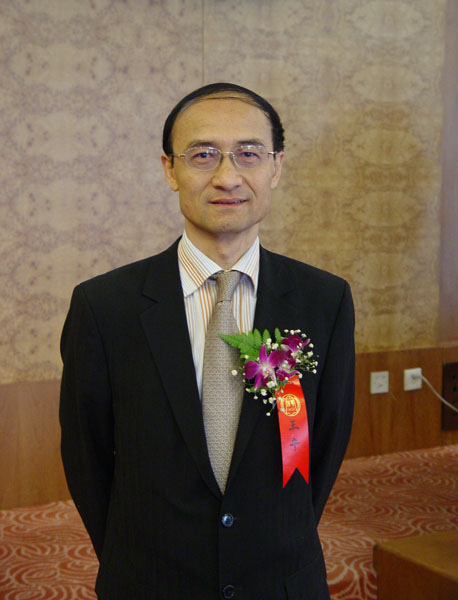
Wang Ning is a distinguished Professor of English and Comparative Literature with affiliations at Tsinghua University (part-time) and Shanghai Jiao Tong University. His career spans prestigious roles including Zhiyuan Chair Professor (2009–present) and Changjiang Distinguished Professor (2013–present). Born in 1955, he holds academic qualifications from institutions in China, Europe, and North America. Research interests focus on cosmopolitanism, translation studies, Northrop Frye's mythopoeia, cultural studies, and Chinese-Western comparative literature. He has secured over ten grants since 1991 aimed at introducing European theory to China and has conducted research across Europe, North America, and Australia as a visiting professor/research fellow. Key achievements include the Changjiang Scholars Award (2013), membership in Académé de la Latinité (2010), and fellowships at Cambridge and Gottingen Universities. He co-founded Chinese editions of New Literary History and Critical Inquiry , advancing transnational literary discourse. Wang has delivered keynote lectures globally and led initiatives to bridge Chinese and Western literary traditions. His work emphasizes global literary dynamics, translation’s role in cultural exchange, and reinterpreting modern Chinese literature within global contexts.