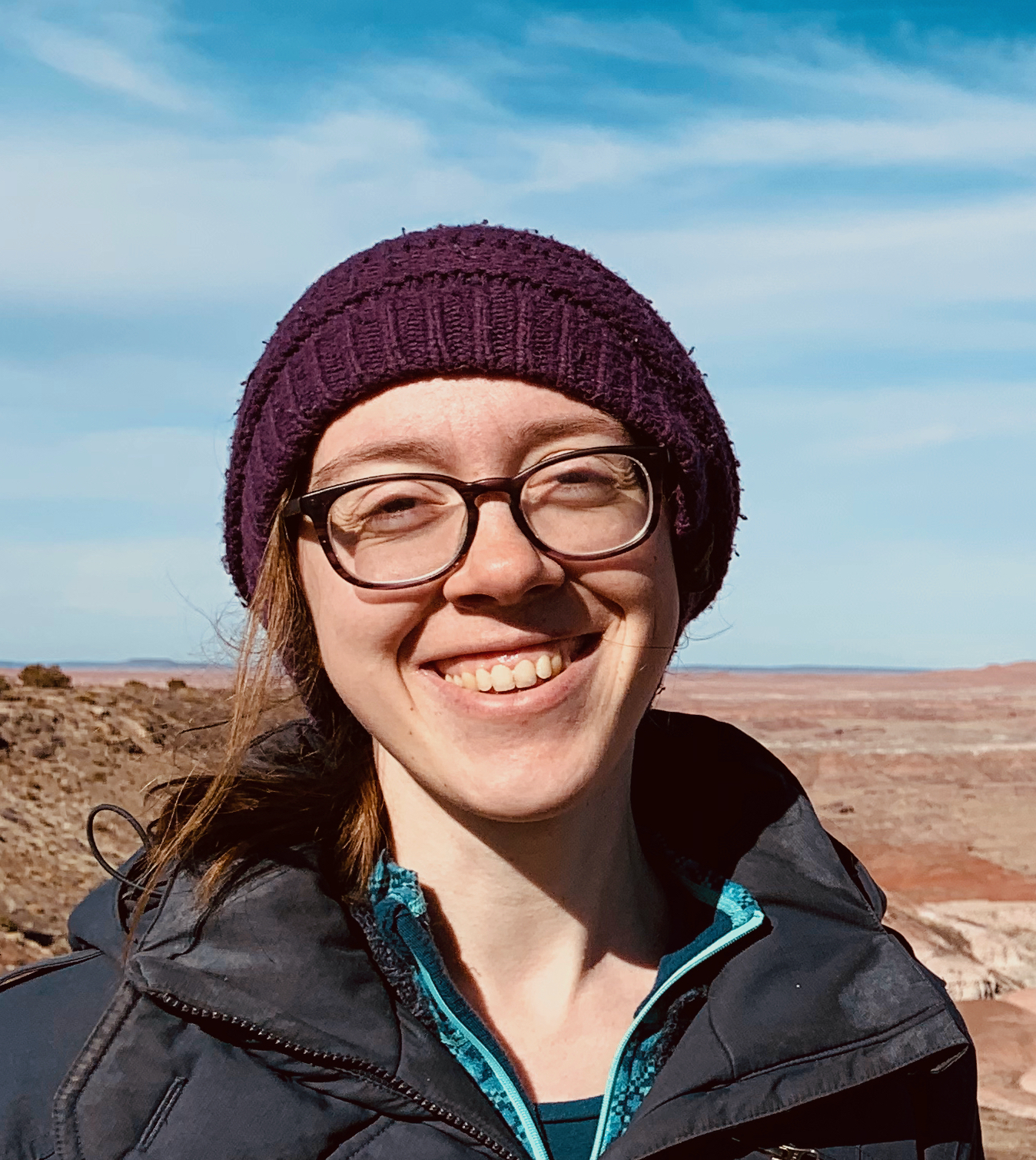
Kelsey Allen is an Assistant Professor in the Department of Computer Science at the University of British Columbia (UBC) and a Senior Research Scientist at DeepMind. Her research bridges cognitive science, machine learning, and robotics, focusing on understanding and replicating human-like problem-solving, tool use, and physical reasoning. She holds a PhD from MIT (2016) under Josh Tenenbaum and a B.Sc. in Physics from UBC (2010). Research Interests : Allen investigates computational mechanisms underlying human complex behaviors, particularly tool use and design. Her work emphasizes endowing machines with flexible problem-solving abilities. Key themes include lifelong learning, embodied cognition, and integrating symbolic and neural approaches. Awards & Recognition Best Paper Award at Robotics: Science and Systems (RSS) 2018 Oral Presentation at Cognitive Science Society 2019 Spotlight at NeurIPS 2018 and ICLR 2019 Key Projects : Includes developing graph network simulators for rigid body dynamics, tools for physical design optimization, and studies on human tool-use learning. Her work often combines empirical experiments with machine learning models to bridge human and artificial intelligence.
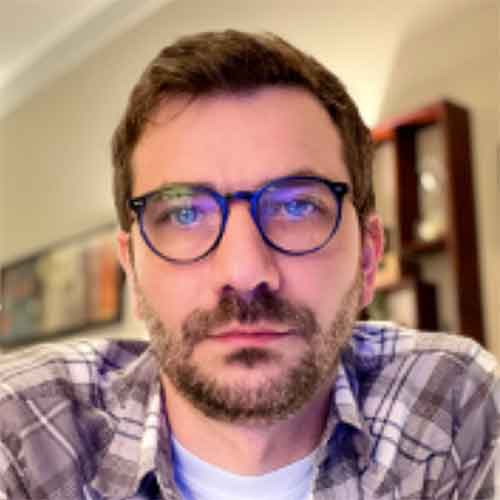
Liam Kendall is a Researcher at the Centre for Environmental and Climate Research (CEC) and Principal Investigator at BECC: Biodiversity and Ecosystem services in a Changing Climate at Lund University. He holds a PhD in Applied Ecology from the University of New England, Australia, and previously served as a Postdoctoral Fellow at CEC. His research focuses on leveraging pollinator biodiversity to enhance crop pollination services, nature conservation, socio-economic outcomes for farmers, and sustainable food production. His work contributes to UN Sustainable Development Goals related to Ecology, Agricultural and Veterinary sciences, and Environmental Sciences. Key projects include BIOSPACE (2024–2027), exploring biodiversity conservation via satellite monitoring, and The economic importance of pollinator interactions (2023–2027), funded by FORMAS. He also leads Pathogen spillover between managed and wild bees (2023–2024), supported by The Royal Physiographic Society in Lund. His research highlights include a global meta-analysis on diel pollination cycles, bumblebee community visual traits in Sweden, and crop-driven pollinator niche overlap. Notable activities include media engagement about nocturnal pollination and presentations on pollinator-crop interactions at international conferences.
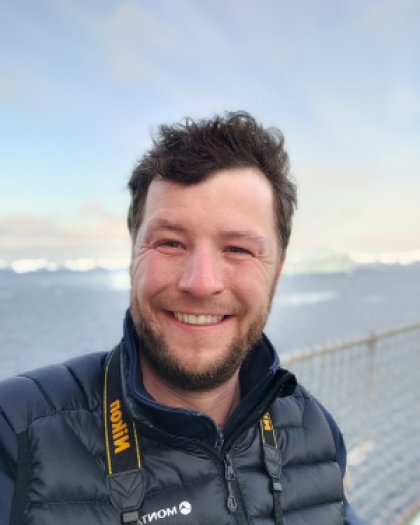
Giuseppe Bianco is a Researcher at Lund University affiliated with multiple profile areas including NanoLund: Centre for Nanoscience, LTH Profile Area: Nanoscience and Semiconductor Technology, LU Profile Area: Light and Materials, and LU Profile Area: Natural and Artificial Cognition. He serves as technical expert of the Animal Navigation Lab, manager of the 3D Laboratory, and Principal Investigator for the Migration in small aquatic animals project. His research focuses on developing innovative tracking technologies and computational methods for animal behavior data acquisition, modeling, and analysis across diverse taxa and scales. His work spans animal migration studies using birds as model species, nano particle tracking of zooplankton using computer vision and fluorescent nanotechnology, and advanced 3D phenotyping of both extant and extinct organisms. His research contributes to UN Sustainable Development Goals related to environmental protection and biodiversity. Analysis of his publication record shows consistent output in high-impact journals with research spanning animal migration patterns, magnetic navigation, behavioral ecology, and zooplankton dynamics. His work demonstrates interdisciplinary approaches combining field studies, laboratory experiments, and computational modeling. As Principal Investigator for the Migration in small aquatic animals project, he leads collaborative research efforts. His work has received attention across multiple platforms including news outlets, social media, and academic platforms like Mendeley. He manages the Cell Sorting & Imaging Lab within the Functional Ecology infrastructure and oversees the 3D Laboratory, which specializes in quantifying, analyzing and visualizing complex 3D phenotypes. His technical expertise bridges biological research with advanced imaging and tracking technologies.
**Roles & Affiliations**: Professor of Psychology and Beckman Institute for Advanced Science and Technology at the University of Illinois Urbana-Champaign. Holds dual appointments in Psychology and interdisciplinary research through the Beckman Institute. **Education**: PhD from Massachusetts Institute of Technology (MIT). **Research Interests**: Focuses on the neurobiological basis of emotion regulation, cognitive-emotional interactions in psychopathology (anxiety/depression), and spatial cognition. Explores brain lateralization, spatial memory distortions, and higher-dimensional spatial reasoning. Recent work includes human safety perception with UAVs, mind-wandering dynamics, and non-Euclidean spatial learning in virtual environments. Uses virtual reality, behavioral experiments, and computational models to study spatial navigation, attention, and human-computer interaction. **Article Trends**: Research spans spatial cognition (e.g., curved/non-Euclidean spaces), safety perception with drones, cognitive fluctuations in mind-wandering, and cross-modal effects (auditory-visual interactions). Integrates neuroscience and robotics to advance human-robot collaboration models. **Advising & Collaborations**: Supervised over 20 graduate students. Collaborates with experts in robotics (Naira Hovakimyan), vision science (Paul Kwiat), and cognitive neuroscience (Diane Beck, Sepideh Sadaghiani). Projects include Beckman Institute initiatives on spatial cognition and interdisciplinary AI-human interaction. **Labs & Teams**: Leads research at Beckman Institute’s Spatial Cognition and Human-Computer Interaction labs. Active in UIUC’s interdisciplinary programs on robotics, perception, and computational neuroscience.
Stephen Chester is an Associate Professor in the Department of Anthropology at Brooklyn College, part of the City University of New York (CUNY) system. He also serves as a doctoral faculty member in the PhD Program in Anthropology at The Graduate Center, CUNY, and is a core faculty member in the New York Consortium in Evolutionary Primatology (NYCEP). Dr. Chester maintains affiliations with four major natural history museums: the American Museum of Natural History, Denver Museum of Nature & Science, Florida Museum of Natural History, and Yale Peabody Museum, where he builds significant fossil collections. Dr. Chester received his PhD with distinction from Yale University in 2013 under the tutelage of Eric Sargis. His academic journey has positioned him at the forefront of research on primate origins and mammalian evolution following the Cretaceous-Paleogene mass extinction. As a biological anthropologist and paleontologist, Chester specializes in the origin and early evolutionary history of primates and other placental mammals. His research focuses on the skeletal anatomy of fossil primates that lived shortly after the extinction of the dinosaurs. He employs advanced techniques including micro-CT scanning, 3D visualization, and morphometric analyses to examine primate supraordinal relationships and evolutionary morphology. A significant portion of his work investigates how mammals responded to periods of global warming in Earth's history, providing insights into current climate change challenges. Analysis of Dr. Chester's recent publications reveals a strong emphasis on Paleocene mammals, particularly plesiadapiforms and other early primate relatives. His research increasingly incorporates advanced imaging technologies to examine cranial and skeletal morphology in unprecedented detail. The work spans multiple disciplines including paleontology, evolutionary biology, and anthropology, addressing fundamental questions about primate origins through detailed morphological analyses and phylogenetic studies. Dr. Chester's contributions to the field have been recognized through coverage in major media outlets including National Geographic, PBS NOVA, and The New York Times, though specific formal scientific awards are not mentioned in the available information. As a dedicated mentor, Chester has advised numerous students across academic levels, from undergraduate to PhD candidates. His research is currently funded by prestigious sources such as the National Science Foundation and Leakey Foundation, supporting both his field expeditions in western North America and laboratory work. He has served as an Associate Editor for the Journal of Human Evolution and is a Series Editor with Eric Delson for the Vertebrate Paleobiology and Paleoanthropology book series at Springer Nature Publishing. Dr. Chester directs the Mammalian Evolutionary Morphology Laboratory (MEML), which functions as a fully operational fossil preparation facility, 3D scanning and visualization studio, and computing laboratory for morphometric and phylogenetic analyses. MEML is noted for its commitment to inclusivity, operating on the principle that diverse perspectives lead to better scientific outcomes. The laboratory actively involves undergraduate and master's students from Brooklyn College, as well as PhD students from The Graduate Center, CUNY, and the New York Consortium in Evolutionary Primatology.
John O. Dabiri is a faculty member at California Institute of Technology , focusing on fluid dynamics, biomechanics, and marine biology. His research explores aquatic locomotion, vortex dynamics, and animal-fluid interactions, often in collaboration with institutions like Roger Williams University and the Marine Biological Laboratory. Research Interests : Hydrodynamics of swimming organisms Vortex generation and manipulation Biological propulsion mechanisms Fluid-structure interactions in marine animals Comparative biomechanics Passive energy recapture in locomotion Collaborative Networks : Frequently collaborates with researchers such as Sean P. Colin, John H. Costello, Brad J. Gemmell, and Kakani Katija. Funded by the National Science Foundation (Grant #1510929). Technological Contributions : Co-developed the Self-Contained Underwater Velocimetry Apparatus (SCUVA) for in situ hydrodynamic measurements and biohybrid robotic jellyfish for propulsion studies.
Sarah Enos Watamura is a Professor in the Psychology Department at the University of Denver’s College of Arts, Humanities and Social Sciences. She serves as Faculty Senate President, Chair of the Psychology Department, and co-Director of the Stress, Early Experiences and Development (SEED) Research Center since 2014. Education: Ph.D. (2005), MA (2002) in Developmental Psychology from Cornell University; BS (1998) in Child Development from University of Minnesota. Research Focus: Investigates stress and adversity in low-income families, integrating psychobiology with community-engaged approaches. Key themes include socioeconomic measurement, caregiver well-being, early childhood interventions, and buffering toxic stress through parenting behaviors. Publication Trends: Recent work examines neural responses to infant cries (2025), pandemic-era parenting stress (2020), stress buffering mechanisms (2020), and poverty-related risk factors (2014). Earlier studies (2000-2010) explore crowding effects, parenting stress measurement, and Early Head Start program efficacy. Grants: Lead researcher on multiple Administration for Children and Families grants (e.g., 90YR0056, 90YR0059) supporting multisite studies on poverty-related stress models. Professional Service: Member of International Society for Developmental Psychobiology and Society for Research in Child Development.
Yen-Ling Kuo is an Assistant Professor in the Department of Computer Science at the University of Virginia and a member of the Link Lab. Her research focuses on robot learning, human-AI/robot interaction, and integrating artificial intelligence with cognitive science to enable robots to generalize reasoning skills for human interaction, including language understanding and common sense reasoning. She holds a PhD from MIT CSAIL, advised by Boris Katz and Andrei Barbu. She teaches courses such as Artificial Intelligence and Learning for Interactive Robots, emphasizing foundational AI concepts, robotics applications, and generative AI. Research Interests: Robot Learning Human-AI/Robot Interaction Cognitive Science Integration Machine Learning for Robotic Systems Awards: NSF CAREER Award (2024) Advising & Grants: Actively recruiting students for her UVA research group, focusing on interactive robotics and AI collaboration. Her work is supported by grants including the NSF CAREER Award. Labs: Member of the Link Lab, a leading center for robotics and autonomous systems at UVA.
Jordi Delgado Pin is a faculty member at the Universitat Politècnica de Catalunya (UPC), affiliated with the Faculty of Computer Science (FIB) and the Department of Computer Science. He is an active researcher in the IDEAI-UPC and SOCO (Soft Computing) research groups, contributing extensively to artificial intelligence, machine learning, and complex systems. His research interests include artificial intelligence, machine learning, computational complexity, neural networks, and data science, with applications in biological and social networks. He has made significant contributions to unsupervised learning methods, particularly in contrastive divergence and community detection in complex networks. The analysis of his recent publications reveals a strong focus on machine learning optimization, neural network training, and theoretical foundations of computing. His work spans both theoretical and applied domains, including educational technology and bio-inspired algorithms. Jordi Delgado Pin has participated in multiple competitive R&D+i projects, such as 'Gestió i Anàlisi de Dades Complexes' and 'Mineria en datos biológicos y sociales', demonstrating sustained research activity. He has also contributed to educational initiatives in programming and data science. He is involved in key research laboratories including IDEAI-UPC, SOCO, and LARCA, fostering interdisciplinary collaboration in data science and AI.
Marcelo Mollinari is an Assistant Research Professor at North Carolina State University, affiliated with the Department of Horticultural Science and the Bioinformatics Research Center. His research focuses on genetic statistics and computational strategies to decode inheritance patterns in polyploid species, particularly in plants like sweetpotato and alfalfa. He develops tools such as the VIEWpoly app for visualizing genetic maps and QTL analysis. His work encompasses genomic characterization of polyploid crops, including hexaploid sweetpotato and Urochloa humidicola. He has contributed to public genotyping platforms and advanced methods for linkage mapping and haplotype phasing in complex genomes. Mollinari’s publications highlight advancements in QTL discovery for traits like disease resistance and nutritional content, as well as computational pipelines for genomic data analysis. Key contributions include the development of R packages like MAPpoly and VIEWpoly , which provide essential tools for geneticists studying polyploid organisms. His research bridges statistical genetics, bioinformatics, and plant breeding to address challenges in crop improvement.
Tom Langbehn is a Researcher at the Department of Biological Sciences, University of Bergen (UiB), affiliated with the Theoretical Ecology Group and the Bjerknes Centre for Climate Research. His work integrates theory, modeling, and field experiments to study marine ecosystems, with a focus on light-driven ecological interactions, mesopelagic zones, and polar environments. Research Interests: Langbehn specializes in understanding how light and vision influence species distributions, predator-prey dynamics, and ecosystem responses to climate change. He explores topics such as mesopelagic fish ecology, Arctic sea-ice impacts, and the effects of artificial light on marine organisms. His recent projects include investigating trophic subsidies from open oceans and reimagining fisheries as sustainable food systems. Key Projects: Leads the Trond Mohn-funded project on Advection and Trophic Subsidies (2025–2028), and collaborates on How can fisheries contribute more to a sustainable future? Scientific Awards: TMF Starting Grant (2025) Labs/Teams: Theoretical Ecology Group, Bjerknes Centre for Climate Research
Dr. Andrew Meso is a Senior Lecturer in Computational Neuroscience at King's College London, affiliated with the Department of Neuroimaging and the Institute of Psychiatry, Psychology & Neuroscience. His research focuses on dynamic human visual processing, leveraging computational models and experimental methods to explore how sensory and motor systems interact. He teaches courses on reproducible research practices and quantitative methods for scientists. Key areas of study include eye movements, perceptual stability, and atypical sensory processing in conditions like autism and schizotypy. Research interests span computational neuroscience, sensory integration, and visual motion analysis. Notable collaborations include work with institutions like the Institut de Neuroscience de la Timone and the University of Western Australia. His recent publications address topics such as motion perception, perceptual decision-making in aging populations, and cognitive strategies in visual foraging. He contributes to interdisciplinary initiatives through the Research Centre for Urban Science and Progress (CUSP) London, focusing on urban science and innovation. His work aligns with UN Sustainable Development Goals related to health and well-being.
Elisa Frasnelli is an Associate Professor at the University of Trento, Italy, affiliated with the Center for Mind/Brain Sciences (CIMeC). Her research focuses on animal cognition, cerebral asymmetry, and neuroethology across species including honeybees, bumblebees, octopuses, and domestic animals. She holds editorial roles at journals like Animal Behaviour and Learning & Behavior , and serves as Secretary of the Association for the Study of Animal Behaviour (ASAB). Education: PhD in Cognitive and Brain Sciences, University of Trento (2010) MSc in Physics and Biomedical Technologies, University of Trento (2007) BSc in Applied Physics, University of Trento (2004) Research Interests: Lateralization in invertebrates and vertebrates Spatial navigation and visual-motor control in insects Neuromodulation of pain perception in bumblebees Impact of environmental stress on pollinator health Awards: JSPS Fellowship (2017) ASAB Above & Beyond Award (2016) PRIN 2022 Grant (€230k) for LADISEX Project Grants & Collaborations: PI of MicroBeeH Project (CARITRO, 2024) Coordinator of IBC Project on pollinators and climate change Teaching: Leads courses on Invertebrate Neurosciences and Mathematical Foundations for Cognitive Science at the University of Trento.
Dr. Kathryn Napier is a Lead Data Scientist at the Curtin Institute for Data Science (CIDS) within Curtin University's Faculty of Science and Engineering. She leads the Curtin Open Knowledge Initiative (COKI), a team developing tools to track open access research performance and improve scholarly communication. Her work bridges data science, healthcare informatics, and bioinformatics, with a focus on transdisciplinary research integration. Education: PhD BSc (Honours) BSc CHIA (Certified Health Informatics Analyst) Research Focus: Kathryn’s research spans data science applications in healthcare, bioinformatics, and open access metrics. She designs web-based registries for rare diseases (e.g., familial hypercholesterolemia, Angelman syndrome) and develops machine learning models for clinical and ecological studies. Her work emphasizes privacy-preserving data linkage and global research evaluation tools. Key Projects: COKI Dashboard: Tracks global open access performance using 12 trillion data elements Chronic Kidney Disease Modeling: Uses linked health data to improve outcomes Ballet Biomechanics: Machine learning for dancer posture analysis Labs/Teams: Leads the COKI team, collaborating with CWTS (Leiden University) and international partners to advance open science and university performance analytics.
Dr. Roland Pusch is a researcher affiliated with the Department of Biopsychology at Ruhr University Bochum's Faculty of Psychology. His work focuses on the neurophysiological basis of cognitive behavior, utilizing controlled behavioral experiments combined with electrophysiology and optogenetics in pigeon models (Columba livia). He investigates extinction learning, object categorization, and working memory mechanisms through comparative studies of birds and mammals. Education : PhD in Neuroethology and Sensory Ecology from Bonn University (2007–2013); studies in Biology and Social Science (2000–2006). Career : Postdoc at Ruhr University Bochum (2013–present); student teacher (2012–2013); associate member of University of Bonn's Graduate School 'Bionics' (2009–2012). His research spans electrophysiology , sensory physiology , and neurobiology , with recent articles exploring extinction learning dynamics, optogenetic vector optimization, and computational modeling in avian cognition. Publications since 2008 highlight his expertise in sensory systems (electric fish, pigeons) and neural mechanisms of behavior. He received a Friedrich-Ebert-Foundation fellowship during his PhD. His 2012–2025 publications reveal trends in: (1) extinction learning and memory (2020–2025), (2) comparative neuroanatomy (2012–2021), (3) optogenetics and neural imaging (2012–2021), and (4) sensory adaptation in extreme environments (2008–2013). Collaborations with Güntürkün, Cheng, and Rose underscore his role in avian cognition research. Scientific Awards Friedrich-Ebert-Foundation post-graduate fellowship (2007–2010) While no explicit student list is provided, his publications with multiple co-authors suggest mentorship roles. His work involves awake animal neuroimaging , 3D-printed neural implants , and machine learning integration in cognitive studies. The lab employs electrophysiological single-cell recordings and optogenetic interventions to dissect neural processes.