Anna Levina is an Assistant Professor for Computational Neuroscience at the University of Tübingen , affiliated with the Department of Computer Science under the Faculty of Science. Her research focuses on the self-organization of neuronal activity, critical dynamics in neural networks, and the excitation/inhibition balance in cortical circuits. Current positions: Assistant Professor (since 2018), Group Leader (2017-2018), Equality Officer (Computer Science) Previous roles: IST Fellow (2015-2017), Associated Researcher (2011-2015), Postdoc/PI (2011-2015), Postdoc (2008-2011) Her research integrates mathematical modeling , statistical physics , and computational neuroscience to study criticality phenomena, neural avalanches, and adaptive network dynamics. Key interests include: Self-organized criticality in neural systems Excitation/Inhibition balance mechanisms Network topology and dynamics Timescale analysis in neural processing Stochastic modeling of neural activity Recent publications reveal trends in understanding critical dynamics across biological and artificial networks, with applications to memory systems, sensorimotor integration, and disease modeling. She has received recognition as an IST Fellow .
Jens Krause is a Professor and Head of Department at the Leibniz Institute of Freshwater Ecology and Inland Fisheries (IGB) in Berlin, leading the Research Group on Mechanisms and Functions of Group-Living. He holds a full professorship in Fish Ecology at Humboldt-Universität zu Berlin, Faculty of Life Sciences, Thaer-Institute, and since 2018 has been an Adjunct Professor at Technical University Berlin within the Excellence Cluster 'Science of Intelligence'. His research is centered on collective intelligence, social networks, decision-making, and behavioural ecology in fish and other animals. Full Professor in Fish Ecology, Humboldt-Universität zu Berlin Adjunct Professor at Technical University Berlin (since 2018) Head of Department, IGB Berlin PhD, University of Cambridge Diploma, Free University Berlin His work integrates experimental biology, network analysis, and biomimetic robotics to understand how animals make collective decisions. His expertise spans animal behaviour, evolution, and ecological physiology, with a strong focus on group-living dynamics. Recent research explores group hunting, predator evasion, social foraging, and the impact of environmental stressors on collective behaviour. The analysis of his recent publications reveals a strong trend in understanding collective behaviour in fish, including escape waves, social foraging, group hunting in marlins and sailfish, and the use of robotic agents to study social integration. His interdisciplinary approach combines marine biology, physics, robotics, and data science to uncover the mechanisms behind collective intelligence in both animal and human systems. Editorial Board, Behavioral Ecology Editorial Board, Fish and Fisheries Executive Board, Excellence Cluster 'Science of Intelligence' Advisory Board, Bimini Biological Field Station Foundation He advises numerous PhD students and postdoctoral researchers, and leads major research projects, including 'Developing exploration behaviour' funded by the Excellence Cluster. His work has been supported by extensive collaborations across Europe and North America, and he frequently publishes in top-tier journals such as Nature , Science Advances , Proceedings of the Royal Society , and Current Biology . His lab employs cutting-edge methods including automated tracking, social network analysis, and interactive robotics to study animal groups. His research group, 'Mechanisms and Functions of Group-Living', is embedded within the Excellence Cluster 'Science of Intelligence', where they investigate collective cognition, social information use, and the role of individual differences in group performance. The team combines field studies with laboratory experiments and computational modelling to understand the evolution and function of collective behaviour across species.
Dr. Kamran Safi is a Group Leader at the Max Planck Institute of Animal Behavior (Konstanz, Germany), holding a permanent position as a Senior Researcher (Principal Investigator) with the Computational Ecology Lab. He is also affiliated with the International Max Planck Research School (IMPRS) for Organismal Biology as a faculty member. Education: PhD in Biology (2007), University of Zürich: Thesis on social sexual segregation in bats MSc in Biology (2001), University of Zürich: Thesis on olfactory communication in Bechstein’s bats Bachelor’s in Biology (2000), University of Zürich Research Interests: Focus on movement ecology, macro-ecology, and macro-evolution. Key areas include analyzing animal-environment interactions using remote sensing and sensor data, modeling energy landscapes, and understanding biodiversity patterns. Methodological expertise includes computational ecology, probabilistic analysis, and interdisciplinary data fusion. Articles Summary: Recent work spans animal flight mechanics (e.g., golden eagles using gravity waves), conservation applications (e.g., vulture nesting habitat loss), and software development (e.g., move2 R package). Themes include climate impacts on movement, remote sensing for ecology, and energy efficiency in flight. Achievements: Pioneered MoveApps, an open analysis platform for tracking data. Authored over 40 peer-reviewed articles, with contributions to conservation protocols like the EDGE2 framework. Grants & Labs: Leads the Animal-Environment Interactions Lab and collaborates globally. Projects include studying vultures in drylands, eagle flight in the Alps, and developing tools like the SOS framework for Earth observation integration.
Fumihiro Kano is a comparative psychologist at the Centre for the Advanced Study of Collective Behavior, University of Konstanz, and an Affiliated Scientist at the Max Planck Institute of Animal Behavior. His research focuses on the evolutionary origins of social intelligence, using cutting-edge technologies like eye-tracking, motion-capture, and thermal imaging to study social cognition in great apes, monkeys, and birds. Education: PhD in Biological Sciences (Primate Research Institute, Kyoto University) Key Collaborations: Max-Planck Institute for Evolutionary Anthropology, University of Oxford, Kumamoto Sanctuary (Kyoto University) Kano’s work spans comparative analysis of gaze behavior, emotional processing, and collective decision-making. He has developed wearable sensors for free-flying pigeons and non-invasive methods for studying primates in sanctuaries. His studies on the human eye’s uniformly white sclera have provided experimental support for the gaze signaling hypothesis . Recent research integrates large-scale motion-capture systems with gaze-tracking to analyze interspecies interactions in pigeons, crows, and humans. He specializes in quantifying attention dynamics during collective behavior, including vigilance in birds and social cognition in apes. Scientific Awards: Heidelberg Academy of Sciences Manfred Fuchs Preis (2023) APA Division 6 Early Carrier Investigator Award (2020) Japanese Psychological Association International Award (2018) Kano leads interdisciplinary teams combining computer vision, psychology, and behavioral ecology. His work bridges evolutionary biology and technological innovation, with applications for understanding human uniqueness and animal cognition.
Dominik Deffner serves as a Qualifikationsprofessur (W1, Tenure Track W2) for Computational Modeling of Behavior at the Department of Psychology, Philipps University of Marburg. His research group, Computational Modeling of Behavior (AG Deffner), is housed in the Institute Building at Gutenbergstraße 18 in Marburg. Deffner's work bridges cognitive science, evolutionary anthropology, and social psychology through interdisciplinary approaches combining dynamic group experiments, cultural evolution studies, and computational modeling. Deffner's educational background includes a PhD (Dr.rer.nat.) from the Max-Planck-Institute for Evolutionary Anthropology in Leipzig (2018-2021), an MSc in Evolutionary and Comparative Psychology from the University of St Andrews, UK (2016-2017), and dual undergraduate degrees in Psychology and Comparative Cultural and Religious Studies, Philosophy from Philipps-University Marburg (2012-2016). Prior to his current position, he worked as a postdoc at the Max-Planck-Institute for Human Development and Science of Intelligence Cluster in Berlin (2021-2024). His research interests focus on understanding how individuals and collectives adapt to changing and uncertain environments through cognitive processes and social/cultural dynamics. Deffner's work primarily investigates collective dynamics and cultural evolution, cognitive modeling and Bayesian statistics, causal inference, cross-cultural comparative methods, and collective foraging. He combines immersive computer games, field research, and statistical modeling to study social cognition in naturalistic groups, particularly examining how visual-spatial dynamics drive adaptive social learning in complex environments. Analysis of Deffner's recent publications reveals a strong emphasis on interdisciplinary research that bridges theoretical frameworks with empirical data. His work spans computational approaches to cultural evolution, collective decision-making processes, risk-sensitive learning strategies, and causal inference methodologies. A notable trend is his integration of Bayesian statistics with agent-based modeling to understand social learning dynamics across different contexts, from human groups to animal behavior studies. His research increasingly focuses on developing statistical workflows that enable robust causal inferences in cross-cultural research. As an academic advisor, Deffner offers thesis opportunities in both empirical work (interactive group experiments, data analysis) and statistical/theoretical modeling (cognitive modeling, collective behavior, cultural evolution). His research group welcomes students interested in social learning, decision research, cultural evolution, group processes, and advanced Bayesian data analysis methods. While specific grant information isn't detailed in the provided texts, his affiliation with the Max Planck Society and publication in high-impact journals suggest successful funding acquisition for his research program. Deffner leads the Computational Modeling of Behavior research group, which investigates cognitive decision-making processes in groups interacting in natural and complex environments. The group combines immersive computer games and field research with statistical modeling to better understand collective dynamics in real-world contexts. Current research directions include social cognition in naturalistic groups, social learning and cultural evolution, causal inference and statistical workflows, and flexibility and adaptation in both human and non-human animals.
Prof. Dr. Konstanze Krüger-Farrouj serves as Professor of Horse Keeping and Animal Welfare Officer at Nürtingen-Geislingen University of Applied Sciences, maintaining active office hours at Campus CI3 in Nürtingen, Germany. Her institutional role integrates academic research with practical animal welfare oversight in equine management systems. Her research specializes in equine cognitive ethology with emphasis on sensory laterality, social learning mechanisms, and non-invasive welfare assessment. Key investigations explore how horses process environmental stimuli, transfer knowledge through observation, and exhibit behavioral asymmetries linked to emotional states—directly informing evidence-based training and husbandry practices that prioritize psychological well-being alongside physical health. Analysis of her 2021-2025 publications reveals consistent methodological innovation in measuring welfare through immunoglobulin A, laterality patterns, and problem-solving tasks. Recurring themes include human-horse communication dynamics, impacts of housing systems on stress physiology, and the cognitive implications of rider presence—demonstrating translational research bridging laboratory findings to practical equine management. No scientific awards were documented in available sources. While specific advisees aren't listed, her active supervision is evidenced by collaborative publications with institutional colleagues. Research infrastructure leverages the university's Lehr- und Versuchsbetriebe (LVB) agricultural facilities where experimental stables and pastures enable controlled behavioral studies. Current projects focus on predator-horse interactions and laterality-based welfare indicators, supported by ongoing publication output in specialized equine science journals. Her work operates within the university's agricultural research ecosystem, utilizing Lehr- und Versuchsgärten (LVG) facilities for ethological studies that examine natural behavior in semi-controlled environments, particularly investigating group dynamics and environmental enrichment strategies.
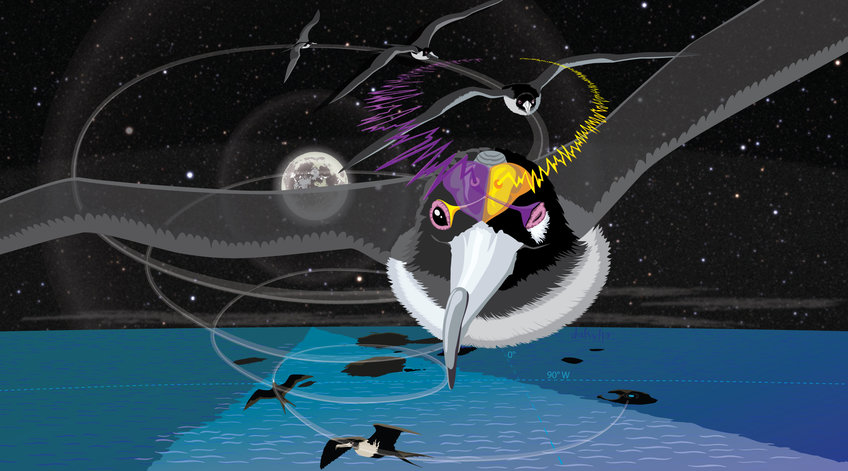
Dr. Niels Rattenborg serves as Research Group Leader at the Max Planck Institute for Biological Intelligence (formerly Max Planck Institute for Ornithology) in Seewiesen, Germany, where he has directed the Bird Sleep Research Group since 2005. His pioneering work focuses on the evolution and neurophysiological mechanisms of sleep in birds, utilizing advanced techniques including high-density electrode arrays and telemetry systems to study sleep patterns in both controlled laboratory environments and natural field settings. Dr. Rattenborg's research has fundamentally changed our understanding of avian sleep through groundbreaking discoveries about sleep in flight. His work with great frigatebirds (Fregata minor) demonstrated that birds can sleep while flying over the ocean, typically with one brain hemisphere at a time but occasionally with both hemispheres simultaneously. Remarkably, these birds accumulate less than one hour of sleep per day for up to 10 days during flight, challenging the mammalian paradigm that adaptive waking performance requires substantial sleep. His research extends to diverse avian species including grey-breasted sandpipers (Calidris melanotos) and chinstrap penguins, revealing how birds employ unique sleep strategies to survive in challenging ecological environments. Analysis of Dr. Rattenborg's recent publications (2022-2025) reveals three major research themes: neurophysiological mechanisms of avian sleep, ecological adaptations of sleep patterns in natural environments, and comparative evolutionary studies across species. His work spans multiple disciplines including neuroscience, ecology, evolutionary biology, and physiology, with particular emphasis on how birds adapt their sleep architecture to environmental constraints. The research demonstrates remarkable diversity in avian sleep strategies that challenge traditional mammalian models of sleep regulation. Dr. Rattenborg's significant contributions to sleep science have been recognized with prestigious awards: Sleep Research Society Young Investigator Award (2000) for best peer-reviewed paper Sleep Research Society Outstanding Scientific Achievement Award (2017) As leader of the Bird Sleep Research Group, Dr. Rattenborg oversees a multidisciplinary team conducting cutting-edge research that has developed innovative methodologies for studying sleep in natural settings. His laboratory's development of the ONEIROS device—a miniature standalone recorder for sleep electrophysiology, physiology, temperatures, and behavior—has revolutionized field studies of sleep. The group's comparative approach to sleep research provides crucial insights into the evolutionary history and fundamental functions of sleep, with implications for understanding sleep disorders and the consequences of sleep loss in humans.
Johannes Spaethe is a PD Dr. (Privatdozent) and research group leader at the Chair of Zoology II (Behavioral Physiology & Sociobiology) at the University of Würzburg , Germany. His work integrates molecular genetics, neurobiology, and behavioral science to study insect sensory systems, particularly visual perception in bees. Academic Affiliation : Chair of Zoology II, Biocenter, University of Würzburg Research Focus : Evolution, function, and ecology of insect sensory systems Research projects include: Psychophysics of color vision in insects Eye development & molecular evolution of opsins Visual learning and memory formation Sensory basis of taste in bees He supervises PhD students Jonathan Heinze and Marielle Schleifer . Contact: johannes.spaethe@uni-wuerzburg.de
Alvaro Lopez Caicoya is a Research Fellow at the Research Institute for Farm Animal Biology (FBN) in Germany since 2023. His work focuses on animal cognition, behavior, and welfare, particularly in ungulates and primates. Research Interests: Understanding social cooperation and helping behaviors in pigs Investigating cognitive abilities across ungulate species Studying neophobia and problem-solving in wild Barbary macaques Exploring gaze-following and attention mechanisms in domesticated and non-domesticated species Research Trends: His recent publications emphasize comparative cognition, quantity discrimination, optical illusions perception, and dominance-style impacts on behavior across ungulates and macaques. Studies include European bison, giraffes, and primates. Labs & Teams: Alvaro is affiliated with the Psychophysiology Working Group at FBN, conducting research on animal cognition in both wild and captive settings.
Dr. Patrick Schultheiss is a PostDoc at the Department of Zoology II (University of Würzburg) within the Biocenter . His research focuses on understanding how insects, particularly ants, navigate natural environments through integrative approaches combining behavioral, neurobiological, and ecological perspectives. Research Interests: Visual navigation in ants and bees Neural mechanisms of search behavior Biogeography and macroecological patterns of ant distribution Swimming kinematics in mangrove ants Desert ant orientation using ultraviolet cues Publications highlight his work on spatial cognition in Melophorus bagoti , mangrove ant biomechanics, and visual perception in desert ants and honeybees. His methods blend field experiments, lab studies, and neurobiological investigations. Contact: Email: patrick.schultheiss@uni-wuerzburg.de Location: Building B1 (Biocenter), Room D112
Dr. Hannah Williams is a Movement Ecologist and Affiliated Scientist at the Max Planck Institute of Animal Behavior , where she investigates soaring bird behavior using bio-logging, UAVs, and simulation modeling. She is affiliated with the University of Konstanz and leads research within the Research Group Safi under the Department of Migration . Current Focus: Social eavesdropping in soaring birds, mapping airflow landscapes through conspecific behavior Previous Institutions: Swansea University (postdoc), University of Exeter (MSc), University of St Andrews (BSc) Research Interests center on movement ecology, animal behavior, and bio-logging. Her work explores how soaring birds use social and environmental cues for navigation, combining field data with computational modeling to decode dynamic movement strategies. Publications (2015-2019) demonstrate expertise in bio-logging technology, flight energetics, and social information theory. Key themes include thermal soaring mechanics, movement pattern recognition, and ecological data visualization tools.
Dr. Hannah Rowland leads the Max Planck Research Group 'Predators and Toxic Prey' at the Max Planck Institute for Chemical Ecology in Jena, Germany. Her work integrates chemical ecology, evolutionary biology, and predator-prey dynamics to investigate defensive strategies in animals, with a focus on warning signals, mimicry, and toxin resistance. Key Research Areas: Chemical defense mechanisms, sensory ecology, avian predation, and evolutionary trade-offs. Affiliations: Max Planck Institute for Chemical Ecology (2017–present), Australian Research Council, Wissenschaftskolleg zu Berlin. Her research explores how predators interact with chemically defended prey, including studies on cardenolide sequestration, social learning in avian populations, and the evolution of complex warning signals. Recent articles highlight interdisciplinary approaches combining behavioral experiments, genomic analyses, and biochemical assays. Dr. Rowland's 2023–2025 publications emphasize adaptive mimicry landscapes, toxin resistance mechanisms, and social information's role in dietary decisions. These works bridge molecular physiology (e.g., Na+/K+-ATPase interactions) and ecological dynamics (e.g., population-specific genomic differentiation in invasive species). Scientific Awards: Australian Research Council Discovery Grant (2019) Wissenschaftskolleg zu Berlin Fellowship (2017) Thomas Henry Huxley Award & Alfred Russel Wallace Award (2008) She employs experimental models like 3D-printed prey, poison frogs, and grasshoppers to dissect defensive trait evolution. Her team's work demonstrates how extraocular photoreception, oxidative trade-offs, and network centrality influence antipredator strategies.
Dr. Franziska Taubert leads the Grassland Modelling working group at the Department of Ecological Modelling, Helmholtz Centre for Environmental Research (UFZ) in Leipzig, Germany. Her research integrates vegetation ecology, ecological modeling, and Digital Twin technologies, focusing on grassland biodiversity dynamics and ecosystem functions. She developed the GRASSMIND model for simulating plant growth in managed grasslands. Research Interests: Her work investigates biodiversity emergence in grasslands, plant trait-environment relationships, and vegetation pattern analysis using field data and remote sensing. Methodologically, she specializes in process-based modeling and Digital Twin applications for environmental systems. Key Projects: EU-Horizon BioDT: Developing a Digital Twin for grassland biodiversity (WP6 Leader) LandTrans: Leading vegetation modeling team (GRASSMIND/FORMIND) PhD College LISA: Modeling socio-ecological impacts of grasslands iDiv Flexpool: Remote sensing of grassland diversity (Co-PI) Her recent publications demonstrate strong emphasis on ecological modeling (43%), biodiversity (29%), and Digital Twin applications (21%), with grassland ecosystems being the dominant focus (86%).
Dr. Daniel Forman is a Senior Lecturer in the Department of Biosciences at Swansea University, affiliated with the School of Biosciences, Geography and Physics. He holds multiple roles including Senior Academic Mentor and Employability Officer. His research focuses on carnivore ecology, wildlife diseases, and ecological monitoring, with a particular emphasis on British wildlife and freshwater systems. Education: Details not explicitly stated in the text, but his academic positions imply advanced degrees in related fields. His research interests span conservation strategies for top predators, such as Eurasian otters, and the ecological impacts of predation. He has contributed to studies on pollination networks, parasite detection in elusive species, and the effects of livestock grazing on pollinators. Forman is also involved in education reforms, particularly in enhancing graduate employability through work-simulated learning frameworks. He has served on numerous committees including the Ethics Committee, Athena SWAN, and the Swansea Academy of Inclusive Learning Management Board. As an academic lead for the Conservation Ecology Society, he advocates for wildlife rehabilitation and biodiversity initiatives. His work often bridges ecological theory with practical conservation solutions.
Dr. Jan Tünnermann is a Research Fellow at the Philipps-Universität Marburg , affiliated with the Department of Cognitive Psychophysiology within the Faculty of Psychology. His research focuses on Visual Foraging, Temporal-Order Perception, and Artificial Visual Attention Systems , with particular emphasis on cognitive modeling and Bayesian estimation techniques. He investigates how attentional mechanisms guide human behavior in naturalistic and experimental settings, including foraging tasks, game-like experiments, and human-computer interaction scenarios. Research Interests : Visual Attention Dynamics and Template Switching Temporal-Order Judgment and Psychophysics Cognitive Models of Attentional Resource Allocation Artificial Visual Systems Inspired by Human Perception Recent work highlights attention's role in optimizing search strategies across oculomotor and manual tasks, revealing trade-offs between speed and accuracy. He collaborates on interdisciplinary projects, such as developing sensory substitution devices for visually impaired individuals and virtual cycling environments for human-in-the-loop experiments. His publications span journals like Journal of Experimental Psychology and Cognitive Computation , with a focus on advancing computational theories of visual attention. Key Contributions : Pioneering use of the Theory of Visual Attention (TVA) in real-world experiments Model-based analysis of temporal-order judgments Development of saliency detection algorithms for artificial systems No scientific awards explicitly listed, though his work has received attention for methodological innovations in attention research.