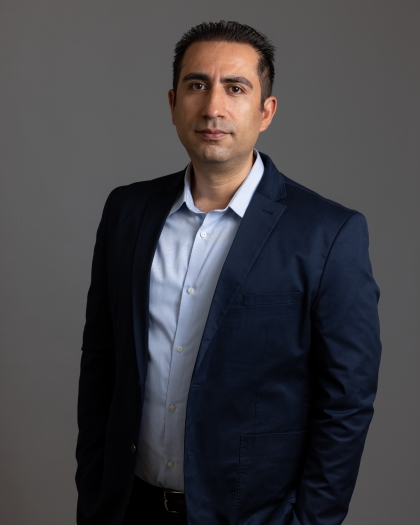
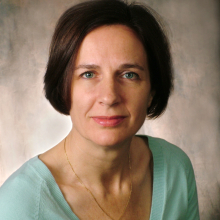
Manolis Chiou is a Lecturer (Assistant Professor) in Computer Science at Queen Mary University of London, part of the School of Electronic Engineering and Computer Science. His expertise lies in Human-Robot Teaming and Interaction within Variable Autonomy systems, emphasizing safety-critical and hazardous environments. Prior roles include Research Fellow at the University of Birmingham, leading the human-robot teaming group and co-founding the Extreme Robotics Lab. Education: PhD in Robotics and AI (University of Birmingham, 2017); MSc in Computational Intelligence (University of Sheffield, 2012); BEng in Automation Engineering (University of West Attica, 2011). Research focuses on developing AI/robotics frameworks for seamless human-robot collaboration, drawing on methods from AI, robotics, human factors, and cognitive science. Key themes include trust models in autonomous systems, variable autonomy paradigms, and operator workload management. Recent work explores robot health indicators, neurosymbolic control, and field-tested disaster response applications. Teaching includes modules on Computational Creativity and Machine Learning. His research has produced over 30 publications since 2015, with a focus on advancing mixed-initiative systems and trustworthy AI in robotics.
Mehdi Elahi is a Professor at the University of Bergen (UiB), affiliated with the Department of Information Science and Media Studies . With a Ph.D. in Computer Science, he has published over 100 peer-reviewed papers and co-invented a US patent in Recommender Systems. As a Work Package Leader in the MediaFutures project (NOK 300M budget, 8-year duration), he collaborates with Norwegian media giants and global companies like Spotify and XING. Research Interests : AI and Data Analytics, focusing on industrial applications in Recommender Systems, algorithmic fairness, and media technology. His work addresses challenges like popularity bias, cold start problems, and integrating visual/audio features into recommendation algorithms. Article Trends : His recent publications emphasize responsible AI , popularity bias mitigation , visual feature integration , and hybrid recommendation models . Key collaborations include Amazon, TV 2, and the Research Council of Norway . Scientific Awards : Prestigious research credits from Amazon Advising : Supervised 7+ theses on topics like news recommendation , movie analytics , and food RS . Key advisees include Vanessa Haaland (2024), Sebastian Bergh (2023), and David Olsen (2022). Projects : Leads MediaFutures, a large-scale initiative with industry-academia partnerships.
Dr. Matthew Vann is an Associate Professor & Tobacco Extension Specialist in the Department of Crop and Soil Sciences at North Carolina State University. His roles include teaching tobacco production courses, advising graduate students, and leading extension programs. He holds the Dr. William K. Collins Tobacco Agronomist Endowed Position. Education: B.S., Environmental Management in Agriculture & Natural Resources, University of Florida (2009) M.S. (2011), Ph.D. (2015), Crop and Soil Sciences, NC State University Research Interests: Flue-cured, burley, and cigar wrapper tobacco production systems Weed management, sucker control, and organic farming practices Pesticide residue analysis and Good Agricultural Practices (GAP) training Nutrient deficiency diagnostics using spectral/hyperspectral technologies Recent Research Trends: Focus on sustainable weed control and herbicide resistance management Integration of precision agriculture tools (drones, spectral analysis) for crop monitoring Exploration of organic nitrogen sources and alternative cropping systems Professional Engagement: Secretary, CORESTA Agrochemical Residue Field Trial Task Force (2015–present) Associate Editor, Agronomy Journal (2020–present) Cooperative Extension leadership roles across 12 North Carolina research stations Advising & Grants: Mentored 21 graduate students since 2015 (15 M.S., 6 Ph.D.) Secured USDA grants for tobacco production research and extension Directed $1.2M in research funding for agronomic trials Labs/Research Stations: Whiteville (Border Belt Tobacco Research Station) Kinston (Cunningham Research Station) Rocky Mount (Upper Coastal Plain Research Station) Oxford (Oxford Tobacco Research Station)
Professor Barbara Szybinska Matusiak is a leading academic in daylighting, architectural lighting design, and sustainable building systems at NTNU. She holds a professorship in the Department of Architecture and Technology within the Faculty of Architecture and Design. Her research focuses on optimizing daylight use in buildings, particularly at high latitudes, and spans over 25 years of academic and practical contributions. Leadership roles: Founded the Light & Colour Centre (2017) at NTNU, previously established the Light & Colour Group (2011). International engagement: Active in CIE, AIC, IEA, and CEN technical committees, contributing to European daylighting standards. Her work integrates architectural design with environmental science, including innovations like the Daylight laboratory (2002) and ROMLAB (2006). She supervises four PhD candidates and one postdoctoral researcher, and has reviewed for top journals/conferences globally. Key research themes include daylight simulation accuracy, occupant-centric lighting design, façade-integrated photovoltaics, and cross-cultural studies on lighting preferences. She advocates for daylight prioritization in urban planning and has authored/co-authored over 100 publications since 1998. Awards: Member of NTVA (Norwegian Academy of Technological Sciences) and DLA (Daylight Academy). Teaching emphasizes daylight, artificial lighting, and color in architectural design. Her research teams engage in global projects like IEA SHC Task 61 and Syn-TES Nordic networks.
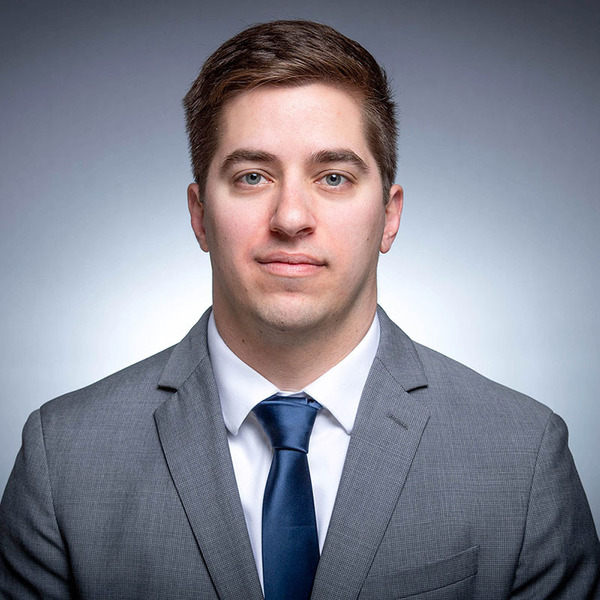
Joshua D. Szczudlak is a Senior Research Scientist at the University of Notre Dame's Turbomachinery Laboratory (NDTL). He leads experimental and numerical projects focused on high-energy propulsion systems, including compressor testing, combustion systems, and turbine-based combined cycle (TBCC) engines. His expertise spans turbomachinery aerodynamics, thermal performance, and high-speed flow diagnostics. Education: Ph.D. in Aerospace and Mechanical Engineering from the University of Notre Dame (2019), advised by Scott C. Morris. His doctoral research addressed complex flow interactions in turbine nozzles. He also holds prior degrees in mechanical/aerospace engineering. Research Interests : Szczudlak’s work emphasizes experimental and computational analysis of high-speed flows, thermal management in propulsion systems, and turbulence modeling. He has developed NDTL’s high-Mach test facilities for advanced engine configurations, including TBCC systems. His research bridges fundamental fluid mechanics with practical applications in aerospace propulsion. Technical Contributions : He pioneered hot-wire probe techniques for high-temperature flows and advanced entropy transport models for quasi-one-dimensional systems. His work on turbine nozzle aerothermal performance and multi-scale turbulence models has informed industry-standard simulations. Currently oversees NDTL’s experimental capabilities, including combustion test cells and direct-connect turbine facilities. Collaborates with aerospace partners on next-generation propulsion technologies.
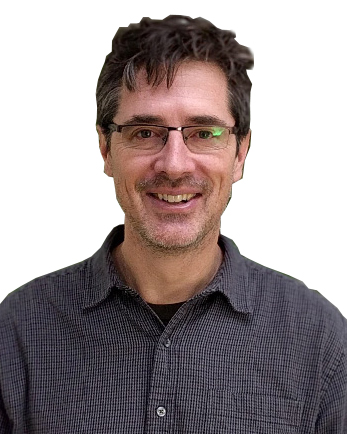
Jude Mitchell is a researcher specializing in visual neuroscience and cognitive processes, focusing on the role of internal brain states like selective attention in modulating sensory processing. His work emphasizes the marmoset (Callithrix jacchus) as a model organism for studying visual perception, attention mechanisms, and neural circuitry. Collaborations include researchers at UC San Diego and The Salk Institute, exploring topics such as saccadic eye movements, cortical activity, and optogenetic techniques. Key research areas include neuronal selectivity, laminar cortical activity, and the integration of motion signals during visual tasks. His research spans studies on dopamine receptor effects on distractibility, neural correlates of reach-to-grasp movements, and the interplay between sleep-wake cycles and circadian rhythms. Mitchell’s methodologies include head-mounted eye tracking, electrophysiological recordings, and computational models of neural networks. He has pioneered techniques for studying free-moving marmosets, enabling deeper insights into visual processing dynamics and attentional modulation across cortical layers and neuron types. Notable contributions include defining attention’s impact on neuronal burstiness and correlation in macaque area V4, and establishing marmoset models for understanding human mental disorders. His work bridges primate neurobiology with translational research, addressing both fundamental questions about brain function and practical applications in neuroscience.
Dr. Malte Ressin is an Associate Professor in Computer Science at the School of Computing and Engineering, University of West London . He has extensive experience in both academia and the software development industry, with a research focus on interdisciplinary collaboration in software development and productive mobile computing. University: University of West London School: School of Computing and Engineering Position: Associate Professor in Computer Science Email: malte.ressin@uwl.ac.uk His research spans software localization, agile development, human-computer interaction, additive manufacturing, and educational technology. He has contributed to numerous peer-reviewed journals, conferences, and book chapters, often in collaboration with international researchers. His work bridges technical software engineering with sociocultural and usability aspects, particularly in global development contexts. The recent publications show a trend toward applied computing in education, manufacturing, and accessibility, with increasing use of machine learning and empirical methods. His work connects software engineering practices with real-world applications in FMCG, esports, and vocational training. Degree Apprenticeship Assessment 3D Printing User Behavior AI in Ubiquitous Environments Software Localization in Agile CAD Data Standards Inclusive Esports Design Dr. Ressin has supervised or co-supervised research activities and contributed to teaching across multiple programs including BSc and MSc degrees in Computer Science, Information Technology, and Digital and Technology Solutions. He has presented at major software engineering conferences such as ICSE, XP, and INTERACT. His doctoral research focused on interdisciplinary collaboration in software localization, forming the foundation of his ongoing scholarly contributions.
Chul Min Yeum is an Associate Professor in the Department of Civil and Environmental Engineering at the University of Waterloo. He leads the CViSS Lab, focusing on smart infrastructure through interdisciplinary research in computer vision, sensing technologies, and artificial intelligence. His work emphasizes developing technologies for structural health monitoring, nondestructive testing, and automated inspection systems. Education: PhD from Purdue University (2016), MS/BS from KAIST (2010/2008) Research interests include smart structures, mixed/augmented reality, robotics, machine learning, and big data analytics applied to civil infrastructure. His recent work explores real-time defect quantification using RGB-D datasets, gaze-based human-robot interaction systems, and machine learning for seismic vulnerability assessments. He teaches courses like AE 121, CIVE 497, and CIVE 700, focusing on computational methods and advanced structural engineering topics. Current research funding supports collaborations with government and industry partners to advance smart infrastructure solutions. Chul Min Yeum holds Sole-Supervisory Privilege Status (SSPS) and is actively mentoring graduate students in areas like computer vision for structural assessment, automated inspection systems, and resilient infrastructure design.
Dr. Kristof Kipp is a Professor and Program Director of Exercise Science in the Department of Physical Therapy at Marquette University. He also serves as Co-Director of Graduate Studies for Sport and Data Analytics. His research focuses on sports science and biomechanics, particularly in musculoskeletal modeling, injury prevention, and athletic performance optimization. Dr. Kipp leads Marquette's Motion Analysis and Biomechanics Laboratory, applying advanced techniques to study movement patterns in athletes and clinical populations. Education: PhD in Nutrition and Exercise Sciences (Oregon State University), postdoc at University of Michigan Key Roles: Exercise Science Program Director, Co-Director of Graduate Studies Research interests include joint-level biomechanics, neuromuscular control, and the application of machine learning in sports analytics. He teaches courses like Introduction to Research in Biomechanics and Advanced Applied Biomechanics in Injury Prevention. Recent studies analyze weightlifting techniques, youth pitching biomechanics, and the effects of chronic ankle instability on movement. His work bridges clinical rehabilitation and elite athletic performance through innovative biomechanical modeling and data-driven approaches.
Dr Lee How Chinh is a Senior Lecturer (Practice) in the Department of Econometrics and Business Statistics at the School of Business, Monash University Malaysia. He is actively involved in teaching, research, and industry collaboration, particularly in data science and analytics. Education: PhD in Statistics, Universiti Sains Malaysia Master of Applied Statistics, Universiti Putra Malaysia Master of Science in Mathematics, Universiti Kebangsaan Malaysia Bachelor of Science (Hons) in Mathematical Sciences, Universiti Kebangsaan Malaysia Dr Lee's research centers on applying statistical and machine learning methods to business and industrial problems. His key interests include predictive modeling, statistical business analysis, and anomaly detection in operational data. He emphasizes practical applications and bridges academia with industry through training and consultancy. The recent publications reflect a strong trend in statistical process control, AI-driven environmental modeling, and educational technology. His work combines theoretical rigor with real-world impact, particularly in quality control and data-driven decision-making. Scientific Awards and Recognitions: Hadiah Sanjungan from PERSAMA for PhD thesis Professional Technologist (MBOT) SAS Certified Professional: AI and Machine Learning Dr Lee actively supervises students and contributes to academic service as a peer reviewer for journals like IEEE Access and PLoS ONE. He is a chief investigator in an active research project focused on building data-driven organizations using AI and data warehousing. He also collaborates with SAS Institute Malaysia as an accredited trainer, delivering data science programs to industry and government. He is involved in professional communities and serves as a technical reviewer and judge for data science competitions and conferences, contributing to the advancement of the field in Southeast Asia.
Professor Kathy T. Mullen is a distinguished academic at McGill University's Department of Ophthalmology, affiliated with the McGill Vision Research unit. Her research focuses on understanding visual pathways and color perception through human behavioral experiments and brain imaging techniques like fMRI and MEG. She investigates how the brain processes color differences to construct spatial maps and perceives objects, with particular attention to chromatic and achromatic contrast encoding. Her work also explores developmental aspects of color cognition in young children. Her studies use advanced neuroimaging to identify brain regions involved in color processing, including the lateral geniculate nucleus (LGN) and visual cortex. Key areas of inquiry include cross-orientation masking in color vision, fMRI adaptation effects, and the impact of attention on binocular vision dynamics. Notable projects address amblyopia mechanisms, contrast sensitivity deficits, and the role of different visual pathways (parvocellular vs. magnocellular) in perception. Recent research highlights include uncovering 'coarse-to-fine' temporal dynamics in color representation and demonstrating how monocular attention can shift eye dominance. Her work bridges fundamental neuroscience with clinical applications, such as understanding neuroretinal dysfunction in multiple sclerosis and optimizing contrast sensitivity assessments for clinical use. No specific awards or grants are listed in the provided materials. Her lab's outputs emphasize methodological innovation in neuroimaging and psychophysics, with a focus on translating findings to improve understanding of visual disorders.
Professor Irene Tracey is the Vice-Chancellor of the University of Oxford, effective from January 2023. She holds a Professorship in Anaesthetic Neuroscience within the Nuffield Department of Clinical Neurosciences. Previously, she served as Warden of Merton College and Head of the Nuffield Department of Clinical Neurosciences (2015–2019). Her academic journey began at Oxford, where she earned degrees in Biochemistry under Sir George Radda, followed by postdoctoral work at Harvard Medical School. Tracey’s research focuses on pain mechanisms, anaesthesia, and neuroimaging. As a founding member and director of the Wellcome Centre for Integrative Neuroimaging (formerly FMRIB), she pioneered techniques like functional MRI to study pain processing and neural pathways. Her work bridges discovery science and clinical translation, challenging traditional views of pain as merely nociceptive input. She has supervised over 35 PhD students and mentors numerous early-career researchers. Awards include the CBE (2022), Feldberg Prize (2017), and the British Neuroscience Association’s Outstanding Contribution Award (2018). She advocates for women in science and chairs committees like the Federation of European Neuroscience Societies (FENS). Her leadership roles span institutional governance, national academies, and global health initiatives. Key research themes include the neural basis of chronic pain, central sensitization, and anaesthetic agents’ effects on consciousness. Collaborations with industry and academia aim to develop pain biomarkers and therapeutics, reflected in her extensive publication record on neuroimaging, pain modulation, and interdisciplinary methods.
Dagmar Reinhardt is an Associate Professor at the School of Architecture, Design and Planning at The University of Sydney, where she leads the robotics research group and the Master of Digital Architecture Research stream. With a PhD from Sydney, a Master of Architectural (Concept Design) from Hochschule der Bildenden Künste in Frankfurt, and a Diploma in Architectural Studies from Hanover, she has established herself as a leading figure in digital architecture and robotic fabrication. Her educational background includes: PhD, University of Sydney Master of Architectural (Concept Design), Hochschule der Bildenden Künste, Frankfurt Diploma, Architectural Studies (Technical), Hanover Dagmar Reinhardt's research sits at the intersection of architecture, acoustics, structure, robotics, fabrication, and material science. She investigates how robotic fabrication methods can adapt geometry, materiality, and construction techniques within design technology, exploring new solutions for the relationship between human labor and construction automation. Her work spans from theoretical investigations of design robotics to practical applications in building environments. She leads two substantial industry and state-government funded projects on new robotic applications for workspace scenarios and for safer construction work environments. As an associate editor of the Springer Journal of Construction Robotics, she networks the Australian section and is currently writing a book on 'Design Robotics' that bridges robotic approaches between construction robotics, social robots, and collaborative and creative robotics. Analysis of her recent publications reveals a strong focus on human-robot collaboration in architectural contexts, with particular attention to accessibility applications, material innovation using mycelium-based composites, and the social implications of robotics. Her work demonstrates a consistent trajectory toward making robotic fabrication more accessible, inclusive, and integrated with human workflows in the architecture, engineering, and construction industries, while maintaining a strong emphasis on interdisciplinary approaches that connect architectural design with social and environmental concerns. As an educator, Reinhardt has led the Master of Digital Architecture Research stream and has taught courses including 3D Computer Design Modelling, Digital Architecture Research Studio, and Code to Production. Her design research studios have been regularly awarded the prestigious National Student Award for Structural Innovation and for Digital Innovation by the AIA Institute of Architects, Sydney. She was the Foundational Program Director of the Bachelor of Architecture and Environments (BAE, 2014-2018) and has lectured internationally. Reinhardt's current research students are working on innovative projects focused on acoustic retroreflection, techno-subjectivities, inclusive playground design for visually impaired children, eco-cartography, and human-robot collaboration toolkits. She serves as an External Examiner for multiple prestigious institutions worldwide and maintains active collaborations across architecture, computer science, and human-computer interaction fields.
Gábor Erdei is an Associate Professor at the Department of Atomic Physics, Budapest University of Technology and Economics (BME). He specializes in optical design, materials science, and advanced imaging systems. His work focuses on scintillator arrays for PET detectors, holographic storage technologies, and biomedical optics applications. Dr. Erdei has contributed to projects involving photon pair sources, quantum interference, and ophthalmic lens design. Research Interests: Optical system design and optimization Scintillator material characterization Quantum photonics and entanglement Holographic data storage systems Medical imaging technologies Key Research Trends: His recent work explores advancements in quantum optics for secure communication, novel materials for improved PET detector performance, and personalized optics for enhanced visual acuity. He has also contributed to interdisciplinary projects combining machine learning with particle analysis in fluidization processes. Scientific Awards: None explicitly listed in available materials. Advising & Grants: No formal advisee records found. Involved in SPADnet project collaborations and holographic storage system developments. Labs/Teams: Active in BME's Optics and Photonics Research Group, contributing to projects on diffractive optics and biomedical imaging systems.
Karolina Matejak Cvenić is a Senior Lecturer at the Department of Physics, Faculty of Science, University of Zagreb. She specializes in physics education, focusing on improving teaching methods and student understanding in wave optics and related fields. Her roles include lecturing in laboratory courses and teaching practices for physics education programs. Her research interests center around educational research in physics, construction and validation of conceptual tests, curriculum development, and student participation in national/international competitions (IJSO, EOES). She has contributed to developing the Conceptual Survey on Wave Optics and assesses its effectiveness across different education systems. Dr. Cvenić has published extensively on student reasoning in wave optics, inquiry-based teaching methods, and the design of investigative experiments. Her work highlights challenges in teaching interference, diffraction, and polarization concepts, with studies using eye-tracking and cross-cultural comparisons to understand learning dynamics. She is involved in educational outreach and the Physics Education Research Group, contributing to pedagogical innovations and resource development for physics educators. Her teaching responsibilities span laboratory modules and practical training for future physics teachers.

.jpg)