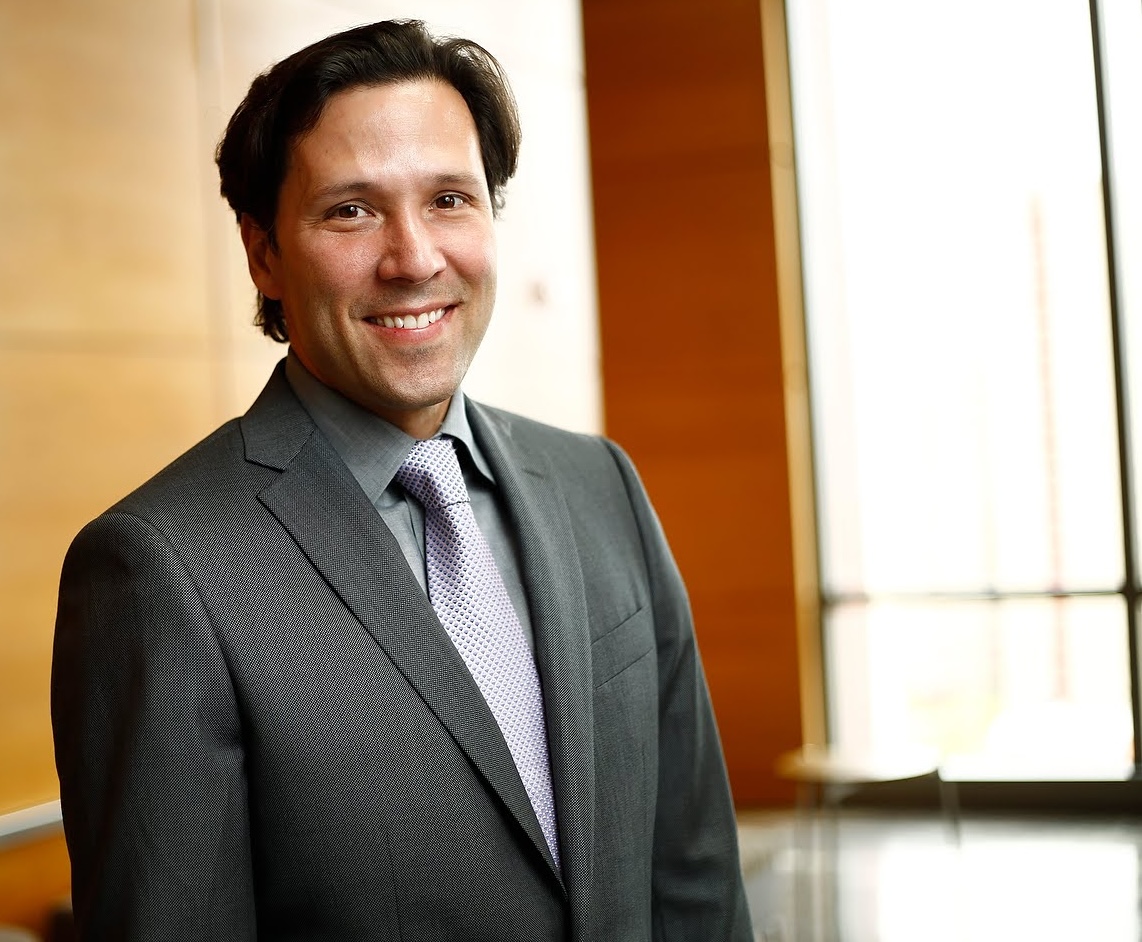
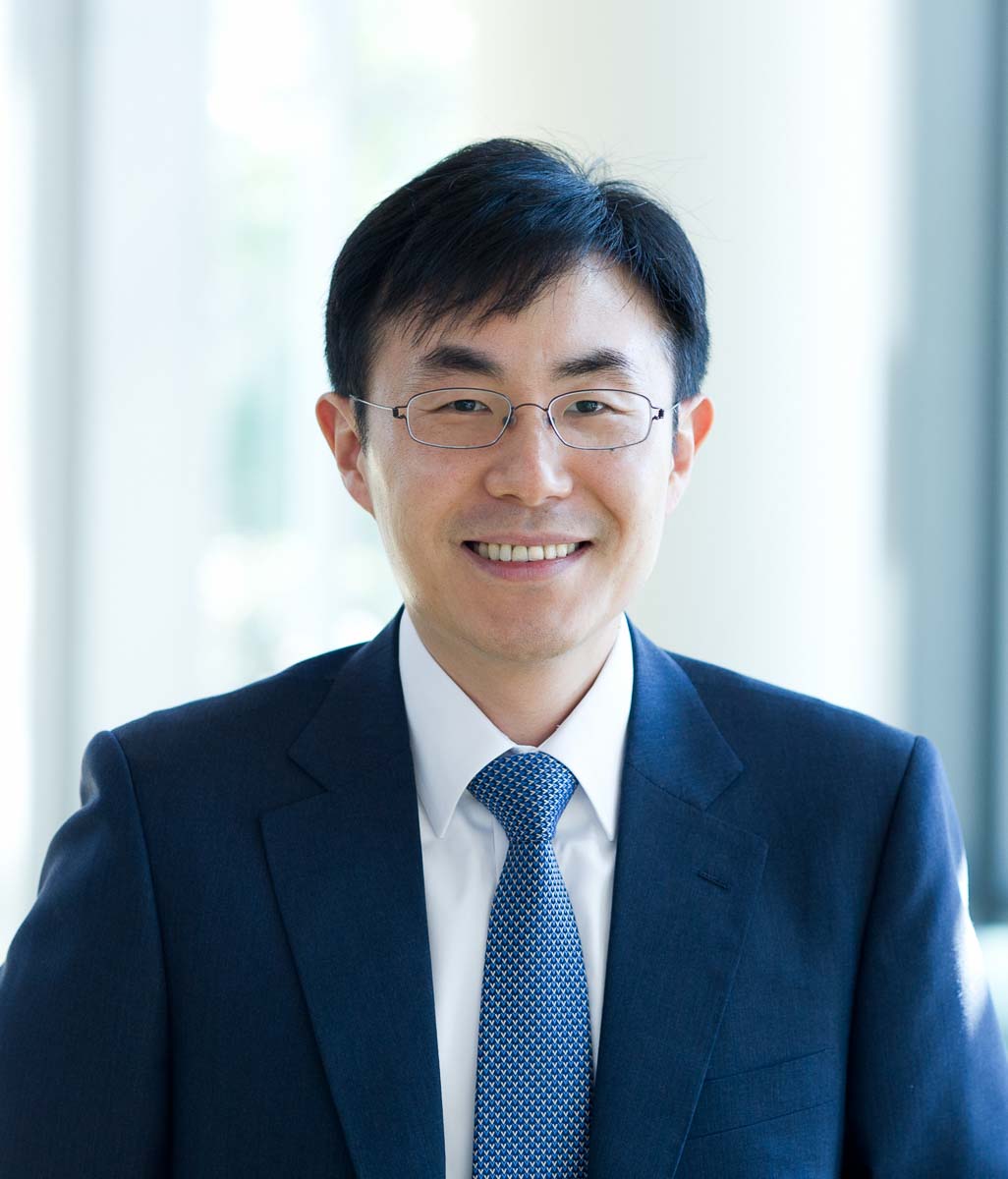
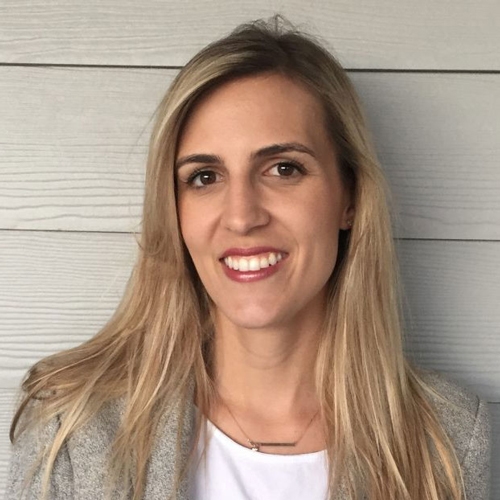
Brian Scholl is a Professor of Psychology at Yale University, specializing in visual cognition, perception, and cognitive science. His research explores how visual perception interacts with higher-level cognition, including object persistence, event perception, causality, and intuitive physics. He leads the Yale Perception & Cognition Lab, focusing on dynamic events, attention, and computational models. He earned his Ph.D. from Rutgers University in 1999. His work spans experimental psychology, neuroscience, and computational modeling, with a focus on phenomena like inattentional blindness, scaffolded attention, and event segmentation. He has authored numerous papers and presented at international conferences, contributing to debates on perception vs. cognition interactions. Key research areas include the perception of dynamic event types, the role of intuitive physics in visual processing, and the influence of event boundaries on memory and decision-making. His lab employs computer-based experiments and collaborations with computational models to study perception across species and clinical populations.
Professor Gabriel Brostow is a faculty member in the Department of Computer Science at University College London (UCL), where he leads research in Computer Vision and Human-Computer Interaction. He also serves as Chief Research Scientist and Senior Director of the R&D Team at Niantic, the company behind Pokémon GO. His work bridges academic research and industry applications, focusing on developing AI systems that enhance human capabilities through what he terms 'Human in the Loop AI'—now commonly referred to as Human-Centered AI. Brostow completed his BS in Electrical Engineering at UT Austin, followed by a PhD with Irfan Essa at Georgia Tech. He then pursued postdoctoral research with Roberto Cipolla's Computer Vision & Robotics Group at Cambridge University as a Marshall Sherfield Fellow, and with Marc Pollefeys in ETH Zurich's CVG Group. His research explores how AI, particularly Computer Vision, can serve as 'super-tools' for professionals across various domains including filmmaking, architecture, robotics, and scientific research. Specific interests include assistive technology for everyday life, authoring systems that maximize user effort, 3D reconstruction, depth estimation, and vision-language models. His work often involves creating systems that are validated through real-world human interaction to ensure practical utility. Analysis of his recent publications reveals a strong focus on practical applications of Computer Vision that directly interact with humans. His research spans 3D scene understanding, depth estimation, sketch-based interfaces, and multimodal AI systems. There's a clear emphasis on creating benchmarks and tools that facilitate human-AI collaboration, with applications in assistive technology, urban planning, filmmaking, and biodiversity monitoring. His work frequently appears at top conferences including CVPR, NeurIPS, ECCV, and CHI. Marshall Sherfield Fellowship Brostow actively mentors PhD students, with current advisees including Ross Murphy, Skanda Koppula, Gizem Unlu, Omiros Pantazis, and Jamie Watson. His alumni include numerous PhD graduates and MSc students who have gone on to successful careers in academia and industry. He emphasizes selecting students based on passion and potential rather than just academic credentials, valuing traits like helpfulness, drive, and hunger to learn. His research is supported through collaborations with major institutions and companies including DeepMind, MIT, and the University of Edinburgh. He leads a research group at UCL that collaborates closely with Niantic's R&D team, creating a unique bridge between academic research and industry application. His team's work frequently involves developing novel Computer Vision techniques that are validated through real-world human interaction, ensuring practical utility alongside technical innovation. The group explores blue-sky research problems with applications ranging from assistive technology to professional tools for filmmakers, architects, and scientists studying diverse environments.
Claus Lamm is a Full Professor of Biological Psychology at the University of Vienna , where he leads the Social, Cognitive and Affective Neuroscience Unit (SCAN-Unit) . He serves as Vice Dean for Research and Advancement of Early Career Researchers at the Faculty of Psychology and holds affiliations with the Vienna Cognitive Science Hub , Environment & Climate Change Hub , and Austrian Academy of Sciences . His academic career spans international collaborations and formative research experience abroad. Scientific Focus: Lamm investigates the neural underpinnings of empathy and prosocial behavior , employing multi-modal approaches combining neuroimaging, psychopharmacology, and psychoneuroendocrinology . His work extends to comparative studies with ravens and dogs, and explores environmental social neuroscience through climate change decision-making research. Recent publications show trends in cross-cultural psychology , machine learning applications , and neurobiological pathways related to social behavior. Awards & Grants: Recipient of the APS Mentor Award for his support of early career researchers. Funded by European Research Council , Austrian Science Fund , Vienna Science and Technology Fund , and intramural grants exceeding €10 million. Key projects include "Unravelling the opioid system in empathy" and "Comparative dog-human fMRI" . Media Engagement: A prominent public science communicator, Lamm has appeared in Nature , Science Magazine , and Austrian media outlets like Ö1 Mittagsjournal and ORF2 , discussing topics from pandemic psychology to social media effects . He maintains active outreach through Science TV and educational programs .
Ian Frigaard is a Professor in the Department of Mechanical Engineering at the University of British Columbia (UBC), affiliated with the Faculty of Applied Science. He also holds an appointment in the Department of Mathematics. His research group operates in UBC's Complex Fluids Lab, focusing on interdisciplinary studies combining mathematical, experimental, and computational approaches. Education: B.Sc. (University of Wales) M.Sc. (University of Oxford) D.Phil. (University of Oxford) C.Math. (Certificate in Mathematics) Research Interests: Professor Frigaard specializes in non-Newtonian fluid mechanics, particularly the mechanics of visco-plastic (yield stress) fluids. His work addresses industrial challenges in petroleum engineering, including well cementing, leakage prevention, and abandonment techniques related to GHG emission control and environmental protection. Research methodologies span theoretical modeling, experimental validation, and computational simulations. Publication Trends: Recent work (2021–2023) emphasizes bubble dynamics in complex fluids, displacement flows in annular geometries, wellbore integrity modeling, and stochastic risk assessment for oil/gas operations. Publications frequently appear in top-tier journals like the Journal of Fluid Mechanics and Journal of Non-Newtonian Fluid Mechanics . Awards & Honors: CSME Fluid Mechanics Medal (2024) Stanley G. Mason Award, Canadian Society of Rheology (2022) Killam Research Prize, UBC (2019) Academic Leadership: Leads a research group of 10+ graduate students and postdocs. Provides summer internships and collaborates extensively with the petroleum industry. Research is supported by industrial partnerships and institutional grants. Facilities: Conducts experiments in UBC's Complex Fluids Lab, equipped for advanced rheological measurements and flow visualization.
Joydeep Biswas is an Associate Professor in the Computer Science Department at the University of Texas at Austin, where he serves as the Director of the Autonomous Mobile Robotics Laboratory (AMRL). He is also affiliated with Texas Robotics, the UT Machine Learning Laboratory, and UT Good Systems. Previously, he was an Assistant Professor in the College of Information and Computer Sciences at the University of Massachusetts Amherst. Dr. Biswas earned his PhD in Robotics from Carnegie Mellon University in 2014 and his B.Tech in Engineering Physics from the Indian Institute of Technology Bombay in 2008. His educational background has provided him with a strong foundation in both theoretical and applied aspects of robotics and artificial intelligence. Dr. Biswas's research focuses on enabling long-term autonomy for mobile robots operating in human environments. His work spans robot perception, motion planning, control systems, and AI, with the ultimate goal of creating self-sufficient autonomous mobile robots that can perform tasks accurately and robustly in real-world settings. He is particularly interested in perception, planning, and failure recovery for autonomous mobile robots, which supports his vision of having autonomous service mobile robots deployed at campus-to-city scale, both indoors and outdoors, performing assistive tasks over deployments spanning years. His IJCAI 2019 Early Career Spotlight talk summarizes much of his research to date and ongoing interests. His recent research has shown a strong trend toward social navigation, human-robot interaction, and the application of machine learning techniques to robotics problems. There's a clear progression from fundamental robotics research toward more complex, real-world applications that require robots to understand and navigate human social spaces effectively. His work increasingly integrates large language models and other advanced AI techniques with traditional robotics approaches, as evidenced by his recent publications on topics like preference-conditioned navigation, social navigation benchmarks, and instruction-following navigation systems. Dr. Biswas has received numerous prestigious awards including the NSF CAREER Award (2021), J.P. Morgan Faculty Research Award (2019), Amazon Research Award (2019), and a grant from Northrop Grumman Mission Systems (2018). These awards recognize his innovative contributions to the field of robotics and autonomous systems. As a dedicated educator and mentor, Dr. Biswas actively supervises PhD and master's students, with his PhD student Sadegh Rabiee winning the student poster award at the Northrop Grumman University Symposium 2019. He has secured significant grant funding from the National Science Foundation for projects including 'Introspective Perception and Planning for Long-Term Autonomy' and 'Interactive Synthesis and Repair For Robot Programs,' demonstrating his ability to secure competitive research funding and his commitment to advancing the field. Dr. Biswas leads the Autonomous Mobile Robotics Laboratory (AMRL), which serves as a hub for interdisciplinary research in mobile robotics. The lab has developed notable resources such as the UT Campus Object Dataset (CODA) for 3D perception research and SOCIALGYM, a framework for benchmarking social robot navigation. His team regularly deploys robots on the UT Austin campus and in urban environments to test and refine their approaches in realistic settings, bridging the gap between simulation and real-world application.
Anocha Aribarg is a Professor of Marketing and Area Chair of Marketing at the Ross School of Business, University of Michigan, with additional faculty affiliation at the Center for Southeast Asian Studies (CSEAS). Her interdisciplinary research bridges psychological theory, consumer behavior, and advanced statistical modeling to address complex marketing challenges. Education: PhD in Marketing, University of Wisconsin, 2004 MBA, University of Wisconsin-Milwaukee, 1998 BS in Statistics, Chulalongkorn University, Thailand, 1994 Research Focus: Prof. Aribarg investigates cognitive processes in consumer decision-making, specializing in individual/joint choice dynamics, product search behaviors, and responses to marketing stimuli. Her methodology integrates Bayesian econometrics with physiological measures (eye tracking, skin conductance) and multi-method experimental designs to uncover hidden decision mechanisms. Publication Trends: Her 14 recent publications (2009-2024) reveal consistent innovation in choice modeling, with increasing emphasis on attention dynamics (2020), moral psychology in aesthetics (2022), and high-frequency service data integration (2023). Work appears predominantly in Marketing Science Journal of Marketing Research, and Psychological Science, demonstrating methodological rigor across consumer behavior, advertising, and service contexts. Academic Service: She serves as Associate Editor for Marketing Science, Journal of Marketing, and Journal of Marketing Research, while contributing to the Journal of Retailing editorial board. Teaching: Prof. Aribarg delivers graduate-level courses in Marketing Research and Analytics and Predictive Analytics at Ross, emphasizing data-driven decision frameworks.
Matthew Kay is an Associate Professor in the Department of Communication Studies at Northwestern University's School of Communication, with a secondary appointment in Computer Science. He serves as Co-Director of Graduate Studies for the PhD in Technology and Social Behavior program. His research focuses on human-computer interaction and information visualization, specializing in uncertainty communication, usable statistics, and personal informatics. He employs mixed-method approaches including behavioral analysis, interactive system development, and visualization technique evaluation to address real-world data interpretation challenges. Analysis of his recent publications reveals dominant themes in visualization literacy development, uncertainty representation for decision-making, and health informatics applications. His work consistently bridges theoretical frameworks with practical implementations, particularly in educational assessment tools and election forecast visualizations. Professor Kay co-directs the Midwest Uncertainty Collective (MU collective), a research group advancing uncertainty communication methodologies. Previously faculty at the University of Michigan School of Information, he maintains active contributions to visualization tool development including the ggdist R package for uncertainty visualization.
Dr. Chandranath Adak is an Assistant Professor at the Department of Computer Science and Engineering, Indian Institute of Technology Patna (IIT Patna), and concurrently serves as a Visiting Fellow at the School of Computer Science, University of Technology Sydney (UTS), Australia. He holds a Ph.D. in Analytics from UTS (2019) and previously served as an Assistant Professor at Indian Institute of Information Technology Lucknow (IIITL) and the Centre for Data Science at JIS Institute of Advanced Studies, Kolkata. Education: Ph.D. (Analytics), University of Technology Sydney (2019) M.Tech., Computer Science and Engineering, University of Kalyani (2014) B.Tech., Computer Science and Engineering, West Bengal University of Technology (2012) Research Interests: His work spans Computer Vision, Deep Learning, Reinforcement Learning, Document Image Analysis, and AI-driven solutions for healthcare, forensics, and industrial automation. He has pioneered methods in biomarker detection using electrochemical sensors combined with ML models, handwriting analysis for educational and forensic applications, and anomaly detection in industrial systems. His research bridges theoretical advances with real-world applications, such as medical diagnostics and quality control systems. Publications: His recent work includes innovations in biosensor-based medical diagnostics, handwriting evaluation systems, and transformer networks for historical document analysis. These contributions reflect a focus on interdisciplinary applications of AI across healthcare, cultural heritage preservation, and industrial automation. Awards: Start-up Research Grant, SERB, India (2022) Dr. Kalam Doctoral Scholarship, UTS (2018) IEEE CIS Graduate Student Research Grant (2017) Senior Member, IEEE (2024) Teaching & Supervision: Taught courses at UTS including 'Introduction to Data Analytics' and supervised research in machine learning and computer vision. His mentorship emphasizes hands-on experience with AI tools and real-world problem-solving. Labs & Teams: Engaged in collaborative projects at UTS's CIBCI Centre and Griffith University's IIIS, focusing on computational intelligence and sensor-driven AI systems.
Rachel Rudinger is an Assistant Professor at the University of Maryland, affiliated with the Department of Computer Science and the University of Maryland Institute for Advanced Computer Studies (UMIACS). Her research focuses on Natural Language Processing (NLP), Machine Learning, and AI ethics, particularly addressing sociocultural biases and fairness in large language models (LLMs). She holds a PhD from Johns Hopkins University (2019) and a B.S. from Yale University (2013). Rudinger's work explores equitable cultural alignment in AI systems, common ground misalignment in dialog systems, and the mutual influence of gender and occupation in LLMs. She received the NSF CAREER Award in 2024 for her project on robust, fair, and culturally aware commonsense reasoning. Her recent publications investigate empathy gaps in LLMs, synthetic data effectiveness in disaster response, and bias measurement techniques across domains. As an advisor, she guides seven PhD students including Christabel Acquaye and Haozhe An. Her research spans diverse topics from legal language analysis to maternal health question answering, reflecting her commitment to interdisciplinary AI ethics. She actively contributes to workshops on commonsense representation and serves as a reviewer for top conferences in NLP and AI.
Professor Rainer Böhme is a prominent academic in the field of IT security and privacy at the University of Münster's School of Business and Economics, Department of Information Systems. He also holds a professorship for Security and Privacy at the University of Innsbruck's Institute of Computer Science. His research spans multiple dimensions of digital security, with particular expertise in steganography, digital forensics, privacy-enhancing technologies, and the economic aspects of cybersecurity. Dr. Böhme earned his Doctoral Degree from TU Dresden's Faculty of Computer Science in 2008, following studies in Communications, Economics and Computer Science at Technische Universität Dresden and Université Paris XII. His academic journey includes positions as Assistant Professor at the University of Münster (2010-2015), Postdoctoral Fellow at the International Computer Science Institute in Berkeley (2009-2010), and Scientific Staff at TU Dresden's Chair of Privacy and Data Security. His research interests focus on steganography and steganalysis, digital forensics, privacy-enhancing technologies, security and usability, economic and behavioral aspects of information privacy, virtual currencies, and the economics of information security. His work bridges technical security mechanisms with economic and behavioral considerations, creating a unique interdisciplinary approach to cybersecurity challenges. Analysis of his recent publications reveals a strong trend toward the economics of security, particularly regarding blockchain technologies, cryptocurrency, and privacy valuation. His work increasingly examines the intersection of technical security mechanisms with market dynamics, regulatory frameworks, and user behavior. The research spans theoretical game-theoretic models, empirical studies of user behavior, and practical applications in digital forensics and privacy protection. Program Co-Chair, Financial Cryptography and Data Security (2015) Program Co-Chair, New Security Paradigms Workshop (NSPW) (2015) General Chair, 8th International Conference on IT Security Incident Management & IT Forensics (2014) Organizer and Program Co-Chair, 1st Workshop on Bitcoin Research (2014) Associate Editor, Electronic Commerce Research (since 2013) Associate Editor, EURASIP Journal on Information Security (since 2013) Professor Böhme has supervised multiple Master's theses in Information Systems, including work on static code analysis for smart contracts, remote maintenance protocol security, and application protection requirements in retail banking. His research is supported by significant grants from the German Federal Ministry of Research, Technology and Space, the DFG, and the EU FP7 program, with projects focusing on digital forensics, privacy-enhancing technologies, and cryptocurrency crime prevention. He leads the IT Security Research Group at the University of Münster, which investigates theoretical and applied aspects of information security with particular emphasis on the economic dimensions of security decisions.
Eduardo Azevedo is the John M. Bendheim and Thomas L. Bendheim Professor of Business Economics and Public Policy at the Wharton School , University of Pennsylvania. He holds a courtesy appointment as Professor of Economics and was awarded the 2016 Sloan Foundation Fellowship. His research integrates economic theory with practical applications across science and business domains. His research interests include: Market design Selection markets Social science genetics Experimental economics Game theory Recent publication trends focus on: Economic theory applications to healthcare and digital markets Empirical Bayes methods in A/B testing Adverse selection in insurance markets Strategic behavior in two-sided matching Evolutionary behavioral economics He serves as an instructor for BEPP2500 - Managerial Economics , emphasizing real-world application of microeconomic theory to business problems. His work also involves software development for economic research, including MATLAB-based empirical Bayes tools for analyzing treatment effects in large-scale experiments. Scientific awards : Sloan Foundation Fellow (2016)
Song Kim is an Associate Professor of Political Science at the Massachusetts Institute of Technology (MIT) and a Faculty Affiliate at the Institute for Data, Systems, and Society (IDSS). He holds a Ph.D. in Politics from Princeton University, where he was awarded the Harold W. Dodds Fellowship (2012-2013). His research focuses on International Political Economy, Formal and Quantitative Methodology, and Big Data analysis of international trade. He is particularly known for his work on firm-level political incentives in trade liberalization, which earned him the 2015 Mancur Olson Award and the 2018 Michael Wallerstein Award for best published article in political economy. Kim develops computational methods for analyzing trade data, including dimension reduction and visualization techniques. He maintains two key databases: LobbyView (tracking firm lobbying efforts) and TradeLab (for trade policy analysis). His research has been published in top journals such as the American Political Science Review, American Journal of Political Science, and International Organization. Educations : Ph.D. in Politics (Princeton University), B.A. not explicitly stated. His research interests include the dynamical evolution of lobbying networks, strategic links between political donations and lobbying, and the political origins of trade regulations. He also contributes methodological innovations, such as two-way fixed effects models and matching methods for causal inference with panel data. Awards : Mancur Olson Award (2015) Michael Wallerstein Award (2018) Harold W. Dodds Fellowship (2012-2013) Advising & Grants : No listed advisees. His work is supported by MIT’s IDSS and institutional funding. He collaborates on software tools like the 'wfe' and 'concordance' R packages, advancing computational social science. Labs/Teams : Associated with MIT’s Political Science Department and IDSS, focusing on interdisciplinary projects in trade, lobbying, and quantitative methods.
Dr. Katerina Marcoulides is an Associate Professor in the Quantitative and Psychometric Methods Program at the University of Minnesota's Department of Psychology. She is affiliated with the Minnesota Population Center and serves as Co-Chair of the Structural Equation Modeling Special Interest Group (SEM SIG) for the American Educational Research Association. Her research focuses on advanced data mining and modeling techniques for complex longitudinal data, particularly applied to developmental processes in economically disadvantaged immigrant children. She holds a PhD in Quantitative Psychology from Arizona State University, an MA from UC Davis, and a BA from UC Santa Barbara. Education: PhD: Quantitative Psychology, Arizona State University MA: Quantitative Psychology, University of California, Davis BA: Psychology (minor in Education), University of California, Santa Barbara Research Interests: Dr. Marcoulides develops and applies statistical methods such as structural equation modeling (SEM), Bayesian synthesis, and data fusion to study developmental and educational processes. Her work emphasizes longitudinal data analysis, item response theory, and multilevel modeling. Recent projects include NIH-funded research on parenting, marginalization, and well-being during the pandemic. Awards: APS Rising Star Award (2021) NIH Grant Award Teaching & Collaboration: She teaches courses on SEM, multilevel modeling, and data analysis at the University of Minnesota. Previously at the University of Florida, she contributed to workshops on educational data mining and served as an APA Advanced Training Institute presenter. Her interdisciplinary collaborations span population studies, health inequities, and workforce research. Labs & Groups: She leads the Data Analytics and Visualization Lab and actively participates in the Minnesota Population Center, integrating computational and statistical innovations with real-world applications.
Hilda Ruokolainen is a Senior Lecturer at Åbo Akademi University, affiliated with the School of Business and Economics. Her work focuses on misinformation as a social phenomenon, particularly within asylum seeker contexts, using qualitative methodologies like semi-structured interviews and empirical research. University: Åbo Akademi University School: School of Business and Economics Email: hilda.ruokolainen@abo.fi ORCID: 0000-0003-2521-4390 Her research spans information science, social sciences, and migration studies, emphasizing collaborative qualitative practices and the creation process of data. Recent publications analyze official misinformation, methodological approaches, and network effects in information research. Key trends in her work include social dynamics of misinformation, empirical studies on service workers, and the intersection of information practice with computer science. She advocates for embracing complexity in collaborative research frameworks.
Raquel Fernández is Full Professor of Computational Linguistics and Dialogue Systems at the University of Amsterdam, where she leads the Dialogue Modelling Group at the Institute for Logic, Language & Computation (ILLC). As Vice-Director for Research at ILLC and a Fellow of the ELLIS Society, she bridges computational linguistics, cognitive science, and artificial intelligence through her research on language use in multimodal and conversational contexts. PhD in Computational Linguistics from King's College London Prior research positions at University of Potsdam and Stanford University's CSLI Her work explores how cognitive constraints, social interaction, and perception shape language use, with a focus on: Visually-grounded language processing Multimodal dialogue modeling Model uncertainty and calibration Language grounding in multimodal data Language learning and semantic change Dialogue reference resolution Recent publications analyze multimodal reasoning limitations, cross-lingual knowledge consistency, and uncertainty modeling in dialogue systems. She has received multiple accolades including an ERC Consolidator Grant , NWO VENI/VIDI/Aspasia fellowships , and EMNLP/GenBench awards . Outstanding Paper Award (EMNLP 2023) Best Data Award (GenBench Workshop 2023) ELLIS Society Fellow ERC Consolidator Grant #819455 recipient NWO VENI/VIDI/Aspasia awardee As a leader in academic service, she serves on the SIGDAT Executive Committee and chairs multiple conference committees. Her lab develops models for multimodal dialogue, visual storytelling, and grounded language understanding.