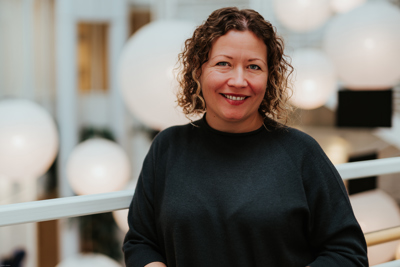
Martin Lacayo is a postdoctoral researcher at the University of Zurich's Interactive Visual Data Analysis (IVDA) group. His work focuses on exploratory data analysis and human-model collaboration, building upon his doctoral research in reproducible scientific workflows using open standards at the University of Geneva's Institute for Environmental Sciences. His research spans interdisciplinary applications in ecosystem services and environmental informatics. Contact: mlacayo@ifi.uzh.ch
Leiv Rønneberg is a Postdoctoral Fellow in Statistics and Data Science at the University of Oslo (UiO), with a primary affiliation at the Department of Mathematics. His research focuses on Bayesian statistical methods, machine learning, and data science, particularly applied to biomedical and astrophysical domains. Key research trends in his publications include: Development of flexible Bayesian models (FlexKnot, bayesynergy) for complex datasets Applications in 21 cm cosmological signal processing and drug combination analysis Creation of bioinformatics tools (screenwerk) for experimental design Interdisciplinary work spanning astrophysics, pharmacology, and sports science Scientific Awards: No awards explicitly mentioned in the provided text. Students: No advisees or students listed in the current description.
Ina Blom is a Professor of Art History at the University of Oslo, with a focus on avant-garde movements, media aesthetics, and the intersection of art and technology. Her research spans contemporary art theory, media archaeology, and the social implications of technological infrastructures. University: University of Oslo Department: Department of Philosophy, Classics, History of Art and Ideas In her work, Blom explores themes such as the Anthropocene , media archaeology , and technological sensibilities , often linking historical avant-garde practices to contemporary digital and media art. Her recent publications analyze the role of algorithms, environmental change, and the politics of media infrastructures. Key trends in her articles: Blom's research bridges avant-garde traditions with modern media theory, emphasizing technological memory , social collectivity , and environmental aesthetics across digital, video, and installation art. Teaching: Blom has taught courses on art and technology, media archaeology, and contemporary art at both the University of Oslo and the University of Chicago, including topics like Media Atmospheres and Fluxus and the Question of Media . Notable projects: She is affiliated with the Oslo School of Environmental Humanities and has contributed to research groups in Visual Studies .
Hilda Bø Lyng is an Associate Professor in Health Service Safety at the University of Stavanger's Faculty of Health Sciences and Department of Quality and Health Technology. Her work focuses on resilience engineering, healthcare management, and knowledge transfer across industries. Current role: Associate Professor Primary affiliation: University of Stavanger Research domains: Healthcare resilience, adaptive capacity, knowledge transfer Her research explores how healthcare systems develop resilience through leadership strategies, digital technologies, and collaborative learning. She investigates adaptive capacity in hospital teams, knowledge boundaries in quality improvement, and mental wellbeing support for aged care workers. Recent publications analyze resilience operationalization frameworks, pandemic response strategies, and tools for translating resilience into practice. These works span journals like Applied Ergonomics , BMC Health Services Research , and International Journal of Health Governance . Collaboration networks include researchers from Norway, Australia, and European institutions working on resilience programs. She contributes to policy development through empirical studies and theoretical frameworks. Techniques like analogical objects and cross-industry innovation models appear in her methodology, addressing knowledge integration challenges between healthcare and other sectors.
Rachelle Esterhazy is a Professor at Oslo Metropolitan University (OsloMet), affiliated with the Center for Professional Research within the Faculty of Social Sciences. Her work focuses on teaching and research in higher education, with particular expertise in educational processes, feedback mechanisms, and collaborative learning approaches. She maintains an active research presence at both OsloMet and the University of Oslo through multiple research groups and projects. Her research interests span various processes in (professional) higher education, with particular emphasis on: Feedback and assessment practices Pedagogical design and implementation Interprofessional collaborative learning Simulation-based learning environments Student-centered course design Academic dropout prevention (Multimodal) learning analysis Dr. Esterhazy employs qualitative methodology, design-based research, and sociocultural learning theories to study educational processes at both micro (meaning-making within student groups) and meso levels (institutional course design and implementation). Her recent publications demonstrate a strong focus on learning analytics, feedback literacy, and collaborative problem-solving in professional education contexts. She currently leads significant research initiatives including: Co-leader of TeamLearn - Teamwork analytics for training collaborative problem solving in professional higher education (NFR-funded 2021-2026) Project member in BraStart! - A learning analysis approach to explore academic integration and dropout (Strategic UiO funding 2023-2025) As an educator, Dr. Esterhazy teaches university pedagogy courses and provides training for PhD supervisors at the Center for Professional Studies. She is an active member of the PKK (Professional Knowledge and Qualification) research group at SPS and HEDWORK (Knowledge, Learning and Governance) at UiO, contributing to the broader academic community through conferences, workshops, and scholarly publications.
Karl Øyvind Mikalsen is an Associate Professor at the Department of Clinical Medicine, UiT The Arctic University of Norway. He is also a division leader at the Center for Patient-Near Artificial Intelligence (SPKI) at University Hospital of North Norway (UNN). His research focuses on applying artificial intelligence (AI) to healthcare, particularly in analyzing medical images, speech, and text using language models and machine learning, with applications such as anonymizing patient records and evaluating AI tools for clinical use. Research Interests: Mikalsen’s work bridges medical informatics and computer science, emphasizing explainable AI, clinical time series analysis, and medical image processing. He collaborates with UiT and UNN to integrate AI into healthcare systems. Recent Publications: His studies span AI-driven clinical coding, breast cancer detection via mammography, surgical infection prediction, and self-supervised representation learning for medical data. Key methodologies include transformer models, kernel methods for time series, and uncertainty-aware ensembles. Collaborations: Mikalsen works with researchers such as Robert Jenssen, Michael Kampffmeyer, and Arthur Revhaug, focusing on clinically relevant AI applications in Scandinavia.
Magnus Bruaset is a Professor and Director of the Software & AI Department at Simula Research Laboratory , with expertise in computational geosciences, numerical methods, and quantum computing. His work spans geological modeling, PDE solvers, and software development frameworks like Diffpack. Education : PhD in preconditioned iterative methods for elliptic problems (1992), Master's in preconditioning symmetric systems (1988). Research Interests : Focus on numerical analysis, GPU acceleration of geological simulations, stochastic modeling for uncertainty quantification, and quantum computing strategy. Key projects include Hamilton-Jacobi solvers, particle-based flow models, and contributions to digital contact tracing systems. Advising & Collaboration : Co-developed PhD training workshops for scientific communication and contributed to industrial-academic partnerships. Collaborated with institutions including ChevronTexaco, Wolfram Research, and University of Oslo.
Marius Causemann is a Postdoctoral Researcher in the Numerical Analysis and Scientific Computing department at Simula Research Laboratory , focusing on computational modeling of brain mechanics and fluid dynamics. His work bridges mathematics, neuroscience, and biomedical simulation through high-fidelity numerical methods. Research Interests include: Computational Neuroscience Biomechanics of Gliovascular Systems Poroelastic and Fluid-Structure Interaction Models Numerical Methods for Multi-Physics Problems Mathematical Physiology His recent publications emphasize in-silico modeling of molecular clearance in intracranial spaces, dual-poroelasticity solvers, and high-resolution meshing of brain tissues. These works contribute to understanding glymphatic pathways, neurovascular coupling, and cerebrospinal fluid dynamics.
Associate Professor Tiago M. D. Pereira is affiliated with the Rosseland Centre for Solar Physics at the Institute of Theoretical Astrophysics, University of Oslo, where he conducts interdisciplinary research bridging computational simulations, observational solar physics, and advanced data analysis to decode stellar phenomena through spectral radiation. Dr. Pereira's educational background includes: PhD from Australian National University (ANU) in 2009, specializing in 3D radiative transfer and spectral line formation in solar simulations. His research pioneers the integration of magnetised plasma simulations with multi-dimensional radiative transfer models and spectral imaging observations of the solar atmosphere. He develops high-performance algorithms for efficient radiative transfer computation and visualization of massive datasets, enabling precise interpretation of solar observations to unravel stellar dynamics. This work addresses the computationally intensive challenge of spectral line formation while advancing methodologies for next-generation solar missions. His scientific recognitions include: NASA Postdoctoral Fellowship Dr. Pereira actively supervises computational projects, including applying deep learning to solar observation interpretation, and has contributed to NASA's IRIS mission as an early science team member. His collaborative work synthesizes data from multiple space and ground-based observatories to study solar atmospheric dynamics, though specific grant details are not documented in the source text. He operates within the Rosseland Centre for Solar Physics framework at the University of Oslo, currently developing a dedicated research group focused on solar physics and computational astrophysics methodologies.
Gro Anita Myklevold serves as Associate Professor in the Department of Language and Literature at the University of South-Eastern Norway's Faculty of Humanities, Sports and Educational Sciences. She teaches across PPU teacher education courses and Master's programs in Language Didactics (English) and the Experiential Master, focusing on practical applications of multilingual pedagogy and literature-based instruction. Her research centers on operationalizing multilingualism within Norway's predominantly monolingual educational context, examining how teachers and students implement multilingual approaches despite systemic challenges. Key interests include: Metacognitive strategies for leveraging students' full linguistic repertoires Intercultural competence development in English language classrooms Pedagogical applications of graphic novels and multimodal texts Implementation challenges of LK20 curriculum reform Dr. Myklevold's recent publications (2021-2025) reveal consistent focus on bridging multilingual theory and classroom practice, with increasing attention to teacher cognition and policy implementation gaps. Her work demonstrates how graphic novels uniquely foster empathy through visual-verbal synergy while lowering linguistic barriers for multilingual learners. As deputy head of the Language Didactics research group and member of the Multilingualism, Learning and Development (FLU) group, she supervises Master's students and develops collaborative projects. Her current editorial work includes guest-editing a 2025 special issue of The Language Learning Journal on multilingualism and co-editing an anthology about Norwegian multilingual classrooms. International engagement continues through her 2017 visiting scholarship at Cambridge's Faculty of Education.
Arne Solli is an Associate Professor in History at the Department of Archaeology, History, Cultural Studies and Religion, University of Bergen. His academic work bridges historical scholarship with digital methodologies, with a particular focus on historical demography, urban history, and GIS applications in historical research. Dr. Solli's research spans multiple interconnected domains including historical demography, urban development of Bergen, historical GIS applications, and the evolution of property registration systems. His work often combines microhistorical approaches with macrohistorical perspectives, creating innovative frameworks for understanding historical population patterns. He has made significant contributions to the study of 19th century cholera epidemics in Norway, examining how factors like topography, social status, and water supply affected mortality rates. His research demonstrates a consistent focus on spatial and temporal analysis of historical phenomena, with particular attention to Bergen's urban development over centuries. Dr. Solli has pioneered the integration of GIS technology with historical research through his development of BerGIS, a map portal for historical maps of Bergen that has become an essential resource for urban historians. Historical demography and population structures Urban history and development of Bergen Historical GIS applications Property registration systems through time 19th century Norwegian social and health history Cholera epidemiology and public health Dr. Solli has received recognition for his innovative approaches to historical research, particularly in developing digital tools that transform how historical data can be analyzed and visualized. His work on BerGIS has provided valuable resources for researchers studying urban development patterns over time. As an educator, Dr. Solli has contributed to the development of digital history methodologies and has supervised numerous students in historical research. His publications span from the 1990s to present, demonstrating a sustained commitment to advancing historical scholarship through technological innovation.
Trond Aalberg is a Professor at Oslo Metropolitan University's Faculty of Social Sciences within the Department of Archivistics, Library and Information Science. His research focuses on semantic technologies, metadata standards, and information behavior with strong applications in digital libraries and cultural heritage systems. He maintains an active research profile with significant contributions to bibliographic modeling frameworks like CIDOC CRM and IFLA LRM. His primary research interests include Semantic Web technologies, Information Retrieval systems, Metadata schema design, Ontology development, and Digital Library infrastructure. Current work examines user information needs in cultural heritage contexts, compound object presentation in search interfaces, and the application of pervasive learning games in educational settings. His research bridges theoretical information science with practical implementations in library systems and educational technology. Professor Aalberg leads the Information Systems based on Metadata (METAINFO) research group. His publication trends show consistent contributions to major venues including Cataloging & Classification Quarterly , ACM Transactions on Computing Education , and TPDL conferences. Recent work demonstrates growing interdisciplinary connections between information science, computer science education, and cultural heritage documentation. He actively contributes to professional discourse through conference presentations at events like CoLIS, KORG, and NIKT. His work on peer assessment tools and educational game design reflects strong engagement with computing education challenges. While no formal awards are documented in the provided materials, his sustained publication record across multiple formats (research articles, textbooks, dissemination) indicates significant scholarly impact. Aalberg maintains strong institutional engagement through OsloMet's research infrastructure. His work on metadata standards connects with international initiatives including IFLA's Library Reference Model development. The METAINFO research group serves as his primary academic home, focusing on metadata-driven information systems across cultural heritage and educational contexts.
Gunhild Ring Olsen serves as Associate Professor at Kristiania University of Applied Sciences within the School of Communication, Leadership and Marketing and Department of Communication. She holds a PhD from the University of Bergen (2018) and brings ten years of professional journalism experience from major Norwegian outlets including VG, Aftenposten, and Klassekampen. Her research focuses on digital media transformations, with core expertise in digital source criticism, automated journalism, and investigative methodologies. She emphasizes bridging classical journalistic principles with emerging digital competencies, particularly in data journalism and algorithmic ethics. As program manager for Kristiania's new Master's in Digital Journalism, she developed the curriculum through industry consultation to address critical gaps in contemporary journalism education. Olsen serves as board member and secretary of the Norwegian Media Research Association since 2020, and previously held a Fulbright Visiting Scholar position at American University's School of Communication (2014-2015). Her teaching integrates practical newsroom experience with academic rigor, preparing students for evolving media landscapes including conflict reporting scenarios. Fulbright Visiting Scholar at American University (2014-2015) As program manager for journalism education, Olsen leads curriculum development initiatives directly informed by media industry needs. She spearheaded Kristiania's first Master's in Digital Journalism launched in 2023, implementing a broad admissions approach that welcomes humanities and social science graduates beyond traditional journalism backgrounds. Her pedagogical approach emphasizes ethical frameworks like the Norwegian Vær Varsom-plakat while developing students' operational capabilities in high-stakes reporting environments. Olsen collaborates with industry-experienced faculty including Arne H. Krumsvik, Bente Kalsnes, and Ketil Raknes in developing practice-oriented journalism programs. Her work with the Norwegian Media Research Association facilitates ongoing industry-academia dialogue to ensure educational relevance.
Per Arne Tufte is an Associate Professor at Oslo Metropolitan University within the Faculty of Social Sciences at Oslo Business School's Economics and Methodology department. His research spans economics, public administration, and social research methodology with particular focus on the Norwegian welfare state context. His primary research interests include: Economics and Methodology Public Sector Management and Performance Measurement Welfare State and Financial Well-Being Critical Realism in Social Research Economic Counseling and Personal Finance Tufte's recent work demonstrates a strong focus on practical applications of economic research in public administration. His publications examine municipal procurement practices, performance measurement systems in public sector organizations, and the impact of cost-of-living crises on financial well-being in welfare states. He also makes significant contributions to research methodology, particularly regarding mechanism explanations and quality criteria from both empiricist and critical realist perspectives. His scientific output includes numerous journal publications, textbooks on research methodology, and research reports for institutions like Statens institutt for forbruksforskning. Notable works include "Penger til besvær" (2022) on personal finance challenges and economic counseling, and his contributions to "Vitenskapsteori for sosial- og helsefag" (2020). Tufte actively collaborates with researchers including Christian Poppe, Asgeir Solstad, and Sissel Hovik. His work bridges theoretical research methodology with practical applications in public administration and welfare policy, making significant contributions to understanding economic challenges in contemporary Norwegian society.


.jpg)