Björn Johan Gustavsson is a Professor in Space Physics at the Department of Physics and Technology, UiT The Arctic University of Norway. His research focuses on combining optical and radar observations to study auroral dynamics, ionospheric modifications via HF radio pumping, and plasma instabilities in polar regions. He actively contributes to the EISCAT_3D project, developing interferometric imaging techniques for fine-scale incoherent scatter radar measurements. Current affiliation: UiT The Arctic University of Norway Department: Physics and Technology Research themes: Ionospheric Physics , Auroral Imaging , Wave-Plasma Interactions His work includes modeling electron transport in flickering aurora, studying Kelvin-Helmholtz instabilities, and analyzing artificial aurora induced by HF radio waves. Publications highlight collaborations with international teams on turbulence dynamics, radar imaging algorithms, and atmospheric implications of meteor phenomena.
Daniel Radoslaw Sokolowski is a Postdoctoral Fellow at the Department of Neuromedicine and Movement Sciences , Norwegian University of Science and Technology (NTNU), with affiliations to the National Competence Service for Functional MRI at St. Olavs Hospital HF. His work focuses on neuroimaging and cognitive neuroscience. Institution : Norwegian University of Science and Technology Department : Neuromedicine and Movement Sciences Collaborations : St. Olavs Hospital HF, University of Amsterdam, University of Leiden His research explores: Cognitive control mechanisms through advanced neuroimaging (7T MRI) Sex differences in verbal memory and learning Development of digital cognitive screening tools Impact of handedness on cognitive functions Recent publications highlight interdisciplinary trends in Neuroscience , Psychology , and Medical Imaging , with subfields spanning functional connectivity, executive function mapping, and behavioral genetics. His work connects clinical applications (e.g., cognitive impairment screening) with fundamental research on brain networks. Projects: Active contributor to the HUNT4 Brain Training Study (NTNU-led)
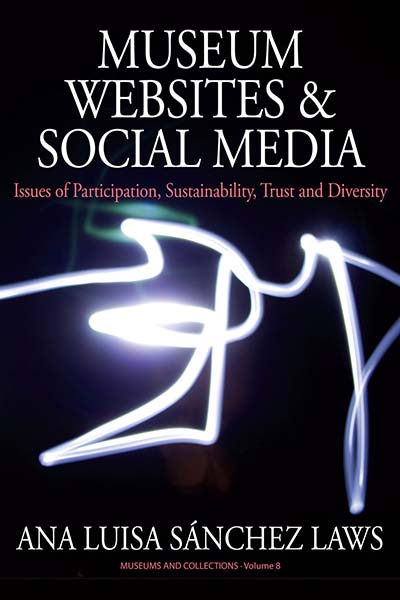
Ana Luisa Sanchez Laws is a Professor at the Center for Peace Studies (CPS) at UiT The Arctic University of Norway. Her research focuses on identity(ies), belonging, and the application of new technologies in museums and peace/conflict studies. She has authored two major books: Panamanian Museums and Historical Memory (Berghahn Books 2011) and Museum Websites and Social Media (Berghahn Books 2015, second ed. 2019). Former Associate Professor in Media and Design at Volda University College (2015-2020) Former Assistant Professor at University of Canberra (2011-2015) PhD from University of Bergen (research on digital inclusion in Panamanian museums) Her research spans: Developing digital artifacts for cultural/natural heritage communication Immersive journalism theory and practice (2018 book Conceptualizing Immersive Journalism ) VR applications in psychological research (subjective/physiological measures) She has extensive international exhibition experience as a video artist, with works like Angie Contra el Mundo in Panama's Museum of Contemporary Art. Her teaching covers media, design, research methods, and web documentary production at graduate level. Current collaborations include Kamilla Bergsnev on perception/learning research and Tormod Utne on digital media projects. She contributes to projects under research groups ConGender , PEACE , The Grey Zone , CRAFT , and Center for Arctic Humanities .
Tore Brox-Larsen is an Associate Professor in the Department of Informatics at UiT The Arctic University of Norway. His work centers on distributed computing, high-performance systems, and large-scale visualization technologies. He is actively engaged in research involving sensor networks, Arctic observatories, and remote visualization of scientific data. His research interests span distributed shared memory systems, MPI performance, tiled display walls, and networked visualization. He has made significant contributions to improving communication efficiency in cluster computing and enabling scalable interactive visualization environments. His work bridges computer systems engineering with applications in genomics and environmental monitoring. The most recent publications reflect a strong trend toward real-world deployment of large-scale systems, particularly in Arctic observation and healthcare informatics. His work emphasizes practical system design, latency optimization, and cross-platform interoperability in distributed environments. Tore Brox-Larsen has collaborated extensively with researchers such as Otto Anshus, John Markus Bjørndalen, and Brian Vinter. While no formal advising or grant history is listed, his sustained publication record indicates active research leadership and team-based scientific inquiry. He has contributed to major projects including the development of a large-scale Arctic observatory sensor system and interactive tiled display walls. His work supports both academic research and societal applications in health and environmental science.
Enrico Riccardi is an Associate Professor in Computational Engineering at the Department of Energy Resources, Faculty of Science and Technology, University of Stavanger (UIS), Norway. His work bridges computational chemistry, machine learning, and multi-scale modeling, with applications in energy, environmental science, and biophysics. Research Interests: His core expertise lies in molecular dynamics , rare event simulation methods (e.g., reaction kinetics and adsorption), and multi-scale modeling from molecular to continuum levels. He is a key developer of path sampling methodologies and software such as PyRETIS and PyVisA , enabling the study of slow and rare processes in complex systems. His research spans interfacial phenomena in emulsions, membrane permeation, atmospheric chemistry, and data-driven discovery of reaction pathways using machine learning. Recent Publication Trends: Over the past decade, Riccardi has consistently published in high-impact journals such as Journal of Chemical Physics , Physical Chemistry Chemical Physics , and Nature Machine Intelligence . His recent work (2023–2025) shows an expanded scope into educational technology , environmental science , and open-source tool development (e.g., GeoSight), reflecting a growing interdisciplinary impact. The publications reveal a strong focus on algorithmic innovation in simulation methods and their application across chemistry, biology, and engineering. Scientific Contributions: Lead and co-developer of PyRETIS, a widely used open-source library for rare event simulations. Contributor to immuneML, a machine learning ecosystem for immune repertoire analysis published in Nature Machine Intelligence . Active in promoting open science, data sharing, and academic integrity through public commentary and educational initiatives. Advising and Grants: While no formal students are listed in the provided text, Riccardi has mentored or collaborated with numerous early-career researchers and PhD candidates, particularly within the van Erp group. He has contributed to multiple collaborative research projects, likely funded by Norwegian and European research councils, though specific grants are not mentioned. His outreach on postdoctoral challenges suggests engagement with academic policy and mentorship. Labs and Teams: Riccardi is part of a vibrant computational research group at UIS, closely collaborating with Prof. Titus Sebastiaan van Erp and colleagues in the Department of Energy Resources. His work is embedded in a team focused on advanced simulation techniques, with strong ties to international networks in computational chemistry and soft matter physics.
Raul Ferrer Conill is a Professor in Journalism at the Department of Media and Social Sciences, Faculty of Social Sciences, University of Stavanger (UiS), Norway. His work bridges media sociology, institutional theory, and digital technology, with a strong focus on datafication, audience engagement, and the transformation of journalistic practices. He leads the interdisciplinary Digital Society Research Group and is a key researcher in a Research Council of Norway-funded project on media policy and digital infrastructures. Research Interests: His research explores how digital platforms, data metrics, and gamification reshape journalism. He investigates how social processes are quantified and instrumentalized, particularly focusing on engagement metrics, native advertising, and the erosion of journalistic autonomy. His work critically examines digital infrastructures, platform power, and the implications for democratic communication and media policy in Nordic welfare states. Publication Trends: Over the past decade, Ferrer Conill’s publications reveal a consistent trajectory from early work on gamification in journalism to current critical analyses of datafication, platform capture, and infrastructural dependencies. His research increasingly emphasizes the political economy of digital media, regulatory challenges, and the reconfiguration of public communication. Scientific Awards: Bob Franklin Journal Article Award (Taylor and Francis) Honorable Mention, Wolfgang Donsbach Outstanding Article Award (ICA) Best Dissertation Award (Swedish Media and Communication Research Association) Top Faculty and Top Student Paper Awards (ICA) Honorable Mention, Best Teacher Award (Karlstad Student Association) Advising and Grants: While no formal students are listed, he actively mentors through research projects and supervises within PhD and master’s programs. He currently leads a major research project funded by the Research Council of Norway on datafication and media policy. His leadership in the Digital Society Research Group fosters collaborative, interdisciplinary scholarship across methodological traditions. Labs and Teams: He leads the Digital Society Research Group at UiS, an interdisciplinary collective focused on the societal implications of digital transformation. He frequently collaborates with scholars such as Helle Sjøvaag, Michael Karlsson, and Steen Steensen on projects analyzing digital infrastructures, platform power, and journalistic change.
Jürgen Kasper is a Professor at Oslo Metropolitan University's Faculty of Health Sciences, Department of Nursing and Health Promotion. His work focuses on health communication, evidence-based practice education, and shared decision-making frameworks in nursing and public health contexts. He has led multiple validation studies for health information assessment tools like MAPPinfo and MAPPIN'SDM. Specializes in critical appraisal training using media health claims Developed decision coach training modules for Norwegian nurses Created validated instruments for health information quality assessment Active in cross-cultural adaptation of medical education tools Recent research includes evaluating MS patient relapse knowledge, optimizing treatment claim evaluation tools, and analyzing master's-level internship implementations. His dissemination activities at HELINOR, ICCH, and OCHER workshop highlight Norway's healthcare communication challenges. No formal scientific awards listed in current data.
Asma Belhadi is a Postdoctoral Fellow at Oslo Metropolitan University's Faculty of Technology, Art and Design, Department of Computer Science. Her research focuses on Applied Artificial Intelligence, bridging domains like Neuroscience, Medical Technology, and Intelligent Transportation Systems through innovative methodologies such as Visual Transformers, Federated Learning, and Graph Algorithms. Primary affiliation: Oslo Metropolitan University Academic discipline: Computer Science Research areas: Deep Learning, Explainable AI, Biomedical Signal Processing, Sustainable Systems Her recent work explores cross-domain applications including: EEG classification using enhanced visibility graphs Medical imaging with ensemble fuzzy deep learning Secure pattern mining for Medical Internet of Things Knowledge-enhanced object detection for agriculture Metaverse security using transformer models and GANs
Pål Halvorsen is a Professor at the Department of Computer Science within the Faculty of Technology, Art and Design at Oslo Metropolitan University. He works at the intersection of computer science and applied domains, with a particular focus on multimedia systems, distributed computing, and healthcare applications. Specializes in distributed multimedia systems Active in AI-driven forensic psychology applications Conducts research on medical imaging and diagnostics Develops sports analytics datasets and tools Works on communication and distributed systems His research spans several key areas of computer science, particularly focusing on multimedia systems and their applications in healthcare, sports analytics, and forensic psychology. He leads projects involving AI-driven child avatars for investigative interview training, develops datasets for medical and sports applications, and explores innovative approaches to image analysis and time-series data processing. Recent publications demonstrate strong activity in applying computer vision and deep learning to medical diagnostics, particularly in gastrointestinal tract analysis and ophthalmology. His work on sports analytics includes creating comprehensive datasets for ice hockey and soccer, while his forensic psychology research focuses on AI-enhanced interview training for child abuse investigations. Halvorsen collaborates extensively across disciplines, working with researchers in psychology, medicine, and sports science. His projects often involve developing novel tools for data analysis, including approaches to multimodal data handling, visual deep learning verification, and AI-enhanced prompt generation techniques.
Kåre Mosgren is an Associate Professor at the University of Agder's Department of Information and Communication Technology, specializing in multimedia technology and e-learning. He actively contributes to the Multimedia and e-Learning research group, focusing on innovative digital education tools and media production techniques. His research explores: Multimedia technology for educational enhancement Digital media production workflows and event management 3D tracking systems and interactive visualization Photography and digital image manipulation techniques Science communication through documentary production Analysis of his 14 publications (2004-2014) reveals strong emphasis on: Educational technology development (e.g., video tutorials) Marine science communication projects like MAR-ECO Practical applications in photography and 3D systems Interactive research dissemination methods He maintains professional contact at kare.mosgren@uia.no and works from the Grimstad campus.
Johan Gustav Bellika is a Professor of Medical Informatics at the Department of Clinical Medicine, Faculty of Health Sciences, UiT The Arctic University of Norway, and serves as Chief Research Informatics Officer (CRIO) for PraksisNett, a national research infrastructure for primary health care. He has worked at the National Center for e-Health Research at the University Hospital of North Norway since 1997. Master’s (1997) and PhD (2006) in Informatics from UiT Research focus: Privacy-preserving health data reuse and learning healthcare systems Contributed to >100 scientific publications Supervision of Master’s, PhD, and postdocs His work spans health data security , ontology-based terminologies , e-health modernization , and federated learning . Key projects include DigSam (digital security), PraksisNett (primary care research infrastructure), and ASCLEPIOS (secure cloud solutions). Articles highlight expertise in distributed health analytics , patient confidentiality , and clinical decision support systems . Scientific contributions include: Advancing privacy-preserving statistical computation with Statistics Norway Implementing SNOMED CT standardization Developing secure platforms for health data analysis
Adam Leon Kleppe is an Associate Professor at the Norwegian University of Science and Technology (NTNU) , affiliated with the Department of ICT and Natural Sciences. He works extensively with MANULAB , focusing on robotic welding labs and Industry 4.0 labs , handling procurement, planning, installation, and maintenance. His research spans robotics, geometric algebra, point cloud processing, and automation technologies. Education : Master in Engineering Cybernetics with a specialization in robotics from NTNU (2013); Ph.D. (2018) on Point Cloud Registration for Assembly using Conformal Geometric Algebra. Research Interests revolve around robotics, including inverse kinematics, point cloud alignment, obstacle detection, and geometric algebra applications. He also explores automation in manufacturing and aquaculture, such as deformable body modeling for salmon equipment testing and machine vision for fish bin picking. Publication Trends show a consistent focus on geometric algebra-based solutions for robotic tasks, with recent work extending into biomechanical simulation and aquaculture automation. Teaching includes courses like Mechatronics and Systems Integration , Automation and Mechatronics , and Industrial Control Systems . He also contributes to outreach via program management for AI videos on platforms like YouTube and LinkedIn.
Johannes Sørby Heines is a Researcher at the Department of Physics , University of Oslo, focusing on deformation in atomic nuclei through lifetime measurements. He is also actively engaged in data visualization and scientific writing as part of his academic activities. His educational background includes a Master in Nuclear Physics (2022) and a Bachelor of Physics (2020) from the University of Oslo, complemented by participation in the CERN Summer Student Programme (2022). Heines contributes to academic instruction as a group teacher for courses such as FYS1100 – Mechanics of Modeling , STK-FYS1110 – Probability, modeling and data analysis for the physical subjects , and FYS5960 – Writing Science . His research aligns with the Nuclear and Energy Physics group at the university. His recent publications highlight advancements in understanding nuclear structure and deformation mechanisms in isotopes like ruthenium and zirconium. These works employ experimental techniques such as γγ-coincidence and lifetime measurements, falling under broader themes of Gamma-ray Spectroscopy and Nuclear Reactions .
Dr. Alexander Johan Nederbragt ("Lex Nederbragt") is a Senior Lecturer at the University of Oslo's Faculty of Mathematics and Natural Sciences, affiliated with the Centre for Ecological and Evolutionary Synthesis (CEES) and former member of the Centre for Computational Inference in Evolutionary Life Science (CELS). He leads the "Computing in Science Education" initiative within the Bioscience bachelor's program, developing courses like BIOS1100 that integrate Python programming with biological modeling. His educational philosophy emphasizes reverse instructional design and constructive alignment, with a focus on student-active learning and AI-driven pedagogical innovation. Researchwise, Nederbragt specializes in Bioinformatics and Genomics , particularly Evolutionary genomics of fish (Atlantic cod, haddock, grayling) Graph-based reference genome methodologies Genomic repeat element analysis Horizontal gene transfer in diatoms Computational microbiome studies His work spans comparative genomics, genome assembly validation, and bioinformatics software development (NucDiff, NucBreak). Scientific contributions reveal expertise in High-throughput sequencing Genomic architecture Evolutionary adaptation Computational methods Publication trends from 2012-2023 His research frequently intersects with ecological and evolutionary questions, particularly in teleost fishes. Scientific Awards Merittert Utdanner (Excellent Teaching Practitioner), University of Oslo (2023) Olav Thon Foundation National Award for Excellence in Teaching (2025)
Aree Widya Witoelar is a Researcher at the University of Oslo , affiliated with the Neural Systems department. Previously held positions include Researcher at Oslo University Hospital (2017-2018) and Postdoctoral Researcher roles at the University of Oslo and Kavli Institute for Systems Neuroscience, NTNU. Ph.D. in Machine Learning (2005-2010), M.Sc. in Physics (2002-2005) - both from University of Groningen Key research areas: Neural process modeling, statistical machine learning, genetic mechanisms in neurodegenerative diseases Her work applies machine learning to analyze neural data and genetic factors across conditions like Alzheimer's, Parkinson's, and schizophrenia. Articles span computational neuroscience, genetic epidemiology, and molecular psychiatry, with a focus on cross-disorder genetic analyses and cortical function modeling. Scientific Awards: Marie Curie Career Development of Researchers (2016) Ubbo Emmius doctoral scholarship (2005)