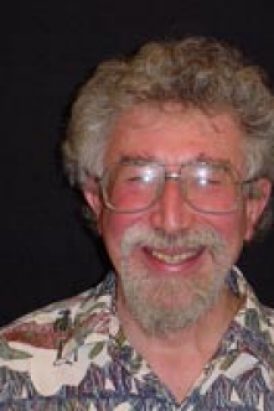
Herbert Eagle is an Associate Professor in the Arts and Ideas in the Humanities Program at the University of Michigan's Residential College, with additional affiliations in Screen Arts and Cultures, Slavic Languages & Literatures, and CREES. He earned his Ph.D. from the University of Michigan in 1973. His research spans Russian and East European cinema, film semiotics, poetry, and dissident literature under communist regimes. Research interests focus on: Semiotic analysis of cinematic narratives Eastern European directors (e.g., Eisenstein, Polanski, Kundera) Socialist realism and its subversion Structural innovation in avant-garde film Publications consistently explore cinematic semiotics, narrative disruption in Soviet-bloc art, and interdisciplinary cultural analysis, with works examining Polish, Czech, and Ukrainian filmmakers through theoretical frameworks like formalism and structuralism. Awards include: Teaching excellence honors from Purdue University (1975, 1976) University of Michigan's Excellence in Education Award (1991) Early-career recognition: Borden Prize (1960) and Michigan Society of Fellows (1970-73)
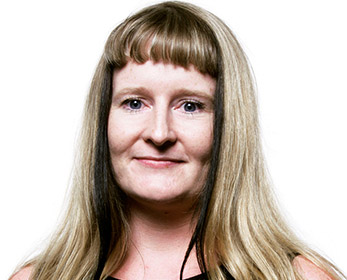
Nicola Kaye is a Lecturer at the School of Arts and Humanities, Edith Cowan University (ECU), Western Australia. She serves as Deputy Lead of the Research Centre Arts, Communications, Design and Culture and Deputy Director of ECU Galleries. Her work focuses on interactive digital media, public pedagogy, and cultural identity, often in collaboration with Stephen Terry. She has exhibited globally and received the J.S. Battye Creative Research Fellowship. MA (Visual Arts), Edith Cowan University Doctor of Philosophy in Fine Art, The University of New South Wales (2009) Her research spans interactive digital video , public space dynamics , and cultural identity critique , with a focus on interdisciplinary collaboration and creative practice . Recent publications like Art in Public: Potential Public Pedagogy Post-Pandemic (2025) highlight trends in urban cultural studies , spatial justice , and bioarts . Scientific awards include: J.S. Battye Creative Research Fellowship (2025) Research Associates at Maritime History Museum, WA (2007) Nicola has supervised over 15 PhD and MA students, exploring themes like gender fluidity , socio-political narratives , and digital technology in art . Her work engages with ECU Galleries and the Australian Council of University Art and Design Schools (ACUADS), where she was part of the 2022 organizing committee.
Jennifer Gustar is an Associate Professor at the Faculty of Creative and Critical Studies, University of British Columbia Okanagan, specializing in Contemporary Women’s Writing and Postcolonial Literature. Her research employs feminist and postcolonial frameworks to analyze works by authors like Kamila Shamsie and Sarah Waters. University: University of British Columbia Okanagan School: Faculty of Creative and Critical Studies Department: Department of English and Cultural Studies Academic Rank: Associate Professor Research Interests: Jennifer focuses on contemporary women’s literature from the UK, South Asia, and diasporic communities, examining how these works reframe history, ethics, and social change through postcolonial and feminist lenses. She is currently writing a book on British women writers including Helen Oyeyemi and Bernardine Evaristo. Publication Trends: Her scholarship spans feminist aesthetics, postcolonial trauma, and narrative subversion. Recent works analyze Angela Carter’s playful style and postmemory in South Asian diasporic literature. Graduate Supervisions: Brianne Christensen (MA), Dravida Huda (MA), Jannik Eichenaar (PhD) Professional Affiliations: Reviews Editor for Contemporary Women’s Writing , UBCO representative for ACCUTE, Co-editor of Bloomsbury Series: Global Women’s Writing
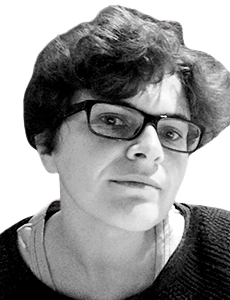
Rosa Rius Gatell is a Lecturer in Philosophy at the Universitat de Barcelona's Department of Philosophy, where she has been an active researcher since 1990. She co-founded the Philosophy and Gender Seminar and currently directs the Thesis Laboratory. Her institutional affiliations include roles as an honorary researcher at ADHUC—Centre de Recerca Teoria, Gènere, Sexualitat (since 2016) and the UNESCO Chair Women, Development and Cultures (since 2003). Research Focus: Her scholarship centers on two primary domains: Renaissance philosophy (particularly 16th century) and women's intellectual history spanning the 13th-16th and 20th centuries. She specializes in recovering marginalized female philosophers through editorial projects, translations, and critical analyses of figures like Simone Weil, María Zambrano, and Jeanne Hersch. Her interdisciplinary approach connects philosophy with gender studies, aesthetics, and intellectual history. Publications Analysis: Recent articles (2013-2022) demonstrate three key trajectories: 1) Comparative studies of 20th-century female philosophers (Weil, Zambrano, Hersch) examining ethics, exile, and aesthetics; 2) Renaissance scholarship recovering women thinkers like Moderata Fonte; 3) Philosophical investigations into art, music, and beauty as epistemological frameworks. Her work consistently challenges canonical boundaries through feminist historiography. Research Leadership: Directs the Thesis Laboratory and participates in multiple funded projects including: Consolidated Research Group on Creation and Thinking of Women (SGR 588) Teaching Innovation Group Lletra de dona / LLETRAD Juliana Morell’s Forgotten Legacy research initiative
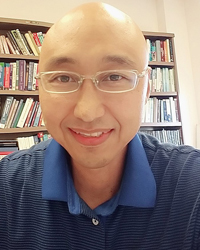
Henry Kang is an Associate Professor in the Department of Computer Science at the University of Missouri–St. Louis, College of Arts and Sciences. His expertise spans computer graphics, data visualization, and computational art, with extensive experience in full-stack web development and programming frameworks. Education: Ph.D. in Computer Science, Korea Advanced Institute of Science and Technology (2002) Research Interests: Kang's work focuses on computer graphics, non-photorealistic rendering, and data visualization. Key projects include coherence-enhancing filtering, stereoscopic 3D line drawing, and emotion-driven image recoloring. He integrates machine learning and GPU computing for real-time scene navigation and artistic effects. Publication Trends: His research emphasizes texture filtering, computational art, and perceptual modeling. Recent work includes Gaussian image binarization (2021) and coherence-enhancing GPU filtering (2018), while earlier contributions explore stereoscopic depth perception (2013) and directional stippling (2011). Contact: Email: kangh@umsl.edu Phone: (314) 516-5841 Office: 318 ESH
Assoc. Prof. Umut Dagistan is a faculty member at Akdeniz University , affiliated with the Vocational School of Social Sciences and the Department of Management and Organization . Holding a Doctorate in Business Administration (2017) and a postgraduate degree in the same field (2013), he has been an Assistant Professor (2022–2024) and now serves as an Associate Professor (2024–present). His research spans organizational culture , dark leadership , and management theory , often integrating literary analysis and cultural studies into business history and organizational behavior. He has published extensively in SSCI and peer-reviewed journals , with recent works examining concepts like quiet quitting and socio-cultural influences on entrepreneurship. Key Research Themes: Historical transformation of Turkish business systems Intersection of art and social science methodology Work satisfaction and organizational commitment Bureaucracy and domination in Kafka's works Notable Contributions: Analysis of Weberian bureaucracy through literary critique Examination of dark leadership phenomena Application of Karl Popper's falsification principle to management studies Currently serving as Head of Department (2023–present), he has participated in international conferences and authored books on organizational theories and managerial ethics.
Petya Alexandrova is a Professor and Doctor of Science at New Bulgarian University's Department of Cinema, Advertising and Show Business, where she has taught since 1995. She previously served in the Department of Media and Communication (2012-2019) and maintains active office hours. Her academic work bridges cinema studies, media theory, and cultural communications. Her research explores Bulgarian cinema's evolution, specializing in short film aesthetics, production challenges, and historical analysis. She investigates film translation, digital education platforms, and cinematic representations of cultural identity. Current interests include YouTube-based pedagogy, Bulgarian-Russian cinematic connections, and festival culture. Recent publications (2018-2021) demonstrate a consistent focus on Bulgarian short films – analyzing funding models, narrative techniques, and digital distribution. Her work frequently examines post-socialist cinema, adaptation studies, and the intersection of film with new media technologies. Earlier scholarship extensively covered film titling conventions and transitional cinema.
Emanuela Marchetti is an Associate Professor at the Department of Mathematics and Computer Science , University of Southern Denmark. Her work bridges STEAM education, computational thinking, and playful learning methodologies. Key research areas: Data Privacy in Education, Human-Robot Interaction, Transmedia Literacy Projects: Taxonomies (2025), SPADATAS Handbook (2025), LabSTEM (2020-2022) Research Interests focus on integrating creativity into STEM through art-science collaborations, as seen in the Taxonomies project. Her recent work explores GDPR education via game design, AI's role in co-creative learning, and social robotics for welfare contexts. Publication Trends show interdisciplinary exploration of data fragility, digital tools for education, and ethical technology design. Articles span computational thinking through card games, AI emotion-based assessment, and GDPR gamification. Contact: emanuela@sdu.dk | Phone: 65 50 10 36
Karin Peters is a Full Professor of Romance Literature and Cultural Studies with a Focus on Ibero-Romania at the University of Bonn since 2023. Her academic journey includes a habilitation at Johannes Gutenberg University Mainz (2021-2022), a doctorate from LMU Munich (2010), and a Magister Artium from the same institution (2006). Her research spans transnational literary history, affect theory, pastoral poetry, and intersections of gender and politics in Spanish and Argentinian literatures. Key projects include co-editing The Face as Scene. Virtuality and Embodiment of Affect and leading the network 'Comic Literacies. Cultural Techniques of the Comic' at KWI Essen. She has supervised doctoral work on Iberoamerican Baroque theater and published extensively on Roland Barthes, Georges Bataille, and contemporary Latin American narratives. Her recent publications analyze the European myth of the emotional subject, pastoral masks in Cervantes, and affective economies in 18th-century literature. She has received scholarships from DAAD, Studienstiftung des deutschen Volkes, and e-fellows.net, and actively contributes to academic organizations including the Romanistenverband and the Bonn Center for Dependency Studies.
Shahira S. Fahmy serves as Professor of Journalism and Mass Communication at The American University in Cairo (AUC), where she leads groundbreaking research while holding prestigious roles including International Communication Association (ICA) Fellow and AEJMC presidential nominee. Previously, she made history as the first female Arab-American tenured full professor in journalism at a U.S. R1 university (University of Arizona). Education: PhD, Missouri School of Journalism Research Interests: Fahmy pioneers empirical studies in Visual Communication and Peace Journalism , examining how emerging technologies reshape media-conflict dynamics. Her innovative work extends peace journalism frameworks to social media platforms and digital peace building, with special focus on non-western contexts through visual quantitative analysis of war versus peace frames. Scientific Awards: NCA book award Deborah Gump Research Award Ecquid Novi African Journalism Studies Award Robert L. Stevenson Open Paper Competition award (International Communication Division) Religion and Media Interest Group award Top Scholar to Scholar Award Visual communication Top Paper Award AUC Excellence in Research and Creative Endeavors Award (2023) International Communication Association (ICA) Fellow (2024) Two Fulbright awards Advising, Editorial, and Leadership: Fahmy mentors students through over 60 co-authored research projects, many receiving international awards. She served as associate editor for the Journal of Communication (2018-2022) and Mass Communication & Society , currently sits on editorial boards of Journalism & Mass Communication Quarterly , Digital Journalism , and Visual Communication Quarterly . As UNECA Journal Publications head, she conceptualized four multilingual academic journals. Her leadership includes establishing AUC-University of Murcia Erasmus+ programs and chairing AEJMC's Standing Committee on Publications (2022-2023), where she launched the Global South Mentorship Program and Translation Fellows initiative. Fahmy currently serves as ICA Vice-Chair for Visual Communication Studies.
Lecturer Aydin Uçar has been affiliated with Akdeniz University's Faculty of Architecture, Department of Interior Architecture since 2000. He holds a postgraduate degree in Architecture/Reconstruction and Restoration from Yildiz Technical University (2000) and an undergraduate degree in Architecture from Anadolu University (1997). Education: Anadolu University (B.Arch), Yildiz Technical University (M.Arch) Research Areas: Architecture, History of Architecture and Restoration, Restoration, Engineering and Technology Aydin Uçar's work focuses on architectural restoration, cultural heritage, and spatial planning. His research bridges historical analysis with modern applications, particularly in post-disaster rural settlements and digital fabrication technologies like CNC in furniture design. He has explored the interplay between traditional architecture and contemporary tourism development strategies. His recent projects include the use of AR technology in Phaselis case studies (2022-2024). Uçar has contributed to understanding Anatolian architectural identity through publications on topics ranging from archaeological reconstruction to 20th-century rural modernization. Scientific Awards : Best Papers WSEAS (2010) Grants & Scholarships : SEE together Traveling Academy Scholarship (2022) Travel Grants (2015, 2014) Research Scholarship (2003) Professional Activities : Founder of Pratikiz Mimarlık Ltd. Şti. (2017) Jury member in architectural competitions (2002-2008) Active in international academic conferences (2008-2022)
Daniel F. Keefe is a Professor in the Department of Computer Science & Engineering at the University of Minnesota, Twin Cities, where he directs the Interactive Visualization Lab (IV/LAB). He is also recognized as a Distinguished University Teaching Professor, reflecting his excellence in both research and education. His work bridges computer science, art, and design, with a focus on ethical and creative approaches to data interaction in extended realities. Education: Ph.D. in Computer Science from Brown University (2007) Bachelor of Science in Computer Engineering summa cum laude from Tufts University (1999) Additional training at the Rhode Island School of Design and School of the Museum of Fine Arts at Tufts University Professor Keefe's research centers on ethical, just, and creative human-data interaction in computer-mediated extended realities (AR/MR/VR). His work addresses high-stakes societal needs including human-in-the-loop data-driven medical decision making, Indigenous cultural revitalization, climate discourse, natural resource management, and computer-mediated creative work. His technological approaches span interactive 3D computer graphics, digital 3D drawing, multimodal sensing, spatial displays, digital fabrication with sustainable materials, and traditional craftsmanship. His research group, the Interactive Visualization Lab, is known for pioneering work at the intersection of art, science, and technology, producing over 80 research papers with numerous best paper awards at top ACM and IEEE venues. Scientific Awards: National Science Foundation CAREER Award (2010) Best Paper Award at IEEE VIS 2024 Best Paper Award at IEEE VIS 2015 Best Paper Honorable Mention at IEEE VIS 2013 ACM I3D 2011 Best Paper (Honorable Mention) IEEE VisWeek 2010 Best Panel Award 3M Nontenured Faculty Award McKnight Land-Grant Professor (2012-2014) Horace T. Morse-University of Minnesota Alumni Association Award for Outstanding Contributions to Undergraduate Education (2019) Bowers Faculty Teaching Award (2021) Professor Keefe has mentored eight Computer Science Ph.D. students and one Cognitive Science Ph.D. student to graduation, with his former students now holding positions as professors at institutions like Gonzaga, Macalester, Carleton, and UMN, as well as roles at companies including Google, 3M, and Abbott. He has also mentored more than 50 undergraduate students and advised over 20 undergraduate and master's theses. His research program is primarily funded by the National Science Foundation, with additional support from the National Institutes of Health, National Academies Keck Futures Initiative, Mayo Clinic, US Department of Agriculture Forest Service, cities of Minneapolis and Saint Paul, and corporate partners in the medical and computer industries. The Interactive Visualization Lab (IV/LAB) serves as the hub for Professor Keefe's transdisciplinary research. The lab is known for its inclusive culture and collaborative approach, working closely with Indigenous scholars and communities, artists, designers, and scientists across disciplines. Recent projects include Sculpting Vis (an NSF-sponsored project on artistic design for scientific visualization), Back to Indigenous Futures, and various initiatives exploring the intersection of data, art, and social justice. The lab has also been involved in creating public art installations like Orbacles in downtown Minneapolis and the Augmented Paafu Mat exhibited at the Queensland Art Gallery. Professor Keefe is deeply committed to diversity, equity, and inclusion, having founded and chaired the CS-IDEA committee and co-designed the department's Broadening Participation in Computing Plan.
Daniela Margareta Chiorean serves as University Professor in the Graphics Department at the University of Art and Design Cluj-Napoca, where she has held academic positions since 2000 and currently serves as Prorector responsible for quality assurance (2023-2024). She previously served as Dean of the Faculty of Plastic Arts (2012-2015) and Department Director for Graphics (2015-2023). Concurrently, she maintains an active legal practice as an attorney specializing in civil law and intellectual property at the Cluj Bar Association since 2007. Her educational background includes a PhD in Visual Arts (2007) from UAD Cluj-Napoca with thesis 'Man - Media. Traditional and new media in graphics,' a Master's in Civil Law (2005-2007), Law degree (2001-2005), and dual Master's degrees in Visual Arts (2001-2003). She completed specialized training in intellectual property at WIPO (2002) and cultural management/multimedia in Germany (2002-2003). Chiorean's research bridges graphic design, digital media, and intellectual property law, examining how traditional media interacts with contemporary digital environments. Her work explores symbolic dynamics in advertising, the evolution of typography from Gutenberg to virtual publications, and the legal frameworks governing creative works in digital spaces. She investigates how new technologies transform artistic practices while maintaining connections to historical techniques, with particular focus on remix culture and copyright issues in visual communication. Her publication trends reveal consistent exploration of media transitions, with recent work analyzing digital image processing, urban-nature representations in artificial environments, and comparative studies of display versus print media. These publications demonstrate her interdisciplinary approach connecting artistic practice with scholarly inquiry into media evolution. Premiul UAP România pentru grafică - tineret (2002) Premiul Vespasian Lungu pentru grafică (1997) As a researcher, she has led multiple nationally-funded projects including 'Vector – Design and Book Illustration' (2012) through the National Cultural Fund and 'Center for Promoting Entrepreneurship in Sustainable Development' (2010-2013). She coordinates international collaborations through Erasmus+ and Leonardo da Vinci programs, organizing workshops on infographics, bookbinding, and digital media. Her professional activities span academic leadership, legal practice in intellectual property, and active participation in national and international artistic communities as both creator and evaluator. She coordinates specialized workshops in infographics and bookbinding techniques, and participates annually in the Brâncuși International Workshops for sculpture, painting, and graphics. Her collaborative network extends across European institutions through multiple international partnerships, with recent involvement in Korea's 'O întâlnire și o altă călătorie începe' exhibition (2024).
Verena Krieger is Chair of Art History at Friedrich Schiller University Jena, where she has held a professorship since 2011. Her academic career spans multiple institutions including the University of Applied Arts Vienna (2008-2011), and visiting professorships at the Universities of Bern, Jena, Munich, and Karlsruhe University of Art and Design. She previously served as a research assistant at the Institute of Art History in Stuttgart (1998-2008) and completed her doctorate at the University of Bochum in 1996 followed by habilitation at the University of Stuttgart in 2004. Her research interests focus on art and art theory of modern and contemporary periods, with particular emphasis on ambiguity in art, collage/montage techniques, monument and culture of remembrance, European avant-gardes, gender constructions in art, concepts of the artist and creativity, methods of art history, politics of art, visualization of unborn children, and temporality in art. She approaches these topics through both historical analysis and contemporary theoretical frameworks, often examining the political dimensions of artistic production and exhibition practices. Krieger's recent scholarly output demonstrates a consistent engagement with visual representation in politically charged contexts, particularly regarding Holocaust imagery, right-wing extremism, and memorial culture. Her work shows a methodological commitment to examining ambiguity as both an artistic strategy and a political tool, with increasing focus on decentralized memorial practices and artistic responses to intolerance. Her publications reveal a trajectory from studies of Russian avant-garde and modern art toward contemporary political art practices and memory culture. Professor Krieger supervises numerous doctoral candidates working on diverse topics including Jiri Kolár's work, artistic articulations from Buchenwald concentration camp, art in provenance research, Soviet architecture, art during the German reunification period, and feminist artistic practices in East Germany. Her academic leadership extends to organizing significant conferences on topics such as visual representations from Nazi camps, collage/montage practices, and ambiguous relationships in art and politics. She has directed several major research projects including 'Kunst zur 'Wende'-Zeit' examining artistic reflections of the 1989/90 transformation period, 'Jenseits der Undarstellbarkeit' analyzing artistic artifacts created by concentration camp prisoners, and the 'BrandSchutz' project addressing intolerance through contemporary art. The 'decentrale Denkmal' project for Eduard Rosenthal represents her innovative approach to memorial culture through decentralized artistic interventions across multiple locations in Thuringia.
Marcelle Freiman is an Associate Professor in the School of Humanities at Macquarie University, Australia. Her research focuses on Creative Writing pedagogy, theory, and practice, with specialties in ekphrasis, cognition in creative processes, and postcolonial creativity. She has published extensively in journals like TEXT , AXON , and New Writing , and authored three poetry collections: Spirit Level (2021), White Lines (Vertical) (2010), and Monkey's Wedding (1995). Her work has been recognized with awards including the ASAL Mary Gilmore Award (Highly Commended) and a shortlisting for the Newcastle Poetry Prize (2021). Freiman has supervised 14 PhD and 6 MRes theses, with two recent doctoral works receiving Vice-Chancellor's Commendations. She has led research projects like Transformations of Writing: A Cognitive Approach to Creative Writing Process, Practice, and Technologies (2015) and Creative Writing, Literature, Cognition: Analysing Jean Rhys’ Writing Practices (2019). Her interdisciplinary work bridges creative practice with cognitive theory, examining how extended mind frameworks apply to writing processes. Key research areas include the intersection of poetry and visual art (ekphrasis), postcolonial creativity, and the evolution of the sonnet form. She actively publishes in literary journals globally and has contributed book chapters to volumes such as the Cambridge Guide to the Sonnet . Current projects explore distributed cognition in creative processes and the role of material objects (e.g., Patrick White’s briefcase) in shaping literary practices.