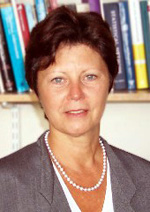
Lucia M. Vaina is a Professor of Biomedical Engineering at Boston University, with primary affiliation in the Chobanian & Avedisian School of Medicine. She holds a dual appointment as Research Professor of Neurology. Her research focuses on computational visual neuroscience, including neuronal mechanisms of spatial representation, motion perception, and functional neuroimaging. She earned a PhD in Mathematical Logic from Sorbonne University and a Doctorat d’Etat in Human & Computational Vision from Toulouse, France. Her work integrates neuroimaging (fMRI/MEG) with computational tools to analyze brain data. Key areas include motion perception during self-motion, neuroplasticity, and multisensory integration. She leads the Brain and Vision Laboratory, developing algorithms for real-time neurofeedback and analyzing large neuroimaging datasets. Recent studies examine cortical dynamics during attention tasks and the effects of aging on sensory integration. Publications span 40+ years, emphasizing motion-related neural mechanisms and clinical applications like migraine research. Her methodologies bridge theoretical engineering and clinical neuroscience, with contributions to both basic science and translational medicine.
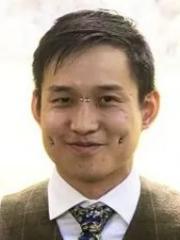
Dr. Tulika Nandi is an Assistant Professor at Vrije Universiteit Amsterdam, affiliated with the Faculty of Behavioural and Movement Sciences, Neurocontrol department. She holds additional roles in IBBA and AMS - Rehabilitation & Development. Her research focuses on neuromodulation techniques, particularly transcranial ultrasonic stimulation (TUS), exploring biophysical mechanisms, safety parameters, and clinical applications. She also maintains an honorary visitor agreement at the University of Oxford since 2021. Her work bridges neuroscience and biomedical engineering, emphasizing the development of precise neuromodulation protocols for deep brain circuits. Key research interests include neurophysiological effects of non-invasive brain stimulation (e.g., TUS, tDCS), auditory interference in stimulation paradigms, and GABAergic modulation in neurological disorders like Neurofibromatosis 1. She collaborates internationally on standardizing TUS protocols through initiatives like the IFCN-endorsed ITRUSST Consortium. Recent publications highlight advancements in understanding TUS biophysics, parameter-effect relationships, and visual cortex modulation. She addresses critical issues like safety considerations and artifact mitigation in ultrasonic stimulation. Her interdisciplinary approach integrates neuroimaging (fMRI, MRS), electrophysiology, and computational modeling to advance translational neuroscience. Dr. Nandi’s contributions include over 19 peer-reviewed articles and active involvement in teaching courses like Neurosciences and Anatomie van het Bewegingsapparaat. Her research has implications for treating neurological disorders and optimizing non-invasive brain stimulation techniques.
Johannes Fahrenfort is an Assistant Professor at the Faculty of Behavioural and Movement Sciences, Vrije Universiteit Amsterdam, with a focus on cognitive psychology and neuroscience. His research explores the neural mechanisms underlying perception, decision-making, and consciousness. Key Research Areas: Metacognition, Working Memory, Electroencephalography (EEG), Functional MRI, and the interplay between conscious and unconscious processing. Recent Projects: Templeton Grant on statistical frameworks for unconscious cognition, Advanced Human Capital Program grant on cognitive neuroscience, and PERISCOPE on visual search and peripheral vision. Research Trends: His recent articles investigate decision-making confidence, neural decoding of working memory, catecholamine effects on perception, statistical rigor in consciousness studies, and arousal-dependent cognitive performance. Keywords span Neuroscience , Psychology , and Neural Oscillations . Scientific Awards: A.F. Sandersprice (2007), Best Lecturer for the Research Master Psychology (2019), and Open Science Award FBMS (2024). Academic Contributions: Frequent lecturer in Cognitive Neuroscience, co-supervisor of PhD theses, and creator of open-access datasets and software tools for EEG analysis.
Lynda Erskine is a Professor and Chair in Development Neurobiology at the University of Aberdeen, affiliated with the Institute of Medical Sciences within the School of Medicine, Medical Sciences and Nutrition. Her research focuses on visual system development, particularly mechanisms governing retinal axon guidance and anterior eye development. She holds roles as Course Coordinator for Human Embryology and Developmental Biology courses, and Co-Programme coordinator for the MSc in Reproductive and Developmental Biology. Education: BSc (1st Class) Medical Science, University of Aberdeen (1991) PhD in Physiology, University of Aberdeen (1994) Research Interests: Anterior eye development and ocular disease risk (glaucoma, myopia) Molecular mechanisms of retinal axon guidance (e.g., VEGF-A/NRP1, DSCAM, Slit/Robo) Role of lens signaling in eye size regulation Teratogenic effects of drugs like thalidomide Recent Trends in Publications: Focus on lens-regulated genes driving eye development (2025) Investigation of CXCL12’s role in optic chiasm axon crossing (2024) Studies on thalidomide’s impact on embryonic tissues (2025) Awards: Suffrage Science Award (MRC Clinical Sciences Centre, 2014) Advising & Grants: Supervised 14+ PhD students and postdoctoral fellows Secured funding including £333K Wellcome Trust microscope grant (2017-2018) and £580K BBSRC grant (2012-2015) Labs & Collaborations: Collaborations with Neil Vargesson, Martin Collinson, and Christiana Ruhrberg Led research teams studying retinal ganglion cell axon pathways and anterior eye development
Jan R. Buitenweg is a Full Professor at the University of Twente, affiliated with the TechMed Centre and the Biomedical Signals and Systems department. His work focuses on nociceptive processing, pain mechanisms, and neurophysiological responses, with applications in spinal cord stimulation, diabetic neuropathy, and clinical pain management. He has contributed to over 130 research outputs since 1997, including peer-reviewed articles, datasets, and conference contributions. His educational initiatives emphasize interdisciplinary training in biomedical engineering to address modern healthcare challenges. Key research interests include the development of novel psychophysical and neurophysiological methods to study pain perception, particularly in chronic conditions like rheumatoid arthritis and post-stroke pain. His work also explores the impact of obesity on nociceptive function and the optimization of spinal cord stimulation techniques. Buitenweg has presented at international conferences, including the IEEE Engineering in Medicine and Biology Society, and collaborates globally on studies involving diabetic patients, spinal pain syndromes, and neurorehabilitation. Recent studies investigate context effects in pain ratings, test-retest reliability of pain questionnaires, and the use of machine learning (e.g., Naïve Bayes classifiers) for diagnosing diabetic neuropathy. His datasets, available via 4TU.Centre for Research Data, include validation studies for visual pain scales and electrocutaneous stimulation protocols. Buitenweg’s contributions advance both clinical practice and educational frameworks in biomedical engineering.
Farshad Alizadeh Mansouri is an Associate Professor in the Physiology Department at Monash University, affiliated with the Monash Biomedicine Discovery Institute. He holds additional roles as Director of the Cognitive Neuroscience Laboratory and Visiting Scientist at RIKEN Institute in Japan. His research focuses on the neural basis of executive control and cognitive flexibility, particularly involving the prefrontal cortex. Techniques include behavioral studies, electrophysiology in animal models, and brain stimulation in humans. Education: BSc in Biology (Zoology), MSc in Medical Physiology, PhD in Neurophysiology. He has led and collaborated on multiple grants, including projects on brain stimulation, bushfire effects on brain function, and cycling safety. Awards include prizes for studies on the insula’s role in cognition (2018, 2019). Research interests revolve around prefrontal cortex function, cognitive flexibility, and executive control mechanisms. Recent work explores how morphine, music, and neuromodulation impact cognitive processes. Over 47 publications span journals like Science , Nature Reviews Neuroscience , and Brain . Key Projects : Effects of bushfires on adult brain structure (NHMRC-funded) Transcranial ultrasound neuromodulation Neural basis of prefrontal cortex stimulation Grants : ARC Centre of Excellence for Integrative Brain Function (associate investigator). Labs/Teams: Cognitive Neuroscience Lab at Monash; collaborates with RIKEN and international teams. Future work emphasizes cross-species studies and clinical applications of cognitive neuroscience insights.
Dr. Nafiseh Atapour Senior Research Fellow in Physiology at Monash University since 2015. Holds a PhD in Neurophysiology and completed postdoctoral training at RIKEN Brain Science Institute (Japan), studying visual circuit plasticity. Her research focuses on neuronal plasticity, critical periods in development, inhibitory interneurons, and neurodevelopmental disorders like schizophrenia and epilepsy. Education & Training PhD in Neurophysiology Postdoctoral Fellowship: Prof. Takao K. Hensch’s Lab at RIKEN Brain Science Institute, Japan Research Projects Thalamic plasticity following cortical damage: recovery of vision (2023-2026, PCI) The effects of early exposure to bushfires on adult brain structure and function (2022-2026, CI) Awards Razi Award for Early-Career Scientists (1999) Gender Equity Travel Support Grant (2016) Key Research Themes Explores structural/physiological plasticity in visual circuits, developmental critical periods, and neurochemical markers of cortical neurons. Uses marmoset and mouse models to investigate epilepsy mechanisms and circuit rewiring post-brain injury. Her work contributes to UN SDGs related to health and well-being.
Dan Fehring is a Research Fellow in the Department of Psychology at Monash University, specializing in cognitive neuroscience, neuromodulation, and executive control mechanisms. He focuses on understanding how prefrontal cortex functions modulate decision-making, addiction, and sex differences in brain processes. His work contributes to UN Sustainable Development Goals related to mental health and well-being. Research interests include neuromodulation techniques (e.g., TDCS), neuropharmacology (opioids, cannabis), and cognitive control mechanisms. He has published extensively on topics like prefrontal stimulation effects, dimensional bias in primates, and music’s role in conflict resolution. His articles span 2016–2025, with recent work exploring stimulation safety, morphine’s cognitive impacts, and biochemical markers of cannabis use. Education: Not explicitly stated in the provided text. Awards: Early Career Researcher Presentation Award (2017) Monash Biomedicine Discovery Institute and RIKEN Fellowship (2020) Monash Discovery Institute Rising Star (2022) Activities: Active in conferences (e.g., Australasian Cognitive Neuroscience Society), peer review (Cell Reports), and seminars. His work bridges basic neuroscience and clinical applications, with a focus on translational research for mental health and addiction. He collaborates internationally and has been cited over 70 times in Scopus.
Jaume Rosselló-Mir is an Associate Professor in the Department of Psychology at the Universitat de les Illes Balears (UIB), Spain. He collaborates as a professor at the Autonomous University of Barcelona in the Psychology of Communications and Change PhD program. His research focuses on implicit processing, experimental aesthetics, moral cognition, and affective processing, with notable contributions to understanding neural correlates of aesthetic preference and the intersection of emotion and morality. Education details are not explicitly stated, but his academic roles suggest advanced qualifications in psychology and neuroscience. His research interests emphasize interdisciplinary approaches, bridging cognitive science, neuroscience, and cultural studies. Recent publications explore topics like implicit attitudes in adolescents, cross-cultural aesthetic preferences, and neuroimaging studies of moral judgment mechanisms. He has advised doctoral theses receiving notable accolades, including the Alumni Prize for Outstanding Achievement (2014, 2012) and national awards like the Premio Nacional Memorial M. Angeles Jiménez de Seguridad Vial 2005. His work frequently integrates experimental methods with theoretical frameworks, contributing to both academic and applied psychology domains. Laboratory and team involvement includes affiliation with the Evolutionary and Cognitive Humanities research group (Evocoghum.uib.eu), reflecting collaborative efforts in interdisciplinary research. He maintains active engagement in academic networks through platforms like ResearchGate and Google Scholar.
Prof. Dr. Claus Christian Hilgetag serves as Director of the Institute and Principal Investigator at the Institute of Computational Neuroscience, part of the Center for Experimental Medicine at the University Medical Center Hamburg-Eppendorf (UKE). His research focuses on computational neuroscience, neuroanatomy, and theoretical frameworks for understanding brain connectivity and network dynamics. Notable contributions include studies on optimal communication in brain networks, causal influence decomposition, and computational models of Parkinson’s disease. His work bridges experimental and computational approaches, with publications in high-impact journals like eLife , Science Reports , and Cerebral Cortex . He leads projects on brain simulation, lesion mapping, and neural network modeling, emphasizing interdisciplinary collaboration in neuroscience.
Liana E. Brown is an Associate Professor in the Department of Psychology at Trent University, specializing in motor-sensory integration. Her research explores how sensation, perception, and movement interact during everyday tasks. Education: B.Sc., M.Sc. in Psychology from the University of Waterloo M.S., Ph.D. in Psychology from Pennsylvania State University Research Areas: She investigates four core questions: (1) How hands enhance vision/attention, (2) Limb spatial tracking, (3) Motor capabilities’ impact on cognition, and (4) Observational motor skill learning. Her work focuses on neural mechanisms underlying sensory-motor exchange. Research Trends: Publications from 2015–2025 reveal a progression from fundamental studies on limb positioning and sensory integration to applied research in concussion assessment, Parkinson’s disease, and sports physiology. Key themes include motor learning, neurorehabilitation, visuomotor coordination, and biomechanics. Teaching & Supervision: During 2025–26, she will supervise 1 graduate student, up to 2 honours thesis students, and 2 practicum students.
Jessica Teed is a doctoral candidate and teaching tutor within the Psychology department of the School of Philosophy, Psychology and Language Sciences at the University of Edinburgh. She holds the position of Psychology PhD Tutor Representative and provides instructional support as a Tutor and Demonstrator for core undergraduate psychology modules including Psychology 1A, 1B, 2A, and 2B. Her academic journey is deeply embedded in cognitive neuroscience and visual perception research. Her educational qualifications demonstrate a strong foundation in psychological science: Currently pursuing a PhD in Psychology at the University of Edinburgh, investigating visual perception and memory through multimodal methods including fMRI, TMS, and EEG. MSc in Cognitive Neuroscience from the University of York, with a thesis focused on developmental prosopagnosia using fMRI. BSc in Psychology (Industrial) from the University of Leeds, examining facial expression categorization. Jessica's research centers on the neural mechanisms of visual perception and memory, particularly exploring how the brain organizes visual representations through retinotopic mapping and category-selective regions. She investigates the interplay between perception and memory, with current projects examining hemispheric asymmetries in object processing and the neural underpinnings of individual differences in mental imagery capacity, including the phenomenon of aphantasia. Her methodological toolkit spans psychophysics, functional magnetic resonance imaging, transcranial magnetic stimulation, and electroencephalography. Her scholarly output, including the forthcoming 2025 publication on visual imagery of familiar people and places in category selective cortex, reveals a consistent focus on cortical organization for visual cognition. This work integrates mental imagery paradigms with neuroimaging to uncover how category-selective regions support both perception and imagery, contributing to broader understanding of visual system architecture. No scientific awards or major honors were documented in the available materials. While Jessica does not currently supervise graduate students, she plays a significant role in undergraduate education as a course tutor. She operates within the research framework of the Silson Lab, receiving guidance from Dr. Edward Silson and Professor Robert McIntosh, but has not been associated with independent research grants at this career stage. Jessica is an integral member of the Silson Lab at the University of Edinburgh, where she collaborates on projects investigating the functional organization of the visual cortex. Her work contributes to the lab's mission of understanding how the brain processes visual information and supports memory functions through advanced neuroimaging techniques.
William Kwan is a Postdoctoral Research Fellow at the Queensland Brain Institute (University of Queensland). His research focuses on neural circuitry, optogenetic stimulation for artificial vision, and neuroregenerative strategies following brain injury. He investigates retinal ganglion cell projections, astrocyte roles in injury response, and primate visual system development. Key research areas include: Optogenetic approaches to restore visual function Neural circuit mapping in primates Role of astrocytes in brain injury repair Development of visuomotor systems His recent work demonstrates how stochastic optogenetic stimulation improves retinal cell efficacy and how infant-like astrocyte behaviors enhance adult brain recovery. He explores predator fear circuits in primates and connectivity between pulvinar nuclei and cortical regions. Kwan’s studies often use marmoset and rodent models to bridge basic neuroscience with translational applications. His publications highlight advancements in understanding: Artificial vision systems Stroke recovery mechanisms Neural plasticity in sensory systems Sexually dimorphic brain circuits No awards or grants are listed in the provided materials. His work is part of the Queensland Brain Institute’s mission to advance neuroscience research with clinical relevance.
Steven Chase is a Courtesy Professor in the Department of Electrical and Computer Engineering at Carnegie Mellon University, part of the College of Engineering. His research focuses on understanding neural mechanisms underlying learning, motor control, and the development of brain-computer interfaces (BCIs). He investigates how neural activity adapts during skill acquisition and explores the interplay between sensory input, motor output, and cognitive processes. His work emphasizes the neural basis of learning and adaptation, with a particular focus on motor cortex dynamics and the design of BCI systems. Recent studies explore how reward influences movement vigor, the role of limb posture in motor adaptation, and the neural substrates of choking under pressure. Chase's research also addresses the stability and plasticity of cortical representations during skill learning and sensory deprivation. Key trends in his publications include advancing BCI technology through low-dimensional control frameworks, analyzing neural memory traces during learning, and dissecting the multidimensional constraints shaping neural activity patterns. His work bridges computational neuroscience, neurophysiology, and engineering to develop translational solutions for neural prosthetics and rehabilitation. Chase collaborates widely on projects involving neural decoding algorithms, closed-loop systems, and the optimization of BCI usability. His research has implications for understanding fundamental neural processes and developing assistive technologies for motor impairments.
Gorana Pobric is a Senior Lecturer at The University of Manchester's Division of Psychology Communication and Human Neuroscience. She directs the Manchester Brain Stimulation Lab (MBSL), focusing on non-invasive brain stimulation techniques to study semantic cognition and neurorehabilitation. Her research spans dementia, autism, schizophrenia, and stroke recovery. She holds a BSc in Neuroscience (University of Toronto), a BA in Psychology (University of Belgrade), and a PhD in Cognitive Neuroscience (SISSA, Trieste). Dr. Pobric collaborates internationally with institutions like Columbia University and Kyoto University. Her teaching includes courses on cognitive neuroscience, neuropsychology, and neuroimaging. She received the Award for Promotion of UK-Japan Scientific Collaboration (2016). Her work contributes to UN Sustainable Development Goals related to health and well-being (SDG 3) and quality education (SDG 4). Education: BSc (Honors) Neuroscience, University of Toronto BA Psychology, University of Belgrade PhD in Cognitive Neuroscience, SISSA (Trieste, Italy) Research Focus: Non-invasive brain stimulation, semantic cognition, neuropsychiatric disorders, and neurorehabilitation Labs/Teams: Manchester Brain Stimulation Lab (MBSL) Her recent work explores transcranial electrical stimulation effects on emotional processing and cognitive training protocols for neurofibromatosis type 1. She has published over 50 peer-reviewed articles and led projects funded by UK and international grants.