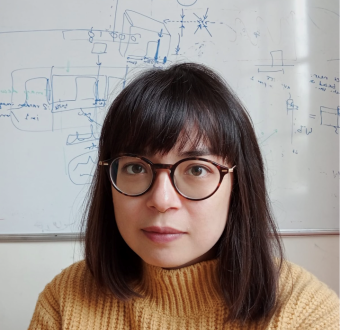
Federico Pigni serves as Dean of Faculty, Pedagogy, and Research at Grenoble Ecole de Management (GEM), where he holds a full Professorship in Information Systems within the Management of Technology and Strategy department. His academic journey includes a cum laude Business Administration degree and a Ph.D. in Management Information Systems and Supply Chain Management. He has held teaching roles at institutions including Carlo Cattaneo University, the Catholic University of Milan, and Università Commerciale Luigi Bocconi in Milan. Beyond academia, Pigni co-founded Lab4Consulting (2000–2006), a web and software consultancy focused on IT innovation in banking, and completed a post-doctorate at France Télécom R&D in Sophia Antipolis, developing inter-organizational ICT adoption methodologies. His research focuses on strategic applications of information systems, particularly in interorganizational contexts and digital technologies for customer service innovation. Notable projects include the EU-funded EpilepsyPOWER initiative promoting workplace inclusion for epilepsy patients, and the TRIPBAM project leveraging digital data streams for pandemic resilience. His work spans digital transformation frameworks, cybersecurity investments, and big data analytics' impact on competitive advantage. He has authored over 100 publications, including seminal works on IT ambiguity, DevOps frameworks, and supply chain digitalization. Pigni has led collaborative initiatives like the ECOLEAD network supporting SMEs' interorganizational systems and contributed to projects such as the SOLMED solar energy desalination initiative. His expertise bridges academic research with industry practice, emphasizing real-world applications of emerging technologies to drive organizational value creation and societal impact.
Vincent Ardonceau is a Researcher and PhD student at the University of Burgundy , affiliated with the INSERM U1093 Laboratory and the Marey Institute . His research focuses on sensorimotor adaptation, cognitive neuroscience, and multisensory integration. Licence STAPS in Adapted Physical Activity and Health (APAS), INU J-F Champollion, Rodez Master STAPS in Movement Ergonomics and Disability (MEH), Université Grenoble Alpes, Grenoble His thesis, "Glasses to hear differently: the aftereffects of vertical prism adaptation on visual and auditory attention and representations," investigates how vertical prism adaptation alters visuospatial and auditory perception, contributing to understanding neural plasticity and cognitive processing. His publications in Cortex and Frontiers in Psychology highlight mechanisms of cross-modal sensory interactions. Current research trends include experimental psychology methods to analyze aftereffects on attentional networks and potential applications in cognitive rehabilitation. Vincent collaborates with the Marey Institute and works under the supervision of Carine Michel and Bénédicte Poulin-Charronnat.
BOHI Amine is a researcher at CESI (School of Engineering and Digital Tools, Department of Computer Science), with a PhD in Computer Science from the University of Toulon (2017). His academic profile spans disciplines including Machine Learning, Signal and Image Processing, and Biomedical Engineering, with a focus on applications in Digital Health and Human-Robot Interaction. Education : PhD in Computer Science (University of Toulon, 2013-2017); Master 2 in Computer Science (University of Fes, Morocco, 2009-2011); Bachelor’s in Mathematical and Computer Sciences (University of Fes, 2006-2009). His research interests include: Machine Learning and Deep Learning Signal and Image Processing 3D Shape Analysis Computer Vision Digital Health Biomimetic Feature Design BOHI’s publications reflect expertise in facial emotion recognition for elderly care, cortical folding modeling, and soft tissue organ deformation analysis using MRI. He supervises diverse research internships, mentoring students from institutions like Sorbonne Paris Nord, Université de Technologie King Mongkut, and INP Grenoble. Current projects involve developing intelligent solutions for emotional interaction with elderly individuals suffering from neurodegenerative disorders, in collaboration with VyV3 Bourgogne. He also contributes to the design of multimodal datasets and wearable health monitoring systems. BOHI’s technical work includes contributions to maritime surveillance systems (PARE project) and semantic information platforms, demonstrating a capacity to bridge theoretical research with practical applications across domains.
Ludovic Sacchelli is an Inria researcher (CR) affiliated with the McTAO team at the Centre Inria d'Université Côte d'Azur and the Laboratoire J.A. Dieudonné of Université Côte d'Azur. His research spans control theory, sub-Riemannian geometry, and mathematical neuroscience, focusing on optimal control, observers, and estimation problems. His work on sub-Riemannian manifolds and control systems includes stabilization techniques for non-uniformly observable systems and applications to UAV control, neural fields, and bioprocess modeling. He has contributed to heat kernel analysis, line fields interpolation, and geometric models for sound processing. His recent publications address topics like distributed state estimation in neural models, polynomial state-affine control systems, and geometric algorithms for orientation field interpolation. He has also explored observability singularities in bilinear systems and stabilization of weakly contractive systems. Teaching roles include instructing Measure Theory , Stochastic Processes , and applied mathematics at institutions such as Université Côte d'Azur, Polytech Nice, Lehigh University, and École Polytechnique. His mentorship includes supervising a Masters research project on numerical implementation of line fields interpolation in 2019.
Stanislas Dehaene is a Professor of Experimental Cognitive Psychology at the Collège de France. He holds a doctorate in cognitive psychology from EHESS (1989) and conducted early training in mathematics at École Normale Supérieure (ENS) in 1984. His research focuses on the neural bases of numerical cognition, reading, and consciousness, employing cognitive psychology experiments and advanced neuroimaging techniques. He pioneered studies on the parietal lobe’s role in arithmetic and demonstrated how symbolic systems like language and mathematics evolved from core "neuronal recycling" processes. Education: Bachelor’s in Mathematics, ENS (1984) Master’s in Mathematics, UPMC (1985) PhD in Psychology, EHESS (1989) Research Interests: Dehaene explores the brain’s mechanisms for processing numbers, reading, and conscious thought. His theories include the global neuronal workspace model of consciousness and the neuronal recycling hypothesis explaining how evolution repurposes neural circuits for symbolic thought. He also investigates educational applications of cognitive science, such as improving math and literacy instruction. Key Awards: Chevalier de la Légion d'Honneur (2011) Inserm Grand Prix (2013) Jean Rostand Prize (1997) American McDonnell Foundation Centennial Fellowship Labs/Teams: Leads the Cognitive Neuroimaging Unit (INSERM-CEA) and collaborates with neuroimaging centers like NeuroSpin (Saclay). His work integrates fMRI, MEG, and EEG to study human and primate cognition.
Kristina Nielsen is an Associate Professor of Neuroscience at Johns Hopkins University School of Medicine and a researcher at the Zanvyl Krieger Mind/Brain Institute. She investigates the function, development, and plasticity of higher-level visual cortex circuits. PhD, Max Planck Institute for Biological Cybernetics (Germany) Postdoctoral work at Salk Institute (2006-2012) with Ed Callaway and Rich Krauzlis Her research focuses on: Structure-function relationships in higher visual cortex Neural mechanisms of object recognition Developmental plasticity of visual circuits Two-photon microscopy applications in primates Viral vector-based circuit analysis Key article trends include primate visual cortex organization, motion and shape integration, and cortical development mechanisms. She has contributed to journals like Nature , Neuron , and Journal of Neuroscience . Scientific awards: CNRS 2025 bronze and silver medals Current lab members include graduate researchers Dallas Khamiss, Emmanuel Osikpa, and Brandon Nanfito. Her team has received ANR funding for projects like 'Earlier stages of development of the motion pathway' and 'Encoding of 2D and 3D shape in primate V4.'
Anne Kavounoudias is a Professor at Aix-Marseille University, where she serves as Director of the Body & Multisensoriality team within the NeuroMarseille Institute. She also holds the position of Director of EUR Neuroschool, a University Research School that brings together L3, Master and PhD programs in Neurosciences from Aix-Marseille University. Since 2020, she has served as Deputy Director of the NeuroMarseille Institute and previously served as a member of CNU section 69 (2015-2022) and the Board of the Doctoral School of Life and Health Sciences (2019-2021). Dr. Kavounoudias' research focuses on the mechanisms and neural bases underlying multisensory integration in the representation and control of human body movement. Her work sits at the interface of neurophysiology and experimental psychology, examining how muscular proprioceptive, tactile, and visual sensitivities interact to ensure movement perception and control. She conducts studies with healthy adults, elderly subjects to understand adaptive processes during non-pathological aging, and individuals who are transiently deafferented (through immobilization) or permanently (amputees, deafferented patients). Her research methodology incorporates functional brain imaging (fMRI), structural imaging (DWI), MR-spectroscopy of the brain and spinal cord, psychophysical approaches, electromyography, and multisensory stimulations including tendon vibration, visual vection, and tactile vection. Current projects include the ANR ASTRID 'PhantomPain' Project (2021-2025) on phantom pain in amputees, an AMIDEX Excellence Incubator Project (2020-2021) on new therapies for phantom pain, and previous projects like 'DISREMO' (2017-2019) and the ANR JCJC 'MULTISENSE' project (2012-2016). Analysis of Dr. Kavounoudias' recent publications reveals a consistent evolution in her research focus, with increasingly sophisticated neuroimaging approaches to study multisensory integration. Her work demonstrates growing attention to age-related changes in sensory processing and expanding applications to rehabilitation contexts, particularly for amputees and individuals with movement disorders. The publications show a progression from basic research on sensory integration mechanisms to more translational work with clinical applications. Her research has been supported by multiple competitive grants including: ANR ASTRID 'PhantomPain' Project (2021-2025) - Phantom pain in amputees: understanding its central and peripheral origins AMIDEX Excellence Incubator Project (2020-2021) - New therapy for phantom pain after amputation 'DISREMO' Project (2017-2019) - Exploration of audio-haptic interactions in texture perception ANR JCJC 'MULTISENSE' Project (2012-2016) - Multisensory integration and kinesthetic perception As Director of EUR Neuroschool, Dr. Kavounoudias oversees graduate education in neuroscience at Aix-Marseille University, coordinating L3, Master and PhD programs. She previously served as Co-director of the ICN PhD Program and Co-manager of the Brain Master Program, both initiatives aimed at internationalizing neuroscience education at AMU. Dr. Kavounoudias leads the Body & Multisensoriality research team at the NeuroMarseille Institute, where her group investigates the neural mechanisms of body representation and movement control. Her laboratory employs a multidisciplinary approach combining neuroimaging, psychophysics, and electrophysiological techniques to study sensory integration in both healthy and clinical populations, with particular focus on developing rehabilitation approaches for movement disorders.
Thierry Artières is a University Professor at Aix-Marseille University, primarily affiliated with École Centrale Marseille (ECM), where he holds multiple leadership positions including Head of the Computer Science teaching unit, Head of the IAAA course of the Computer Science Master's degree, and Head of the IAM course of the 3rd year Computer Science option. He is a key member of the QARMA (Machine Learning) research team within the LIS (Laboratoire d'Informatique et Systèmes) and collaborates with several research institutes including the READ laboratory, Institut de Neurosciences de la Timone (INT), and the ILCB (Institute of Language, Communication and the Brain). His research interests span Machine Learning, Deep Learning, and Artificial Intelligence with applications to neuroscience, medical imaging, and computational biology. His work focuses on understanding brain representations of voice and sound, optimizing MRI acquisition through deep learning, and developing novel machine learning techniques for multi-label classification and generative modeling. He has supervised numerous PhD students including Loris Berthelot, Hamed Benazha, Malek Senoussi, Swetali Nimje, and Charly Lamothe. His recent publications reveal a strong focus on applying deep learning to neuroscience problems, particularly in understanding how the brain processes sound and voice. His work combines theoretical machine learning advances with practical applications in medical imaging and cognitive neuroscience, often through collaborations between computer science and neuroscience laboratories. His research demonstrates a consistent trend toward interdisciplinary work that bridges AI with biological and medical domains. Member of QARMA Machine Learning team at LIS Collaborator with Institut de Neurosciences de la Timone Involved with ILCB Institute (Institute of Language, Communication and the Brain) Supervisor of multiple PhD students and Master's interns Regularly posts about internship opportunities in Machine Learning and AI Professor Artières actively mentors students through PhD positions, Master's internships, and engineering student projects. He has secured funding for multiple research projects, including ANR-funded collaborations with neuroscience institutes. His lab regularly offers 5-6 month internships on cutting-edge topics in machine learning, and he has facilitated numerous research opportunities for students interested in AI and data science careers. He also contributes to understanding the French job market for AI and data science professionals.
Jing-Rebecca Li is a Professor and Research Scientist at ENSTA Paris, affiliated with the Applied Mathematics Unit (UMA) and INRIA Saclay as part of the IDEFIX research team. Her work bridges advanced mathematical techniques with medical imaging applications, particularly in diffusion MRI. She maintains a dual affiliation between ENSTA Paris, a leading engineering school in France, and INRIA, the French national research institute for digital science and technology. HDR (Habilitation à Diriger des Recherches) in Mathematics, Université Paris-Sud, 2013 Ph.D. in Mathematics, Massachusetts Institute of Technology, 2000 B.Sc. in Mathematics, University of Michigan, 1995 Dr. Li's research focuses on developing sophisticated numerical methods to solve partial differential equations with applications in diffusion magnetic resonance imaging. Her work spans brain and cardiac imaging, numerical linear algebra, machine learning algorithms for inverse problems in PDEs, and natural language processing tools. She has pioneered approaches to simulate diffusion MRI signals in complex biological tissues, enabling more accurate interpretation of imaging data for neuroscience and cardiology applications. Her research has significant implications for understanding brain microstructure and cardiac tissue organization through non-invasive imaging techniques. Her recent publications demonstrate a clear trend toward increasingly sophisticated modeling of biological tissues, with growing emphasis on cardiac applications alongside her foundational work in brain imaging. She has developed robust computational frameworks that incorporate permeable interfaces, geometrical deformations, and realistic neuronal geometries to better simulate diffusion MRI signals. Her work increasingly integrates machine learning with traditional numerical methods, creating hybrid approaches that leverage the strengths of both paradigms for microstructure estimation. Householder Prize for the best dissertation in Numerical Algebra (2002) Dr. Li has supervised numerous doctoral students across multiple institutions, with a focus on computational methods for diffusion MRI. Her current research is supported by significant grants including the Engineering for Health (E4H) interdisciplinary center project investigating biomarkers for Multiple Sclerosis through diffusion MRI (2023-2025). Previously, she led the ANR-funded SIMUDMRI project (2010-2014) and participated in the US-French Collaboration project on Computational Imaging of the Aging Cerebral Microvasculature (2013-2016). Her work demonstrates strong interdisciplinary collaboration between mathematics, computer science, and medical imaging communities. As leader of the IDEFIX research team at INRIA Saclay, Dr. Li directs a group focused on inversion methods for differential equations applied to imaging and physics problems. Her team has developed the SpinDoctor software package, a widely used MATLAB toolbox for diffusion MRI simulation that has become a standard tool in the field. The team maintains strong collaborations with Neurospin (CEA) and international research groups working on advancing diffusion MRI methodology and applications.
Sylvain Argentieri serves as an Associate Professor at the Institute for Intelligent Systems and Robotics (ISIR) within Sorbonne University, where he has been a member of the ASIMOV research group ("Architectures and Models for Adaptation and Cognition") since 2008. His office is located at ISIR, Campus Pierre et Marie Curie, 4 place Jussieu, BC173, 75005 Paris. He maintains an active research presence with publications spanning from 2006 to 2024. His educational background includes obtaining the highest teaching diploma in France (Agrégation externe) in Electrical Engineering from the École Normale Supérieure in 2002, followed by a Ph.D. in Computer Science from Paul Sabatier University (Toulouse) in 2006, and his Habilitation à Diriger des Recherches (HDR) in 2018. Argentieri's research focuses on artificial perception in robotics with special emphasis on auditory perception, active multimodal perception approaches, and sensorimotor integration. His work demonstrates a consistent trajectory exploring how robots can develop perceptual capabilities through sensorimotor experiences, with particular attention to binaural sound localization, head movement control, and the emergence of spatial representations from uninterpreted sensory signals. His publications reveal a strong interest in how naive agents can structure their understanding of the world through active exploration and sensory prediction. His publication record shows a clear progression from foundational work on sound source localization to more complex investigations of sensorimotor contingencies and embodied cognition. The research spans multiple venues including IEEE conferences, Robotics and Autonomous Systems, and Frontiers journals, with recent work incorporating transformer architectures and neural network approaches to auditory processing. Argentieri maintains active collaborations with researchers including Nicolas Obin, Bruno Gas, and Valentin Marcel, as evidenced by his co-authored publications. His laboratory work takes place within the ASIMOV team at ISIR, which focuses on architectures and models for adaptation and cognition in robotic systems.
Florent Haiss is a researcher at the Institut Pasteur in Paris, France, where he leads a research group within the Neural Circuit Dynamics and Decision Making team under the Physics of Biological Function unit. His work is centered on understanding how cortical microcircuits process sensory information and contribute to perception, learning, and decision-making in behaving animals. His research interests lie at the intersection of systems neuroscience, neurophysiology, and behavioral neuroscience, with a strong emphasis on sensory systems—particularly the somatosensory and visual systems. He investigates how neuronal networks interact during cognitive tasks, using advanced methods such as two- and three-photon imaging, optogenetics, intracellular patch-clamp recordings, multi-electrode arrays, and psychophysics in rodent models. The trends in his recent publications indicate a focus on neural coding in the barrel cortex, including how state, choice, and sensory inputs are co-represented. His work also explores autonomic correlates of cognition (e.g., pupillary responses), neural adaptation, and the development of novel neuroimaging tools and neural interfaces. His methodological innovations support long-term, in vivo investigations of neural dynamics. Functional and Structural Properties of Highly Responsive Somatosensory Neurons in Mouse Barrel Cortex Coexistence of state, choice, and sensory integration coding in barrel cortex LII/III Pupillary dilations reflect task engagement and confidence in mice Design of ultra-flexible two-photon microscopes for in vivo use Reorganization of cortical activity during sensory deprivation Florent Haiss mentors early-career researchers, including PhD students and postdoctoral fellows such as Ervan Achirou, indicating an active and productive research group. He has not received any explicitly mentioned scientific awards in the provided texts. His research is supported by institutional affiliations and collaborative networks at the Institut Pasteur, particularly within transversal programs involving quantitative biology and artificial intelligence in biomedical research. He is involved in the development of advanced technologies for neuroscience, including flexible microscopes and large-scale electrode arrays for retinal stimulation, reflecting a strong engineering and translational component in his work. His team collaborates across disciplines, integrating computational modeling with experimental neuroscience.
Keith Doelling is a researcher at the Pasteur Institute, affiliated with the Auditory Cognition and Communication team. His work focuses on the neural mechanisms underlying auditory perception, speech processing, and brain plasticity, particularly in aging and hearing rehabilitation contexts. His research interests include: Cognitive Neuroscience Auditory Perception Neural Oscillations Speech Processing Temporal Prediction Brain Plasticity His recent publications reveal a strong focus on how rhythmic structures, predictability, and acoustic features shape perception and cognition. He frequently collaborates with Diane S. Lazard and Luc H. Arnal, contributing to high-impact journals such as PLoS Biology , iScience , and Journal of Neuroscience . His work integrates psychophysics, neuroimaging, and computational modeling to understand how the brain processes temporal information in speech and sound. There are no listed scientific awards or grants. He has not been mentioned as advising students or leading a lab, though his role as Structure Manager suggests organizational and technical leadership within his research unit.
Danion Frédéric is a CNRS Researcher at the Center for Research on Cognition and Learning (CeRCA), affiliated with the University of Poitiers and operating under the Maison des Sciences de l'Homme et de la Société (MSHS) framework. His work focuses on sensorimotor interactions and communication within the CeRCA laboratory in Poitiers, France. His research centers on motor control mechanisms, specifically examining learning and adaptation in eye-hand coordination during pursuit and pointing movements. Key interests include anticipatory behaviors, directional asymmetries in tracking, and bimanual coordination. Future work will extend to handwriting analysis, building on his expertise in sensorimotor integration. Collaborators include Pierre-Michel Bernier (Sherbrooke University), Aymar de Rugy (University of Bordeaux), and Fabrice Sarlegna (University of Aix-Marseille). Recent publications (2017-2021) reveal consistent themes in neural and behavioral mechanisms of eye-hand coordination, utilizing TMS, kinematic analysis, and behavioral paradigms. His work bridges neuroscience, psychology, and biomechanics, with emphasis on spatial coordination, motor prediction, and cortical contributions to sensorimotor control. Experimental work leverages CeRCA's specialized platforms including the PLAViMoP (Point Light Action Visualization and Modification Platform) and Self Analysis Video (SAV) systems for motion capture and analysis.
Yves Boubenec is an Associate Professor (maître de conférences) in neuroscience at the École Normale Supérieure (ENS) in Paris, where he is affiliated with the Department of Cognitive Studies and the Perceptual Systems Laboratory. His research focuses on the neural basis of auditory cognition, particularly how attention, learning, and memory interact with auditory processing at the cortical level. He teaches neurophysiology of auditory perception at ENS through the IMaLiS and Cogmaster programs. His research spans three main conceptual angles: Attention , examining how top-down attention modulates auditory processing; Learning , studying how exposure to natural sounds shapes auditory perception across multiple time scales; and Memory , investigating how exposure to sounds leaves long-term traces in auditory cortex. He employs mesoscopic-scale neural recording techniques including electrophysiological recordings of neuronal populations and large-scale functional UltraSound (fUS) neuroimaging. Boubenec's recent publications (2023-2024) reveal a strong focus on speech processing, task engagement effects on auditory cortex, evidence integration across sensory modalities, and the neural mechanisms underlying categorical perception. His work frequently involves cross-species comparisons (particularly using ferrets) and combines experimental approaches with theoretical modeling. His laboratory offers multiple internship opportunities for students at various levels (L3, M1, M2, DENS) focusing on hemogenetic imaging, cross-species comparison of rhythm perception, and learning dynamics in biological and artificial networks. Boubenec collaborates extensively with researchers including Shihab Shamma, Srdjan Ostojic, and various interdisciplinary teams across neuroscience, acoustics, and computational modeling fields. His work bridges fundamental neuroscience with applications in speech processing and artificial intelligence.
Alex Cayco Gajic is a Junior Professor and Principal Investigator in the Department of Cognitive Studies at École Normale Supérieure (ENS), part of PSL University in Paris. She leads a research team within the Group for Neural Theory (GNT), which is embedded in the Laboratoire de Neurosciences Cognitives et Computationelles. Her work sits at the intersection of machine learning, mathematical modeling, and systems neuroscience, with a particular focus on understanding how neural populations represent behavior and change over learning. Dr. Cayco Gajic received her Ph.D. in Applied Mathematics from the University of Washington in 2015, where she worked under Eric Shea-Brown, followed by a postdoctoral fellowship in Angus Silver's lab at University College London. She established her independent laboratory at ENS in 2019, integrating her mathematical training with experimental neuroscience to study cerebellar function and neural dynamics during learning. Her research interests span computational neuroscience, cerebellar function, neural coding, dimensionality reduction techniques, reinforcement learning, and dynamical systems. Dr. Cayco Gajic aims to identify fundamental principles of how task-relevant neural dynamics emerge over learning, particularly focusing on the cerebellum but also exploring its interactions with the motor cortex and basal ganglia during motor and cognitive learning. Her recent publications reveal a strong trend toward developing novel dimensionality reduction methods for analyzing large-scale neural recordings, with particular emphasis on understanding how neural representations evolve during learning. Her work bridges theoretical modeling with experimental neuroscience, often collaborating closely with experimental teams to validate computational approaches with real neural data, as evidenced by her development of slice tensor component analysis (sliceTCA) for identifying multiple classes of covariability in neural data. Dr. Cayco Gajic currently supervises several PhD students in her lab, including Helen Todd (working on cerebellar interneuron synchronization), Leonardo Agueci, Mattia Della Vecchia, and Hugo Ninou. Her team is actively working on understanding how interacting circuits in the brain control behavior, with particular focus on the cerebellum's role in both motor and cognitive functions. She maintains affiliations with multiple research centers including the ENS Quantitative Biology Centre and the Paris Artificial Intelligence Research Institute, reflecting the interdisciplinary nature of her work that spans neuroscience, mathematics, and artificial intelligence.