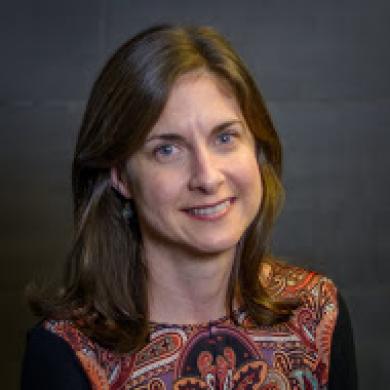
Ross Otto is an Associate Professor in the Department of Psychology at McGill University. He holds an office at 2001 McGill College, 711, and can be reached via email at ross.otto@mcgill.ca. His research focuses on understanding the mechanisms underlying reflective versus reflexive decision-making, particularly how cognitive resources, stress, and contextual factors influence effort-based choices. He employs computational modeling, behavioral experiments, and neuroimaging techniques. Notable contributions include studies on stress-induced cognitive avoidance and the neural correlates of effort evaluation. His work is affiliated with the Otto Lab, and he collaborates widely across disciplines such as neuroscience and behavioral economics.
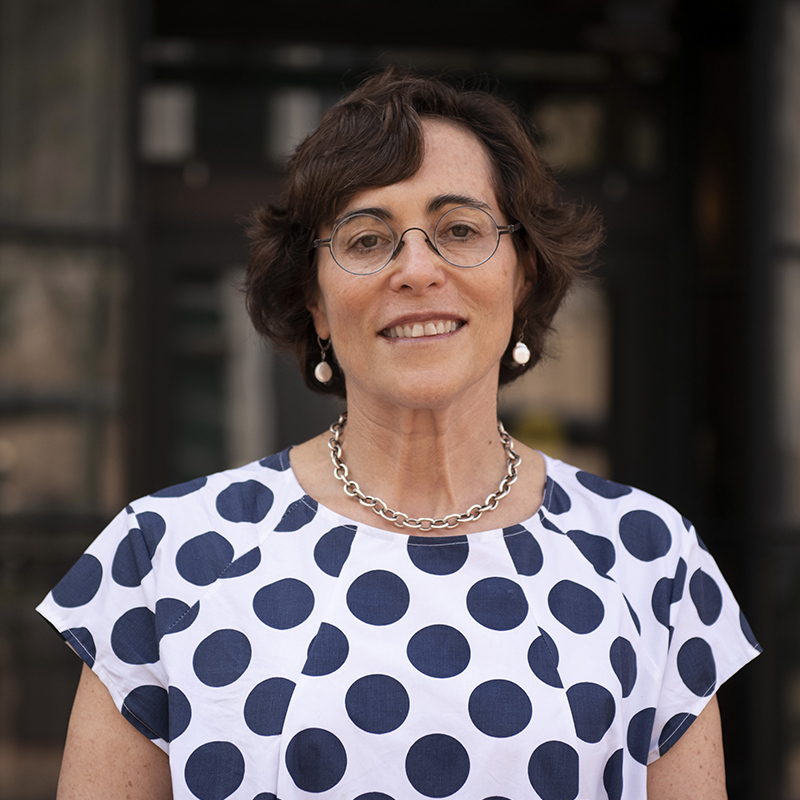
Dr. Pulin Gong is an Associate Professor in the School of Physics at the University of Sydney. His research focuses on understanding the self-organizing mechanisms of neural circuits' spatiotemporal dynamics and their computational principles. He investigates distributed dynamic computation via propagating neural waves, irregular neural activity variability, and coherent spatiotemporal patterns in large-scale neural data. His work combines experimental and computational approaches to unravel neural coding principles. Research interests include: Distributed dynamic computation (e.g., visual feature integration) Irregular neural dynamics and membrane potential fluctuations Coherent spatiotemporal wave patterns (e.g., spiral waves) Recent projects involve analyzing cortical wave patterns in mice and primates, fractional neural sampling, and Lévy walk dynamics in neural systems. Collaborators include institutions like Fudan University and Kyoto University. Current research student: Andrew LY, working on cortico-cortical loop dynamics and AI applications.
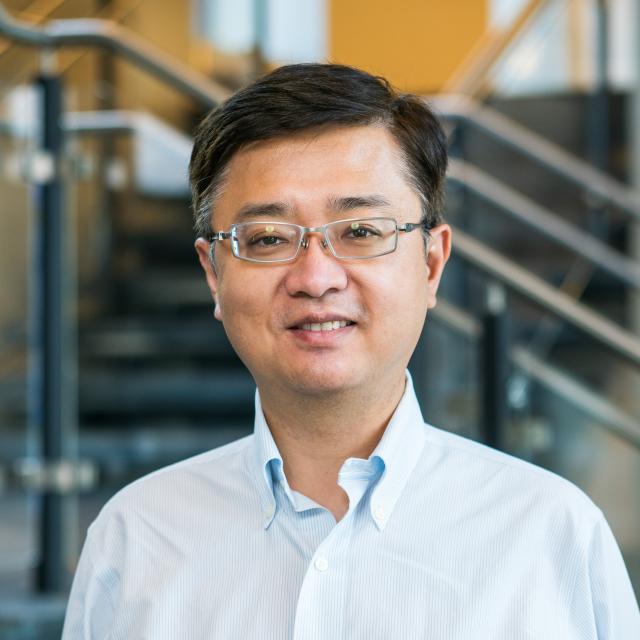
Professor Christian F. Doeller is a leading cognitive neuroscientist serving as Director of the Department of Psychology at the Max Planck Institute for Human Cognitive and Brain Sciences (MPI CBS) in Leipzig and Vice President of the Max Planck Society (since 2023). His roles include honorary professorships at the University of Leipzig (2019) and TU Dresden (Cognitive Neuroscience of Learning and Memory). He holds a PhD in Psychology from Saarland University (2005) and has held positions at institutions such as UCL (London), Radboud University (Nijmegen), and NTNU (Trondheim). His research focuses on spatial navigation, memory systems, and cognitive mapping in the human brain, leveraging neuroimaging (fMRI, EEG) and computational modeling. Key areas include hippocampal/entorhinal cortical function, grid cells, and the neural basis of spatial and conceptual representations. Recent work explores non-Euclidean spatial cognition, value-based decision making using grid-like maps, and hormonal influences on navigation. His lab combines experimental psychology, neuroimaging, and theoretical neuroscience to understand how brains build predictive models of environments and concepts. Publications emphasize cognitive maps, neural representations of space/value, and memory formation mechanisms. Over 100 journal articles span high-impact journals like Nature Neuroscience , Neuron , and Current Biology . His work bridges basic research and translational applications in neurodegenerative disorders and spatial cognition deficits.
Jeffrey L. Krichmar is a Professor in the Department of Cognitive Sciences and Department of Computer Science at the University of California, Irvine. His academic journey includes a B.S. in Computer Science from the University of Massachusetts Amherst (1983), an M.S. in Computer Science from The George Washington University (1991), and a Ph.D. in Computational Sciences and Informatics from George Mason University (1997). Prior to UCI, he served as Assistant Professor at George Mason University (1997-1999) and Senior Fellow at The Neurosciences Institute (1999-2007). University of California, Irvine (2007-present) George Mason University (1997-1999) The Neurosciences Institute (1999-2007) His research focuses on neurorobotics , exploring how embodied cognition and biologically plausible neural models can enhance robotic systems. Key areas include spiking neural networks , neuromodulation , path planning , and interactive tactile robots for therapeutic applications. His work bridges neuroscience , robotics , and cognitive science , with applications in autonomous vehicles , neuroprosthetics , and AI explainability . Recent publications emphasize spiking neural networks for navigation , neuromodulated attention , and neuromorphic hardware integration. The development of CARLsim, a GPU-accelerated spiking neural network simulator now in version 6.0, represents a major technical contribution. His team's work on socially assistive robots like CARL-SJR targets therapeutic applications for autism and ADHD. Scientific Awards IJCNN 2020 Best Paper Award Finalist for Best Student Paper at IJCNN 2018 Best Paper Award at IEEE IJCNN 2009 Grants include National Science Foundation funding for neural models of decision-making (2009). His lab (Cognitive Anteater Robotics Laboratory) develops systems that use large-scale brain simulations for autonomous behavior , with applications in adaptive robotics , sensorimotor learning , and neuroethology . Current projects explore neuromodulatory influences on attention systems and cognitive flexibility .
Prof. Sander Bohte is a part-time full professor of Computational Neuroscience at the University of Amsterdam (Swammerdam Institute of Life Sciences) and an honorary full professor of Bio-inspired Neural Networks at the University of Groningen. He serves as a Scientific Staff Member and Group Leader in the Machine Learning department at CWI, Amsterdam. His work bridges computational neuroscience and machine learning with a focus on continuous-time information processing. Key research interests include: Spiking Neural Networks with predictive coding and multi-compartment models Biologically Plausible Learning in recurrent and deep architectures Working Memory modeling via reinforcement learning Neuromorphic Computing for real-time systems and GPU acceleration His recent publications highlight trends in neural adaptation , predictive coding , and SNN hardware-software co-design . Awards include the Veni Innovational Research Grant (2004) and ERCIM grant (2013) . He actively supervises MSc theses and leads grants like the NWO KIC project 'Selfhealing Neuromorphic Systems' (2024).
Quentin S. Fischer, Ph.D., is a Research Assistant Professor at the Fralin Biomedical Research Institute at Virginia Tech Carilion (VTC), where he conducts neuroscience research within the Friedlander Lab. His work focuses on synaptic plasticity mechanisms, particularly long-term potentiation (LTP) and depression (LTD), in the context of mild traumatic brain injury (mTBI) and neural rehabilitation through stimulation. Education: Ph.D. in Psychology (Neuroscience program), University of California, Riverside Master of Arts in Psychology (Neuroscience program), University of California, Riverside Bachelor of Arts in Psychology (Behavioral Neuroscience program), University of Colorado, Boulder Dr. Fischer's research explores how patterns of synaptic stimulation influence calcium signaling and plasticity in both normal and injured brains, aiming to optimize noninvasive neurostimulation therapies such as magnetic or optical stimulation. His prior work extensively examined visual cortex plasticity, ocular dominance, and molecular signaling pathways involving PKA and calcineurin. The publication trends reflect a deep engagement with synaptic and cortical plasticity, particularly in visual systems, spanning molecular, cellular, and systems-level neuroscience. His early work focused on developmental and experience-dependent plasticity in visual cortex, while recent research aims to translate these findings into therapeutic strategies for brain injury. Professional Experience: Instructor, Baylor College of Medicine (Neuroscience; Psychiatry & Behavioral Sciences) Postdoctoral Associate, Yale University Medical School, Dept. Ophthalmology & Visual Science Postdoctoral Research Associate, Ohio University, Neurobiology Program Graduate Student, University of California, Riverside Professional Research Associate II, University of Colorado Research Assistant, University of Colorado Dr. Fischer is actively involved in pre-clinical research and is part of the Friedlander Lab team, contributing to the development of evidence-based neural stimulation protocols for neurorehabilitation. No formal scientific awards or student mentorship details are listed in the provided text.
Katarzyna Chawarska is the Emily Fraser Beede Professor of Child Psychiatry at Yale School of Medicine, with primary affiliation in the Child Study Center and secondary appointments in Pediatrics and Statistics. She is a leading expert in autism spectrum disorders (ASD), directing the NIH Autism Center of Excellence, the Social and Affective Neuroscience of Autism Program, and the Yale Toddler Developmental Disabilities Clinic. Education: PhD in Psychology, Yale University (2000) Post-Doctoral Fellowship, Yale University School of Medicine (2000) MS in Psychology, Yale University MPhil in Psychology, Yale University MA, Jagiellonian University (1986) Her research focuses on identifying early diagnostic markers and novel treatment targets in ASD, particularly in infants at risk due to familial, genetic, or perinatal factors. Her work integrates clinical assessment, neuroimaging, eye-tracking, and longitudinal design to understand the neurodevelopmental trajectories of autism. Her recent publications explore disrupted functional connectivity, atypical visual attention, social anhedonia, and familial recurrence in autism. She employs advanced methodologies including fMRI, eye movement dynamics, and machine learning to identify biomarkers. Her research spans developmental neuroscience, clinical psychology, genetics, and pediatric psychiatry, with strong emphasis on early detection and intervention. Scientific Awards: No specific awards mentioned in the provided text. Dr. Chawarska is the Principal Investigator on active clinical trials, including studies on emotional development in infants at risk for ASD and regulation of visual attention and emotion in autism. She mentors research through her lab and collaborates extensively with experts such as Fred Volkmar, James McPartland, and Frederick Shic. She leads the Chawarska Lab, which is part of the Center for Brain & Mind Health and the Wu Tsai Institute at Yale.
Sebastian Seung is a Professor at Princeton University , affiliated with both the Department of Computer Science and the Princeton Neuroscience Institute . His career spans Harvard University (Ph.D., 1990), Bell Laboratories, and Massachusetts Institute of Technology before joining Princeton in 2014. An External Member of the Max Planck Society and 2008 Ho-Am Prize recipient, Seung merges machine learning with neuroscience . Research Focus : Pioneering connectomics , Seung developed technologies for reconstructing neural circuits from high-resolution brain images, including FlyWire for collaborative brain mapping. His work explores brain function, development, and plasticity , drawing parallels between fly visual systems and convolutional networks . Awards & Affiliations : 2008 Ho-Am Prize in Engineering External Member, Max Planck Society Technical Contributions : Led breakthroughs in 3D connected component labeling and high-throughput EM imaging for mammalian brains, partnering with NIH’s BRAIN Initiative to scale connectomics to whole mouse brains. Seung’s team has shifted from EM analysis to interpreting connectomes , focusing on neural circuit function and biological mechanisms in flies and mice. His lab alumni network spans institutions, advancing AI and neuroscience globally.
Alexei Koulakov is a Professor at Cold Spring Harbor Laboratory (CSHL) and the Charles Robertson Professor of Neuroscience. His research focuses on applying mathematical and computational approaches to unravel the principles of brain organization, particularly in sensory systems like olfaction and vision. Koulakov's work explores how neural circuits form during development, the role of genetic and experiential factors, and the evolutionary basis of brain architecture. Education: PhD in Physics from the University of Minnesota (1998). Key Research Areas: Olfactory system development, neural network modeling, and AI inspired by biological computation. Koulakov's recent publications emphasize cross-disciplinary integration of neuroscience and AI, including NeuroAI initiatives and DeepNose models predicting olfactory percepts. His team investigates how innate abilities are encoded genomically and how experience shapes neural networks. Scientific contributions include studies on primacy coding in olfaction, stochastic learning mechanisms , and high-throughput neural mapping . Awards include the Charles Robertson Professorship , reflecting his leadership in theoretical neuroscience. Koulakov collaborates extensively, with notable work on genomic bottlenecks , odor mixture interactions , and neural integrator models . His lab at CSHL is at the forefront of NeuroAI research, leveraging brain circuit insights to advance artificial intelligence.
Megan Carey is a Researcher at the Champalimaud Foundation , leading the Carey Lab . Her research focuses on understanding how cellular and synaptic mechanisms in the cerebellum influence motor behavior and learning. Key projects include studies on cerebellar neural circuits, locomotor adaptation, and sensory-motor integration. Her recent work highlights cross-species comparisons (mice and flies), zebrafish visual system neurobiology, and pharmacological modulation of motor learning. The lab employs genetic perturbations, optogenetics, and behavioral analysis to dissect neural circuit dynamics. Notable collaborators include senior scientists, postdoctoral researchers, and PhD students. The lab's publications span high-impact journals like J. Neurosci. , eLife , and Neuron , with funding from HHMI and NIH.
Marlene Behrmann is the Thomas S. Baker University Professor of Psychology and Cognitive Neuroscience at Carnegie Mellon University (CMU), affiliated with the Dietrich College of Humanities and Social Sciences. She leads the Behrmann Lab, which moved to the University of Pittsburgh in 2023. Her research focuses on visual cognition, object recognition, and neural mechanisms of perception, with a particular emphasis on face and word recognition. Behrmann holds a B.A. and M.A. in Speech and Hearing Therapy and a Ph.D. in Psychology from the University of Toronto. She is a leader in her field, recognized by her induction into the National Academy of Sciences (2015) and the American Academy of Arts and Sciences (2019). Her work combines neuropsychological studies of patients with brain damage, neuroimaging, and computational modeling to explore visual processing. Recent research highlights include studies on dorsal-ventral pathway interactions, functional reorganization post-hemispherectomy, and autism-related sensory processing differences. Behrmann has advised numerous graduate students and postdocs, contributing to their academic and professional development. Key awards include her National Academy of Sciences membership and American Academy of Arts and Sciences fellowship. Her lab collaborates widely, publishing in top journals like Cerebral Cortex , PNAS , and Trends in Cognitive Sciences . She also engages in translational research to improve interventions for perceptual and cognitive disorders.
Pouya Bashivan is an Assistant Professor in the Department of Physiology at McGill University's Faculty of Medicine. His research focuses on developing computational models to explain and regulate neural responses during visual tasks requiring memory, combining machine learning, neuroscience, and cognitive science. Education : Ph.D. in Computer Engineering (2016), Postdocs in Machine Learning (2020) and Computational Neuroscience (2016-2020) His lab investigates: Topographical neural networks for visual cortex simulation Massively-multitask models for prefrontal cortex Saccade-driven visual exploration models Predictive hippocampus models for episodic memory Recent publications explore adversarial robustness, memory-augmented networks, and brain-state decoding. Current projects emphasize causal models, brain-AI alignment, and translating computational neuroscience into therapeutic applications. The lab is located in the McIntyre Medical Sciences Building, Room 1117, Montreal, Quebec.
Ju Lu serves as an Assistant Professor at Lehigh University with office location in Iacocca Hall (room 0111), contactable via phone (610.758-3687) and email (jul724@lehigh.edu). Her academic position reflects active engagement in neuroscience research and education within the university's life sciences framework. Education Background: Ph.D. in Neurobiology from Harvard University (2008) B.Eng. in Microelectronics from Tsinghua University (2002) Research Focus: Dr. Lu's work pioneers investigations into neural circuit dynamics and synaptic plasticity mechanisms using advanced optical imaging technologies. Her research spans: Cortical circuit reorganization during motor skill acquisition across species Stress-induced synaptic alterations mediated by microglia in prefrontal circuits Therapeutic applications of psychedelic compounds for neural circuit restoration Development of three-photon microscopy for deep-brain imaging Genetically-encoded neurotransmitter sensors for in vivo studies This multidisciplinary approach bridges molecular neuroscience, systems-level circuit analysis, and translational mental health applications. Publication Trends: Analysis of Dr. Lu's 15 most recent publications (2016-2023) reveals an evolving trajectory from foundational studies on dendritic spine plasticity toward translational neuroscience. Early work emphasized optical imaging methodology and basic plasticity mechanisms, while her 2021-2023 publications increasingly focus on stress-related circuit disruptions and psychedelic therapeutics. A consistent thread involves combining high-resolution in vivo imaging with behavioral models to establish causal links between neural circuit dynamics and cognitive functions. Honors and Awards: No scientific awards or fellowships were documented in the provided materials. Mentorship and Funding: While specific student mentees and grant funding details are not specified in the source text, her extensive collaborative publication record indicates active supervision of research personnel and successful acquisition of research support. Research Infrastructure: Her methodological expertise in advanced microscopy suggests utilization of specialized imaging facilities, though no dedicated laboratory or research team is explicitly identified in the available documentation.
Dr. Koen Haak is an Associate Professor at Tilburg University's Department of Cognitive Science and Artificial Intelligence within the Tilburg School of Humanities and Digital Sciences. His research focuses on vision science, neuroimaging, and AI applications in healthcare. He leads projects like 'Bridging the gap between visual function and functional vision' (NWO Vidi) and 'Neuroimaging biomarkers for predicting vision training success after stroke' (NWO KIC). He collaborates with institutions such as the Donders Institute and the Lifelong Vision Consortium. His work contributes to UN SDGs related to health and innovation. Research interests include analyzing brain imaging data to predict functional vision outcomes, developing machine learning tools for clinical trials, and studying visual cortex plasticity. He has authored 51+ publications, including papers in Nature Neuroscience and Translational Psychiatry . Awards include NWO Veni (2016) and Vidi (2020) fellowships. He teaches courses on computer vision and AI at Tilburg University. Current projects explore predictive analytics for eye treatments, thalamocortical connectivity, and sleep disruption effects in maritime pilots. His lab develops methods like connectopic mapping and deep learning for MRI analysis, with applications in Alzheimer's, autism, and psychiatric disorders.
Richard Born is a Professor of Neurobiology at Harvard Medical School , focusing on the circuitry of the mammalian cerebral cortex and its role in visual perception. His lab employs multi-species approaches, combining primate psychophysics and electrophysiology rodent 2-photon imaging and optogenetics hierarchical Bayesian modeling of perceptual inference to investigate cortico-cortical feedback, neural variability, and context-dependent visual processing. Research Interests span visual systems neuroscience, with emphasis on top-down modulation of sensory processing binocular rivalry and perceptual states gamma oscillations and neural synchrony input-gain control in V1/V2/V3 Bayesian brain frameworks neuroanatomical connectomics Recent work explores layer 1 dendritic interactions with somatostatin interneurons and collaborations with institutions like Boston University and the University of Rochester. Advising includes mentoring postdoctoral fellows (Ariana Sherdil, Camille Gómez-Laberge, Abhinav Grama) and students at Harvard Medical School. The lab utilizes advanced techniques including multi-electrode arrays laminar probes optogenetic perturbation DTI tractography validation for circuit analysis.