Xavier Serra is a Full Professor at the Department of Engineering at Universitat Pompeu Fabra (UPF), Barcelona. He is the founder and director of the Music Technology Group (MTG), and leads the UPF-BMAT Chair on AI and Music. He also coordinates the Master in Sound and Music Computing and serves as President of the Phonos Foundation. His research focuses on audio signal processing, sound and music computing, and computational musicology, emphasizing open science and open innovation. Education: BSc in Biology, University of Barcelona (1981) Master in Music, Florida State University (1983) PhD in Computer Music, Stanford University (1989) Research Interests: Audio Signal Processing Data-Driven and Knowledge-Driven Methodologies Music Information Retrieval Cultural Music Analysis (e.g., Carnatic/Turkish/Andalusian Music) Music Education Technology Notable Projects: CompMusic (ERC Advanced Grant, 2010-2017): Multicultural computational music analysis Open datasets: Freesound, Saraga, FSD50K Technologies: Reactable, Vocaloid, Essentia API Recent Trends in Articles: Focus on AI-driven audio processing (neural fingerprints, generative models), cross-cultural music analysis, and explainable music difficulty estimation. Awards: ERC Advanced Grant (2010) for CompMusic Project. Labs/Teams: Director of MTG, Phonos Foundation, and UPF-BMAT Chair. Active in open-source projects and international collaborations.
Carme Torras Genís is a Research Professor at the Spanish National Research Council (CSIC), affiliated with the Institute of Robotics and Industrial Informatics (IRI) in Barcelona and the Technical University of Catalonia (UPC). Her career spans over three decades, focusing on robotics, neurocomputing, and artificial intelligence with applications in healthcare and deformable object manipulation. M.Sc. in Mathematics (University of Barcelona, 1978) M.Sc. in Computer Science (University of Massachusetts, 11981) Ph.D. in Computer Science (UPC, 1984) Research Interests : Robotic manipulation of deformable objects (especially textiles) Neurocomputing and machine learning for robotic control Human-robot interaction and assistive robotics Computational topology for cloth state representation Ethics in social robotics and AI Medical applications of robotics for neuromuscular disease assessment Scientific Leadership : ERC Advanced Grant recipient (2016) IEEE and EurAI Fellow Coordinator of Horizon Europe project SoftEnable and former ERC project CLOTHILDE Editorial leadership in IEEE Transactions on Robotics and multiple journals Active in ethics committees and AI policy advisory boards Advisory Committee of Ethics in AI (Catalan Government) Vice-President of CSIC Ethics Committee Member of Royal Academy of Engineering (Spain)
Pere-Pau Vázquez is an Assistant Professor in AI for Visual Computing at the Computer Vision Lab, TU Wien, Austria . Previously, he held academic positions at the ViRVIG Group and Facultat d'Informàtica de Barcelona (UPC) , where he taught courses in Programming, Computer Graphics, and Visualization for over 20 years. His research focuses on Information Visualization, Scientific Visualization, Medical Data Visualization, Molecular Visualization, and AI applications to Visual Computing . Current Teaching : Data Visualization, Fast Realistic Rendering, Information Visualization, Medical Images, Scientific Visualization, Virtual Reality, and 3D Medical Visualization. Former PhD Students : Elena Molina, Alexandra Cortez, Jesús Díaz, Pedro Hermosilla, Eva Monclús. His scientific awards include the Best PhD Thesis Award (UPC, 2003), Best Student Paper Award (SPIE, 2012), and Best Paper Award (International Conference on Computer Graphics Theory and Applications, 2013). Recent publications explore AI integration in biomedical visualization, molecular data analysis, and interactive techniques for volume rendering. He serves on the EuroGraphics Executive Board as Secretary and is active in steering committees for EuroVis and Visual Computing for Biology and Medicine . His work bridges Computer Graphics, Artificial Intelligence, and Human-Computer Interaction , with applications in medical and molecular data analysis.
Andrea Ianiro is a Full Professor in the Aerospace Engineering Department at Universidad Carlos III de Madrid (UC3M), where he leads research in fluid dynamics, turbulence, and heat transfer. His work bridges experimental techniques and machine learning applications for flow analysis and control. He serves as Associate Editor of the International Journal of Heat and Mass Transfer (2025-2028) and directs the EFM Lab (Experimental Fluid Mechanics Laboratory) at UC3M. Professor Ianiro's research focuses on turbulence characterization, boundary layer flows, and the application of machine learning to fluid mechanics problems. His work spans experimental techniques including Particle Image Velocimetry (PIV), infrared thermography, and advanced data processing methods. Recent research emphasizes data-driven approaches for flow field reconstruction, turbulence control, and heat transfer optimization in wall-bounded flows. His projects often combine theoretical, experimental, and computational approaches to address complex fluid mechanics challenges. The analysis of his recent publications reveals a strong trend toward integrating machine learning with traditional fluid mechanics. His work increasingly focuses on using deep learning techniques (particularly CNNs and GANs) for flow field prediction from limited measurements, developing meshless computational methods for flow analysis, and applying optimization techniques (including genetic algorithms) to heat transfer enhancement. His research maintains a strong experimental foundation while embracing data-driven approaches to tackle turbulence modeling challenges. Associate Editor of the International Journal of Heat and Mass Transfer (2025-2028) Professor Ianiro leads multiple significant research projects including SPANDRELS (SParse AND paRsimonious Event-based fLow Sensing, 2025-2030), HumanIC (Human-Centric Indoor Climate for Healthcare Facilities, 2024-2027), and EXCALIBUR (Extraction of machine learning strategies for turbulent flow control, 2023-2026). His work has attracted funding from the European Commission, Spanish National Research Agency, and industry partners including Airbus. He has supervised numerous theses on topics including AI-based sensing of turbulent flows, convective heat transfer control, and turbulent boundary layers. At UC3M, Professor Ianiro directs the Experimental Fluid Mechanics Laboratory (EFM Lab), which focuses on advanced measurement techniques for fluid flow and heat transfer characterization. The lab specializes in PIV/PTV techniques, infrared thermography, and the development of novel experimental approaches for turbulence research. Current research directions include machine learning applications for flow field reconstruction, plasma-based flow control, and heat transfer optimization in complex flow configurations.
Felix Gomez Marmol is an Associate Professor at the University of Murcia's Faculty of Informatics, Department of Information and Communication Engineering. His research focuses on cybersecurity, artificial intelligence, network security, and IoT security. He holds a PhD in Computer Science from the University of Murcia (2010), supervised by Dr. Gregorio Martínez Pérez. Key research interests include adaptive intrusion detection systems, dark web analysis, and AI-driven cybersecurity frameworks. He leads the Intelligent Systems and Telematics research group and previously contributed to the Sistemas Inteligentes group. His work emphasizes practical applications such as the SCORPION Cyber Range platform for cybersecurity training and gamification. Recent projects involve detecting hate networks on social media, optimizing malware defense using transfer learning, and developing SIEM systems for IoT environments. His contributions span technical papers on cybersecurity education, ethical hacking fundamentals, and blockchain-based security solutions. Prof. Gomez Marmol has collaborated on initiatives like the COBRA framework for simulating advanced persistent threats (APTs) and the COnVIDa dashboard for pandemic-related data analysis. His research bridges theoretical advancements with real-world cybersecurity challenges.
Dr. Jose R Juan Sanchez is a full Professor at the Faculty of Law, Universitat de València, specializing in Procedural Law within the Institute of Criminology and Criminal Science (ICCP). He serves in the Administrative Department and leads the NCPJ New conflicts and judicial process research group. Doctorate in Law (1997) from Universitat de València Thesis: Autonomous Communities as Parties in Civil Proceedings Supervised by Dr. Manuel Ortells Ramos His research focuses on procedural law, judicial management, and legal reforms. He investigates tribunal jurisdiction, victim rights, and data protection in criminal proceedings. Recent work includes Photovoice analysis of pandemic healthcare systems and efficiency in Spanish criminal justice. Key article trends span judicial reforms (2015-2024), victim rights in EU legal frameworks (2020-2023), digital justice systems (2016-2017), and social justice in legal education (2022-2023). His work bridges law, criminology, and policy analysis. Current affiliations: Universitat de València, ICCP Institute Research group: NCPJ New conflicts and judicial process
Gemma Boleda is an ICREA Research Professor at Universitat Pompeu Fabra in Barcelona, Spain, where she co-directs the Computational Linguistics and Linguistic Theory (COLT) research group. Her research focuses on understanding how humans convey meaning through language, investigating the formal properties that support communication, and exploring how languages are shaped by cognitive and communicative factors. Her primary interests include lexical semantics, cross-linguistic variation, and the integration of linguistic theory with computational methods. She employs interdisciplinary approaches combining linguistics, artificial intelligence, and cognitive science, utilizing large-scale data analysis to study universal patterns and variations across languages. Boleda's publications demonstrate a consistent focus on computational semantics, lexical variation, and language evolution. Her recent work explores the intersection of symbolic and neural approaches to language processing, lexical creativity across development and evolution, and computational models of semantic phenomena like colexification and polysemy. She teaches Computational Semantics in the Master's in Theoretical and Applied Linguistics program and has secured significant research funding including ERC Starting Grants. Her work has contributed valuable linguistic resources such as the ManyNames dataset and Database of Catalan Adjectives.
Fernando Sánchez-Figueroa is a Full Professor at the University of Extremadura's Department of Computer Systems Engineering and Telematics. He is a co-founder of Homeria Open Solutions, a spin-off engaged in R&D projects under EU frameworks. His research focuses on Software Engineering, Machine Learning, Data Visualization, and Ambient Intelligence. He has authored over 50 scientific articles and led numerous R&D contracts with public and private entities. Key roles include: Academic: Full Professor at University of Extremadura Entrepreneur: Co-founder of Homeria Open Solutions Research: Participation in EU-funded projects and development of AI-driven solutions for healthcare, smart cities, and education Research Interests: Machine Learning applications in healthcare, predictive analytics for education, and sustainable smart city technologies. His work bridges theoretical advancements with practical implementations, such as medical image segmentation using SAM models and cost-efficient UAV systems. Publications: Recent works include decision support systems for employability analysis, zero-shot learning in medical imaging, and recommender systems for education. He emphasizes data-driven approaches and model-driven engineering in software development. Impact: Developed tools like CompareML for preliminary data analysis and LiveSankey for advanced web visualization. His contributions span academia and industry, addressing challenges in healthcare, urban sustainability, and educational technology.
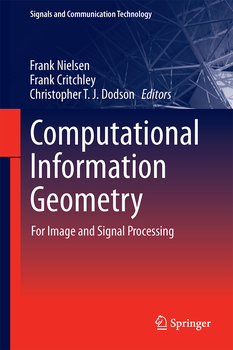
Frank NIELSEN is a Professor at École Polytechnique with expertise in information geometry, data science, and machine learning. He holds a PhD (1996) and HDR (2006) in computer science and has established himself as a leading researcher in geometric approaches to information science. His educational background includes a PhD in computer science (1996) followed by a Habilitation à Diriger des Recherches (HDR) in 2006, the highest academic qualification in France that qualifies one to supervise doctoral candidates. Dr. NIELSEN's research focuses on the Geometric Science of Information , where he develops theoretical frameworks for understanding data through geometric and information-theoretic lenses. His work bridges Computational information geometry Statistical manifold theory Bregman divergences and their applications Machine learning with geometric foundations High-dimensional data analysis He aims to address the challenge of inappropriate data representation in current Data Science by building a theory of Computational Information Geometry to enable Intrinsic Data Science with principled distances. His extensive publication record shows a clear trend toward developing geometric frameworks for understanding statistical divergences, with recent work focusing on Bregman geometry, Fisher-Rao metrics, and their applications in machine learning. His research spans theoretical developments in information geometry to practical implementations like the pyBregMan Python library, demonstrating both theoretical depth and practical relevance. Dr. NIELSEN has made significant contributions through his teaching and publications. He has taught courses at École Polytechnique including INF442, INF517, and INF591. His authored textbooks include Introduction to HPC with MPI for Data Science (2016), A Concise and Practical Introduction to Programming Algorithms in Java (2009), and Visual Computing: Geometry, Graphics, and Vision (2005). He has also edited influential volumes such as Computational Information Geometry for Image and Signal Processing (2016) and Geometric Theory of Information (2014). He actively organizes and participates in academic events, serving on program committees for major conferences including GSI (Geometric Science of Information), CVPR, and ICCV. His work has established him as a key figure in the growing field of geometric approaches to information science.
Mariano Cabezas is a researcher in medical imaging and computer vision, currently affiliated with Macquarie University and as an affiliate at the University of Sydney . His work focuses on automating brain MRI analysis for pathologies like multiple sclerosis, Alzheimer's disease, and tumors, with additional contributions to UAV image analysis. PhD in Computer Science (2013), University of Girona MSc in Automation, Computation, and Systems (2010), University of Girona BSc in Computer Science (2009), University of Girona Research Interests : Specializes in magnetic resonance imaging , lesion detection , deep learning , and image processing , with applications in multiple sclerosis , hearing loss , and UAV-derived ecological data . His recent work includes federated learning frameworks for cross-site MS lesion segmentation and pseudo-labeling techniques for longitudinal brain volume estimation. Publication Trends : Over the past five years, his research has emphasized federated learning (4 articles), lesion segmentation (9 articles), and UAV image analysis (3 articles), with a strong focus on clinical validation and cross-institutional collaboration. Labs & Collaborations : Contributed to the NIC-VICOROB group at the University of Girona and maintains affiliations with the Research Institute of the Hospital Vall d'Hebron (VHIR) in Barcelona and Macquarie University in Sydney. Actively develops open-source tools hosted on GitHub.
Luis Merino Cabañas is a Professor at the Universidad Pablo de Olavide , affiliated with the Deporte e Informática department and leading the SRL Service Robotics Laboratory . His research focuses on robotics, systems engineering, and automation, with a specialization in human-robot interaction and path planning. Education : PhD in Systems Engineering from the Universidad de Sevilla (2007), where his thesis explored cooperative perception techniques for multiple unmanned aerial vehicles in forest fire detection. Research Trends : Recent work (2023–2025) emphasizes 3D path planning, sensor fusion (LiDAR, radar, inertial systems), neural distance fields for safe navigation, and socially aware robotics. His studies integrate AI, genetic programming, and multi-modal perception for applications in construction, healthcare, and GNSS-denied environments. Labs & Teams : He leads the SRL Service Robotics Laboratory , contributing to projects like the Skyeye team and BIM2ROS integration for construction robotics.
Mercedes Herrero de la Fuente is a Professor at Antonio de Nebrija University's School of Communication and Arts in Madrid, specializing in Journalism and Media Innovation. Holding a PhD in Information Sciences from Complutense University of Madrid, she coordinates the doctoral program in Innovation in Digital Communication and Media while leading research through the INNOMEDIA Research Group. Her academic affiliations include active participation in multiple national research projects funded by Spain's Ministry of Science and Innovation. Her research focuses on the intersection of digital technologies and communication, with particular emphasis on data journalism, transmedia narratives, disinformation combat strategies, and gender representation in media. Recent work explores augmented reality applications in journalism, accessibility for people with disabilities in the audiovisual sector, and women's leadership in media production. She has conducted research fellowships at Cornell University, Radboud Universiteit, Salford University, and Charles University. Herrero de la Fuente has published extensively in high-impact journals, with her most recent work examining AI applications against electoral misinformation, women creators in streaming platforms, and immersive journalism technologies. Her research demonstrates consistent focus on emerging media technologies and their societal implications, particularly regarding inclusion and verification practices. As an educator, she previously directed Nebrija University's Master's in Digital and Data Journalism (2016-2021) and Master's in Television Journalism (2015-2020), while currently teaching in both undergraduate and graduate programs. Her professional background includes eight years as a producer for TELEMADRID News, providing practical industry experience that informs her academic work.
Cristobal Pagan Canovas is a Permanent Professor (tenure-track) at the Department of English Philology, University of Murcia, where he co-directs the Daedalus Lab and the Murcia Center for Cognition, Communication, and Creativity. He is also a member of the international consortium Red Hen Lab, focusing on multimodal communication research. Education includes: PhD in Ancient and Modern Greek Literature from University of Murcia BA+MA in Classics and BA+MA in English from University of Murcia MA in Classics from University College London His research explores human cognition and communication through interdisciplinary approaches combining humanities and sciences. Primary interests include: Conceptual integration networks in emotional expression Multimodal communication patterns across language, gesture, and prosody Temporal representation in creative artifacts Cognitive foundations of poetic metaphor and verbal art Cultural evolution of integrative patterns in social interactions Recent publications demonstrate consistent focus on temporal cognition, multimodal communication, and creativity across domains including poetry, music, and gesture. Research employs corpus analysis, big data approaches, and cognitive modeling to examine how humans integrate perceptions into meaningful wholes. Scientific awards and fellowships: Ramón y Cajal Grant (elite national scheme) Alexander von Humboldt Fellowship in Quantitative Linguistics EURIAS Fellowship at Netherlands Institute for Advanced Studies FBBVA Leonardo Fellowship Marie Curie Fellowship ENSAYA'10 Award for scientific essay He leads multiple research grants including ERASMUS PLUS KA220-HED (MULTIDATA) and national grants MULTIFLOW and CREATIME. Supervised trainees include postdoctoral researchers (Marie Curie, Juan de la Cierva), MA students, undergraduates, and data scientists. The Daedalus Lab develops interdisciplinary methods to study cognition and communication, while Red Hen Lab enables large-scale multimodal dataset analysis through international collaboration.
Pedro Antonio Garcia Tudela is a researcher at Universidad de Murcia specializing in Educational Technology, with a focus on Smart Learning Environments and Digital Entrepreneurship. He completed his PhD in 2023 with a thesis on intelligent learning environments supervised by Dr. María Paz Prendes Espinosa and Dr. Isabel María Solano Fernández. His educational background centers on advanced educational technology studies at Universidad de Murcia, culminating in his 2023 doctoral dissertation that established foundational frameworks for smart learning environments. This research positioned him at the forefront of educational innovation in Spanish-speaking contexts. Garcia Tudela's research explores the intersection of digital tools and pedagogical innovation, with emphasis on gamification, computational thinking development through Arduino, and digital entrepreneurship education. His work addresses critical gaps in teacher training for future classrooms and develops practical models like EmDigital for fostering entrepreneurial competencies in digital contexts. He investigates how educational escape rooms, flipped learning, and gender-inclusive technology integration transform learning experiences across K-12 and higher education. Analysis of his 15 most recent publications reveals a clear trajectory toward practical applications of educational technology: 40% focus on digital entrepreneurship frameworks, 30% on smart learning environment design, and 30% on gamification and computational thinking implementation. His research increasingly addresses cross-cultural applications, with comparative studies of future classrooms in Spain and Portugal. As an active thesis supervisor within the Educational Technology research group, Garcia Tudela mentors students in developing innovative educational methodologies. His work demonstrates strong industry-academia connections through practical frameworks for professional development and employability. The Educational Technology research group serves as his primary collaborative environment, driving projects that translate theoretical models into classroom applications while addressing contemporary challenges in digital education transformation.
Sergio Barbero is an Associate Researcher at the Visual Optics laboratory of the Instituto de Óptica (CSIC), Spain, under the supervision of Prof. Susana Marcos. He holds a BSc in Physics from the University of Zaragoza (1999) and a PhD in Visual Sciences from the University of Valladolid (2004), which earned him the Doctoral Thesis Extraordinary Award (2005). His research focuses on optical aberrations, intraocular lens design, wavefront measurement techniques, and gradient-index modeling of ocular structures. Barbero has collaborated with international groups at Indiana University (USA), University of Houston (USA), and Australian institutions. His work includes pioneering studies on crystalline lens tomography, corneal ablation algorithms, and novel wavefront sensing methods. He has authored 16 peer-reviewed publications and contributed to a US patent on wavefront reconstruction techniques. His research spans three core areas: (1) intraocular lens design using analytical tools, (2) gradient-index modeling of the human eye, and (3) in vivo measurement of crystalline lens aberrations. He has secured grants from the Spanish government (I3P-CSIC), NIH (USA), and Fulbright fellowships. Barbero has presented 33 scientific talks/posters, including invited lectures, and maintains an h-index of 9. His work bridges fundamental optics with clinical applications in ophthalmology.