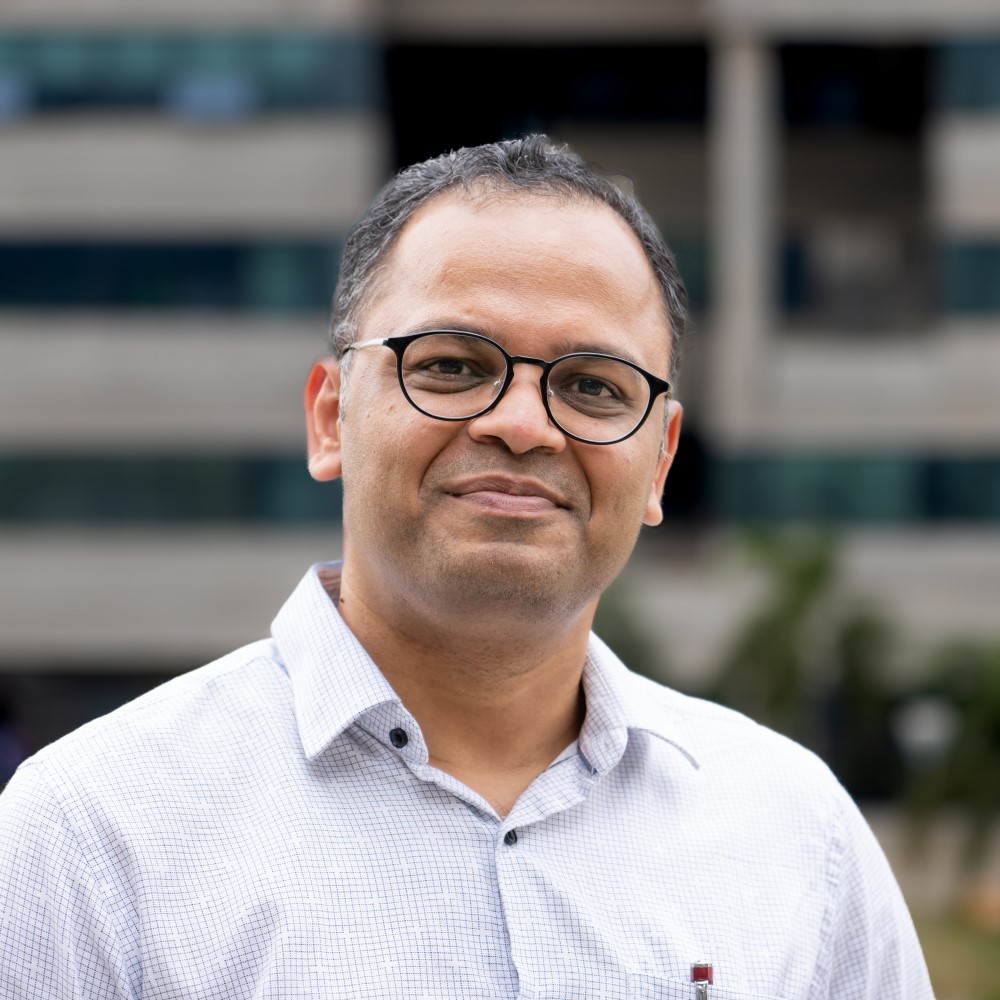
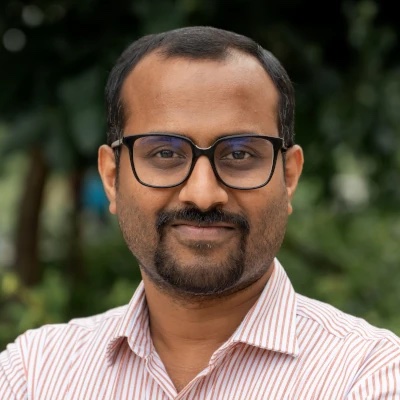
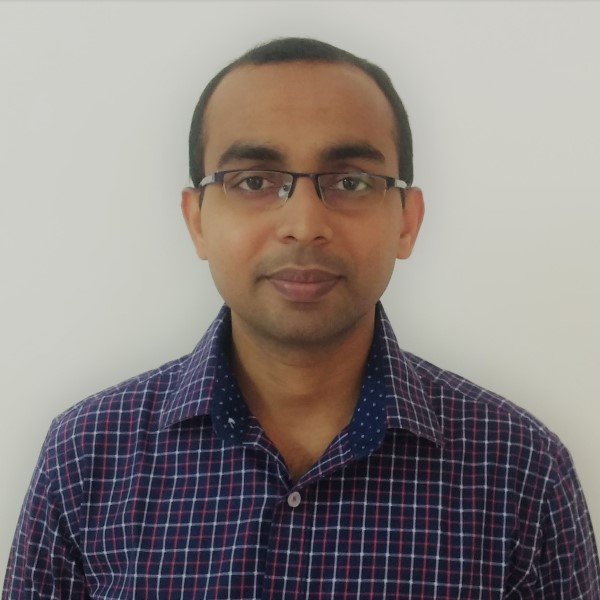
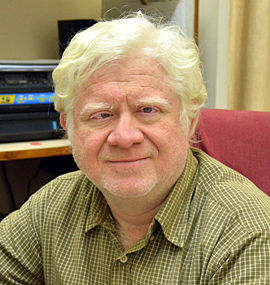
Rajesh Kedia is an Assistant Professor in the Department of Computer Science & Engineering at Indian Institute of Technology Hyderabad . He received his Ph.D. from IIT Delhi under the supervision of Prof. M. Balakrishnan and Prof. Kolin Paul, and holds a B.Tech. in Electronics and Communication Engineering from MNIT Jaipur (2006). His research focuses on computer architecture , embedded systems , and VLSI design automation , with specific emphasis on thermal management of processors and memories , shared resource management , and FPGA-based accelerator design . His recent publications address CNN execution time prediction, thermal modeling for 3D systems, and efficient resource allocation in multi-accelerator environments. Rajesh has received multiple scientific awards including the Visvesvaraya Ph.D. fellowship , IEEE Senior Member designation, and a BEST PAPER NOMINATION at DATE 2022 . He has mentored several Ph.D. and M.Tech students, including Lakshay Arora , Venugopal Ramamurthy , and M A Muneeb , with research topics spanning compilers, thermal management, and RISC-V architecture. He actively contributes to the academic community as a reviewer for leading conferences/journals (ASPDAC, DAC, IEEE ESL, CODES+ISSS) and previously served as Design Contest co-chair for ISLPED 2024 . His work has been supported by a SERB startup research grant (INR 20.26L) for shared resource management research.
Sengunthapuram Kandasamy Karthick is an Assistant Professor in the Department of Mechanical and Aerospace Engineering at Indian Institute of Technology Hyderabad . With a Ph.D. from IISc Bengaluru, Karthick's research spans experimental gas dynamics, jet aeroacoustics, and hypersonic aerothermodynamics, focusing on flow control, optical diagnostics, and fluidic devices. Education : B.E. in Aeronautical Engineering (Rajalakshmi Engineering College), M.E. in Space Engineering and Rocketry (Birla Institute of Technology, Mesra), Ph.D. in Aerospace Engineering (IISc Bengaluru) Previous Positions : Ramanujan Faculty Fellow at IIT Madras, Postdoctoral Fellow at Technion – Israel Institute of Technology Karthick's research explores supersonic/hypersonic flow physics, including shock-turbulence interactions, cavity flow noise control, and fluidic energy-conversion devices. His work employs advanced diagnostics like PLMS, PIV, and PLIF, with applications in aerospace thermal management and wind tunnel technologies. Recent publications highlight expertise in supersonic nozzle design, flow unsteadiness, and shock-related phenomena. Karthick has received recognition as a Top Reviewer by Web of Science and serves as an active reviewer for engineering journals. Contact: skkarthick@mae.iith.ac.in | Office: Room 516, C-Block, IIT Hyderabad
Sathesh Mariappan is a Professor in the Department of Aerospace Engineering at Indian Institute of Technology Kanpur. His research focuses on thermoacoustic interactions, dynamical systems theory applied to thermo fluid systems, and mechanisms of dynamic stall in rotorcrafts. He has made significant contributions to the understanding of nonlinear phenomena in thermo-fluid systems. Education: PhD in Aerospace Engineering from Indian Institute of Technology Madras, Chennai (2012, direct admission from B.E) B.E. in Aeronautical Engineering from Madras Institute of Technology, Chennai (2007) Dr. Mariappan's research interests span several critical areas in aerospace engineering and fluid dynamics. His work on fundamentals of thermoacoustic interactions has provided valuable insights into the complex coupling between heat release and acoustic waves in combustion systems. His research on the application of dynamical systems' theory to thermo fluid systems has advanced our understanding of nonlinear phenomena in these systems. He has also made significant contributions to understanding the mechanism of dynamic stall in rotorcrafts , which is crucial for improving helicopter performance and safety. His expertise in optical flow diagnostics and acoustic measurements provides him with powerful tools to investigate these complex phenomena experimentally. His publication record shows a consistent focus on thermoacoustic instability, with several high-impact papers in the Journal of Fluid Mechanics. His work bridges theoretical analysis with practical applications in combustion systems and aerospace engineering. The research demonstrates sophisticated use of dynamical systems theory, bifurcation analysis, and advanced diagnostic techniques to unravel complex nonlinear phenomena in fluid-thermal systems. Scientific Awards and Honors: Alexander von Humboldt fellowship for Postdoctoral Researchers at the German Aerospace Center, Goettingen, Germany (2012-2013) Session co-chair on Combustion Instabilities (51-PC-3) at the 47th AIAA/ASME/SAE/ASEE Joint Propulsion Conference & Exhibit, San Diego (2011) Session co-chair on Aero- and Thermo-Acoustical Coupling in Energy Applications II (40-AA-40) at the 16th AIAA/CEAS Aero acoustics Conference, Stockholm (2010) Dr. Mariappan has been actively involved in the international research community, serving as session chair for major conferences in propulsion and aeroacoustics. His Humboldt fellowship indicates recognition of his research potential by the international scientific community. While specific grant information is not provided in the available data, his publication record suggests involvement in research projects related to thermoacoustics and rotorcraft dynamics. Though specific laboratory information is not detailed in the provided text, his research areas suggest involvement with facilities for thermoacoustic experiments, optical flow diagnostics, and acoustic measurements at IIT Kanpur's Department of Aerospace Engineering.
Prof. Amit Agrawal is a Professor at the Indian Institute of Technology Bombay (IIT Bombay), specializing in fluid dynamics, microfluidics, and energy harvesting. His research focuses on biomedical devices, surface engineering, and heat transfer in rarefied gases. He leads a team developing innovative technologies like blood plasma separation microdevices and piezoelectric energy harvesters. Education: Not explicitly stated, but his work suggests advanced training in mechanical engineering and fluid dynamics. His research interests span microfluidic systems, bio-inspired surfaces for drag reduction, and flow dynamics in energy harvesting. Key projects include: Design of passive microfluidic devices for blood component separation with 100% plasma efficiency. Development of liquid-infused surfaces for anti-biofouling and drag reduction. Investigating gaseous slip flows for heat transfer optimization in miniaturized devices. Flow-induced energy harvesting systems using piezoelectric transducers and vortex dynamics. His team has published extensively on topics like lubricant-infused surfaces, bacterial cell mechanics, and pulsation effects on jet impingement. Over 20 articles from 2020–2024 highlight his contributions to microfluidics, biomedical engineering, and thermal-fluid systems. He supervises PhD and Master’s students, with notable advisees including Ratan Ahuja, Reshma Siddiquie, and Harsh Deswal. His lab facilities include advanced PIV setups, microfabrication tools, and energy harvesting testbeds. Current openings exist for motivated students and interns in his research group.
Amey Karkare is a Professor in the Department of Computer Science and Engineering at the Indian Institute of Technology Kanpur (IIT Kanpur). He holds a PhD from IIT Bombay and has been affiliated with IIT Kanpur since 2010, progressing through academic ranks to his current role since 2021. Education: PhD, IIT Bombay (2003-2008); B.Tech., IIT Kanpur (1994-1998) Research Interests: His work spans compilers , functional programming , program analysis , code optimization , and programming education . He focuses on improving compiler error messages, automated error repair, and educational tools like Prutor for programming courses. Recent Publications highlight advancements in pedagogical error repair , intelligent problem indicators , error localization , and GPU energy optimization . Notably, his 2023 paper on automated error repair received a Best Paper Award. Awards & Recognitions: Poonam and Prabhu Goel Chair Fellowship (2022) IIT Kanpur 1989 Batch Faculty Award for innovative teaching (2019) Best Faculty of the Year by Computer Society of India (2018) P. K. Kelkar Young Faculty Fellowship (2013-2016) Teaching & Advising : He supervises PhD, M.Tech, and B.Tech students, offering courses like Advanced Compiler Optimizations and Principles of Programming Languages . His projects integrate AI and functional programming in education.
Konda Reddy Mopuri is an Assistant Professor at the Indian Institute of Technology Hyderabad , leading the Data-Driven Intelligence & Learning Laboratory (DiL) . He holds a PhD from Indian Institute of Science, Bengaluru , where he worked under Prof. R. Venkatesh Babu. His research spans Artificial Intelligence , Deep Learning , Computer Vision , and Optimization , with recent work focusing on coreset selection , fairness in ML , and medical imaging . Awards include the IUPRAI Best Doctoral Dissertation Award and SPCOM Best Doctoral Dissertation Award in 2018, and the Young Alumni Achiever Award from IISc in 2022. Notable publications include work on data-free knowledge distillation , adversarial perturbations , and medical AI applications . He has advised students like Saumyaranjan Mohanty , Nikita Malik , and Naveen George , and teaches courses on Machine Learning and Deep Learning .
Manish Singh is an Associate Professor in the Computer Science & Engineering Department at Indian Institute of Technology Hyderabad . He holds a PhD from the University of Michigan, Ann Arbor, and a Dual Degree from IIT Delhi. Education: PhD in Computer Science and Engineering from the University of Michigan, Ann Arbor (2014) Dual Degree (BTech & MTech) in CSE from IIT Delhi (2009) Research Interests: Spanning Data Mining , Information Retrieval , Databases , and NLP , his work addresses challenges in Human-Computer Interaction (HCI) , Information Visualization , Health & Society , and AI applications in healthcare and social networks. Specific focus areas include Information Exploration , Relationship Extraction , Social Network Analysis , and Recommendation Systems . Affiliation & Contact: Office located in CS-512, CSE Building, IIT Hyderabad, Telangana, India. Contact details include email msingh@cse.iith.ac.in and phone (040) 2301 - 6360.
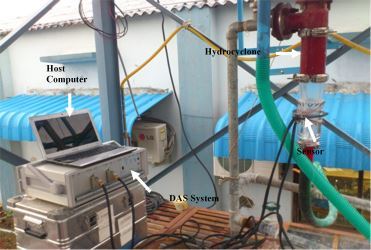
Narasimha Mangadoddy is a Professor in the Department of Chemical Engineering at Indian Institute of Technology Hyderabad. His research focuses on advanced computational fluid dynamics (CFD) applications in mineral processing, including multiphase flow modeling, hydrocyclone optimization, and fluidization studies. He has developed validated CFD models for industrial equipment like dense medium cyclones and hydrocyclones. His work integrates experimental techniques such as Gamma Ray Tomography, Electrical Resistance Tomography, and Laser Doppler Anemometry to validate computational models. Key projects include collaborations with TATA Steel, DST, and Tega Industries for equipment design and process optimization. Recent publications highlight his contributions to CFD modeling of fluidized beds, hydrocyclones, and dense medium cyclones, with applications in coal processing and iron ore beneficiation. Keywords include Computational Fluid Dynamics, Multiphase Flow, and Industrial Process Optimization. Excellence in Teaching Award (IIT Hyderabad, 2016) Best Paper Award (MPT-2016, Pune) University of Queensland International Research Award (UQIRA) He advises multiple PhD and master’s students, with research teams focusing on GPU-based CFD solvers, multi-component particle behavior, and industrial-scale flow simulations. Patents include novel dense medium cyclone and coal feed distributor designs.
Raja Banerjee is a Professor in the Department of Mechanical & Aerospace Engineering at the Indian Institute of Technology Hyderabad . He holds a PhD from the University of Missouri Rolla (2001), an MTech from IIT Kharagpur (1998), and a BE from Govt. Engineering College, Rewa (1995). Research Interests include: Multiphase and interfacial flows Spray and atomization dynamics Turbulent combustion modeling High Performance Computing (HPC) for CFD Fluid-structure interaction in industrial systems His publications focus on: Coal/water slurry atomization LNG storage tank stratification Alternative fuel combustion (butanol, ethanol) Sloshing noise prediction in automotive systems GPU-accelerated CFD solvers Micro-scale cavitating flows Labs & Facilities under his leadership include: 3D Phase Doppler Particle Analyzer (PDPA) Constant Volume Spray Chambers Schlieren/Shadowgraph imaging setup High-end computational clusters with K80/P100 GPUs Optical engine for combustion visualization
Seema Krishnakumar is an Assistant Professor in the Department of Design at the Indian Institute of Technology Hyderabad . Her work bridges Information Design, Data Visualization, and Photojournalism , with a focus on Interactive Media and Communication Design . She explores themes like Tangible and Intangible Heritage and Human-Computer Interaction , often integrating fieldwork from diverse regions such as the Amazon and New York into her research.
Dr Shiva Ji is Associate Professor of Design at Indian Institute of Technology Hyderabad, with affiliate appointments in the Department of Climate Change (GreenKo School of Sustainability) and Department of Heritage Science & Technology. He also serves as Head of Design and Principal Investigator of the Design for Sustainability Lab and Digital Heritage Lab. Education PhD in Design, IIT Guwahati (2015-2020) – MHRD Design Innovation Center Fellow Master of Design (PGDPD), National Institute of Design, Ahmedabad (2005-2007) Bachelor of Architecture, Government College of Architecture (now FoA, APJAKTU), Lucknow (1999-2004) MBA, Indira Gandhi National Open University (2011) Certificate Course in Sustainability in Practice, University of Pennsylvania (2014) Professional Certificate in Environment & Sustainable Development, CEPT University (2011) Research Interests Dr Ji’s work converges architecture, sustainability, and digital technologies . His major thrust areas include Design for Sustainability integrating Life-Cycle Assessment (LCA) and system-design thinking, Digital Heritage using AR/VR/MR for architectural documentation and immersive reconstruction, and Climate-Responsive Design Innovation addressing micro-habitation, urban sprawl, and sustainability in the face of climate change. He also investigates vernacular and bio-architecture , leveraging indigenous knowledge for contemporary sustainable solutions, and explores industrial/product design for new-age services and circular-economy products. Publication Trends Since 2016 he has authored 25+ peer-reviewed works spanning urban analytics, digital heritage, sustainable architecture, and socio-cultural studies . Recent publications emphasize data-driven heritage documentation (photogrammetry, space-syntax, visibility graphs) and environmental performance evaluation of built environments, highlighting an interdisciplinary blend of design, computation, and sustainability science. Scientific Awards & Recognition 3rd Winner – Click! Japan Photo Contest 2020 (Embassy of Japan & Japan Foundation) JICA Travel Grant for Japan Universities visit Ford Foundation Scholarship NID Scholarship MHRD Design Innovation Center Fellowship All-India Rank 36 – CEED 2005 NASA Design Competition Citation 2002 Student Supervision & Funding Currently supervising 5 ongoing PhD and 4 ongoing Master’s students, with 14 Masters theses/dissertations already completed. He is Principal Investigator on DST-Govt. of India funded project and India partner for EU LeNSin project (Politecnico di Milano), mobilising international collaborations on sustainable product-service systems. Laboratories & Teams Dr Ji leads two flagship labs: • Design for Sustainability Lab – focuses on LCA, circular design, and strategic sustainable solutions for local to global challenges. • Digital Heritage Lab – pioneers AR/VR/MR applications for immersive heritage visualization and digital twins of architectural assets. Each lab runs multiple sponsored projects with interdisciplinary student teams, industry partners, and international collaborators.
Tushar Sandhan serves as an Assistant Professor in the Department of Electrical Engineering at the Indian Institute of Technology Kanpur (IIT Kanpur), one of India's premier technical institutions. He maintains his office in room 205-B of the Electrical Engineering department building on the IIT Kanpur campus in Kanpur 208016. Dr. Sandhan earned his PhD from Seoul National University in South Korea, indicating substantial international research experience prior to joining IIT Kanpur's faculty. His educational background reflects a strong foundation in advanced technical disciplines. His research expertise spans three rapidly evolving and interconnected fields: computer vision , which focuses on enabling machines to interpret visual information; machine learning , which develops algorithms that allow computers to learn from data; and robotics , which integrates these capabilities into physical systems. These research areas have significant applications across multiple industries including autonomous vehicles, medical imaging, industrial automation, and consumer electronics. While specific research projects aren't detailed in the available information, his work likely contributes to both theoretical advancements and practical implementations in these cutting-edge domains. As an Assistant Professor at IIT Kanpur, Dr. Sandhan is actively involved in teaching electrical engineering courses while pursuing research in his specialized areas. His position suggests he is in the early to mid-career stage of his academic journey, building his research program and contributing to the academic community at one of India's most prestigious technical institutions.
Debopam Das is a Professor in the Department of Aerospace Engineering at Indian Institute of Technology Kanpur. His academic career includes significant contributions to fluid dynamics research with expertise in theoretical and experimental approaches. Research Interests: Theoretical and Experimental Fluid Dynamics Aero acoustics Instability & transition Vortex Dynamics and Unsteady Aerodynamics Dr. Das's research primarily focuses on vortex dynamics and compressible flows, with particular emphasis on vortex ring behavior and interactions. His work bridges theoretical analysis with experimental validation, contributing significantly to understanding complex fluid phenomena. Recent publications demonstrate continued focus on vortex dynamics with applications ranging from fundamental fluid mechanics to bio-inspired flight aerodynamics and aeroacoustic noise generation. Education: PhD, Indian Institute Science, Bangalore, 1998 M.E., Indian Institute Science, Bangalore, 1992 B.E., Bengal Engineering College, Shibpur, Calcutta University, 1990
Sanjay Kumar is a Professor in the Department of Aerospace Engineering at the Indian Institute of Technology Kanpur. Previously, he served as an Associate Professor at IIT Kanpur from 2015-2019, and before that as a tenured Associate Professor and Assistant Professor at UT-Brownsville (now UT-RGV) in the USA. He completed his postdoctoral work at Los Alamos National Laboratory after earning his PhD from the California Institute of Technology. His research focuses on complex fluid dynamics phenomena including flow control, bluff body wakes, granular flows with shock waves, multiphase flows, shock-accelerated flows, and fluid instabilities and turbulence. His work bridges theoretical fluid mechanics with practical engineering applications. Professor Kumar's research output shows a consistent focus on shock wave phenomena in various media, particularly granular flows, with recent publications in prestigious journals like Journal of Fluid Mechanics and Physics of Fluids. His work often involves computational methods combined with experimental validation. AIAA Flow Visualization Showcase Award (2020) Focus on Fluids article selection (2020) Micro-Vec Best Image Award (2018) Olegario Vasquez Rana Faculty Fellow (2014-16) Exceptional Merit Award (2010) Based in the Low Speed Aerodynamics Laboratory (A01) at IIT Kanpur, Professor Kumar maintains an active research program that continues to advance understanding of complex fluid flow phenomena, particularly those involving shock waves and granular materials. His work has significant implications for aerospace engineering applications where shock wave interactions are critical.
K S Venkatesh is a Professor in the Department of Electrical Engineering at Indian Institute of Technology Kanpur (IIT Kanpur). His research spans multiple areas of signal and image processing with applications in computer vision and robotics. Education: PhD from IIT Kanpur M.Tech from IIT Kanpur B.E. from Bangalore University Professor Venkatesh's research focuses on signal processing, image and video processing, computer vision with applications in robotics, and signal and system theory . His work bridges theoretical foundations with practical applications, particularly in the domain of visual perception systems. He has made significant contributions to areas such as object occlusion handling, gesture recognition under challenging lighting conditions, image enhancement techniques, and efficient stereo depth computation. His recent publications demonstrate a strong focus on computer vision problems with practical applications. The research shows progression from fundamental signal processing techniques to more complex vision systems capable of operating in real-world conditions. Several of his papers have received recognition, including Best Paper Awards at prominent conferences. Scientific Awards: Best Paper Award at Second Michael Faraday IET India Summit 2013 Best Paper Award at IEEE INDICON, IIT Bombay, December 2013 Professor Venkatesh maintains active research collaborations, as evidenced by his co-authored publications with researchers from various institutions. His work appears in prestigious international conferences including IJCAI, IEEE INDICON, and specialized computer vision conferences. His office is located in room 207-A/ACES at the Department of Electrical Engineering, IIT Kanpur, where he leads research activities in signal and image processing.