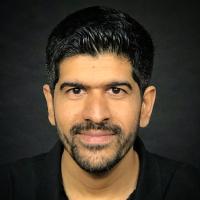
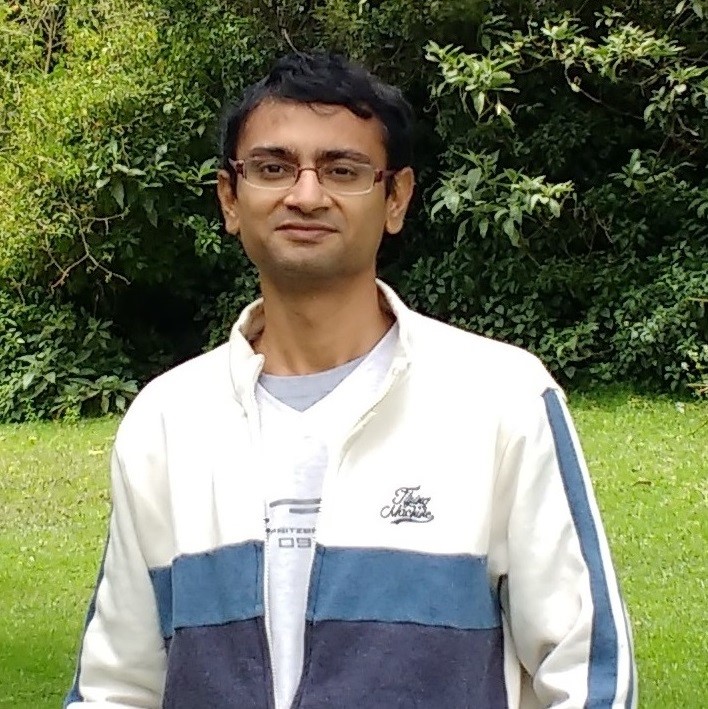
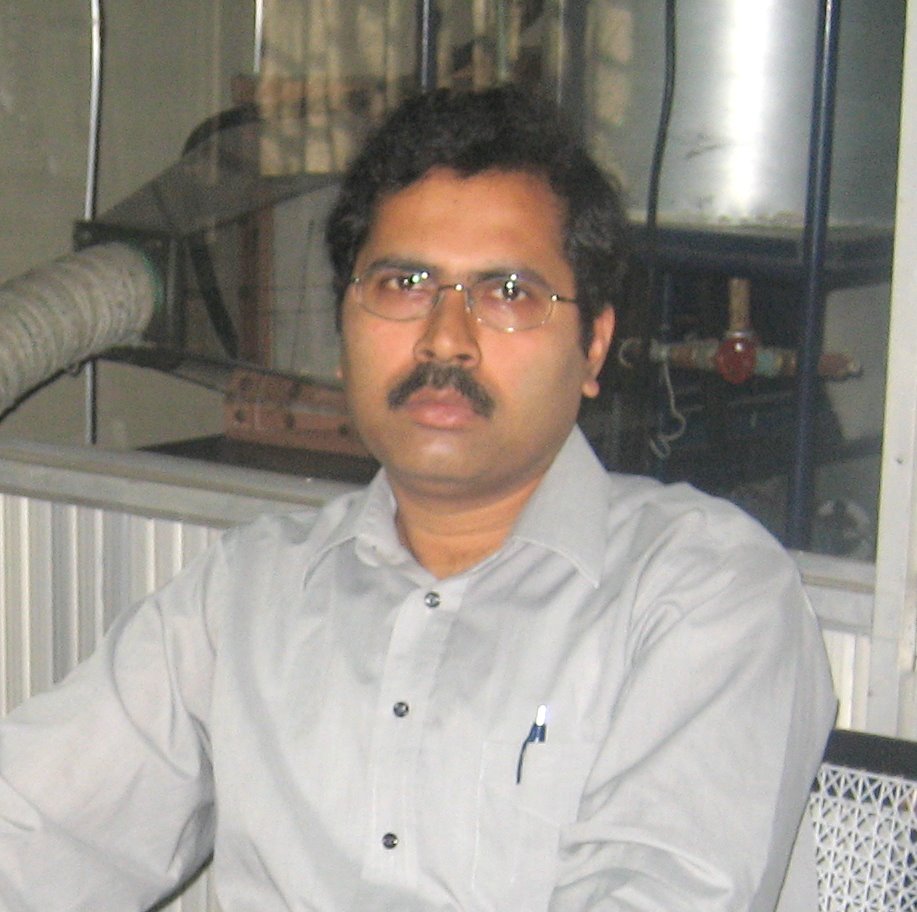
Sunita Sarawagi is a Professor at Computer Science and Engineering , IIT Bombay, and a member of AI Labs@CSE . She is also associated with the Center for Machine Intelligence and Data Science (CMInDS), which she founded in 2020. Education: PhD in Computer Science from UC Berkeley (Thesis: Query Processing in Tertiary Memory Databases), BTech in Computer Science from IIT Kharagpur Research Interests span machine learning , data analytics , graphical models , and structured learning , with applications in text segmentation, sequence modeling, domain adaptation, and human-in-the-loop systems. Her publications reveal a strong focus on integrating data mining with database systems , temporal data analysis , and information extraction using probabilistic methods. Professional Activities include serving on the IEEE John Von Neumann Medal committee (2017-), VLDB 2011 Research Track Co-chair , and multiple program committee roles at top conferences like ICML, KDD, and SIGMOD. Labs & Teams : Leads the SS Lab , a research group focused on probabilistic graphical models, sequence modeling, and data integration techniques.
Vineeth N Balasubramanian is a Professor in the Department of Computer Science & Engineering at the Indian Institute of Technology Hyderabad, with affiliate faculty status in the Department of Artificial Intelligence. His research focuses on the intersection of deep learning, machine learning, and computer vision, emphasizing explainability, robustness, and real-world applications. He leads Lab 1055, which investigates problems such as Explainable and robust AI/ML systems Lifelong learning in evolving environments Multimodal vision-language models Applications in agriculture, autonomous navigation, and human behavior analysis His recent work includes causal reasoning in transformers, vision-language model capabilities, and drone-based object detection. Funded by organizations like Google, Microsoft, Intel, and DST, he has received multiple awards including the World's Top 2% Scientists (2022-23), INSA/INAE Fellowships, and Best Paper recognitions. Lab 1055 collaborates with institutions like CMU, UBC, and Monash University, contributing to cutting-edge advancements in AI.
Sharat Chandran is a Professor in the Department of Computer Science and Engineering at the Indian Institute of Technology Bombay (IIT Bombay), where he has been actively engaged in teaching and research for several decades. His office is located in Room KR102 (also known as A202) in the Rekhi Building on the IIT Campus in Mumbai, India. His primary research interests span two major areas in computing: Computer Graphics and Computer Vision . He has extensively worked in these fields with his students and research staff, producing various publications, talks, and research projects over the years. His current teaching focus includes Math for Visual Computing (CS 740), a course designed for postgraduate students new to the IIT system who may have some apprehension about mathematics. Professor Chandran has supervised numerous PhD students whose work covers diverse topics including 3D modeling, efficient computing with tomographic measurements, vision for drones, cancer prognosis, hierarchical visibility, projector-camera systems, arterial pulse analysis, and optimization algorithms for motion factorization. His teaching portfolio is extensive, having offered courses such as Basic Freshman Programming, Software Systems, Parallel Programming Paradigms, Graphics I & II, Multimedia Systems, Computer Vision, Digital Image Processing, Algorithms, and Spatial Data Structures. He has held multiple administrative and service roles at departmental, institutional, and external levels. Departmental roles include PhD Faculty Advisor, Awards Committee Chair, Faculty Search Chair, and Web Team Chair. At the institutional level, he served as Founding PMRF Coordinator, Head of the Application Software Centre, and IIT Research Fellowship Initiative Coordinator. Externally, he has coordinated the DST India Digital Heritage Project and served as Program Co-Chair for conferences like Mysore Park Vision Conference and ICVGIP. Professor Chandran is actively involved in campus community activities including Sanskriti @ IITB, Taekwando @ IITB, and serves as Secretary for Kendriya Vidyalaya PTA. His office hours are from 12:30 PM to 1:00 PM on Monday, Tuesday, and Thursday, and he emphasizes using Piazza rather than email for student communications.
Soumya Dutta is an Assistant Professor in the Department of Computer Science and Engineering at the Indian Institute of Technology Kanpur (IITK), where he leads the INSIGHT: Intelligent Scientific and Visual Computing of Big Data Research Group. He joined IIT Kanpur in October 2022 after working as a Scientist II at Los Alamos National Laboratory (LANL) from July 2019 to August 2022, and previously as a Postdoctoral Research Associate at LANL from June 2018 to July 2019. His educational background includes a Ph.D. and M.S. in Computer Science and Engineering from The Ohio State University (2011-2018), where he was part of the GRAVITY research group, and a B.Tech. in Electronics and Communication Engineering from West Bengal University of Technology, India (2005-2009). Research Interests: Dr. Dutta's research focuses on the intersection of machine learning, visual computing, big data, and high-performance computing. His primary research areas include Machine Learning for Visual Computing and Image Analysis, Big Data Visualization and Analytics, Data Science and HPC, Machine Learning for Scientific Computing, and Explainability and Interpretability of AI Models. His work addresses various big data characteristics including the 5 Vs: Volume, Velocity, Variety, Veracity, and Value. He develops techniques that make complex machine learning models more interpretable and explainable, enabling their effective adoption in real-life applications across scientific domains, social media, IoT, healthcare, and industry applications. Dr. Dutta's research group has secured multiple funded projects including: DAVi: An Intelligent Data Analytics and Visualization Framework (funded by ISRO), Intelligent Visual Computing of Extreme-scale Data for Accelerating Scientific Discovery (IIT Kanpur Initiation Grant), Enabling Interactive Big Data Analytics and Visualization at Exascale (SERB), Development of AI-Enabled National Portal for Efficient Search of Missing People (C3iHub), and Proactive and Generalized Deepfake Defense Mechanisms (C3iHub). Best Reviewer, Honorary Mention Award for IEEE Transactions on Visualization & Computer Graphics (TVCG), 2021 Best Paper Award at ISAV 2021, co-located with Supercomputing (SC) LAAP Award at Los Alamos National Laboratory, 2021 Best Paper Award at TopoInVis 2019 Best Paper Award at ISAV 2018, co-located with Supercomputing (SC) Best Poster Award in 12th Annual CSE Student Poster Exhibition, The Ohio State University, 2018 Best Poster Award in 11th Annual CSE Student Poster Exhibition, The Ohio State University, 2017 Best Paper Honorable Mention Award at IEEE Visualization Conference (IEEE VIS) 2016 Dr. Dutta actively mentors a large group of students including Ph.D., M.Tech., and B.Tech. students. His current Ph.D. students include Shanu Saklani, Sankhadeep Bhowmick, Ananya Chaturvedi, Arpita Santra, Anubhav Dixit (co-supervised), and Robin Shah. He has supervised numerous M.Tech. students with thesis topics ranging from uncertainty-aware neural networks to deepfake detection. Dr. Dutta currently teaches courses including CS360 - Introduction to Computer Graphics and CS661 - Big Data Visual Analytics. The INSIGHT research group collaborates internationally with researchers from Meta, Oak Ridge National Laboratory, and National Taiwan Normal University. The group's work focuses on building machine learning and data science-based solutions to analyze large-scale multifaceted data in a scalable way, enabling interactive and interpretable analytics of complex data from scientific simulations, social media, IoT, healthcare, and other application domains.
Dr. Shatarupa Thakurta Roy is an Associate Professor in the Department of Humanities and Social Sciences at the Indian Institute of Technology Kanpur (IIT Kanpur). She teaches courses in Art Appreciation, Design Theory, Visual Communication, and History of Art, and collaborates with IIT Kanpur's Design Programme. She holds a Ph.D. in Design from IIT Guwahati (2014), an M.F.A. (1999), and a B.F.A. (1997) from Kala Bhavana, Visva Bharati Santiniketan. Her research explores Visual Culture , Indian Folk and Minor Art , Graphic Design , and Design Theory , with fieldwork focusing on narrative folk paintings across Eastern India. She emphasizes cultural sustainability, visual storytelling, and interdisciplinary design methodologies. Her publications (2011–2022) span art theory, data visualization, HCI, and cultural preservation, reflecting trends in cross-disciplinary innovation , social impact design , and digital heritage conservation . She frequently integrates cognitive psychology, new materialism, and postcolonial perspectives. Awards & Honors: Best Paper Award, NaCoMM 2011 National Scholarship Scheme, Government of India (1997–1998) Mentorship Award for 'Toycathon 2021' (designing educational board game 'CheMystery') Advising & Grants: She has supervised 15+ Ph.D. and 35+ M.Des. theses. Funded projects include an MHRD grant (2016) for assistive interfaces for dyslexic children and a Doordarshan collaboration (2022) on sustainable farming documentaries. Administration: She has served as Warden, DPGC Convener, and lab in-charge at IIT Kanpur. She also edits academic journals and chairs conferences on art and design.
Koumudi Patil serves as an Associate Professor in the Department of Humanities and Social Sciences at Indian Institute of Technology Kanpur (IIT Kanpur), specializing in Craft Thinking and Installation Art. Her academic journey includes a PhD from the Industrial Design Center at IIT Powai, an MFA from Vishwabharati University, and a BFA from Sir J.J. School of Fine Arts. Her research focuses on the intersection of traditional crafts, design thinking, and community-based innovation. Her work on Banarasi toys demonstrates how linguistic categories reveal cultural worldviews embedded in craft traditions. She leads the Frugal Innovation for Design and Innovation for Grassroot Communities initiative, operating from FB-153 at IIT Kanpur. Patil's scholarly work shows a consistent trajectory exploring how traditional knowledge systems can inform contemporary design practices, particularly in resource-constrained contexts. Her publications reveal interdisciplinary connections between anthropology, linguistics, and design methodologies. Best Research award from International Toy Research Association (2014) Fellow of Arts Network Asia (2008-2009) Patent holder for innovative furniture design Key contributor to national craft initiative launched by Prime Minister Modi As an academic leader, she has served as Executive member of the Board of International Toy Research Association (2014-2017) and maintains active engagement with both theoretical and applied aspects of design. Her work bridges academic research with practical social impact through frugal innovation approaches.
Dr. Jayesh Pillai is an Associate Professor at the IDC School of Design, Indian Institute of Technology Bombay, specializing in immersive media design, virtual reality, and augmented reality technologies. His work bridges the gap between design, technology, and storytelling, with a focus on creating meaningful user experiences in virtual environments. His research interests include: Immersive Media Design Virtual Reality & Augmented Reality Visual & Interactive Storytelling Interaction Design Dr. Pillai teaches courses in Design for Virtual Reality, Immersive Media Design, Interaction Design, and Trends in Interactive Technologies at the MDes level, as well as Digital Media Technologies at the BDes level. He has developed educational content through D'Source, including "Virtual Reality: Introduction." His recent publications demonstrate a strong focus on VR narrative techniques, AR educational applications, and social interactions in virtual spaces. His work explores audio-visual cues in 6DoF VR, interactive storytelling through digital game design, and the application of AR in mathematics education and vocational training. Dr. Pillai's research consistently examines how immersive technologies can enhance user experience, learning, and social connection. Dr. Pillai is the creator of "Cinévoqué," a form of responsive VR Cinema where storylines are driven by the viewer's point of interest, and has directed VR films including "Dragonfly" (2018) and "Manhole" (2022), which has been officially selected at multiple international film festivals. He leads the IMXD Lab at IIT Bombay, where his team conducts cutting-edge research in immersive media and interaction design. His work has been presented at major conferences including ACM SIGGRAPH, IEEE VR, and INTERACT.
Subhajit Dutta is an Associate Professor in the Department of Mathematics and Statistics at the Indian Institute of Technology Kanpur. He has established himself as a notable researcher in specialized statistical methodologies with publications in top-tier statistical journals. Dr. Dutta completed his PhD in Statistics from the Indian Statistical Institute (ISI), Kolkata in 2013 under the supervision of Prof. Probal Chaudhuri. His academic journey includes an M.Sc. in Statistics from IIT Kanpur (2007) and a B.Sc. in Statistics from Presidency College, University of Calcutta (2005). He also pursued post-doctoral research at KAUST with Prof. Marc G. Genton. His research focuses on advanced statistical methodologies, particularly in Discriminant Analysis, Inference based on Data Depth, Characterization of Multivariate Distributions, and Classification of Sequence Data. His work bridges theoretical statistics with practical applications, developing robust methods for complex data analysis problems across various scientific domains. Dr. Dutta's publication record shows consistent progression from foundational properties of statistical depth functions to practical applications in classification and sequence analysis, demonstrating both theoretical depth and practical relevance in his scholarly contributions. As a faculty member at IIT Kanpur, one of India's premier technical institutions, Dr. Dutta contributes to both teaching and research in the Department of Mathematics and Statistics, helping to advance statistical science education and methodology development.
R.K. Shyamasundar is a Professor at the Indian Institute of Technology Bombay , with a focus on Real-Time and Reactive Programming, Logic Programming, Pi-Calculus, and Parallel Programs. Research spans formal verification, concurrency, and distributed systems. Key contributions include RT-CDL semantics, Esterel language extensions, and hybrid system controller synthesis. Scientific awards include JC Bose National Fellow, Fellowships at Indian Academy of Sciences and Indian National Science Academy, and Senior Membership in IEEE. His work involves collaborations with institutions like TCS Group and researchers such as Basant Rajan, N. Raja, and Deepak Kapur.
Nishchal K. Verma is a Professor at the Department of Electrical Engineering, Indian Institute of Technology Kanpur. He holds a PhD from IIT Delhi (2007), an M.Tech from IIT Roorkee (2003), and a B.Tech from DEI Agra (1996). His postdoctoral research includes work at the University of Tennessee (2009) and Louisiana Tech University (2008). Specialization: Fuzzy Logic, Health Monitoring, Intelligent Informatics Current Research Interests: Intelligent Data Mining, Computer Vision, Smart Grids, Biomedical Applications His research focuses on Fuzzy Systems , Machine Learning , and Health Monitoring with applications to power systems, biomedical data, and wireless sensor networks. He has developed technologies like the Transducers and Instrumentation Virtual Laboratory and Brain Computer Interface Laboratory , emphasizing predictive modeling and fault diagnosis. Key sponsored projects include DST-funded Fuzzy Rule-Based Image Prediction and DRDO-supported Visual Surveillance Systems . His work spans 15+ years of interdisciplinary publications in journals and conferences. Scientific Awards : Devendra Shukla Young Faculty Research Fellowship (2013-16) He has served as Associate Editor for journals and Chairman of IEEE chapters, with leadership roles in academic administration at IIT Kanpur.
Laxmidhar Behera is a Professor in the Department of Electrical Engineering at the Indian Institute of Technology Kanpur, specializing in Intelligent Systems and Control. With over two decades of academic experience at IIT Kanpur and international research experience at institutions including Fraunhofer Institute of Autonomous Intelligent Systems in Germany, ETH Zurich, and University of Ulster, he has established himself as a leading researcher in cognitive robotics and intelligent control systems. Dr. Behera's research spans multiple cutting-edge domains including Cognitive Robotics, Nano-robotics, Vision based Control, Soft Computing, Information Retrieval in music and language, Semantic Information Processing, Physics of Complex Systems, Cyber Physical Systems, Formation Control of UAVs, Brain-Computer Interface (BCI), and Sanskrit Computational Linguistics. His interdisciplinary approach bridges traditional control theory with modern computational intelligence techniques, creating innovative solutions for complex real-world problems. His extensive publication record in top-tier journals like IEEE Transactions demonstrates his leadership in areas such as brain-computer interfaces, visual servoing, multi-robot systems, and music information retrieval. Notably, his work on quantum neural networks for EEG filtering and multisatellite formation control has received significant attention in the research community. UKIERI Standard Research Award 2008 Best Paper at International Conf. on Intelligent Sensors and Information Processing (ICISIP-2004) Best Paper at WoSco,02, Int. Conf. High-Performance Computing (HiPC, 2002) AICTE career award for young teacher (1997) Senior Member IEEE Multiple IEEE top accessed articles (2009-2010) As an Associate Editor for Autosoft Journal and Technical Committee Member for Intelligent Control at IEEE Control System Society, Dr. Behera actively contributes to the academic community. His laboratory in the Western Lab - 212A of the Department of Electrical Engineering serves as a hub for research in intelligent systems, where he mentors students and collaborates with researchers worldwide on cutting-edge projects in robotics, control systems, and computational intelligence.
Dootika Vats is an Associate Professor in the Department of Mathematics & Statistics at Indian Institute of Technology Kanpur (IIT Kanpur). She earned her PhD in Statistics from the University of Minnesota, Twin-Cities, and her research focuses on advancing Monte Carlo and Bayesian computational methods, especially Markov chain Monte Carlo diagnostics. Education: PhD, Statistics, University of Minnesota, Twin-Cities, Feb 2017 MS, Statistics, University of Minnesota, Twin-Cities, Nov 2016 MS, Statistics, Rutgers University, New Brunswick, May 2012 BA (honors), Mathematics, University of Delhi, Lady Shri Ram College, May 2010 Research Interests: Her work lies at the intersection of computational statistics and Bayesian inference, with core emphases on: Markov chain Monte Carlo (MCMC) methodology Monte Carlo variance estimation and output analysis Bayesian computation and diagnostics Geometric ergodicity and convergence rates of MCMC algorithms Recent Publications Trend: Across her recent articles and preprints, Dr. Vats has consistently tackled open problems in MCMC output analysis, introducing new diagnostics, optimal batch-size selection, and visualization tools that directly impact practical Bayesian computation. Her contributions bridge theoretical rigor—such as proving strong consistency of spectral variance estimators—with immediately applicable software and graphical methods. Awards & Honors: Director’s Award, University of Minnesota School of Statistics, 2016 Graduate Research Partnership Program Fellowship, Summer 2016 Louise T. Dosdall Fellowship for Women in STEM, 2016–2017 School of Statistics Alumni Fellowship, 2015–2016 Martin–Buehler Fellowship in Statistics, Fall 2015 Bernard W. Lindgren Graduate Student Teaching Award, Spring 2014 Lynn Lin Fellowship in Statistics, Summer 2014 Teaching & Mentoring: At IIT Kanpur she continues to teach and mentor within the statistics curriculum. Earlier, at the University of Minnesota, she served as Instructor for STAT 3011 and as a teaching assistant across multiple undergraduate and graduate courses; at Rutgers University she was a part-time lecturer in calculus and pre-calculus. Labs & Collaboration: While no specific lab is named, her research is computational and collaborative; she has worked with James M. Flegal, Galin L. Jones, and other leading MCMC methodologists, and her Google Summer of Code participation demonstrates engagement with the open-source statistics community.
Dr. N.R. Aravind is an Associate Professor in the Department of Computer Science and Engineering at the Indian Institute of Technology Hyderabad. Holding a Ph.D. in Theoretical Computer Science from The Institute of Mathematical Sciences, Chennai, he is affiliated with the College of Engineering. His research spans algorithms, graph theory, combinatorics, and determinantal complexity, with a focus on parameterized algorithms and approximation techniques for NP-hard problems. Education: Ph.D., The Institute of Mathematical Sciences, Chennai (Advisor: Prof. C.R. Subramanian) Postdoctoral research under Prof. Sundar Vishwanathan at IIT Bombay Aravind's research explores structural questions in graph theory, social network modeling, and complexity bounds. His work on parameterized algorithms addresses tractable instances via input parameters, while his studies in graph coloring and forbidden subgraphs contribute to theoretical understanding. Recent publications focus on matching cut problems, happy coloring, and determinantal complexity. His 15 most recent publications (2010-2024) span computational complexity, graph algorithms, coloring problems, and determinantal complexity. These works emphasize parameterized approaches, structural graph theory, and algorithmic bounds for intractable problems. Scientific Awards: Aravind has mentored numerous PhD and MTech students, including Roopam Saxena, Anjeneya Swami Kare, and R.B. Sandeep, now holding academic positions at prestigious institutions. He has taught courses like Algorithms, Probability in Computing, and Cryptology, often collaborating with co-instructors such as Dr. Rakesh Venkat. His office is located in Room CS-408, Indian Institute of Technology Hyderabad.
Professor Satyaki Roy is a faculty member at the Indian Institute of Technology Kanpur , serving in the Department of Design and the Media Technology Centre . Since October 2001 he has been instrumental in establishing the Media Technology Centre and the 90.4 FM Community Radio Station on campus, and has founded the start-up Gestures Design and Media Solutions Pvt. Ltd. Education PhD, Kala Bhavana, Visva-Bharati University, Santiniketan (2003–07) MFA, Kala Bhavana, Visva-Bharati University, Santiniketan (1997–99) BFA, Kala Bhavana, Visva-Bharati University, Santiniketan (1992–97) Research & Creative Focus Professor Roy’s research integrates visual communication, folk art & crafts, creativity, film-making, design thinking, and user-experience design . His work explores the intersection of traditional Indian aesthetics with contemporary design practice, employing visual ethnography, augmented-reality applications, and emotion-driven design methodologies to address challenges in education, urbanism, and sustainable craft livelihoods. Publications Trajectory Across 2021 alone, Roy co-authored four major journal and conference papers on themes ranging from commoditization of Gond art to emotion dynamics in design processes and visual literacy for children. Earlier works (2017–2015) concentrated on augmented-reality toolkits, urban visual perception methodologies, and empowerment of craft clusters, demonstrating a steady evolution from ethnographic documentation to actionable design interventions. Honours & Patents National recognition for contributions to the NPTEL Phase I-II (2004–2014) Indian Patent 234987 – “The Drift-Battery Operated Campus Vehicle” Indian Patent 238758 – “Stair Climbing Wheel Chair” Best-paper recognition at the Design History Society Annual Conference, Barcelona Advising & Grants He has supervised 60+ M.Des theses and currently guides eight active PhD scholars in areas such as folk-painting aesthetics, emotion in design, sustainable pottery, assistive yoga tools, signage, and medical-device design. His projects have been funded by MHRD, MOE, DST, MIB, DMSRDE, UPPCL, NOKIA, JCBL and others, totalling more than 30 completed and ongoing initiatives in e-content creation, community radio, digital agriculture, and rural craft revitalisation. Labs & Teams Roy spearheads activities at the Media Technology Centre , the 90.4 FM Community Radio Station , and collaborates with the Design Programme at IIT Kanpur. These interdisciplinary hubs integrate design research, media production, and outreach to foster innovation in education, culture, and social development.
Malay K. Das is a Professor in the Department of Mechanical Engineering at the Indian Institute of Technology Kanpur . With a PhD from PennState, his career spans advanced research in thermofluid science, focusing on energy systems, carbon capture, and battery thermal management. B. E. (University of Calcutta), M. Tech. (IIT Kanpur), PhD (PennState) Teaches graduate-level courses like Machine Learning for Engineers and Mathematics for Engineers Leads two research laboratories: Energy Conservation and Storage Laboratory and Gas Hydrate Research Laboratory Research Interests: Computational Fluid Dynamics (CFD) applications in energy systems Physics-informed machine learning for thermofluid applications CO2 Sequestration and Methane Hydrate Reservoirs Thermal Management of Batteries and Fuel Cells Modeling Transport Phenomena in Porous Media Recent Publication Trends: His work focuses on energy conversion , gas hydrate dynamics , and advanced materials for electrochemical systems . Key areas include Lattice Boltzmann Methods , viscoelastic flow analysis , and nanofluid applications in carbon capture. Advising: Currently supervising PhD students Sourav Dhawan (CO2 Hydrates), Randeep Ravesh (Methane Recovery), Ayaj A. Ansari (Coalbed Methane), and Pawan K. Pandey (Cerebral Aneurysm Flow). Labs and Teams: Leads the Energy Conservation and Storage Laboratory (8 PhD graduates, 3 in progress) and Gas Hydrate Research Laboratory (2 PhD graduates, 1 in progress). Research teams work on fuel cells , CO2 sequestration , and graphene-based nanomaterials for energy applications.