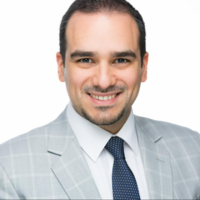
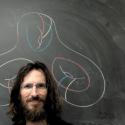
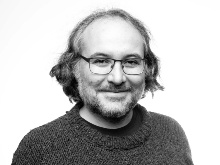
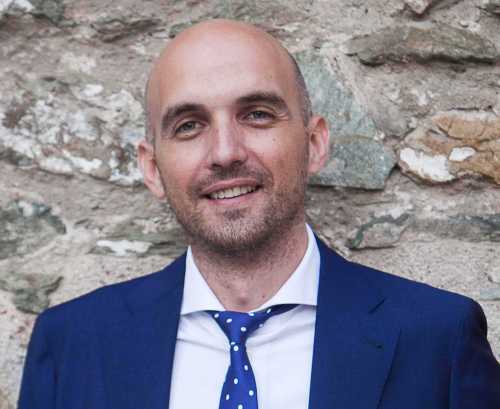
Hamidreza Mahyar is an Assistant Professor at the Faculty of Engineering , McMaster University , and an Associate Member of the Computing and Software department. His academic journey includes postdoctoral work at Boston University and TU Wien , and a Ph.D. in Computer Science from Sharif University of Technology . Research Focus: Mahyar's work bridges machine learning and network science , emphasizing graph neural networks for applications in social networks , recommendation systems , drug discovery , and generative AI . His research spans industrial AI (Industry 4.0 projects at Infineon Technologies), biomedical engineering (organoid morphology analysis), and semiconductor manufacturing (wafermap modeling). Scientific Recognition: McMaster Teaching Merit Award (2022) Vector Scholarship in AI (2023) NSERC USRA Award (2022) Google Cloud Platform for Research Award (2018) Best Paper Selection, Complex Networks (2018) Academic Leadership: He mentors PhD students (Taraneh Ghandi) and MSc students (Reza Namazi, Mohammad Khodadad, Ali Shiraei), while leading AI initiatives at Mind Lab 56 and BrainMaven . Former mentees include industry leaders at Google, Accenture, and ETH Zurich.
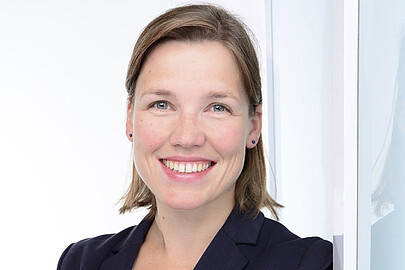
Søren Eilers is a Professor at the Department of Mathematical Sciences , University of Copenhagen. His research focuses on Operator Algebras , particularly the classification of C*-algebras related to discrete and low-dimensional structures. He is a member of the FNU network 'Automorphisms and Invariants for Operator Algebras' and advocates for experimental mathematics using computational methods in pure mathematics. Education: MS in Mathematics and Computer Science, University of Copenhagen (1993) PhD in Mathematics, University of Copenhagen (1995) Research Interests: Operator Algebras K-theory Symbolic Dynamics Discrete Mathematics Experimental Mathematics Recent Publications (2016-2024) demonstrate expertise in graph C*-algebras , symbolic dynamics , and computational approaches to pure mathematics, with key collaborations in Denmark, Japan, Canada, and the U.S. Scientific Leadership: President, Danish Mathematical Society (2006-2008) Principal Investigator, Villum Fonden (2012-2016) Main Organizer, Mittag-Leffler Institute Program (2016) Advisory Roles: Supervised 28 master's theses and mentored 9 PhD students/postdocs (2003-2022) across institutions in Denmark, Canada, Japan, and the U.S.
Prof. Dr. Melanie Krüger is a faculty member at Leibniz University Hannover , where she serves as Head of the Research Unit Sports and Cognition within the Institute of Sports Science. Her academic career spans institutions including the Technical University of Munich, University of Tasmania, and Ludwig Maximilian University. She leads research initiatives in embodiment, cognitive aging, motor decision-making, and the impact of physical activity on neurocognitive and motor functioning. Current Position: Professor, Institute of Sports Science, Leibniz University Hannover Prior Appointments: Post-doctoral roles at Technical University of Munich, University of Tasmania, and Pennsylvania State University Education: PhD in Systemic Neurosciences, Ludwig Maximilian University; Diploma in Sports Science, University of Leipzig Krüger's research focuses on: Embodiment Research: Systemic interactions between cognitive and motor development Cognitive Aging: Age-related changes in motor decision-making and coordination Human Locomotion: Collision avoidance, mixed reality interactions, and real-world movement studies Open Science: Advocacy for research data management in sports science Her recent publications explore mixed reality applications ( 2024 ), stress effects on motor function ( 2023 ), and methodological innovations in locomotion studies ( 2021-2025 ). Current projects include Moving Forward (2021-2022) and two Innovation Plus initiatives (2022-2024) developing experimental frameworks for human movement analysis. Krüger actively participates in academic governance: Spokesperson, German Society of Sport Science's Ad Hoc Committee on Research Data Management (since 2022) Board member, DVS Section 'Sports Motor Skills' (since 2022) Doctoral Committee, Faculty of Humanities Examination Board, MSc Sustainable Health Promotion in Sports Science
Dr. Maria Cristina Ramos is an Assistant Professor at Florida State University, specializing in Computational Social Science. She is affiliated with the Interdisciplinary Social Science program, where her teaching and research focus on applying network science and computational methods to address complex social issues such as health inequalities, reproducibility in science, and social-ecological systems. Ph.D. in Sociology, Duke University M.A. in Sociology, Duke University B.A. in Organizational Psychology, Pontificia Universidad Católica del Ecuador Her research integrates Social Network Analysis, Computational Social Science, and interdisciplinary approaches to study identity structures, sustainable fisheries, and organizational collaboration. She emphasizes reproducibility in social science research and uses data visualization to enhance understanding of societal challenges. Dr. Ramos' recent publications highlight trends in network science applications to moral psychology, environmental policy, and scientific methodology. Her work bridges quantitative and qualitative techniques, contributing to fields like Social Psychology and Marine Policy. Contact: mcr22c@fsu.edu | mc@mariacramos.com | Personal Website
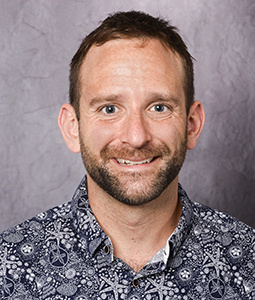
Dr. Daniel Speiser is an Associate Professor in the Department of Biological Sciences at the McCausland College of Arts and Sciences, University of South Carolina. His research focuses on the evolutionary physiology of marine invertebrates, particularly their visual systems and sensory adaptations. Visual Ecology: Studies spatial resolutions, spectral responses, and temporal dynamics of vision in molluscs and crustaceans for predator/prey detection and navigation. Distributed Visual Systems: Investigates neurobiology of multi-eyed molluscs like scallops and chitons with decentralized processing. Complex Trait Co-evolution: Analyzes functional relationships between sensory and locomotory systems in marine invertebrates. Biology of Color: Examines pigment-nanostructure interactions in color production, focusing on butterfly Speyeria . Natural Armor Systems: Explores trade-offs between protection and sensory function in structures like snapping shrimp orbital hoods and chiton shells.
Sidonie Christophe is a Senior Researcher (Directrice de Recherche, DR1) at UMR LASTIG, a joint research unit of Université Gustave Eiffel, IGN-ENSG, and EIVP. She serves as co-director of the LASTIG laboratory and leads research in geovisualization, map design, and interactive spatial data exploration. She also holds a part-time advisory role (60%) at the French Ministry of Higher Education and Research in the domain of digital technology, environment, climate, and sustainable urban development. PhD in Geographic Information Sciences Senior Researcher, DR1, MTECT Co-Director, LASTIG Laboratory (since 2021) Former Team Leader, GEOVIS (Geovisualization, Interaction, and Immersion) Advisor, Environment and Urban Climate, French Ministry of Higher Education & Research Her research centers on innovative methods for 2D/3D and nD geospatial data visualization, with a focus on enabling spatio-temporal understanding through visual and non-visual spatial thinking. Her work integrates principles from geographic information science, human-computer interaction, and computer graphics. Key areas include urban climate visualization, tactile and augmented reality for accessibility, expressive cartographic rendering, and cognitive aspects of map design. She investigates how aesthetic and semiotic choices impact map comprehension and utility. The 15 most recent publications reflect a strong trend in interactive and accessible geovisualization, particularly for urban and environmental applications. Topics include neural map style transfer, 3D urban climate analysis, tactile maps for the visually impaired, augmented reality in geography, and visual analytics for crisis and climate data. There is a consistent emphasis on user-centered design, interdisciplinary integration, and the development of tools for decision-making under uncertainty. Scientific Recognition and Service: Invited speaker at major conferences (IEEEVIS, AGILE, ICC, CPGIS) Co-organizer of international workshops (e.g., GeoVIS, ISPRS AR/VR sessions) Leader of national research projects (ANR ORACLES, ANR ACTIVmap, ANR ECOCIM) Recipient of international mobility grants (AMICI I-SITE FUTURE) Contributor to national glossaries and research strategy (e.g., French photogrammetry glossary) Advising and Grants: Sidonie Christophe actively supervises PhD students and postdoctoral researchers, including Markie Jiang, Maria-Jesus Lobo, and Alexandre Mielniczek. She leads or participates in multiple funded research projects such as ANR ORACLES (marine flooding visualization), ANR ACTIVmap (tactile 3D maps), and ANR ECOCIM (eco-design of city information models). Her advisory role at the MESR involves shaping national research strategy in digital and environmental sciences. Labs and Research Teams: She is a core member of the GEOVIS team (Geovisualization, Interaction, and Immersion) at LASTIG and previously served as its leader. As co-director of LASTIG, she plays a central role in the leadership and strategic direction of the entire laboratory, which comprises over 100 researchers across four teams: ACTE, GEOVIS, MEIG, and STRUDEL.
Helen Oleynikova is a Lecturer at the Department of Mechanical and Process Engineering at ETH Zürich, where she is part of the Autonomous Systems Lab. She works on the intersection of perception and planning, particularly for micro-aerial vehicles. Her research focuses on real-time onboard mapping, planning, and localization using visual-inertial systems and signed distance fields. Research Interests: Helen's work spans robotics, autonomous systems, and computer vision, with a focus on enabling safe and efficient navigation in complex environments. She specializes in visual-inertial odometry, SLAM, 3D mapping using signed distance fields, and real-time path planning for MAVs. Her projects often involve embedded systems and FPGA-based high-speed vision for obstacle avoidance. Publication Trends: Her recent publications (2023–2019) show a consistent focus on real-time, onboard algorithms for autonomous navigation. Key themes include signed distance function maps, collision-free motion generation, global localization, and efficient exploration. She frequently publishes in top-tier robotics conferences such as ICRA and IROS, and journals like IEEE RA-L and Journal of Field Robotics. Professional Experience: Senior Researcher, Autonomous Systems Lab, ETH Zürich Senior Software Engineer, Isaac 3D Perception, Nvidia Senior Scientist, Microsoft Mixed Reality and AI Lab, Zürich Software Engineer, Google (StreetView) Contributor, Willow Garage (ROS, TurtleBot Arm) Education: PhD in Robotics, ETH Zürich (2019) MSc in Robotics, ETH Zürich BSc in Robotics, Olin College of Engineering (2011) Advising and Grants: While no formal students are listed, she has collaborated extensively with researchers at ETH Zürich and industry labs. Her work has been supported through institutional affiliations and industry research roles. She has contributed to open-source robotics software, particularly in ROS-based systems for manipulation and navigation. Labs and Teams: Helen is a key member of the Mobile Manipulation team at the Autonomous Systems Lab at ETH Zürich. She has also been involved in projects at Nvidia, Microsoft, Google, and Willow Garage, focusing on real-world deployment of autonomous systems.
Andrea Longhi is a Full Professor at the Interuniversity Department of Regional and Urban Studies and Planning (DIST) at Politecnico di Torino, where he also serves as the Rector's representative for the strategic management and conservation planning of Valentino Castle. He is a member of the Interdepartmental Center R3C (Responsible Risk Resilience Centre) and actively contributes to national and international research on cultural and religious heritage. His research interests include medieval architecture, cultural and ecclesiastical heritage, landscape history, urban history, and the historical development of settlements. He focuses on the interplay between liturgical reform and architectural practice, the resilience of religious complexes, and the adaptive reuse of decommissioned churches. His work integrates historical research with contemporary heritage policy and conservation strategies. His recent publications reflect a strong focus on civic and religious architecture, territorial history, and heritage valorization. Themes include post-conciliar religious architecture, the transformation of urban religious heritage, and the historical significance of medieval civic and defensive structures. He often collaborates on interdisciplinary projects and contributes to digital platforms for heritage mapping and resilience. Scientific Committee member - Leon Battista Alberti Study Center Foundation, Mantua, Italy (2023-) National Consultation for Liturgical Pastoral Care of the National Liturgical Office of the Italian Episcopal Conference, Italy (2022-2027) Steering Committee member - Future for Religious Heritage, Belgium (2020-) Scientific Committee member - ICOMOS Italia - PRERICO and ICORP (2020-) Effective member - ICOMOS Italia (2020-) Scientific Committee member - Observatorio de Arquitectura Religiosa Contemporánea, Spain (2019-) Founding partner - Associazione Piemontese per l'Arte Cristiana "Guarino Guarini", Italy (1999-) Andrea Longhi supervises PhD students, including Giulia Assalve, and teaches in doctoral and master's programs at Politecnico di Torino. He has been involved in evaluating cultural heritage funding programs for institutions such as Fondazione Cassa di Risparmio di Cuneo and Compagnia di San Paolo. He also leads significant research projects, including PRIN grants on civic palaces and the architectural heritage of small Italian municipalities. He is involved in multiple research collaborations and has contributed to the development of digital tools for heritage resilience, such as the Mnemonic atlas. His editorial roles include directing the journal Atti e Rassegna Tecnica and serving on the scientific committees of several academic publications.
David Gay is a Professor and Director of Graduate Studies in the Department of Mathematics at the University of Georgia, where he has been a faculty member since 2011. His academic journey includes postdoctoral positions at the University of Arizona, Nankai Institute of Mathematics, and the University of Quebec, a Senior Lectureship at the University of Cape Town, and a visiting Hirzebruch Research Chair at the Max Planck Institute for Mathematics in Bonn (2019–2020). David Gay earned his PhD in Mathematics from UC Berkeley in 1999 under the supervision of Rob Kirby, following an undergraduate degree in Mathematics from Harvard College in 1991. He also gained professional experience working for the National Park Service for two years, which he considers an important part of his education. His research centers on topology and geometry, with a particular emphasis on visual and illustrative methods in mathematics. He is passionate about illustrating mathematical concepts and uses topological pictures to explore and explain complex ideas. His work intersects geometric topology and low-dimensional topology, often focusing on intuitive and visual representations. Although recent publications are not listed in the provided text, his research trajectory suggests continued engagement with geometric and topological structures, likely involving visualization techniques and interdisciplinary applications. Creative Teaching Award (2020) David Gay has advised graduate students as part of his role as Director of Graduate Studies, though specific names are not listed. He has received support for educational activities including lectures and travel, contributing to student and faculty development. His leadership in graduate education and innovation in teaching highlight his commitment to academic mentorship and pedagogical excellence. David Gay is actively involved in the academic community through seminars and research collaborations. His recent visit to the Max Planck Institute and leadership role in the graduate program indicate ongoing engagement with both research and educational initiatives.
Daniel Hernández is a Postdoctoral Researcher at the Institute for Artificial Intelligence (KI) under the Cluster of Excellence IntCDC at the University of Stuttgart. He is part of the Analytic Computing group within the Institute for Parallel and Distributed Systems (IPVS). His work focuses on Semantic Web technologies , particularly SPARQL , RDF , and knowledge graph applications in interdisciplinary design workflows . Research Trends : His publications (2015–2025) emphasize semantic query processing , provenance computation , and interoperability between architectural data and knowledge graphs . Key innovations include the eSPARQL language for epistemic queries, NPCS for native provenance in SPARQL, and BHoM to bhOWL for integrating building data with ontologies. Teaching & Collaborations : He has held teaching roles at the University of Stuttgart ( Human-Computer Interaction with Knowledge Graphs ), University of Aalborg ( Group Supervisor ), and University of Chile ( Lecturer for The Web of Data ). Collaborations span institutions like Buro Happold , TU Wien , and INRIA , with publications in journals like Proceedings of the VLDB Endowment and conferences such as WWW and ISWC .
Judith West-Mays is a Professor in the Department of Pathology & Molecular Medicine at McMaster University . Her research focuses on: Molecular mechanisms of eye development and disease Role of transcription factors (AP-2β, AP-2α) in ocular morphogenesis Transforming Growth Factor Beta (TGF-β) signaling in epithelial-mesenchymal transition (EMT) Matrix Metalloproteinases (MMPs) in vision disorders Biomaterials for intraocular pressure management Key scientific contributions include: Elucidating AP-2β's role in trabecular meshwork formation and glaucoma Characterizing MMP-9's impact on aqueous humor drainage Developing conditional knockout mouse models for vision research Investigating YAP signaling in lens fibrosis Creating mucoadhesive micelles for glaucoma therapy Scientific awards : Brockhouse Canada Prize (2025) for interdisciplinary vision health research Teaching : Biomedical Engineering II (2018) at McMaster University. Collaborators include Taiyab, Sheardown, and Ball. Research hubs involve McMaster's interdisciplinary vision science team.
Luís Moreira de Sousa is an Assistant Professor at the Department of Computer Engineering, Higher Technical Institute (Instituto Superior Técnico), University of Lisbon. His academic work bridges computer science and geography, with a focus on Geoinformatics rather than traditional GIS. He is affiliated with the Information and Decision Support Systems research unit and teaches Data Administration and Information Systems. His research spans several interconnected domains: spatial simulation, semantic web technologies for geospatial data, hexagonal grid systems, and resource depletion studies. Dr. de Sousa has developed innovative approaches to spatial simulation through his DSL3S (Domain Specific Language for Spatial Simulation Scenarios) and has contributed significantly to the Semantic Web through the GloSIS web ontology for soil data. His current major project is the book Spatial Linked Data Infrastructures , which bridges geospatial science and semantic web technologies. His publication record shows consistent contributions to spatial simulation tools, semantic web applications in geospatial domains, and resource depletion analysis. His work demonstrates a clear trajectory from practical spatial simulation tools toward more sophisticated semantic web applications for geospatial data. The recent focus on spatial linked data infrastructures represents the culmination of his interdisciplinary approach, combining computer science rigor with geospatial domain knowledge. Dr. de Sousa is a strong advocate for open source tools and maintains an active presence in the FOSS4G (Free and Open Source Software for Geospatial) community. His professional digital footprint includes Codeberg, Mastodon, ORCID, Google Scholar, LinkedIn, ResearchGate, and StackExchange. Outside his academic work, he maintains interests in resource depletion (having created the Portuguese Peak Oil website PicoDoPetroleo.net in 2005 and contributed to TheOilDrum), cycling (covering thousands of kilometers annually), music, and literature. His Goodreads profile shows an active engagement with science fiction, history, and science literature.
Mia Minnes is a Teaching Professor and the Vice Chair for Undergraduate Education in the Computer Science and Engineering Department at UC San Diego's Jacobs School of Engineering. She teaches discrete math for CS, introduction to computability, and TA training classes, while leading initiatives that connect academic learning with professional development. Her research focuses on Automata Theory and Computability education, Scholarship of Teaching and Learning (SoTL), and projects supporting student professionalization pathways including industry internships, peer mentor development, and ethics in computing. She has pioneered initiatives like the Summer Internship Symposium and CSE-PACE (Peer-led Academic Cohort Experiences) to enhance student experiences in large computing programs. Minnes' publication portfolio reveals strong trends in computing education research, particularly in internship experiences, TA professional development, assessment methods, and interventions for large classes. Her work consistently bridges theoretical computer science with practical educational applications, demonstrating a commitment to evidence-based teaching practices and student success metrics. UC San Diego Academic Senate Distinguished Teaching Award (2020) Jacobs School of Engineering Teacher of the Year (2013-2014) Multiple NSF grants as PI including DUE-2337253 (2024-2027) UC San Diego Student Centeredness Award (2023-2024) Teaching+Learning Commons Faculty Fellow (2018-2019) She has advised numerous undergraduate and graduate students through research projects examining internship disparities, TA professional development, educational technology tools, and student experiences in computing programs. Her leadership extends to projects like FlapJS (an interactive visualization tool for formal computation), ComputingPaths (resources for computing career paths), and OCCTIVE (supporting computational problem solving in non-CS courses).
Stergios Tampekis is an Assistant Professor at the Department of Forestry and Natural Environment Management within the Faculty of Plant Sciences at the Agricultural University of Athens . His research focuses on forest operations engineering, emphasizing the optimization of human-environment interactions through Nature-Based Solutions. Based in Karpenisi, Greece, he contributes to sustainable forest infrastructure and wildfire prevention strategies. Contact: stampeki@aua.gr Phone: +30-22370-23282 Research Interests Tampekis specializes in: Environmental impact assessment of forest operations GIS-based spatial planning for fire management Development of Decision Support Systems (DSS) for forestry Resilient infrastructure planning in Mediterranean islands Integration of wildfire prevention with sustainable land use Recent Research Trends His recent publications highlight GIS-driven approaches for wildfire risk management, economic evaluation of forest infrastructure, and climate change adaptation through complex systems science. Key themes include multi-criteria analysis, spatial optimization, and sustainable resource deployment. Scientific Awards No awards listed in the provided text
Kobus Barnard is a Professor in the Department of Computer Science at the University of Arizona, with his office located in GS 708. His research bridges computer vision, machine learning, and interdisciplinary scientific applications across diverse domains. Education: Ph.D. from Simon Fraser University (1999) His research interests focus on extracting meaningful insights from complex data through computer vision and probabilistic modeling. Key areas include machine learning for environmental monitoring (flood detection, plant disease analysis), social dynamics (interpersonal coordination, emotional coregulation), astronomy (transient classification), and multimodal learning (visual-linguistic integration). His work consistently applies deep learning to real-world problems requiring high-resolution data interpretation. Analysis of his 2022-2025 publications reveals three dominant trends: (1) Environmental applications using satellite imagery for flood mapping and agricultural monitoring, (2) Cognitive modeling of human teams and emotional dynamics through probabilistic frameworks, and (3) Astronomical data analysis leveraging host galaxy properties for transient classification. These threads demonstrate his commitment to solving practical scientific challenges through computational innovation. While scientific awards aren't documented in available sources, his leadership in projects like FloodPlanet and ToMCAT indicates significant contributions to data infrastructure. His advising and grant activities remain unreported in the source material, though his extensive interdisciplinary collaborations suggest substantial mentorship impact. Barnard's work operates at the intersection of multiple scientific communities, evidenced by applications spanning neuroscience, agriculture, astronomy, and social science. His current focus on high-resolution data fusion and multimodal modeling positions him at the forefront of real-world AI deployment.