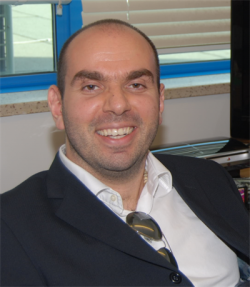
Dr. Alasdair King serves as Reader in Film at Queen Mary University of London , where he leads the Centre for Film and Ethics and contributes to the Finance Aesthetics research cluster. His work bridges film philosophy , critical political economy , and German cinema studies , with particular focus on financialization's impact on moving image aesthetics. DAAD Visiting Research Fellow (2015) Co-founder of CAPITAL FORMS (2020) graduate program in Economic Humanities PhD examiner at institutions including University of Warwick, University of Manchester, and University of Edinburgh He supervises doctoral projects on cinematic economics , AI media , and posthuman aesthetics , currently co-guiding two AHRC and LAHP-funded students. His 2023 monograph The Financial Image establishes frameworks for analyzing film's relationship to finance capital through works by Hito Steyerl , Harun Farocki , and Isaac Julien . A second monograph Hans Magnus Enzensberger: Writing, Media, Democracy (2007) remains foundational for understanding Frankfurt School media theory in West German context.
Christos Gatzidis serves as Executive Dean of Bournemouth University's Faculty of Science and Technology since October 2023, overseeing six departments including Computing and Informatics, Creative Technology, and Psychology. Previously Deputy Dean (2021-2023) and Head of Creative Technology Department (2016-2021), he was appointed Professor in Creative Technology in November 2019. The Faculty leads five REF Units of Assessment and secures funding from AHRC, NIHR, and Innovate UK for research spanning digital healthcare, gaming technologies, and cultural heritage applications. His educational qualifications include: PhD in Information Science, City University London (2010) PG Cert in Research Degree Supervision, Bournemouth University (2010) MA in Computer Animation, Teesside University (2003) BSc (Hons) in Computer Studies (Visualisation), University of Derby (2002) Professor Gatzidis specializes in computer graphics with research spanning virtual reality, serious games, and digital healthcare applications. His work bridges technical innovation and practical implementation, particularly in mindfulness prototypes for healthcare and stroke rehabilitation systems. Current projects focus on the multidisciplinary application of gaming technologies in medical contexts, emphasizing user experience and therapeutic outcomes through collaborations with industry partners. His publication record (2014-2025) demonstrates evolving expertise from foundational computer graphics research in terrain generation and deformation to applied work in healthcare, cultural heritage, and music education. Key trends include virtual reality for therapeutic mindfulness, usability studies in mobile gaming, and digital cultural presentation techniques, reflecting a trajectory toward socially impactful technological solutions with strong industry translation. No scientific awards are documented in the provided information. He has supervised PhD students and secured competitive research funding, including two Innovate UK Knowledge Transfer Partnerships. His principal investigator role in a virtual reality mindfulness prototype project exemplifies his approach to translating academic research into practical industry solutions, with current focus on expanding knowledge exchange activities to support the University's civic engagement mission. As Executive Dean, he leads faculty-wide research strategy across six departments, fostering interdisciplinary collaborations particularly in digital healthcare and cultural heritage. His personal research integrates computer graphics expertise with clinical applications through partnerships with healthcare providers and technology companies, driving innovation in therapeutic VR systems and educational gaming platforms.
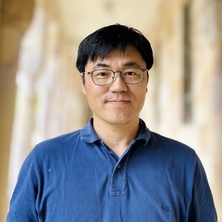
Associate Professor Dan Dongseong Kim is Deputy Director of UQ Cybersecurity and an Associate Professor at The University of Queensland (UQ), Australia. Previously, he held permanent academic positions at The University of Canterbury (UC), New Zealand (2011-2018) as a Senior Lecturer and Lecturer. His research focuses on Cybersecurity and Dependability for AI, IoT, Autonomous Vehicles, Cloud Computing, and Moving Target Defenses (MTD). Doctor of Philosophy in Computer Engineering from Korea Aerospace University Postdoctoral Research at Duke University (2008-2011) Visiting Scholar at University of Maryland (2007) Dan's work explores Graphical Security Models , Moving Target Defense for proactive resilience, and AI-Driven Cybersecurity with emphasis on adversarial robustness and interpretable models. His recent publications (2024-2025) span journals like IEEE Transactions on Dependable and Secure Computing and conferences such as DSN , addressing automated defense, evolving attacks, and hardware-aware security frameworks. He has advised 15 Ph.D. graduates, including researchers now at institutions like RMIT University, La Trobe University, and CSIRO's Data61. Current supervision includes projects on Automated Penetration Testing , AI-Based Intrusion Response , and Moving Target Defense . Dan's research is funded by agencies including the Republic of Korea's Agency for Defence Development and US Army Research Lab . His professional roles include Associate Editor for IEEE Communications Surveys and Tutorials and Steering Committee Chair for IEEE PRDC .
Jennifer Dy is a Distinguished Professor at Northeastern University with joint appointments in Electrical and Computer Engineering and Khoury College of Computer Sciences. As Director of AI Faculty at the Institute for Experiential AI, she leads research in machine learning, computer vision, and explainable AI. Her work spans biomedical applications (COPD phenotyping, neuroimaging) and fundamental algorithms (active learning, continual learning). She holds a PhD from Purdue University and is an AAAI Fellow. Research Focus: Dy develops methodologies for robust and interpretable machine learning, including techniques for model stability in continual learning, dependency-aware active learning, and axiomatic explanation frameworks. Her applied research advances diagnostic tools using Raman spectroscopy, CT imaging, and multi-omics biomarker discovery. Awards: Recognized with the NSF CAREER Award, Faculty Research Team Award, and AAAI Fellowship for contributions to unsupervised learning and medical AI. Publication Trends: Recent articles demonstrate strong cross-disciplinary integration, combining theoretical advances in explainability/robustness with applications in healthcare, wireless systems, and particle physics. Methodological themes include optimal transport theory, probabilistic modeling, and transformer architectures.
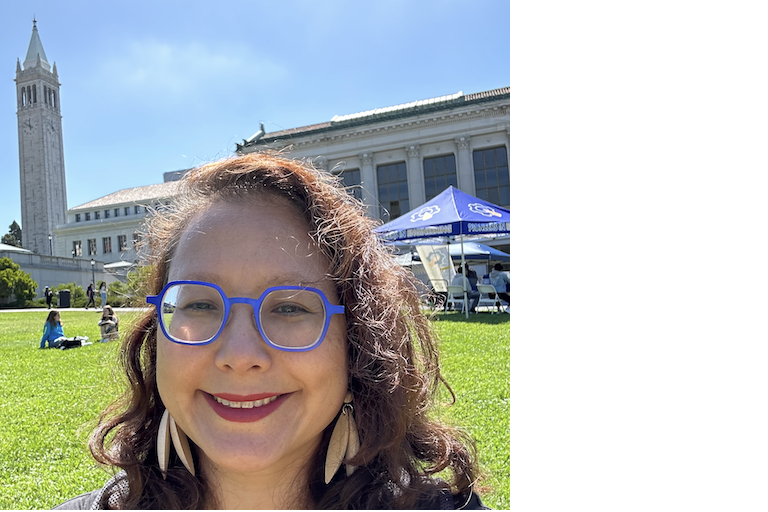
Dr. Rebecca Rainof is a Lecturer in the Department of English at the University of California, Berkeley, and an Associate Researcher. Her research focuses on Victorian and Modernist literature, interdisciplinary studies of literature and visual arts, and gender studies. She has held positions at Princeton University and the Catholic University of America. Her work explores topics such as midlife narratives in Victorian novels, Van Gogh’s engagement with Victorian literature, and Japanese American incarceration through familial memory. Her book The Victorian Novel of Adulthood (2015) examines alternative novelistic traditions. Her recent research includes contributions to the Santa Barbara Museum of Art’s 2022 exhibition Through Vincent’s Eyes: Van Gogh and his Sources . She has published on George Eliot, Woolf, and the intersections of art and literature. Her writings on her mother’s experience during WWII Japanese American incarceration appear in Hyphen: Asian America Unabridged and Literary Imagination . Rainof’s grants and fellowships include the Princeton Mellon Fellowship (2018) and the Curran Fellowship (2015). Her teaching and writing emphasize creative nonfiction, feminist literary theory, and pedagogical innovation. Her current projects include a book manuscript on Van Gogh’s literary adaptations and a family memoir rooted in Heart Mountain’s history.
Dr. Michel Chaaya is a Senior Lecturer in Civil Engineering at the University of Sydney, with expertise in project management, construction engineering, and sustainability. He holds a PhD from the University of Sydney and is a Fellow of the Institution of Engineers Australia and the College of Leadership and Management. His research focuses on innovative project management methodologies, sustainable construction practices, and BIM implementation. Education: BE, ME(Res), PhD in Project Management and IT from the University of Sydney. Research Interests: Enhancing project success through risk management, modular construction, and BIM adoption. He emphasizes communication, sustainability, and community wellbeing in construction projects. Recent projects include studies on net-zero steel production, BIM in SMEs, and NCC 2022 energy requirements. Awards: ARCHIBUS Excellence Awards (2017-2013), Best Residential Development Awards (2009-2010), and Australian Postgraduate Award (1997). Teaching: Courses include Project Planning, Professional Practice in Engineering Management, and Global Project Management. He has supervised over 250 theses since 2003. Industry Roles: Director of Business Development for multiple organizations, specializing in construction, IT systems, and real estate. He advises on complex project delivery and stakeholder management.
Julia Kuhlin is a Research Fellow in digital humanities at Humlab, Umeå University, leading research on Swedish Free Churches' visual communication on Instagram and religious digital creatives. Her work bridges religious studies and digital media analysis. Research focuses on: Digital religion and social media engagement Lived religion in Pentecostal communities Interreligious relations and gender aspects World Christianity with regional focus on India and Sweden Publications demonstrate consistent focus on religious adaptation to digital platforms and ethnographic studies of Christian communities. Recent work emphasizes deconstruction of religious narratives through new media formats like podcasts.
Jian Tang is an Assistant Professor at HEC Montréal and a core member of the Montreal Institute for Learning Algorithms (MILA). His research focuses on graph representation learning, generative models, and their applications in drug discovery and material science. Prior to this, he was a postdoctoral researcher at the University of Michigan and Carnegie Mellon University, and a researcher at Microsoft Research Asia (2014-2016). He has received several prestigious recognitions, including the Canada CIFAR Artificial Intelligence Chairs (CCAI Chair) and best paper nominations at WWW’16. His work on LINE (WWW’15) was recognized as the most cited paper in its year. Tang’s research spans theoretical foundations and practical systems, such as GraphVite for scalable graph embedding and TorchDrug for drug discovery. Key research interests include geometric deep learning for molecular structures, generative models for protein design, and neural-symbolic reasoning for knowledge graphs. He actively collaborates with leading biological labs and leverages industry partnerships for GPU resources. Recent publications emphasize molecular property prediction, 3D conformation generation, and algorithmic reasoning frameworks. He has secured grants from IBM/MILA, Amazon, and the National Research Council Canada, supporting projects like molecular pretraining and geometric representation learning. Tang teaches courses on graph representation learning and deep learning, and mentors a vibrant team of PhD and master’s students. His lab has developed impactful software tools like LINE, PTE, and LargeVis, widely used in the research community.
Professor Jason Hall-Spencer is a globally recognized marine biologist at the University of Plymouth and a full professor at the University of Tsukuba (Japan), with an adjunct role at Xiamen University. His research focuses on ocean acidification, invasive species (e.g., lionfish), and climate change impacts on marine ecosystems. He pioneered the use of underwater CO2 seeps as natural analogues for climate change studies, a methodology now adopted globally. His work has influenced policies to protect deep-water corals and Arctic reefs, and he leads projects like RELIONMED to combat lionfish invasions in the Mediterranean. Education: Studied Applied Marine Biology at Heriot-Watt University, completed a PhD on coralline algae at Millport Marine Station, and conducted fieldwork across Europe, Asia, and the Pacific. His career includes discovering UK deep-water coral reefs and Arctic reefs, leading to their legal protection. Research Interests: Ocean acidification effects on marine organisms, invasive species management, CO2 seep dynamics, coral reef ecology, and marine conservation. His work combines field experiments, policy advocacy, and community engagement to address global marine challenges. Grants and Collaborations: Secured €1.7M from the EU Life Programme for lionfish control and a $400K grant on plankton dynamics. Collaborates with organizations like the Marine Biological Association and international researchers on projects such as the Ocean Organ to visualize CO2 impacts. Labs/Teams: Leads the Marine Conservation Research Group at Plymouth, coordinating initiatives like RELIONMED and influencing global marine policies through partnerships with governments and NGOs.
Rebecca Williams is an Associate Professor in Media Audiences and Participatory Cultures at the Faculty of Business and Creative Industries , University of South Wales. She co-leads the Creative Industries Research & Innovation Group and chairs the Faculty Ethics Committee. PhD in Media & Cultural Studies (2008), Cardiff University Postgraduate Certificate in Learning and Teaching (2011), University of Glamorgan MA in Critical and Cultural Theory (2004), Cardiff University BA (First Class) in Journalism, Film, and Broadcasting (2003), Cardiff University Her research focuses on media audiences , fan engagement , transmedia storytelling , and the experience economy , particularly in media tourism and themed entertainment . Current projects explore Disney's evolving role in global culture and the commodification of fan practices. Rebecca's publications span fandom theory , transmedia analysis , and immersive media , including monographs on theme park fandom and post-object fan identity. She actively supervises PhD students in areas like celebrity studies , media tourism , and digital fan communities . She welcomes PhD applications in media audiences, fan studies, and immersive experiences, with a commitment to mentoring emerging scholars in these fields.
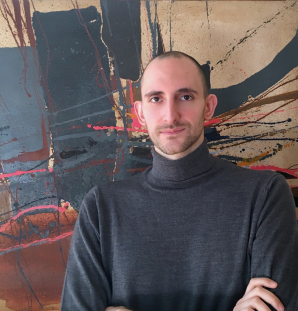
Alessandro Masetti is a PhD candidate in Museum Studies at the IMT School for Advanced Studies Lucca, funded by the Museo Egizio in Turin. He holds a background in architecture (2014) and has served as a curator at Fondazione Giovanni Michelucci in Fiesole (2015–2022). As a researcher in the LYNX Research Unit at IMT Lucca, he focuses on museum accessibility, cultural heritage curation, and digital communication. His work spans European-funded projects, including studies on women in photography (PRIN-funded) and initiatives to digitize Lucca’s photographic heritage. His academic contributions include editorial work for Predella. Journal of Visual Arts and co-authorship of publications on architect Giovanni Michelucci. He has also produced a bilingual podcast episode ( Lucca Stories & Tales ) and authored catalog entries for the ARCHIVI IN RETE project. His research bridges historical analysis, cultural policy, and digital innovation in cultural institutions. Key projects include Fotografiste: Women in Photography from Italian Archives , exploring underrepresented female photographers, and the digitization of Lucca’s photographic archives. His work emphasizes accessibility, historical recovery, and the intersection of technology with cultural preservation.
Ali Yaycıoğlu is an Associate Professor of History at Stanford University, serving as Director of the Abbasi Program in Islamic Studies and Middle Eastern Studies Forum. His work focuses on Ottoman Empire and Modern Turkey, integrating digital tools to analyze political, economic, and legal institutions. He holds affiliations with the Center on Democracy, Development and the Rule of Law, and the Freeman Spogli Institute for International Studies. B.S. in International Relations (Middle East Technical University, 1994) M.A. in History (Bilkent University, 1997) Graduate Studies in Islamic Studies (McGill University, 1998) Ph.D. in History and Middle Eastern Studies (Harvard, 2008) His research explores Ottoman political and financial systems, with current projects examining debt networks (The Order of Debt) and Ottoman political communities. He leads digital initiatives like Charting the Empire and Mapping Ottoman Epirus, using spatial analysis to map fiscal records and power structures. His work bridges historical analysis with digital humanities, producing visualizations of Ottoman networks. Notable publications include Partners of the Empire (2016) and essays on Ottoman global connections. He co-edited a special digital humanities issue of the Journal of Ottoman and Turkish Studies (2023). His research has been supported by grants including the Stanford Data Science Seed Grant (2018). Yaycıoğlu advises the Stanford Ottoman World Series and engages in public scholarship through media commentary on Turkish politics. His artistic projects under 'Critical Imagination' explore historical themes through visual arts, further bridging academic and creative domains.
Thijs Weststeijn is a Professor of Art History at Utrecht University's Department of History and Art History (Humanities). He specializes in early modern European art, particularly Dutch Golden Age art and global cultural exchanges. His research focuses on cross-cultural interactions between Europe, China, and Asia, with notable projects like the 'Histories of Global Netherlandish Art, 1550-1750.' Weststeijn holds a PhD from Amsterdam University Press (2008) and has held fellowships at institutions like the Getty Research Institute and the Max Planck Institute. He is a founding editor of History of Humanities and contributed to exhibitions such as Barbaren en Wijsgeren . His recent media engagements include discussions on climate change impacts on cultural heritage (2023) and re-evaluations of Rembrandt's global influences. Key publications include Art and Antiquity in the Netherlands and Britain (2015) and Foreign Devils and Philosophers (2020).
Dr. Dijiang Huang is an Associate Professor in the School of Computing and Augmented Intelligence at Arizona State University (ASU). He joined ASU in 2005 after completing his Ph.D. in Telecommunications and Computer Networking from the University of Missouri-Kansas City (2004). His research focuses on cybersecurity, mobile computing, and cloud computing, supported by grants from the National Science Foundation (NSF), Office of Naval Research (ONR), and industry partners like HP. He has received prestigious awards, including the ONR Young Investigator Award and HP Innovative Research Award. Education: B.E. in Telecommunications, Beijing University of Posts and Telecommunications (1995) M.S. in Computer Science, University of Missouri-Kansas City (2001) Ph.D. in Telecommunications and Computer Networking, University of Missouri-Kansas City (2004) Research Interests: Huang’s work emphasizes secure communication protocols, privacy-preserving techniques, and resilient network architectures. He has pioneered frameworks like Secure Group Communication (SeGCom) and Attribute-Based Cryptography , addressing challenges in VANETs, SDN, and edge computing. His recent projects include developing Waterfall for SDN security and SmartDefense for DDoS mitigation. Grants & Awards: ONR Young Investigator Award (2008) HP Innovative Research Award (2008) NSF grants for secure mobile cloud frameworks and cyber-physical systems Professional Contributions: Huang has served as a reviewer for journals like IEEE Transactions on Wireless Communications and conferences such as ACM MobiArch. He co-developed the Open Human-Robotic Mobile Networking and Security Testbed (OHReST) and the Virtual Laboratory (VLab) for cybersecurity education.
Elaine Gerber is an Associate Professor of Anthropology at Montclair State University (MSU), affiliated with the College of Humanities and Social Sciences. Her research focuses on the intersection of disability studies, medical anthropology, and food systems, emphasizing disability as a social construct. She holds a PhD from UCLA and has conducted extensive fieldwork on disability culture, accessibility, and food insecurity. Education: PhD, Anthropology, University of California, Los Angeles (1999) MA, Anthropology, University of California, Los Angeles (1999) BA, Anthropology, University of Michigan, Ann Arbor (1989) Research Interests: Disability studies and cultural anthropology Food insecurity among disabled populations Audio description and accessibility Intersection of race, gender, and disability Her work bridges theory and practice, including community-based participatory research projects like the #EatDis initiative examining barriers to food access for disabled individuals. Notable publications explore disability identity, food as a site of resistance, and the built environment's impact on marginalized groups. Awards & Grants: Recipient of the 2018 Society for Applied Anthropology Fellowship, Chateaubriand Fellowship (1996), and Montclair State’s “Best Professor” recognition (2019). Funded projects include a Robert Wood Johnson Foundation grant ($100k) on physical activity barriers for people with disabilities. Teaching & Service: Teaches courses on disability studies, medical anthropology, and food studies. Founded MSU’s Disability Caucus and volunteers with organizations like the Reelabilities Film Festival. Served as President of the Society for Disability Studies (2007–2009). Labs/Teams: Leads the #EatDis research project and collaborates with the World Institute on Disability on food education initiatives.