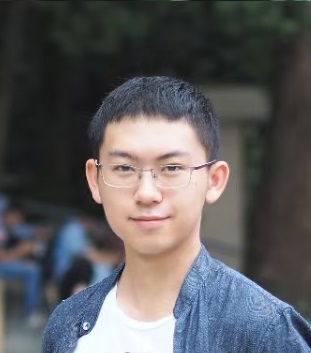
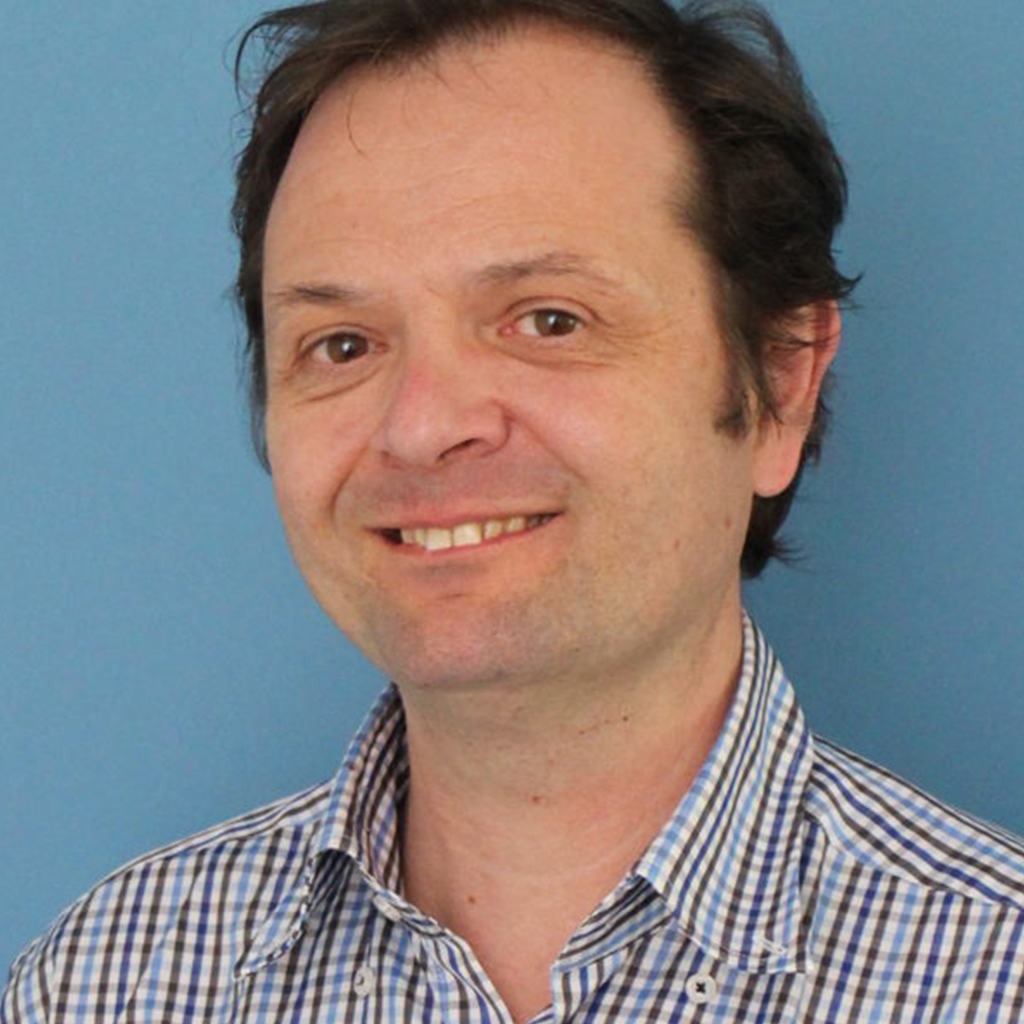
Olga Sorkine-Hornung is a Professor of Computer Science at ETH Zurich and head of the Institute of Visual Computing. She leads the Interactive Geometry Lab, focusing on theoretical and practical advancements in digital content creation, geometry processing, and shape modeling. Current position: ETH Zurich, Department of Computer Science Previous roles: Courant Institute (NYU), Technical University of Berlin Education: BSc and PhD from Tel Aviv University, postdoc at TU Berlin Her research spans shape representation, digital fabrication, computer animation, and fundamental geometry processing. Key contributions include Laplacian surface editing, as-rigid-as-possible deformation, and generalized winding numbers. She works on applications in VR, AR, and autonomous systems. Awards include Test of Time Awards (2024), ACM Fellow (2020), ERC Consolidator Grant (2020), and EUROGRAPHICS Young Researcher Award (2008). She has supervised numerous students and co-developed software libraries like libigl and Instant Meshes . Co-chair roles for SIGGRAPH, Eurographics, and Pacific Graphics Editorial board member for ACM Transactions on Graphics and other journals Keynote speaker at VMV, CVPR, and SIAM conferences Her work bridges mathematical rigor with practical implementation, advancing computer graphics and geometry processing through intuitive algorithms that maintain surface detail while enabling efficient computation.
April Yi Wang is a tenure-track Assistant Professor in the Department of Computer Science at ETH Zürich, where she directs the Programming, Education, and Computer-Human Interaction Lab (PEACH Lab). She is a core faculty member at the Institute for Intelligent Interactive Systems and associated with the ETH AI Center. Wang is also an active member of ETH HCI and Swiss CHI communities, contributing significantly to human-computer interaction and educational technology research. Dr. Wang's educational background includes: Ph.D. in Information Science from University of Michigan (2023), advised by Steve Oney and Christopher Brooks M.Sc. in Computer Science from Simon Fraser University (2018), advised by Parmit Chilana B.Eng in Computer Science from Zhejiang University (2016) Dr. Wang's research focuses on human-centered approaches to programming and data science. Her work reimagines programming as a form of literature that communicates with both machines and people, exploring creative representations like text, shapes, animations, and everyday objects. She investigates how to make programming more natural and intuitive through literate programming environments, with applications in professional and educational contexts. Her research spans human-computer interaction, educational technology, and AI-assisted programming tools. Analysis of Dr. Wang's recent publications reveals a strong focus on AI-enhanced educational tools, particularly for programming and data literacy. Her work increasingly integrates large language models to scaffold learning while maintaining user agency. There's a clear trajectory toward developing situated learning approaches that connect abstract concepts to real-world contexts through augmented reality and tangible interfaces. Her research bridges HCI, education, and AI to create more accessible and engaging technical learning experiences. Dr. Wang has received numerous prestigious awards including: 2023 Gary M. Olson Award and Honourable Mention Award at ACM CHI 2022 Rising Stars in EECS and Heidelberg Laureate Forum Young Researcher 2020 Best Short Paper Award at IEEE VL/HCC and Honourable Mention at ACM CHI 2019 Best Paper Award at ACM CSCW Dr. Wang actively mentors students through thesis projects at ETH Zürich, supervising numerous bachelor's and master's students on topics ranging from AI-assisted programming to data literacy tools. Her lab, PEACH Lab, has secured funding including the recent innovedum funding for the Coducate project. She serves on program committees for major conferences including CHI and UIST, and regularly reviews for top HCI and education journals. The PEACH Lab, directed by Dr. Wang, focuses on creating expressive, intelligent, and human-centered systems that make technical topics more accessible. The lab explores textual, visual, and embodied representations for programming, with emphasis on enhancing communication, collaboration, and learning. Current research directions include balancing automation with user agency, supporting diverse learning needs, and developing tools for interdisciplinary technical communication.
Mennatallah El-Assady serves as Assistant Professor at ETH Zurich's Department of Computer Science, where she leads the Interactive Visualization and Intelligence Augmentation Lab (IVIA). Her academic trajectory includes research fellowships at ETH's AI Center and doctoral work at University of Konstanz and OntarioTech University, establishing her expertise at the intersection of visualization and artificial intelligence. Her research focuses on advancing responsible data-driven decision-making through human-centered analytics, with particular emphasis on explainable machine learning systems. Dr. El-Assady combines data mining techniques with visual interfaces to create transparent AI workflows, specializing in text data analysis. Her work bridges computational linguistics, digital humanities, and information visualization to develop tools that make complex AI processes interpretable for end users. Recent publications demonstrate growing focus on generative AI's impact on visualization practices and sophisticated frameworks for interactive machine learning. Her research consistently addresses the challenge of maintaining human agency in increasingly automated systems, with applications spanning political debate analysis, musicology, and healthcare data interpretation. The trend shows increasing sophistication in evaluation methodologies for visual analytics systems. Best Paper Award: Honorable Mention for 'Progressive Learning of Topic Modeling Parameters: A Visual Analytics Framework' Dr. El-Assady actively shapes her field through workshop leadership including ArgVis (Argument Visualization), Vis4DH (Visualization for Digital Humanities), and VISxAI (Visualization for AI Explainability). Her teaching includes 'Interactive Machine Learning- Visualization and Explainability' at ETH Zurich, training next-generation researchers in human-centered AI development. She maintains strong industry connections with coverage in Forbes and ETH News regarding human-AI collaboration frameworks. The Interactive Visualization and Intelligence Augmentation Lab (IVIA) develops cutting-edge tools including explAIner for transparent machine learning, LingVis for linguistic analysis, VisArgue for debate structure visualization, and VALIDA for political deliberation analysis. These projects share a common thread of enhancing human understanding through carefully designed visual interfaces that expose AI decision processes.
Gerold Schneider is an Associate Professor at the University of Zurich , affiliated with the Department of Computational Linguistics under the Faculty of Arts and Social Sciences and Faculty of Business, Economics and Informatics . He leads the Text Crunching Center (TCC) , focusing on interdisciplinary research at the intersection of NLP, Digital Humanities, and Health Data Science. Research Interests His work spans Text Analytics , Digital Humanities , Corpus Linguistics , and Health Data Science , with applications in: Biomedical NLP (e.g., Alzheimer’s detection, clinical trials) Digital Humanities projects (e.g., analyzing Charles Dickens, UN archives) Migration discourse framing across languages Adversarial data collection for hate speech detection Interdisciplinary methodologies for digital unstructured data Recent Publications 2025–2024 research highlights include annotated corpora for preclinical and neurological studies, AI-driven analysis of historical linguistic variation, and innovative tools for language learners. His NLP applications address health diagnostics, ethical AI, and cross-lingual political discourse. Labs & Teams As TCC leader, he spearheads collaborative projects within the Digital Society Initiative (DSI) communities (AI & Law, Health, Ethics, etc.), integrating computational methods with humanities and health research.
Elaine M. Huang is an Associate Professor of Human-Computer Interaction at the Department of Informatics, University of Zurich, where she has served since 2010. She also leads the People and Computing Lab, focusing on the dynamic interplay between human practices and technological advancements. Her academic background includes: PhD in Computer Science, Georgia Institute of Technology (2006) Dr. Huang's research centers on human-computer interaction, examining the bidirectional relationship between technology and human practices. She is particularly known for her work on gender equality in technology, challenging assumptions about innate gender differences and investigating how AI systems may perpetuate biases. Her research also spans sustainable interaction design, mental health technologies, and chronic disease management, always emphasizing empirical data over intuition. Analysis of her recent publications (2023-2025) reveals a strong trajectory toward socially impactful HCI, with significant focus on health technologies (diabetes management, mental health), cultural sensitivity in design, and the ethical challenges of AI. Her methodology often involves field studies to understand real-world technology use, countering the industry's reliance on intuition. As head of the People and Computing Lab, Dr. Huang oversees a research group dedicated to designing and evaluating technologies that address complex human needs. The lab's work frequently involves co-design with diverse user communities to ensure relevance and inclusivity in technological solutions.
Tanja Käser is a Tenure Track Assistant Professor at EPFL's School of Computer and Communication Sciences (IC), leading the Machine Learning for Education Laboratory (ML4ED). Her interdisciplinary research bridges machine learning, data mining, and educational technology, focusing on personalized learning systems and human behavior modeling. PhD in Computer Science (ETH Zurich, 2015) - honored with Fritz Kutter Award Former Senior Data Scientist at Swiss Data Science Center (ETH Zurich) Postdoctoral Researcher at Stanford University's Graduate School of Education Research Focus Explainable AI for education Adaptive learning environments Behavioral pattern recognition Generative AI applications in pedagogy User modeling and personalization Learning analytics in unstructured settings Recent Publication Trends Her 2024-2023 work demonstrates: Interpretable clustering of learners Transformer-based language learning prediction GAN applications for creative education Teacher-AI collaboration frameworks Explainability validation methods Modular network architectures Scientific Recognition Fritz Kutter Award for best Swiss computer science thesis (2015) Advising & Collaborations Currently supervises multiple PhD students including: Cock Jade Maï L Glandorf Dominik Güres Fatma-Betül Neshaei Seyed Parsa Radmehr Bahar Shibu Abhinand Shved Ekaterina Research Infrastructure Operates from EPFL's ML4ED laboratory with hybrid on-site and digital educational systems research capabilities.
Prof. Dr. Julia Vogt is an Assistant Professor at the Department of Computer Science at ETH Zürich, leading the Professur für Medizin. Datenwiss. Her research focuses on medical machine learning, data science, and AI applications in healthcare. She specializes in developing interpretable AI systems for clinical decision support, particularly in pediatric diabetes management, medical imaging analysis, and anomaly detection. Her work bridges translational gaps by emphasizing causal approaches and clinical validation. Her academic role includes teaching courses like the Data Science Lab (263-3300-00L/10L) and Topics in Medical Machine Learning (263-5100-00L). Her lab's research spans predictive modeling for nocturnal hypoglycemia, echocardiogram analysis for pulmonary hypertension detection, and multimodal learning in radiology. She also contributes to national pediatric data initiatives like SwissPedHealth. Key technical areas include concept bottleneck models, stochastic AI frameworks, and generative models for medical signal denoising. Her work often emphasizes model interpretability, fairness, and robustness to distribution shifts. She collaborates on projects involving wearable devices for pediatric monitoring and AI-driven rehabilitation tools for post-stroke gait analysis.
Frédéric Kaplan serves as Director of the College of Humanities at École Polytechnique Fédérale de Lausanne (EPFL), where he holds the Chair of Digital Humanities. He also serves as President of the Time Machine Organisation, a nonprofit entity comprising over 600 institutions. His academic appointments span multiple departments including the Digital Humanities Laboratory (DHLAB), School of Architecture (SAR), and School of Humanities (SODH), demonstrating his interdisciplinary leadership across EPFL's academic structure. Dr. Kaplan's research focuses on the intersection of computational methods and humanities, particularly in historical urban analysis, cultural heritage digitization, and the development of the Mirror World concept. His work bridges computational techniques with historical scholarship, creating new methodologies for analyzing historical documents, maps, and urban structures through advanced digital tools. His research has significant implications for how we understand and reconstruct historical urban environments and cultural heritage. His publication record reveals a strong emphasis on computational approaches to historical data, with recent work focusing on LLM applications for historical cadastre navigation, historical map analysis through deformation patterns, 4D city modeling, and language technology applications for historical document processing. This research trajectory demonstrates an evolving focus from basic digitization toward sophisticated analytical frameworks that extract deeper historical insights from digital representations. Kaplan has supervised numerous doctoral students whose work spans digital heritage applications, historical document analysis, computational cartography, and language technology. His research has been supported through multiple institutional frameworks at EPFL and has resulted in practical applications demonstrated through exhibitions at major institutions including the Venice Architecture Biennale, Grand Palais, Centre Pompidou in Paris, and the Museum of Modern Art in New York. He leads the Digital Humanities Laboratory (DHLAB) which serves as a nexus for computational approaches to humanities research. The lab focuses on developing methodologies for historical data analysis, creating digital tools for cultural heritage institutions, and exploring the theoretical implications of computational approaches to historical scholarship. The lab's work with the Time Machine Organisation represents one of the most ambitious efforts to create comprehensive digital reconstructions of historical urban environments.
Matthieu Cord is a Professor at Sorbonne University and Scientific Director of valeo.ai, leading research in computer vision, deep learning, and computational cooking. He heads the MLIA team at ISIR Lab, focusing on multimodal models, transformers, and efficient architectures. Research areas include computer vision, large language models with vision, and AI-driven food analytics. Key projects: VISA-DEEP AI chair, Foundation VaViM models, and SmolVLA collaboration with Hugging Face. His recent work examines scalable multimodal models , trajectory prediction , and diffusion-based segmentation , with studies on in-context learning and biased shortcut learning in visual question answering. Articles highlight DeiT variants , fishr for OoD generalization , and STEEX for counterfactual explanations . Scientific awards include IUF Honorary Membership (2009), BMVC 2017 Best Paper, and ICIP 2018 Best Paper. As an advisor, he supervised PhD theses on topics like GAN editing , semantic segmentation , and multimodal retrieval . Current roles involve mentoring the 'Research Band' at MLIA and leading EU-funded initiatives like SCAPE. His work bridges theoretical AI exploration with practical applications in autonomous driving and food technology.
Nathalie Pignard-Cheynel is a Full Professor of Journalism and Digital Communication at the University of Neuchâtel since 2020, where she leads cutting-edge research on digital transformations in journalism. Previously, she held academic positions at the University of Neuchâtel (Assistant Professor, 2016-2020), University of Lorraine (2013-2016), and Grenoble 3 University (2005-2013), where she earned her doctorate in Information and Communication Sciences (2004). Doctorate in Information and Communication Sciences, University of Grenoble 3 (2004) Full Professor of Journalism and Digital Communication, University of Neuchâtel (2020-present) Assistant Professor in Digital Journalism, University of Neuchâtel (2016-2020) Lecturer in Information and Communication Sciences, Grenoble 3 University (2005-2013) Her research focuses on: Mutations in journalistic practices during digital transformations Social media usage by journalists, media, and audiences Participatory journalism and media-audience relationships Journalism and data practices Disinformation content dissemination and reception Platformization of information and algorithmic roles Digital formats analysis in journalism She has led multiple funded research projects including: PANDA (2023-2026, CHF 499,986) on pandemic data communication #sad2 (2021-2022, CHF 138,460) on disinformation architectures LINC (2018-2021, CHF 184,586) on local journalism innovation International collaborations on pandemic communication and digital media Her teaching includes: Digital technology courses for economics students NewsLab projects for journalism master's students Advanced seminars on digital media and communication Innovative journalistic format production She serves in leadership roles for: President of the Scientific Council, Initiative for Media Innovation (2018-2022) Board Member, Hirondelle Foundation (2021-present) Editorial Board Member, Cahiers du journalisme (2020-present) Qualis Commission, University of Neuchâtel (2019-present)
Prof. Alexander Geissler holds the position of Full Professor of Health Care Management at the School of Medicine (Med-HSG) within the University of St. Gallen. His research focuses on health systems research, health economics, and health policy, with particular emphasis on digital transformation in healthcare and patient-reported outcomes. He has contributed extensively to studies on healthcare quality improvement, public reporting systems, and the integration of artificial intelligence in medical diagnostics and screening programs. His work spans topics like optimizing hospital digital maturity (e.g., German DigitalRadar project), analyzing surgical outcomes (robotic vs. open prostatectomies), and evaluating patient empowerment through quality information. He has pioneered methodologies for interpreting patient-reported outcomes (e.g., EQ-5D-3L) and designing clinical dashboards to enhance care delivery. Recent research highlights include investigating AI applications in breast cancer screening and cost-effectiveness of remote patient monitoring post-joint replacement surgery. Geissler’s publications demonstrate a strong focus on healthcare policy implications, such as hospital capacity planning, payment systems for specialized care, and cross-country comparisons of healthcare transparency initiatives. His work frequently bridges academic rigor with practical policy recommendations, particularly in Switzerland and Germany. Notably, he has addressed low-value care reduction, price sensitivity in healthcare demand, and the socio-demographic factors influencing healthcare utilization. While no specific awards are listed, his prolific research output reflects sustained leadership in health systems analysis. His academic contributions are disseminated through the Alexandria Research Platform and international peer-reviewed journals.
Anne-Sophie Chauvin is a Senior Lecturer and Researcher at École Polytechnique Fédérale de Lausanne (EPFL), School of Basic Sciences, within the Institute of Chemical Sciences and Engineering and the Supramolecular Chemistry Laboratory. She actively engages in supramolecular and inorganic chemistry, focusing on f-element (lanthanides and actinides) coordination polymers and luminescent bioprobes for biological and technological applications, including invisible inks and dye-sensitized solar cells. PhD in Bioinorganic Chemistry from University Paris V-René Descartes (thesis on Nitrile Hydratase mimetics) Postdoctoral work at University of Geneva on chiral alcohol configuration analysis Habilitation à Diriger des Recherches (HDR) from University René Descartes (2006) Her research spans Lanthanide and Actinide Chemistry , Luminescence , Coordination Polymers , Metallacages , and Photovoltaic Materials . Recent publications emphasize catalytic spiro stereocenter formation, actinide coordination polymers, and photoredox-enabled biomolecule functionalization. She has supervised PhD students including Andrei Andreichenko , Julien Andrès , Steve Comby , and Aurélien Willauer . Recognitions include Fellowship of the Royal Society of Chemistry (FRSC) and membership in the Swiss Chemical Society (SCS). Current roles include teaching General and Analytical Chemistry to first-year Pharmacy and Biology students at the University of Lausanne (UNIL), overseeing practical sessions, and serving on the EPFL School of Basic Sciences Faculty Council.
Lena Jäger is a Professor in the Department of Computational Linguistics at the University of Zurich (UZH). Her research focuses on the intersection of linguistics, computational cognitive science, and machine learning, particularly analyzing cognitive mechanisms underlying human language processing through experimental psycholinguistics, computational modeling, and NLP methods. She holds an MA in Chinese Language and Culture, an MSc in Experimental and Clinical Linguistics, a PhD in Cognitive Science, and a BSc in Computer Science. Prior to UZH, she led a Machine Learning Junior Research Group funded by the German Federal Ministry of Education and Research (2020) and conducted postdoctoral research at the University of Potsdam. Her work emphasizes developing machine learning methods for analyzing eye-tracking data to uncover cognitive processes reflected in eye movements. Notable contributions include creating multilingual eye-tracking corpora (e.g., MultiplEYE, PoTeC) and advancing tools like pymovements for data processing. Her research spans applications in language comprehension, biometric identification, and clinical diagnostics (e.g., ADHD detection via eye movements). Education: BA/MA: Chinese Language and Culture (University of Freiburg, Tongji University, Beijing Language and Culture University, Université Paris 7) MSc: Experimental and Clinical Linguistics (University of Potsdam) PhD: Cognitive Science (University of Potsdam) BSc: Computer Science (concurrent with PhD) Awards: Machine Learning Junior Research Group Grant (2020). Labs/Teams: Leads computational linguistics and machine learning research groups at UZH, collaborating on projects like ScanDL and CoLAGaze. Her recent work bridges AI and cognitive science, exploring how language models emulate human reading behaviors and developing frameworks for ethical AI applications. Ongoing projects include improving fairness in biometric identification systems and analyzing individual differences in reading through synthetic data.
Natalia Díaz Rodríguez is an Assistant Professor of Artificial Intelligence at ENSTA ParisTech, where she works in the Computer Science and Systems Engineering department within the Autonomous Systems and Robotics Lab (U2IS). She is also affiliated with the INRIA Flowers team, focusing on developmental robotics. Her research spans deep learning, reinforcement learning, continual learning, and symbolic AI, with applications in explainable AI, computer vision, and robotics for social good. Her academic background includes a double PhD in Artificial Intelligence from Abo Akademi University and the University of Granada, alongside MSc degrees in Soft Computing and Computer Engineering from the University of Granada. She contributes to interdisciplinary AI, particularly in robotics, ethics, and healthcare applications, and co-organizes workshops on continual learning. Double PhD in Artificial Intelligence (2015), Abo Akademi University and University of Granada Doctoral diploma on Innovation and Entrepreneurship (2017), EIT Digital MSc in Soft Computing and Intelligent Systems (2012), University of Granada MSc in Computer Engineering (2010), University of Granada Her recent publications focus on trustworthy AI, including bias identification, counterfactual explanations, and continual learning strategies, reflecting her commitment to ethical and robust AI systems. She also explores AI applications in structural engineering, climate visualization, and financial risk assessment, emphasizing practical deployment and interpretability.
Ulrik Brandes serves as Full Professor and Head of the Department of Humanities, Social and Political Sciences at ETH Zurich, holding the Professorship for Social Networks. He actively teaches courses including Network Analysis and Applied Network Science: Sports Networks for Fall semester 2025, with office location at WEP J 14, Weinbergstr. 109, Zurich. His research spans Social Network Analysis, Graph Theory, and Network Science, with significant applications in sociology, sports analytics (particularly soccer and Australian Football League), and archaeological networks. As a longstanding member of the International Network for Social Network Analysis (since 2001) and the Academy of Sociology (since 2017), he bridges theoretical graph algorithms with practical interdisciplinary applications, recently expanding into sports analytics through the Football Scouting Association (2023). Analysis of his recent publications reveals strong thematic continuity in network centrality, temporal dynamics, and robustness, with increasing application diversity across sports analytics, archaeological trade networks, and decentralized social media platforms. His work consistently emphasizes efficient computational methods for real-world network problems. Honors: Simmel Award (2024) Prof. Brandes maintains active research leadership through departmental oversight and course development, though specific grant details and student advisement records are not publicly documented in available sources. His departmental role indicates substantial administrative responsibilities alongside research and teaching commitments.