Dr. Alexander Heinemann is a Lecturer and curator at the University of Tübingen's Institute of Classical Archaeology. Previously, he held a lecturer position at Freiburg University (2006-2017) and participated in archaeological projects across Turkey, Greece, and Italy. His work centers on Roman state monuments, visual narratives, and classical reception studies. PhD in Classical Archaeology (Heidelberg, 2003) Magister Artium in Classical Archaeology (Heidelberg, 1999) Research focuses include Roman Imperial topography , Greek vase painting , and visual culture analysis . His monograph on Dionysian imagery and co-edited volumes on symposion culture and visual narration highlight interdisciplinary approaches. Recent publications analyze Roman imperial iconography, Hellenistic ivory art, and Dante's archaeological engagement. Key themes involve political symbolism , ritual practices , and artifact contextualization . Traveling Fellow, German Archaeological Institute (2004/5) Gerda Henkel Foundation Fellow (2003/4) Active in public outreach through exhibitions like 'Vom Trinken und Bechern' and collaborative editorial projects, he serves as co-founder of das Rollpodest platform for archaeological collections.
Omobolanle Ogunseiju is an Assistant Professor in the School of Building Construction at Georgia Institute of Technology . She holds a Ph.D. in Environmental Design and Planning from the Department of Building Construction at Virginia Tech. Education: Ph.D. in Environmental Design and Planning, Virginia Tech Current Role: Assistant Professor, Georgia Tech School of Building Construction Her research focuses on integrating wearable robotics and Artificial Intelligence (via digital twin , cyber-physical systems , and data sensing ) to improve construction workforce safety, health, and well-being . She explores ethical implications of automation in construction, particularly in human-technological dynamics. Key research trends include: Advancing smart communities through robotics and AI Exoskeleton evaluation for ergonomic risk reduction Mixed reality environments for construction education Data analytics for cognitive and physical risk assessment Professional identity development in construction engineering students Industry-academia alignment for sensing technology integration Scientific awards: Outstanding Doctoral Candidate, Myers-Lawson School of Construction Outstanding Doctoral Student, College of Architecture and Urban Studies at Virginia Tech Teaching philosophy emphasizes experiential learning , engagement techniques , and hierarchical assessments . She developed the Construction Cost Management course at Georgia Tech and will lead Construction Technology courses. Previously, she taught Smart Construction , Building Systems Technology , and Wireless Sensing in Construction Management at Virginia Tech.
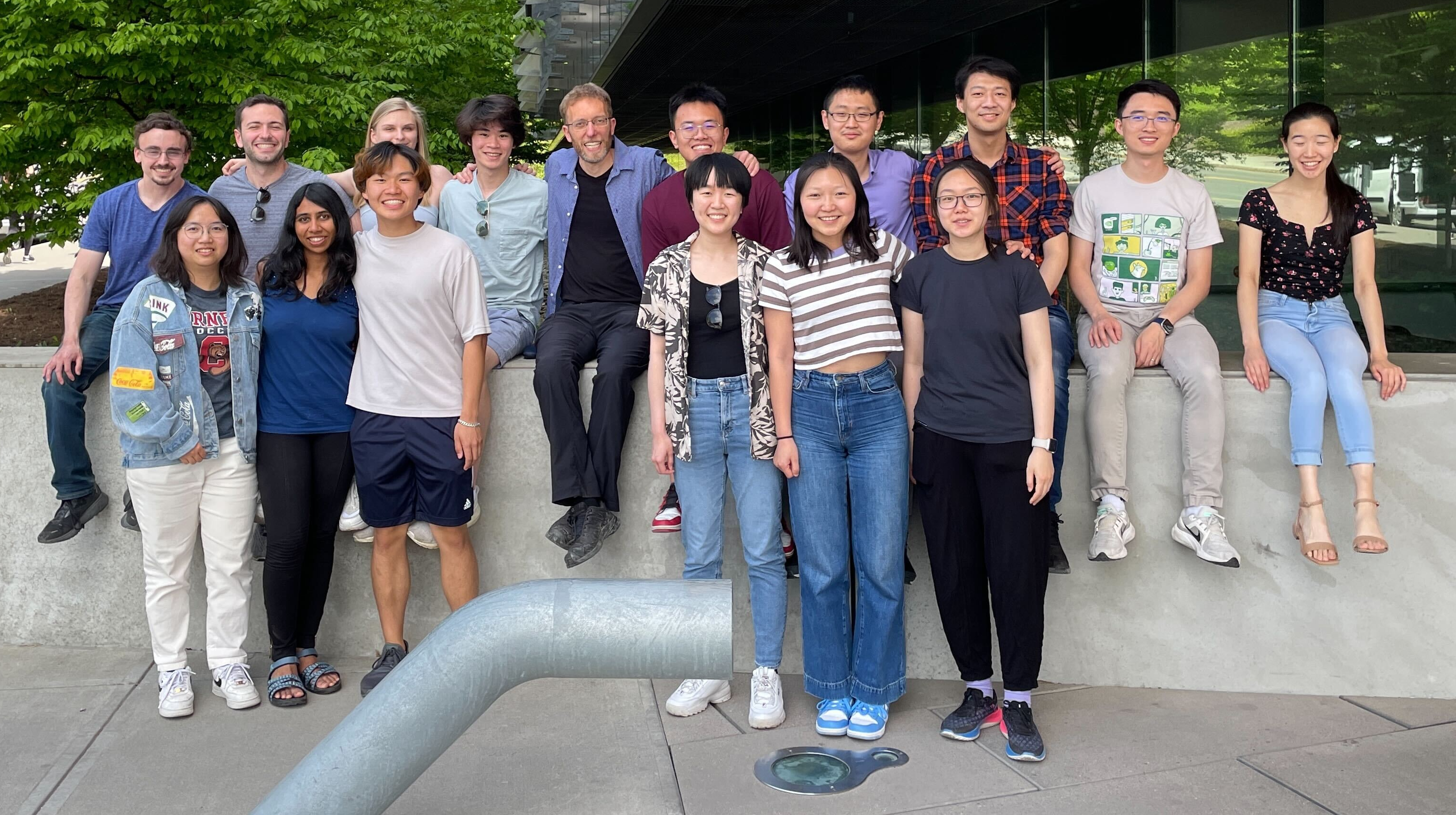
Kilian Q. Weinberger is a Professor of Computer Science at Cornell University's College of Engineering, focusing on Machine Learning, Deep Learning, and AI applications. He has held previous roles as Associate Professor at Washington University in St. Louis and Research Scientist at Yahoo! Research. His research spans metric learning, resource-constrained learning, Gaussian Processes, and advancements in 3D perception for autonomous systems. Education : Ph.D. in Machine Learning (University of Pennsylvania), BA in Mathematics and Computing (University of Oxford) Key Research Areas : AI in Science, Computer Vision, Autonomous Vehicles, and Neural Network Efficiency His recent work emphasizes interpretable machine learning, large language models, and multimodal applications. Awards include NSF CAREER (2012) Daniel M Lazar '29 Teaching Award (2016) Ann S. Bowers Excellence Award (2024) ACM and AAAI Fellow (2024) He teaches advanced courses like CS6784 (Cornell) and has mentored numerous PhD students across institutions. Current affiliations include the Sloan Research Fellowships Selection Committee since 2024.
Dr. Lucy Fraser is a Senior Lecturer in Japanese at the School of Languages and Cultures , University of Queensland. Her work bridges Japanese and English literary traditions with a focus on fairy tales, gender studies, and animal-human relationships. Her research explores: Transnational adaptations of fairy tales Gender representations in Japanese literature and manga Literary translation and cross-cultural connections Environmental narratives through fictional animal depictions Recent publications examine fairy tale fashion translation (2024), border-crossing narratives (2023), and animal symbolism in classical/modern Japanese texts (2022). She co-edited The Routledge Companion to Gender and Japanese Culture (2020) and supervises PhD projects on feminist discourse, queer narratives, and cross-cultural modernity. Dr. Fraser's translation work includes Tsushima Yuko’s Tōkina-to (2020) and collaborations on shojo manga gender studies (2018). She previously received funding for technology-enhanced Japanese language assessment (2019).
Ali Ramezani-Kebrya is an Associate Professor with tenure in the Department of Informatics at the University of Oslo (UiO), where he leads research in machine learning theory. He holds dual Principal Investigator roles at the Norwegian Center for Knowledge-driven Machine Learning (Integreat) and SFI Visual Intelligence, and is an active member of the European Laboratory for Learning and Intelligent Systems (ELLIS) Society. His service includes Area Chair positions for NeurIPS and AISTATS, and Action Editor for Transactions on Machine Learning Research. His research focuses on theoretical foundations of deep learning with emphasis on understanding input data distribution encoding in neural network layers. Key themes include minimizing statistical risk under resource constraints, addressing distribution shifts in distributed settings, and developing practical tools for robust federated learning. Current applications span emotion recognition, marine data analysis, and neuroscience, reflecting his commitment to real-world machine learning challenges as evidenced by his FRIPRO-funded Machine Learning in Real World (MLReal) project. Recent publication trends reveal three dominant threads: (1) label/covariate shift mitigation in distributed systems through entropy regularization and density ratio estimation; (2) communication-efficient optimization via layer-wise quantization and adaptive compression techniques achieving 150% speedups; and (3) robustness guarantees against tailored attacks and distribution shifts. These works consistently bridge theoretical bounds with empirical validation across domains from GAN training to federated settings. Scientific recognition includes: FRIPRO Grant for Early Career Scientists (2025) for MLReal project SFI Visual Intelligence Spotlight Publication award (2023) for federated learning work He actively mentors 11 graduate students across Oslo and Tromsø universities, with recent PhD placements at Apple and NVIDIA. Current grant portfolio features the FRIPRO Early Career award and leadership roles in two major Norwegian research centers. His lab maintains strong industry collaborations through Vector Institute and EPFL, with recent hiring for PhD and postdoc positions in physics-informed machine learning.
Reza Farivar-Mohseni is an Associate Professor at McGill University , affiliated with the Faculty of Medicine and Health Sciences and the Department of Ophthalmology and Visual Sciences . He serves as a Scientist at the RI-MUHC (Montreal General Hospital site), contributing to the Brain Repair and Integrative Neuroscience (BRaIN) Program and the Centre for Translational Biology . Research Interests: Dr. Farivar-Mohseni’s work focuses on cortico-cortical communication, information processing in the brain, and disruptions in neurological disorders like traumatic brain injury. He specializes in advancing non-invasive brain imaging (MRI) for both fundamental and clinical applications, particularly improving concussion detection and diagnosis. Publications: His research spans high-resolution MRI, visual perception, and functional imaging. Key themes include depth-cue invariance in object recognition, gamma-band neural representations, and cortical deficits in amblyopia. Recent studies (2025–2022) address computational neuroscience, vision screening tools, and neural imaging techniques. Labs & Collaborations: He collaborates with the MGH-MRI Research Platform and works within the Centre for Translational Biology , focusing on translating imaging advancements into clinical tools.
Aaron Puri is an Assistant Professor of Chemistry at the University of Utah, specializing in chemical ecology and natural product discovery. His research focuses on bacterial interactions in methane-oxidizing communities and the biosynthesis of secondary metabolites. Education: B.S. from University of Chicago, Ph.D. from Stanford University School of Medicine Dr. Puri's work bridges microbiology and chemistry, with projects targeting: Chemical Ecology: Decoding interspecies signaling in methane-oxidizing bacteria Natural Products: Discovering therapeutics from underexplored bacterial genomes Biosynthesis: Activating cryptic gene clusters for novel compound production Recent publications highlight advancements in quorum sensing mechanisms (2025), inverse stable isotopic labeling techniques (2024), and methanotroph community dynamics. His research also explores spatially resolved model ecosystems for studying microbial phenotypes (2023-2024). Key methods include GNPS Dashboard for mass spectrometry analysis (2021-2022). Dr. Puri leads the CAREER-funded project on quorum sensing in methanotrophs (2024) and has developed genetic tools for industrial methanotrophs (2015). His lab maintains a strong focus on environmental microbiology and biotechnological applications.
Daniel Hershcovich is a Tenure Track Assistant Professor at the Department of Computer Science (Faculty of Science, University of Copenhagen) specializing in Natural Language Processing and Machine Learning . His research focuses on cross-cultural adaptation of language models, integrating human values into AI, and analyzing food-related cultural narratives for sustainable diets. Education: Ph.D. in Computational Neuroscience from Hebrew University of Jerusalem B.Sc. in Mathematics and Computer Science from Open University of Israel Recent publications highlight his work on multimodal models (haptic captioning, visual assistants for the blind), historical text analysis (Danish/Norwegian literature, euphemism detection), and cross-cultural NLP (recipe adaptation, cultural value alignment, climate awareness). His projects frequently combine AI ethics with domain-specific applications like food studies, historical linguistics, and accessibility research. Key collaborative networks include institutions in Denmark, Israel, and international partnerships through conferences like ACL, EMNLP, and workshops on cross-cultural NLP. The NLP section at DIKU serves as his primary affiliation for these efforts.
Alexei Koulakov is a Professor at Cold Spring Harbor Laboratory (CSHL) and the Charles Robertson Professor of Neuroscience. His research focuses on applying mathematical and computational approaches to unravel the principles of brain organization, particularly in sensory systems like olfaction and vision. Koulakov's work explores how neural circuits form during development, the role of genetic and experiential factors, and the evolutionary basis of brain architecture. Education: PhD in Physics from the University of Minnesota (1998). Key Research Areas: Olfactory system development, neural network modeling, and AI inspired by biological computation. Koulakov's recent publications emphasize cross-disciplinary integration of neuroscience and AI, including NeuroAI initiatives and DeepNose models predicting olfactory percepts. His team investigates how innate abilities are encoded genomically and how experience shapes neural networks. Scientific contributions include studies on primacy coding in olfaction, stochastic learning mechanisms , and high-throughput neural mapping . Awards include the Charles Robertson Professorship , reflecting his leadership in theoretical neuroscience. Koulakov collaborates extensively, with notable work on genomic bottlenecks , odor mixture interactions , and neural integrator models . His lab at CSHL is at the forefront of NeuroAI research, leveraging brain circuit insights to advance artificial intelligence.
Robert P. Anderson is a Professor of Biology in the Division of Science at City College of New York (CCNY), part of the City University of New York (CUNY) system. His research laboratory is located in Marshak Science Building (Room 810), with additional affiliation as a Research Associate at the American Museum of Natural History (AMNH) Mammalogy Department. As a Highly Cited Researcher (2019-2023) and AAAS Fellow (2023), he leads an interdisciplinary biogeography research program focused on modeling species niches and distributions. Dr. Anderson's research spans biodiversity modeling, biogeography, and ecology with specialization in mammals. His lab develops ecological modeling software widely applied in conservation biology, invasive species management, zoonotic disease studies, and climate change impact assessments. Key research themes include: Characterizing spatial configuration of environmental suitability for species Developing machine learning approaches (particularly Maxent) for species distribution modeling Studying climate change effects on biodiversity Conservation applications of biogeographic models Neotropical mammal systematics and ecology His work has resulted in significant software contributions including Wallace, ENMeval, and spThin, with recent publications emphasizing methodological improvements in species distribution modeling and conservation applications. The lab maintains active projects funded by NASA and the National Science Foundation, focusing on small mammals of North and South America. Scientific recognition includes: AAAS Fellow (2023) Web of Science Highly Cited Researcher (2019-2023) Blavatnik Science Scholar (New York Academy of Sciences) Most Downloaded Paper in Ecography (2023-2024) Most Cited Paper in Ecography (2023) Dr. Anderson mentors graduate students through the CUNY Graduate Center and CCNY Master's programs, with recent advisees receiving prestigious awards including the ASM Horner Award and NASA FINESST Fellowship. His lab trains students in environmental biology through interdisciplinary research combining fieldwork, morphology, climatology, remote sensing, physiology, and genetics. Current lab members include Andrew Gaier (NASA Fellow), Mariano Soley-Guardia, and Kass (lead author on highly cited Wallace v2 paper). The Anderson Lab operates from CCNY's Marshak Science Building as part of the university's biodiversity group studying ecology, evolution, and geography of life on Earth. The lab emphasizes software co-design between end-users and developers to enhance conservation utility, with recent work focusing on neighborhood approaches for range estimation and operationalizing expert knowledge in species assessments.
Rob van Beers is an Assistant Professor at the Faculty of Behavioural and Movement Sciences at Vrije Universiteit Amsterdam, with affiliations to Neurocontrol, IBBA, and AMS - Sports. His research focuses on human motor control, spatial perception, and computational modeling using Bayesian approaches to understand sensory-motor integration under uncertainty. He holds ancillary roles as a Researcher at Radboud University (Nijmegen) since 2015 and serves on the Editorial Board of the Journal of Neurophysiology since 2015. His work contributes to UN Sustainable Development Goals related to health and well-being. Key research interests include motor learning dynamics, sensorimotor adaptation, and the neural basis of spatial orientation. Recent studies explore Alzheimer’s impacts on motor adaptation and Bayesian inference in vestibular path integration. Teaching responsibilities include courses on linear systems dynamics, physical measurement techniques, and motor systems regulation. His work spans 42 peer-reviewed articles, with datasets published on platforms like Dryad and Zenodo.
Mehrtash Tafazzoli Harandi is an Associate Professor in the Department of Electrical and Computer Systems Engineering at Monash University, part of the Faculty of Engineering. His research focuses on machine learning and computer vision, particularly visual data analysis, with contributions to geometric deep learning, continual learning, and medical imaging. He holds editorial roles at IET Computer Vision , Frontiers in Imaging , and Journal of Imaging . Education & Previous Affiliations: Prior to Monash, he worked at NICTA (Canberra & Queensland Research Labs) and CSIRO-Data61. His Erdős number is 4 via a collaboration path through Richard Hartley. Research Interests: His work spans geometric learning, diffusion models, medical image analysis, and sustainable AI applications. Key areas include unlearning mechanisms in AI, 3D reconstruction compression, and robust MRI reconstruction using contrastive learning. Grants & Projects: He leads projects funded by ARC, US Air Force, and industry collaborations, including 'Can Machines Unlearn?' (ARC, A$790k) and 'Exploiting Geometries of Learning' (ARC, A$420k). His work addresses challenges in lifelong learning, model adaptation, and trustworthy AI from limited data. Awards: Recipient of Best Recognition Paper (IEEE DICTA 2013), NICTA Impact Award (2015), and multiple outstanding reviewer recognitions at top conferences. Teaching: Teaches courses on neural networks, computer vision, and advanced data analysis at Monash University. Supervises PhD students with a focus on mathematical and computational proficiency. Labs/Teams: Collaborates with the Australian Center for Robotic Vision (ACRV) and contributes to interdisciplinary projects at CSIRO-Data61. His research group explores cutting-edge AI applications in healthcare, manufacturing, and environmental sustainability.
David S. Matteson is a Professor and Associate Department Chair in the Department of Statistics and Data Science at Cornell University. He holds affiliations with the Bowers College of Computing and Information Science, the ILR School, the Center for Applied Mathematics, and the Program in Financial Engineering. His research focuses on developing statistical and machine learning methodologies for complex systems, with applications in finance, environmental science, healthcare, and nanotechnology. He received his PhD in Statistics from the University of Chicago and a BSB in Finance, Mathematics, and Statistics from the University of Minnesota. His awards include the NSF CAREER Award (2015), SUNY Chancellor’s Award (2022), and Fellowships from the Institute of Mathematical Statistics and American Statistical Association (2024). Research interests span theoretical methods like changepoint analysis, high-dimensional time series, and functional data, alongside applied domains such as systemic risk, climate change, and medical imaging. He leads major NSF-funded initiatives including the PRISM Institute for Trans-domain Systemic Risk and the TRIPODS Greater Data Science Cooperative Institute (GDSC). Editorial Roles: Founding Editor-in-Chief of Data Science in Science , Associate Editor for Journal of Econometrics , and former editor for multiple statistical journals. Leadership: Chair of the ASA’s Business and Economic Statistics Section (2024), Director of the National Institute of Statistical Sciences (NISS). Grants: PI/Co-PI on NSF and USAID projects addressing systemic risk, energy systems, and poverty estimation.
Professor Washington Yotto Ochieng serves as Head of the Department of Civil and Environmental Engineering and Chair Professor in Positioning and Navigation Systems at Imperial College London. He directs the Centre for Active Resilience and Security (CARS) and maintains key affiliations with the Centre for Systems Engineering and Innovation, Centre for Transport Engineering and Modelling, Institute for Molecular Science and Engineering, and Space Lab. His extensive advisory roles include the Science Museum Group Board of Trustees, Royal Institute of Navigation Presidency, and Royal Academy of Engineering Africa Steering Committee. His educational background includes a BSc (First Class) in Engineering from the University of Nairobi and MSc (Distinction) and PhD in Civil Engineering from the University of Nottingham. He received an honorary DSc from Technical University of Kenya in 2023. Ochieng's research pioneers critical infrastructure resilience, user-centric mobility, and positioning/navigation/timing (PNT) systems. He has designed satellite navigation systems (including Europe's EGNOS and GALILEO) for multi-domain applications and advanced Air Traffic Management and Intelligent Transport Systems. His work integrates geomatics, transportation engineering, and sustainable mobility to solve global urban infrastructure challenges, with recent emphasis on decarbonization and AI-driven solutions. His 2024-2025 publications reveal strong trends in sustainable transportation decarbonization, AI-optimized traffic management, and resilient urban positioning systems. Research focuses on hydrogen fuel cell trains, carbon-efficient aviation, and deep reinforcement learning applications for emission reduction, demonstrating interdisciplinary integration of engineering, environmental science, and artificial intelligence to address climate challenges. Fellow of the Royal Academy of Engineering (2013) Harold Spencer-Jones Gold Medal from Royal Institute of Navigation (2019) Doctor of Science (honoris causa) from Technical University of Kenya (2023) Elder of the Order of the Burning Spear (EBS) from Kenya (2023) Commander of the Order of the British Empire (CBE) (2024) Ochieng provides strategic guidance to UK Government bodies (Government Office for Science, Department for Transport, FCDO), European Parliament, and European Court of Auditors. His advisory work shaped the Blackett Review on Satellite-derived Time/Position, UK Space Strategy, and Future of Mobility report. He chairs the Science Museum London Advisory Board and leads FCDO's Sustainable Urban Economic Development program in Africa, with significant grant influence through UK National Physical Laboratory and Department for International Development. He directs the Centre for Active Resilience and Security (CARS) and leads Space Lab initiatives, focusing on mission-critical PNT systems and infrastructure resilience. His teams collaborate with international consortia including RTCM Special Committee 134 and US Institute of Navigation, developing next-generation navigation solutions for safety-critical applications across transport, aviation, and urban environments.
Dieter Uckelmann serves as Professor of Information Logistics and Scientific Director of the Institute for Applied Research at Stuttgart University of Applied Sciences (HFT Stuttgart). He holds multiple leadership positions including Spokesperson for the research focus 'Smart Technologies, Processes and Methods' at HFT Stuttgart since March 2023 and Scientific Director of the Institute for Applied Research since September 2023. His academic journey began with mechanical engineering studies in Braunschweig, followed by doctoral research at the University of Bremen focusing on 'Quantifying the Value of RFID and the EPCglobal Architecture Framework in Logistics.' Uckelmann's research spans Internet of Things applications across Industry 4.0, logistics, smart buildings, and smart cities, with significant contributions to educational technology including learning analytics and AI in teaching. His work bridges technical innovation with practical implementation, particularly in digital transformation of laboratories and smart city infrastructure. He has led numerous research projects including KNIGHT (AI for teaching), InDeckLe (earth composite ceiling systems), iCity initiatives, and DigiLab4U (online laboratories). His publication record shows a clear progression from foundational RFID and IoT research toward emerging technologies like the Industrial Metaverse, 5G applications, and AI-driven educational systems. Recent work demonstrates strong integration of physical and digital systems, particularly in urban environments and educational contexts, with increasing emphasis on sustainability and energy efficiency applications. Co-editor of International Journal of RF-Technologies: Research and Applications Member of PhD Association BW, Research Unit III Computer Science and Electrical Engineering Mentor in the HAWCareer mentoring program Program Committee Member for IEEE RFID, IEEE/ITMC, AIET, and other major conferences Associate Editor for Journal of Online and Biomedical Engineering Professor Uckelmann actively mentors students and researchers, with his team contributing to projects across smart city infrastructure, digital learning platforms, and industrial IoT applications. He leads the Industrie 4.0 Laboratory which focuses on industrial IoT applications, digital twins, and the industrial metaverse, with research spanning RFID, RTLS, wireless sensor networks, AR/VR, and IoT architectures. His work extends to international collaborations including visiting professorships at Auburn University and the University of Parma.