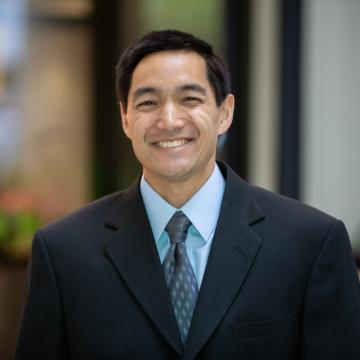
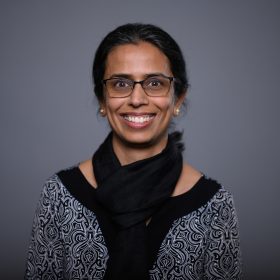
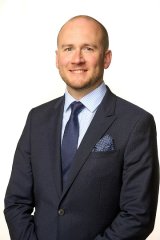
Jason S. Ng is Professor at the Southern California College of Optometry, Marshall B. Ketchum University. He holds OD and PhD degrees, with expertise spanning clinical optometry and vision science research. His research focuses on visual function assessment methodologies with clinical applications. Research interests center on color vision assessment, visual perception mechanisms, and diagnostic technologies for retinal diseases. His work bridges clinical practice and fundamental vision science, with emphasis on improving diagnostic accuracy and developing standardized testing protocols. Recent publications demonstrate methodological innovations in color vision testing, visual acuity measurement, and electrophysiological assessment of retinal function. His studies establish clinical thresholds and validate new diagnostic instruments for ophthalmic practice. Awards & Honors: Chase Faculty Teaching Excellence Award Hemenger Faculty Research Award Fellow of American Academy of Optometry
Yvonne Norgett is an Associate Professor of Optometry at Anglia Ruskin University (ARU), affiliated with the Faculty of Science and Engineering and the Psychology, Sport and Sensory Science School. She holds dual Fellowships from the College of Optometrists and the Higher Education Academy, and has served as a Chief Examiner for professional optometry examinations. Her expertise spans clinical optometry, regulatory affairs, and higher education pedagogy. Dr. Norgett’s education includes a BSc in Ophthalmic Optics from the University of Manchester (2009), followed by a PGCert in Learning and Teaching in Higher Education (2013) and a PhD in Optometry from ARU (2017), focused on visual crowding in children. She has held roles in clinical practice, academic leadership, and professional regulation, including membership in the General Optical Council’s Fitness to Practise Panel (2003–2015). Her research focuses on contact lens-associated anterior eye conditions, pediatric vision assessment, and clinical communication. Key areas include optimizing visual acuity measurement in children and developing standardized protocols for lid wiper epitheliopathy (LWE) assessment. She leads the Vision and Hearing Sciences Research Group and has secured grants from the College of Optometrists for studies on pediatric visual acuity testing. Dr. Norgett’s recent work addresses pandemic impacts on optometric practice and advances in LWE diagnostic methodologies. She reviews for journals such as Ophthalmic & Physiological Optics and Clinical Ophthalmology and contributes to professional examination development through the College of Optometrists’ OSCE Writing Group.
Lecturer in Optometry at the University of Plymouth's School of Health Professions. Specializes in optometric practices, including pediatric optometry, contact lens handling, and low vision device applications. Leads modules such as Specialist Optometric Practice and Paediatric and Binocular Vision . Conducts research on diagnostic methods (e.g., Lissamine Green staining), visual acuity assessment, and global motion perception in amblyopia. Research interests span optometric education strategies, glaucoma management, and optometry practices in Nepal. Recent work explores the role of bias in visual acuity measurements and evaluates contact lens adaptation techniques globally. His studies often integrate clinical innovation with sensory and cognitive psychology principles. Publications highlight contributions to understanding amblyopia's neural processing deficits and advancing quantitative tools for keratoconus diagnosis. No scientific awards or grants are explicitly mentioned. Advises on projects via the Project Studies module but no specific students are listed. No dedicated labs or research teams are noted.
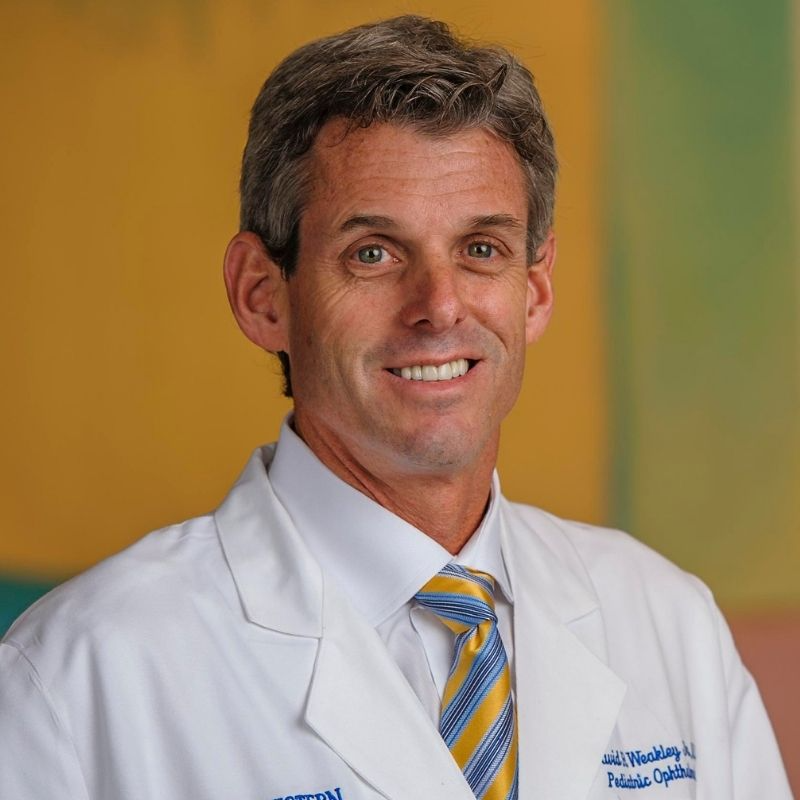
Dr. David R. Weakley, Jr. is a Professor of Ophthalmology at the University of Texas Southwestern Medical Center and serves as Chief of the Clinical Service of Ophthalmology at Children's Medical Center of Dallas. With a career spanning over three decades since completing his fellowship in 1989, Dr. Weakley has established himself as a leading expert in pediatric ophthalmology through his clinical practice, research, and professional leadership. Dr. Weakley's research primarily focuses on pediatric ophthalmology, with special emphasis on infantile cataract surgery, strabismus management, and visual development in children. His work often involves large-scale clinical trials and collaborative research efforts with national study groups, particularly the Infant Aphakia Treatment Study Group. His scholarly contributions address critical questions regarding optimal treatment approaches for pediatric eye conditions, with a focus on evidence-based medicine and long-term patient outcomes. Analysis of Dr. Weakley's publication record reveals a strong focus on clinical outcomes in pediatric eye care, particularly regarding cataract management in infants, strabismus surgery techniques, and nasolacrimal duct obstruction treatments. His research frequently appears in leading ophthalmology journals including Ophthalmology, JAMA Ophthalmology, and the Journal of AAPOS, demonstrating his commitment to advancing the scientific understanding of pediatric eye conditions. Alpha Omega Alpha medical honor society graduate Dr. Weakley has been an associate examiner for the American Board of Ophthalmology since 1995 and serves on the board of editors for the Journal of AAPOS. His professional service includes active membership in the American Academy of Ophthalmology, American Association for Pediatric Ophthalmology and Strabismus, and American Ophthalmological Society, where he contributes to setting standards for the specialty. As Chief of the Clinical Service of Ophthalmology at Children's Medical Center of Dallas, Dr. Weakley leads a comprehensive pediatric ophthalmology program that provides specialized eye care for children while advancing clinical research in the field through participation in multicenter studies and clinical trials.
Caridad Galindo Romero is an Associate Professor at the University of Murcia’s Faculty of Optics and Optometry, affiliated with the Department of Ophthalmology, Optometry, Otolaryngology and Pathological Anatomy. She holds a PhD from the University of Murcia (2014), focusing on retinal ganglion cell characterization and neuroprotection mechanisms in rodent models. Her research group, Experimental Ophthalmology, explores neurodegenerative processes in the retina, particularly focusing on retinal ganglion cell survival under conditions like axotomy, glaucoma, and excitotoxic injury. Her work emphasizes neuroprotective drug development (e.g., 7,8-dihydroxyflavone), estrogen receptor signaling, and the role of systemic inflammation in retinal pathology. She investigates both experimental models and clinical applications, including telemedicine approaches to visual acuity assessment and pandemic-related changes in eye care practices. Her studies often compare multi-species models (rodents, primates) to advance translational research. Key contributions include defining contralateral effects of unilateral CNS injuries and exploring adenosine receptor agonists as therapeutic targets for glaucoma. Research interests span ophthalmology, neuroprotection, retinal degeneration mechanisms, and the application of molecular pathways to develop novel treatments. She has published extensively on glial activation dynamics, retinal compensation mechanisms, and the impact of environmental factors (e.g., light exposure) on retinal health. Her work bridges basic science and clinical optometry, addressing public health issues like uncorrected refractive errors in children and contact lens hygiene compliance among university students.
Zöe Wimshurst is a Senior Lecturer in Psychology at the School of Health and Rehabilitation Sciences, Health Sciences University. She specializes in visual performance optimization for elite athletes, with over a decade of experience collaborating with Olympic and professional athletes. Her research focuses on eye tracking, concussion management, and visual system training to enhance athletic performance. She leads the BSc programs in Sport and Exercise Psychology, Sport and Exercise Science, and Sports Rehabilitation. Education: BSc (Hons) Psychology (University of Surrey), MSc Sport and Exercise Psychology (Loughborough University), PhD Psychology (University of Surrey), PGCert Higher Education (Solent University). Memberships: British Psychological Society, British Association of Sport and Exercise Sciences, Higher Education Academy. Her research explores topics like cognitive factors in elite performance, eye tracking applications in sports, and neurophysiological responses under pressure. She consults with elite athletes in football, rugby, golf, and motor racing to improve perceptual capabilities. Recent publications include studies on motor sport psychology and visual training efficacy in cricket. Zöe has contributed to peer-reviewed journals and media commentaries on athlete performance. Her work bridges psychological principles with practical applications in sport, with a focus on translating research into actionable coaching strategies.
Yi Pang, OD, PhD, FAAO is a Professor and Associate Dean for Research at the Illinois College of Optometry . She serves as an attending optometrist in the Pediatric and Binocular Vision Service at the Illinois Eye Institute. Education: OD (2005), New England College of Optometry PhD (2003), University of Alabama at Birmingham MD (1996) and Ophthalmology Fellowship (1999), Shandong Medical University Research Interests: Dr. Pang specializes in amblyopia , strabismus , myopia control , and binocular vision research. Her work includes NIH-funded multi-center studies on amblyopia treatment and myopia progression. Publication Trends: Her recent articles focus on automated visual acuity testing , intermittent occlusion therapy , myopia prevention , retinal ischemia , and vision-based learning interventions , reflecting interdisciplinary collaboration in optometry and clinical research. Awards & Leadership: Recipient of the 2006 Best Article Award from Optometry & Visual Development . Active editorial board member for multiple journals and part of advisory committees like the National Center for Children Vision and Eye Health . Professional Affiliations: Board member of the Illinois Society for the Prevention of Blindness , and member of the American Optometric Association , American Academy of Optometry , Association for Research in Vision and Ophthalmology , and International Society for Eye Research .
Sangeetha Metlapally is an Associate Professor of Vision Sciences at the New England College of Optometry (NECO), specializing in optics and binocular vision research. Her work focuses on understanding visual perception mechanisms, particularly related to keratoconus, refractive errors, and cataract pathology. Dr. Metlapally has established herself as a significant contributor to vision science through her extensive publication record and research funding. PhD in Vision Science, University of Melbourne, Australia BS in Optometry, Birla Institute of Technology and Science, Pilani, India Elite School of Optometry, Chennai, India Dr. Metlapally's research centers on two primary areas: the optical and visual consequences of keratoconus, and the structural and optical properties of age-related cataracts. Her work on keratoconus investigates how higher-order aberrations affect stereoacuity and visual performance, while her cataract research examines the ultrastructural changes in lens fiber cells that lead to light scattering. She employs advanced techniques including computational modeling, electron tomography, and detailed optical measurements to understand these visual disorders at both clinical and fundamental levels. Her publication record shows a clear progression from early work on cataract pathology with geographic focus on Indian populations, to more recent sophisticated analyses of visual processing in keratoconus. The research demonstrates strong methodological diversity, incorporating animal models (tree shrews, chicks), computational approaches, and detailed clinical measurements. Her 2020-2019 publications represent cutting-edge work using binocular cross-correlation analyses to understand how optical imperfections affect 3D vision. 2021 Hot Topic Award from ARVO for innovative research ideas 2019 Nominee for AEVR's National Emerging Vision Scientists Day 2016 Alcon Associate Award for Best Presentation 2011-2018 NEI K23 and K12 Awards through the Berkeley Clinician Scientist Development Program 2013-Present Fellow of the American Academy of Optometry Dr. Metlapally actively mentors graduate students, with records showing she advised Jingyi (Alice) Tang (Class of 2022) and Anastasia Logotheti (Class of 2024). Her significant NEI K23 and K12 awards demonstrate her ability to secure competitive research funding. She maintains active membership in key professional organizations including the American Academy of Optometry and Association for Research in Vision and Ophthalmology. Her research bridges basic science and clinical applications, with potential implications for improving vision correction strategies for individuals with keratoconus and understanding cataract formation mechanisms.
Farzana Choudhury is an Assistant Professor of Clinical Population and Public Health Sciences at the University of Southern California. Her work focuses on ophthalmic epidemiology and public health, with a particular emphasis on vision-related disorders in diverse populations. Her research spans studies like the African American Eye Disease Study (AAEDS) and the Chinese American Eye Study (CHES), examining risk factors for conditions such as age-related macular degeneration, diabetic retinopathy, and lens opacities. She has also contributed to the Los Angeles Latino Eye Study (LALES), investigating vision impairment trends and their societal impacts. Key themes in her work include understanding disparities in vision health across ethnic groups, the interplay between systemic health and ocular conditions, and the long-term epidemiological trends of eye diseases. Her publications highlight methodological rigor in large-scale cohort studies and translational research aimed at improving clinical care and public health strategies. Dr. Choudhury's work frequently integrates clinical data with epidemiological analysis, addressing topics like the impact of visual acuity changes on quality of life, the role of physical activity in hormone regulation, and the design of population-based studies to advance ophthalmic research.
Darren Koenig is an Assistant Professor of Optometry at the Illinois College of Optometry, where he joined the faculty in 2018. He teaches clinical methods, procedures labs, and optics courses for 1st and 2nd-year students. His prior experience includes positions at MCPHS University School of Optometry, University of Houston College of Optometry, Brook Army Medical Center, and Lackland Air Force Base. Dr. Koenig holds an OD from Nova Southeastern University College of Optometry and a PhD in Physiological Optics and Vision Science from the University of Houston College of Optometry. His research focuses on geometric, physical and visual optics, vision quality in aging populations, and optical/neurological limits to visual function. His publications demonstrate expertise in adaptive optics, visual psychophysics, and age-related vision changes. Key research trends include innovations in optical measurement techniques and understanding physiological changes in vision across the lifespan. Awards & Honors: Bausch + Lomb Ezell Fellow Ruth L. Kirschstein National Research Service Award National Eye Institute/ARVO Travel Grant Minnie F. Turner Memorial Fund Award Beta Sigma Kappa Honor Society Professional Organizations: Fellow of the American Academy of Optometry with memberships in AOA, Optical Society of America, ARVO, and AAAS.
Leon Davies is a Professor of Optometry & Physiological Optics at Aston University, holding leadership roles such as Dean of the School of Optometry (2016–2021 & 2024) and Head of School (2016–2021). He is also an Honorary Professor at the University of Bradford and Chair of the Board of Trustees at The College of Optometrists. His research focuses on presbyopia, ocular accommodation, and myopia, with over 70 peer-reviewed publications and £3 million in funding. Davies has supervised 17 PhD candidates and mentored 14 postdoctoral researchers. Education: BSc (Hons) Optometry (2000, Aston University), PhD in Physiological Optics (2004, Aston University). Professional qualifications include FCOptom, FAAO, and SFHEA. He co-created Villa Vision, a mobile eye care service, and served as Optometry Clinical Lead at the 2022 Commonwealth Games. Research interests span presbyopia mechanisms, ocular biometry, and dry eye disease. Key awards include the Neil Charman Medal (2010) and College of Optometrists Research Fellowship (2008). His editorial roles include Editor-in-Chief of Optometry in Practice (2018–2022) and Clinical Editor of Optometry Today (2007–2008). Recent articles explore AI in ophthalmic care, dry eye subtypes, and myopia management. His work emphasizes translational research with clinical impact, including innovations in optical devices and optometric training standards.
Dr. Tessa Dekker is an Associate Professor in Experimental Psychology at University College London, leading the Child Vision Lab within the Institute of Ophthalmology. Her research focuses on developmental neuroscience, integrating cognitive psychology, neurosciences, and ophthalmology to study visual development and neurological adaptations in childhood. She has held prestigious fellowships including the ESRC Future Leaders Fellowship and the Moorfields Career Development Award. Education & Professional Background: PhD in Experimental Psychology (Marie Curie Centre of Excellence Grant funded) at Birkbeck, University of London (supervised by Prof. Marty Sereno, Prof. Denis Mareschal, and Prof. Mark Johnson). Postdoctoral research at UCL Institute of Ophthalmology with Dr. Marko Nardini, studying multisensory integration in child development. ESRC Future Leaders Fellowship (2016) investigating risk perception in visually guided actions. Research Interests: Dr. Dekker’s work explores visual development, neurological adaptations in children with eye diseases, and the interplay between vision and mental well-being. Key areas include: Visual crowding and acuity development Cortical plasticity in sensory deprivation Gene therapy outcomes in retinal disorders Child-friendly vision assessment tools Vision-related mental health impacts Scientific Awards: ESRC Future Leaders Fellowship (2016) Moorfields Career Development Award (2018) Grants & Collaborations: Her work is supported by grants from the ESRC, Wellcome Trust, and UCL. She collaborates with Moorfields Eye Hospital and leads the interdisciplinary Child Vision Lab ( https://childvisionlab.co.uk/ ), advancing translational research in pediatric ophthalmology and neurodevelopment. Labs & Teams: The Child Vision Lab combines computational modeling, neuroimaging, and clinical studies to address vision-related challenges in children. Current projects include developing child-friendly testing tools and investigating cortical adaptations in inherited retinal diseases.
Professor Alexander Black is an academic at Queensland University of Technology, specializing in vision science and its impact on daily life, particularly in aging populations and transportation safety. His research focuses on how visual impairments affect driving, mobility, and quality of life, with a strong emphasis on older adults and children. He has collaborated extensively with Joanne Wood and other researchers, producing over 80 peer-reviewed publications since 2005. Key areas include vision-related falls prevention, pedestrian and cyclist safety, and the design of interventions to enhance road safety. Education: PhD in Optometry (Queensland University of Technology, 2010) Affiliations: Queensland University of Technology School of Optometry and Vision Science His work bridges clinical optometry with public health, addressing real-world challenges such as age-related macular degeneration's impact on driving ability and the effectiveness of vision screening tools. Recent projects include evaluating night-time pedestrian visibility aids and assessing the prevalence of vision conditions in remote communities. Research Highlights: Development of novel hazard visibility tests for drivers Investigation of color misperception risks for train signals Systematic reviews on vision impairment and crash risk His interdisciplinary approach combines behavioral optics, epidemiology, and engineering to create solutions for vision-related safety issues. Current interests include advancing ADAS technologies for older drivers and optimizing vision standards for licensing regulations.
Alfredo Jose Amigo Pombo is a Professor at the University of Santiago de Compostela, holding a position within the Department of Applied Physics under the Faculty of Physics. His academic journey includes a PhD from the same university (1991) with a thesis focusing on theoretical-experimental studies of liquid mixtures, specifically 1-alcohol + n-alkane systems, under the supervision of Dr. María Inmaculada Paz Andrade and Dr. Ramón Bravo Quintas. His research group, PTSL (Thermophysical and Surface Properties of Liquids), explores advanced topics in fluid physics, nanomaterials, and surface chemistry. Key areas of interest include thermophysical properties of nanofluids, ionic liquids, tribology, and energy applications. His work spans experimental and theoretical analysis of surface tension, heat capacity, and molecular interactions in liquid mixtures. Recent publications highlight innovations in nanomaterials for electric vehicle lubricants (2025), ionic liquid toxicity (2024), and supramolecular fluid design (2021). His contributions also extend to ophthalmology, addressing intraocular lens techniques and post-surgical vision outcomes (2014–2020). Over 70 peer-reviewed articles demonstrate his prolific output across material science, energy, and medical applications. Despite no explicitly listed awards or grants, his sustained research output and interdisciplinary focus reflect significant academic impact. He collaborates extensively on international projects and advises research groups in fluid dynamics and nanotechnology.
Katie Thomson is a Research Fellow in Nursing at Glasgow Caledonian University. Her work focuses on systematic reviews, evidence synthesis, and rehabilitation research with a particular emphasis on neurological conditions, chronic fatigue syndrome, and vascular diseases. She contributes to the United Nations Sustainable Development Goal 3 (Good Health and Well-being). Role: Research Fellow Institution: Glasgow Caledonian University Research Interests : Katie specializes in: Systematic and Scoping Review Methodologies Neurological and Stroke Rehabilitation Chronic Fatigue Syndrome Evidence Mapping Telerehabilitation Implementation Vascular Disease Secondary Prevention Her research outputs from 2008 to 2025 demonstrate expertise in synthesizing evidence for healthcare interventions across diverse settings, including low- and middle-income countries. She serves as Principal Investigator for the UK-ID Disability Inclusion Partnership and collaborates on patient consultation frameworks for post-cataract care.