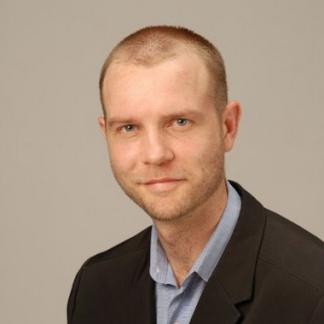
Elizabeth A Bauer is a Clinical Professor of Psychology at New York University's Department of Psychology within the College of Arts & Science. Her expertise spans visual perception, experimental psychology, and statistics education. She holds a Ph.D., M.A., and B.A. in Experimental Psychology from the City University of New York. Her career includes roles as Assistant Research Scientist at NYU (2001–present), Visiting Assistant Professor (2001–2002), and Research Project Director at Manhattan Vision Associates (1998–2001). She has also served as an Adjunct Lecturer and Research Assistant at Brooklyn College. Her research focuses on visual perception, experimental methodology, and applying statistical reasoning to real-world problems. Bauer has contributed to studies on infant vernier acuity, progressive lenses (PALs), and visual performance metrics. She is affiliated with the Association for Research in Vision and Ophthalmology. Her teaching emphasizes overcoming math phobia among students and demonstrating practical applications of statistics. Contact: eab10@nyu.edu | 6 Washington Place, New York, NY 10003.
Konstantinos Papamichael is Professor of Design at the University of California, Davis, and Co-Director of the California Lighting Technology Center (CLTC). At CLTC, he leads initiatives to advance energy-efficient lighting and daylighting technologies through research partnerships with utilities, manufacturers, government agencies, and design professionals. His research focuses on lighting technology innovation with emphasis on adaptive systems, daylight harvesting, spectral optimization, and human-centered design. Recent projects address dynamic lighting controls, neural network modeling for daylight prediction, and application-specific spectral power distributions. Analysis of his recent publications reveals strong emphasis on energy-efficient lighting solutions, human factors in lighting design, and technological innovation in daylight harvesting. His work consistently bridges theoretical research with practical applications in sustainable building design. Papamichael directs the CLTC facility at 633 Pena Drive in Davis, where he oversees technology demonstrations and educational outreach programs that accelerate adoption of advanced lighting solutions across residential, commercial, and institutional sectors.
Michael Siminovitch is Professor of Design and Rosenfeld Chair in Energy Efficiency at the University of California, Davis, where he directs the California Lighting Technology Center (CLTC). His research advances energy-efficient lighting, human-centric design, and sustainable technologies. Recent grants include projects on discrete color spectra’s impact on stress and alertness (with Toyota Boshoku America and Seoul Semiconductor) and full-spectrum LEDs for health applications. Research interests span lighting technology, energy conservation, color science, and industrial innovation. The CLTC bridges academic research and industry implementation. Articles focus on energy-efficient lighting systems, color fidelity in clinical settings, and policy initiatives. Trends include human-centric lighting design, sustainable technology deployment, and interdisciplinary collaborations with healthcare and manufacturing sectors. No awards or students are listed in the source material. Grants include $200,000 for discrete color research (2023) and $100,000 for full-spectrum LED studies. The CLTC collaborates globally with industry partners like Seoul Semiconductor.
Yingchen He is an Assistant Professor in the Human Factors and Applied Cognition Program at NC State's Department of Psychology. She directs the Translational Vision Research Lab, focusing on cognitive psychology, engineering, and health intersections. Her work addresses visual processing limitations caused by eye diseases and develops assistive technologies to improve accessibility for visually impaired individuals. Education: B.S. Biological Sciences and Psychology from Beijing University (2011), Ph.D. in Cognitive Psychology from University of Minnesota (2017). Postdoctoral training at University of Minnesota's Department of Ophthalmology. Research interests include visual constraints in daily tasks, accessibility technology, brain plasticity from vision loss, and retinal implant optimization. Publications emphasize prosthetic vision evaluation, website accessibility for blind users, and thermal sensor integration for navigation. Her lab collaborates with industrial partners to advance assistive technologies. Labs/Teams: Translational Vision Research Lab (www.translational-vision-research.org) focuses on translational research from basic visual neuroscience to practical solutions. Current projects include optimizing retinal implants, developing adaptive training protocols, and evaluating assistive tech usability.
Dr. Johannes Burge is an Associate Professor in the Department of Psychology at the University of Pennsylvania's School of Arts and Sciences. His research develops computational models of visual processing, focusing on depth perception, natural scene statistics, and perceptual performance. He earned his Ph.D. in Vision Science from UC Berkeley. Research investigates: Optimal estimation principles in depth perception Behavioral adaptations to natural scene statistics Temporal dynamics of visual processing Psychophysical methods for natural stimuli Recent work examines how visual uncertainty in natural environments constrains depth perception, develops continuous psychophysical methods, and models neural coding strategies for natural image statistics.
Chris Hull is Professor of Optics of Vision and Assistant Vice-President (Head of City Doctoral College) at City St George's, University of London, within the School of Health Sciences and the Department of Optometry and Visual Science. He joined the institution in 1991 and was promoted to Professor in 2009. He holds a PhD in Applied Optics from Imperial College London and a BSc in Applied Physics from the University of Hull. His academic career has been dedicated to ocular optics, visual function, and ophthalmic instrumentation. Chris Hull's research focuses on the optics of the eye, particularly in the context of intraocular lenses, keratoprosthesis (artificial cornea), refractive surgery, and light scatter. His work has significant clinical implications for cataract and corneal disease management. Recent publications highlight trends in IOL glistenings, toric lens outcomes, keratoconus vision, and automated image analysis in ophthalmology. Member, Institute of Physics (Chartered) Founding Member, European Academy for Optometry and Optics Liveryman, Worshipful Company of Spectacle Makers Member, Association for Research in Vision and Ophthalmology Member, British Society for Refractive Surgery He received the City, University of London Teaching & Learning Award in 2002. Hull has held leadership roles including Associate Dean for Research and Divisional Lead for Optometry & Visual Science. He supervises PhD students and collaborates with institutions such as Moorfields Eye Hospital, Institute of Ophthalmology, and international universities. His laboratory is central to the Ocular Optics and Instrumentation research theme, funded by organizations like Santen Inc and Lein Applied Diagnostics. He teaches modules including Visual Optics, Clinical Skills, Contact Lenses, and Refractive Surgery. His professional service includes editorial review for journals such as Investigative Ophthalmology and Visual Science and Ophthalmic and Physiological Optics .
Hannah Smithson is a Professor of Experimental Psychology and Tutorial Fellow at Pembroke College, University of Oxford. She holds the title of Sir Henry Wellcome Postdoctoral Fellow and Junior Research Fellow at Pembroke College. Her research focuses on neural mechanisms underlying human perception, particularly color perception and visual processing of rapid sequences. Smithson employs psychophysical experiments to study how visual stimuli are processed by the eye and brain. Education: BA (Hons) and PhD qualifications are noted in her profile. Her work explores color constancy, object-light source interactions, and retinal circuitry. Current projects include developing adaptive optics ophthalmoscopes to link retinal stimulation with perceptual experience. Research interests emphasize color vision mechanisms, fixational eye movements' role in visual sampling, and translational applications like display technology and disease understanding. Awards include the Sir Henry Wellcome Postdoctoral Fellowship. Collaborators include Takuma Morimoto and institutions like Pembroke College. Her lab focuses on high-resolution retinal imaging and perceptual modeling.
Justo Arines Piferrer is a full-time Professor at the Faculty of Optics and Optometry , University of Santiago de Compostela , affiliated with the Department of Applied Physics and the Materials Institute (iMATUS) . His work is part of the Strategic Grouping in Materials (AEMAT) and the P4Life Photonics4Life research group. His research focuses on Wavefront Coding , Retinal Imaging , and Aberration Compensation , with applications in Ophthalmic Optics and Adaptive Optics . He has pioneered techniques for presbyopia correction using Jacobi-Fourier phase masks and developed low-cost optical solutions for cataract-affected imaging and PDMS lenses. His recent publications emphasize phase mask engineering , environmental lighting impacts , and educational innovations in optics. Key trends include computational imaging , aberration modeling , and affordable ophthalmic devices . He contributes to the CODEHO committee for optics dissemination and education, integrating webcam-based teaching tools in optometry training. His work spans collaborations with iMATUS and AEMAT , though no specific grants or awards are listed in the provided data.
Karyotakis Nikolaos is a Researcher at the Optics & Vision Laboratory of the University of Crete, with a PhD funded by the Manasaki scholarship. He completed his B.Sc. in Physics, followed by an MSc with excellence funding, both focused on optics and vision. His work spans laser light interaction with ocular media, biomechanical properties of the eye (rigidity, intraocular pressure, outflow facility), and the development of invasive/non-invasive optical devices like corneal cross-linking systems. He contributed to a Tele-Ophthalmological Retinal Pathology Screening Service using Automated Fundus Cameras, integrating physics, optics, and programming expertise. His research has been published in over 15 peer-reviewed journals, including Investigative Ophthalmology & Visual Science and Acta Ophthalmologica , covering topics such as scleral light transmission, ocular hemodynamics, and mechanical stiffness diagnostics. Collaborations include work with Prof. Ioannis Pallikaris and teams at the Institute of Vision and Optics. 2015: Manometric outflow facility measurement 2013: Corneal cross-linking effects 2013: Ocular rigidity and glaucoma Scientific accolades include the Manasaki scholarship and an Honorable Mention Poster in the Cornea Category (ASCRS 2013). His work bridges interdisciplinary domains, requiring skills in electronics, programming, and animal handling.
Guna Laganovska serves as Head of Department and Professor at the Department of Ophthalmology , demonstrating expertise in clinical medicine (3.2 according to Field of Science classification). Active in research since 1996, she supervises multiple PhD projects and maintains leadership roles in academic and clinical settings. Her research focuses on: Ocular Surgery : Cataract surgery outcomes, IOL implantation, and anterior chamber modifications Metabolic Ophthalmology : Analyzing intraocular fluid metabolome and its clinical implications Retinal Analysis : Monitoring structural changes post-surgery and in metabolic diseases Ocular Microbiome : Investigating microbial influences on ocular health Recent publications (2025) examine vascular density changes in diabetic patients, biosimilar drug efficacy, and structural outcomes after lens exchange. Her work aligns with UN SDG 3 (Good Health and Well-being) through clinical research applications. Scientific Recognition : Certificate of Recognition (2019) Order of the Three Stars (2018) She actively contributes to academic events as organizer and peer-reviewer, and maintains professional service through council memberships and media appearances.
Professor Barbara Krystyna Pierscionek is a Deputy Dean (Research and Innovation) at Anglia Ruskin University's Faculty of Health, Medicine and Social Care, and leads the Medical Technology Research Centre. She holds a PhD from the University of Melbourne (Australia), an MBA from the University of Bradford, and legal qualifications including an LLM in Cybersecurity. Her research spans optics, biomechanics, nanotechnology, and ethico-legal aspects of Big Data , with a focus on eye development, aging, and disease. Key contributions include synchrotron-based lens studies and robotic eye surgery collaborations. Education: BSc (Optometry), University of Melbourne PhD (Protein Chemistry/Optics of Eye Lens), University of Melbourne MBA, University of Bradford Postgraduate Diplomas in Law (LMU Munich) Research Themes: Accommodation mechanics and presbyopia Nanotechnology for cataract treatment Big Data ethics in healthcare Eye lens biochemistry and refractive index modeling Grants & Awards: £3.88M EU MSCA Grant (OBERON Network) NHMRC Research Fellowship (Australia) SPring-8 Synchrotron Beam Time Grant EPSRC/BBSRC/EU funding Labs/Teams: Leads multidisciplinary teams in vision research, robotics collaboration with Warsaw University of Technology, and serves on editorial boards of Investigative Ophthalmology and Experimental Eye Research .
Stephen A. Burns serves as Professor and Associate Dean for Graduate Programs at Indiana University School of Optometry, where he maintains an active research laboratory and holds endorsement to chair PhD committees. His work bridges the fields of vision science, optical engineering, and clinical ophthalmology with a focus on retinal structure and function. Dr. Burns' research interests span retinal imaging, adaptive optics technology development, and the study of cone photoreceptors in health and disease. His laboratory specializes in developing state-of-the-art optical technology based on Adaptive Optics to investigate retinal structure and function, with particular emphasis on how aging and disease impact the retina. Key research areas include diabetic retinopathy, vascular structure and function, and cone photoreceptor analysis. His recent publications demonstrate a strong focus on advancing retinal imaging techniques, particularly through adaptive optics, with applications for understanding diabetic retinopathy progression and vascular changes. The research shows consistent interdisciplinary collaboration across optics, engineering, and clinical ophthalmology, with emphasis on translating technological advances into clinical applications for early disease detection. Tillyer Medal from Optical Society of America Fellow of The Optical Society of America (since 1993) Dr. Burns has served in significant editorial and review capacities, including as past editor of the Journal of the Optical Society of America and service on the Visual Science C Study Section. His laboratory receives support from the National Eye Institute for research on diabetic retinopathy, developing precise techniques for measuring vascular structure and blood velocity in the living human retina. The Burns Lab maintains active research programs in photoreceptor imaging, vascular structure and function, and the development of adaptive optics technologies for retinal imaging, with ongoing investigations into early changes in diabetic retinopathy and the relationship between vascular changes and photoreceptor health.
Shirin E. Hassan is an Associate Professor and Graduate Faculty member at Indiana University School of Optometry, endorsed to chair PhD committees. She holds a BAppSc(Optom) and PhD from Queensland University of Technology, Australia. Dr. Hassan maintains active clinical practice in the Low Vision Rehabilitation Service and leads a funded research program in vision rehabilitation. Her research focuses on: Low vision rehabilitation techniques Impact of visual/cognitive deficits on mobility and driving Gaze behavior analysis in navigation scenarios Age-related vision loss interventions Pedestrian safety for visually impaired individuals Her recent publications (2002-2009) predominantly investigate the Salisbury Eye Evaluation Driving Study, examining how visual and cognitive decline affects driving capability in aging populations. Additional work explores street-crossing behaviors, attentional fields, and mobility challenges in macular degeneration. Dr. Hassan teaches graduate courses including Low Vision Rehabilitation (V 751) and Integrative Optometry I (V 501) , while providing continuing education on refractive errors. She directs patient care at IU's Low Vision Rehabilitation Service and collaborates with institutions like Johns Hopkins University on vision research initiatives.
John Barbur is Professor of Optics & Visual Science and Director of the Applied Vision Research Centre at City, University of London. Trained at Imperial College where he completed his BSc, ARCS, MSc, DIC, and PhD in Physics, Applied Optics and Vision Science. He has been actively involved with professional organizations including the Applied Vision Association, the Colour Group of Great Britain, and the International Colour Vision Society. As a Fulbright Scholar, he spent time at the Center for Visual Science at the University of Rochester, NY, working on color vision and visual performance in the mesopic range. Professor Barbur's research covers both fundamental studies of visual mechanisms and applied/clinical research. He has developed innovative research instrumentation and measurement techniques for analysis of pupil response components, spatial vision, chromatic sensitivity, and scattered light in the eye. His methodologies combine visual psychophysics with measurements of involuntary responses such as eye movements and pupil signals. Specific research areas include Mesopic photometry, Colour vision mechanisms/Colour constancy, Blindsight/Pupillometry/Light flux sensing/Aging and vision, Colour-defined motion/Rapid flicker, and Disability and discomfort glare. His recent publications (2021-2025) focus on color vision assessment methods, age-related changes in visual function, diabetes-related vision changes, and blue cone monochromacy. His work bridges fundamental vision science with clinical applications, particularly in occupational settings requiring precise color vision. There's a strong emphasis on developing clinical tools for early detection of vision problems across various patient populations. Fulbright Scholar Walsh-Weston Award from Society for Lighting Research & Technology (2008) Professor Barbur has trained numerous students with clinical and basic science backgrounds over 30 years who found employment in industry, hospitals, and universities. His significant research funding includes projects with the Sasakawa Foundation (2008-2010), Emerald Fund (2009-2010), EPSRC (multiple projects 2010-2015), Colt Foundation (2011-2014), UK Civil Aviation Authority (2011-2014), and Qinetiq Ltd (2011-2014). His principal collaborators include researchers from City University London, UCL, Sheffield, National Hospital, and Moorfields Eye Hospital. He directs the Applied Vision Research Centre (formed in 1986) at City, University of London, with research teams focusing on visual psychophysics, non-invasive measurement of involuntary signals, fMRI imaging, and mathematical modeling of visual mechanisms. The center has a strong translational focus, recently concentrating more on the application of fundamental research findings into industrial and clinical settings.
Andrew Chang AM MBBS (Hons), PhD (USYD) FRANZCO FRACS is a distinguished vitreoretinal surgeon and ophthalmologist holding academic appointments as Clinical Associate Professor at the University of Sydney's Faculty of Medicine and Health and Conjoint Professor in the Department of Surgery at UNSW. He serves as Head of Ophthalmology at Sydney Eye Hospital and Medical Director of Sydney Retina Clinic, demonstrating leadership in both academic and clinical settings. Dr. Chang graduated from University of Sydney Medical School and completed specialized training at Sydney Eye Hospital, with additional retinal fellowships at Royal Victorian Eye and Ear Hospital and in the USA. His PhD research in retinal science was conducted at the Universities of California and Sydney, establishing his strong foundation in both clinical practice and scientific investigation. His research interests focus on clinical ophthalmology and visual science, particularly clinical trials and basic science related to retinal and choroidal surgery. Dr. Chang has made significant contributions to understanding and treating age-related macular degeneration, diabetic eye diseases, and various retinal conditions. His work spans from fundamental research on retinal physiology to large-scale clinical trials evaluating novel therapeutic approaches. Dr. Chang's extensive publication record demonstrates consistent contributions to the field, with research spanning anti-VEGF therapies, macular surgery techniques, imaging modalities, and treatment guidelines. His work often addresses practical clinical challenges, with a focus on improving patient outcomes through evidence-based approaches and innovative treatment strategies. Member of the Order of Australia (AM) 2023 Tano Lectureship APVRS Achievement Award APAO Prevention of Blindness Award APAO Distinguished Service Award APAO Teaching Award RANZCO Dr. Chang actively supervises MPhil and PhD students in visual sciences research and provides undergraduate teaching at USyd Central Clinical School. He mentors accredited ophthalmology trainees and retinal fellows at Sydney Eye Hospital, contributing significantly to the education of future eye care specialists. His international influence extends through leadership roles including Secretary General of the Asia-Pacific Vitreoretinal Society (APVRS) and Deputy Secretary General of the Asia-Pacific Academy of Ophthalmology (APAO). He serves on multiple important committees and boards, including as Chair of the Board of the Sydney Eye Hospital Foundation and Chair of the Medical Staff Council at Sydney Eye Hospital. His expertise is sought by governmental bodies, serving as clinician advisor to the Department of Health Australia and to the TGA on new technologies in Ophthalmology.