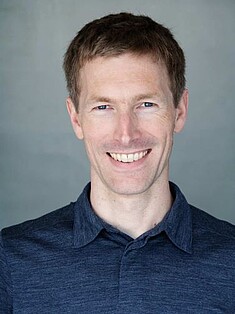
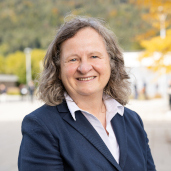
Professor Thomas Lukasiewicz is a Full Professor and Head of the Artificial Intelligence Techniques research group at the Faculty of Informatics, Vienna University of Technology (TU Wien). His research focuses on enabling machines to mimic human-like intelligence through techniques spanning deep learning, symbolic reasoning, and predictive coding. Key areas include explainable AI, hybrid neurosymbolic systems, and applications in healthcare and law. He teaches courses such as Deep Learning for Natural Language Processing, Scientific Research and Writing, and multiple seminars in artificial intelligence and knowledge representation. His research projects include Explainable AI in Healthcare (2023–2027) and foundational work on predictive coding networks. His publications (15+ recent articles) address medical image segmentation, neurosymbolic frameworks, and language model evaluation in mathematics. Notable work includes neurosymbolic hybrid models (CCN⁺), reinforcement learning for medical report generation, and theoretical foundations of predictive coding networks.
Markus Vincze is an Associate Professor at the Institute of Automation and Control Engineering (ACIN) at Vienna University of Technology (TU Wien). He founded the Vision for Robotics (V4R) group in 1996 to advance robotic perception, particularly in real-world environments and homes. His work focuses on cognitive computer vision techniques for robotics. Education: Diplom in Mechanical Engineering (1988) and PhD (1993) from TU Wien; M.Sc. (1990) from Rensselaer Polytechnic Institute. V4R coordinates EU projects like ActIPret, robots@home, HOBBIT, and national initiatives like vision@home. Markus has edited a book on Robust Vision with Gregory Hager and authored 62 peer-reviewed journal articles and over 400 reviewed publications. His recent research explores zero-shot 6D pose estimation, sim-to-real transfer, and transparent object detection. Markus has served as program chair for ICRA 2013 and organized HRI 2017 in Vienna. He has advised numerous students and secured grants from the Austrian Academy of Sciences for work at HelpMate Robotics and Yale's Vision Laboratory. The V4R group leads innovations in robotic vision, including frameworks for synthetic data generation (Unrealgensyn), depth completion (CAGT), and educational robotics applications for sustainability. Their work spans household robotics (RH3), agricultural robotics (EdgeSoil), and human-robot collaboration.
Marc Pollefeys is a Full Professor of Computer Science at ETH Zurich and Director of the Microsoft Mixed Reality and AI Zurich Lab. He has held roles such as Visiting Professor at Stanford University (2007) and Assistant/Associate Professor at UNC-Chapel Hill (2002–2009). His research focuses on 3D computer vision, robotics, machine learning, and augmented reality. Education: PhD in Computer Science from KU Leuven (1999), followed by postdoctoral research there until 2002. He transitioned to academic roles at UNC-Chapel Hill before joining ETH Zurich in 2007. Research interests include 3D reconstruction, visual localization, SLAM, and applications in archaeology, urban modeling, and robotics. Notable projects include real-time 3D scanning, city-scale reconstruction, and autonomous vision-based drones. Key awards include ACM Fellow (2022), IEEE Fellow (2012), and ERC Starting Grant (2008). He advises numerous PhD students and collaborates with institutions like Google and Microsoft. Labs and teams: Leads the Computer Vision and Geometry (CVG) lab at ETH Zurich and directs the Microsoft Mixed Reality and AI Lab. His work bridges academia and industry, focusing on perception for mixed reality and autonomous systems.
Mohamed Khamis is an Associate Professor at the University of Glasgow , specializing in Human-Computer Interaction (HCI) with a focus on Human-centered Security and Eye Tracking for privacy protection. His research spans Pervasive Displays , Usable Security , and User Privacy in immersive environments. PhD from Ludwig Maximilian University of Munich (LMU) Supervised by Florian Alt and Andreas Bulling Research Interests: Usable Security and Privacy Designing Gaze-based Systems Thermal Attacks and Shoulder Surfing Mitigation Security in Public Displays and Virtual Reality Recent Publications demonstrate expertise in: Drone Interaction and Proxemics Privacy Scales for Measuring Granular Constructs Gaze-enabled Mobile Authentication Multimodal Security Systems Deepfake Privacy Applications XR Dark Patterns Analysis Scientific Contributions: Recipient of multiple Honorable Mention Awards at CHI and MobileHCI Funding from EPSRC for thermal imaging research Keynote speaker at ECCV 2020 Open Eyes Workshop Co-organizer of ETRA workshops on Eye-Gaze for Security
Johannes Brandstetter is an Associate Professor at the Institute for Machine Learning at Johannes Kepler University Linz (JKU) where he leads the "AI for data-driven simulations" research group. He is also Co-founder and Chief Scientist at Emmi AI, bridging academic research with industrial applications in AI-driven physics simulation. Brandstetter earned his PhD after working at CERN's CMS experiment on Higgs boson physics. In 2018, he transitioned to machine learning, joining Sepp Hochreiter's research group in Linz. From 2021-2023, he worked at the Amsterdam Machine Learning Lab under Max Welling and Microsoft Research, developing expertise in Geometric Deep Learning and neural surrogates for partial differential equations. He returned to JKU in October 2023 to establish his own research group. His research spans Machine Learning, Deep Learning, and Physics-Informed Machine Learning with focus areas including Neural PDE solvers, Computational Fluid Dynamics, and Climate Modeling. Brandstetter believes AI is poised to revolutionize industrial-scale simulations, potentially saving thousands of compute hours across engineering domains. His work integrates computer vision, numerical simulation, and engineering components to advance data-driven approaches. Recent publications reveal a strong trend toward foundation models for scientific applications, particularly in atmospheric modeling (Aurora), geometric deep learning, and neural surrogates for complex physical systems. His interdisciplinary work spans computer vision, climate science, computational physics, and engineering, demonstrating the versatility of his research approach. Principal Investigator for "AlKa-DL: Alpine karst spring discharge prediction" (FWF-funded, 2024-2027) Principal Investigator for Cluster of Excellence "Bilateral Artificial Intelligence" (FWF-funded, 2024-2029) Co-PI for "Fast, efficient and flexible CFD simulation through generative AI" (FFG-funded, 2025-2026) As an educator and researcher, Brandstetter actively engages with the scientific community through invited talks at major conferences including presentations on "Closing the Gap Between Scientific Foundation Models and Real-World Applications" (March 2025) and "Scientific Machine Learning for Science and Engineering" (February 2025).
Dr. Alexander Plopski is an Assistant Professor at the Institute of Visual Computing, Technische Universität Graz. His research focuses on advancing augmented reality (AR) technologies, human-computer interaction (HCI), and optical display systems. He holds a PhD, M.Sc., and BSc in relevant fields. His work emphasizes perceptual optimization in AR displays, eye tracking integration, and accessibility solutions for color vision deficiencies. Key research areas include gaze-contingent AR interfaces, light field manipulation for extended reality, and multimodal interaction techniques. Notable contributions include the development of the 'guitARhero' interactive AR guitar tutorial system and studies on focal distance effects in optical see-through displays. His publications span topics from AR display calibration to gesture recognition using radar sensing. He has explored applications in industrial training, medical AR, and robotic telemanipulation. His work often bridges theoretical perceptual studies with practical system implementations, aiming to enhance user experience and accessibility in AR/VR environments.
Jean Ponce is a Professor of Computer Science at Ecole Normale Superieure (ENS) in Paris and a Part-Time Global Distinguished Professor at New York University's Courant Institute of Mathematical Sciences and Center for Data Science (CDS). He previously served as Director of the ENS Computer Science Department (2011-2017) and held positions at Inria (2017-2022), University of Illinois at Urbana-Champaign (1998-2006), MIT, Stanford, and Inria (1982-1985). Academic Leadership: Scientific Director of PRAIRIE Interdisciplinary AI Research Institute in Paris Startup Involvement: Co-founder and CEO of Enhance Lab (2022) Editorial Roles: Senior Editor-in-Chief of International Journal of Computer Vision (2019-2022) Conference Leadership: Chair of IEEE CVPR (1997,2000), ECCV (2008), and upcoming ICCV (2023) Research Focus: Computer vision, machine learning, robotics, and AI with applications in exoplanet imaging, 3D reconstruction, and image quality assessment. His work bridges statistical learning and deep learning approaches. Awards: IEEE Fellow (2003) ELLIS Fellow (2019) ERC Advanced Grant (2011) IEEE CVPR Longuet-Higgins Prizes (2016,2020) ICML Test-of-Time Award (2019) Patents & Publications: Co-author of influential textbook Computer Vision: A Modern Approach (translated into Chinese, Japanese, Russian). Holds two US patents and one pending French patent. Google Scholar h-index of 78 with over 55,000 citations.
Antonio Plaza is a Full Professor at the University of Extremadura, Spain, and Head of the Hyperspectral Computing Laboratory. With over 600 publications, he is a leading expert in hyperspectral data processing and parallel computing of remote sensing data. He serves as IEEE Fellow and has received numerous accolades, including the 2019 Excellent Teaching Award and multiple Highly Cited Researcher recognitions. Research Interests : His work bridges Hyperspectral Image Analysis , Medical Imaging , and High-Performance Computing . Recent projects focus on 3D anatomical modeling, AI-driven surgical tools, and deep learning applications for aortic dissection segmentation. Scientific Awards : 2019 Highly Cited Researcher (Geosciences) 2015 IEEE Fellow 2019 Excellent Teaching Award 2018 Highly Cited Researcher (Cross-Field) 2002 Best PhD Dissertation, University of Extremadura Editorial Leadership : Served as Editor-in-Chief of IEEE Transactions on Geoscience and Remote Sensing (2013–2017) and held multiple committee roles in IEEE GRSS. His articles reflect a shift from remote sensing to medical imaging, with a focus on Aortic Dissection Segmentation , Skull Reconstruction , and AI-driven Medical Tools .
Michael Gadermayr serves as a Senior Lecturer and Head of the Research Group within the Department of Information Technologies and Digitalisation at Salzburg University of Applied Sciences. Based at Campus Urstein (Room 423), he can be contacted via michael.gadermayr@fh-salzburg.ac.at or +43-50-2211-1341. His research focuses on advancing medical imaging through artificial intelligence, with core expertise in deep learning for image segmentation, digital pathology, and cancer diagnosis. Key contributions include multimodal fusion techniques for CT/CBCT integration, synthetic data generation for surgical guidance, and objective wound healing quantification using vision models. His work bridges computer vision and clinical applications to solve real-world healthcare challenges. Analysis of his 15 most recent publications reveals a dominant trend toward leveraging synthetic data and multimodal fusion to enhance segmentation accuracy in oncology and surgical contexts. Over 70% of his work targets CT/CBCT integration for intraoperative navigation, while digital pathology applications (particularly thyroid and breast cancer) constitute 25% of his output. Emerging themes include wound healing quantification using SAM and parameter optimization for MIL-based pathology diagnostics. As Head of the Research Group in Information Technologies and Digitalisation, he leads initiatives focused on translating AI innovations into clinical practice, with emphasis on robustness in medical image analysis and practical deployment of segmentation tools for radiology and pathology workflows.
Ruth Breu is a Full Professor and Dean of the Faculty of Mathematics, Computer Science and Physics at the Universität Innsbruck, where she also leads the Quality Engineering research group. She has been a key figure in the Department of Computer Science since 2002 and served as its Head from 2013 to 2024. Her academic journey began with a PhD summa cum laude from the University of Passau in 1991, followed by a habilitation at the Technical University of Munich in 1999. Her research interests include: Quality Engineering Model and Security Engineering Requirements and Software Development Processes Enterprise Architecture Management Threat Intelligence and Digital Twins Her recent publications reflect a strong focus on model-based systems, automated programming assessment, security engineering, and digital twins in construction and energy systems. She frequently collaborates with researchers such as Michael Felderer, Clemens Sauerwein, and Philipp Zech, contributing to advancements in software testing, threat intelligence sharing, and cyber-physical systems. Notable awards include her PhD awarded summa cum laude. She has also been actively involved in national research governance, serving on the board of the Austrian Science Fund (FWF) from 2011 to 2020. She co-founded Txture GmbH in 2017 and holds advisory roles at Universität Passau and FH OST. Ruth Breu advises several students and leads a vibrant research group. Her leadership extends to organizing workshops and contributing to major conferences in software engineering and enterprise modeling. She is deeply engaged in both academic and applied research, bridging theory and practice in IT quality and security.
Peter Mohr-Ziak is a researcher affiliated with both the Institute of Computer Graphics and Vision at the University of Technology Graz (TU Graz) and VRVis Forschungs GmbH. His primary focus areas include Augmented Reality (AR) and Mixed Reality (MR) systems, specifically in the domains of AR visualization, content generation for AR, and head-mounted display (HMD) technologies. He is actively involved in projects with AVL List GmbH in addition to his academic research. Academic Rank: Researcher at TU Graz Education: Telematics, TU Graz Peter's research interests center on creating interactive AR systems with applications in industrial assembly, remote assistance, and education. His work spans technical aspects of AR visualization and practical implementations for skill training (e.g., guitar tutorials) and complex tasks like maxillofacial surgery. He investigates spatial rendering techniques, adaptive perspective models, and light field applications in mixed reality environments. Recent research trends include: 2024: Expanding into human-robot interaction and AR affordance templates 2023: Developing interactive guitar tutorials and state-aware configuration detection systems 2022: Advancing focus cues in video see-through MR and assembly instruction authoring 2019-2020: Improving HMD interaction with TrackCap and light field remote assistance 2017: Creating adaptive perspective rendering and video tutorial retargeting systems Scientific recognition includes: 2021: ISMAR Best Conference Paper 2017: CHI Best Paper Honorable Mention He contributes to projects at TU Graz's Institute of Computer Graphics and Vision, including collaborations with VRVis Forschungs GmbH and AVL List GmbH, while maintaining personal interests in photography and drone flying.
Assoc. Prof. David Ahlström is an Associate Professor at the Department of Informatics Systems, Alpen-Adria-Universität Klagenfurt. He also teaches within the Department of Media and Communications, focusing on human-computer interaction and interface design. His research spans multiple areas in human-computer interaction (HCI), including graphical user interfaces, usability engineering, and interactive mobile systems. Department of Informatics Systems (main affiliation) Department of Media and Communications (teaching) David Ahlström's research explores both theoretical and practical aspects of interaction design: Human-computer interaction (HCI) Graphical user interfaces (GUIs) Usability engineering Mobile computing interfaces Information design Interactive systems His publications demonstrate a consistent focus on interface innovation across different device categories. Early work investigated fundamental menu interaction models and mobile screen usability (2002-2007), while recent research (2015-2025) explores advanced spatial interfaces, vibration-based input methods, and multimodal UAV control systems. Common themes include: Evaluating new interaction techniques Optimizing spatial navigation Developing intuitive gesture systems Exploring wearable interface possibilities Advancing smartphone interaction paradigms Improving visual search performance As a member of the Equal Opportunities Working Group, he contributes to institutional initiatives beyond his technical research. His work often addresses practical challenges in mobile device usability across various contexts including education, emergency response, and domestic smart home systems.
Leif Kobbelt is a Full Professor of Computer Science and Head of the Visual Computing Institute at RWTH Aachen University . He previously held academic positions at the Max-Planck-Institute for Computer Science, University of Erlangen-Nürnberg, and University of Wisconsin-Madison. Diploma in Computer Science (1992), Karlsruhe Institute of Technology PhD in Computer Science (1994), Karlsruhe Institute of Technology His research focuses on computer graphics and geometry processing , with specific interests in 3D reconstruction, quad mesh generation, real-time rendering, and geometric modeling algorithms. He has pioneered techniques for efficient mesh processing, anisotropic geodesic computation, and procedural facade visualization. Recent publications analyze nonlinear constraints in geometric modeling, quad layout optimization, and real-time rendering techniques. Key themes include mesh parameterization, multiresolution analysis, and computational geometry for interactive applications. Scientific recognitions include: 2014 Gottfried Wilhelm Leibniz Prize (Germany's most prestigious research award) 2013 ERC Advanced Grant (ACROSS project) 2008 Eurographics Fellow 2004 Eurographics Outstanding Technical Contribution Award 2000 Heinz-Maier-Leibnitz Award He leads major research initiatives like the excellence clusters UMIC (€40M) and AICES (€15M), and the ERC-funded ACROSS project (€2.5M, 2014-2018). He serves as principal investigator and reviewer for international journals and organizations.
Dieter Schmalstieg is the Alexander von Humboldt Professor of Visual Computing at the University of Stuttgart and an adjunct professor at Graz University of Technology. He leads research in augmented reality (AR), virtual reality (VR), and visualization, with contributions to tracking, rendering, and medical applications. His work spans academia and industry, with over 400 publications and numerous awards, including the IEEE ISMAR Career Impact Award and Fellow of the IEEE. Education: PhD (1997), Habilitation (2001) from Vienna University of Technology. Research: Focuses on AR/VR systems, medical visualization, and real-time graphics. Key projects include the Christian Doppler Laboratory for Handheld AR and collaborations with Qualcomm and VRVis. Awards: START Prize (2002), IEEE Technical Achievement Award (2012), Humboldt Professorship (2023). His teaching includes courses on computer graphics, VR, and real-time rendering. He has advised over 30 PhD students, many of whom hold academic or industry leadership roles. Current research explores situated analytics, mixed reality telepresence (MRUnion), and AR applications in mining and medicine (MiReBooks).
David Ribeiro Lamas is a Professor of Human-Computer Interaction at Tallinn University's School of Digital Technologies, where he heads the Human-Computer Interaction group. He also serves as the chair of the Estonian chapter of ACM's SIGCHI and as an expert member of IFIP's TC13. With an extensive international career spanning the USA, UK, Portugal, Cape Verde, Mozambique, Afghanistan, and Estonia, he has developed deep expertise in designing organizations, communities, and human technologies. His educational background includes a PhD in Human Computer Interaction from Portsmouth University (1998), an MSc in Computer Science from Minho University (1994), and an Honours BSc in Informatics/Applied Mathematics from Portucalense University (1989). He also completed specialized studies in Strategic Management at the Polytechnic University of Catalunya and a postdoc in Augmented and Virtual Environments at Michigan State University. Lamas' research primarily focuses on design theory and methodologies, with recent work emphasizing trust in technology, facial recognition systems, and vibrotactile interfaces. He has pioneered academic programs including the Master in Human-Computer Interaction and the Masters in Interaction Design (run online with Cyprus University of Technology). His approach combines theoretical rigor with practical application, particularly in cross-cultural contexts. His publication record shows a strong trend toward understanding human trust in technology systems, with significant work on facial recognition, vibrotactile feedback systems, and trust frameworks. His research spans both theoretical contributions to HCI methodology and practical applications addressing real-world challenges in digital accessibility and user experience. 2025 HCI Pioneer Award from IFIP TC13 2025 Tallinn Conference Ambassador 2024 IFIP Service Award 2015 Badge of Merit from Tallinn University 2011 Best Paper Award for work on Estonia's M-Government Services 2000 Best Paper Award for research on Web navigation guidance Lamas has successfully supervised forty-eight master students, seven doctoral students, and two post-doc researchers, and currently supervises twelve doctoral students. His leadership extends to numerous research projects including COST Actions on Interactive Narrative Design and Human-Computer Interaction methodologies. He founded and leads STARTS.EE, Tallinn University's initiative promoting encounters between science, technology, and the arts. He has been instrumental in building the Estonian HCI community through seasonal courses on Experimental Interaction Design, Research Methods in HCI, and the Design of Human Technologies since 2010. His World Usability Day events bring together over 600 researchers and practitioners annually from the Baltics, Nordic countries, and beyond. Lamas has chaired major international conferences including INTERACT 2019, NordiCHI 2020, AfriCHI 2021, and ICIDIS 2021.