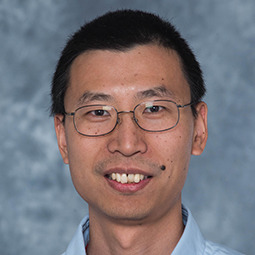
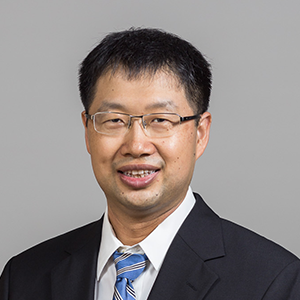
Yu Huang is a Researcher in the Department of Mathematical and Statistical Sciences at Clemson University's College of Science. His work focuses on advancing computational methods in medical imaging, computer vision, and deep learning applications. His research includes developing multimodal models for ophthalmology, enhancing 3D graphics rendering, and improving biomedical image analysis through active learning frameworks. Notable projects involve generative models for retinal imaging and shadow removal techniques in computer vision. His research interests span computational ophthalmology, neural rendering, and AI-driven biomedical solutions. Recent efforts emphasize scalable diffusion models for high-resolution synthesis and robust medical image segmentation using test-time augmentation. Yu Huang's publications reflect a strong emphasis on interdisciplinary research at the intersection of computer science and healthcare. His work addresses challenges in both foundational AI methodologies and their practical applications in clinical settings.
Lang Yuan is an Associate Professor in the Department of Mechanical Engineering at the University of South Carolina's Molinaroli College of Engineering and Computing. His research focuses on additive manufacturing, materials science, and computational materials engineering, with expertise in microstructure evolution, solidification defects, and X-ray characterization techniques. Research interests include developing computational models for grain structure prediction during laser powder bed fusion, in-situ monitoring of melt pool dynamics, and defect characterization in additively manufactured materials. Recent work emphasizes process-structure-property relationships in alloys and ceramics, with applications in aerospace and energy sectors. Methodologies combine synchrotron imaging, discrete element modeling, cellular automata simulations, and machine learning approaches to advance manufacturing quality control and material design.
Ruba Al Omari is an Assistant Professor, Teaching Stream in the Department of Electrical Engineering & Computer Science at York University. She holds a PhD in Computer Science from Ontario Tech University, where she earned the Doctoral Excellence Award. Her research focuses on cybersecurity, machine learning applications in security, and the intersection of brain-computer interfaces (BCIs) with password memorability and user behavior analysis. Dr. Al Omari has over 15 years of industry experience in IT roles spanning network management and security. Her teaching portfolio includes graduate and undergraduate courses in cybersecurity, network security, applied cryptography, malware analysis, and machine learning. Notable courses include 'Attack and Defense Special Topics in IT: AI in Cybersecurity' and capstone projects in computer security. Research interests emphasize leveraging EEG signals and neural networks to predict password memorability, studying user behavior in password usage, and exploring BCI applications for facial recognition and image tagging. Her work bridges cognitive science, neuroscience, and computational security systems. Publications consistently address themes of password security, BCI-driven biometric authentication, and cognitive aspects of cybersecurity. Awards include the Doctoral Excellence Award from Ontario Tech University (exact year not specified in text). Previous roles included program coordinator for AI and Cybersecurity programs at Durham College, alongside teaching experience at Ontario Tech University. Industry background includes user support and network management roles, providing practical insights into IT security challenges.
Marco Grangetto serves as Full Professor in the Department of Computer Science at the University of Turin, coordinating research in image processing and computer vision. His expertise spans wavelets, image/video coding, data compression, error resilient video coding, and biomedical image processing, with significant contributions to ISO JPEG2000 standardization and editorial roles in IEEE Transactions on Multimedia. His educational background includes a PhD in Electrical and Communications Engineering (2003) and MSc in Telecommunications Engineering (1999), both from Politecnico di Torino. His research integrates Artificial Intelligence and Deep Learning with medical imaging and fundamental compression theory , producing innovations in neural network pruning, capsule networks, and entropy-based models. Recent work focuses on Covid-19 diagnosis from chest X-rays and efficient 3D scene modeling. His publication trends reveal dual trajectories: applied medical AI (Covid-19 diagnostics, lung cancer segmentation) and theoretical advances (learned compression, contrastive learning, bias mitigation). This bridges clinical validation with information-theoretic foundations, particularly in resource-constrained environments. Scientific recognition includes: Premio Optime by Unione Industriale di Torino (2000) Fulbright Grant for research at UC San Diego (2001) He maintains leadership through IEEE editorial positions, ISO standardization participation, and MPAI membership. His research group develops medical datasets (UniToChest, UniToPatho) while advancing neural network efficiency for clinical deployment. Current projects focus on entropy minimization techniques and unbiased representation learning for healthcare applications.
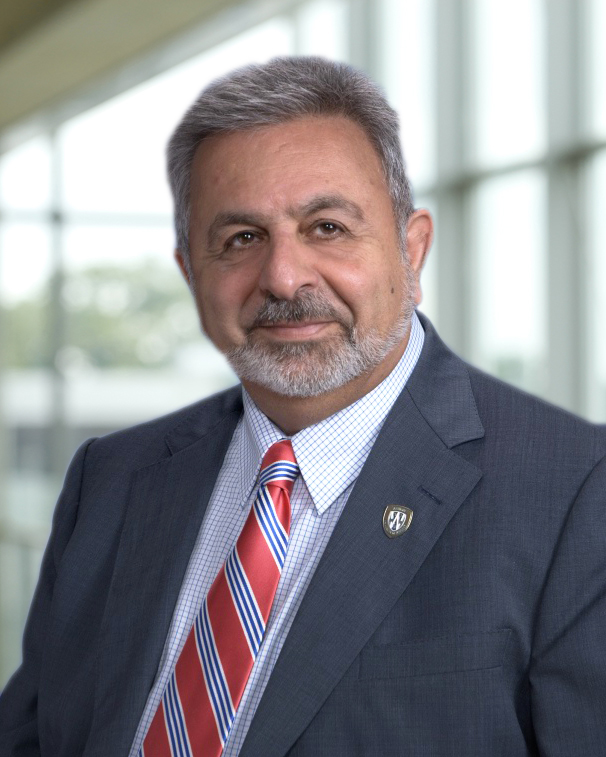
Dr. Majid Ahmadi is a Distinguished Professor in the Department of Electrical and Computer Engineering (ECE) at the University of Windsor's Faculty of Engineering. He holds a BSc from Sharif University of Technology (1971) and a PhD from Imperial College London (1977). His research focuses on digital signal processing, machine vision, VLSI systems, and memristive circuits. He is a Chartered Engineer (UK) and a Fellow of both IET and IEEE. His work spans cutting-edge areas including low-power VLSI architectures, illumination-invariant face recognition, and 3D IC testing. Recent publications address energy-efficient cognitive radio networks and microstrip filter optimization. His professional accolades include prestigious engineering fellowships. He advises graduate research in advanced signal processing and integrated circuit design. His contributions to IEEE Transactions and IET journals reflect his leadership in interdisciplinary electronics research.
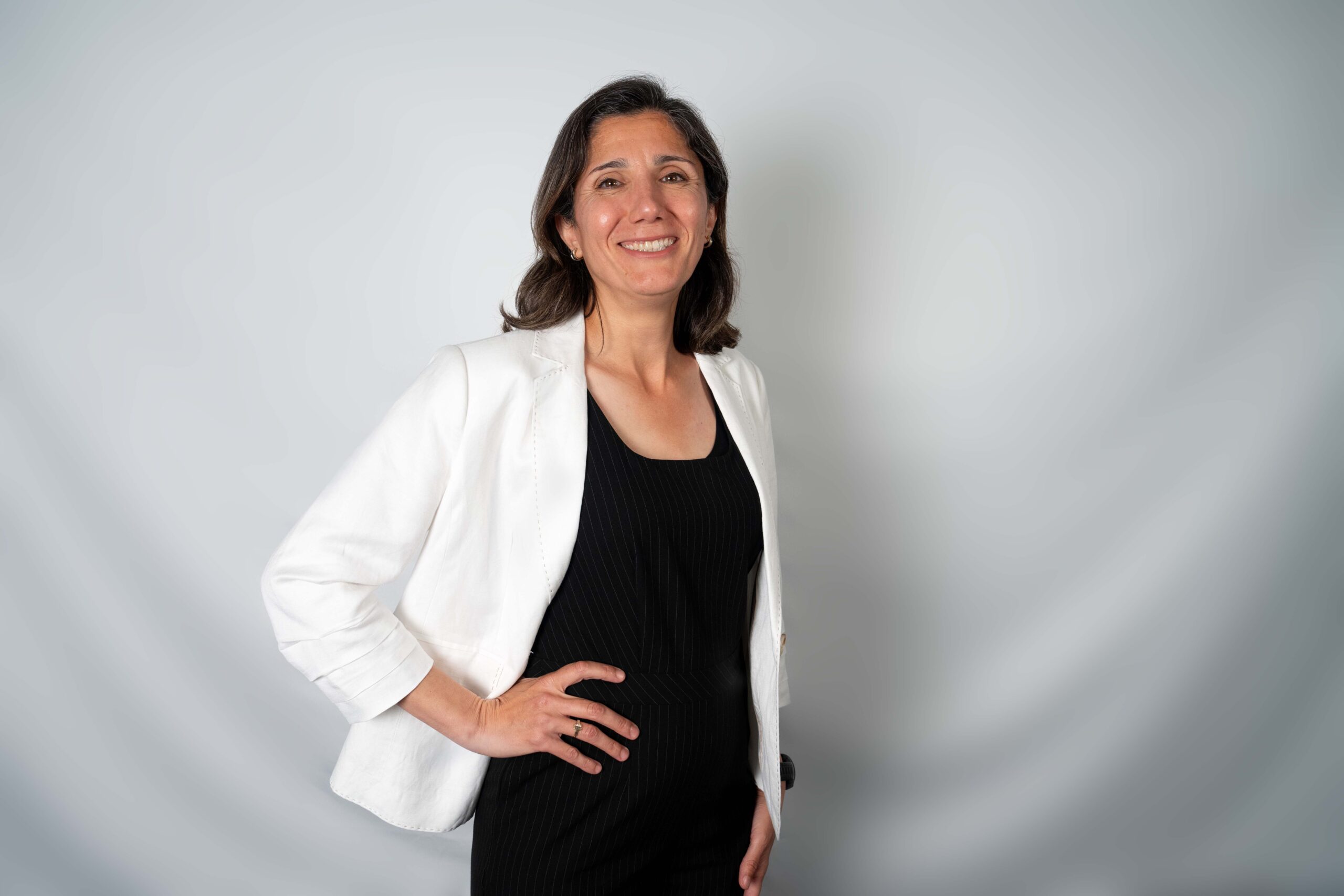
Raul Fernandez Rojas is an Associate Professor in the Department of AI and Robotics at the University of Canberra. His research focuses on multimodal neurophysiological sensing, machine learning applications in healthcare, and pain assessment using technologies like fNIRS, EEG, and facial expression analysis. He leads projects integrating brain-body interactions in neurological disorders such as Parkinson's disease and dementia, and develops intelligent systems for driver distraction detection. Education: PhD (details unspecified) Research interests include cognitive workload analysis, sensor fusion for biomedical applications, and AI-driven diagnostics for mental and neurological conditions. His work spans clinical pain assessment, human-swarm interaction, and real-time monitoring systems. He has contributed to over 55 peer-reviewed publications and actively supervises PhD candidates in machine learning for neurophysiological applications. Current projects include a dementia detection initiative using machine learning and exercise interventions, funded from 2024–2026. He collaborates internationally on topics like head motion patterns for depression biomarkers and fNIRS-based pain assessment for non-verbal patients. Advising focuses on PhD projects involving neurophysiological sensors (EEG, fNIRS, etc.) and facial expression analysis for pain recognition. Grants include funding for multimodal signal fusion research and wearable sensor systems.
Dong Chen is an Associate Professor in the Department of Computer Science at the Colorado School of Mines. His research focuses on building data-driven experimental systems in Cyber-Physical Systems (CPS), IoT, Embedded AI, and Embodied AI, with applications in smart devices, homes, cities, and renewable energy systems. He leads the Next Generation Cyber-Physical Systems Laboratory (CPSLab), emphasizing open-source systems and datasets. Dr. Chen holds PhDs in Electrical and Computer Engineering (2018, University of Massachusetts Amherst) and Computer Science (2014, Northeastern University). His work addresses security, privacy, sustainability, and efficiency in smart environments. Notable contributions include SolarFinder, SolarTrader, PrivacyGuard, and VoiceAttack, which tackle challenges in IoT privacy, energy trading, and adversarial attacks. He received the NSF CAREER Award (2023) and is a member of Sigma Xi, ACM, AAAI, and IEEE. His research spans system design, AI applications, and cross-cutting domains like solar energy modeling and edge computing. Current projects include AgileDART (edge stream processing) and SolarDetector (satellite-based PV array identification). Advising and collaborations: Dr. Chen seeks PhD and undergraduate students with strong CS/EE backgrounds. His lab focuses on CPS/IoT security, energy systems, and AI-driven solutions. He has published extensively on topics ranging from smart grid optimization to adversarial machine learning.
Patrick Denny is an Associate Professor at the University of Limerick, affiliated with the Department of Computer Science & Information Systems, the Centre for Sustainable Digital (Re)Manufacturing, and Lero – the Research Ireland Centre for Software. His research focuses on computer vision, automotive systems, and medical imaging, with notable contributions to object detection, instance segmentation, and image processing in autonomous vehicles and healthcare. He holds patents in automotive camera systems and has authored over 38 research papers. His work addresses challenges such as rain impact on automated vehicle perception, medical image classification using graph neural networks, and optimizing camera exposure for automotive applications. He collaborates extensively on projects involving V2X communications and intelligent transportation systems. Denny’s research also extends to waste management through computer vision and medical imaging innovations. Patents: Over 10 patents in automotive imaging, including systems for calibrating image-capturing devices and thermal infrared sensors. Key Research Themes: Automotive perception, computer vision algorithms, medical image analysis, and sensor optimization. He actively engages in interdisciplinary projects, combining machine learning with real-world applications in transportation and healthcare.
Dr. Vivi Tornari is a Research Fellow and head of the Holography laboratory at IESL/FORTH, specializing in optical metrology and cultural heritage preservation. She has held this position since 1996 and has coordinated major EU projects such as E-RIHS and CHARISMA . Her work focuses on developing holographic interferometry techniques for structural diagnosis of artworks, fraud detection, and environmental impact assessment. She holds a PhD in Applied Science from the University of Sunderland and has authored over 70 scientific publications. Education: Postdoctoral Fellow in Optical Holography, Royal College of Art (RCA), London (1990) PhD in Applied Science, University of Sunderland, UK (2009) MSc in Chemical Engineering/Material Science, National Technical University of Athens (1996) Research interests include laser-based structural analysis, speckle interferometry, and the integration of optical methods for heritage preservation. She has pioneered non-invasive diagnostic tools such as the Applied Holography Metrology Laboratory and has advised on EC projects as an evaluator. Funding highlights include: Leadership in EU projects totaling over €20M Coordinator of SYDDARTA (FP7) and CLIMATE FOR CULTURE (FP7) PI for HOLOAUTHENTIC (FP5) and LASERACT (FP6) Her publications emphasize interdisciplinary collaboration, combining optical engineering with conservation science. Key innovations include: Development of DHSPI (Digital Holographic Speckle Pattern Interferometry) Integration of thermography with interferometry for defect analysis Laser ablation studies on polymer substrates Labs/Teams: Lead the Holography Lab at IESL, collaborating with international institutions like the V&A Museum and Imperial College London. Current projects focus on European research infrastructures (E-RIHS) and climate change impacts on heritage materials.
Liana E. Brown is an Associate Professor in the Department of Psychology at Trent University. She holds degrees from the University of Waterloo (B.Sc., M.Sc.) and Pennsylvania State University (M.S., Ph.D.). Her research focuses on sensory-motor integration, exploring how vision, perception, and motor control interact during everyday tasks. Key interests include motor learning, proprioception, and the neural mechanisms underlying action-perception interactions. Dr. Brown’s research program investigates four core questions: 1) How hand use enhances vision/attention, 2) Limb spatial tracking mechanisms, 3) Motor capabilities’ influence on cognition, and 4) Observational motor skill acquisition. Her work bridges neuroscience, biomechanics, and clinical applications. She advises up to 2 Honours thesis students and 2 practicum students annually (2025-26 onward). Her lab (ACT Lab: https://actlab.squarespace.com/ ) explores motor learning, tool use, and neurorehabilitation strategies. Notable collaborations include studies on concussion assessment, Parkinson’s gait analysis, and motor skill development in cerebral palsy patients.
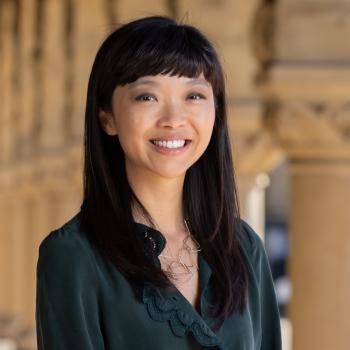
Judith Ellen Fan is a Courtesy Assistant Professor at Stanford University, holding primary appointment in the Department of Psychology and courtesy appointments in the Graduate School of Education and the Department of Computer Science. She directs the Cognitive Tools Lab, focusing on how humans use physical representations to learn, communicate, and solve problems through interdisciplinary approaches combining cognitive science, computational neuroscience, and AI. Her research interests span cognitive tool development, data visualization literacy, educational technology, and developmental psychology. Key areas include understanding how drawing and sketching shape memory and conceptual representation, evaluating machine comprehension of visual and physical concepts, and designing human-centered AI systems. Recent work emphasizes benchmarking human and machine abilities in physical dynamics understanding (Physion++), evaluating data visualization literacy (CHART-6), and analyzing large-scale drawing datasets (THINGS-drawings). These projects bridge cognitive science with AI to advance both fields through shared benchmarking frameworks. Judith has received funding for projects on cognitive tool development and human-AI collaboration. Her lab collaborates across disciplines, emphasizing empirical studies with human participants and algorithmic benchmarking. Notable datasets include the 1,854-concept THINGS-drawings collection and Physion++ physical prediction benchmarks.
Daniel Huttenlocher is the Dean of the MIT Stephen A. Schwarzman College of Computing and holds the Henry Ellis Warren (1894) Professorship in Computer Science and Artificial Intelligence + Decision-making (AI+D). He leads the interdisciplinary College of Computing while maintaining academic ties to the Electrical Engineering & Computer Science Department. His research focuses on AI ethics, societal impact of technology, machine learning applications, and vision systems. Key research areas include AI governance frameworks, adaptive public health strategies, and large-scale computer vision algorithms. He has pioneered work on decentralized collaboration systems, social media dynamics, and generative AI's societal implications. Huttenlocher’s recent publications address challenges in epidemic testing optimization and the evolving role of AI in knowledge ecosystems like Wikipedia. His leadership roles include steering MIT’s computing initiatives and fostering industry partnerships, such as the MIT Generative AI Impact Consortium. Despite no explicitly listed awards, his contributions to AI ethics and technical systems reflect significant academic influence. Advising and grant activities remain unspecified in available records. His work bridges technical innovation with societal challenges, emphasizing the ethical deployment of AI across healthcare, education, and digital economies.
Dr. LIANG Zhenkai is an Associate Professor and Chairman of the Department of Computer Science at the National University of Singapore's School of Computing. He also serves as the Lead Principal Investigator for the National Cybersecurity R&D Lab (NCL). With extensive experience in academic leadership and cybersecurity research, Dr. Liang has established himself as a prominent figure in the field of system and software security. Dr. Liang received his Ph.D. in Computer Science from Stony Brook University in 2006 and his B.S. degrees in Computer Science and Economics from Peking University in 1999. His dual background provides a unique perspective on security challenges that bridges technical expertise with economic understanding. Dr. Liang's research focuses on system and software security , with particular emphasis on security in emerging platforms including Web, mobile, and Internet-of-Things (IoT) systems. His specific research interests include program analysis, Web and IoT system security, and virtualization. As the leader of the Curiosity Research Group, his team pursues missions centered around "Understanding systems (理解系统), abstracting knowledge (提炼知识), and connecting facts (参悟规律)". This philosophical approach to security research has yielded numerous significant contributions to the field. Dr. Liang's recent publications demonstrate a strong evolution from fundamental security mechanisms to sophisticated solutions addressing AI security, blockchain, and advanced vulnerability analysis. His work increasingly integrates machine learning techniques with traditional security approaches, focusing on developing robust defenses against sophisticated attacks while maintaining system usability. The trend shows a progression toward addressing contemporary challenges in large language models, secure system observability, and vulnerability propagation analysis. Dr. Liang has received numerous prestigious awards recognizing his research excellence: Outstanding Paper Award at ACSAC (2003) Best Paper Award at USENIX Security Symposium (2007) ACM SIGSOFT Distinguished Paper at ESEC-FSE (2009) Best Paper Award at W2SP Workshop (2014) Annual Teaching Excellence Award at NUS (2014, 2015) As an educator, Dr. Liang has taught various undergraduate and graduate courses including CS3235 Computer Security, CS5231 Systems Security, and CS5321 Network Security. His teaching philosophy, which he has published on in "Tool, Technique, and Tao in Computer Security Education," emphasizes both technical expertise and philosophical understanding of security principles. He has successfully mentored numerous students and researchers in the cybersecurity field. Dr. Liang leads the Curiosity Research Group, which actively seeks curious minds to join their exploration of security systems. The group maintains strong connections with industry and government cybersecurity initiatives, particularly through the National Cybersecurity R&D Lab (NCL). Their research environment encourages innovative thinking with the requirement that "Curiosity is required, while mentality for repairing things (such as bicycles) is a plus."
Xiaoyu Ai is a Researcher at the School of Electrical Engineering and Telecommunications at the University of New South Wales (UNSW Kensington). His work bridges telecommunications engineering with quantum communication technologies. Bachelor of Engineering (Xidian University, 2013) Master of Engineering Science (UNSW, 2015) PhD in Telecommunications (UNSW, 2022) A specialist in quantum key distribution (QKD), Xiaoyu Ai focuses on channel coding for satellite-based QKD systems, including the development of LDPC codes and multithreaded reconciliation algorithms. His research extends to wireless communication protocols for mining IoT applications and scalable LoRa mesh networks. Recent work includes quantum emitter integration in hexagonal boron nitride for secure communication hardware. Key publications highlight his contributions to quantum cryptography, satellite communication, and industrial IoT. Notable projects include the CRC-P initiative for LoRa-based backup systems in the mining industry and collaborations in quantum networking with institutions like University of Technology Sydney. His technical expertise spans secure communication protocols, photonic device optimization, and low-light multimedia algorithms, as evidenced by recent conference presentations.
Dr. Matias Valdenegro Toro is an Assistant Professor of Machine Learning at the University of Groningen within the Faculty of Science and Engineering and the Artificial Intelligence department of the Bernoulli Institute. He holds a PhD from Heriot-Watt University (2019) and a Master's in Autonomous Systems from Bonn-Rhein-Sieg University of Applied Sciences (2014). His research focuses on trustworthy machine learning models , particularly in uncertainty quantification , medical AI , and robotics , with applications in computer vision and explainable AI. He teaches courses like Introduction to Machine Learning and Deep Learning at the Bachelor and Master levels. His work emphasizes robustness in AI systems, including uncertainty estimation for medical applications, super-resolution techniques, and neuromorphic robotics. He has published widely on topics like Bayesian neural networks, prompt tuning, and sanity checks for explanations. Notable awards include Best Reviewer at ICML (2024) and Highlighted Reviewer at ICLR (2022). He collaborates with institutions like the German Research Center for Artificial Intelligence and actively contributes to open-source datasets (e.g., the Japanese Uncertain Scenes Dataset ). Key grants and activities include organizing the ENLIGHT BIP Course on Deep Learning for Forestry and teaching at the European Summer School on AI . His research also addresses regulatory challenges like the EU AI Act's implications for uncertainty quantification in general-purpose AI.