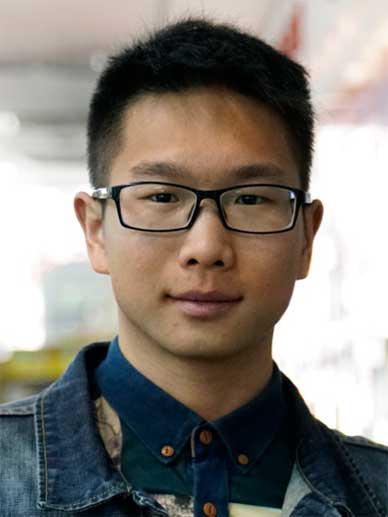
Janne Heikkilä is a Professor at the Faculty of Information Technology and Electrical Engineering, University of Oulu, Finland. With over 30 years of experience in computer vision and machine learning, he leads the Center for Machine Vision and Signal Analysis (CMVS) and has contributed extensively to both theoretical and applied research. Research Interests: 3D computer vision, biomedical image analysis, computational photography, and deep learning. Scientific Leadership: IAPR Fellow, Senior IEEE Member, and former President of the Pattern Recognition Society of Finland. His work spans computer vision, radiotherapy planning, and biomedical imaging, with over 200 publications and 14,000 citations. He has secured funding from prestigious organizations like the Academy of Finland and Business Finland. His recent research focuses on debiasing AI models, 6D object pose estimation, and radiotherapy dose prediction. Scientific Awards: IAPR Fellow Senior Member of IEEE
Armin Kirchknopf serves as a Junior Researcher at the Media Computing Research Group within the Institute of Creative Media/Technologies, Department of Media and Digital Technologies at the University of Applied Sciences St. Pölten. His interdisciplinary work bridges artificial intelligence, computer vision, and social media analysis, with significant contributions to misinformation detection and disaster response systems. Based at Campus-Platz 1 in St. Pölten, Austria, he actively collaborates on EU-funded projects and publishes in top-tier AI venues. His educational journey spans humanities and technology: a Bachelor of Arts in Egyptology and Master of Arts in Classical Archaeology from the University of Vienna (including fieldwork at excavation sites across Austria, Germany, and Egypt), followed by a Bachelor of Science in Media Technology from FH St. Pölten. This unique background informs his human-centered AI research approach. Kirchknopf's research centers on explainable multimodal AI systems for real-world challenges. His recent work demonstrates expertise in transformer-based architectures for cross-lingual fake news detection, sexism identification, and flood monitoring through social media imagery. He pioneers techniques like Grad-CAM for object detection explainability and develops visualization tools for complex data interpretation, emphasizing transparency and social impact in AI deployment. Analysis of his 13 publications (2017-2022) reveals a strategic shift toward applied AI in societal contexts , particularly using social media data for disaster management and combating online toxicity. His projects consistently integrate computer vision with natural language processing, showing increasing sophistication in multilingual capabilities and model interpretability frameworks. His scientific recognition includes: Creative Business Award for co-developing the Tenjin learning quiz application No documented student advisement or grant leadership appears in current records, though he actively mentors through project-based collaborations. His work with the Media Computing Research Group drives innovation in educational technology and public safety applications. Kirchknopf contributes to the Media Computing Research Group's portfolio including Fake News Detection, SAiEX (Safe AI with explainable integrity), InfraBase (building footprint segmentation), and Ressel Center music therapy projects. His cross-disciplinary collaborations span computer scientists, archaeologists, and social scientists, reflecting the group's commitment to human-centric technological solutions .
Antoine Doucet is a Full Professor at the University of La Rochelle, where he teaches in the Computer Science department of the University Institute of Technology (IUT). He conducts his research at the Computer Science, Image and Interaction Laboratory (L3i) within the 'Images and Content' team, which he has led since 2015. He is also a member of the Franco-Vietnamese laboratory ICTLab and serves as Director of the ICT Department at the University of Science and Technology of Hanoi since 2016. His research focuses on information retrieval, natural language processing, text mining, and artificial intelligence, with emphasis on automatic analysis of text in all forms across languages. His work prioritizes generic methods that work across languages without relying on language-specific linguistic resources. This approach is particularly valuable for under-resourced languages and noisy texts from sources like social media or OCR output. As coordinator of the Horizon 2020 NewsEye project, he led efforts to improve access to European historical newspapers through semantic enrichment and advanced search capabilities. His research has practical applications in epidemic surveillance, document fraud detection, and historical content analysis. The NewsEye project involved 11 teams across Europe, including 3 national libraries and multiple research groups. Best paper award from IMIA Yearbook 2016 (among 1,272 candidates) Best paper award at HCI International with Ilona Nawrot Press coverage for ACL 2013 paper in major publications Recipient of French scientific excellence award (Prime d'Excellence Scientifique) Doucet actively supervises PhD and Master's students, with recent advisees including Chloé Artaud (Document fraud detection), Paul Martin (Photograph Time-Stamping), Ilona Nawrot (Temporal and Multilingual Text Analysis), and Gaël Lejeune (Multilingual Epidemic Surveillance). His research has been funded through multiple projects including ANR Digistory, AmeliOCR, PHC Nusantara, and USTH SWARMS. He has also coordinated significant European projects like NewsEye and Embeddia. At L3i, he leads a research group of approximately 40 persons focused on Images and Digital Content. His work bridges theoretical advances in multilingual text processing with practical applications in historical document analysis, epidemic surveillance, and document security.
Weiyu Liu is an incoming Assistant Professor at the Kahlert School of Computing , University of Utah. Previously, he was a Postdoctoral Scholar at Stanford University in the CogAI group and Stanford Vision and Learning Lab (SVL), after completing his Ph.D. in Robotics at Georgia Institute of Technology under the supervision of Sonia Chernova. Ph.D. in Robotics (Georgia Tech) Bachelor's in Electrical Engineering (Georgia Tech) His research focuses on developing robots that can perceive, model, and interact with the real world through structured knowledge representations grounded in language and sensorimotor data. Key areas include language-guided manipulation , long-horizon task execution , and semantic reasoning frameworks for robotic systems. His recent work (2024) explores: Language-annotated demonstration integration (BLADE framework) 3D visual grounding with concept learners Embodied decision-making benchmarks Long-horizon inference challenges 4D instruction grounding from videos Scientific contributions include the RSS Pioneer (2023) recognition and First Place in Fetch It! Mobile Manipulation Challenge (2019) . He advocates for weekly individual mentoring , open research dissemination, and holistic student development in both academic and personal growth.
John M. Henderson is a Distinguished Professor at the University of California, Davis , affiliated with the Visual Cognition Lab . He holds additional roles at the Center for Mind and Brain , Center for Vision Science , Center for Neuroscience , and Plasticity and Memory Program . As an editor for Collabra: Psychology and associate editor for Journal of Experimental Psychology: General , he contributes to open science and cognitive research dissemination. Ph.D. in Cognitive Psychology, University of Massachusetts, Amherst (1988) M.S. in Cognitive Psychology, University of Massachusetts, Amherst (1986) B.S. in Psychology, University of Massachusetts, Amherst (1983) Professor Henderson’s research investigates how visual information is acquired, recognized, and integrated into cognitive systems to guide behavior. His work combines scene perception , reading processes , and visual memory using eye tracking , fMRI , brain stimulation , and computational modeling . Recent studies explore semantic guidance of attention in natural scenes, neural correlates of fixation duration, and developmental attentional patterns. His 15 most recent publications (2023-2025) reflect a focus on semantic processing in visual cognition , scene perception , and computational modeling of attention . Topics include meaning-based attentional guidance, deep learning applications in scene analysis, and neural mechanisms of memory-guided eye movements. Collaborations span cognitive neuroscience, developmental psychology, and AI-driven scene understanding. Scientific honors include: Google Scholar Classics recognition (2017) for groundbreaking 2006 paper Fellow of the Association for Psychological Science, American Psychological Association, and Psychonomic Society Grants from the National Eye Institute and National Institute on Aging support his work on visual cognition and aging. His lab trains students in cognitive methods and interdisciplinary research, bridging psychology, neuroscience, and computational modeling.
Nikos Aletras is a Professor of Natural Language Processing at the University of Sheffield's School of Computer Science, where he serves as Head of the Natural Language Processing research group and is co-affiliated with the Machine Learning group. His academic journey began with a Bachelor's degree in Computer Science from the University of Crete, followed by a PhD in Natural Language Processing at the University of Sheffield. Prior to his current position, he worked as a research scientist at Amazon (Core ML and Alexa) and as a research associate at UCL's Department of Computer Science. Aletras' research spans multiple domains within AI, with particular emphasis on Natural Language Processing applications across social science, legal contexts, and data science. His work demonstrates a consistent focus on practical implementations of NLP techniques to solve real-world problems, especially in computational social science and legal technology. He has developed innovative text analysis methods that bridge traditional disciplinary boundaries, creating tools applicable across multiple scientific domains. His recent publications reveal a strong trend toward efficient and responsible AI, with significant work on model compression, hallucination mitigation in language models, and ethical considerations in computational social science research. The publications also show deep engagement with multilingual NLP challenges, explainable AI, and applications of NLP to social media analysis and legal contexts. Area Chair Award: Society and NLP (2023) Aletras has secured substantial research funding as both Principal Investigator and Co-Principal Investigator, including grants from EPSRC, ESRC, Leverhulme, EC Horizon 2020, and industrial partners like Amazon. His current projects focus on efficient deployment of large language models, addressing socio-technical limitations of LLMs for medical and social computing, and developing speech and language technologies. He actively supervises PhD students and collaborates with researchers across multiple disciplines. He leads the Natural Language Processing research group at Sheffield, which focuses on advancing NLP methodologies while applying them to diverse domains including computational social science, legal informatics, and healthcare technologies. The group maintains strong industry connections, particularly with technology companies working on language technologies, and collaborates with legal scholars and social scientists on interdisciplinary projects.
Miroslaw Staron is a Professor of Interaction Design and Software Engineering at Chalmers University of Technology. He maintains a unique 50/50 work arrangement, spending half his time on field research at Ericsson while holding his academic position. His research bridges academic theory with industrial practice through collaborations with major companies including Volvo Car Corporation and Volvo Information Technology. His research spans several key areas in software engineering: Software metrics and measurement systems in industry Model driven software development and empirical studies Defect prediction in software projects Requirements engineering in model-based development Applications of AI and machine learning in software engineering Automotive software development and security Staron's recent work demonstrates a strategic shift toward integrating AI technologies into software engineering processes, with particular focus on automotive applications. His publications from 2024-2025 reveal expertise in generative AI applications for code review automation, testing methodologies, and requirements engineering, showing how these technologies can transform traditional software development practices while addressing domain-specific challenges in automotive systems. Current research projects include: Kvantdatorer för framtidens mobilitetslösningar (2025-2027) Automatiserad och designoptimerad programvarukonstruktion/kodgenerering (2025-2029) Förvandla fordonsarkitektur med hjälp från AI (2021-2023) Arkitektonisk design och verifiering/validering av system med maskininlärning komponenter (2020-2024) With 78 publications documented in Chalmers' research database, Staron has established himself as a significant contributor to evidence-based software engineering research with strong industrial relevance.
Prof. Dr. rer. nat. Rasha Abdel Rahman is a leading figure in Neurocognitive Psychology at the Institute of Psychology, Humboldt-Universität zu Berlin . Her research bridges the domains of language production , visual perception , and semantic memory organization , with particular emphasis on electrophysiological mechanisms (EEG) and emotional influences on cognitive processing. Habilitation in Psychology (2008), Ph.D. in Psychology (summa cum laude, 2001), and M.S. in Psychology (1997) from Humboldt-Universität Since 2010: Heisenberg Professor of Neurocognitive Psychology 2009: Heisenberg Fellow Her research interests focus on: Language production mechanisms Interface between vision, semantics, and language Functional organization of semantic memory Attentional and emotional modulation of perception Face and object perception dynamics Mental imagery processes The laboratory employs behavioral and electrophysiological (EEG) methods to investigate how knowledge shapes perception and language processing. Recent studies examine: Emotional content's impact on social judgment AI-generated face perception Art perception influenced by artist morality Trustworthiness effects in visual consciousness Selected scientific awards include: Heisenberg-Fellowship (DFG, 2008) Heinz Heckhausen Junior Scientist Award (DGPs, 2002)
Sylvain Lefebvre is a permanent researcher at INRIA (Institut National de Recherche en Informatique et en Automatique) in France, where he leads the MFX research team since 2018. Previously, he was part of the ALICE group at INRIA Nancy (2009-2018) and the REVES team in Sophia Antipolis (2006-2009). His career includes a postdoctoral position at Microsoft Research Seattle (2005) following his PhD at INRIA Rhones-Alpes under Fabrice Neyret. His educational background includes a PhD in Computer Graphics from Université Joseph Fourier (Grenoble) in 2005, preceded by a Master in Computer Graphics from INP Grenoble in 2001. His habilitation thesis focused on Runtime Texture Synthesis. Lefebvre's research centers on simplifying content creation for highly detailed patterns, structures, and shapes with applications spanning Computer Graphics to additive manufacturing. He develops fast, controllable by-example synthesis approaches that generate content while enforcing user-specified constraints. His work addresses computational challenges through novel data structures and algorithms optimized for GPUs and FPGAs, including his Silice programming language. The ERC-funded ShapeForge project (2012-2017) advanced shape generation for 3D printing, leading to the IceSL software for digital modeling and fabrication. Analysis of his 15 most recent publications reveals a strong focus on additive manufacturing optimization, with recurring themes in structural integrity, material efficiency, and geometric algorithms. His work bridges computer graphics theory with practical fabrication constraints, particularly in microstructure design, slicing techniques, and mechanical metamaterials. The interdisciplinary nature spans computer science, materials engineering, and robotics. EUROGRAPHICS Young Researcher Award (2010) ERC Starting Grant for ShapeForge project (2012) Lefebvre has advised over 25 PhD students and interns including Marco Freire, Thibault Tricard, and Jimmy Etienne. His ShapeForge project received significant ERC funding, supporting research in computational fabrication. He serves on numerous program committees including SIGGRAPH, Eurographics, and SIGGRAPH Asia, reflecting his leadership in the computer graphics community. As leader of the MFX team since 2018, Lefebvre directs research in computational fabrication, focusing on IceSL software development for 3D printing workflows. The team integrates computer graphics techniques with manufacturing constraints, developing tools that simplify complex object design and fabrication while addressing real-world challenges in material usage and structural integrity.
Raquel Fernández is a Full Professor of Computational Linguistics and Dialogue Systems at the Institute for Logic, Language & Computation (ILLC), University of Amsterdam. She serves as Vice-Director for Research at ILLC and is a board member of the ELLIS Amsterdam Unit. Her research focuses on interdisciplinary approaches at the intersection of computational linguistics, cognitive science, and artificial intelligence, with emphasis on dialogue modeling, multimodal processing, and language grounding in visual/social contexts. Her work is supported by prestigious grants including the European Research Council (ERC Consolidator Grant 819455) and multiple Dutch Research Council (NWO) awards (VENI, VIDI, Aspasia). She has received scientific recognition such as the Outstanding Paper Award at EMNLP and Best Data Award at GenBench Workshop. Her recent publications analyze multimodal dialogue systems, visual storytelling evaluation consistency, and co-speech gesture modeling, reflecting trends in Linguistic-Cognitive Integration , Multimodal AI , and Contextual NLP . She leads the Dialogue Modelling Group and has been actively involved in academic leadership as co-president of SemDial, VP-Elect for SIGDAT, and ethics chair for major conferences like COLM. Scientific Awards ERC Consolidator Grant 819455 NWO VENI/VIDI/Aspasia grants Outstanding Paper Award at EMNLP 2023 Best Data Award at GenBench Workshop Elected ELLIS Fellow 2023
Lianne Lefsrud serves as Associate Professor and Risk, Innovation, and Sustainability Chair (RISC) in the Department of Chemical and Materials Engineering at the University of Alberta's Faculty of Engineering. Her interdisciplinary research bridges engineering, social sciences, and policy to transform risk management practices across energy, mining, construction, and railroading industries, directly influencing regulations, building codes, and industry operations for sustainable development. Her academic credentials include: BSc in Civil Engineering (Cooperative Program), University of Alberta (1994) MSc in Interdisciplinary Civil & Environmental Engineering and Sociology, University of Alberta (1996) PhD in Strategic Management and Organization, Alberta School of Business (2014) Dr. Lefsrud's research centers on risk management frameworks for sustainability challenges. She examines hazard identification, social license to operate, and technology adoption drivers in high-hazard industries, with emphasis on prospective risk assessment (e.g., hydrogen infrastructure design) and retrospective analysis (e.g., microplastic pollution impacts). Her work integrates circular economy principles into energy systems while addressing unintended consequences across UN Sustainable Development Goals. Recent publications (2024-2025) demonstrate heavy focus on machine learning applications for rail and construction safety, hydrogen infrastructure risk analysis, and science denial mitigation. Key patterns show cross-industry adaptation of AI for incident prediction, regulatory gap analysis for emerging energy systems, and socio-technical approaches to reconcile sustainability goals with operational realities. Scientific recognition includes: Erb Post-Doctoral Fellowship (University of Michigan) Dow Sustainability Research Fellowship (Ross School of Business) Dr. Lefsrud mentors graduate students through industry-integrated projects like her Sustainable Design course where teams generated patents and city solutions. Her research secures Alberta Innovates funding with 1:4 industrial-to-federal matching, collaborating with Suncor, Transport Canada, and Canadian Standards Association. Grants target practical implementations including railcar inspection systems and hydrogen safety protocols. She co-founded Insight Risk Systems and leads the Lefsrud Lab, prioritizing inclusive teams with under-represented groups (women, Indigenous, LGBTQ2S+, neurodiverse) to tackle 'wicked problems' in sustainability. The lab leverages interdisciplinary partnerships across engineering, computer science, psychology, and environmental sociology for real-world risk management solutions.
Haibo Yang is an Assistant Professor in the Department of Computing and Information Sciences at Rochester Institute of Technology's Golisano College of Computing and Information Sciences. He earned his Ph.D. in Electrical and Computer Engineering from The Ohio State University under the supervision of Prof. Jia (Kevin) Liu. Rochester Institute of Technology , Golisano College of Computing and Information Sciences Ohio State University , Ph.D. in Electrical and Computer Engineering His research focuses on distributed and federated learning systems, examining how statistical and system variability affect algorithm performance under constraints like privacy and communication limitations. Key areas include optimization algorithms, communication-efficient frameworks, Byzantine robustness, and multi-modal adversarial attacks. He is actively involved in developing theoretically grounded solutions for scalable and intelligent distributed learning. Recent publications highlight advancements in multi-objective reinforcement learning, zeroth-order federated optimization, and robustness against heterogeneous client participation. His work has appeared in top venues like UAI, IJCAI, ICLR, AAAI, NDSS, ACM CCS-LAMPS, and ACM MobiHoc, with notable acceptance rates (e.g., 19.3% for IJCAI 2025). Current projects investigate exact convergence mechanisms and adaptive weighting strategies. Dr. Yang received the RIT AI Seed Funding and GWBC Award in February 2024. He supervises funded Ph.D. students and teaches advanced machine learning topics, including CSCI-635: Introduction to Machine Learning.
Guoquan Huang is an Assistant Professor in the Department of Mechanical Engineering at the University of Delaware. He holds a B.Eng. in Automation from the University of Science and Technology, Beijing (2002), and M.Sc. and Ph.D. degrees in Robotics from the University of Minnesota (2009 and 2012). Prior to his current role, he was a Postdoctoral Associate at MIT's Computer Science and Artificial Intelligence Laboratory (CSAIL). His research focuses on robotics, computer vision, and autonomous systems, emphasizing probabilistic perception, estimation, and control for ground, aerial, and underwater vehicles. He leads the development of the OpenVINS platform for visual-inertial estimation and has contributed to advancements in SLAM (Simultaneous Localization and Mapping), sensor fusion, and multi-robot coordination. Education: B.Eng in Automation (Electrical Engineering), University of Science and Technology, Beijing, 2002 M.Sc. in Robotics, University of Minnesota, Twin Cities, 2009 Ph.D. in Robotics, University of Minnesota, Twin Cities, 2012 His research interests span robotics, computer vision, and autonomous systems , with a focus on: Visual-inertial navigation and SLAM Sensor fusion (LiDAR, IMU, camera) Autonomous vehicle control and safety Multi-robot cooperative localization His recent publications (2023–2025) emphasize robust algorithms for navigation in GPS-denied environments, real-time sensor calibration, and dataset development for aerial visual localization. He has pioneered techniques like decoupled error-state estimation and consistent parallel frameworks for SLAM. Labs/Teams: Leads the development of the OpenVINS research platform, focusing on visual-inertial state estimation. Collaborates on projects involving human-swarm interactions and resilient ground vehicle navigation.
Robert J. Brunner is a Professor at the University of Illinois with primary appointments in the Gies College of Business (Department of Accountancy) and the School of Information Sciences. He holds affiliate roles across multiple departments including Astronomy, Computer Science, and Statistics, as well as research centers like the Beckman Institute and NCSA. His research focuses on applying statistical/machine learning to solve complex problems in astronomy, finance, and large-scale data science. Education: Ph.D. in Astrophysics from Johns Hopkins University (advisor: Alex Szalay). Postdoctoral work at Caltech on the Digital Sky project. Research Interests: Machine learning applications, computational techniques, data management/visualization, and observational cosmology. His work bridges astrophysical data analysis with modern data science methodologies. Recent work includes developing spatio-temporal neural networks for forecasting, evaluating AI-driven financial analysis tools, and planning for the Vera C. Rubin Observatory. He collaborates internationally on large-scale surveys like the Dark Energy Survey and SDSS. Labs/Teams: Leads data science initiatives at the University of Illinois Research Park. Active in interdisciplinary teams at NCSA and Beckman Institute focusing on algorithm optimization and data-intensive research.
Dr. Froukje Sleeswijk Visser is an Associate Professor in Service Design at Delft University of Technology's Industrial Design Engineering department, part of the Human-Centered Design group. She works part-time and focuses on public service design, empathy-driven methodologies, and co-design approaches. Her research emphasizes societal challenges, user participation, and empathic design practices. She advises ContextQueen, a consultancy firm, and collaborates on projects like MyFutures Lab (winner of the 2018 Hans Sauer Award). Education: PhD in Design Engineering (2009, TU Delft), Master’s in Industrial Design Engineering (Delft). Key roles include teaching courses like 'Contextmapping Skills' and 'Human-Centered Design and Beyond'. Research projects involve Innovation in Services, Empathic Future Visions, and Bubble Games exploring empathy design. Publications span over 50 peer-reviewed works since 2003, focusing on empathic design frameworks, service design deliverables, and collaborative research impacts. She advocates for bridging design research and industry practice, with notable contributions to contextmapping and empathic method taxonomies. Labs/Studios: Active in StudioLab (cross-pollination of research/education) and MyFutures (tools for personal future planning). Current projects explore VR for empathy-building and interdisciplinary design labels.