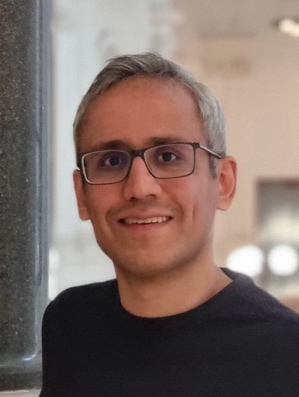
Prof. Dr. Mehmet Reşit Tolun is a full-time Professor in the Department of Software Engineering at Çankaya University (Turkey) since 2022. Previously held full-time professor positions at Konya Food and Agriculture University (2020-2022), Aksaray University (2013-2017), and TED University (2011-2013), along with a part-time professorship at Başkent University (2017-2020). Specializes in Artificial Intelligence , Machine Learning , and Data Mining , with a focus on deep learning applications in aerospace, biomedical data analysis, and software process improvement. PhD in Computer Science (University of Kent, 1985) MSc in Computer Science (University of Kent, 1982) BSc in Physics and Computer Science (University of Kent, 1981) Research Interests span deep learning frameworks, hybrid expert systems, software engineering methodologies, and biomedical signal processing. Publications emphasize practical implementations in medical diagnostics, robotics, and agricultural pest detection. Scientific Awards include the IEEE Third Millenium Medal (2000). Supervised over 55 graduate students, including Burak Çetin, Uğur Özotuk, and Mahinur Doğan. Collaborated with researchers from Orta Doğu Teknik Üniversitesi , Çankaya University , and Aksaray University .
Craig Jones is an Assistant Professor of Computer Science at Johns Hopkins University's Whiting School of Engineering. He is affiliated with the Malone Center for Engineering in Healthcare and contributes to the Precision Medicine Analytics Platform's Imaging and Data Science Subcommittees. BSc in Computer Science and Mathematics from Simon Fraser University MSc in Medical Biophysics from the University of Western Ontario PhD in Physics from the University of British Columbia His research focuses on applying artificial intelligence and neural networks to medical image processing, particularly for MRI, CT, optical coherence tomography (OCT), and ultrasound datasets. Key areas include 2D/3D image processing, anomaly detection, segmentation, and uncertainty quantification, with clinical applications in neurosurgery, ophthalmology, and oncology. Projects span robotic imaging, neuroendoscopic guidance, and cancer boundary detection. Recent publications highlight advancements in vision-language models for 3D medical imaging, automated segmentation of venous malformations, and AI-guided neurosurgical tools. Articles emphasize multimodal data fusion, self-supervised learning, and federated learning for rare cancer analytics. He received a $310,000 Department of Defense grant in 2022 to develop AI-guided treatments for venous malformations. His work bridges clinical imaging domains and computer vision as a member of the Radiology AI Lab (RAIL), a collaborative effort across Johns Hopkins Hospital, the Whiting School of Engineering, and the Applied Physics Laboratory.
Janne Heikkilä is a Professor at the Faculty of Information Technology and Electrical Engineering, University of Oulu, Finland. With over 30 years of experience in computer vision and machine learning, he leads the Center for Machine Vision and Signal Analysis (CMVS) and has contributed extensively to both theoretical and applied research. Research Interests: 3D computer vision, biomedical image analysis, computational photography, and deep learning. Scientific Leadership: IAPR Fellow, Senior IEEE Member, and former President of the Pattern Recognition Society of Finland. His work spans computer vision, radiotherapy planning, and biomedical imaging, with over 200 publications and 14,000 citations. He has secured funding from prestigious organizations like the Academy of Finland and Business Finland. His recent research focuses on debiasing AI models, 6D object pose estimation, and radiotherapy dose prediction. Scientific Awards: IAPR Fellow Senior Member of IEEE
Novi Quadrianto is a Professor of Machine Learning at the School of Engineering and Informatics, University of Sussex, where he joined as a Lecturer in February 2014. He is currently a Principal Investigator on three active EU grants: BayesianGDPR (ERC), TANGO (EU Horizon RIA), and Act.AI (ERC Proof of Concept). He also holds an Adjunct Professor position in Data Science at Monash University, Indonesia, and serves as Strategic Lab co-Leader of the BCAM Severo Ochoa Strategic Lab on Trustworthy Machine Learning in Bilbao, Spain. His educational background includes a PhD in Machine Learning from the Australian National University (2012) and a BEng in Electrical and Electronics Engineering from Nanyang Technological University, Singapore. During his PhD, he conducted research at multiple international institutions including HIIT-Finland, Yahoo! Research-US, University of Alberta-Canada, Fraunhofer IAIS-Germany, and IST Austria. From 2012-2014, he was a Newton International Fellow of the Royal Society at the University of Cambridge. Professor Quadrianto directs the Predictive Analytics Lab (PAL) since 2017, which focuses on "Responsible AI" research developing AI models that embed fairness, accountability, transparency, and trustworthiness. His research spans algorithmic fairness, federated learning, and computer vision, with applications in sustainable development, healthcare, and finance. His work has been funded by prestigious organizations including the European Research Council, EPSRC, and HM Treasury. His publications reveal a strong focus on addressing challenges in AI fairness, robustness, and privacy, particularly in dynamic environments and heterogeneous data settings. Recent work explores performative prediction, diversity-driven learning, and efficient vision transformer inference, demonstrating his leadership in cutting-edge machine learning research. European Research Council ERC Proof of Concept Grant (2023) Guarantor Researcher for BCAM Severo Ochoa Excellence Accreditation (2023) European Lab for Learning and Intelligent Systems (ELLIS) Scholar/Fellow (2020) European Research Council ERC Starting Grant (2019) Newton International Fellowship (2012) Microsoft Research Asia Fellowship (2009) Professor Quadrianto currently supervises six PhD students and five postdoctoral researchers. He has served as Action Editor for Transactions on Machine Learning Research since 2022 and as Associate Editor for IEEE Transactions on Pattern Analysis and Machine Intelligence since 2016. He has also been an Area Chair for major conferences including NeurIPS, ICML, and AAAI. His PAL laboratory hosts a team of 15 members focused on inter-disciplinary AI research with domain experts across various sectors. The PAL Lab operates three innovation strands: AI for Sustainable Development (supporting UN SDGs), AI for Healthcare (transforming health outcomes), and AI for Finance (personalized loan decision-making). The lab also leads initiatives in Diversity & Inclusion in AI and offers Pro-Bono Office Hours to organizations seeking guidance on machine learning aspects.
Armin Kirchknopf serves as a Junior Researcher at the Media Computing Research Group within the Institute of Creative Media/Technologies, Department of Media and Digital Technologies at the University of Applied Sciences St. Pölten. His interdisciplinary work bridges artificial intelligence, computer vision, and social media analysis, with significant contributions to misinformation detection and disaster response systems. Based at Campus-Platz 1 in St. Pölten, Austria, he actively collaborates on EU-funded projects and publishes in top-tier AI venues. His educational journey spans humanities and technology: a Bachelor of Arts in Egyptology and Master of Arts in Classical Archaeology from the University of Vienna (including fieldwork at excavation sites across Austria, Germany, and Egypt), followed by a Bachelor of Science in Media Technology from FH St. Pölten. This unique background informs his human-centered AI research approach. Kirchknopf's research centers on explainable multimodal AI systems for real-world challenges. His recent work demonstrates expertise in transformer-based architectures for cross-lingual fake news detection, sexism identification, and flood monitoring through social media imagery. He pioneers techniques like Grad-CAM for object detection explainability and develops visualization tools for complex data interpretation, emphasizing transparency and social impact in AI deployment. Analysis of his 13 publications (2017-2022) reveals a strategic shift toward applied AI in societal contexts , particularly using social media data for disaster management and combating online toxicity. His projects consistently integrate computer vision with natural language processing, showing increasing sophistication in multilingual capabilities and model interpretability frameworks. His scientific recognition includes: Creative Business Award for co-developing the Tenjin learning quiz application No documented student advisement or grant leadership appears in current records, though he actively mentors through project-based collaborations. His work with the Media Computing Research Group drives innovation in educational technology and public safety applications. Kirchknopf contributes to the Media Computing Research Group's portfolio including Fake News Detection, SAiEX (Safe AI with explainable integrity), InfraBase (building footprint segmentation), and Ressel Center music therapy projects. His cross-disciplinary collaborations span computer scientists, archaeologists, and social scientists, reflecting the group's commitment to human-centric technological solutions .
Antoine Doucet is a Full Professor at the University of La Rochelle, where he teaches in the Computer Science department of the University Institute of Technology (IUT). He conducts his research at the Computer Science, Image and Interaction Laboratory (L3i) within the 'Images and Content' team, which he has led since 2015. He is also a member of the Franco-Vietnamese laboratory ICTLab and serves as Director of the ICT Department at the University of Science and Technology of Hanoi since 2016. His research focuses on information retrieval, natural language processing, text mining, and artificial intelligence, with emphasis on automatic analysis of text in all forms across languages. His work prioritizes generic methods that work across languages without relying on language-specific linguistic resources. This approach is particularly valuable for under-resourced languages and noisy texts from sources like social media or OCR output. As coordinator of the Horizon 2020 NewsEye project, he led efforts to improve access to European historical newspapers through semantic enrichment and advanced search capabilities. His research has practical applications in epidemic surveillance, document fraud detection, and historical content analysis. The NewsEye project involved 11 teams across Europe, including 3 national libraries and multiple research groups. Best paper award from IMIA Yearbook 2016 (among 1,272 candidates) Best paper award at HCI International with Ilona Nawrot Press coverage for ACL 2013 paper in major publications Recipient of French scientific excellence award (Prime d'Excellence Scientifique) Doucet actively supervises PhD and Master's students, with recent advisees including Chloé Artaud (Document fraud detection), Paul Martin (Photograph Time-Stamping), Ilona Nawrot (Temporal and Multilingual Text Analysis), and Gaël Lejeune (Multilingual Epidemic Surveillance). His research has been funded through multiple projects including ANR Digistory, AmeliOCR, PHC Nusantara, and USTH SWARMS. He has also coordinated significant European projects like NewsEye and Embeddia. At L3i, he leads a research group of approximately 40 persons focused on Images and Digital Content. His work bridges theoretical advances in multilingual text processing with practical applications in historical document analysis, epidemic surveillance, and document security.
Weiyu Liu is an incoming Assistant Professor at the Kahlert School of Computing , University of Utah. Previously, he was a Postdoctoral Scholar at Stanford University in the CogAI group and Stanford Vision and Learning Lab (SVL), after completing his Ph.D. in Robotics at Georgia Institute of Technology under the supervision of Sonia Chernova. Ph.D. in Robotics (Georgia Tech) Bachelor's in Electrical Engineering (Georgia Tech) His research focuses on developing robots that can perceive, model, and interact with the real world through structured knowledge representations grounded in language and sensorimotor data. Key areas include language-guided manipulation , long-horizon task execution , and semantic reasoning frameworks for robotic systems. His recent work (2024) explores: Language-annotated demonstration integration (BLADE framework) 3D visual grounding with concept learners Embodied decision-making benchmarks Long-horizon inference challenges 4D instruction grounding from videos Scientific contributions include the RSS Pioneer (2023) recognition and First Place in Fetch It! Mobile Manipulation Challenge (2019) . He advocates for weekly individual mentoring , open research dissemination, and holistic student development in both academic and personal growth.
John M. Henderson is a Distinguished Professor at the University of California, Davis , affiliated with the Visual Cognition Lab . He holds additional roles at the Center for Mind and Brain , Center for Vision Science , Center for Neuroscience , and Plasticity and Memory Program . As an editor for Collabra: Psychology and associate editor for Journal of Experimental Psychology: General , he contributes to open science and cognitive research dissemination. Ph.D. in Cognitive Psychology, University of Massachusetts, Amherst (1988) M.S. in Cognitive Psychology, University of Massachusetts, Amherst (1986) B.S. in Psychology, University of Massachusetts, Amherst (1983) Professor Henderson’s research investigates how visual information is acquired, recognized, and integrated into cognitive systems to guide behavior. His work combines scene perception , reading processes , and visual memory using eye tracking , fMRI , brain stimulation , and computational modeling . Recent studies explore semantic guidance of attention in natural scenes, neural correlates of fixation duration, and developmental attentional patterns. His 15 most recent publications (2023-2025) reflect a focus on semantic processing in visual cognition , scene perception , and computational modeling of attention . Topics include meaning-based attentional guidance, deep learning applications in scene analysis, and neural mechanisms of memory-guided eye movements. Collaborations span cognitive neuroscience, developmental psychology, and AI-driven scene understanding. Scientific honors include: Google Scholar Classics recognition (2017) for groundbreaking 2006 paper Fellow of the Association for Psychological Science, American Psychological Association, and Psychonomic Society Grants from the National Eye Institute and National Institute on Aging support his work on visual cognition and aging. His lab trains students in cognitive methods and interdisciplinary research, bridging psychology, neuroscience, and computational modeling.
Morteza Haghir Chehreghani is a Professor of Artificial Intelligence and Machine Learning at the Data Science and AI Division of Chalmers University of Technology , Sweden. He leads the Machine Learning and Decision Making Lab and is affiliated with WASP , CHAIR , and ELLIS . Education : PhD in Computer Science (2014) from ETH Zurich under Prof. Dr. Joachim M. Buhmann Prior Roles : Staff Research Scientist at Naver Labs Europe (2014-2018) Research spans Interactive Machine Learning , Sequential Decision Making , Federated Learning , Efficient Deep Learning , and Graph-Based Learning . Key application areas include Transport , Autonomous Systems , Energy , Drug Discovery , and Computational Biology . Selected Publications (2020-2025) demonstrate expertise in Reinforcement Learning for drug design, Minimax Distance Measures for clustering, and Graph Neural Networks for trajectory analysis. Current work focuses on Combinatorial Bandits and Human-in-the-loop AI . Teaching includes graduate courses like Advanced Topics in Machine Learning (DAT441/DIT41), Algorithms for Machine Learning (TDA233/DIT382), and PhD-level Advanced Reinforcement Learning . He has also taught Statistical Methods for Data Science and Theoretical Foundations of ML . Patents include systems for Autonomous Vehicle Motion Control , K-NN Search via Minimax Distances , and Trip Prediction Algorithms . Collaborative projects involve Nature Communications (2022) and multiple ICML / CVPR publications.
Nikos Aletras is a Professor of Natural Language Processing at the University of Sheffield's School of Computer Science, where he serves as Head of the Natural Language Processing research group and is co-affiliated with the Machine Learning group. His academic journey began with a Bachelor's degree in Computer Science from the University of Crete, followed by a PhD in Natural Language Processing at the University of Sheffield. Prior to his current position, he worked as a research scientist at Amazon (Core ML and Alexa) and as a research associate at UCL's Department of Computer Science. Aletras' research spans multiple domains within AI, with particular emphasis on Natural Language Processing applications across social science, legal contexts, and data science. His work demonstrates a consistent focus on practical implementations of NLP techniques to solve real-world problems, especially in computational social science and legal technology. He has developed innovative text analysis methods that bridge traditional disciplinary boundaries, creating tools applicable across multiple scientific domains. His recent publications reveal a strong trend toward efficient and responsible AI, with significant work on model compression, hallucination mitigation in language models, and ethical considerations in computational social science research. The publications also show deep engagement with multilingual NLP challenges, explainable AI, and applications of NLP to social media analysis and legal contexts. Area Chair Award: Society and NLP (2023) Aletras has secured substantial research funding as both Principal Investigator and Co-Principal Investigator, including grants from EPSRC, ESRC, Leverhulme, EC Horizon 2020, and industrial partners like Amazon. His current projects focus on efficient deployment of large language models, addressing socio-technical limitations of LLMs for medical and social computing, and developing speech and language technologies. He actively supervises PhD students and collaborates with researchers across multiple disciplines. He leads the Natural Language Processing research group at Sheffield, which focuses on advancing NLP methodologies while applying them to diverse domains including computational social science, legal informatics, and healthcare technologies. The group maintains strong industry connections, particularly with technology companies working on language technologies, and collaborates with legal scholars and social scientists on interdisciplinary projects.
Miroslaw Staron is a Professor of Interaction Design and Software Engineering at Chalmers University of Technology. He maintains a unique 50/50 work arrangement, spending half his time on field research at Ericsson while holding his academic position. His research bridges academic theory with industrial practice through collaborations with major companies including Volvo Car Corporation and Volvo Information Technology. His research spans several key areas in software engineering: Software metrics and measurement systems in industry Model driven software development and empirical studies Defect prediction in software projects Requirements engineering in model-based development Applications of AI and machine learning in software engineering Automotive software development and security Staron's recent work demonstrates a strategic shift toward integrating AI technologies into software engineering processes, with particular focus on automotive applications. His publications from 2024-2025 reveal expertise in generative AI applications for code review automation, testing methodologies, and requirements engineering, showing how these technologies can transform traditional software development practices while addressing domain-specific challenges in automotive systems. Current research projects include: Kvantdatorer för framtidens mobilitetslösningar (2025-2027) Automatiserad och designoptimerad programvarukonstruktion/kodgenerering (2025-2029) Förvandla fordonsarkitektur med hjälp från AI (2021-2023) Arkitektonisk design och verifiering/validering av system med maskininlärning komponenter (2020-2024) With 78 publications documented in Chalmers' research database, Staron has established himself as a significant contributor to evidence-based software engineering research with strong industrial relevance.
Prof. Dr. rer. nat. Rasha Abdel Rahman is a leading figure in Neurocognitive Psychology at the Institute of Psychology, Humboldt-Universität zu Berlin . Her research bridges the domains of language production , visual perception , and semantic memory organization , with particular emphasis on electrophysiological mechanisms (EEG) and emotional influences on cognitive processing. Habilitation in Psychology (2008), Ph.D. in Psychology (summa cum laude, 2001), and M.S. in Psychology (1997) from Humboldt-Universität Since 2010: Heisenberg Professor of Neurocognitive Psychology 2009: Heisenberg Fellow Her research interests focus on: Language production mechanisms Interface between vision, semantics, and language Functional organization of semantic memory Attentional and emotional modulation of perception Face and object perception dynamics Mental imagery processes The laboratory employs behavioral and electrophysiological (EEG) methods to investigate how knowledge shapes perception and language processing. Recent studies examine: Emotional content's impact on social judgment AI-generated face perception Art perception influenced by artist morality Trustworthiness effects in visual consciousness Selected scientific awards include: Heisenberg-Fellowship (DFG, 2008) Heinz Heckhausen Junior Scientist Award (DGPs, 2002)
Jung-Eun Kim is an Assistant Professor in the Department of Computer Science at North Carolina State University, where she conducts research at the intersection of artificial intelligence, machine learning, and cyber-physical systems. Her work focuses on creating trustworthy, interpretable, and efficient AI systems, particularly for safety-critical applications. Education: Ph.D. in Computer Science, University of Illinois at Urbana-Champaign (2017) M.S. in Computer Science and Engineering, Seoul National University (2009) B.S. in Computer Science and Engineering, Seoul National University (2007) Dr. Kim's research primarily investigates how to make AI systems more trustworthy, interpretable, and efficient, with particular emphasis on understanding failure modes, safety risks, vulnerabilities, and biases in deep learning models. Her work bridges theoretical understanding with practical applications in safety-critical systems. She explores how efficiency considerations interact with these issues, seeking to fundamentally anatomize neural networks to understand what causes failure modes and how to mitigate them. Her approach has been described as 'like a heart surgeon, we open the heart of a neural network architecture, look into it, interpret it, and cure it.' Her recent publications demonstrate a strong focus on safety alignment in large language models, mitigation of spurious correlations, privacy preservation against membership inference attacks, and sustainable AI development. Her work spans theoretical foundations of trustworthy AI while addressing practical challenges in model deployment, particularly for resource-constrained environments. She has made significant contributions to understanding how model compression techniques like pruning and quantization can inadvertently amplify biases and vulnerabilities. Scientific Awards: ICLR Spotlight, 2025 IBM Faculty award, 2023 CRA Early & Mid Career Mentoring Workshop, 2023 Cloud GPU provided by Lambda, worth $17,280, for course, Spring 2023 NeurIPS Spotlight and nomination for Best Paper Award, 2022 CRA Career Mentoring Workshop, 2022 GPU Grant by NVIDIA Corporation, 2018 The MIT EECS Rising Stars, 2015 The Richard T. Cheng Endowed Fellowship, 2015-2016 Dr. Kim actively mentors PhD students, currently advising Xingli Fang, Varun Mulchandani, Jianwei Li, Rishi Singhal, and Minseon Kim. She has secured significant research funding, including an NSF SaTC (Secure and Trustworthy Cyberspace) grant as Co-PI for 'Partition-Oblivious Real-Time Hierarchical Scheduling' ($281,629.00, 2022-2024). Her research has also been supported by an NVIDIA GPU Grant and cloud resources from Lambda. She serves on program committees for top AI conferences including ICLR, ICML, NeurIPS, AAAI, and IJCAI, and has held roles such as Publicity Chair for IJCAI 2024. Her research group focuses on developing methods to make AI systems more trustworthy, interpretable, and efficient, with particular attention to safety-critical applications. The group investigates how to identify and mitigate failure modes in neural networks while maintaining efficiency, exploring the fundamental relationship between model architecture, safety risks, and computational constraints.
Sylvain Lefebvre is a permanent researcher at INRIA (Institut National de Recherche en Informatique et en Automatique) in France, where he leads the MFX research team since 2018. Previously, he was part of the ALICE group at INRIA Nancy (2009-2018) and the REVES team in Sophia Antipolis (2006-2009). His career includes a postdoctoral position at Microsoft Research Seattle (2005) following his PhD at INRIA Rhones-Alpes under Fabrice Neyret. His educational background includes a PhD in Computer Graphics from Université Joseph Fourier (Grenoble) in 2005, preceded by a Master in Computer Graphics from INP Grenoble in 2001. His habilitation thesis focused on Runtime Texture Synthesis. Lefebvre's research centers on simplifying content creation for highly detailed patterns, structures, and shapes with applications spanning Computer Graphics to additive manufacturing. He develops fast, controllable by-example synthesis approaches that generate content while enforcing user-specified constraints. His work addresses computational challenges through novel data structures and algorithms optimized for GPUs and FPGAs, including his Silice programming language. The ERC-funded ShapeForge project (2012-2017) advanced shape generation for 3D printing, leading to the IceSL software for digital modeling and fabrication. Analysis of his 15 most recent publications reveals a strong focus on additive manufacturing optimization, with recurring themes in structural integrity, material efficiency, and geometric algorithms. His work bridges computer graphics theory with practical fabrication constraints, particularly in microstructure design, slicing techniques, and mechanical metamaterials. The interdisciplinary nature spans computer science, materials engineering, and robotics. EUROGRAPHICS Young Researcher Award (2010) ERC Starting Grant for ShapeForge project (2012) Lefebvre has advised over 25 PhD students and interns including Marco Freire, Thibault Tricard, and Jimmy Etienne. His ShapeForge project received significant ERC funding, supporting research in computational fabrication. He serves on numerous program committees including SIGGRAPH, Eurographics, and SIGGRAPH Asia, reflecting his leadership in the computer graphics community. As leader of the MFX team since 2018, Lefebvre directs research in computational fabrication, focusing on IceSL software development for 3D printing workflows. The team integrates computer graphics techniques with manufacturing constraints, developing tools that simplify complex object design and fabrication while addressing real-world challenges in material usage and structural integrity.
Raquel Fernández is a Full Professor of Computational Linguistics and Dialogue Systems at the Institute for Logic, Language & Computation (ILLC), University of Amsterdam. She serves as Vice-Director for Research at ILLC and is a board member of the ELLIS Amsterdam Unit. Her research focuses on interdisciplinary approaches at the intersection of computational linguistics, cognitive science, and artificial intelligence, with emphasis on dialogue modeling, multimodal processing, and language grounding in visual/social contexts. Her work is supported by prestigious grants including the European Research Council (ERC Consolidator Grant 819455) and multiple Dutch Research Council (NWO) awards (VENI, VIDI, Aspasia). She has received scientific recognition such as the Outstanding Paper Award at EMNLP and Best Data Award at GenBench Workshop. Her recent publications analyze multimodal dialogue systems, visual storytelling evaluation consistency, and co-speech gesture modeling, reflecting trends in Linguistic-Cognitive Integration , Multimodal AI , and Contextual NLP . She leads the Dialogue Modelling Group and has been actively involved in academic leadership as co-president of SemDial, VP-Elect for SIGDAT, and ethics chair for major conferences like COLM. Scientific Awards ERC Consolidator Grant 819455 NWO VENI/VIDI/Aspasia grants Outstanding Paper Award at EMNLP 2023 Best Data Award at GenBench Workshop Elected ELLIS Fellow 2023