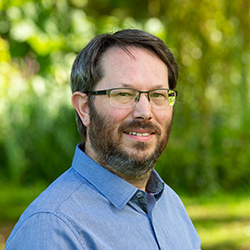
Thomas Williams is an Associate Professor of Computer Science at the Colorado School of Mines, where he directs the MIRRORLab (Mines Interactive Robotics Research Lab). He earned his PhD in Computer Science and Cognitive Science from Tufts University in 2017. His educational background includes: BA in Computer Science, Hamilton College, 2011 MS in Computer Science, Tufts University, 2013 PhD in Computer Science: Cognitive Science, Tufts University, 2017 Williams' research focuses on artificial intelligence for human-robot interaction, especially natural language understanding and generation in uncertain environments. His work integrates cognitive science principles from linguistics and psychology to develop context-aware robotic systems. Key areas include Human-Robot Interaction, Natural Language Processing, Robot Ethics, and Augmented Reality, with emphasis on ethical implications and social dynamics in human-robot communication. Analysis of his publications (2015-2020) reveals a clear trajectory toward context-sensitive dialogue systems that handle ambiguity, social norms, and ethical considerations. His work increasingly explores multimodal interaction through AR/VR and examines how language-capable robots influence human moral frameworks, with growing attention to gender dynamics and noncompliance behaviors in social robotics. His notable awards include: New and Future AI Educator Award, EAAI (2017, 2018) Teaching Fellowship, Tufts Graduate Institute for Teaching (2015) Doctoral Consortia participation at YRRSDS (2014), HRI (2015), and AAAI (2016) Williams teaches Human-Robot Interaction, Robot Ethics, and Computer Vision courses while leading externally funded research. His work receives support from NSF, ONR, ARL, and Early Career awards from NSF, NASA, and AFOSR, focusing on grants that advance context-aware natural language interaction in robotics. As director of the MIRRORLab, he oversees research on human-robot interaction systems that dynamically adapt to environmental, cognitive, social, and moral contexts, with applications in assistive robotics and collaborative workspaces.