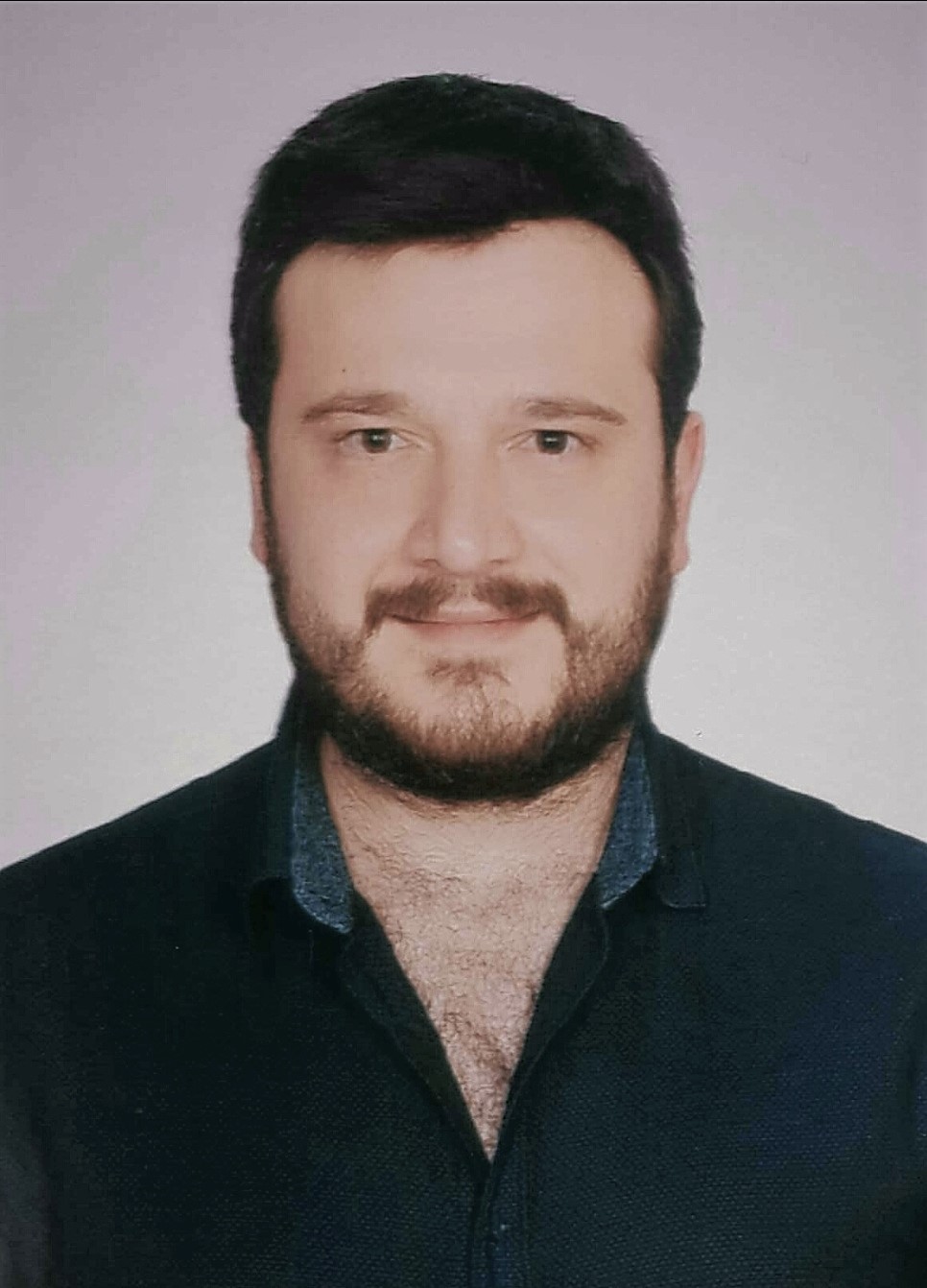
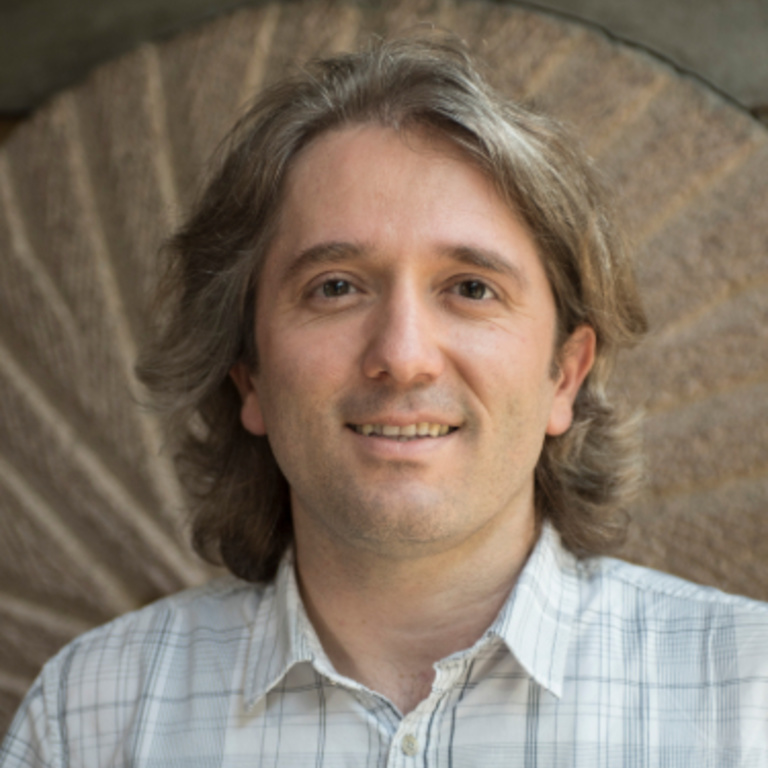
Burak Kurkcu is an Assistant Professor in the Department of Electrical and Computer Engineering at Santa Clara University's School of Engineering. He previously served as an Assistant Professor at Hacettepe University and as a Senior Control System Design Engineer at Aselsan Inc. Education: Ph.D., TOBB University of Economics and Technology (2019) M.S., TOBB University of Economics and Technology (2015) B.S., Istanbul Technical University (2010) Research Interests: Dr. Kurkcu specializes in robust control systems, soft robotics, switched neural networks, and autonomous systems. His work focuses on disturbance estimation, simultaneous learning algorithms, and control of nonlinear systems. Recent Publication Trends: His research includes soft pneumatic actuator modeling, disturbance observer-based control methods, and evolutionary optimization for state-space models. Key themes involve soft robotics, autonomous control, and computational intelligence applications. Scientific Awards: IEEE Turkey Ph.D. Thesis Award (2020) Editorial Roles: Associate Editor for TIMC, Measurement and Control , and Turkish Journal of Electrical Engineering and Computer Science . Principal Investigator for defense-related control system projects.
Iain Spears holds dual academic appointments as Senior Lecturer in Sport & Exercise Science at Newcastle University's Faculty of Medical Sciences (Department of Biomedical Sciences) since May 2020, and as Lecturer in Biomedical/Sports Engineering at Nottingham Trent University's Department of Engineering since August 2019. His interdisciplinary position bridges sports science, biomechanics, and engineering applications in athletic performance. Dr. Spears' research focuses on several interconnected areas: Sports biomechanics and movement analysis Training load monitoring and performance assessment methodologies Injury prevention and rehabilitation strategies Technological applications in sports performance Physiological responses to exercise His publication record demonstrates methodological innovation, with recent work employing point-cloud processing for motion analysis, low-cost depth-sensing camera systems, and exergaming solutions for high-intensity training. Key research themes include differential ratings of perceived exertion, environmental effects on athletic performance, and cooling methodologies for endurance exercise. Dr. Spears' collaborative research network includes frequent co-authors Matthew Weston, Thomas Macpherson, and Sean McLaren, with publications appearing in high-impact journals such as Journal of Biomechanics, Sports Medicine, and Medicine and Science in Sports and Exercise. His work has practical applications across team sports, military training contexts, and rehabilitation programming.
Jesus Escudero-Sahuquillo is a Full Professor at the Computing Systems Department (DSI) of the Faculty of Computer Science Engineering at the University of Castilla-La Mancha (UCLM), Spain. His academic journey began at UCLM where he completed his Degree in Computer Science in 2006, followed by a Master of Science in 2008, and a PhD in Advanced Computing Technologies in 2011. His professional experience includes: Full Professor at UCLM (current position) PostDoc at Technical University of Valencia (2015) PhD Senior Engineer at Oracle Norway (2013-2015) 5-year PostDoc position at UCLM funded by UCLM and European Commission (2016) Dr. Escudero-Sahuquillo's research focuses on high-performance computing and Big Data, with particular emphasis on interconnection networks and related optimization strategies. His work spans congestion management, routing algorithms, network topologies, and power saving techniques. He has extensive experience with InfiniBand technology and has contributed significantly to congestion control mechanisms in high-performance interconnects. His publication record demonstrates a strong focus on advancing network performance in high-performance computing environments. Over the past decade, his research has evolved from foundational work on routing algorithms and network topologies to more sophisticated congestion management techniques applicable to modern data centers and exascale computing architectures. His most recent work addresses cutting-edge challenges in packet identification, hybrid congestion control, and adaptive routing for next-generation interconnection networks. Dr. Escudero-Sahuquillo has served as a program committee member and reviewer for numerous prestigious conferences and journals including IEEE Micro, IEEE Transactions on Parallel and Distributed Systems, and Journal of Parallel and Distributed Computing. He was the co-organizer for five editions of the IEEE International Workshop on High-Performance Interconnection Networks in the Exascale and Big-Data Era (HiPINEB). His research has been supported through participation in multiple projects funded by the European Commission and the Spanish Government. He has collaborated extensively with researchers across Europe and has been instrumental in advancing the state of the art in high-performance interconnection networks.
Nathalia Peixoto is an Associate Professor in the Department of Electrical and Computer Engineering and Affiliate Faculty in Bioengineering at George Mason University. Her work bridges neural engineering, biomedical applications, and assistive technology development with international collaborations across Israel, Ireland, Peru, and Korea. Educational background: PhD in Electrical Engineering, Universidade de Sao Paulo MS, University of Campinas Research Interests: Dr. Peixoto specializes in neural engineering with focus on brain-computer interfaces using wearable devices. Her lab develops: Neural prosthetics and implantable systems Bioimpedance-based medical sensors Low-cost electrophysiological recording platforms Community-centered engineering design solutions Publication Trends: Her 2022-2025 publications demonstrate strong interdisciplinary convergence between neuroscience, biomedical engineering, and AI. Key trends include machine learning for seizure detection in zebrafish models, electrochemical optimization of neural interfaces, and community-engaged design projects addressing societal challenges through transdisciplinary graduate training. Grants and Projects: Principal investigator for multiple NSF-funded initiatives: NRT-HDR: Transdisciplinary Graduate Training (2019-2024) Smart and Connected Communities: Networked Devices (2017-2019) Bioimpedance for retinal implants (2015-2017) C2MW: Classroom to Makers Week (2015-2016) Additional funding from VA STEM CoNNECT and Longwood University. Laboratory: The Neural Engineering Lab integrates chemistry, physics, and engineering disciplines through team-based projects involving high school to graduate students. Current work includes sustainable food-waste solutions, tremor-capturing robots for low-resource areas, and neural implants with international academic partnerships.
Dr. Andrzej Ożadowicz is a University Professor at the Department of Power Electronics and Automation of Energy Conversion Systems within the Faculty of Electrical Engineering, Automatics, Computer Science and Biomedical Engineering at AGH University of Science and Technology in Kraków, Poland. His office is located in room 510, building C-1, with contact details including phone +48 12 617 50 11 and email ozadow@agh.edu.pl. He holds PhD, DSc, and Engineering degrees, reflecting his dual expertise in academic research and practical engineering applications. His research spans Power Electronics, Building Automation, Smart Grids, and IoT-driven energy systems. Key interests include energy efficiency optimization through digital twins and BIM, distributed energy resource integration , and AI-enhanced demand management . Notably, he pioneers applications of deep reinforcement learning in home energy systems and develops frameworks for Smart Readiness Indicator implementation. His work bridges theoretical innovation with practical case studies in building thermal modeling and dynamic façade systems. Recent publications (2021-2025) reveal three dominant trends: (1) Convergence of digital twin technology with building automation for real-time energy management; (2) Critical analysis of IoT security and interoperability in smart infrastructure; (3) Pedagogical innovations in engineering education through blended learning methodologies post-COVID-19. His scholarly output demonstrates consistent focus on energy transition challenges and smart grid evolution. Professor Ożadowicz actively contributes to the Discipline Council for Automation, Electronics, Electrical Engineering and Space Technologies at AGH. He is instrumental in the AutBudNet initiative —a network of certified laboratories for energy efficiency assessment that implements "learning by doing" principles in building automation education. His work with this consortium emphasizes practical validation of smart grid technologies and demand response systems.
Jill M Castek is Professor of Literacy, Technology & Bi/multilingual Learners & STEM Education in the Department of Teaching, Learning, and Sociocultural Studies at the University of Arizona's College of Education. As Graduate Advisor for the Second Language Acquisition and Teaching (SLAT) program and Co-Director of the Digital Innovation and Learning Lab (DIALL), she bridges research and practice in digital literacy development. Dr. Castek earned her PhD in Education Psychology (Cognition and Instruction) from the University of Connecticut as a Neag fellow in the New Literacies Research Lab, followed by postdoctoral work at UC Berkeley's Lawrence Hall of Science. Her research examines how digital, visual, and audio storytelling fosters literate capacities across print and digital forms in classrooms and community spaces. Her work centers on digital problem solving , critical media literacy , and equity-centered making practices in STEM education. She investigates intersections of disciplinary literacy, new media, and learning for bi/multilingual students, with strong emphasis on community-based applications through libraries and non-profits like Literacy Connects where she serves on the board. Recent publications (2022-2025) reveal growing focus on AI-era teacher education , digital health literacy , and misinformation challenges , while maintaining core commitments to collaborative problem solving and expansive literacies frameworks. Her scholarship consistently addresses K-12 and adult learning contexts through interdisciplinary lenses. Scientific recognition includes: Neag fellowship during doctoral studies As Principal Investigator on NSF and IMLS grants, Dr. Castek advances digital equity through projects like the Making Equity Network (broadening STEM participation for underrepresented groups) and library-focused digital problem-solving initiatives serving economically vulnerable adults. Her leadership in the Technology Enhanced Language Learning (TELL) cluster hire demonstrates institutional impact. Through DIALL, she cultivates innovations connecting digital storytelling with self-expression at individual and community levels, promoting workforce readiness via creative problem-solving approaches. Her board membership with Literacy Connects extends this community-engaged scholarship to Tucson-based literacy initiatives.
Professor Trina Myers serves as the Head of School for the School of Information Technology at Deakin University's Faculty of Science Engineering and Built Environment. With extensive experience in academia and research leadership, she plays a pivotal role in shaping IT education and research directions at Deakin. She is also an active member of the Australian Council of Deans of ICT (ACDICT), having served as its immediate past President. Her educational background includes: Doctor of Philosophy in Computer Science from James Cook University Master of Business Administration from James Cook University Master of Information Technology from James Cook University Professor Myers' research focuses on semantic technologies, ontology engineering, Internet of Things, knowledge management, natural language processing, and human-computer interaction . Her work emphasizes interdisciplinary collaboration, bridging technology with fields such as healthcare, marine science, environmental conservation, and business. She has pioneered approaches in academagogy (academic gamification) to enhance online learning engagement, particularly for adult learners. Her IoT research has significant applications in healthcare space optimization, environmental monitoring, and resource management. Her recent publications demonstrate a strong trajectory in applying AI and IoT technologies to solve real-world problems, particularly in healthcare, education, and resource optimization. There's a clear pattern of interdisciplinary work connecting computer science with healthcare, education, and environmental science. Her research increasingly focuses on human-centered technology design, especially for vulnerable populations like adolescents with autism spectrum disorder. Her notable achievements include: Fellow of the Australian Computer Society (2023) Australian Awards for University Teaching (AAUT) Teaching Award (2020) Women in IT Professional Leadership Award Finalist (2020) Asia-Pacific International Triple E Entrepreneurial Educator of the Year Award (1st runner-up, 2020) Australian Computer Society, National Digital Disruptor ICT Educator of the Year (2019) Professor Myers actively supervises doctoral students across diverse research areas including gamification in language learning, brain tumor analysis using deep learning, AI in higher education, AI for refugee resilience, data integrity in edge environments, and quantum-driven satellite networking. She has secured significant research funding, including a recent grant for "Indiginizing ICT Curriculum: A Starter Framework for the Community of Practice" through the Australian Council of Deans of ICT. Her teaching philosophy emphasizes active learning methodologies, Process Oriented Guided Inquiry Learning (POGIL), blended learning, and collective intelligence approaches.
Dr Lynette Pretorius is a Lecturer at Monash University's School of Curriculum Teaching & Inclusive Education, where she has established herself as an award-winning educator and researcher. With extensive experience teaching across undergraduate, postgraduate, and graduate research levels, she supervises PhD students while weaving together interdisciplinary expertise to create inclusive and transformative learning environments. Her work spans multiple academic contexts while maintaining a consistent focus on compassionate, equitable education. Dr Pretorius's research centers on doctoral education, academic identity, student wellbeing, and AI literacy, with particular emphasis on creating more just and creative academic spaces. Drawing from autoethnography and qualitative methodologies, her work interlaces personal narratives with institutional systems to understand how lived experiences and academic structures shape one another. She champions pedagogies of care that prioritize wellbeing, justice, and student growth through reflexive, relational ethics and methodological transparency. Her recent publications reveal a growing focus on AI literacy in higher education, with multiple 2024-2025 works developing frameworks for responsible AI use, examining AI's decolonial potential, and exploring how generative AI transforms academic communication and research practices. Alongside this emerging AI focus, her longstanding work on doctoral education continues through writing groups, wellbeing research, and investigations into academic identity formation. Dr Pretorius has received significant recognition for her contributions, including: Dean's Award for Teaching Excellence (2022) Global Impact Grant (Student Success) (2022) Senior Fellow, Higher Education Academy (2021) Dean's Citation for Outstanding Contribution to Student Learning (2019) Dean's Award for Programs that Enhance Learning (2019) Her research leadership extends to multiple funded projects including 'Behind the Academic Curtain: Doctoral Students and the Hidden Rules of Academia' (2025-2026) and 'Learning about Academic Publishing through Collaborative Online International Learning' (2024-2025). She actively supervises doctoral students and has developed innovative approaches to research and teaching, particularly through her work on doctoral writing groups as transformative spaces. Dr Pretorius maintains a strong public scholarly presence through her Scholar's Way Blog, University Study Made Easy YouTube Channel, and the AI Literacy Lab. These platforms extend her research impact beyond traditional academic boundaries, reaching broader educational communities and providing practical resources for students and educators navigating contemporary academic challenges.
Dr. Rama Hart is an Associate Professor in the Department of Management at the Opus College of Business, University of St. Thomas. Previously served as Director of the Master of Arts in Organization Development program in the College of Education, Leadership and Counseling before joining Opus in 2018. Specializes in global/virtual team communication, organizational change leadership, and workplace inclusion issues. Teaches Managing Organizational Behavior in Full-time MBA program Offers courses in Organization & Employee Development (MGMT 360) and Inclusive Leadership (MGMT 385) Active participant in equity, diversity, and intercultural competence initiatives Research Focus: Combines virtual communication studies with organizational change management, emphasizing inclusive leadership practices across domestic and global contexts. Her work examines relationship formation in distributed teams through communication patterns and technological mediation. Teaching Philosophy: Integrates experiential learning through virtual worlds and appreciative inquiry methodology, focusing on practical skill development for navigating modern workplace complexities. Institutional Roles: Involved with multiple academic units including the Schulze School of Entrepreneurship and various research centers like the Behavioral Research Center and Institute for Social Innovation.
NAKAJIMA, Tatsuo serves as a Professor at Waseda University's School of Fundamental Science and Engineering, Department of Computer Network Engineering. Holding a Doctor of Engineering from Keio University, he has been affiliated with Waseda since 1999 after positions at Japan Advanced Institute of Science and Technology (1993-1999), Cambridge University, and Carnegie Mellon University. His academic profile shows substantial research output with 433 papers and 3,338 citations on Scopus, and 7,604 citations with an h-index of 42 on Google Scholar. Dr. Nakajima's research focuses on Distributed Systems, Embedded Systems, and Ubiquitous Computing, with particular emphasis on virtualization architectures for embedded environments. His work bridges theoretical computer science with practical applications in information appliances, operating systems, and persuasive computing technologies. He has developed innovative systems including SPUMONE (a composition kernel for multi-OS environments), SIGMA System, and SPLiT (a performance optimization library for multicore processors). Analysis of his 15 most recent publications reveals a consistent research trajectory centered on enhancing reliability, security, and performance of embedded and pervasive computing systems. His work shows increasing integration of human factors, particularly in sustainable behavior applications through persuasive technology. The research spans from low-level system architecture to user-centered applications, demonstrating both technical depth and practical relevance. Nokia Research Center, Visiting Research Fellow (2005.04) Dr. Nakajima's research has produced numerous practical frameworks including SPUMONE for multi-OS environments, SPLiT for performance optimization, and persuasive applications like EcoIsland for sustainable behavior. His work on kernel monitoring, anomaly detection, and self-healing systems demonstrates strong focus on system dependability. Current research appears directed toward integrating human factors with embedded systems, particularly in environmental sustainability applications. His laboratory work centers around the SPUMONE project, a virtualization layer for multi-core embedded systems that enables multiple operating systems to coexist with minimal engineering cost. This research environment supports exploration of resource management, security monitoring, and performance optimization in embedded contexts. The work has practical applications in information appliances, smart homes, and pervasive computing environments.
Stephen Brooks is a Professor in the Faculty of Computer Science at Dalhousie University, actively contributing to research and education in computer graphics, visualization, and human-computer interaction. He is affiliated with the Human-Computer Interaction, Visualization & Graphics research cluster and currently supervises multiple graduate students on diverse projects. PhD in Computer Science, University of Cambridge (2004) MSc in Computer Science, University of British Columbia (2000) BSc, Brock University (1998) His research focuses on computer graphics and visualization, particularly non-photorealistic rendering, image editing, 3D geospatial systems, ocean visualization, and real-time rendering of natural phenomena. He has also worked in sound synthesis and motion editing. His recent publications show a strong emphasis on visual analytics, network flow visualization, and ocean science applications. His work spans interdisciplinary domains including environmental science, genomics, cybersecurity, and digital art. He has developed visualization tools for ocean science under a major CFREF-funded initiative and created novel methods for rendering stained glass, mixed media art, rivers, and ocean surfaces. His research integrates perception, automation, and user interaction to enhance visual analysis. Notable scientific contributions include work on tone mapping optimization, uncertainty visualization using chromatic aberration, semantic object clouds, and hybrid 2D/3D GIS. His publications appear in top venues such as IEEE TVCG, ACM Transactions, and SIGGRAPH. NSERC Discovery Grants Canada First Research Excellence Fund (CFREF) NSERC CREATE Mitacs Accelerate and Globalink CFI New Opportunities Grant Cyber Security Research and Development Grant He has supervised numerous PhD, Master’s, and undergraduate students in areas including ocean visualization, tone mapping, network security, VR, and geospatial analytics. He teaches courses in Game Design, Visualization, Computer Animation, and Network Computing, emphasizing project-based and interdisciplinary learning. He leads research in visual analytics for network data (FloVis), ocean science, and mixed reality collaboration. His lab develops interactive systems for data exploration in domains ranging from marine biology to cybersecurity. Future work includes expanding ocean-first climate visualization and enhancing mixed presence collaboration in immersive environments.
Professor Helena Cooper-Thomas is a faculty member at Auckland University of Technology (AUT), holding the position of Professor of Organizational Behavior in the AUT Business School. She also holds honorary positions at the University of Auckland and the University of Waikato, reflecting her broad academic influence in Aotearoa New Zealand. Her research and teaching focus on organizational behavior, with an emphasis on employee development and workplace relationships. Her research interests include: New employee adjustment and organizational socialization Proactive behavior and work engagement Workplace wellbeing and quality of working life Workplace friendships and person-organisation fit Quantitative and qualitative research methods Professor Cooper-Thomas's recent publications explore themes such as workplace gossip, psychological contracts, job crafting, and sustainability in organizations. Her work often investigates the social dynamics of onboarding, the role of leadership in psychological safety, and the impact of environmental practices on employee wellbeing. She employs both empirical and methodological approaches, contributing to both theoretical and practical understanding in organizational psychology. She has received scientific recognition including: Best Paper Award, Group & Organization Management (2024) Best Paper selected by the Careers Division of the Academy of Management (2023) Professor Cooper-Thomas is actively involved in mentoring and supervising graduate students at both Master’s and PhD levels, with recent projects covering topics such as broken psychological contracts, psychological safety for racial minorities, and menopause in the workplace. She contributes significantly to academic service as a Representative-at-Large for the Academy of Management’s Organizational Behavior Division (2022–2025) and as a member of the Royal Society Te Apārangi Marsden Panel for Economics and Human Behaviour (2022–2024). She also serves on editorial boards for the Journal of Business and Psychology and Journal of Managerial Psychology, and regularly reviews for top journals and grant agencies. Her outreach includes public engagement through articles in The Conversation and NZ Management magazine, translating research into practical leadership insights. She has collaborated with institutions across Europe, North America, and Asia, and has been a visiting scholar at the University of Toronto, Cass Business School, Tilburg University, and Exeter Business School. She co-organizes the annual Aotearoa New Zealand Organisational Psychology and Organisational Behaviour Conference, fostering scholarly exchange nationally.
Ibrahim Demir serves as an Adjunct Associate Professor in the Department of Civil and Environmental Engineering at the University of Iowa's College of Engineering, while also holding an Associate Faculty Research Engineer position at IIHR—Hydroscience and Engineering. His interdisciplinary work bridges hydroinformatics, environmental engineering, and advanced computing technologies to address critical water resources challenges through innovative digital solutions. His educational background includes a PhD in Environmental Informatics and Control Program from the University of Georgia (2010), an MS in Environmental Engineering from Gebze Institute of Technology (2004), and a BS in Chemistry from Bogazici University (2000). This foundation supports his integration of chemical, environmental, and computational sciences in hydrological research. Dr. Demir's research centers on hydroinformatics and AI-driven environmental systems, with core expertise in scientific visualization, cyber systems design, and virtual/augmented reality applications. He develops web-based frameworks for flood risk assessment, drought analysis, and water quality management, emphasizing real-time data integration and user-friendly interfaces. Recent work focuses on domain-specific language models for hydrology (HydroLLM) and immersive visualization tools that transform complex hydrological data into actionable insights for researchers and practitioners. Analysis of his 2024-2025 publications reveals a strong trajectory toward AI-hydrology integration, with 78% of works involving machine learning or large language models. Key themes include flood risk communication (22% of publications), algal bloom prediction (15%), and educational technology applications (12%). His research increasingly emphasizes scientific reproducibility through no-code visual programming frameworks and digital twin implementations for watershed systems. Dr. Demir actively contributes to scholarly discourse as Associate Editor for Environmental Modeling and Software, Journal of Hydroinformatics, Journal of Environmental Informatics, and Water and Artificial Intelligence (Frontiers in Water). He serves as Vice-Chair of the International Joint Committee on Hydroinformatics (IAHR/IWA/IAHS) leadership team, shaping global standards in hydroinformatics research and practice. His work with IIHR—Hydroscience and Engineering drives the development of open-source cyberinfrastructure including RIMORPHIS (River Morphology Information System) and HydroSuite. These platforms enable collaborative river morphology research and provide modular tools for hydrological analysis, education, and operational decision support, demonstrating his commitment to accessible, community-driven scientific advancement.
J.F. Matos is a Professor at the Faculty of Social Sciences, Education and Administration (FCSEA) of Lusophone University, Portugal. His work focuses on education, pedagogy, teacher training, and digital education , with a strong emphasis on integrating technology into teaching practices and curriculum design. Education: PhD in Mathematics Education, University of Lisbon (1988–1991) Research Interests: Matos is active in research methodology, educational technology, virtual reality pedagogy, and policy analysis . His projects like ReMASE and EDU-LAB explore innovative frameworks for teacher training, work-based learning, and labor market alignment. Scientific Output Trends: Recent work includes immersive virtual reality pedagogical models, digital textbook implementation in Madeira, and collaborative research on educational methodologies in Portugal. His publications span peer-reviewed journals, commissioned reports, and books , reflecting interdisciplinary collaborations. Projects: EDU-LAB (2022–2027): Focus on work-based learning and investment policy. ReMASE (2022–2023): Analyze research methods in advanced education studies. Collaborations: Matos works with institutions like the European Research Executive Agency and COFAC , leveraging international networks to address educational challenges in Portugal and beyond.
Dr. Jia Rao is an Associate Professor in the Department of Computer Science and Engineering at the University of Texas at Arlington, College of Engineering. He previously served as an Assistant Professor at the University of Colorado, Colorado Springs from 2012 to 2016. His research spans operating systems, distributed and parallel computing, cloud computing, virtualization, and machine learning. Education: Ph.D., Computer Engineering, Wayne State University, 2011 M.S., Computer Science, Wuhan University, 2006 B.S., Computer Science, Wuhan University, 2004 Dr. Rao's research focuses on building adaptive, scalable, and efficient computer systems for cloud and data center environments. His interests include resource management, performance modeling, adaptive scheduling, and quality-of-service (QoS) guarantees in virtualized and containerized systems. He combines machine learning and feedback control techniques with low-level system design to improve efficiency, fairness, and predictability in heterogeneous and multi-tenant environments. An analysis of his recent publications reveals a strong trend toward memory and resource management innovations in cloud-native systems. His work explores tiered memory architectures, secure container deployment, preemptive multitasking for deep learning, and efficient packet processing in container networks. These efforts reflect a consistent focus on optimizing system-level performance, security, and scalability in modern data centers. Scientific Awards: NSF CAREER Award (2019) Best Paper Award, APSys (2016) Best Paper Award, ICAC (2013) Best Paper Nomination, HPCA (2013) Best Paper Nomination, HPDC (2013) Best Paper Award, Middleware (2021) Researcher of the Year, UCCS (2014) Dr. Rao actively advises students and serves on dissertation and thesis committees for numerous Ph.D. and Master’s candidates. He leads federally funded research projects supported by the National Science Foundation, including a major CAREER grant on virtualized architectures and collaborative big data initiatives. His research has been sponsored by NSF, IEEE, and Intel Corporation, reflecting strong industry and academic collaboration. He leads and contributes to major research labs and teams focused on cloud systems, operating systems, and performance optimization. His team has produced high-impact work in top-tier venues such as OSDI, SOSP, ATC, EuroSys, and ICDCS. Current and future work includes next-generation memory architectures using CXL, intelligent resource provisioning, and resilient container networking.