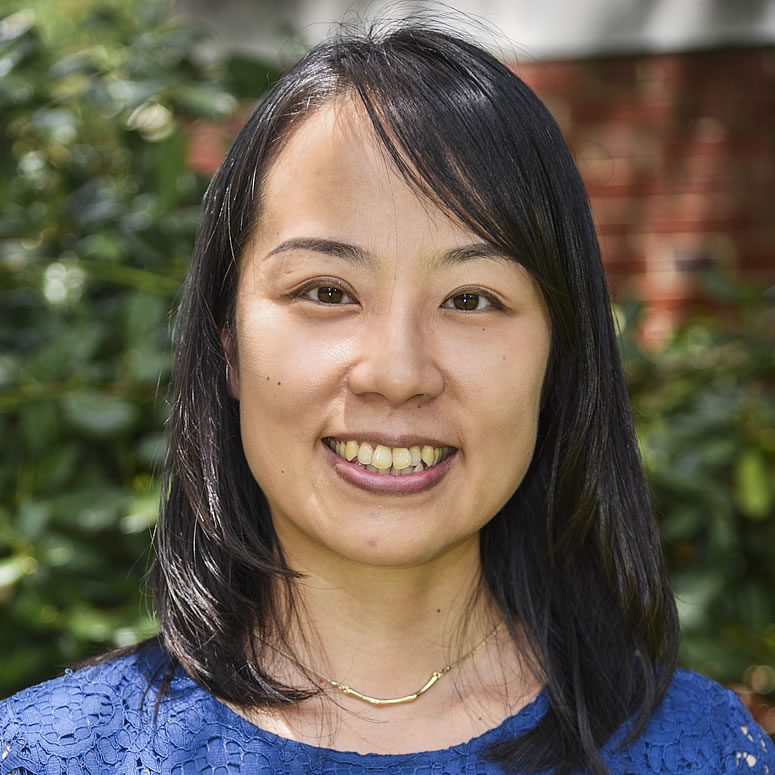
Dr. Barbara Polivka is the Associate Dean for Research and Professor at the University of Kansas School of Nursing. She holds a BSN and MSN from the University of Cincinnati College of Nursing and Health, and a PhD in Nursing from The Ohio State University. Her research focuses on environmental health (e.g., lead poisoning prevention, asthma triggers) and health services research (e.g., public health nursing standards, nursing workforce challenges). She has secured NIH, NIOSH, and AHRQ funding for projects addressing home safety hazards and asthma management in older adults. Professional Affiliations include the American Academy of Nursing (Fellow), American Public Health Association, and Midwest Nursing Research Society. Key grants include current NIEHS funding for real-time asthma exposure monitoring and prior NIOSH support for virtual home safety training. Awards include the Ruth B. Freeman Award (APHA) and Ohio Healthy Homes Achievement Award. Teaching spans undergraduate through doctoral levels, with emphasis on community/public health nursing. Mentored numerous PhD/DNP students in environmental health and health disparities. Current work explores口罩使用对哮喘患者的影响, pandemic-related disinfectant exposure risks, and medication literacy in aging populations.
Felix Xiaozhu Lin serves as Associate Professor and William Wulf Faculty Fellow in the Department of Computer Science at the University of Virginia's School of Engineering and Applied Science, where he directs the Computer Science Ph.D. Program and MCS/MS Program. Previously a tenured Associate Professor at Purdue University's School of Electrical and Computer Engineering, Lin joined UVA Engineering in August 2020 after completing his doctoral research at Rice University. His educational credentials include: Ph.D. in Computer Science, Rice University (2014) M.S. in Computer Science, Tsinghua University (2008) B.S. in Automation, Tsinghua University (2006) Lin's research centers on systems software at the intersection of operating systems, compilers, and computer architecture, with emphasis on accelerating and safeguarding software systems. His current projects target on-device large language models and speech processing for low-cost hardware ( Analysis of his recent publications reveals a strong trajectory in edge computing and efficient AI systems. His research demonstrates increasing focus on hardware-software co-design for autonomous devices, with significant contributions in video analytics for energy-constrained cameras, kernel virtualization for heterogeneous architectures, and stream processing frameworks leveraging emerging memory technologies. The work consistently addresses real-world constraints like power limitations and network intermittency while maintaining rigorous academic standards. His scientific recognition includes: National Science Foundation CAREER Award (2019) Google Faculty Research Award (2016) NSF CISE Research Initiation Initiative Award (2015) ACM ASPLOS Best Paper Award (2014) Lin leads the XSEL research group mentoring graduate and undergraduate students in systems software development. His educational initiatives include CS4414/CS6456, a modern operating systems course featuring Arm64 baremetal kernel development, multicore systems, trusted execution environments, and filesystem forensics. The course's experiential approach has received strong student feedback for its modern content and practical relevance. His group actively recruits for projects spanning on-device AI, hardware-accelerated speech processing, and next-generation OS development. Based in Charlottesville, Virginia, Lin's research benefits from UVA's proximity to Shenandoah National Park and collaborative opportunities within the university's vibrant computing ecosystem, including the 2024 LLM Workshop he co-organized with Professor Yangfeng Ji.
Professor Eduardo Velloso is an academic staff member at the School of Computer Science , University of Sydney . He is a member of the Centre for AI Trust and Governance and holds a PhD in Computer Science from Lancaster University and a Bachelor of Computer Engineering from Pontifical Catholic University of Rio de Janeiro. Teaches COMP4447/5047 - Pervasive Computing and INFO1111 - Computing Professionalism Research Interests focus on distributed collaboration in mixed reality , human-AI interaction , and HCI theory and methodology . His work integrates Engineering, Design, and Psychology to explore gaze interaction, adaptive agents, and multimodal interfaces. Key projects include Blended Whiteboard for remote MR collaboration and GazeGrip for mobile accessibility. Publication Trends show expertise in Virtual Reality , Mixed Reality , and Human-AI Interaction , with recent work on Algorithmic Recourse and Immersive Educational Tools . Awards include ACM Best Paper Awards at CHI, UIST, TOCHI, and DIS venues. Scientific Awards 2024 ACM CHI & DIS Honorable Mentions 2022 UoM-FEIT Teaching & Learning Award 2019 UoM-CIS Excellence in Research Award 2015 ACM UIST Best Paper Award Advising includes supervision of research students Marvin, Tinghui LI, and Wendi YU in projects on asynchronous MR collaboration , situationally-induced impairments , and physical environment integration . His lab explores AI-assisted interaction and context-aware computing through projects like SpinalLog and LiftSmart .
Dr. Kara Miller is an Assistant Professor of Applied Anthropology in the Department of Anthropology at California State University - Long Beach (CSULB). Her work focuses on medical anthropology, body politics, and eco-social well-being, employing holistic approaches to address health equity through ethnography and empowerment-based methodologies. Education: PhD in Anthropology, University of California, Riverside (2017) MA in Anthropology, Louisiana State University (2010) BA in Anthropology & Applied Visual Arts, North Carolina State University (2006) Research Interests: Dr. Miller investigates embodied ecologies, toxic industrial practices, and health sovereignty. Her projects include studies on reproductive health policies in East Africa, mental health systems in New Orleans, migrant healthcare access in California, and a NIH-funded study on integrative medicine in Uganda. She emphasizes feminist epistemologies, health humanities, and critical social theory to explore how bodies interact with lifeworlds and environmental conditions. Teaching: She teaches courses such as Practicing Anthropology, Applied Anthropology, Ethnographic Methods, and Health and Healing. Past courses include Biological Approaches to Medical Anthropology and Embodied Futures. Current Projects: Dr. Miller’s ongoing work examines local environmental entanglements and community-based conservation strategies, linking embodiment to ecological health and justice.
Dr. Chang Pu is a Professor of Teacher Education and Coordinator of the ESOL endorsement program at Berry College. She specializes in TESOL, bilingual education, and heritage language education, teaching both undergraduate and graduate courses including Multicultural Education and ESOL endorsement classes. Her work emphasizes preparing educators to support culturally and linguistically diverse students through collaborations with schools in Georgia (e.g., New Comer Academy) and China. Education: Ph.D. in Culture, Literacy, and Language (University of Texas, San Antonio) M.A. in TESOL (St. Cloud State University) B.A. in English (University of Electronic Science & Tech. of China) Instructional Technology Certificate (St. Cloud State University) Research Focus: Dr. Pu's research centers on heritage language education, virtual exchange methodologies, and equitable practices for linguistically diverse learners. She investigates how bilingual and bicultural competence can be fostered in K-12 settings and teacher preparation programs. Publications: Her work spans topics like at-risk Latino student success, global teacher education collaboration, and Chinese heritage language instruction. Recent contributions include analyses of biliteracy development and innovative pedagogical strategies in multicultural contexts. Awards: 2019 Longview Foundation Global Teacher Educator Fellow Dr. Pu actively engages in community partnerships, co-designing programs with international schools and bilingual immersion initiatives to bridge educational gaps. Her advising focuses on preparing teachers for multicultural classrooms through service-learning and cross-cultural exchanges.
Kevin Moberly is an Associate Professor in the Department of English at Old Dominion University (ODU), affiliated with the College of Arts & Letters. He holds a Ph.D. in English from the University of Louisiana at Lafayette (2005), an M.A. in Creative Writing (2000), and a B.A. in English from Berry College (1995). His research focuses on medievalism, digital humanities, and computer game studies, with notable grants including a 2011 College of Arts & Letters Summer Research Fellowship ($6,000) and a 2015 Center for Learning and Teaching Faculty Innovator Grant ($3,000). Moberly’s work bridges medieval scholarship and modern digital media, addressing themes like fan culture, corporate revisionism, and virtual economies. His publications span journals such as Studies in Medievalism , Computers and Composition , and Eludamos , alongside book chapters on game studies and technical communication. He has received numerous teaching awards, including the 2010 Shining Star Teaching Award and recognition for co-organizing the 2007 Computers and Writing Online Conference. His research interests include the intersection of medieval narratives with contemporary cultural phenomena, digital pedagogies, and the rhetoric of free speech in online spaces. Moberly has contributed to initiatives like the Examining the Evolution of Gaming anthology and co-authored studies on modding in technical classrooms. His work often critiques societal structures through interdisciplinary lenses, blending literary analysis with digital media theory.
Marco Di Renzo is a CNRS Professor (Directeur de Recherche Titulaire) at University of Paris-Saclay, affiliated with CentraleSupelec and the Signals and Systems Laboratory (L2S). He serves as Coordinator of the Communications Networks Area at the DigiCosme Laboratory of Excellence and Editor-in-Chief of IEEE Communications Letters. His academic leadership includes membership in the Ph.D. School on ICT Admission Committee at Paris-Saclay University. His educational background includes a Laurea (cum laude) and Ph.D. in Electrical Engineering from University of L'Aquila, Italy (2003, 2007), and a Habilitation à Diriger des Recherches from University Paris-Sud (2013). Laurea (cum laude), Electrical Engineering, University of L'Aquila (2003) Ph.D., Electrical Engineering, University of L'Aquila (2007) Habilitation à Diriger des Recherches, University Paris-Sud (2013) Di Renzo's research focuses on next-generation wireless communications, particularly reconfigurable intelligent surfaces (RIS), 6G technologies, and stochastic geometry modeling. His work bridges theoretical communication theory with practical implementations in cellular networks, millimeter-wave communications, and ultra-wide band systems. Recent publications demonstrate leadership in holographic metasurfaces, integrated sensing and communication (ISAC), and AI-empowered network design, establishing him as a pioneer in electromagnetic wave manipulation for future networks. His award-winning publications span RIS-aided communications, channel modeling, and security frameworks. Analysis of his recent work reveals consistent focus on three pillars: (1) fundamental electromagnetic theory for wave manipulation, (2) practical RIS implementations across frequency bands, and (3) integration with AI for network optimization. His articles frequently address industrial applications including factory automation and space-air-ground networks. Di Renzo's scientific recognition includes: IEEE Fellow (2020) and IET Fellow (2020) Highly Cited Researcher (Web of Science, 2019) SEE-IEEE Alain Glavieux Award (2017) Multiple Best Paper Awards (IEEE ICC, EURASIP) Nokia Foundation Visiting Professorship (2020) As Principal Investigator for CNRS, he coordinates multiple Horizon 2020 projects including SURFER, PathFinder, and MetaWireless. His leadership extends to serving as Project Coordinator for H2020 5Gwireless, 5Gaura, MAPNET, and REDESIGN. With over 350 publications, 17,000+ citations, and h-index of 66+, his research group maintains strong industry partnerships with Nokia and other telecommunications leaders. Di Renzo directs the Signals and Systems Laboratory (L2S) at Paris-Saclay and coordinates the DigiCosme Excellence Lab's Communications Networks Area. His team specializes in electromagnetic modeling for wireless networks and has pioneered the European Telecommunications Standards Institute (ETSI) Industry Specification Group on RIS. The group maintains active collaborations with Aalto University (Finland), University of Technology Sydney (Australia), and University of L'Aquila (Italy).
Mark D. Gross is a Professor of Computer Science and Director of the ATLAS Institute at the University of Colorado Boulder. His research focuses on modular robotics, tangible interaction design, digital fabrication, and computational design. He co-founded Modular Robotics and Blank Slate Systems, leveraging his expertise in educational technology and maker culture. Education: PhD in Design Theory & Methods from MIT. Academic history includes roles at Carnegie Mellon University and University of Washington Seattle. His work spans architecture, robotics, and human-computer interaction. Research Interests: Modular robotics and computationally enhanced construction kits Tangible interaction and e-textiles Shape-changing interfaces and swarm robotics Sketch-based interaction and digital fabrication Publications highlight advancements in collaborative AR systems, shape-changing interfaces (e.g., LiftTiles, ShapeBots), and accessible technologies like FluxMarker. His work bridges computational tools and creative design processes. Advising: Guided students such as Ryo Suzuki (PhD '20). Entrepreneurial ventures include companies spun off from research. Labs/Teams: Leads projects at the ATLAS Institute, emphasizing interdisciplinary collaboration in robotics, design, and human-centered computing.
Laurie Wilcox is a Full Professor in the Department of Biology at York University, affiliated with the Faculty of Science. Her research focuses on stereopsis, binocular vision, and depth perception, particularly exploring how the visual system processes binocular disparity signals. She leads a laboratory investigating cortical systems for fine and coarse disparities, with studies on amblyopia and applied collaborations with companies like Christie Digital and IMAX. Her work bridges basic neuroscience and applied research, addressing depth perception in 2D/3D displays and VR environments. Key interests include stereoscopic volume representation, perceptual grouping, and the impact of monovision on depth judgments. Recent studies examine lightness constancy in virtual reality, depth magnitude errors in 3D displays, and neural activation patterns in object-selective visual cortex. Wilcox has published extensively on binocular vision mechanisms, including coarse stereopsis in strabismus patients and the role of motion parallax in depth perception. Her applied projects evaluate visual fidelity in stereoscopic content, compression algorithms, and ergonomic considerations for XR devices. She also investigates how environmental context (e.g., familiar size, natural scenes) modulates depth perception accuracy across real and virtual environments. Her research emphasizes translational applications, aiming to optimize display technologies through insights from human visual processing. Ongoing work explores perceptual integration of binocular and monocular cues, attention modulation by depth, and the neurophysiological underpinnings of stereoscopic vision.
Niall Winters is a Visiting Fellow at the University of Oxford's Department of Education, previously serving as Professor of Education and Technology and an Official Fellow. His research focuses on socially-just technology innovations, particularly in healthcare and education, supported by over €7 million in funding. He holds a PhD in Computer Science from Trinity College Dublin. Key roles include co-convenor of the Critical Digital Education Research Group, director of the MSc Education (Digital and Social Change), and mentor to Kellogg students. Prior to Oxford, he was a Reader in Learning Technologies at UCL Institute of Education and Deputy Head of the Department of Culture, Communication and Media. His research integrates global health challenges with digital solutions, emphasizing community health workers' training in low-resource settings. Collaborations include the Global Centre on Healthcare and Urbanisation at Kellogg and projects with UNESCO, WHO, and the NHS. He has held fellowships at institutions like Sciences Po and MIT Media Lab Europe. Publications span mobile health technologies, gamification in medical education, and policy frameworks for digital equity. His work bridges theory and practice, advocating for ethical technology design that addresses systemic inequalities in education and healthcare systems.
Eve S. Puffer is the Pamela and Jack Egan Associate Professor of Psychology & Neuroscience at Duke University, affiliated with Trinity College of Arts & Sciences. She holds additional roles as Associate Research Professor of Global Health (Duke Global Health Institute) and affiliate of the Center for Child and Family Policy. Her work focuses on global mental health interventions, particularly in sub-Saharan Africa, addressing child mental health, family functioning, and HIV prevention. She has led studies in Kenya, Liberia, Thailand, and Guatemala, emphasizing culturally adapted, community-based approaches. Education: PhD (2008), MA (2005) in Psychology from the University of South Carolina; BS (2002) from Furman University. Research Interests: Dr. Puffer develops interventions to reduce violence against children, promote positive parenting, and address HIV risk behaviors. Her work integrates family systems and community engagement, often collaborating with religious institutions and local leaders. Recent projects include adapting interventions for refugee families in Jordan and virtual family support during the pandemic. Grants & Recognition: Principal investigator on NIH-funded projects (e.g., ESTEEM intervention in Guatemala) and grants from the International Rescue Committee and Oxford University. Notably selected for the Thomas Langford Award (2023) and featured in Duke’s global health initiatives. Labs/Teams: Active in Duke Initiative for Science & Society and Center for Child and Family Policy, focusing on scalable mental health solutions for marginalized populations.
Adam Feinberg is a Professor in the Departments of Biomedical Engineering and Materials Science and Engineering at Carnegie Mellon University (CMU). He leads the Regenerative Biomaterials & Therapeutics Group, focusing on cell-material interactions, 3D bioprinting, and bioengineered tissues. His work integrates nanofabrication, molecular biology, and 3D imaging to address challenges in muscle repair, corneal regeneration, and cancer. Key innovations include the FRESH bioprinting platform, enabling soft ECM gel-based constructs, and ECM shrink-wrapping techniques for cell encapsulation. Feinberg holds a Ph.D. and MS in Biomedical Engineering from the University of Florida (2004, 2002) and a BS in Materials Science and Engineering from Cornell University (1999). He has secured major grants, including ARPA-H funding for diabetes treatments and Canada’s New Frontiers Fund for heart disease therapies. His research has led to over 45 peer-reviewed articles and 20 patents. His scientific awards include the NIH Director’s New Innovator Award and NSF CAREER Award. Media highlights include breakthroughs in vascularized tissue models and biodegradable actuators. Feinberg collaborates widely, advancing clinical translation of bioprinted tissues and sustainable bio-bots.
Dr. William Merrin is an Associate Professor in Media Studies at Swansea University's School of Culture and Communication, within the Faculty of Humanities and Social Sciences. He is also a co-founder of the Journal of Digital War and serves on the editorial board of The International Journal of Baudrillard Studies . His research focuses on media theory, digital media, digital warfare, media history, and media law. Early work on Jean Baudrillard's media theory led to publications like Baudrillard and the Media (2005) and the edited volume Jean Baudrillard: Fatal Theories (2008). Later contributions include pioneering work on 'Media Studies 2.0' (2014) and digital warfare, culminating in Digital War: A Critical Introduction (2018). He co-founded the Journal of Digital War with Andrew Hoskins to explore modern conflicts' digital dimensions. Key publications include Media Studies 2.0 (2014) and Digital War (2018), alongside contributions to journals like Digital War and Critical Studies on Terrorism . Dr. Merrin supervises PhD candidates in topics such as digital literacy education and corporate surveillance, though specific student names are not listed here. His work has been supported by research grants, though details are not provided in the text. He actively contributes to academic discourse through the Journal of Digital War and editorial roles, addressing contemporary issues like social media’s role in conflict, digital authoritarianism, and pandemic-era warfare dynamics.
Virginia Ferreiro Basurto is an Assistant Professor in the Department of Psychology at the University of the Balearic Islands (UIB), where she teaches undergraduate and postgraduate courses in psychology, with a strong focus on gender equality and gender-based violence. She is actively involved in postgraduate coordination, including the Chair of Gender Violence Studies and the Summer University of Gender Studies at UIB. Assistant Professor, Department of Psychology, University of the Balearic Islands Coordinator, Chair of Gender Violence Studies, UIB Coordinator, Summer University of Gender Studies, UIB Member, Gender Studies Research Group (ESTUDEGE), UIB Education: Degree in Pedagogy, University of the Balearic Islands Master’s in Inclusive Education, University of the Balearic Islands Doctoral Candidate in Interdisciplinary Gender Studies, University of the Balearic Islands Dr. Ferreiro Basurto’s research centers on gender perspectives in the Information Society, with emphasis on ICT-related social-digital exclusion of women and sexist cyberviolence. Her work explores implicit and explicit attitudes toward gender-based violence, bystander intervention, street harassment, and the myth of romantic love as a justification for abuse. She has contributed extensively to academic discourse through publications and participation in national and international conferences. The trend in her recent scholarly output reveals a consistent focus on gender-based violence in both physical and digital environments. Her articles analyze youth perceptions of cyberaggression, the role of bystanders in intimate partner violence, and methodological advancements in measuring supportive attitudes toward violence. The interdisciplinary nature of her work spans psychology, sociology, gender studies, and digital humanities, often informed by empirical data from Spanish populations. Scientific Awards: No specific awards listed in the provided text. She has been involved in multiple research projects funded by national and international institutions, including the Ministry of Science, Innovation and Universities, FECYT, Ministerio de Economía y Competitividad, Fundación BBVA, and Instituto de la Mujer. These projects cover themes such as critical thinking development in education, citizen involvement in violence prevention, and intervention programs for abusers. She also advises and supervises master’s theses and final degree projects, particularly in gender-focused postgraduate programs. Dr. Ferreiro Basurto is a member of the Gender Studies Research Group (ESTUDEGE) at UIB, a consolidated R&D&I group dedicated to advancing interdisciplinary research on gender, violence, and digital society. Her collaborative work involves designing and evaluating gender-sensitive educational and intervention programs.
Dr. Rong-Hao Liang is an Assistant Professor at Eindhoven University of Technology (TU/e), affiliated with both the Future Everyday Group (Department of Industrial Design) and the Signal Processing Systems Group (Department of Electrical Engineering). His research bridges intelligent sensing systems and user interface technology for ubiquitous computing and embodied human-computer interaction . He co-organized international ACM conferences (CHI, UIST, DIS) and has over 70 peer-reviewed publications and 10 patents. PhD in Computer Science (2014) and MSc in Electrical Engineering (2010) from National Taiwan University Founded GaussToys Inc. in 2015, focusing on magnetic-field sensors Cross-appointed to Electrical Engineering in 2021 His research explores intelligent sensing systems , tangible user interfaces , and physiological sensors for real-world challenges. Key trends in his work include ubiquitous health monitoring (e.g., preterm infants), wearable technology , and innovative interaction design . Articles like GaussBits and NFCStack demonstrate his focus on magnetic and RFID-based tangible systems . Scientific awards include the ACM CHI 2013 Best Paper Award , 2014 Honorable Mentions , and the ACM SIGGRAPH Asia 2012 Emerging Technologies Prize . He mentors passion-driven projects in user interface design and embedded systems , emphasizing technical rigor and creativity. His STRAP project (2020–2025) addresses heart disease prevention via big data and AI . Labs and teams include the Future Everyday Group and Signal Processing Systems Group , with collaborations across healthcare , education , and technology startups . His work aligns with UN Sustainable Development Goals , particularly good health and well-being .