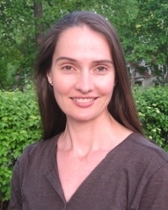
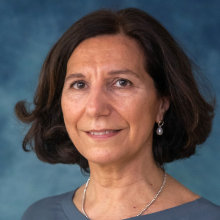
Sarah Jacoby is a Professor of Religious Studies at Northwestern University , specializing in Tibetan Buddhism with particular focus on gender and sexuality, religious autobiography, Buddhist revelation, and Tibetan literature. She holds a Ph.D. from the University of Virginia and previously held a postdoctoral fellowship at Columbia University’s Society of Fellows in the Humanities. Key academic affiliations: Northwestern University (2009–present), Columbia University (postdoc), University of Virginia (Ph.D.) Teaching areas: Introduction to Buddhism, Buddhism and Gender, Tibetan Religion and Culture, Feminist Theory, Religion and Celibacy Research Themes : Jacoby’s work centers on Tibetan Buddhist women’s voices through textual translation and analysis. Her groundbreaking study of Sera Khandro (1892–1940) explores: Autobiographical ventriloquy and spiritual legitimacy Interdependent personhood and relational ethics Translation methodology as ethical practice Gender dynamics in tantric Buddhist practices Academic Impact : 2016 E. Gene Smith Book Prize for Love and Liberation 2015 American Academy of Religion Book Award Finalist Co-organizer of 2022 Tibetan translation workshop Advocate for Tibetan script in academic publications Key Projects : Current book project on Lelung Zhepai Dorjé’s biographical texts Khyentse Foundation Buddhist Studies Lecture Series chair Collaborative translation initiatives with Tibetan writers and scholars
Andreas Weber is an Associate Professor at the University of Twente's Digital Society Institute , specializing in the Knowledge, Transformation & Society (KiTeS) research group . His work examines the long-term historical and global relationship between Science, Technology, and Society , with particular focus on colonial histories of natural history, chemistry, and sustainability , as well as computational technologies for contextualizing digitized archives . He leads the HAICu project (2023–2029) on digital cultural heritage and coordinates STS PhD training for the Netherlands Graduate Research School (2019–2024). MA & PhD in History (2005 & 2012), Leiden University Assistant Professor (2017–2023), University of Twente Andreas' research integrates digital humanities with colonial science history , emphasizing global histories of minerals , digital humanism , and AI's societal context . His 15 most recent publications (2016–2025) explore topics like colonial bias in natural history collections , FAIR data implementation , and semantic annotation of handwritten archives , spanning disciplines from history of science to computer science and museum studies . He has received 7 scientific awards , including multiple Best Teacher Awards (2020–2023) and the IEEE eScience Best Poster Award (2018). Andreas supervises PhD and postdoctoral projects while engaging in media commentary on colonial heritage issues and co-organizing international conferences like Hydrogen Pasts and Futures (2024).
Isabel Kentengian is a Lecturer in the Department of World Languages and Cultures at The College of New Jersey, specializing in Spanish language education, heritage language pedagogy, and intercultural competence. Her work bridges applied linguistics, social justice, and professional language training. Education: Ph.D. in Applied Linguistics (New York University, 2020), M.A. in Applied Linguistics (University of Illinois at Chicago, 1995), B.A. in Psychology (Bryn Mawr College, 1982), and a certificate in Hispanic Studies (Universidad Complutense de Madrid, 1979). Her research focuses on critical pedagogy in Spanish language instruction, linguistic landscapes in the U.S., and Spanish for the professions, particularly in healthcare and business contexts. She has developed innovative curricula for Spanish for Medical Purposes and Spanish for the Professions certificates. Recent publications examine community-centered oral history projects, medical Spanish curriculum evaluation, and linguistic landscapes as pedagogical tools. Her work frequently addresses health equity, professional communication, and identity negotiation among heritage speakers. Professional Affiliations: American Association for Applied Linguistics, American Council on the Teaching of Foreign Languages, National Association for Bilingual Education, and Healing the Children New Jersey. Service Roles: Academic Diversity Officer for Intercultural Competency, Faculty Lead for International Student Success, and member of the HSS Anti-Racism Advocates Committee.
Dr Ana Cristina Vasconcelos is a Senior Lecturer in Corporate Information Management at the School of Information, Journalism and Communication, University of Sheffield. She holds a PhD from Sheffield Hallam University and has held academic roles at multiple institutions, including Leeds Metropolitan University and Sheffield Hallam University. Her research focuses on the intersection of knowledge management, information systems, and organizational adaptation. Education: BA in History, PGDip in Information Science (University of Lisbon), PhD in Information Systems (Sheffield Hallam University) Her research explores organizational learning, absorptive capacity, knowledge sharing, and boundary spanning practices, often applying theoretical frameworks like Arenas/Social Worlds Theory and Practice Theory. Funded by the European Community and AHRC, her work addresses challenges in information systems implementation and knowledge integration across sectors. Recent publications highlight trends in smart city datafication, interdisciplinary knowledge management, and virtual community dynamics. She supervises PhD students in areas spanning economic resilience to knowledge transfer in FinTech ecosystems. Teaching interests include qualitative research methods, organizational culture, and knowledge management systems. She has external examiner roles at multiple universities and serves on editorial boards for journals like Libri and the International Journal of Knowledge-Based Organizations.
Prof. Dr. Ilona Buchem is a Professor of Communication and Media Studies at the Berlin University of Applied Sciences (BHT), Department I of Business and Social Sciences. She serves as Head of the Communication Laboratory and leads research in human-robot interaction, educational robotics, and technology-enhanced learning. Her work spans multiple interdisciplinary projects including Social Robotics, Open Virtual Mobility, and ePA-Coach, focusing on digital media for communication, collaboration, and digital sovereignty for older adults in healthcare contexts. Dr. Buchem holds a doctorate in business education from Humboldt University and a certificate in business administration from the University of St. Gallen, Switzerland. Her academic background bridges business education with digital media expertise, positioning her at the intersection of technology and communication for innovative educational approaches. Her research interests focus on human-robot interaction in educational contexts, social robotics for learning, AI applications in education, and digital media for communication and collaboration. She explores how robots can serve as educational tools in business studies, language learning, and health-related applications. Her work also investigates digital sovereignty, particularly for older adults using electronic health records, and the use of open digital credentials like Open Badges for recognizing learning achievements. The integration of gamification elements with social robots represents another significant strand of her research, enhancing student engagement and learning outcomes. Analysis of her recent publications reveals a strong focus on practical applications of social robots in educational settings, particularly examining student perceptions of different robot platforms (NAO, Pepper, Furhat). Her work increasingly integrates generative AI with robotics, exploring conversational interfaces and new learning paradigms. There's also a consistent thread examining digital literacy for seniors, especially regarding electronic health records, and innovative approaches to recognizing learning through micro-credentials and digital badges. Dr. Buchem actively supervises numerous bachelor's and master's theses across multiple programs including Business Administration: Digital Economy and Media Informatics Online. She has established a digital award system based on Open Badges to recognize outstanding thesis work with top grades. Her research is supported through various funding sources including BMBF, EU, DFG, and industry partners, with projects spanning social robotics, virtual reality applications, and digital credentialing systems that connect academic research with practical applications. She leads the Communication Laboratory at BHT and is actively involved in the 'House of Robotics' initiative at the university. Her work connects with international partners through projects like Social Robotics (EU) and Open Virtual Mobility, creating a global network for educational robotics research and development that bridges European institutions and promotes cross-cultural educational exchange.
Dr. Daniel German is a Professor in the Department of Computer Science at the University of Victoria, part of the Faculty of Engineering and Computer Science. He holds a PhD from the University of Waterloo, specializing in software engineering and open source ecosystems. His research focuses on software evolution, open source development practices, intellectual property issues in software systems, and licensing compliance challenges in modern AI/ML environments. German has contributed extensively to understanding dependency management, developer workflows, and legal aspects of software development. His work includes seminal studies on code provenance tracking (e.g., Cregit), library dependency management, and the sociotechnical dynamics of open source communities like the Linux kernel and GitHub ecosystems. German has explored critical topics such as licensing inconsistencies in software projects, ethical implications of AI-generated code, and the integration of open source components into proprietary systems. He is actively involved in software engineering education, examining how students engage with open source projects and the challenges of maintaining code quality in large-scale distributed systems. German’s research has practical implications for both academic and industrial software development practices, addressing real-world issues like security vulnerabilities in dependency chains and the legal risks of AI training data usage.
Dr. Sibel Tatar is an Associate Professor at the Department of Foreign Language Education, Faculty of Education, Boğaziçi University. She has been teaching there since 2003, following her PhD in Language Education from Indiana University (2003) and B.A. in Translation and Interpretation from Hacettepe University (1997). Her research focuses on foreign language teacher cognition, TESOL methodologies, and non-native speaking professionals in education. Her educational background includes a PhD specialization in Language Education from Indiana University, emphasizing teacher development and intercultural communication. Her work spans over two decades, with a strong emphasis on qualitative research in language education contexts. Research interests include teacher identity, pre-service training, and the impact of native speakerism on educational policies. Her recent studies explore transformative learning through virtual exchange programs (COIL projects) and critical reflection techniques for teacher candidates. Dr. Tatar has received multiple awards from Boğaziçi University and grants for projects on teacher feedback mechanisms, technology integration, and EFL hiring practices. She has supervised numerous PhD theses and co-authored over 20 journal articles and book chapters. Her professional service includes roles on the Awards Committee and Financial Aid Interviews Committee at Boğaziçi University, reflecting her commitment to educational equity. She has also contributed to international conferences and editorial work, including the EUROSLA Yearbook.
Dr. Anna Oldfield is a Professor at Coastal Carolina University's Department of English, specializing in world literature and film with particular focus on Central and Western Asia. Her international academic career spans institutions in Russia, Ukraine, Azerbaijan, Kazakhstan, Uzbekistan, Turkey, and China, including Fulbright Scholar and Specialist appointments. Ph.D. in Languages and Cultures of Asia, University of Wisconsin-Madison M.A. in Russian and Slavic Languages and Literatures, University of Arizona B.A. in Russian Studies, University of New Mexico Professor Oldfield's research creates vital connections between epic narratives, musical traditions, and cultural diplomacy. Her work with institutions like the British Library, Smithsonian Folkways, and the International Council of Traditional Music has produced groundbreaking collaborations in Central Asian and Caucasian studies. Her 15 most recent publications explore critical intersections of musicology, postcolonial theory, and transnational cultural practices. These works examine topics ranging from immersive art commodification to diasporic musical identity formation, demonstrating her commitment to advancing cross-cultural understanding. Fulbright Scholar (2010) Fulbright Specialist (2017) As academic advisor to students like Nick Powell (Labyrinth Studies), Yvette Curtis (Middle Eastern Graffiti), Victoria Greene (Russian Literature), and Erin Turman (Beauty and the Beast Interpretations), she fosters public-facing scholarship that connects classroom learning with global conversations. Her current Uzbek short story translation project continues this legacy of cultural bridge-building.
Hatice GÜR is a full-time Lecturer at the School of Foreign Languages of Karabük University. With a Master's degree in Rumi Studies from Selçuk University (2019) and another Master's in English Language and Literature from Karabük University (2018), her academic profile spans interdisciplinary research in language education and literary analysis. Education Highlights: MA in Rumi Studies, Selçuk University (2019) MA in English Language and Literature, Karabük University (2018) BA in Foreign Language Education, Istanbul University (2010) BA in Translation and Interpreting, Hacettepe University (inactive) BA in Sociology, Istanbul University (2010) Research Focus integrates English pedagogy, autonomous learning frameworks, and comparative literary studies. Her work bridges Shakespearean drama with Latin American magical realism, Sufi allegorical traditions, and Neo-Victorian feminist reinterpretations. Professional Development includes 84 certifications from institutions like University of Arizona, Columbia University, and OECD, with recent engagements in AI in education, virtual exchange methodologies, and extended reality (XR) in language instruction. Academic Affiliation : Member of the British Association for Applied Linguistics (TEASIG) since 2020.
Emma Sdegno is an Associate Professor of English Literature (L-LIN/10) at the Department of Comparative Linguistic and Cultural Studies , Ca' Foscari University of Venice . She is also affiliated with the Interdepartmental School of Economics, Languages and Entrepreneurship for International Exchanges (SELISI). Academic Background : 1989: Degree in Foreign Languages and Literatures, Ca' Foscari University 1991-1992: MA in Literature and the Visual Arts (1840-1940), University of Reading Research Focus : Her work centers on John Ruskin , his influence on Victorian and Modernist art criticism , and his reception in France and Italy . She explores travel literature through the lens of Venetian and Alpine mythmaking , examines the intersections between literature and visual arts (especially Ruskin's critiques of Jacopo Tintoretto ), and investigates Victorian biblical exegesis . Her projects include Enacting Fors: Ruskin and 21st Century Venice , collaborating with English artists The Poly-Technic. Academic Contributions : She co-organized international conferences on Ruskin (2008, 2019), Dickens (2012), and Victorian culture (2013). She serves on the editorial board of Scritture Migranti and as a referee for The Eighth Lamp: Ruskin Studies Today . Her institutional roles include Erasmus coordinator for four universities and leadership in academic committees since 2008. Teaching Portfolio : Courses on Victorian essays , Victorian novel , Romantic poetry , travel literature , Modernist novel , and literary translation .
Grace Oakley is an Associate Professor at The University of Western Australia's Graduate School of Education, specializing in language and literacy education across Early Childhood and Primary years, with a strong focus on integrating ICTs and innovative teaching practices. She holds a BA(Hons), GradDipEd, MEd, and PhD from Edith Cowan University. Her research interests include mobile technologies for literacy learning, blended learning, and the application of augmented/virtual reality (XR) in education. She has led numerous grants and projects, including initiatives in Cambodia, Japan, and China, focusing on technology-enhanced teacher professional development and cross-cultural educational exchanges. Key roles include Deputy Dean of the Graduate School of Education (2020–present), Course Coordinator for Master of Teaching Primary (2009–2020), and leadership in curriculum committees and academic governance. She has received multiple awards for teaching excellence, including the AAUT Citation (2025) and ALEA Special Services Award (2024). Her work aligns with UN Sustainable Development Goals, particularly in quality education (SDG 4) and partnerships for the goals (SDG 17). She actively engages in international collaborations, keynote presentations, and policy advising to advance educational innovation globally.
Gerardine Meaney is a Full Professor of Cultural Theory in the School of English, Drama and Film at University College Dublin (UCD). She serves as Director of the UCD Centre for Cultural Analytics and is Principal Investigator on a European Research Council (ERC) funded project on European Migrants in the British Imagination. Her academic leadership includes a previous role as Director of the UCD Humanities Institute (2011–2016). Research Interests: Her scholarship spans gender, migration, national identities, cultural memory, and digital humanities. She integrates critical theory with innovative digital methodologies to analyze literature and culture. Her work emphasizes feminist theory, Irish women’s writing, modernism, and the intersection of technology and humanities. The most recent publications reflect a strong trend toward computational and digital approaches in literary analysis, particularly using word embeddings and semantic networks to study gender in 19th-century fiction. Her research also continues to engage deeply with Irish cultural identity, modernist literature, and feminist literary recovery. Scientific Awards and Honors: Member of the Royal Irish Academy Visiting Fellow, Institute for Advanced Studies, University of Edinburgh (2021–2022) Advising and Grants: She has supervised PhD students as a thesis supervisor and led significant research projects, including ERC and Irish Research Council grants such as 'Contagion, Biopolitics and Migration in European Cultural Memory' and 'Inventing and Re-Inventing the Irish Woman: External Influences on Gender Construction 1760–2005'. Labs and Teams: She leads the UCD Centre for Cultural Analytics, which supports digital humanities research, and has contributed to digital outreach projects including an iPad app on James Joyce’s 'The Dead' and the Irish Virtual Research Library and Archive.
Professor Binhua Wang is Chair and Professor of Interpreting and Translation Studies at the Centre for Translation and Interpreting Studies, School of Languages, Cultures and Societies, University of Leeds, where he has been a faculty member since 2017. He previously held academic positions at Hong Kong Polytechnic University and Guangdong University of Foreign Studies, where he served as Associate Professor and Head of Department. He is an elected member of the European Academy of Sciences and Arts and a Fellow of the Chartered Institute of Linguists. His educational background includes a PhD in Interpreting and Translation Studies and a Certificate of Training in Public Administration from Oxford University. He also holds a Training for Trainers Certificate from the European Commission’s DG Interpretation. Professor Wang’s research focuses on interpreting and translation studies with interdisciplinary extensions into digital humanities, human-AI interactions, and cross-cultural studies of Chinese literature and culture. He has published extensively in top-tier SSCI/A&HCI/CSSCI journals and with leading publishers such as Routledge, Springer, and John Benjamins. His recent work explores metaverse interpreting, AI-assisted translation, and the sociocultural dimensions of interpreting norms. His recent publications reveal a strong trend toward digital transformation in translation and interpreting, with increasing emphasis on technology integration, cognitive processes, and interdisciplinary methodologies. Keywords across his articles highlight core themes in translation theory, discourse analysis, and digital scholarship, with subfields ranging from AI-augmented interpretation to historical translation movements and cognitive load in simultaneous interpreting. Elected Member, European Academy of Sciences and Arts Fellow, Chartered Institute of Linguists First Prize, China Ministry of Education Research Award (2024) AHC Partnership Award for Academic Supervision (2022) National-level Excellence Course Tutor (2007) Member, National-level Teaching Team (2010) Professor Wang actively supervises PhD candidates and has co-supervised multiple graduates who have published in top journals such as Meta , Perspectives , and The Translator . He has served as external examiner at institutions including UCL, SOAS, Durham, and Beijing Foreign Studies University. He leads major funded projects, including a UK government-funded initiative on computational linguistics and an EU-funded platform for conference interpreter training. His research has been supported by the Hong Kong Research Grants Council and China’s Ministry of Education. He is deeply involved in academic service, serving as Co-Editor of Interpreting and Society , Associate Editor of Frontiers in Psychology , and Founding Editor-in-Chief of the International Journal of Chinese and English Translation & Interpreting . He sits on the editorial boards of numerous international journals and book series, and regularly acts as a reviewer for top publishers and academic rankings.
Dr. Amy Jo Minett is an Associate Professor in the Department of English at Salem State University, specializing in TESOL (Teaching English to Speakers of Other Languages) and multilingual writing. She coordinates the First Year and Multilingual Writing program and the Graduate Certificate in Writing and Rhetoric. Her international experience spans curriculum development and teacher training in Kurdistan, Afghanistan, Central/Eastern Europe, and China. Peacebuilding through language education Intercultural communication in post-conflict regions Critical discourse analysis English as an international language Teacher education and reflective practice Her scholarly work examines intersections between language teaching, conflict resolution, and social justice. Recent publications focus on virtual intercultural exchanges and critical pedagogy in transitional societies. She has presented at major conferences including AAAL and the International Society for Language Studies.
Prof. Dr. Saša Adamović is a faculty member at Singidunum University in Belgrade, Serbia, affiliated with the Faculty of Informatics and Computer Science . His academic career spans over 15 years with a focus on Cryptography, Biometrics, and IoT Security . Born October 15, 1985, in Drvar, Bosnia and Herzegovina PhD in Advanced Security Systems (2013), Master’s in Contemporary Information Technologies (2008), and Bachelor’s in Business Informatics (all from Singidunum University) His research interests include: Biometric Cryptography Blockchain for IoT Security Catalan Number Applications in Cryptography Machine Learning in Security Systems Virtualization and Energy Efficiency Steganography and Forensics Recent publications highlight trends in: IoT Healthcare Security (2022) Biometric Authentication (2021) Combinatorial Cryptography (2021) Machine Learning for Diabetes Prediction (2021) Distance Learning Security (2023) He served as one of five Serbian representatives in the Open World program (USA) for expert exchange in technology development.