Dr. Andrew Hines is a Researcher at the School of Computer Science, University College Dublin, specializing in machine learning applications for signal processing in speech, audio, and video domains. His work focuses on Quality of Experience (QoE) modeling, speech quality assessment, and immersive media analysis. He has held leadership roles in European COST Actions like Qualinet and CryptoAction, and previously worked in industry as a Director of Engineering. University: University College Dublin Role: Director of Research, Innovation and Impact Key Collaborations: IEEE (Senior Member), Audio Engineering Society (Ireland) Research interests center on machine learning for QoE optimization, audio-visual integration, and healthcare applications like heart sound classification and stroke rehabilitation. His recent publications explore self-supervised learning, neural speech codecs, and contextual factors in speech/audio quality assessment. Scientific contributions include awards like IEEE Senior Membership, and his work spans both academic research and industrial engineering in finance and aviation sectors. He leads the QxLab research team at UCD and develops open-source platforms such as WARP-Q and AQP for quality metrics.
Dr. Shirley Coyle is an Assistant Professor in the School of Electronic Engineering at Dublin City University (DCU) and Programme Chair for the BSc Global Challenges. She holds a BEng in Electronic Engineering from DCU (2000) and a PhD in Biomedical Engineering from NUI Maynooth (2005). Her career includes roles as a Telecoms Engineer at Siemens, Research Fellow at the National Centre for Sensor Research, and Team Leader of Wearable Sensors in the INSIGHT Centre for Data Analytics. She also studied part-time at the Grafton Academy for Fashion Design and later founded a consultancy in wearable technologies. Her research focuses on smart garments, wearable sensors, and sustainable textiles, with applications in healthcare, sports performance, and S.T.E.A.M. integration. Key interests include developing wearable chemical sensors, energy-autonomous sensing systems, and IoT-enabled rehabilitation devices. She has pioneered work on wearable sensors for monitoring chronic diseases, athlete training, and home rehabilitation using VR. Dr. Coyle’s work spans interdisciplinary collaboration, combining biomedical engineering with textile design. Her contributions include innovations in electrospun textiles, self-powered sensors, and sensor integration with microfluidics. She has held leadership roles in DCU’s Governing Authority and promotes STEM education through design-focused initiatives.
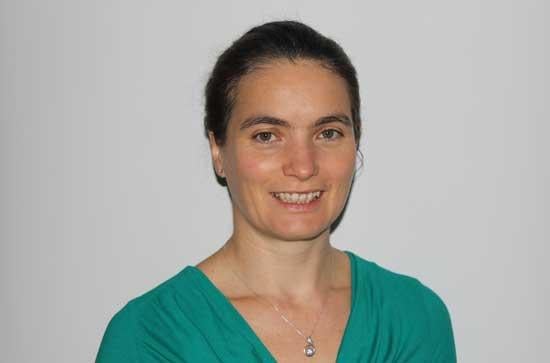
Rosemary Monahan is a Professor in the Department of Computer Science at Maynooth University and an affiliate of the Hamilton Institute. She holds BSc and MSc degrees from University College Dublin and a PhD from Dublin City University. As Maynooth University's institutional lead for ADAPT (SFI Research Centre for AI-Driven Digital Content Technology), she focuses on advancing software dependability through formal methods and AI integration. Her research interests include safety-critical systems, dependable software, formal verification, and computational thinking education. She co-founded the VerifyThis competition series and leads projects such as MAIVV (Modular AI Verification and Visualisation) funded by SFI, and VALU3S (Verification and Validation of Automated Systems) funded by Horizon 2020. She has secured over €2.5M in EU funding for the Erasmus Mundus programs in dependable software systems. Monahan’s educational contributions include pioneering computational thinking resources (CoCoA and InSPECT projects) and teaching modules on software verification and rigorous software processes. She supervises PhD students in data science and advanced networks and collaborates with institutions like INRIA, Microsoft Research, and Amazon Web Services. Her professional roles include editorships in journals like Science of Computer Programming and leadership in conferences like iFM and FMICS. She actively promotes gender equality in computing through initiatives like INGENIC and TechMate toolkits.
Ralf Bierig joined Maynooth University's Computer Science Department in 2017, teaching topics including information retrieval, software testing, interaction design, and virtual reality. He is the programme director of the Higher Diploma in Human-Computer Interaction (HCI) and User Experience (UX). He earned his BSc (2002) from University of Furtwangen and PhD (2008) from Robert Gordon University. Research Interests His work spans information retrieval, interactive information retrieval, personalisation, information search behavior, usability (UX), and virtual reality (VR). Recent publications focus on multimodal concept indexing, hybrid IR approaches, and contextual adaptation in search systems. Publication Trends His research combines statistical semantics, graph modeling, and multimodal data analysis across academic collaborations in Austria, Germany, and international venues like ECIR and SIGIR.
Dr. F. Jerry Reen serves as a Senior Lecturer and Principal Investigator in the School of Microbiology at University College Cork (UCC), Ireland. With over two decades of academic experience since joining UCC's Department of Microbiology in 2002, he has established himself as a leading researcher in microbial communication systems and host-pathogen interactions. His research group operates within the BIOMERIT Research Centre, and he maintains active collaborations across multiple institutions in Ireland and internationally. Dr. Reen earned his BSc in Biochemistry at the National University of Ireland Galway (NUIG), followed by a PhD in the Molecular GlycoBiotechnology Group at NUIG, supported by an Enterprise Ireland Scholarship and an NUI Teaching Fellowship. His academic journey includes a postdoctoral position in the lab of Dr. E. Fidelma Boyd at UCC, during which he was a visiting scientist at the Sidney Kimmel Cancer Center in San Diego and received an IRCSET Postdoctoral Fellowship for bacteriophage-host interactions research. Dr. Reen's research focuses on deciphering communication systems underpinning polymicrobial-host interactions for human and ecosystem health, with particular emphasis on small molecule signaling in microbial communities. His work bridges fundamental microbiology with translational applications, targeting antimicrobial resistance through chemico-biological therapeutics and developing sustainable pharmaceutical production methods using marine biocatalysts. His research has evolved from early work on Vibrio species to current investigations of Pseudomonas aeruginosa signaling systems, bile acid interactions in cystic fibrosis, and marine enzyme applications in green chemistry. His laboratory's publication record demonstrates consistent productivity with over 80 peer-reviewed papers (h-index 26), spanning from foundational studies on LysR-type transcriptional regulators to recent innovations in virtual reality educational tools. The research trajectory reveals an expanding scope from molecular microbiology to systems-level understanding of microbial communities, with increasing emphasis on sustainable solutions for the pharmaceutical industry. Bronze LEAF Award (2022) - Green Campus University College Cork The Disciplinary Excellence in Learning, Teaching and Assessment (DELTA) Award (2021) - National Forum for the Enhancement of Teaching and Learning Purdy-Lucey UCC Life Sciences Invention of the Year 2015 (2016) Best Poster Exhibition (2012) - Royal Irish Academy National Researcher of the Year, Silver Medal (2011) - Roche BioSciences Researcher of the Year, Gold Medal (2011) - Roche Dr. Reen has successfully secured significant research funding from multiple sources including Science Foundation Ireland (SFI), Health Research Board (HRB), Enterprise Ireland, and Irish Research Council. His current projects include 'BioBloc' enhanced Contact LEns solutioNS (BBCLENS), HEACOVID19, SSPC3 Pharm5, and investigations into novel macrolides for cystic fibrosis management. He has mentored numerous graduate students, including Stephanie Flynn (PhD, 2019), Noelle McCarthy (PhD, 2009), and David Woods (MSc, 2008), with two doctoral students currently completing their research. His educational innovations, particularly student-partnered virtual reality simulations, have transformed how challenging molecular concepts are taught. Dr. Reen leads an interdisciplinary research group that combines microbiology, chemistry, bioinformatics, and education technology. His team collaborates with internal UCC colleagues including Dr. Gerard McGlacken and Prof. Anita Maguire, as well as external partners from institutions like the University of Warwick, Medical University of Graz, and University de Porto. The laboratory maintains strong connections with clinical researchers studying cystic fibrosis and has developed novel approaches for detecting bacterial signaling molecules using boron-doped diamond electrodes.
Simon Colreavy Donnelly is an Associate Professor in the Department of Computer Science & Information Systems at the University of Limerick. He is a member of the Interaction Design Centre and focuses on interdisciplinary research at the intersection of artificial intelligence, educational technology, and healthcare informatics. His work spans machine learning applications in medical data analysis, virtual reality (VR) and extended reality (XR) for inclusive education, and deep learning techniques in chemical analysis and spectroscopy. Research Interests: His primary areas of investigation include generative AI for education equity, semisupervised learning algorithms, virtual learning environments design, and the ethical deployment of immersive technologies in healthcare and palliative care. He also explores NMR spectroscopy analysis using deep learning and develops tools for nutritional content estimation through image processing. Collaborations: His recent collaborations span international teams addressing challenges in toxicity-free online discourse (PAN 2024), semisupervised learning distribution mismatches, and VR applications for post-pandemic blended learning. His work integrates computational methods with real-world applications in education, healthcare, and chemical analysis. Labs/Teams: Active within the Interaction Design Centre at UL, his research group develops practical solutions for accessibility in digital education and healthcare systems, emphasizing user-centered design principles for extended reality applications.
Dr. Kata Szita serves as an Assistant Professor of Multimedia at the School of Communications. Her expertise spans extended reality technologies, human-computer interaction, and the psychological impacts of virtual environments on human behavior and cognition. Her research delves deep into understanding how virtual and augmented reality experiences affect human-to-computer and human-to-human interactions. She investigates the cognitive and neural processes involved when users engage with virtual environments, particularly focusing on the use of avatars and XR-manipulated bodies. Her work also examines social behaviors in virtual spaces and the ethical dilemmas surrounding artificial digital agents and personal data collection in XR environments. Dr. Szita currently leads interdisciplinary and cross-sector research projects aimed at developing accessible and adaptive immersive technologies. Her collaborative efforts extend to studying cognitive processing of realism in mixed reality, virtual identities, and youth behavior in virtual environments. Her research approach combines theoretical frameworks with practical applications, contributing significantly to the understanding of immersive media experiences. Her extensive publication record from 2017-2025 demonstrates a consistent focus on emerging themes in XR research. The articles reveal an evolution from early smartphone-based viewing studies to sophisticated analyses of metaverse environments, presence measurement methodologies, and the psychological impacts of virtual identities. Her work bridges cognitive psychology, media studies, and technology development, establishing her as a leading voice in understanding human experience within digital and virtual contexts.
Cathy Ennis is an Assistant Professor in the Department of Computer Science at Maynooth University, Ireland, specializing in perceptually guided graphics and virtual reality. She is actively involved in research and teaching, with affiliations to the ADAPT Centre and D-REAL SFI Centre for Research Training. Education: BEng in Electronic Engineering, Maynooth University MSc in Cognitive Science, University College Dublin PhD in Computer Graphics, Trinity College Dublin PG Dip in Higher Education Teaching and Learning, DIT Research Interests: Dr. Ennis's research centers on creating realistic virtual humans and crowds, exploring multisensory perception in VR, and applying these technologies in serious games and interactive systems. Her work integrates AI, HCI, and immersive technologies to enhance user engagement and learning. Her recent publications reflect a strong focus on virtual character realism, VR-based education, and machine learning applications in animation and interaction. Notable themes include speech-animation realism, cultural VR experiences, and reinforcement learning for character control. Scientific Awards: Best Paper Award, IEEE VR 2022 Teaching and Supervision: Dr. Ennis currently teaches CS401 (Machine Learning and Neural Networks) and CS261 (Multimedia Technology). She is actively seeking PhD students and collaborators interested in VR, games, and virtual characters, particularly using machine learning for gesture generation and engagement. Labs and Teams: She is a Funded Investigator with the ADAPT Centre and D-REAL SFI Centre for Research Training, contributing to interdisciplinary research in AI, HCI, and immersive technologies.
Dr. Brian Mac Namee is an Associate Professor at the School of Computer Science, University College Dublin (UCD), and UCD Site Director at the Insight SFI Research Centre for Data Analytics since 2024. His research focuses on interactive machine learning, emphasizing human-centered model training, with applications in healthcare, agriculture, space technology, and virtual reality. He co-authored the textbook Fundamentals of Machine Learning for Predictive Data Analytics , translated into five languages. Education includes a PhD (2004) and BA (Mod) from Trinity College Dublin. He previously co-founded the Applied Intelligence Research Centre at Technological University Dublin and was a founding co-PI at CeADAR. He chairs the Artificial Intelligence Association of Ireland and directs training at Krisolis Ltd. Notable awards include the 2016 Data Science Award for Best Academic Research Team and UCD's Fiosraigh Research Excellence Award (2013). His teaching spans advanced machine learning, data science projects, and programming courses. He leads grants such as the SFI-funded Machine Learning & Virtual Reality for Pilot Training and co-directs the SFI Centre for Research Training in Machine Learning.
Abey Campbell is an Assistant Professor in Computer Science at the School of Computer Science, University College Dublin. He holds roles such as Deputy Programme Director for Computer Science, Director of UCD VR Lab, and 1st Year Stage Coordinator. His research focuses on Augmented Reality (AR), Virtual Reality (VR), Mixed Reality (MR), and Multi-Agent Systems with applications in education, healthcare, and human-computer interaction. Campbell has coordinated modules like Augmented and Virtual Reality, Computer Graphics, Game Development, and Mobile Computing. He earned his BSc and PhD in Computer Science from University College Dublin. His work explores touchless interaction technologies, machine learning agents in STEM education, and ethical implications of emerging technologies. Notable contributions include RenderKernel for real-time rendering systems and studies on AR's role in decision support systems. Campbell has secured a grant from Enterprise Ireland for collaborative design documentation and participates in professional activities like peer reviewing for Frontiers in Virtual Reality and IEEE conferences. His collaborative projects include developing AR tools for veterinary training and evaluating immersive VR experiences in nursing education. The UCD VR Lab under his direction focuses on applied research in spatial computing and interactive systems.
Dr. Laura Maye is a Lecturer at the School of Computer Science and Information Technology, University College Cork. Her research specializes in Interactive Media and Human-Computer Interaction (HCI), focusing on participatory design methods and immersive technologies. Key research interests include virtual reality applications, co-design methodologies for cultural heritage, community-centered technology development, and sensory interaction studies. Her work emphasizes inclusive design and socio-ecological relationships in technology. Recent publications (2020-2025) demonstrate strong trends in VR-based sensory studies, community radio innovations, and rehabilitation technology. Articles frequently employ mixed-methods approaches and highlight cross-modal perception, participatory frameworks, and rural HCI challenges.
Dr. Sabin Tabirca is a Senior Lecturer at the School of Computer Science and Information Technology, University College Cork (UCC). He holds a BSc from Bucharest University and a PhD from Brunel University. His research focuses on Artificial Intelligence, Data Analytics, Algorithmics, Interactive Media, and HCI, with applications in computational cancer modeling, mobile health (mHealth), and parallel computing. He coordinates MPT Activities and is affiliated with the CRR Group and BCRI Centre. Notable awards include UCC's President Award for Innovation in Teaching (2007), IT@Cork Leader Award (2008), and UCC Staff Recognition Award (2013). His teaching includes modules like Parallel and Grid Computing, Mobile Application Design, and Graphics for Interactive Media. Dr. Tabirca has supervised over 70 MSc students and numerous PhD candidates, many of whom now hold academic and industry roles globally. His research includes developing mHealth apps for cystic fibrosis patients, 3D cancer visualization tools, and frameworks for mobile parallel computing. Publications span mHealth design pipelines, cancer prediction models, and mobile gaming for health education. He actively engages in interdisciplinary projects, blending computer science with medical and biological applications.
Dr. Enda Donlon is an Associate Professor at Dublin City University's School of STEM Education, Innovation & Global Studies, part of the DCU Institute of Education. He specializes in ICT integration in education, digital technologies for teacher training, and AI in education. As APF leader for the AI and Emerging Technologies strand of DCU's Doctor of Education Programme, he drives innovation in educational technology. His professional roles include former presidency of the Educational Studies Association of Ireland (ESAI) and governance roles in European educational research bodies like EERA. Research interests focus on digital pedagogy, teacher professional development, and the ethical implications of emerging technologies in education. He has received prestigious awards including the DCU President’s Award for Innovation (2014) and Excellence in Teaching (2021 team award). Enda contributes to academic governance through editorial roles in journals like International Journal of Educational Technology in Higher Education and Irish Educational Studies . His work bridges theory and practice, exploring topics such as cybersecurity professionals’ learning needs, pandemic-era academic collaboration, and AI’s role in reshaping educational landscapes. Ongoing projects include frameworks for computational thinking education and virtual/augmented reality applications in teacher training.
Dr. Eoin O'Connell is an Associate Professor in the Department of Electronics & Computer Engineering at the University of Limerick. He is affiliated with the Centre for Robotics and Intelligent Systems (CRIS) and the Optical Fibre Sensors Research Centre (OFSRC), actively contributing to IoT research and founding the IOT@UL seminar in 2016. Research Interests include cyber-physical modeling, digital twinning, system scalability, security vulnerabilities, edge processing techniques, and sensor development. His work intersects IoT, fiber optics, smart manufacturing, and cloud computing. Recent publications focus on interoperable IoT systems, AI-driven failure detection in additive manufacturing, and digital twin integration, reflecting his expertise in scalable, secure IoT solutions. He has supervised over 40 postgraduate students throughout his career. Teaching Hero Award (2021) Education includes a PhD in wireless integration of fiber optic sensors, an MBA, a Bachelor's in Telecommunications, and certifications in Cisco Networking and cloud computing.
Dr. Janas Harrington is a Senior Lecturer and Director of the BSc Public Health Sciences program at the School of Public Health, University College Cork (UCC). She holds a BSc in Nutritional Science (1996), an MA in Health Promotion (1997), a PhD in Nutrition Epidemiology (2012), and a PG Certificate in Teaching and Learning in Higher Education (2013). Her career includes roles as Health Promotion Pathway Coordinator (2012-2015) and Director of the online Master of Public Health (2015-2016) at UCC. Education: BSc Nutritional Science, 1996 MA Health Promotion, 1997 PhD Nutrition Epidemiology, 2012 PG Certificate Teaching & Learning in Higher Education, 2013 Her research focuses on dietary patterns, food policy, and their links to obesity and cardiovascular health. She leads the Food Policy Research team at UCC’s Centre for Health and Diet Research. Key projects include the Irish Food Environment Policy Index (Food EPI) and the Horizon Europe FEAST initiative. She chairs the Cork Food Policy Council and the GAA National Health and Wellbeing Committee, and co-chairs the European Association for the Study of Obesity’s Public Health Task Force. Recent work explores sustainable dietary guidelines, ultra-processed food impacts, and virtual reality interventions for health awareness. Her grants total over €1.6 million, including EU Horizon funding for FOODPATH and FEAST. Collaborations span international networks like INFORMAS and JPI PEN. Key grants include: FOODPATH: €499,802 (2024-2027) FEAST: €332,310 (2022-2027) SuHEGuide Project: FIRM-funded Dr. Harrington has advised on national policies, including Ireland’s Obesity Action Plan and the 2022 clinical guidelines for obesity management. Her research spans epidemiological studies like the Mitchelstown Cohort and SLÁN surveys, emphasizing upstream policy solutions to dietary inequalities.