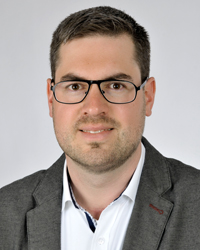
Anderson Augusto Simiscuka is a Researcher affiliated with the Performance Engineering Laboratory and the Insight Centre for Data Analytics at Dublin City University (DCU). His work centers on Internet of Things (IoT) communications performance and integrating rich media with IoT devices. Education : B.Sc. in Information Systems (2014), Mackenzie Presbyterian University, São Paulo, Brazil Ph.D. in Electronic Engineering (2020), Dublin City University, Ireland Research Interests : IoT Communications Performance Engineering Rich Media Integration with IoT Devices Adaptive Video Streaming in Collaborative Environments Virtual Reality (VR) and 360º Multimedia Systems Real-Time Communication Technologies Professional Affiliations : IEEE Young Professionals IEEE Communications Society IEEE Broadcast Technology Society Current Projects : He is a key contributor to the EU Horizon 2020 TRACTION project, focused on Opera co-creation for social transformation. His responsibilities include developing tools, algorithms, and technologies for real-time communication in rich-media environments, supporting adaptive video, VR, and 360º content collaboration. Past Experience : Prior to his postdoctoral work, he collaborated with Wittel (2010–2013), DCU/Ericsson (E-Stream Project, 2014), Arkadin (2014), and IBM (2015) on telecom and software development initiatives.
Dr. Nikolaos Katzakis is a Researcher at the Human-Computer Interaction group within the Department of Informatics, Faculty of Mathematics, Informatics and Natural Sciences, University of Hamburg. He is presently contributing to the Cross Modal Learning project, focusing on immersive technologies and interactive systems. His academic journey includes industry experience followed by specialized graduate studies in Japan. Education: B.Sc. in Computer Hardware and Software Engineering, Coventry University, UK (2001) M.Sc. in Human-Computer Interaction, Kansai University, Japan (supervised by Prof. Masahiro Hori) Ph.D. from Osaka University, Japan (supervised by Prof. Kiyoshi Kiyokawa) Research Interests: Dr. Katzakis explores cutting-edge domains including Social Virtual Reality, Augmented Reality, and Computer Graphics, with specialized work in AI-driven cinematography and streaming technologies. His research aims to enhance user interaction in 3D environments and develop novel animation systems. Teaching: Interactive Computer Graphics (Winter 2018) Introduction to Deep Learning (Seminar) 3D User Interfaces (Summer 2018) User Interface Science and Technology (Summer 2017) He has supervised 12 graduate theses across institutions in Germany and Japan, covering topics such as VR interface design, 3D interaction techniques, and animation systems. No awards or grants are mentioned in the source material.
Wang-chien Lee is an active Associate Professor in Computer Science and Engineering, specializing in machine learning, data mining, and graph optimization. His work spans domains including social networks, wireless sensor systems, and location-based services. Key research focus areas: Recommendation systems, Graph neural networks, and Social network analysis Pioneering applications in traffic safety, VR configuration, and blockchain marketing His publications demonstrate expertise in transfer learning, deep learning frameworks, and heterogeneous network modeling. Recent work explores traffic crash prediction, social-aware VR systems, and NFT marketing optimization. Current projects include: Learning Latent Representations of Heterogeneous Information Networks Link Quality Estimation for Wireless Sensor Networks Community Clickthrough Model Development
Anand Sivasubramaniam is a Professor in the Department of Computer Science and Engineering, specializing in systems optimization and energy efficiency. His research spans hardware-software co-design, edge computing, and sustainable computing infrastructures. He leads multiple NSF-funded projects, including dynamic edge platforms for XR applications and power management in consolidated servers. His research interests focus on: Energy-efficient computer systems and data centers Hardware-software co-design for heterogeneous architectures Storage systems, memory tiering, and SSD optimization Edge computing for VR/AR and IoT applications Latency-aware resource provisioning and power regulation Recent publications emphasize emerging trends in edge-device streaming (e.g., low-bandwidth VR), neural network performance estimation, and adaptive resource orchestration. His work consistently bridges theoretical models with practical system implementations, particularly in distributed environments and green computing. Grant leadership includes: NSF projects on edge platforms (2022-2025), power allocation (2017-2023), and latency reduction (2019-2022) Collaborations on multi-stakeholder systems and ReRAM-based memory architectures
Huijuan Xu is an Assistant Professor in the Department of Computer Science and Engineering. Her research spans artificial intelligence, computer vision, and knowledge representation, with a focus on temporal modeling, semantic reasoning, and multimodal learning. She has contributed to advancements in virtual reality streaming, knowledge graph completion, and weakly-supervised video analysis. Research output: 32 publications (2015-2025), including 15 peer-reviewed articles and conference contributions Core research areas: Representation Learning (100% match), Knowledge Graph (100% match), Temporal Action Detection (86% match), and Motion Feature Learning (73% match) Her recent work explores: 2025 : Bandwidth-optimized VR streaming for edge devices 2024 : Neural concept reasoning for image retrieval and avatar generation from sparse data 2023 : Zero-shot scene graph generation and bias mitigation in visual QA
Daniel Wirth serves as an Academic Councillor and Lecturer for Special Tasks at the Institute of Geography and Geology within the Faculty of Philosophy at the University of Würzburg. His primary affiliation is with the Didactics of Geography department, where he has been employed since January 2020, focusing on the digital transformation of geography education with particular emphasis on virtual reality applications and sustainable development education. Wirth earned his First State Examination in Geography and German Studies for Realschule (secondary school) teaching at the University of Würzburg, followed by his Second State Examination with distinction. His educational journey included a four-month international teaching practicum in Kosovo through the Robert Bosch Foundation's "Völkerverständigung macht Schule" program. His research centers on innovative digital approaches to geography education, particularly exploring how virtual reality technologies can enhance teaching and learning experiences in sustainable development education. Wirth has developed specialized expertise in creating virtual field trips and 360-degree learning environments that make geographical concepts more accessible and engaging for students. His work bridges traditional geography teaching methods with cutting-edge digital tools to create more immersive and effective learning experiences. Analysis of his publication record reveals a clear trajectory from general digital tools in education toward increasingly sophisticated virtual reality applications specifically tailored for sustainable development education. His research demonstrates both theoretical depth and practical classroom applicability, with a strong emphasis on empowering teachers to create their own digital learning materials. Professional Recognition Junior Fellow in the Kolleg Didaktik:digital program sponsored by the Joachim Herz Foundation in Hamburg (2020-2022) Tenured civil servant (Beamter auf Lebenszeit) since March 2016 Robert Bosch Foundation scholarship recipient for international teaching experience in Kosovo (2009-2011) As an educator, Wirth has supervised numerous written theses for pre-service geography teachers and developed innovative teaching approaches that integrate digital tools into geography education. He serves as the webmaster for the Geography Didactics working group and as editor for the "Digital" section of the Schulmagazin 5-10 journal. His professional activities extend beyond the university to include significant contributions to teacher training across Bavaria, where he regularly conducts workshops on virtual reality applications and digital teaching methods for practicing educators. Wirth leads initiatives focused on creating digital learning environments, particularly through his work with virtual reality field trips. His current projects involve training pre-service geography teachers to develop their own VR excursions focused on sustainable development topics, creating a sustainable pipeline of digitally competent geography educators who can implement these innovative approaches in their future classrooms.
Brett Sherrick is an Assistant Professor at Purdue University's Brian Lamb School of Communication, specializing in video games, media psychology, and communication. Previously, he served as an Assistant Professor in the Department of Journalism and Creative Media at the University of Alabama. He earned his PhD in mass communications from Penn State University, with MA and BA degrees from the University of North Carolina systems. Primary Research: Video games, mass communication, media effects Primary Teaching: Video games, research methods, media psychology Methodology: Quantitative social science approaches His research examines how media engagement leads to user benefits, particularly in health communication and persuasive game design. Recent publications explore awe experiences in games, esports motivations, and parasocial interactions on streaming platforms. Sherrick emphasizes practical applications for communication professionals. Scientific recognition includes the Mass Communication and Society Division Top Dissertation Award (2016) and AEJMC's Promising Professor Award (2017). He actively mentors graduate students in game studies and media research, focusing on their development in both academic and industry contexts.
Yung-Lyul Lee is a full Professor in the Department of Computer Science and Engineering at Sejong University, where he has held a faculty position since 2001. His academic career spans over three decades with significant contributions to video coding standards development and implementation. His educational background includes: Ph.D. in Computer Science from KAIST (1992) M.S. in Computer Science from Sogang University (1988) B.S. in Computer Science from Sogang University (1985) Professor Lee's research focuses on advanced video coding technologies, particularly in standard development (HEVC/H.265, VVC), 360° video processing, and CNN-integrated compression systems. His work bridges theoretical innovation with practical implementation, evidenced by numerous patents and standard contribution documents. Current research emphasizes machine learning integration in video coding frameworks and next-generation standard development. Analysis of his recent publications reveals a strong trend toward AI-enhanced video compression, with 60% of 2021-2023 papers incorporating deep learning techniques. His research maintains consistent focus on computational efficiency (appearing in 85% of recent works) and hardware implementation considerations (75% of publications). Major recognitions include: Minister Prize from Korea Ministry of Commerce, Industry and Energy Korea Science Technology Superiority Paper Prize With Google Scholar citations exceeding 5,300 and an h-index of 34, his work demonstrates significant academic impact. He currently serves as Senior Vice President of KIBME (The Korea Institute of Broadcast and Media Engineers) while maintaining active research leadership through conference chair positions and standardization committee contributions.
Sonia Fahmy is a Professor and Associate Department Head in the Department of Computer Science at Purdue University. She joined Purdue in 1999 and was recently elevated to IEEE Fellow status. Fahmy is a member of CERIAS (Center for Education and Research in Information Assurance and Security) and has made significant contributions to network architectures and protocols research. Research Interests: Design and evaluation of network architectures and protocols Network support for virtual reality applications Network measurement and management Cellular networks optimization and security Network experimentation methodologies Professor Fahmy's research has evolved to address emerging challenges in networking, with recent work focusing on virtual reality networking, 5G security, and quality-of-experience optimization. Her publications reveal a consistent trajectory from fundamental network protocol design toward addressing the specific requirements of modern applications like VR and volumetric video streaming. Scientific Awards: IEEE Fellow National Science Foundation CAREER Award (2003) Professor Fahmy has successfully mentored numerous PhD students who have gone on to careers at leading technology companies and academic institutions. Her research has been supported by substantial funding from the National Science Foundation, Department of Homeland Security, and industry partners including Cisco, Meta, Juniper Networks, and AT&T. She leads several active research projects including network support for virtual reality applications (NSF and Meta projects), network measurement and management (Juniper Networks and GENI Project), cellular networks security (NSF projects), and network experimentation (DHS and NSF projects).
Rui Manuel Sá Pereira Lima is an Associate Professor at the Department of Production and Systems within the School of Engineering at the University of Minho, Portugal. He serves as a Senior Researcher with PhD and Coordinator of the Research Group on Industrial Engineering and Management (Lean Production Research Group) at the Algoritmi Centre. His academic leadership extends to chairing the Project-Approaches in Engineering Education Association (PAEE) and serving on the steering committee of the Active Learning in Engineering Education (ALE) network. Dr. Lima's research spans Industrial Engineering and Management with focus on Production Management, Lean and Agile Project Management, Lean Healthcare, Lean Services, and Operations Management. His educational research concentrates on Project-Based Learning (PBL), University-Business Cooperation, and applying project management concepts to improve learning. He has delivered over 60 workshops across 30+ higher education institutions in Europe, Asia, South America, and Africa on Active Learning and PBL for teachers. His publication portfolio reveals strong trends in healthcare operations management, Lean methodologies across various sectors, and innovative engineering education approaches. Recent work shows growing emphasis on digital transformation, Industry 4.0 integration with traditional lean practices, and extended reality applications in educational settings. h-index 20 with 191 publications including 38 in Q1/Q2 journals Editorial board member for Production journal, Production Engineering Archives, and European Journal of Engineering Education Member of Consultative Committee on UNESCO Research Centre UCPBL Member of Academic Committee of College Doctoral Tordesillas in Production Engineering Dr. Lima has supervised 9 PhD students (co-supervised) with 6 currently under supervision, and over 80 MSc students while evaluating more than 40 MSc exams. His research projects involve international collaboration with universities across eight countries in Europe, Asia, and South America, focusing on hospital operations improvement, business process modeling, and Lean project development with industry partners. He has served as course coordinator for the integrated master's in industrial engineering and management and as an elected member of the School Council at the University of Minho's School of Engineering. His laboratory affiliations include the Industrial Engineering and Management (IEM) R&D Group and the Lean Production Systems Laboratory (LPSL) at the Algoritmi Centre, where his team develops practical applications of Lean methodologies across healthcare, manufacturing, and educational contexts. His current work emphasizes the integration of digital technologies with traditional Lean approaches to address contemporary operational challenges.
Håkan Grahn is a Professor of Computer Engineering at the Department of Computer Science, School of Computing, Blekinge Institute of Technology (BTH) in Sweden. He has been a faculty member since 1996, becoming a full professor in 2007. His academic leadership includes serving as Head of Department (1999-2002) and Dean of Research (2011-2013) at BTH. He leads multiple significant research projects including GPAI (General Purpose AI Computing) and Green Clouds, with funding from ELLIIT, the Knowledge Foundation, and Vinnova. His educational background includes: M.Sc. in Computer Science and Engineering (1990) from Lund University Ph.D. in Computer Engineering (1995) from Lund University Håkan's research spans several interconnected domains in computer science and engineering, with a strong emphasis on practical applications. His work in computer architecture focuses on optimizing system performance through innovative cache coherence protocols and memory management techniques. In the realm of parallel computing , he investigates multicore systems, GPU computing, and thread-level speculation to enhance computational efficiency. His research in AI and machine learning addresses energy efficiency, data stream mining, and practical applications in areas like district heating systems and airborne networks. The integration of image processing with machine learning forms another significant strand of his work, particularly in historical document analysis and medical imaging applications. These research areas converge in his leadership of major initiatives like BigData@BTH and GPAI, where he bridges theoretical advances with real-world implementation challenges. Analysis of Håkan's recent publications reveals a clear trajectory toward increasingly applied research with strong industry connections. While maintaining foundational work in computer architecture, his output increasingly focuses on practical AI applications, energy efficiency in computing, and domain-specific implementations in sectors like telecommunications, energy systems, and defense. The interdisciplinary nature of his work is evident in collaborations spanning computer science, engineering, and domain-specific applications, with a growing emphasis on sustainability and resource optimization in computing systems. Håkan has successfully supervised numerous doctoral students, with ten graduates and six current Ph.D. candidates. His research has been supported by substantial funding from: The Knowledge Foundation (BigData@BTH, HINTS, Green Clouds) ELLIIT (GPAI project) Vinnova (FANET-MCA, Directed COM & EW) Industry partners including Ericsson, Saab, Telenor, and Fortnox He is actively involved in multiple research groups including DISL (Distributed and Intelligent Systems Lab), CCS-Lab (Communication and Computer Systems Research Lab), and previously PAARTS (Parallel Architectures and Applications for Real-Time Systems). His leadership extends to organizing academic events like the Nordic workshop on Multi-Core Computing and the Swedish Artificial Intelligence Society workshop.
Prof. Dr. André Hinkenjann is the Founding Director of the Institute for Visual Computing and holds a Research Professorship in Computer Graphics and Interactive Systems at Bonn-Rhein-Sieg University of Applied Sciences. His research spans computer graphics, interactive environments, and visualization, with applications in VR/AR, digital twins, and scientific data analysis. He leads multidisciplinary projects funded by institutions like BMBF and Zukunftsfonds NRW. His research integrates: Computer Graphics : Real-time global illumination, foveated rendering, and GPU optimization Interactive Systems : Haptic interfaces, large-display collaboration, and spatial interaction techniques Applied VR/AR : From trauma therapy to industrial training and cultural heritage preservation Recent publications emphasize mixed-reality interaction, neural rendering, and perceptual optimization, reflecting a consistent focus on bridging theoretical graphics with human-centered applications. His lab frequently contributes to high-impact venues like ACM SIGGRAPH, IEEE VR, and Eurographics. Notable projects under his direction include: PInBiM: Gamified citizen science for museum-based insect research DT4MP: Digital twins for urban/industrial multiphysics simulations GTN: State-wide network advancing game technology in NRW Witality: VR for sensory wine analysis
Mustafa ULAŞ is an Assistant Professor in the Software Engineering Department at Fırat University, Turkey. He also serves as a University Advisor and Coordinator of the Digital Transformation and Software Office at Fırat University since October 2020. With academic roots entirely at Fırat University, he has established himself as a prominent researcher in data science and software engineering. Born in November 1981 in Elazığ, Turkey PhD in Electrical-Electronics Engineering (2011) Master's in Computer Engineering (2006) Bachelor's in Electrical-Electronics Engineering (2003) Dr. ULAŞ's research spans multiple domains of computer science and engineering with particular emphasis on practical applications. His work bridges theoretical computer science with real-world problems in healthcare, finance, and industrial systems. Recent publications reveal a strong focus on machine learning applications, especially in medical diagnostics and explainable AI, while maintaining his longstanding interest in VLF signal analysis for earthquake prediction. His publication record shows a clear evolution from foundational work in database systems and medical imaging to cutting-edge research in deep learning and explainable AI. The most recent articles (2024-2025) predominantly focus on healthcare applications of machine learning, particularly diabetes and cancer diagnosis, while maintaining parallel research streams in industrial applications, financial analytics, and drone network optimization. This multidisciplinary approach demonstrates his ability to adapt core computational techniques to diverse problem domains. Dr. ULAŞ has been actively involved in numerous research projects, including TÜBİTAK-funded initiatives such as the 'Enriched Virtual Laboratory' and 'A New Approach in Teacher Education: Effective Blended Learning.' His project portfolio spans infrastructure development, educational technology, and advanced research applications. As an educator, he teaches courses including C Programming and Algorithms, Internet-Based Programming, Server Operating Systems, and Web Project Management. His administrative roles include serving as University Advisor and Coordinator of the Digital Transformation and Software Office at Fırat University since 2020.
Konstantin Schekotihin is an Associate Professor at the Department of Artificial Intelligence and Cybersecurity, Alpen-Adria University of Klagenfurt. His research focuses on artificial intelligence, machine learning, and semantic technologies with applications in industrial systems and semiconductor manufacturing. Reinforcement learning for industrial scheduling Answer Set Programming (ASP) and stream reasoning Failure analysis automation and ontology engineering Neuro-symbolic AI integration Knowledge-based systems in manufacturing Recent publications emphasize AI-driven optimization in semiconductor production, decomposition strategies for scheduling problems, and multi-agent systems for workflow management. His work combines symbolic reasoning with machine learning to address complex industrial challenges. Contact: Konstantin.Schekotihin@aau.at
Ulrik Beierholm is an Associate Professor in the Department of Psychology at Durham University, serving as Department Representative and Fellow of the Durham Research Methods Centre, and holding an Associate Professor position on the Executive Board of the Biophysical Sciences Institute. His research employs computational frameworks to investigate uncertainty processing in perception, decision making, and learning through interdisciplinary methodologies. His core research spans Computational Neuroscience, Perception, Decision Making, Neuroeconomics, and Machine Learning, with emphasis on Bayesian inference and reinforcement learning models validated via psychophysics, fMRI, and pharmacological techniques. Recent work demonstrates how the nervous system optimally handles sensory uncertainty across multisensory contexts, developmental stages, and cognitive tasks. Analysis of his publication trajectory reveals consistent innovation in Bayesian modeling of perceptual processes, with growing emphasis on computational tools development, neuroeconomics applications, and educational initiatives. His work bridges theoretical neuroscience with experimental validation across diverse cognitive domains. Honors include: Facebook Faculty Award for Virtual Reality (2016) Associate Editor for PLoS Computational Biology Editor for Bayesian methods section in Springer's Encyclopedia of Computational Neuroscience Dr. Beierholm supervises postgraduate researchers including Denise Foresteire and has co-organized influential workshops such as the Durham Computational Biology Symposium (2018) and Probabilistic Brain Workshop (2018), establishing himself as a key collaborator in computational neuroscience communities. His dual affiliations with the Biophysical Sciences Institute and Durham Research Methods Centre facilitate cross-disciplinary integration of psychological theory, neural data, and advanced computational modeling to address fundamental questions about human cognition.