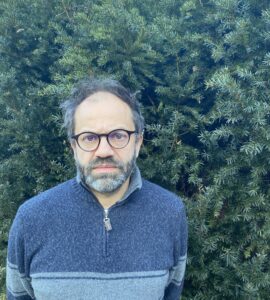
Elly Konijn is a Full Professor at the Faculty of Social Sciences and Humanities and Network Institute of Vrije Universiteit Amsterdam, holding the Fenna Diemer-Lindeboom Endowed Chair. As chair of the Media Psychology Amsterdam program, her work bridges media psychology, social robots, affective processing, and adolescent media use . Research Pillars : Relating to media figures, virtual humans, and social robots Media-based reality perceptions and moral standards Adolescent media effects (cyberbullying, video games, body image) Recent Publications explore emotional bonding with robots, narrative complexity in film, and media's impact on adolescent cognition. Her 2025 Communication Theory article introduces a framework for human-artificial others relationships. Scientific Recognition : KNAW/NWO Eurekaprijs (2015) Computable Award (2021) Network Institute Competitive Research Funding (2025) She supervises 16 PhD students and leads projects like ROBOT-BOND (ERC Advanced Grant 2025-2029) and Communicating with Social Robots (2020-2025). Her documentaries (e.g., Alice Cares ) translate research into public discourse.
Tom McDonough is a Professor of Art History at Binghamton University, specializing in modern and contemporary art with a focus on avant-garde movements, particularly the Situationist International. His research explores intersections between art, politics, and social movements in postwar Europe. He holds degrees from Rutgers University (BA), New York University’s Institute of Fine Arts (MA, PhD), and has taught at Harvard University and UC Berkeley. Education: Bachelor’s Degree: Rutgers University MA and PhD: Institute of Fine Arts, New York University His research interests include postwar European avant-gardes, postwar French architectural history, and contemporary Black American art. Key publications include "The Beautiful Language of My Century" and edited volumes on the Situationist International and urban theory. McDonough received the SUNY Chancellor’s Award for Excellence in Scholarship (2024) and has held fellowships at institutions such as the Institute for Advanced Studies in the Humanities and the Académie de France à Rome/Villa Medici. Teaching focuses include 19th-century Parisian art, Black Monument sculptors, and film theory. His work bridges art criticism with broader socio-political analysis, emphasizing radical artistic movements’ societal impacts.
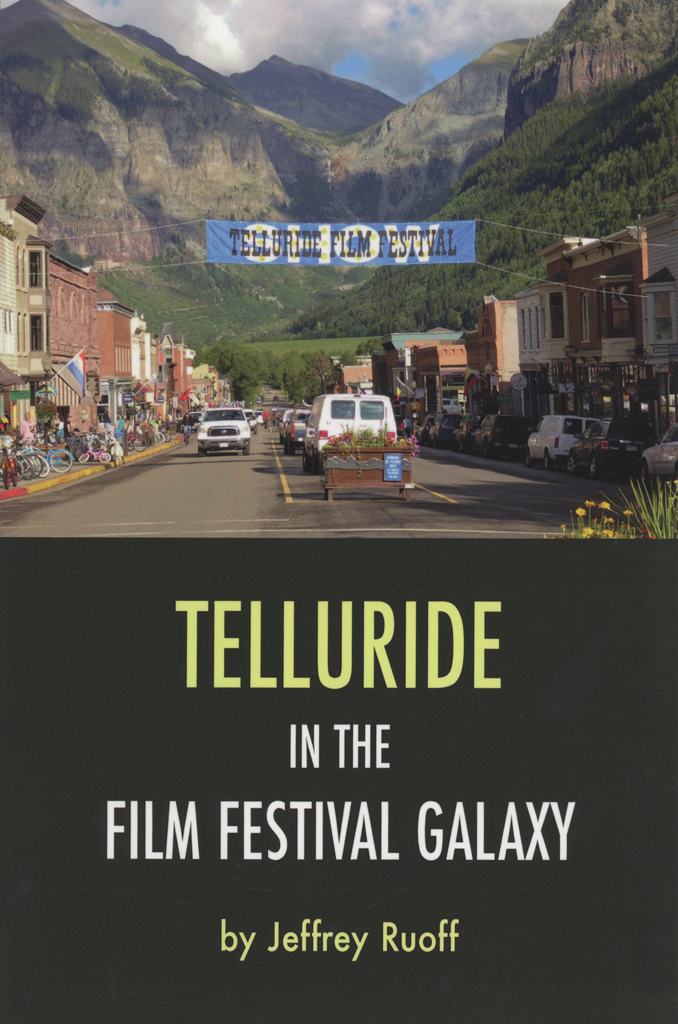
Jeffrey Ruoff is an Associate Professor of Film and Media Studies at Dartmouth College. His research focuses on documentary filmmaking, film festivals, and North African cinema. He authored Telluride in the Film Festival Galaxy (2016) and edited works on film programming and travel cinema. Ruoff teaches documentary production, video mashups, and courses on New Waves in Film. His films, including the 2012 documentary Still Moving: Pilobolus at Forty , explore dance and cultural history. He holds a B.A. from Cornell University, an M.F.A. from Temple University, and a Ph.D. from the University of Iowa. In 2015-16, he participated in the OpEd Public Voices Fellowship. Ruoff’s writing appears in academic journals and popular outlets like The Huffington Post and Fortune .
Sheena Malhotra is a Professor of Gender & Women’s Studies at California State University, Northridge (CSUN), where she serves as Director of Queer Studies and Academic Director of the MA in Humanities Program. She holds concurrent appointments within the College of Humanities and Gender and Women's Studies Department, with extensive administrative experience including former roles as Associate Dean of the College of Humanities (2017-2019) and Chair of Gender and Women's Studies (2009-2013). Her academic trajectory bridges Indian film/television production and critical academia. Her educational background includes a Ph.D. in Communication Studies (1999) from the University of New Mexico, an M.A. (1993) from Pepperdine University, and a B.A. (1991) from DePauw University. Research interests span Media and Gender , Postcolonial Analysis of Indian Media , Queer Diasporic Audiences , and Racialized Implications of Silence , with methodological roots in intercultural communication and feminist theory. Her publication portfolio reveals consistent thematic evolution toward intersectional analyses of globalization, media, and identity. Early work focused on Indian television commercialization and Bollywood's cultural politics, while recent scholarship examines neoliberal impacts on youth imaginaries and queer coalition-building. Key methodological threads include postcolonial critique, discourse analysis, and embodied feminist approaches across 15+ peer-reviewed articles and two major books. Silence, Feminism, Power: Reflections at the Edges of Sound (2013, Palgrave MacMillan) - Co-edited anthology exploring silence as political strategy Answer the Call: Virtual Migration in Indian Call Centers (2013, University of Minnesota Press) - Co-authored ethnographic study of call center labor National Television Award nominations (India, 1995) during executive television production career Her advisory work includes five years on SATRANG's board (serving South Asian LGBTQIA+ communities in SoCal) and founding directorship of CSUN's Queer Studies Program. Current teaching includes GWS 351 (Gen Race Clas Sex) with hybrid/online course design expertise. Documentary film production remains integral to her scholarly practice through projects like The Shape of Water (2006) examining global feminist organizations.
Anna Abrahams is a Senior Programmer Artist Film and Artistic XR at Eye Filmmuseum in Amsterdam and teaches Moving Image at the Royal Academy of Art, The Hague, within the Photography department. She has been active in experimental film since 1989 as a co-founder of Rongwrong, an independent production foundation. Education: Studied film theory at the University of Amsterdam. Her research and practice focus on experimental film, virtual reality (XR), and moving image art. She bridges traditional film techniques (35mm, 16mm) with digital innovations, emphasizing immersive storytelling and artistic exploration of landscapes, urban spaces, and sociocultural themes. The films she has directed or co-directed, spanning 1995–2022, explore topics like psychogeography, counterculture, and digital experimentation. Her 2022 VR work Angels of Amsterdam highlights her engagement with extended reality technologies. As a co-author, she contributed to publications including Warhol Films , mm2. Experimental Film in the Netherlands , and film³ [kyü-bik film] , documenting avant-garde film practices and theoretical frameworks.
Claudia Lehmann is a University Professor of Film Art & Visual Communication at the Institute for Open Arts, Department of Scenography at Mozarteum University Salzburg. She has been a professor at Mozarteum University since 2019 and previously served as a visiting professor at the Berlin Weissensee Art Academy. As a faculty member, she contributes to the Institute management, teaches as a Teacher, and serves on the Curricular Commission. Dr. Lehmann holds a doctorate in physics (Dr. rer. nat.) with her dissertation "GAUGE COVARIANT MULTISCALE ANALYSIS OF COMPLEX SYSTEMS" published through DESY-Publications in 2004. Her academic journey reflects a unique interdisciplinary trajectory from scientific research to artistic practice. Claudia Lehmann's research interests center around the intersection of art and science, with particular focus on perception, reality, and systemic phenomena. Her work spans documentaries, feature films, music videos, art videos, installations, and performances, constantly searching for new forms and formats. She develops visual concepts, video stage sets, and unique live video performances, often in collaboration with Nicolas Stemann. Through her work, she explores diverse possibilities for new structures, especially in the form of artistic collaboration. Her recent artistic output shows a consistent trend toward interdisciplinary work that blends theater, film, and digital media. Lehmann frequently collaborates with Nicolas Stemann and Konrad Hempel, creating innovative performances that integrate video technology with traditional stagecraft. Her work often addresses social and political themes while experimenting with form and presentation. The Institute for Experimental Affairs (IXA), which she co-founded with Konrad Hempel, serves as a platform for exploring the interfaces between science and art through various projects and research initiatives. Dr. Lehmann has received several prestigious awards for her work: Samsung Smartfilm Award 2013 Shocking Shorts Award 2007 Nomination for German Documentary Film Music Prize 2013 Nomination for Studio Hamburg Young Talent Prize for Best Screenplay As an educator and researcher, Lehmann has developed numerous collaborative projects and performances that have been featured at major international festivals including the Berlin International Film Festival, Leipzig Documentary Film Festival, and various theater festivals. Her work with IXA represents a significant research initiative at the intersection of science and art. Lehmann co-founded the Institute for Experimental Affairs (IXA) with visual artist and composer Konrad Hempel. Through IXA, she conducts research and realizes projects at the interfaces between science and art. Her collaborative work spans theater productions, film projects, and interactive installations that have been presented at venues including the Schauspielhaus Zürich, Münchner Kammerspiele, Opéra Comique Paris, and various international festivals.
Tom Boellstorff is a Professor of Anthropology at the University of California, Irvine. He holds a Ph.D. from Stanford University (2000). His research focuses on digital anthropology, virtual worlds, queer theory, and the intersection of technology with cultural practices. Boellstorff is known for pioneering ethnographic studies in virtual environments like Second Life and has explored topics such as Indonesian LGBTQ+ communities, disability in digital spaces, and the cultural history of early video games like Intellivision. His work spans theoretical frameworks for understanding digital cultures, methodological innovations in virtual ethnography, and critical analyses of technology’s role in shaping identity, politics, and social structures. Boellstorff’s interdisciplinary approach integrates cultural theory, media studies, and queer studies to examine how digital platforms mediate human experience. Recent publications emphasize the anthropology of emerging technologies (e.g., metaverse studies), historical analyses of video game platforms, and the sociopolitical implications of digital exclusion. His documentary work, including Virtual Cultures in Pandemic Times , extends his ethnographic focus into visual media.
Ryan Kelly is an Associate Professor in the School of Computing Technologies at RMIT University, specializing in Human-Computer Interaction (HCI), digital health, and mixed reality. His research focuses on technology-enabled social connection and wellbeing, including designing communication tools for close relationships, digital health initiatives like the Music-Attuned Care via eHealth (MATCH) project, and VR applications for mental health. He collaborates with industry partners such as Google, Netflix, and the Worldwide Fund for Nature, and has developed technologies for older adults, including simplified video calling systems for aged care during the pandemic. His work has been featured globally in media, including Al-Jazeera's documentary All Hail the Algorithm . He actively contributes to the HCI community as a reviewer and committee member for conferences like ACM CHI and CSCW, holding roles such as Editor for CSCW 2025 and Awards Co-Chair for CSCW 2023. Ryan supervises PhD candidates exploring human-centered AI for social connection and online safety for older adults. His research aligns with UN Sustainable Development Goals 3 (Good Health), 9 (Industry Innovation), and 11 (Sustainable Cities). Key projects include the VR mindfulness application used by over 200,000 Australians and the Painpad device for pain logging in UK hospitals. He advocates for participatory design frameworks, emphasizing ethical AI and technology’s role in fostering meaningful human experiences.
Wang Yingji is a tenured professor and doctoral supervisor at the School of Art and Media, Tongji University. He holds a PhD in Literary Studies and has served as director of the China Culture and Art Communication Research Center, member of the China Artists Association, and editorial board member of "Media Criticism" journal. BA: Chinese Language and Literature, Renmin University of China (1995) MA: Journalism, Beijing Normal University (2004) PhD: Literary Studies, Beijing Normal University (2007) His research focuses on the intersections between Journalism and Communication, Media Phenomenology, Philosophy of Technology, and Traditional Chinese Culture. His work explores embodied cognition in media interaction, technological mediation of human perception, and historical epistemology of media systems. The articles demonstrate his expertise in media phenomenology (Hubert Dreyfus analysis), digital reading behavior studies, VR technology ideologies, and historical reconstruction of Chinese communication theories. His publications span from 2016-2022 with consistent CSSCI indexing. National Social Science Fund General Project: "Chinese Modern Public Opinion Thought History" (2021) Major Project Subtopic: "Chinese Media Archaeology in Civilizational Diversity" (2020) Ministry of Education Project: "Husserl's Media and Communication Thought" (2020) Completed NSFC Project: "Rumor Propagation and Governance in Public Emergencies" (2011) As educator, he teaches courses like "Chinese Classical Media Art", "Media Research Methods", and "Communication Theory". His administrative roles include leadership positions in the Chinese Society of Journalism History and multiple journal editorial boards.
Professor Patrice Rey is a faculty member at the School of Geosciences, The University of Sydney. He holds the rank of Professor and specializes in geodynamics, tectonics, and landscape evolution. With an international career spanning 12 institutions across three continents, his research focuses on continental rifting, mantle dynamics, metamorphic processes, and the interplay between climate and tectonics. Notable projects include studies on Australia’s geological history, the formation of precious opal, and the dynamics of early Earth geodynamics. His work bridges field geology, numerical modeling, and geophysical analysis. Key research themes include gravitational collapse in cratons, the role of isostasy in fold belt evolution, and the impact of dynamic topography on sedimentary systems. He has contributed to interdisciplinary projects such as the Perseverance Mars mission, highlighting connections between Earth’s geology and Martian surface processes. Recent publications emphasize continental crust evolution, landscape dynamics, and the integration of virtual reality tools in geological education. He leads research teams funded by grants like the Australian Research Council (DP22 and LP20 projects), focusing on mineral systems and Proterozoic rift basins. His media presence includes BBC documentaries and NOVA series, showcasing his expertise in continental evolution and planetary geology.
Dr. Mario Slugan serves as Senior Lecturer in Film Studies at Queen Mary University of London's School of Languages, Linguistics and Film. His research bridges film studies, philosophy, and German studies with emphasis on theoretical frameworks, historical analysis, and cross-disciplinary methodologies. Slugan's research focuses on film philosophy and film theory , particularly examining fiction/non-fiction distinctions, early cinema practices, and montage aesthetics. His work explores German cinema , Eastern European film traditions , and techniques of visual immersion from Hale's Tours to VR, demonstrating how philosophical aesthetics informs cinematic experience across historical periods. Analysis of his recent publications reveals consistent exploration of fictional frameworks in non-fiction contexts and historical epistemology of cinematic forms . His work shows increasing engagement with pandemic-era film genres while maintaining core interests in German and Eastern European cinemas, with empirical approaches complementing philosophical inquiry. His scholarly contributions have earned significant recognition: 2021 BAFTSS Best Monograph Award (Second Place) for 'Fiction and Imagination in Early Cinema' 2022 BAFTSS Best Edited Volume Award (Third Place) for 'The Fiction/Nonfiction Distinction' 2023 BAFTSS Best Edited Volume Award (Second Place) for 'New Perspectives on Early Cinema History' 2017 BAFTSS Best Journal Article Award (Third Place) Fellowship in the Society for Cognitive Studies of the Moving Image Slugan currently supervises five PhD candidates examining Hitchcock's legacy, post-war German cinema, intersemiotic translation, Iranian avant-garde, and immersive museum theory. As Co-Investigator on the Croatian Science Foundation's 'Aesthetic Education through Narrative Art' project (2021-2026), he explores intersections of narrative art, philosophy, and educational practice while securing continuous research funding through international collaborations.
Max Hattler is a media artist and Associate Professor at the School of Creative Media , City University of Hong Kong . He previously held Lecturer positions at Goldsmiths, University of London (2006-2014) and the Royal College of Art (2012-2014). His work explores intersections of abstraction/figuration , sound/image relationships , and creative media through experimental animation and audiovisual performance. Current Research Focus: Abstracted moving images as frameworks for rethinking power relations Recent Curatorial Work: Relentless Melt series (2021-2025) showcasing Hong Kong experimental animation Key Publications Trends : Recent articles examine stereoscopic innovation , graphical sound techniques , and abstract animation semiotics . His curatorial research in Hong Kong digital art and VR animation demonstrates technical and theoretical contributions. Major Awards : Cannes Lions (2013) Visual Music Awards (2010, 2011, 2014) CityU Teaching Excellence Award (2021-22) President's Award (2022) for research contributions Best Experimental Film at Reanima Festival (2017) International Presence : Regularly participates in Ars Electronica , Animafest Zagreb , and Society for Animation Studies conferences. Has conducted workshops at CalArts , Geneva University of Art and Design , and Floating Projects Hong Kong .
Steven Devleminck is an Associate Professor in the Department of Computer Science at KU Leuven's Faculty of Engineering Technology, concurrently serving as coordinator of the School of Arts (Associated Faculty) in Brussels. His dual appointment bridges engineering and arts through the Human-Computer Interaction (HCI) group at Group T Leuven Campus and Unit Art & Technology in Brussels, with active membership in DigiSoc – KU Leuven Digital Society Institute. His research centers on human-centered computing and speculative design methodologies , with core expertise in tangible interaction for emotion regulation and multispecies futures. Key themes include biofuturing as co-creative response to climate crises, squeeze-based interfaces for workplace stress, and artistic AI collaborations. His work uniquely integrates computer science with choreography, film studies, and anthropology through projects like “Youth TikTok production as public pedagogy” and “Imagining the Post-Anthropocene in BioFutures Living Lab”. Analysis of recent publications reveals three dominant trajectories: (1) Advancement of squeeze interaction techniques for affective computing, (2) Development of biofuturing frameworks for multispecies speculation, and (3) Critical examinations of AI's role in artistic mediumship. Cross-cutting themes include post-anthropocentric design, climate-responsive technologies, and decolonial approaches to digital pedagogy. Devleminck actively mentors doctoral candidates including Ula Sickle (choreographic exhibitions) and J. Verbesselt (cinema studies), while leading major funded projects such as: Living Corpora (2025-2029): Pioneering human-AI collaboration in digital humanities as Co-promotor Experiential Futuring (2022-2026): Co-creative methodology for social media outage response as Co-promotor Deradicalizing the City (2021-2025): Urban intervention research as Promotor He serves on the Computer Science Department Council and Doctoral Committee for the Associated Faculty of Arts. His laboratory ecosystem spans the HCI Group T Leuven Campus for technical development, Brussels-based Unit Art & Technology for artistic integration, and BioFutures Living Lab for participatory multispecies experimentation. This tripartite structure enables transdisciplinary work connecting squeeze sensor engineering with climate futures speculation and museum interface design.
Nicolas de Warren is a Professor of Philosophy and Jewish Studies at The Pennsylvania State University, located in University Park. His primary affiliation is with the Department of Philosophy within the College of the Liberal Arts. De Warren’s research spans phenomenology, ethics, 19th and 20th century philosophy, aesthetics, political philosophy, and literature. He is the author of four major books, including Husserl and the Promise of Time (2010), A Momentary Breathlessness in the Sadness of Time (2018), Original Forgiveness (2020), and German Philosophy and the First World War (2023). Currently, he is developing projects on the phenomenology of the afterlife and the impact of World War I on Proust’s In Search of Lost Time . His research interests explore intersections between time, ethics, and existential questions, engaging thinkers like Husserl, Heidegger, Levinas, and Sartre. He has co-authored works on nuclear responsibility and edited volumes on phenomenology, Europe’s philosophy, and neo-Kantianism. De Warren’s work extends to documentary films, including The Socrates of Prague (2017) and a series on The Great War and Modern Philosophy (2016). His scholarship bridges philosophy with literary, historical, and cultural studies, reflecting a commitment to interdisciplinary dialogue. Notable contributions include analyses of war’s philosophical implications, phenomenological ethics, and the critique of anti-Semitism in Heidegger’s thought. He has published over 100 papers and translations, demonstrating a prolific engagement with continental philosophy’s core questions. His current projects address temporal ethics, the legacy of World War I in modern thought, and the philosophical dimensions of nuclear temporality.
Alex Munt is an Associate Professor at the University of Technology Sydney (UTS), affiliated with the Faculty of Design and Society. He serves as a key member of the Creative Practice Research Group and previously held the position of Acting Dean for Strategic Higher Degree Research Development at the UTS Graduate Research School from January to December 2021. With a background spanning both creative industries and academia, Munt brings extensive practical experience to his academic role, having worked for a decade in design, architecture, and 3D digital media before transitioning to film and academic work. Munt's educational background includes a PhD in Communications from Macquarie University (2010), a Graduate Certificate in Media Arts and Production (Film & Video) from the University of Technology Sydney (2004), and a Bachelor of Architecture (Hons) from the University of Adelaide (1996). His academic journey reflects a deliberate movement from architecture to film and media studies, creating a unique interdisciplinary perspective that informs his research and teaching. Munt's research expertise focuses on microbudget screen development and production in Australian and international contexts, with particular interest in expanded screenwriting practices, innovative screen aesthetics, and alternative models of film production. He examines granular aspects of film style, particularly diverse approaches to mise-en-scène, and explores how non-industrial filmmaking environments produce distinctive cinematic results. His work extends to expanded modes of moving image production, including video art, artist's moving image installations, and Cinematic Virtual Reality (CVR). Munt's research has been incorporated into Screen Australia's Story Development documents to support Australian low-budget screenwriters and directors. An analysis of Munt's recent publications reveals a clear trajectory toward immersive media and virtual reality storytelling. His work increasingly focuses on the theoretical and practical challenges of screenwriting for virtual reality environments, exploring spatial narrative structures, user embodiment, and the relationship between traditional filmmaking techniques and emerging immersive technologies. The research demonstrates how cinematic virtual reality requires rethinking fundamental elements of screen storytelling, particularly in relation to spatiality, narrative emphasis, and structural elements that differ significantly from conventional film. Four feature films as writer/director: LBF (2010), Poor Little Rich Girls (2013), Collectors (2021), and Isaac's Dream (2023) International recognition with award-nominated films screened and distributed worldwide Contributions to Screen Australia's Story Development documents Editor of the significant anthology 'Screenwriting for Virtual Reality: Story, Space and Experience' (2024) Munt supervises Higher Degree Research students with a particular emphasis on working with industry-based creatives who seek to rethink, reshape, and sustain their creative screen practices. His teaching philosophy draws on the lineage and evolution of indie, alternative, DIY, and microbudget approaches to film conception, development, and production. He views these approaches as creatively sustainable methods that both stand apart from and inform industrial modes of screen production. His research, teaching, and engagement all focus on creativity, creative practice research, and professional practice in film and creative screen media. As a practicing filmmaker and academic, Munt bridges theory and practice through the Creative Practice Research Group at UTS. His work demonstrates how academic research can directly inform and enhance creative practice while simultaneously advancing scholarly understanding of emerging media forms. His current focus on cinematic virtual reality represents a natural evolution of his longstanding interest in innovative screen aesthetics and alternative production models.