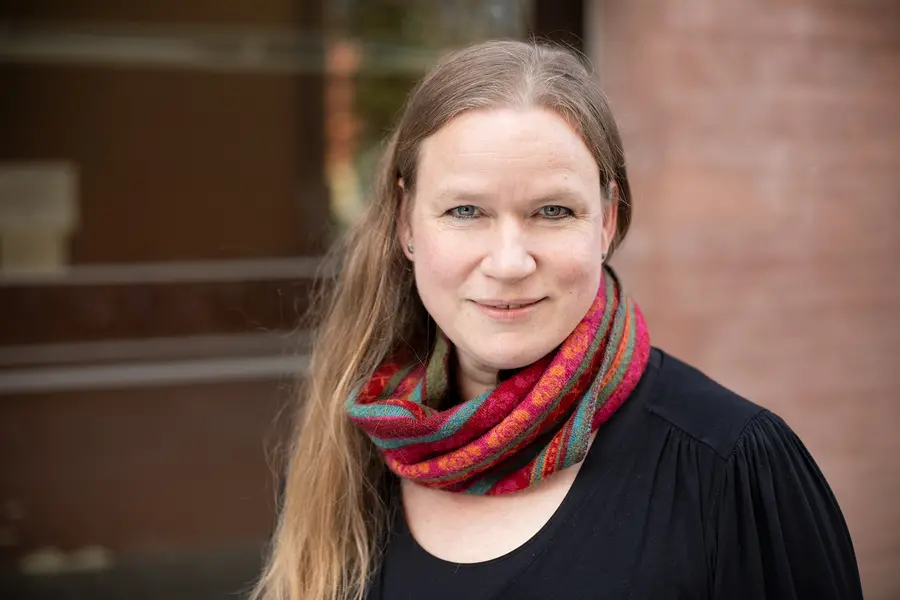
Julia Hertel is a Researcher at the Department of Informatics, University of Hamburg, specializing in Human-Computer Interaction (HCI) and Augmented Reality (AR) systems for industrial applications. Her work bridges AR technology with practical solutions in maritime navigation, hydrographic surveys, and healthcare virtual agents. Bachelor's (2016) and Master's (2020) in Computer Science and HCI from University of Hamburg Her research interests focus on Augmented Reality for industrial contexts , including perception challenges in AR environments, interaction design for immersive systems, and AR tool development for gas station maintenance and maritime navigation. She has contributed to projects like WizARd (2020-2023) and HafenplanZen (since 2022). Julia's publications span AR perception studies, no-code AR authoring tools, and neural rendering for VR. Key collaborations include work on medical virtual agents and geospatial data visualization. She is actively involved in the XR Lab at the University of Hamburg, exploring spatial user interaction and industrial AR applications.
Eberswalde University for Sustainable DevelopmentGermany
Britta Gossel is a Professor for Social Business Management at the Department of Sustainable Business, Eberswalde University of Sustainable Development. She serves as the academic program director for the Master's program Sustainable Entrepreneurship & Social Innovation and teaches courses on sustainable entrepreneurship, digital/media entrepreneurship, personal/intercultural competencies, creative entrepreneurship, and organizational theory. Education: Diplom in Applied Media Sciences (2004, TU Ilmenau), PhD in Communication Studies (2019, Otto-Friedrich University Bamberg). Research Interests: Focus on entrepreneurship (digital, media, social, sustainable), educational technology, emerging technologies like AI/VR/360-video, and organizational/communication theory. She leads the FutureSEE project (2023–2026) for social entrepreneurship education and co-founded the SiSeE network (2022–2024) for social innovation education. Key Affiliations: European Council for Small Business and Entrepreneurship (ECSB), European Media Management Association (emma), German Society for Media Studies (DGPuK), SDW Alumni Association. Publications: Her recent work examines technological potentials in social science research and education, analogies in entrepreneurial communication, and rigor-relevance dichotomy in media management. She uses immersive technologies like 360-video and VR to explore their pedagogical implications.
Dr. Jiaxin Ling serves as a Research Fellow in Digital Twin and AR/VR for Heritage Buildings at The Bartlett School of Sustainable Construction, University College London. His work bridges digital innovation with sustainable construction practices, focusing on heritage preservation in complex urban environments. Academic background includes: PhD in Civil Engineering, Tongji University (2018-2024), recognized as an Outstanding Graduate of Shanghai Bachelor's in Civil Engineering, Wuhan University (2014-2018) His research spans Digital Twin for tunnels/buildings, Building Information Modeling (BIM) , and AI/ML applications in construction engineering. He pioneers AR/VR solutions for fire safety, tunnel lighting optimization, and intelligent infrastructure, directly supporting UN Sustainable Development Goals 11 (Sustainable Cities) and 9 (Industry Innovation). Analysis of recent publications reveals a cohesive trajectory in applying digital twin technology to solve critical challenges in tunnel safety, energy efficiency, and real-time construction monitoring through hybrid knowledge-data approaches. Key recognition: Outstanding Graduate of Shanghai (top doctoral honor) Dr. Ling contributes to major research initiatives funded by the European Union Horizon Programme and National Natural Science Foundation of China (NSFC) , collaborating across international teams to advance sustainable construction methodologies. His work operates within UCL's interdisciplinary research ecosystem, focusing on heritage building preservation through cutting-edge digital workflows and sensor-integrated monitoring systems.
Bernd Zinn is a full-time Professor at the University of Stuttgart , serving as Managing Director of the Institute of Educational Science and Dean of Studies for Vocational Education, Technology Education, and the NwT teaching degree. His research spans teaching-learning research , digital educational technologies , and inclusion in vocational settings . Key Research Areas: Virtual Reality (VR) applications in education, epistemological beliefs, STEM competence development, inclusive pedagogy, AI integration in teacher training, and international vocational Education. Recent Trends: Focus on VR stress analysis for teachers, AI chatbot usage in academia, and digital competence assessments. Scientific Distinctions: Awarded the Hans-Messer Prize (1996) and Ludwig-Lenz Foundation Award (2002-2003) , with a 'magna cum laude' dissertation.
Chris Ingraham is an Associate Professor in the Department of Communication at the University of Utah, where he has been serving since July 2021. He is also on the core faculty of the Environmental Humanities Graduate Program. His academic career bridges communication studies, environmental humanities, and cultural theory, with a focus on how material, aesthetic, and affective practices shape our environments. Dr. Ingraham's educational background demonstrates a strong foundation in the humanities: BA in English from Amherst College MA in Humanities from the University of Chicago PhD in Communication from the University of Colorado - Boulder Before entering academia, Ingraham worked as a freelance writer, environmental journalist, and in publishing at the Knopf Group in New York. This professional background informs his interdisciplinary approach that brings together insights from across the humanities to address contemporary environmental and technological challenges. His research interests span communication and media studies, cultural studies, literary studies, philosophy, creative and professional writing, and environmental communication. His scholarly trajectory reveals a progression from examining digital media and social platforms to increasingly focusing on ecological and environmental concerns. His work connects rhetorical theory with contemporary environmental challenges, exploring how communication practices shape our relationship with the more-than-human world. A strong thread throughout his scholarship is the examination of non-discursive and affective dimensions of communication, particularly how material environments and objects participate in meaning-making processes. Dr. Ingraham has received recognition for his scholarly contributions: Rising Star in Humanities Award (2020) from the College of Humanities, University of Utah Top Paper Award (2020) from the Western States Communication Association Faculty Fellows Award (2020) from the University Research Council Fulbright Scholar in Digital Culture at the University of Bergen (2018) As an educator, Ingraham teaches courses including Environmental Communication: Critical Plant Studies, Foundations of Communication, Ecology of Residency, and Rhetorical Posthumanism. His teaching reflects his research interests, emphasizing critical approaches to environmental communication and the intersection of media, rhetoric, and ecological thought. While specific student advisees aren't listed in the available information, his courses suggest he mentors students interested in environmental humanities, media studies, and rhetorical theory. Institutionally, Ingraham serves on the Advisory Board of the Society for the Study of Affect (since 2023) and participates in the Rhetoric, Culture, and Advocacy Interest Group of the Western States Communication Association. He was also a member of the Legislative Assembly of the National Communication Association from 2021-2023, demonstrating his engagement with professional organizations in his field.
Mr Joël Chappell is a Senior Lecturer at the School of Architecture, Oxford Brookes University. He coordinates the Masters in Architecture programme and leads the MArchD Specialisation in Advanced Architectural Design & DS7. His expertise spans analogue-digital epistemology, design through atmosphere and experience, and urban cultures in architecture. Research Focus: Joël investigates immersion and imagination in architectural education, kinesthetic 3D modelling via VR and feedback devices, and applies Activity Theory to design processes. He explores rapid prototyping for bespoke residential projects through furniture and lightweight tessellated surface structures. He is affiliated with the Design, Theory, Practice research group and contributes to the "University as Studio" initiative. His recent projects include developing cohesive 3D communication strategies through workshop-based analog processes. Scientific Awards & Memberships: DTP Funding for Kinesthetic Modelling through VR Advance HE Teaching Fellow Royal Institute of British Architects (Associate Member) 100k Garages Research Group
Prof. Dr. Katja Dörschner Boyaci is a Professor at Justus-Liebig-Universität Gießen , Faculty of Psychology and Sports Science, leading the Perception & Active Exploration Group . Her research focuses on understanding how the human brain constructs rich perceptual experiences from sensory input, particularly in the perception of material properties like softness, glossiness, and roughness. Research Interests: Computational and neural mechanisms of material perception Integration of visual and haptic information Expectation-driven modulation of perception Neuroimaging (fMRI, EEG) and psychophysical approaches Virtual reality and computational modeling Her work combines psychophysics , neuroimaging , and computational modeling to explore how humans judge material properties from static and dynamic images, and how prior experiences shape these perceptions. Scientific Contributions: Published extensively on material perception, with recent papers in Nature Human Behaviour , Journal of Neuroscience , and Vision Research . Leads the collaborative B8 project on integrating experience and sensory information in material perception. Collaborations & Funding: Co-leads the B8 project with Prof. Hüseyin Boyaci, funded to investigate neural mechanisms of expectation-based perception. Employs interdisciplinary methods including EEG, fMRI, VR, and behavioral experiments. Laboratory & Team: The Perception & Active Exploration Group at Giessen University studies how humans perceive intrinsic object qualities through active exploration and sensory integration, with implications for product design, computer graphics, and robotics.
Hélène Yildiz is a University Professor of Management and Business Sciences at the University of Lorraine , affiliated with the IUT Henri Poincaré in Longwy and the CEREFIGE research unit. She serves as Head of the Offshore Marketing Masters program at IAE Metz and Deputy Head of Department at IUT Longwy. Research Interests focus on economic/social exchange processes across commerce, tourism, and gaming industries, with emphasis on digital marketing strategy, virtual reality applications, and sustainable branding. Her work explores how technologies like VR/AR reshape consumer behavior and purchasing decisions, particularly in gaming and tourism contexts. Key Research Themes : Virtual reality in marketing and consumer psychology E-sports and digital consumption patterns Cross-border trade and territorial development Sustainable branding and CSR Small retailer patronage dynamics Social media's impact on luxury brands Academic Leadership includes: Co-supervising MIAGE Master's program Responsible for Hospitality Management Master's at IAE Metz Deputy Head of Department at IUT Longwy Education : PhD in Management (2006), Université Nancy 2 Diploma from IUFM de Lorraine
Blair MacIntyre is an Adjunct Professor at the Georgia Institute of Technology , affiliated with the School of Interactive Computing and the GVU Center . He has directed the Augmented Environments Lab at Georgia Tech since 1999 and is currently on leave from his role as a Professor at Northeastern University, where he held appointments in the School of Art+Design (College of Art, Media and Design) and the Khoury College of Computer Sciences . His current industry role as Head of AR/VR Research at JPMorganChase focuses on real-world applications of mixed reality technologies. Blair’s research spans the development of Augmented Reality (AR) , Virtual Reality (VR) , and Mixed Reality (MR) as tools for games, entertainment, education, and work. He emphasizes creating user-friendly software for non-expert creators and explores social MR for remote collaboration, conferences, and climate crisis mitigation. His affiliations include the Augmented Environments Lab and prior work with Mozilla on WebXR standards. Blair has published over 100 papers and is a vocal advocate for open, decentralized online spaces. He founded The MacMynatt Group (2015–2020) and co-founded Aura Interactive . Personal pursuits include bagpiping, gaming (e.g., Overwatch, Valorant), and technology advocacy for education.
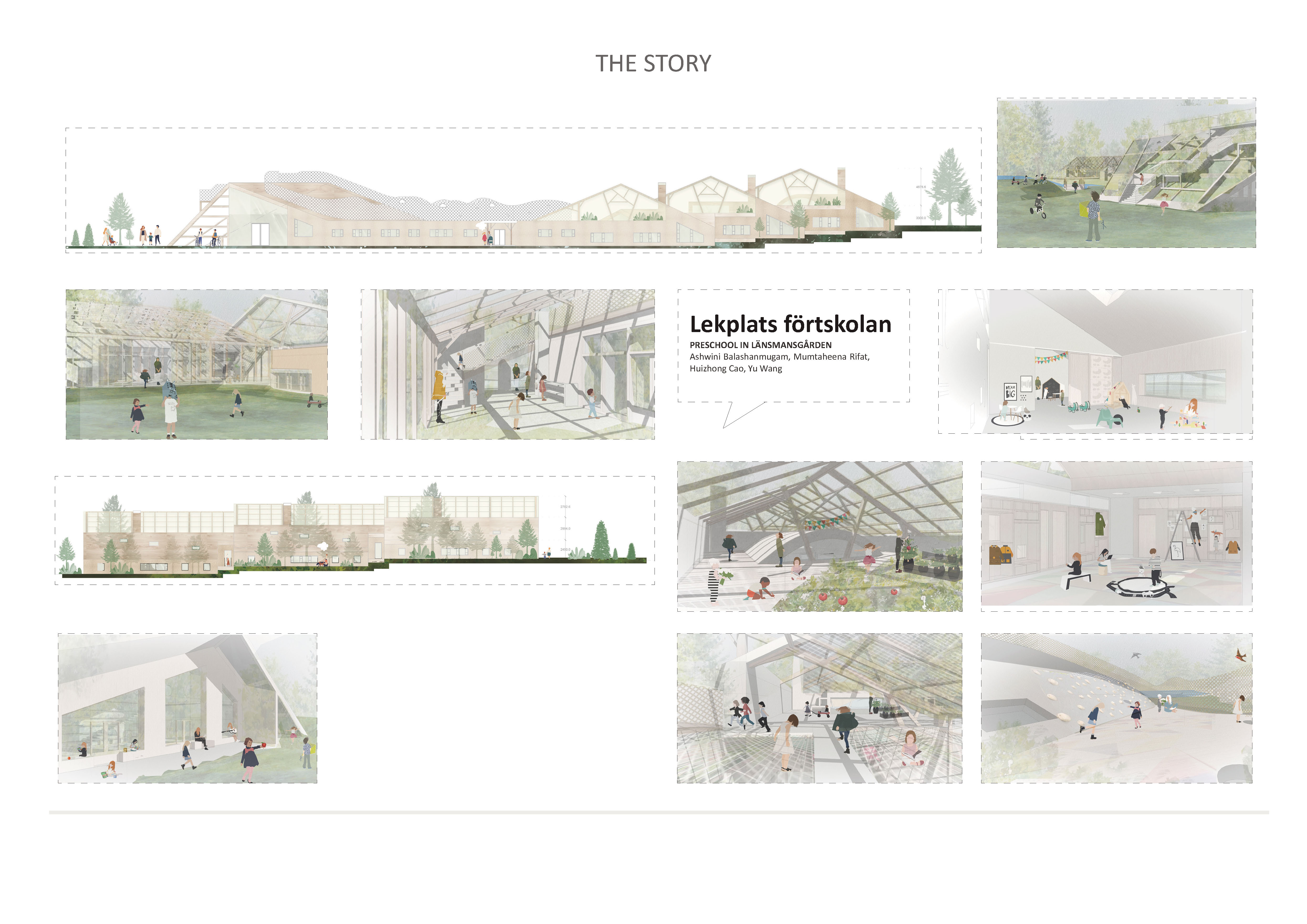
Huizhong Cao is a researcher at Production Systems , Chalmers University of Technology. With a background in architecture and sustainable urban planning, she bridges design and technology through projects involving XR platforms , digital twins , and human-centered design . MSc in Sustainable Urban Planning (Chalmers) BSc in Architecture (Wuhan University) Her research focuses on mental workload assessment , XR interface design , and sustainable smart cities . Key projects include: RILIK - Immersive learning framework XR-TBP - Extended reality training for battery production TRIREME - Digital & Green Skills development DIGITALIS - Cognitive work optimization Recent publications analyze: VR interface design for collaborative manufacturing XR applications in environmental sustainability Digital twin integration with IoT Scientific recognition includes: IPOET Scholarship LEXUS Design Award Finalist KTH Innovative Incubator Program UIA-HYP Cup Third Prize She has contributed to UX design and XR development across multiple projects, often combining participatory design with game engine technology . Contact: huizhong@chalmers.se | huizhongcao1@gmail.com
Dr. Jessica Luke is the Director of the Master of Arts in Museology (MA-Muse) program and a Teaching Professor at the Information School, University of Washington, Seattle, WA. A learning scientist and educator with over 25 years of experience, she bridges museum studies, educational psychology, and informal learning environments to advance educational practices in museums. Education: PhD in Educational Psychology from the University of Maryland College Park MA in Museum Studies from the University of Toronto Her research focuses on art museum education critical and creative thinking youth development family learning dynamics social-emotional learning in museums exhibit design evaluation . She examines how museum experiences influence wellbeing, cognition, and emotional responses, particularly in children and families. Recent publications highlight trends in her work, including social-emotional behaviors in children’s museums awe’s impact on critical thinking during art museum visits stress reduction through cultural experiences virtual reality applications in educational reform theoretical foundations of play in museum settings interdisciplinary research methodologies . Prior to UW, she collaborated with scholars John Falk and Lynn Dierking at the Institute for Learning Innovation, contributing to national museum research projects. Contact: jjluke@uw.edu | Alumni House, Suite 302, 1415 NE 45th Street, Seattle, WA 98105
Dr. Natasha Ginnivan is an Adjunct Lecturer and Senior Research Associate with the School of Population Health at the University of New South Wales. She serves as an Associate Investigator with the Ageing Futures Institute, where her research focuses on psychology and attitudes to ageing, stigma and ageing, and self-perceptions of ageing. Her educational background includes a Bachelor of Science (Psychology) from UNSW, a Graduate Diploma in Psychology from Macquarie University, and a PhD in Population Health, Psychology & Ageing from the Australian National University. Dr. Ginnivan's research encompasses the lived experience of ageing and dementia, with particular focus on ageing in marginalised populations, including ageing prisoners. Her current research investigates elder abuse in the form of financial abuse and drug mule scams, alongside ageing prisoner health. She has pioneered innovative methodologies using immersive art-based approaches and virtual reality to engage with the embodied, sensory and affective experience of living with dementia. Her work often intersects criminology, gerontology, and digital health technologies. Her publication record demonstrates consistent contributions to prisoner health research, particularly for older adults in the justice system. The trajectory of her work shows progression from examining media portrayals of older people to specialized studies on ageing prisoners and dementia in custodial settings, increasingly incorporating advanced methodologies including virtual reality and text mining of research literature. Best Paper presentation by a student, Emerging Researchers in Ageing Conference, ARC Centre of Excellence in Population Ageing Research, University of New South Wales, November, 2011, $250 ANU Vice-Chancellor travel grant $3000 (travelling to the Philippines for field work / data collection), December, 2011 Dr. Ginnivan has secured multiple research grants totaling over $1 million, including funding from the UNSW Ageing Futures Institute, Australian Human Rights Institute, and ARC Centre of Excellence in Population Ageing Research. Her projects address ageism interventions, dementia care pathways, and the specific needs of older prisoners. She collaborates extensively with multidisciplinary teams across psychology, criminology, public health, and digital technology fields. Notable projects include SEASONS (Shifting Expectations and Age Stereotypes of Older persons), DECODE (Daily-life Contexts and perceived Age-based judgements in a Lab without Walls), and ASCAPE (Audio App-delivered Screening for Cognition and Age-related Health in Older Prisoners). She is actively involved with creative research initiatives such as 'The Visit' and 'Course of Empathy,' which utilize virtual reality technology to build understanding of dementia experiences and promote empathy. Her work has been presented at major international conferences including IEEE VR, International Conference on Interactive Storytelling, and the World Psychiatric Association Congress.
Christophe Hurter is a Researcher at the National School of Civil Aviation , specializing in Artificial Intelligence , Data Visualization , and Human-Computer Interaction . His work bridges Aviation Technology , Neuroscience , and Extended Reality (XR) , focusing on enhancing human performance through AI-driven systems. Affiliation: National School of Civil Aviation (Faculty Member, AI axis) Research Interests include: Explainable AI for aviation systems Neurophysiological monitoring using thermal imaging Eye tracking and cognitive processes in memory retrieval Graph and trajectory visualization for air traffic control Augmented/Virtual Reality interfaces for remote collaboration Event-based vision systems for spiking neural networks Recent article trends highlight his expertise in machine learning for medical diagnostics , XR applications in aviation , and visual analytics for human factors research . His work often addresses real-world challenges in air traffic control, piloting training, and biomedical data interpretation.
Alejandra Magana serves as the W.C. Furnas Professor in Enterprise Excellence of Applied and Creative Computing and Professor of Engineering Education at Purdue Polytechnic, Purdue University. She directs the ROCkETEd Lab and holds significant editorial roles including Deputy Editor for the Journal of Engineering Education and Co-Editor of the Education Department for IEEE Computer Graphics & Applications. Her leadership extends to multiple editorial boards in engineering and science education journals. Ph.D. in Engineering Education, Purdue University (2009) Post-doc in Engineering Education, Purdue University (2010) M.S. in Educational Technology, Purdue University (2007) M.S. in Electronic Commerce, Instituto Tecnologico y de Estudios Superiores de Monterrey (2003) B.S. in Information Systems Engineering, Instituto Tecnologico y de Estudios Superiores de Monterrey (2000) Magana's research focuses on how students develop computer and data science self-regulated learning skills through computational cognitive apprenticeship and authentic modeling practices. She investigates how learning analytics and AI can support student learning in computing-intensive domains and engineering thinking in K-12 education. Her work bridges educational theory with practical applications in STEM fields, emphasizing the integration of computational thinking across disciplines. She employs design-based research methodologies to create and evaluate innovative learning environments that leverage simulation, visualization, and emerging technologies. Analysis of Magana's recent publications reveals a strong emphasis on collaborative learning in digital environments, with growing attention to AI applications in education. Her work spans multiple domains including virtual reality for STEM education, teamwork dynamics in software development, AI ethics education, and computational thinking assessment for teachers. A consistent theme is the development of representational competence through modeling and simulation practices, with increasing integration of learning analytics to understand student cognition and team processes. Fellow Member, American Society for Engineering Education (2024) Fulbright Specialists Appointment (2024) Purdue Polytechnic Charles B. Murphy Outstanding Undergraduate Teaching Award (2021) W.C. Furnas Professorship (2020) Purdue University Faculty Scholar (2016) ASEE-ERM Apprentice Faculty Grant (2012) Magana leads multiple significant research grants totaling over $15 million, primarily from NSF, focusing on computational education, AI in learning environments, and engineering education transformation. Her ROCkETEd Lab serves as the hub for these research activities, which often involve interdisciplinary collaborations across engineering, computer science, and education. She has mentored numerous graduate students who appear as co-authors on her publications, though specific advising relationships aren't explicitly documented. Her research program demonstrates strong continuity from foundational work on modeling and simulation to current projects integrating generative AI and immersive technologies. The ROCkETEd Lab (Research in Organizing Computational Knowledge for Engineering Thinking and Education) functions as Magana's primary research unit, focusing on computational cognitive apprenticeship approaches. The lab investigates how students develop representational fluency through modeling and simulation practices, with recent expansion into AI-enabled learning environments. Current projects examine hidden curricula in computer science education, high-performance computing virtual environments for AI education, and culturally relevant programming learning experiences. The lab maintains strong industry and international partnerships, particularly with institutions involved in advanced manufacturing and educational technology development.
Torbjörn Svensson is an Assistant Professor in Media, Aesthetics and Narrative at the Department of Information Technology, School of Informatics, University of Skövde. He is a member of the GAME (Games Art Media Experience) research group and works primarily with Media, Aesthetics and Narrative subjects within the Bachelor's and Master's programs for Computer Game Development. His academic journey culminated in February 2024 with the successful defense of his doctoral thesis "From Games to News: Creating an Engagement Model for Digital Local News," which represents a significant contribution to understanding how game engagement principles can be applied to digital journalism. Dr. Svensson holds a PhD in Information Technology from the University of Skövde (2024), a Master's degree in Film Studies from Lund University (2006) with thesis "The Big Lebowski: The Story, the Narration and the Narrator," and a Bachelor's degree in Film Studies from the University of Skövde (1994) with thesis "Machine Man – Creation and Creations in Film." His educational background bridges film theory, narrative structures, and digital media technologies. Dr. Svensson's research focuses on the intersection of game studies, digital media, and narrative theory. He specializes in applying game engagement principles to digital news contexts, exploring how interactive narratives can enhance user engagement with local journalism. His work investigates the transfer of psychological engagement mechanisms from computer games to digital news platforms, with particular attention to Self Determination Theory. He has developed a novel engagement model for digital local news that moves beyond traditional gamification approaches, examining how digital maturity of features ranges from substitution through modification to disruption. His research also encompasses VR/AR storytelling, pervasive gaming for cultural heritage, and the design of interactive news experiences. Dr. Svensson's publications reveal a clear trajectory from game studies toward innovative applications in digital journalism. Starting with cultural heritage games like "The Mystery of Elin" (2014), his work evolved to examine user engagement in interactive narratives (2017), then progressed to VR/AR storytelling applications (2018-2019), culminating in his comprehensive engagement model for digital local news (2024). His research consistently applies game engagement principles to non-game contexts, but with increasing sophistication - moving from direct game implementations to abstracted engagement mechanisms. The interdisciplinary nature of his work bridges computer science, media studies, psychology, and journalism, with a particular focus on how digital technologies can transform traditional media consumption patterns. While specific awards aren't detailed in the available information, Dr. Svensson's research has been presented at prestigious international conferences including ICIDS (Interactive Digital Storytelling), DiGRA (Digital Games Research Association), and POCG (Philosophy of Computer Games). His work has been featured at events like the Digital Media Europe conference in Copenhagen. Dr. Svensson has served as program coordinator for Computer Game Development Game Writing (2012-December 2015) alongside Marcus Toftedahl. He has supervised student projects and research within game development and digital media. His Level Up project (August 2015-February 2020) investigated how gamification and game technology could increase news consumption among young citizens (16-39 years old). He has also led the development and maintenance of the Game Demonstrator at the University of Skövde, which showcases student games and program information in the Portalen building entrance hall. Dr. Svensson is an active member of the GAME (Games Art Media Experience) research group at the University of Skövde. He has collaborated extensively with colleagues including Katrin Dannberg, Ulf Wilhelmsson, Mikael Lebram, and Anette Andersson from the Department of Game Development/Department of Information Technology, as well as Anna Vibrandt and Cecilia Renström from AMK (Department of Marketing and Communication) on projects like the Game Demonstrator. His interdisciplinary collaborations extend to researchers like Lissa Holloway-Attaway (his PhD supervisor) and Etienne Beroldy on VR/AR storytelling projects.