Mary Lanzerotti is a Collegiate Assistant Professor in the Bradley Department of Electrical and Computer Engineering at Virginia Tech. She specializes in signal processing, control systems, and medical evacuation technology. Her research focuses on hoist stabilization for MEDEVAC rescues, RF signal estimation, and material science involving liquid films. She is also deeply involved in educational initiatives, including hybrid course development and student advising strategies. Education: A.B. summa cum laude from Harvard College (1989), M. Phil. from the University of Cambridge (1991), M.S. and Ph.D. from Cornell University (1994–1997). Research Interests: Signal processing algorithms, mechanical stabilization of hoist systems, quantum computing verification, and integrated circuits design. Recent work includes gyroscopic data-driven control systems and multi-tier RF signal estimation methods. Service Roles: Member of faculty search committees, assessment committees, and the Graduate Honor System panel. Active in institutional accreditation and curriculum modernization efforts. Labs/Teams: Collaborates with interdisciplinary teams on projects involving aerospace rescue systems, laser material interaction studies, and microelectronics verification.
Floyd Mueller is a Full Professor of Future Interfaces in the Department of Human Centred Computing at Monash University, where he also directs the award-winning Exertion Games Lab. His work bridges human-computer interaction, interaction design, and game and play design, with a focus on bodily engagement and physical activity through technology. He has held prior academic and research positions at RMIT University, the University of Melbourne, and CSIRO, and has been affiliated with elite institutions such as Stanford University, MIT Media Lab, and Microsoft Research Asia. PhD in Interaction Design – University of Melbourne (2011) MS in Media Arts and Sciences – Massachusetts Institute of Technology (2002) Diplom-Informatiker (Medieninformatik) – Hochschule Furtwangen (2000) BSc in Multimedia – Griffith University (1999) Floyd Mueller’s research centers on human-computer interaction with a strong emphasis on bodily interactions, exertion interfaces, and playful technologies. His work explores how digital systems can support physical activity, human values, and novel forms of expression through games, wearables, augmented reality, and immersive experiences. He employs methodologies such as design ethnography, autoethnography, and Research Through Design to investigate the phenomenology of human-computer integration. His recent publications (2024–2025) reflect a continued focus on the future of bodily interfaces, including lucid dream mediation, extended reality for fear reduction in water, sonic gastronomy, and shared bodily control in augmented human systems. These works are published in top-tier venues like CHI and Human-Computer Interaction journal, highlighting trends toward immersive, sensory-rich, and human-centered computing that challenge traditional boundaries between body and machine. His scientific awards include being an inaugural honouree of the Australian Design Honours, receiving 9 Best Paper Honorable Mentions and 2 Best Papers at CHI and CHI PLAY, and being recognized as a Fulbright Visiting Scholar and Microsoft Research Asia Fellow. His games have been featured by BBC, ABC, Discovery Science Channel, and New Scientist, and won a Media Star Award. Floyd Mueller actively supervises PhD students through the Exertion Games Lab and Supervisor Connect platform. He has secured major research grants, including Australian Research Council Discovery and Linkage Projects. His current projects include Advancing Australia’s hospitality industry through interactive food and Designing digital aquatic play to foster Australians' engagement with water . He also serves as associate editor for IMWUT and IJHCS, co-founded the CHI PLAY conference series, and was general co-chair for CHI PLAY’18 and CHI’20. He leads the Exertion Games Lab, an interdisciplinary research team focused on inventing the future of bodily play. The lab investigates how technology can support active lifestyles through exertion games, wearables, drones, and immersive environments. The lab’s work spans design, prototyping, user studies, and real-world deployment, often in collaboration with chefs, athletes, and underwater explorers.
Dr. Heather Culbertson is an Assistant Professor in the Department of Computer Science at the University of Southern California, leading the HaRVI (Haptics Robotics and Virtual Interaction) Laboratory. Her research focuses on designing haptic hardware and algorithms to create intuitive human-robot interactions through touch, emphasizing realism in virtual environments and social connectedness. Key areas include mediated touch, wearable haptic systems, and multisensory integration in VR/AR applications. The lab's work spans robotics, human perception modeling, and cross-disciplinary solutions for healthcare and immersive technologies. Research interests revolve around tactile feedback systems, social robotics, and the psychological impact of haptic interfaces. Recent work explores real-time haptic texture rendering, affective communication via touch, and motion platforms for VR. Culbertson's projects often integrate human factors early in design to ensure usability and immersion. Publications highlight advancements in haptics coding standards, drone-human interaction, and emotion regulation systems. Her contributions bridge engineering and cognitive sciences, addressing challenges in wearable tech, surgical training simulations, and assistive robotics. The HaRVI Lab collaborates across disciplines to advance tactile interfaces for virtual reality, social robotics, and medical applications.
François Guimbretière is a Professor in the Department of Information Science at Cornell University, with affiliations to the Department of Design & Technology. He holds a PhD in Computer Science from Stanford University and previously served on the faculty at the University of Maryland before joining Cornell in 2009. His research centers on human-computer interaction, human-robot interaction, and interface design, with a strong emphasis on hardware/software co-design to create seamless, sustainable, and innovative interactive systems. His work spans multiple domains including interactive fabrication, remote collaboration, and low-power interfaces. Guimbretière's recent research explores novel fabrication methods such as interactive printing and yarn-based electronics, as well as immersive remote embodiment systems that reduce reliance on physical travel. These efforts reflect a broader trend toward sustainable and accessible interaction technologies. His publications demonstrate consistent contributions to top-tier venues in HCI and ubiquitous computing, focusing on tangible, wearable, and environmentally conscious interfaces. Scientific Recognition: He advises graduate and undergraduate researchers in the development of next-generation interactive systems. His lab supports projects in digital fabrication, remote presence, and sustainable design, often involving interdisciplinary collaboration. While specific grants are not listed, his research trajectory suggests sustained funding in human-centered technology innovation. He leads a research group focused on building practical, user-centered systems that bridge the digital and physical worlds through creative engineering and design. The lab emphasizes hands-on prototyping, real-world deployment, and the integration of traditional craft with advanced technologies.
Dr Luke Hespanhol is a Senior Lecturer in Design and Computation at the University of Sydney's School of Architecture, Design and Planning. He is affiliated with the Sydney Southeast Asia Centre and Sydney Nano Institute, and previously served as a guest researcher at Aarhus University's Department of Aesthetics and Communication. His work focuses on interactive media installations that foster reflection on human-environment relationships, blending urban design, technology, and social engagement. He holds a PhD in interactive media architecture from the University of Sydney's Design Lab, with research exploring user-centred hybrid urban environments. His doctoral work laid the foundation for his current interests in digital placemaking, urban informatics, and smart cities. Research Interests: - Designing technology-infused public spaces - Media architecture as a tool for inclusive urban development - Ethical implications of AI and blockchain in cultural contexts - Temporal and spatial dimensions of urban interaction design - HCI methodologies for multiperspectival cultural heritage interpretation - Antifragile city frameworks integrating citizen participation His recent publications highlight trends in reimagining urban futures through speculative design, ethical AI systems, and autonomous vehicle interaction paradigms. While no specific scientific awards are listed, his work often addresses critical societal issues like decolonization in technology and climate-resilient infrastructure. Grants and Collaborations: - 2025: 'Waste to Resilience: Sanitation Against Stunting and Climate Vulnerability in Informal Coastal Areas' (Sydney Southeast Asia Centre) - 2022: 'The Metaverse as Vehicle for Aboriginal Digital Inclusion, Wellness and Self-Determination' (Facebook Research) Dr Hespanhol is actively involved in the Media Architecture Institute and contributes to cross-disciplinary initiatives uniting technology, art, and urban planning. His research emphasizes co-creation processes with communities to ensure equitable technological integration in urban systems.
Haryadi S. Gunawi is a Professor in the Department of Computer Science at the University of Chicago where he leads the UCARE research group (UChicago systems research on Availability, Reliability, and Efficiency). His work focuses on improving the dependability of storage and cloud computing systems, with a particular emphasis on addressing performance stability, reliability, and scalability challenges in modern computing environments. Dr. Gunawi received his Ph.D. in Computer Science from the University of Wisconsin, Madison in 2009. Following his doctoral studies, he was a postdoctoral fellow at the University of California, Berkeley from 2010 to 2012 before joining the University of Chicago faculty. His research focuses on three main areas: (1) performance stability, where he builds storage and distributed systems robust to latency tails and "limping" hardware; (2) reliability and scalability, where he addresses concurrency and scalability bugs in cloud-scale distributed systems; and (3) the intersection of machine learning and systems, exploring how machine learning techniques can solve operating and storage system problems. His work often combines theoretical insights with practical system implementations that address real-world challenges in cloud and storage infrastructure. Dr. Gunawi's publication record shows a consistent focus on storage and cloud system reliability, with recent work increasingly incorporating machine learning techniques to address traditional systems challenges. His research spans the full stack from hardware interfaces to distributed system design, with a strong emphasis on practical solutions that can be deployed in production environments. His work often involves close collaboration with industry partners to ensure real-world relevance and impact. Dr. Gunawi has received numerous prestigious awards including the NSF CAREER award, NSF Computing Innovation Fellowship, Google Faculty Research Award, multiple NetApp Faculty Fellowships, and an Honorable Mention for the 2009 ACM Doctoral Dissertation Award. He has also received the Provost's Global Faculty Award and Facebook Faculty Research Award, highlighting the broad recognition of his contributions to the field. As an advisor, Dr. Gunawi has mentored several PhD students including Ruidan Li, Ray Andrew, Rani Ayu Putri, and William Nixon. His research has been supported by major grants from NSF, Google, Facebook, and NetApp, enabling his team to pursue ambitious research projects at the intersection of systems, storage, and machine learning. Dr. Gunawi leads the UCARE research group at UChicago, which focuses on improving the dependability of storage and cloud-scale distributed systems. He is also involved with the Chameleon cloud research infrastructure project and the broader Systems Group at UChicago, contributing to a vibrant research community focused on systems, programming languages, and software engineering.
Assoc. Prof. Dr. Sema Alaçam Doğan has been affiliated with Istanbul Technical University since 2014, serving as an Associate Professor in the Department of Architecture . She has held administrative roles including Deputy Head of Department and Erasmus Coordinator. Education : PhD in Informatics in Architectural Design (2008-2014), MS in Informatics in Architectural Design (2005-2008), and BS in Architecture (1999-2005) from Istanbul Technical University. Her research explores Computational Design , Artificial Intelligence in Architecture , and Sustainable Material Innovation . She investigates digital tools for heritage preservation, daylight optimization in BIM, and cognitive development in architecture students. Recent publications analyze AI-assisted design literacy , machine learning for Sinan mosques , and environmental comfort in Harran houses . Her work integrates algorithmic frameworks with sustainable practices. Scientific awards include multiple ITU Publication and Performance Awards (2021-2024), FABFEST Prizes , and the 2024 Artemis Educator Award from NASA. Active projects like "Physical Computation in Architectural Drawing" and "Robotic Fabrication with Recycled Wind Turbine Blades" demonstrate her leadership in computational and sustainable research.
Mehmet Esat Belviranli is an Assistant Professor in the Computer Science Department at the Colorado School of Mines, where he directs the High Performance Systems and Software Lab (HyperSys). His research focuses on increasing resource utilization in heterogeneous architectures through runtime systems, scheduling algorithms, and performance modeling, with publications in top venues including MICRO, PPoPP, and SC. Education: Ph.D. in Computer Science, University of California, Riverside (2016) M.S. in Computer Science, Bilkent University (2009) B.S. in Computer Science, Bilkent University (2006) Belviranli's research spans heterogeneous architectures, runtime systems, performance modeling, parallel programming, autonomous computing, deep learning acceleration, cyber-physical systems, and edge-cloud platforms. His work develops analytical models and programming abstractions to address resource management, scheduling, and security challenges in diversely heterogeneous systems, with applications in edge computing, autonomous systems, and machine learning acceleration. Recent projects emphasize real-world constraints and security implications. His publication trends reveal increasing focus on edge-cloud resource management (e.g., HARNESS), security vulnerabilities in heterogeneous systems (e.g., MC3), and deep learning acceleration under resource constraints. Key themes include memory contention modeling, scheduling for cyber-physical systems, and concurrent DNN execution, reflecting a shift toward practical deployment in security-sensitive edge environments. Scientific Awards: U.S. Air Force Research Lab Summer Faculty Fellowship Award (2022) U.S. Air Force Research Lab Summer Faculty Fellowship Award (2021) Oak Ridge National Laboratory Significant Event Award (2019) Best Paper Finalist, IEEE HPEC 2018 Outstanding Paper Award, DATE 2024 Belviranli mentors Ph.D. students Ismet Dagli (MLCommons Rising Star 2024, CGO'24 SRC finalist) and Justin Davis (DATE'24 Outstanding Paper Award winner). He has secured $2M+ in funding from NSF, DoE, and SRC, including an NSF-SaTC grant on mobile security (2024), a DoE grant on superconductive systems (2023), and an NSF FuSe grant on graphene nanoribbons (2023), often leading multi-institutional teams from Rochester, Virginia, Arizona, and Minnesota. The HyperSys Lab develops ecosystems for high-performance heterogeneous systems, with recent projects including HARNESS for edge-cloud resource management and MC3 for mobile SoC security. The lab has received equipment donations from Google Coral.ai and Xilinx, and collaborates with national labs on security challenges and next-generation semiconductor technologies.
Pourang Irani is a Professor and Principal’s Research Chair in Ubiquitous Analytics at the University of British Columbia (Okanagan campus), within the Irving K. Barber Faculty of Science’s Department of Computer Science, Mathematics, Physics and Statistics. Previously, he served at the University of Manitoba for 19 years as a faculty member and Acting Associate Dean of Science. His research focuses on Human-Computer Interaction (HCI), Wearable Computing, and Information Visualization, with an emphasis on designing interactive systems for 'anytime, anywhere' sensemaking using emerging technologies like mixed reality and smart devices. He leads interdisciplinary projects such as the NSERC CREATE grant on Visual and Automated Disease Analytics, training data scientists in health analytics. Education: PhD in Computer Science (University of New Brunswick, 2002), supervised by Dr. Colin Ware. Research Interests: Wearable interfaces (smartwatches, smartrings, and AR/VR) Data visualization for health and pervasive systems Persuasive health technologies and data storytelling Mid-air and hands-free interaction techniques Embodied interaction through social robots Recent Work Trends: Articles emphasize innovations in smartwatch interaction (e.g., bezel-to-bezel gestures), tactile visualizations via skin-dragging, and voice assistant-driven health data queries. Projects like Databiting explore transient personal data exploration, while Data Videos focus on narrative-driven health communication. Grants & Leadership: Principal Investigator of NSERC CREATE Visual and Automated Disease Analytics program. Co-leads UBCO’s Digital Transparency cluster. Active in interdisciplinary teams addressing health informatics and HCI challenges. Labs & Teams: Leads a lab developing prototypes in wearable computing, spatial analytics, and immersive technologies. Collaborates with researchers in medicine, engineering, and data science to translate HCI innovations into practical solutions.
Florian 'Floyd' Mueller is a Professor of Future Interfaces at Monash University in Melbourne, Australia, where he directs the award-winning Exertion Games Lab within the Department of Human-Centred Computing (ranked among the top 20 HCI departments globally). Previously, he held positions at RMIT University, Stanford, University of Melbourne, Microsoft Research, MIT Media Lab, Fuji-Xerox Palo Alto Labs, Xerox Parc, and Australia's CSIRO. Mueller is a member of the prestigious ACM SIGCHI Academy, an honorary group recognizing leaders who have made substantial contributions to Human-Computer Interaction (HCI). Professor Mueller's research focuses on the intersections between technology, the human body, and play. He originated the concept of "Exertion Interface," arguing that we should not just design "easy-to-use" interactions when "hard-to-use" interactions can also be beneficial. His work spans movement-based interactions, whole-body interfaces, uncomfortable interactions, somaesthetics, and exertion games. Mueller's research methodology often employs research through design, design ethnography, and autoethnography to explore these novel interaction paradigms, incorporating mixed-reality, augmented reality, virtual reality, electronic muscle stimulation, biosensors, wearables, and drones. His recent publications demonstrate a continued focus on bodily interactions and human-computer integration, with particular emphasis on emerging subfields like WaterHCI and SportsHCI, brain-computer interfaces, and gustosonic (taste and sound) experiences. Mueller's work has evolved from foundational exertion game concepts to more sophisticated explorations of human-computer integration where technology becomes seamlessly woven into the fabric of human experience. Professor Mueller's contributions have been widely recognized with numerous awards including: Inaugural honouree of the Australian Design Centre's Design Honours Tall Poppy award for "intellectual and scientific excellence" 10 "Best Paper Honorable Mentions" (top 5%) from premier HCI conferences 2 "Best Paper" awards (top 1%) at CHI PLAY and CHI Shortlisted for the European Innovation Games Award (alongside Nintendo's WiiFit) Nokia Mindtrek Ubimedia Award Mueller has successfully secured some of Australia's largest and most competitive research grants, achieving a remarkable 14% success rate on Australian Research Council Discovery Project applications. He has served as General co-Chair for CHI PLAY'18 and CHI'20, becoming the first Australian-based researcher to spearhead HCI's highest-ranked publication outlet, and is currently General co-Chair for CHI'24. He is Associate Editor for tier A journals including Elsevier's IJHCS (International Journal of Human-Computer Studies) and ACM's IMWUT (Interactive, Mobile, Wearable and Ubiquitous Technologies). As director of the Exertion Games Lab, Mueller leads a research team whose innovations have been experienced by over 20,000 users across 3 continents and featured on the BBC, ABC, Discovery Science Channel, and Wired magazine. The lab has produced groundbreaking work in bodily interfaces, co-founding the CHI PLAY conference series and establishing new research directions in SportsHCI and WaterHCI through recent "Grand Challenges" papers. Mueller's lab continues to push boundaries with projects exploring brain-to-brain interfaces, lucid dreaming induction, and novel gustosonic experiences.
Prof. Yon Visell is an Associate Professor at the University of California, Santa Barbara (UCSB) with appointments in the Department of Bioengineering, Department of Electrical and Computer Engineering, and Department of Mechanical Engineering. He directs the RE Touch Lab, which focuses on haptics, robotics, and interactive technologies, including sensorimotor augmentation, soft robotics, and virtual reality applications. The lab is affiliated with the Media Arts and Technology Program, Communication and Signal Processing group (ECE), Dynamic Systems and Control group (ME), California NanoSystems Institute, Center for Polymers and Organic Solids, UCSB Research Center for Virtual Environments and Behavior, and UCSB Robotics Group. Education: PhD in Electrical and Computer Engineering from McGill University, MA in Physics from University of Texas, Austin, and BA in Physics from Wesleyan University His research spans robotics, haptics, biomechanics, and soft electronics, aiming to advance human-computer interaction and wearable technologies. Recent work includes light-driven tactile displays, biomechanical filtering in tactile encoding, and haptic systems for VR and healthcare. The lab has received numerous awards at IEEE Haptics Symposium, World Haptics Conference, and EuroHaptics Society events. 2025 Best Demonstration Awards at IEEE World Haptics Conference 2024 Best Paper at IEEE Haptics Symposium 2023 Best Journal Paper at IEEE Transactions on Haptics Visell's group has pioneered wave-based haptic rendering, tactile holography, and soft wearable robotics. They have developed tools like SkinSource for tactile biomechanics simulation and collaborated with institutions in North America, Europe, and Japan. Current projects involve photonics-driven tactile systems, soft robotics for therapy, and next-generation haptic interfaces while mentoring students like Gregory Reardon (2024 EuroHaptics Best Dissertation), Max Linnander (IEEE Haptics awards), and Neeli Tummala (SWE Intel Scholar). Research Grants: Funded by NSF, tech, and healthcare industries Lab: RE Touch Lab at California NanoSystems Institute Collaborations: with TU Dresden, Northwestern University, NC State, UCLA, and others
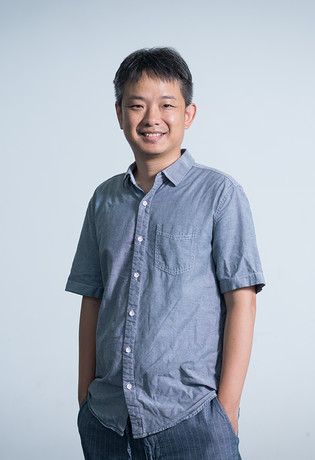
Dr. Kening Zhu (Ken) is an Associate Professor jointly appointed by the School of Creative Media and the Department of Computer Science at City University of Hong Kong (CityU). His work focuses on innovative human-computer interaction techniques, with particular emphasis on creating novel interfaces that bridge digital and physical worlds. Dr. Zhu received his PhD degree from the National University of Singapore, where he was supervised by Professor Ryohei Nakatsu and Dr. Shengdong Zhao. He completed his Bachelor's degree in Computer Science at Huazhong University of Science and Technology in China. Dr. Zhu's research spans multiple areas within Human-Computer Interaction, with particular expertise in: Multimodal and Embodied Interaction (MEI) Mobile gesture interaction and tangible/wearable user interfaces Multimodal VR/AR systems Interactive digital fabrication and rapid prototyping Interaction design for children and educational technology His work often combines technical innovation with practical applications, focusing on making technology more accessible and intuitive for users across different contexts. Dr. Zhu has received numerous prestigious awards for his research contributions: Silver Medal at the 50th International Exhibition of Inventions Geneva (2025) Bronze Medal at the 48th International Exhibition of Inventions Geneva (2023) Bronze Medal at 2022 Inventions Geneva Evaluation Days First prize of Nokia Ubimedia MindTrek Awards (2011) He has also served as a jury member for the Nokia Ubimedia MindTrek Awards and as a reviewer for top-tier conferences and journals including SIGCHI, SIGGRAPH, and MobileHCI. As an active researcher and mentor, Dr. Zhu currently supervises multiple PhD students and research assistants. His research is supported by significant grants including ITF projects on Mixed Reality Assisted Preoperative Neurosurgical Planning and Development of Attention-Aware, Immersive, Collaborative Video Teleconferencing System. He also serves as Co-Principal Investigator for the TDG(CityU) START project focusing on interdisciplinary approaches in digital fabrication. Dr. Zhu established the MEI Lab (Multimodal and Embodied Interaction Laboratory) in 2017, which has become a hub for innovative HCI research at CityU. The lab focuses on creating next-generation interaction techniques that combine physical and digital elements, with applications ranging from healthcare to education and entertainment.
Stephen W. Keckler is an Adjunct Professor at the Department of Computer Science , The University of Texas at Austin , and serves as Vice President of Architecture Research at NVIDIA . He is an ACM Fellow , IEEE Fellow , and Sloan Foundation Research Fellow . Education: BS in Electrical Engineering, Stanford University (1990) SM in Computer Science, Massachusetts Institute of Technology (1992) PhD in Computer Science, MIT (1998) Research Interests focus on computer architecture for deep learning , GPU computing , and energy-efficient systems . His work explores memory compression , network-on-chip designs , and heterogeneous computing . Publication Trends highlight advancements in deep learning accelerators , GPU memory systems , and energy-efficient architectures . Notable themes include sparsity exploitation , multi-chip modules , and fault-tolerant GPU pipelines . Scientific Recognition : ACM Fellow IEEE Fellow Sloan Foundation Research Fellow Best Paper Awards at ASPLOS 2009 and ISPASS 2011 Laboratory Affiliations : Computer Architecture and Technology Laboratory (CART) TRIPS Project (Tera-Op Reliable Intelligently adaptive Processing System) NVIDIA Research
Prof. Torsten Wolfgang Kuhlen serves as a Universitätsprofessor at RWTH Aachen University, leading the Teaching and Research Area for Virtual Reality and Immersive Visualization within the Department of Computer Science. He is affiliated with Chair of Computer Science 12 (High Performance Computing), the Visual Computing Institute, and remains an integral part of the RWTH IT Center where his research group operates one of the world's largest Virtual Reality laboratories including the 30 sqm aixCAVE visualization chamber. The group maintains strong connections with Computational Science & Engineering Division, National High Performance Computing Center for Computational Engineering Science (NHR4CES), and VR in Science and Industry Network NRW e.V. Prof. Kuhlen's research spans virtual reality, immersive visualization, and multimodal 3D user interfaces with applications across simulation science, production technology, neuroscience, and medicine. His work combines basic research on advanced methods and algorithms with interdisciplinary collaborations involving RWTH Aachen institutes, Forschungszentrum Jülich, and industry partners. Recent publications demonstrate strong focus on audiovisual perception, immersive analytics, collaborative virtual environments, and practical VR applications in education and manufacturing. His research group has produced significant work on listening effort in virtual environments, immersive authoring techniques, and VR applications for scientific visualization. Notable projects include VRScenarioBuilder for automated vehicle testing and applications in monitoring additive manufacturing processes. The group actively participates in major conferences including IEEE VIS and EuroVis, with several award-winning contributions. Prof. Kuhlen has advised PhD students including Martin Bellgardt who recently completed his doctoral degree on "Increasing Immersion in Machine Learning Pipelines for Mechanical Engineering". The research group maintains state-of-the-art VR infrastructure including the aixCAVE facility which is open to all RWTH research groups.
Daniel E. Koditschek is the Alfred Fitler Moore Professor in the Department of Computer and Information Science at the University of Pennsylvania’s School of Engineering and Applied Science. He also holds primary appointments in the Department of Electrical and Systems Engineering and a research affiliation with the Department of Mechanical Engineering and Applied Mechanics. He is a leading figure in the GRASP Lab, where he leads the Kod*lab, a specialized group focused on physical interaction and locomotion in autonomous robots. His research lies at the intersection of dynamical systems theory and robotics, emphasizing legged locomotion, hybrid control systems, and bio-inspired design. Koditschek's work integrates formal mathematical modeling with empirical testing of physical robots that run, jump, climb, and manipulate objects. He actively explores how biological insights into animal mobility can inform robotic autonomy and control. His group maintains strong collaborations with biologists and emphasizes embodied intelligence in machine behavior. The recent publications reflect a strong trend in applying theoretical control frameworks—such as hybrid dynamical systems, averaging methods, and navigation functions—to practical robotic challenges in unstructured environments. Topics include terrain adaptation, energy-efficient locomotion, reactive planning, and affordance-based interaction. There is a clear focus on bridging abstract mathematical models with real-world robotic performance, particularly in legged and mobile manipulation systems. IEEE RAS Pioneer Award Heilmeier Research Award AFOSR MURI Award (2010) Daniel Koditschek has advised numerous PhD students and postdoctoral researchers, many of whom now hold faculty positions or leadership roles in robotics companies like Ghost Robotics and Boston Dynamics. His research is supported by major grants from the NSF and AFOSR, including the MURI award and REU/RET programs that engage K-12 and undergraduate educators. He has also been involved in international outreach, including activities at the Penn Wharton China Center. Koditschek leads the Kod*lab within the GRASP Lab’s PERCH facility, which houses advanced legged robots such as the Ghost Minitaur, XRHhex, Inu, Delta Hopper, and Jerboa platforms. The lab emphasizes experimental validation of control theories using custom hardware and real-world terrain challenges.