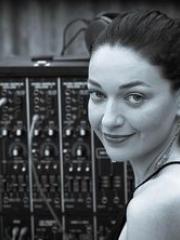
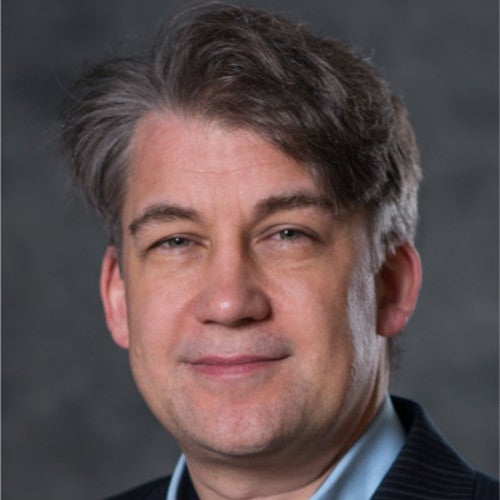
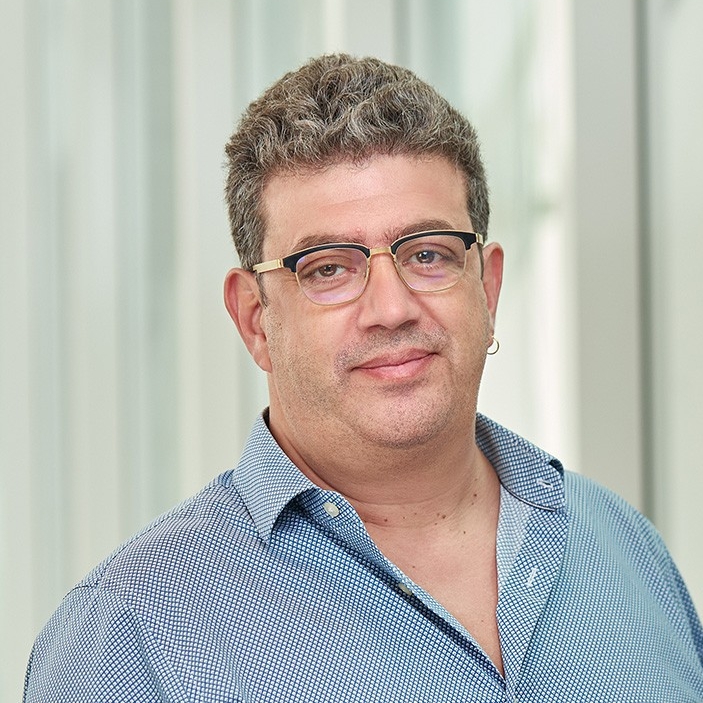
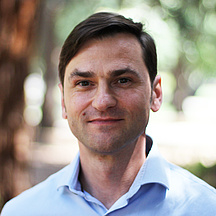
Simon Emmerson is a Professor in Music, Technology & Innovation at De Montfort University 's Leicester Media School. A composer and scholar with over 50 years of experience in electroacoustic music, he has worked extensively in live electronics, music analysis, and gender studies in sonic arts. His contributions include founding EMAS and serving on advisory boards for Sonic Arts Network, Sound and Music, and journals like Organised Sound and Journal of Sonic Studies. Education : BA in Natural Sciences and Education (Cambridge, 1972), PhD in Electronic Music (City University, 1982) External Roles : DAAD Edgard Varese Visiting Professor (Berlin, 2009-10), Silver Jubilee Visiting Professor (Perth, 2016) His research focuses on electroacoustic music composition, live performance with electronics, and the relationship between technology and human perception. Recent projects examine crossadaptive processing, spatial sound design, and the evolution of electronic music terminology. Key publications include The Language of Electroacoustic Music (1986), Living Electronic Music (2007), and The Routledge Research Companion to Electronic Music (2018). Awards span the Bourges Electroacoustic Prize (1985) and Arts Council Bursary (1987). He has served on editorial boards for Organised Sound , Radical Musicology , and Journal of Sonic Studies .
Eleonora Bilotta is a Full Professor of General Psychology at the Department of Physics, University of Calabria, Italy. She is the coordinator of the Ph.D. Course in Psychology of Programming and Artificial Intelligence and vice-coordinator of the Ph.D. Course in Science, Engineering of Environment, Construction, and Energy. Her research spans interdisciplinary fields such as cognitive psychology, educational technologies, artificial life, and mathematical modeling of behavior. Prof. Bilotta has over 150 publications and has contributed to journals like Complexity and International Journal of Bifurcation and Chaos . She led initiatives like the COMSON project (EU-funded) for e-learning platforms and directed the Evolutionary Systems Group (ESG). She also organized conferences such as the International Conference on Simulation of Adaptive Behavior and the Workshop on Artificial Life. Her work bridges science and art, leveraging chaos theory for creative design and educational tools. She collaborates globally, including with institutions like Bergische Universität Wuppertal and Chapman University. Her labs focus on cognitive science, modeling, and simulation, emphasizing innovation in education and technology.
Antti Juvonen is a Lecturer at the School of Applied Educational Science and Teacher Education, University of Eastern Finland. His research focuses on music education, arts education, and pedagogical well-being, with an emphasis on creativity, multiculturalism, and technology integration. He has published extensively on topics such as student motivation, distance learning, and the role of arts in education. Fields of Expertise: Music Education, Arts Education, Educational Sciences, Creativity, Drama Education, School Well-being Email: antti.juvonen@uef.fi Phone: +358 50 593 8120 His recent work explores the paradigm shift in music education, ethnographic studies of community orchestras, and the impact of innovative learning environments on student well-being. He collaborates internationally, with publications in peer-reviewed journals and conferences across Finland, Estonia, Lithuania, and Latvia. Antti’s research includes studies on: Motivation in music and mathematics Distance music learning in primary education Professional competence in teacher training Multicultural reflections in arts education Digital tools in music and teacher education
Dr. Eve Klein is an Associate Professor and Senior Lecturer in Music Technology and Popular Music at The University of Queensland (UQ) School of Music. She leads a research cluster in interactive composition, focusing on virtual/augmented reality works and guiding postgraduate composers. Her work bridges classical music traditions with digital innovation, addressing themes like gender in technology, identity, and participatory cultures. Dr. Klein holds a PhD in Music and Sound and has pioneered immersive art music experiences for festivals such as MONA FOMA and VIVID Sydney. Her artistic works include Vocal Womb (a laryngoscopy-based opera exploring voice and power) and City Symphony (an AR soundwalk overlaying Brisbane’s CBD). She is a recipient of the 2023 Art Music Award for Experimental Practice and the IASPM 2016 Open Publication Prize. Her research spans music technology curriculum design, future work skills in the arts, and epistemic fluency through transdisciplinary collaboration. She co-founded the Touch Ensemble, a technology-focused performance group collaborating with engineering students. Dr. Klein’s work frequently addresses social justice themes, including gendered violence and climate change. Education: PhD in Music and Sound Awards: 2023 Art Music Award, IASPM 2016 Prize, UQ Program Innovation Award Her articles critically examine virtual orchestras’ impact on classical norms, while her creative works challenge traditional performance boundaries. Klein collaborates internationally with festivals, scientists, and NGOs to create transformative cultural projects.
Alice Martignon is a Research Fellow and Subject Expert at the Department of Philosophy and Cultural Heritage, Ca' Foscari University of Venice, where she coordinates the ARMID@Venezia research project. She holds a PhD in Art History from the University of Udine and previously served as a postdoctoral fellow at the Giorgio Franchetti Gallery. Her museum experience includes collaborations with the Fondazione Musei Civici Venezia and the Regional Directorate of Museums of Veneto. Martignon's research focuses on the art market, historical collecting practices, decorative arts, and cultural heritage conservation, with specialized expertise in non-invasive diagnostics and digital humanities. Her work frequently examines 19th-20th century Venetian art markets and the legal frameworks surrounding cultural goods. Her publications demonstrate strong interdisciplinary approaches, combining art historical analysis with scientific techniques like multispectral imaging and spectroscopy. Recent works emphasize digital restoration methods, material characterization of historical artifacts, and responses to cultural heritage emergencies like the 2019 Venice floods. Scientific Recognition: Finalist in the 2023 National Art Competition sponsored by the Italian Ministry of Culture for the ARMID@Venezia project She coordinates the ARMID@Venezia initiative, funded through the National Art Bonus program, focusing on digitization and virtual restoration of damaged music manuscripts. As a Senior Teaching Assistant, she supervises graduate theses and has developed courses on provenance research and digital humanities methodologies. Martignon leads the Materials Characterization Laboratory research group and serves on scientific committees including ICOM Italia's Provenance Working Group and the Venice Centre for Digital and Public Humanities. She maintains international collaborations through memberships in The International Art Market Studies Association and The Society for the History of Collecting.
Jonas Braasch is a Professor at Rensselaer Polytechnic Institute's School of Architecture and Associate Director for Research at the Experimental Media and Performing Arts Center (EMPAC). He teaches in the Graduate Program in Architectural Acoustics and leads research on collaborative virtual reality, binaural hearing, auditory modeling, and sensory substitution devices. His work has been funded by NSF, NSERC, and European agencies, and he holds dual PhDs in Electrical Engineering/Information Science and Musicology. His research integrates acoustic virtual reality systems, immersive museum soundscapes, telematic music, and assistive instrument design. Recent publications focus on networked immersive environments, spatial audio techniques, museum acoustics classification, and innovations in wind instrument design for accessibility. Publications emphasize the application of deep learning to acoustic prediction and multisensory integration.
Carlos Guedes is Associate Professor of Music at New York University Abu Dhabi (NYUAD) , affiliated with the Arts and Humanities division and the Music department. He also holds affiliated positions as Associate Professor in Computer Engineering at NYUAD and in Music Technology at NYU Steinhardt, reflecting his interdisciplinary profile. University: New York University Abu Dhabi School: Arts and Humanities Department: Music Rank: Associate Professor Emails: cag204@nyu.edu, menosmuitomais@gmail.com He holds a BM from the Polytechnic of Porto, School of Music and Performing Arts, and an MA and PhD from New York University. His research and artistic work span music composition, sound design, computational music, and cultural preservation, with a focus on the Gulf, East Africa, and South India. His primary research interests include: Analysis and preservation of music Automatic music generation Interactive music systems Generative computational technologies Audiovisual ethnography Immersive experiences and VR in music He is a founding member of the Music and Sound Cultures (MaSC) research group at NYUAD, which develops hybrid computational-humanistic methodologies and tools such as VR environments and games for cultural enculturation. His recent projects include a faculty research grant from the Sheikh Saud bin Saqr Al Qasimi Foundation to document the musical traditions of the Shihuh tribe in Ras Al Khaimah. As a composer, Guedes has over 80 international premieres, with work presented at major venues and festivals including Expo ’98, Expo 2020, Ars Electronica, ICMC, SIGGRAPH, and the Beijing Modern Music Festival. His compositions often blend industrial, carnatic, and Western erudite traditions with computational technologies. Notable recent works include the Time Poetries cycle for percussion and electronics, composed during his 2021–2022 residency with Drumming GP . His recent artistic output shows a strong trend toward electronic and computational music, with themes exploring space, time, cultural identity, and human-machine interaction. Albums such as Shadows & Reflections (2021) and Becoming Space (2021) reflect collaborative, improvisatory, and ambient tendencies, while pieces like Phobia robotica (2020) and Far Out (ISS Edition) (2024) explore robotic and cosmic themes. He has been actively involved in teaching a wide range of courses across disciplines, including: Music: Music Theory, Individual Instruction, Capstone Seminars, Computational Approaches to Music Computer Science: Capstone Project in CS Interdisciplinary: Immersive Experiences, Multidisciplinary Artistic Collaborations, Audiovisual Ethnography He mentors students in music capstone projects and computational media, and co-advises research in hybrid artistic-technical domains. He leads and participates in research labs and teams such as: Music and Sound Cultures (MaSC) Research Group – focused on computational ethnomusicology and cultural preservation Immersive Experiences Lab – exploring VR, AR, and sensory technologies in artistic contexts Interactive Media and Sound Computing – developing new instruments and performance systems
Dr. Melanie Fritsch is a Junior Professor at Heinrich-Heine-Universität Düsseldorf since October 2020, specializing in Media Cultural Studies with a focus on Game Studies and related fields. Her career spans roles as a PR & Communications Manager in the gaming industry, lecturer at Humboldt-Universität zu Berlin, and research assistant at Universität Bayreuth and Leipzig. Education: Theaterwissenschaft, Musikwissenschaft, and Neuere Deutsche Literatur at Freie Universität Berlin, Humboldt-Universität zu Berlin, and Sapienza Università di Roma (2000–2008) Doctorate: 2018 at Universität Bayreuth with dissertation 'Performing Bytes. Musikperformances der Computerspielkultur' Current Research: Ludomusicology, performance theory, fan studies, environmental narratives in games Melanie’s research bridges game studies, digital humanities, and musicology, emphasizing games as performative cultural practices. Her work explores intersections of music and gameplay, fan engagement dynamics, and liveness in digital spaces. Key publication trends include: Game music analysis (e.g., 'The Cambridge Companion to Video Game Music') Performance theory in gaming ('Live Performance Games') Environmental narratives in virtual worlds Historical game music studies (1980s Japanese game music) Interdisciplinary methodologies combining musicology and game design She has contributed to major conferences and symposia, including keynote presentations at Universidad de Chile and Kunstuniversität Graz. Her editorial work includes co-editing the peer-reviewed series 'Studies in Game Sound and Music'.
Benjamin Cotté is an Associate Professor at ENSTA Paris, a member of Institut Polytechnique de Paris, where he works in the Mechanics Unit (UME) within the Institute of Mechanical Sciences and Industrial Applications (IMSIA UMR 9219). His research focuses on fluid dynamics and acoustics, particularly in modeling and simulation of noise sources and their propagation in various environments. His research interests include the modeling and simulation of aeroacoustic sources and their propagation in inhomogeneous environments, with applications to wind turbine and marine propeller noise, and sound synthesis using physical models of aero- and vibro-acoustic sources. Cotté has developed expertise in wind turbine noise modeling based on Amiet's theory, studying the effects of wind shear and atmospheric turbulence, as well as extended source models for wind turbine noise propagation that account for blade motion. His recent publications reveal a strong focus on wind turbine noise propagation, aeroacoustics, and sound synthesis. His work combines theoretical modeling with experimental validation, particularly in dynamic stall noise characterization. Cotté's research spans both renewable energy applications (wind turbines) and musical acoustics (piano soundboards). Scientific Awards and Funding: ANR PIBE project (Prédire l'Impact du Bruit des Eoliennes) for dynamic stall noise research ANR funding for the MAESSTRO project (Computer-aided design of piano soundboards) DGA funding for time-domain damping models in structural acoustics ITN VRACE project (Virtual Reality Audio for Cyber Environments) for wind turbine noise auralization Collaborations: Cotté collaborates extensively with researchers from Ecole Centrale de Lyon (Michel Roger, Emmanuel Jondeau, Pascal Souchotte) and works with Antoine Chaigne and Roberto Viggiano on piano acoustics research. Advising: Cotté has supervised multiple PhD students and postdocs including David Raus (2019-2021), Lisa Sicard (2020-...), Yuan Tian (2012-2016), and David Mascarenhas (2020-...), focusing on wind turbine noise, aeroacoustics, and sound synthesis.
Meara Faw is an Associate Professor in the Department of Communication Studies at Colorado State University, serving as Director of Graduate Studies. She is also an affiliate faculty member in the Colorado School of Public Health. Her research focuses on interpersonal communication and health, particularly exploring how relationships influence health and well-being, social support dynamics, and caregiver experiences. She teaches courses in Interpersonal Communication, Conflict Management, Communication Theory, and oversees the department’s study abroad program in Murcia, Spain. Education: Ph.D. in Communication (University of Washington, 2014), M.A. in Communication (University of Washington, 2011), B.A. in Communication and Spanish (Whitworth University, 2008). Her research emphasizes caregiver support systems, the communication of social support, and health-related relational outcomes. Recent work includes studies on dementia caregiving during the pandemic, non-pharmacological interventions using arts, and the impact of diet culture on young women’s well-being. Publications span journals like Health Communication and Journal of Social and Personal Relationships . Awards: None explicitly listed, but her work reflects significant contributions to health communication and caregiving research. Advising/Grants: Leads graduate studies and research projects on caregiving support systems, though specific grants are not detailed here. She collaborates on interdisciplinary initiatives addressing caregiver well-being and relational health, emphasizing practical interventions for vulnerable populations.
Douglas Van Nort is an Associate Professor at York University's Department of Computational Arts, School of the Arts, Media, Performance and Design (AMPD). He holds a PhD in Music Technology from McGill University and has held roles including Canada Research Chair in Digital Performance (2015-2025), Banting Fellow at Concordia University (2013-2014), and Research Associate at Rensselaer Polytechnic Institute (2008-2013). His work integrates electroacoustic music, AI-driven systems, and immersive performance environments. Education: PhD in Music Technology (McGill, 2010), MFA in Electronic Arts (Rensselaer, 2003), MA/BA in Mathematics (SUNY Potsdam, 2001). Research Interests: Telematic performance, human-machine improvisation, ecoacoustics, and Deep Listening practices. Van Nort's awards include the 2010 ICMC Best Paper Award and Canada Research Chair designation. His grants total over CAD 5M, including CFI infrastructure funding for the DisPerSion Lab. He teaches courses in electro-acoustic music, interactive media, and digital performance. His DisPerSion Lab explores distributed performance and sensorial immersion.
Attila Bekkvik Szentirmai is an Assistant Professor and Ph.D. research fellow at the Department of Design, Norwegian University of Science and Technology (NTNU), focusing on Universal Design of ICT, Human-Computer Interaction, and Augmented Reality (AR) development. With prior academic roles at the University of Agder and Oslo Metropolitan University, his interdisciplinary background bridges Social Science, Art, Software Engineering, and Digital Health. He teaches Web of Things (IDG3006) and leads innovative AR projects like AReader (AR screen reader), ARachnoAID (phobia treatment), and guARdian (daily decision support). Current role: Assistant Professor at NTNU Research focus: Universal Design, AR/VR accessibility, e-Learning/e-Health Teaching: Web of Things (IDG3006) course coordinator Previous roles: Assistant Professor at University of Agder and OsloMet His recent publications emphasize accessible AR/VR design, including humor/ethics in technology, sustainable AR solutions, and critical analysis of accessibility paradoxes. Projects span education (SlidAR classroom presentations), health (CybAR sickness, ARachnoAID), and sustainability (HoloWatch, E-Waste gaming). All work aligns with universal design principles to ensure inclusivity across diverse user needs. Scientific contributions include developing new accessibility heuristics for AR, analyzing AI-AR integration for decision-making, and creating prototypes for banknote recognition and indoor navigation. His publications bridge theoretical research with practical implementations, often using Unity/Vuforia for development and cross-disciplinary collaboration. His XR Research & Development timeline highlights innovations such as Deadliest Animals (2017, first universally designed WebVR), UndARtheSkull (2019, brain anatomy education), and 2023 projects like Jedi fARt Pro (humorous AR), Meta IntARaction (Quest3 AR), and XR Portal (AR-VR integration). Current Ph.D. work focuses on evidence-based accessibility guidelines for AR, aiming to impact social inclusion, academic research, and industry UX practices.
Dr. Denis Kalkofen serves as an Associate Professor at the Institute of Computer Graphics and Vision (ICG) at Graz University of Technology, Austria. His academic journey began with a Dipl.-Ing. (2004) from the University of Magdeburg, followed by a Dr. techn. (2009) from Graz University of Technology. University of Magdeburg - Dipl.-Ing. (2004) Graz University of Technology - Dr. techn. (2009) University of Michigan, Ann Arbor - Virtual Reality Laboratory member Stanford University - Visiting Assistant Professor at Computational Imaging Laboratory (2019) University of South Australia - Visiting Researcher at Wearable Computer Laboratory (2019) Dr. Kalkofen's research centers on developing visualization, interaction, authoring, and display technologies for Virtual and Mixed Reality environments, with particular emphasis on combining computer graphics and computer vision techniques to create comprehensible and accessible VR/MR experiences. His work spans situated visualization (addressing label placement and X-ray visualization), photometric rendering (recovering lighting properties for realistic AR), and content creation automation (leveraging existing data sources for AR content). His publication trends over the past 15+ years demonstrate consistent leadership in AR/MR research, evolving from foundational work on visualization techniques to current cutting-edge research in neural rendering, neuroadaptive systems, and industrial AR applications. Recent work shows increased focus on practical industrial implementations, error management in AR assembly, and multimodal learning applications. Best paper award for 'enRoute: Dynamic path extraction from biological pathway maps' (2012) Best short paper for 'TutAR: Augmented Reality Tutorials for Hands-only Procedures' (2018) Best paper for 'Tools for Teaching Mining Students in Virtual Reality' (2020) Honorable Mention for Best Paper for 'Adaptive User-Perspective Rendering' (2017) Dr. Kalkofen leads Team Kalkofen at ICG, supervising researchers including Peter Mohr, Shohei Mori, David Mandl, and Ana Stanescu. His team has secured significant funding for projects related to AR/VR content creation, visualization techniques, and industrial applications. They maintain strong collaborations with institutions including Stanford University, University of South Australia, and University of Michigan. Team Kalkofen operates within the Institute of Computer Graphics and Vision at TU Graz, focusing on three main research thrusts: situated visualization for AR, photometric rendering for realistic MR, and automated content creation for professional AR applications. The team maintains active partnerships with industry and academic institutions worldwide, contributing to the advancement of practical AR/MR technologies.
Matthew Rodger is a Senior Lecturer at the School of Psychology Intelligent Autonomous Manufacturing Systems, Queen's University Belfast. His research focuses on perceptual-motor coordination, auditory-motor synchronization, and applications of movement sonification in motor skill learning, particularly for individuals with visual impairments and Parkinson's disease. He has supervised nine PhD students, including current advisees Bonnie Smith and Michal Toth, and former students like James Stafford and Alannah Savage. Rodger is actively involved in interdisciplinary projects such as 'Improvising Futures' and 'Dance for Parkinson’s,' and contributes to UN Sustainable Development Goals related to health and well-being. His work has been recognized with the QUB Research Culture Seed Fund (2021). Research Interests: Auditory-motor coordination, movement sonification, Parkinson's disease rehabilitation, music performance skill acquisition, and embodied cognition. Recent projects include investigating sound-based interventions for gait improvement in Parkinson's patients and exploring aesthetic dimensions in musical interaction. Key Awards: QUB Research Culture Seed Fund (2021). Collaborations: Active in Northern Ireland's Parkinson's@NI network and collaborates with experts in psychology, neurology, and music technology.
Dr. Jie Chen is a Professor and Chair of the Department of Mechanical Engineering at Purdue University (Indianapolis campus, with a courtesy appointment in West Lafayette). He holds dual roles in Mechanical Engineering and Orthodontics. His research focuses on dental biomechanics, energy systems, and instrumentation design, with significant contributions to orthodontic load systems and biomedical engineering. Education: B.S. in Mechanical Engineering, Tianjin University (1982) M.S. in Biomedical Engineering, Shanghai Second Medical University (1985) Ph.D. in Mechanical Engineering and Mechanics, Drexel University (1989) Research Interests: Energy efficiency in HVAC systems and electrical demand forecasting Quantification of orthodontic force systems using finite element analysis Biomechanical validation of orthodontic appliances CT-based quantification of dental displacement and root resorption Optical and haptic interfaces for medical and automotive systems His publications span energy optimization, orthodontic biomechanics, and human-machine interaction. Notable works include real-time energy management platforms and finite element modeling for orthodontic simulations. Recent research explores AI-driven visual analytics and autonomous vehicle systems. Grants & Labs: Active in interdisciplinary collaborations at Purdue, with lab work focused on biomechanical testing and smart energy systems. Supervises projects in orthodontic engineering and advanced manufacturing.