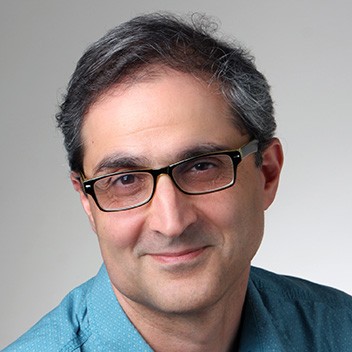
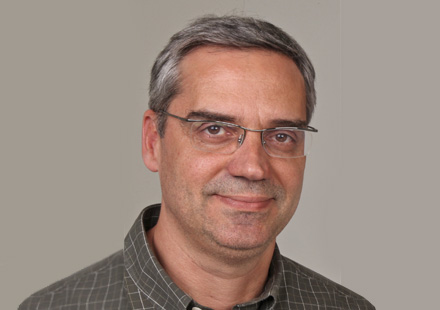
David M Howard is a Professor and Founding Head of the Department of Electronic Engineering at Royal Holloway, University of London. He holds a PhD in Human Communication from UCL and is an Emeritus Professor in Electronic Engineering. His research focuses on human speech/singing voice production, VR/AR applications in acoustics, and the Vocal Tract Organ. He has led major projects like the StoryFutures AHRC initiative. Awards include Fellowship of the Royal Academy of Engineering and Honorary Membership from the Croatian Choral Directors Association. Education: BSc (Eng) in Electronic Engineering from UCL (1977), PhD in Human Communication (1985). Former roles include Head of Department at University of York and roles in engineering institutions. Research interests span vocal tract modeling, forensic audio analysis, and choral singing development. He collaborates internationally on projects like heritage VR storytelling and data science in museums. His work contributes to UN SDG Education goals through advancing accessible technology and arts.
Professor Carsten Rudolph serves as Deputy Dean at Monash University's Faculty of Information Technology and directs the Oceania Cyber Security Centre (OCSC). He holds a PhD in Information Security from Queensland University of Technology (2002) and a Diplom in Computer Science from Goethe University Frankfurt (1997). His interdisciplinary research focuses on cybersecurity foundations, including cryptographic protocols, AI-driven security, human factors, and national cybersecurity policy. Key areas include securing smart grids, digital health systems, and transnational energy networks. Notable contributions include establishing the OCSC, leading Pacific region cybersecurity maturity reviews with Oxford University, and advancing frameworks for firmware security in virtual power plants. He chairs major projects like RAI4IoE (Responsible AI for Energy) and Post-Quantum Cryptography initiatives. Teaching responsibilities include cybersecurity modules like FIT3173 and FIT3168. Rudolph's research outputs (137+ publications) emphasize phishing detection via AI, blockchain-based energy trading, and resilient smart grid systems. He collaborates internationally on policy development and has advised 12 major research projects funded by agencies like the U.S. Bureau of East Asia and Pacific Affairs.
Professor Fang Liu serves as a Professor of Operations Management at Durham University Business School (DUBS). She joined Durham University in 2023 after academic positions at The University of Chinese Academy and Nanyang Technological University, bringing extensive expertise in supply chain systems and operational resilience. Her educational foundation includes a doctoral degree in Operations Management from Duke University's Fuqua School of Business, USA. Liu's research centers on Supply Chain Resilience, Inventory Management, E-commerce and Warehouse Management, and Corporate Social Responsibility and Sustainability. Her work develops innovative frameworks for mitigating disruption risks while optimizing resource allocation, with direct applications in global logistics networks and sustainable operations. She bridges theoretical rigor with practical implementation across diverse sectors. Analysis of her publication trajectory reveals a strategic evolution from foundational inventory theory toward contemporary challenges in e-commerce logistics and sustainable supply chains. Her recent work increasingly addresses healthcare operations and carbon-neutral supply chain design, consistently published in premier journals like Operations Research and Production and Operations Management. Professor Liu has secured multiple competitive research grants as Principal or co-Principal Investigator. She actively translates academic insights into practice through collaborations with organizations including Cummins, Singapore IFRC, and Meide, focusing on operational optimization and resilience building. While specific lab structures aren't detailed, her industry partnerships demonstrate applied research engagement, particularly in developing solutions for complex operational challenges faced by multinational corporations and humanitarian organizations.
Alexandre PARANT is a Researcher at the University of Reims Champagne-Ardenne, affiliated with the School of Engineering and Digital Tools. His work focuses on cyber-physical systems, digital twins, and industrial automation, with a strong emphasis on the IEC 61499 standard for control architecture development. Research Themes: Model-driven engineering for production systems Digital twin implementation IEC 61499 standard application Modular cyber-physical systems Article Trends: Alexandre's publications span model-based development, robotics synchronization, and PLC identification. His work bridges theoretical modeling with practical automation solutions, particularly in educational contexts and industrial manufacturing. Labs & Teams: LINEACT research team Collaboration with CESI Campus Reims
Dr. Andy Nguyen is a Senior Lecturer in Structural Engineering at the University of Southern Queensland, within the School of Engineering. He is an active researcher and educator, specializing in the Structural Health Monitoring (SHM) of critical civil infrastructure such as bridges, buildings, and transport tunnels. Bachelor of Engineering (BEng), NUCE, 1999 Master of Engineering (MEng), NUCE, 2003 Doctor of Philosophy (PhD), Queensland University of Technology (QUT), 2014 Dr. Nguyen's research is at the forefront of integrating advanced technologies into civil engineering. His primary focus is on developing and deploying sophisticated SHM systems that utilize sensors, data analytics, and machine learning to provide real-time insights into the structural integrity of ageing infrastructure. His work aims to enable proactive maintenance, extend the lifespan of structures, and enhance public safety. He has successfully implemented monitoring systems on major bridges and high-rise buildings in Queensland and New South Wales, with systems capable of even detecting distant earthquake events. His research interests span Structural Health Monitoring, Machine Learning for Engineering, Damage Detection, Finite Element Model Updating, Sustainable Building Materials like bamboo, and the application of AI for automated condition assessment of transport infrastructure. The analysis of his recent publications reveals a strong and consistent research trajectory centered on the application of data-driven and AI methods to solve practical problems in civil infrastructure. His work frequently combines signal processing techniques (like Stockwell Transform) with deep learning models for tasks such as crack detection in concrete and pavement. He also conducts significant research on model updating for complex structures like cable-stayed and arch bridges, using vibration data and optimization algorithms. The integration of machine learning for overload classification and the development of cost-effective, automated monitoring systems are key trends in his recent output. Advanced Queensland Fellow (2024-2027) Dr. Nguyen is actively involved in research supervision and collaboration. He is currently supervising several postgraduate students on projects related to AI-powered condition assessment, bamboo as a sustainable building material, and railway track design. He receives research funding from the Queensland Government through his Advanced Queensland Fellowship. His research has direct practical applications, as evidenced by his public engagement, such as writing for The Conversation on safeguarding ageing bridges, and his work with the Australian Network of Structural Health Monitoring. Dr. Nguyen's work embodies the development of a next-generation 'Living' Laboratory for engineering education, where research, teaching, and real-world infrastructure monitoring are integrated. His current projects involve creating smart, automated fault detection systems and advancing 'digital twin'-based monitoring platforms for infrastructure.
Flavio Bezerra Costa serves as an Assistant Professor in the Department of Electrical and Computer Engineering at Michigan Technological University's College of Engineering. His research focuses on critical areas of modern power systems, including smart grid technologies, renewable energy integration, power system protection, and advanced applications of signal processing and artificial intelligence in electrical power networks. Dr. Costa's research interests span a comprehensive range of power system topics with particular emphasis on Smart Grid technologies, Integration of Renewable Energy Systems, Power System Protection, Control, and Monitoring, Power Quality analysis, Power Systems and Power Electronics, AC/DC Microgrids, High-Voltage Direct Current (HVDC) Electric Power Transmission Systems, and the application of Signal Processing and Artificial Intelligence (including Machine Learning) in power systems. His work bridges traditional power engineering with modern computational techniques to address contemporary grid challenges. Analysis of Dr. Costa's recent publications reveals a consistent focus on wavelet transform applications for power system protection and monitoring, particularly in the areas of fault detection, classification, and location. His research demonstrates strong integration of machine learning techniques with traditional power system protection methods, with significant contributions to transformer protection, transmission line fault analysis, and microgrid stability. The work shows an evolving trajectory from fundamental wavelet-based protection techniques toward more sophisticated AI-enhanced approaches for modern power grid challenges. Dr. Costa maintains an active research program with numerous publications in top-tier IEEE journals and conferences, demonstrating his significant contributions to the field of power systems engineering and protection.
Mike Rubenstein is an Assistant Professor with joint appointments in the Department of Computer Science and Department of Mechanical Engineering at Northwestern University. He holds the Lisa Wissner-Slivka and Benjamin Slivka Professorship in Computer Science and is affiliated with the Center for Robotics and Biosystems. His educational background includes a Ph.D. in Computer Science from the University of Southern California, an M.S. in Electrical Engineering from USC, and a B.S. in Electrical Engineering from Purdue University. Prior to joining Northwestern, he completed a postdoctoral fellowship at Harvard University's Self-Organizing Systems Research Group. Rubenstein's research focuses on advancing multi-robot systems to enable capabilities beyond traditional single robots, emphasizing parallelism, adaptability, and fault tolerance at scale (hundreds to millions of robots). His work spans swarm shape control, modular self-reconfigurable robotics, bio-inspired satellite constellations, and novel sensing for air vehicle swarms. Key themes include algorithmic control for large-scale systems and hardware innovations to overcome current limitations in swarm robotics. His advising has produced notable student achievements, including Petras Swissler's Best Student Paper Award at DARS 2021 and Drew Curtis's NDSEG Fellowship. Research trends across his publications reveal a consistent emphasis on scalability, real-world applicability, and bridging hardware constraints with algorithmic innovation in swarm systems. Rubenstein actively mentors graduate students and leads projects involving swarm robotics platforms like FireAnt and PCBot. His lab focuses on developing systems where simplicity in individual robots enables emergent complexity at the swarm level, with applications ranging from space exploration to medical imaging.
Waël Jaafar is a Professor in the Department of Software Engineering and IT at École de technologie supérieure (ETS), a constituent school of the Université du Québec system in Montreal, Canada. His research spans multiple critical domains in modern communications and computing infrastructure, with a particular focus on next-generation wireless networks and intelligent systems. Dr. Jaafar holds a B.Eng. from Sup'Com Tunisie, and both M.Sc.A. and Ph.D. degrees from Polytechnique Montréal. His academic background provides a strong foundation for his interdisciplinary research that bridges theoretical concepts with practical engineering solutions. His research interests center around wireless communications systems, with particular emphasis on 5G/6G networks, UAV communications, space telecommunications, and machine learning applications for networking. He has developed significant expertise in federated learning techniques for distributed networks, cybersecurity applications for next-generation mobile systems, and edge computing architectures. His work frequently explores the intersection of communication theory, artificial intelligence, and network security, with applications ranging from industrial IoT to public safety communications. Analysis of his recent publications reveals a strong trend toward integrating artificial intelligence with wireless networking infrastructure, particularly focusing on UAV-assisted communications, federated learning approaches for distributed networks, and security enhancements for 5G/6G systems. His research demonstrates increasing emphasis on practical implementation challenges including energy efficiency, communication overhead reduction, and reliability in non-ideal network conditions. As an academic supervisor, Dr. Jaafar actively mentors numerous graduate students across various projects. He currently supervises doctoral candidates working on blockchain-enhanced security for 5G networks, green network slice orchestration, and federated learning approaches for Open RAN architecture. His master's students are engaged in diverse topics including LiDAR-based power line monitoring, multimodal behavioral authentication, and 5G/6G security using AI techniques. Dr. Jaafar is affiliated with two prominent research laboratories at ETS: LASI (Computer System Architecture Research Laboratory) and LACIME (Communications and Microelectronic Integration Laboratory). At LASI, he contributes to research in AI-based systems engineering, resource orchestration in edge/cloud environments, and intelligent network design. Through LACIME, he engages with broader communications research spanning from microelectronic components to complex communication systems, with particular focus on wireless networks and signal processing applications.
Kexin Li is an Assistant Professor in the School of Electrical, Computer and Energy Engineering at Arizona State University since August 2023. She earned her Ph.D. in Electrical and Computer Engineering from the University of Illinois Urbana-Champaign in 2022, followed by a postdoctoral position at Columbia University. Education: Ph.D., Electrical and Computer Engineering, University of Illinois Urbana-Champaign (2022) M.Eng., Computer Engineering, New York University (2019) MSc., Analog and Digital IC Design, Imperial College London (2014) B.Eng., Electronic Science and Technology, Southeast University (2012) Her research focuses on semiconductor device physics and modeling for high-power, high-frequency applications, with particular expertise in wide bandgap materials like GaN. She develops frameworks for technology-circuit co-design that bridge nanoelectronics, device physics, and circuit implementation. Current work emphasizes cryogenic device modeling for quantum computing interfaces and ultra-wideband RF systems. Analysis of her recent publications reveals a strong focus on GaN HEMT characterization, device-circuit co-design methodologies, and cryogenic operation for quantum applications. Her work spans fundamental semiconductor physics, advanced TCAD simulation, and practical circuit implementation for next-generation communication systems. Scientific Recognition: Selected as 2022 EECS Rising Star Editor's Pick in Journal of Applied Physics (2022) for GaN HEMT modeling work Professor Li actively mentors graduate and undergraduate researchers, currently advising five Ph.D. students and four MS/UG students. Her research group collaborates with institutions including AFRL and focuses on creating a collaborative, diverse environment for developing new electronic materials and systems. She teaches courses including Analog and Digital Circuits (EEE 335) and Fundamentals of Solid-State Devices (EEE 436).
Rianne Conijn is an assistant professor in the Human-Technology Interaction group at Eindhoven University of Technology (TU/e), Netherlands. Her research bridges data-driven methodologies (machine learning, statistical modeling) with human-centered design to enhance learning analytics, explainable AI, and writing process analysis. She holds a joint PhD (cum laude) from Antwerp University and Tilburg University, and an MSc (cum laude) in Human-Technology Interaction from TU/e. Academic Background: MSc (2015, TU/e, cum laude), PhD (2020, Antwerp University & Tilburg University, cum laude). Research Focus: Learning analytics, keystroke logging, explainable AI for education, data dashboards, and self-regulated learning dynamics. Teaching: Courses in Advanced Research Methods, Human-AI Interaction, Behavioral Research Methods, and AI ethics in education. Her recent publications explore parallel language planning in writing, longitudinal self-regulated learning strategies, and generalizability of academic performance prediction models. She leads an NWO Veni project on Human-Centered AI in education, emphasizing tailored explanations for student-AI collaboration. Scientific awards include cum laude distinctions for her MSc and PhD, and the NWO Veni grant. Collaborative work spans institutions in the Netherlands, Norway, and the U.S., with applications in intelligent tutoring systems and ethical AI deployment in exams. Key trends across her work: integration of machine learning with educational theory, leveraging keystroke data for cognitive process insights, and prioritizing actionable, explainable AI systems for student support. Publications span journals like the Journal of Experimental Psychology: General , Computers and Education , and IEEE Transactions on Learning Technologies . Scientific Awards: NWO Veni grant for Human-Centered AI in education Cum laude for MSc and PhD Grants & Collaborations: National Science Foundation grants (2016868, 2302644) for biometric feedback in writing UK Research and Innovation grant (ES/W011832/1) for real-time AI scaffolding TU/e Boost! Program grant for self-regulated learning analysis Labs & Teams: EAISI Foundational (Eindhoven AI Systems Institute) Human Technology Interaction group at TU/e Collaboration with Norwegian Reading National Center (University of Stavanger) Project teams for Waterproof ITS and ProWrite grants
Craig Shultz is an Assistant Professor in the Department of Electrical and Computer Engineering at the University of Illinois Urbana-Champaign (UIUC), where he joined in January 2024. He is affiliated with the College of Engineering and conducts research through the Interactive Display Lab, which he founded upon joining UIUC. Prior to his academic position, Shultz co-founded Fluid Reality and served as VP of Research and Development at Tanvas, where he developed electroadhesive touchscreens based on his research at Northwestern University. Dr. Shultz's educational background includes: Ph.D. in Mechanical Engineering from Northwestern University (2017) M.S. in Mechanical Engineering from Northwestern University (2015) B.S. in Electrical Engineering from the University of Tulsa (2011) Shultz's research focuses on advancing human-computer interaction through innovative haptic technologies. His work centers on developing tactile interfaces that leverage electrostatic actuation and novel input/output devices to create immersive user experiences. His primary research areas include: Human-Computer Interaction - Exploring contemporary use cases and building novel input and output devices Electrostatic Actuation - Modeling and characterization of moderate to high voltage electrostatic actuators Haptic Technology - Designing and evaluating tactile interaction devices Interactive Embedded Systems - Creating systems that respond to human touch in sophisticated ways Shultz's research has demonstrated how haptic technologies can enhance user experiences across various domains including virtual reality, mobile devices, and interactive displays. His work aims to elevate haptic rendering to the sophistication level of graphics and audio systems through practical hardware and software solutions. Dr. Shultz has received numerous prestigious awards for his research contributions: IEEE Robotics and Automation Society Technical Committee on Haptics Early Career Award (2025) TCH Early Career Award at World Haptics 2025 Sony Faculty Innovation Award for Finger Mounted Haptic Displays (2025) Multiple Best Paper awards at premier ACM and IEEE conferences (2014-2022) As an educator and mentor, Shultz has advised multiple graduate students in the Interactive Display Lab, including Jung-Hwan (the lab's inaugural member), Seung Heon, and Yanjun (his first PhD student). His research has attracted significant attention, being featured in major media outlets including NBC Nightly News, TechCrunch, and Engadget. Shultz teaches courses such as ECE 210 (Analog Signal Processing), ECE 211 (Analog Circuits & Systems), ECE 445 (Senior Design Project Lab), ECE 598 CS (Interactive Haptic Systems), and ME 470 ZJ3 (Senior Design Project). The Interactive Display Lab, housed in room 3038 of the Electrical and Computer Engineering building at UIUC, is equipped with electronics assembly and debugging equipment, a prototyping lab, optical bench, student offices, and a photo and VR studio. The lab benefits from access to departmental mechanical, electrical, and clean room fabrication facilities. Current research directions include developing fast interactive soft buttons (DynaButtons), high-resolution haptic gloves (Fluid Reality), and flat panel haptics with embedded electroosmotic pumps.
Simo Hosio is an Academy Research Fellow (2022-2027) and Professor of Computer Science and Engineering at University of Oulu's Center for Ubiquitous Computing, where he leads the Crowd Computing Research Group. He also maintains a visiting position at University of Tokyo, Japan. Having graduated as the first Finnish scholar under Microsoft Research Cambridge's Ph.D. scholarship program, he has published over 150 peer-reviewed scientific articles spanning two decades of research. Hosio's research spans three primary domains: crowdsourcing methodologies, human-computer interaction, and digital health applications. His work pioneers novel approaches to online labor markets, investigates the suitability of crowdsourcing for diverse applications, and explores HCI aspects of digital health solutions for chronic conditions. His research group, founded in 2020, has secured nearly two million USD in funding, demonstrating significant research impact and recognition. Analysis of Hosio's recent publications reveals a strong trend toward interdisciplinary research at the intersection of crowdsourcing, healthcare technology, and emerging AI systems. His work increasingly focuses on practical applications of crowd computing in health contexts, with growing attention to mental health, women's health, and workplace well-being solutions. The integration of AI and machine learning techniques with traditional HCI approaches represents another significant trajectory in his recent scholarship. Distinguished Paper Award (2024) Best Paper Honourable Mention Award (2022) PMCJ Best Research Paper (awarded in 2024) Best Paper Award (2022) Best Full Paper Award (2015) Honorable Mention Award (2014) Best Paper Presentation award (2010) As an educator, Hosio has taught Human-Computer Interaction (2019-2025) to over 260 students in 2024, Social Computing (2018-2021) to approximately 60 students annually, and Applied Computing (2015-2018) to around 50 students each year. His research group's nearly two million USD in secured funding demonstrates significant grant acquisition success, supporting innovative work at the intersection of crowd computing, health technology, and human-centered AI systems. The Crowd Computing Research Group, founded by Hosio in 2020, represents a significant research infrastructure focused on advancing methodologies for crowd-powered systems. The group's work spans from fundamental research on crowd labor markets to applied projects in healthcare, workplace well-being, and social computing, demonstrating a strong commitment to both theoretical advancement and practical impact.
Dr. Ali Arya is an Associate Professor at the School of Information Technology , Carleton University, Canada. His work bridges Human-Computer Interaction , Educational Technologies , and Virtual/Augmented Reality systems. Funded by NSERC, SSHRC, and OCE, he has designed graduate programs in Digital Media and organized the Global Game Jam since 2009. Education: B.Eng. Electrical Engineering, Tehran Polytechnic Ph.D. Computer Engineering, University of British Columbia Research Interests: Immersive VR/AR for education and health Affective and social computing Personalized learning systems Wearable interaction technologies Game design and development 3D virtual environments Research Trends: Recent publications focus on inclusive VR design, educational applications of immersive environments, anxiety-reduction technologies, and culturally responsive systems. His work combines machine learning, multimodal interaction, and pedagogical innovation across STEM and social contexts. Scientific Awards: OCUFA Teaching Award (2023) Carleton Provost's Fellowship (2020) Faculty Teaching Excellence Award (2019) Graduate Mentorship Award (2019) Professional Service: Associate Dean (2018-2022), Program Chair FDG (2021), IEEE/ACM conference committees. He maintains the Interactive Media Group (iMG) research lab and contributes to open-access educational resources including his "Anyone Can Code" book series.
Waldemar Celes Filho is an Associate Professor in the Department of Computer Science at Pontifical Catholic University of Rio de Janeiro (PUC-Rio) and serves as Director of the Tecgraf Institute/PUC-Rio. With a career spanning over three decades, he has established himself as a leading researcher in computer graphics and scientific visualization. His educational background includes a Civil Engineering degree from UFRJ (1986), a Master's in Civil Engineering from PUC-Rio (1990), a Doctorate in Computer Science from PUC-Rio (1995), and postdoctoral studies in Computer Graphics at Cornell University (1995-1997). Dr. Celes Filho's research focuses primarily on Computer Graphics with special emphasis on Scientific Visualization, Numerical Simulation, Distributed Visualization, and Real-Time Rendering. He is particularly known for his work on visualization techniques for black oil reservoir models and as a co-creator of the Lua programming language. His research has resulted in over 50 publications spanning nearly three decades, with consistent output continuing through 2025. His recent publications demonstrate a strong trend toward applying advanced visualization techniques to complex industrial problems, particularly in petroleum engineering and construction informatics. His work bridges theoretical computer graphics with practical applications in engineering domains, showing particular strength in volume rendering, CAD model visualization, and distributed rendering systems. As Director of the Tecgraf Institute, he leads research initiatives that connect academic work with industry applications, fostering collaborations that translate visualization research into practical tools. Dr. Celes Filho has mentored numerous students who have become co-authors on his publications, including Paulo Ivson, Fábio Markus Miranda, and Lucas Caracas de Figueiredo, among others. His work continues to be influential in both academic and industrial settings.
Lung-Pan Cheng is an Associate Professor in the Department of Computer Science and Information Engineering at National Taiwan University, where he leads the Human-Computer Interaction Laboratory. His research focuses on bridging the gap between physical and virtual realities through innovative interface technologies. Cheng's research expertise spans human-computer interaction, augmented/virtual reality, and tactile feedback systems. His work explores how people exist across three types of reality: physical reality governed by physics, imagined realities where things act by wishes, and programmable virtual realities. By examining the mismatches between these realities, Cheng develops novel interfaces, techniques, and devices that extend and interface these realities toward an ultimate unified experience. His recent publications reveal strong trends in haptic feedback systems, procedural generation in VR, and tangible interaction techniques. Cheng's work often involves creating physical props and mechanisms that enhance virtual experiences, with a particular focus on how humans can interact with and manipulate virtual objects through physical interfaces. His research has significant implications for VR training, gaming, and therapeutic applications. Best Paper Award at CHI 2022 for AirRacket: Perceptual Design of Ungrounded, Directional Force Feedback to Improve Virtual Racket Sports Experiences SIC People's Choice Award at UIST 2022 for Garnish into Thin Air Cheng has secured numerous research grants supporting his work in VR and haptic interfaces, with collaborations spanning multiple institutions. His laboratory develops working prototypes that demonstrate practical applications of his theoretical concepts, often resulting in award-winning publications at top HCI conferences. Current projects appear to focus on advanced fabrication techniques for interactive objects, perceptual illusions in VR, and novel haptic feedback mechanisms that don't require traditional grounded hardware. The Human-Computer Interaction Laboratory under Cheng's direction consists of graduate students and researchers working on various aspects of tangible and virtual interfaces. The team frequently publishes in premier venues like CHI, UIST, and IEEE VR, demonstrating consistent productivity and impact in the field. Current research directions include density-varying soft fabrication, polarized light mosaics, and systems for creating infinite virtual spaces within limited physical environments.