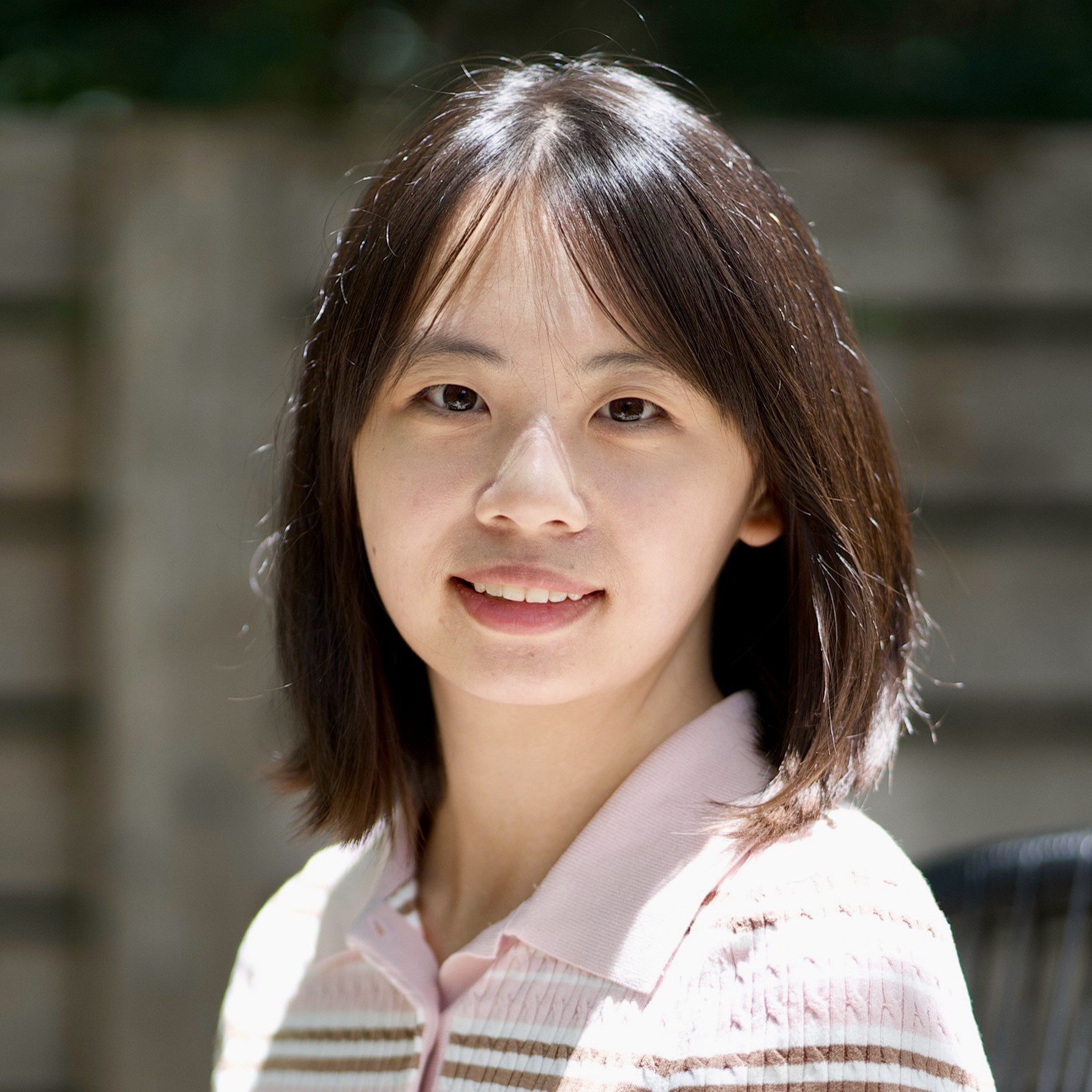
Stella Yu is a Professor specializing in computer vision, machine learning, and AI applications across medical imaging, robotics, and wildlife recognition. She emphasizes adaptive advising tailored to individual student strengths, with regular one-on-one and group meetings to discuss research progress and paper presentations. Yu's research group focuses on unsupervised learning, deep learning workflows, and interdisciplinary applications such as MRI reconstruction, meibography analysis, and aerial wildlife monitoring. Her work bridges theoretical advancements with practical tools like DeepInPy for inverse problems. She strongly advocates for teaching experience through GSI roles and ensures students have conference funding to present findings at top venues. Education Expectations: Regular literature review, lab presence for junior students, and clear authorship protocols. Key Research Themes: Feature learning, medical AI, computational optics, and wildlife population surveys. Her lab promotes a collaborative environment with structured feedback loops, emphasizing both technical rigor and creative problem-solving. Current projects include BatVision for 3D spatial navigation using audio signals, and AI-driven solutions for dry eye diagnosis and building information modeling.
Jon Atle Gulla is a Professor at NTNU and Director of the Norwegian Research Centre for AI Innovation (NorwAI). He holds academic leadership roles, including former Head of the Department of Computer Science and Informatics at NTNU. His expertise spans Semantics, Language Technology, Recommender Systems, and AI-driven innovation. He has nearly 150 international publications and advised over 100 students across MSc, PhD, and postdoctoral levels. Education: MSc in Computer Science (1988), PhD in Computer Science (1993) from Norwegian Institute of Technology (NTH) MSc in Linguistics (1995), University of Trondheim MSc in Management (Sloan fellowship, 2003), London Business School Research interests focus on Semantics and Language Technology applied to Recommender Systems, Information Retrieval, and Text Analysis. He explores AI-based innovations in digitalization and entrepreneurship, advising industry on AI adoption and commercialization. Notable projects include Big Data collaborations with DNB, RecTech for news recommendation, and Trondheim Analytica analyzing political texts/social media. Publications emphasize AI applications in news recommendation, political text analysis, and Scandinavian language models. His work addresses ethical AI, copyright implications, and cross-lingual NLP challenges. Awards: Member of the Royal Norwegian Society of Arts and Sciences. Advising/grants: Supervised 30 PhD students and 70 MSc students. Involved in startups like Fast Search & Transfer (acquired by Microsoft) and Mito.ai/Strise.ai. Active in reviewing for journals like Data & Knowledge Engineering and conferences like ACL. Labs/teams: Leads NorwAI, co-founder of INRA and NOBIDS workshops. Collaborates with industry and academia on AI-driven solutions.
Frederick A. A. Kingdom is a Professor in the Department of Ophthalmology at McGill University's Faculty of Medicine, focusing on Perception, Cognition and Cognitive Neuroscience . His research explores the interplay between early visual feature detection (edges, bars) and intermediate stages forming contours, textures, and surfaces through spatial vision, color vision, stereopsis, texture perception, brightness/lightness perception, and transparency studies . Email: fred.kingdom@mcgill.ca Key research domains include: Perceptual Mechanisms : Lateral inhibition, contrast normalization, spatial bandpass filters, and their role in brightness/lightness perception and illusions like simultaneous brightness contrast. Color Vision : Red-green vs blue-yellow system distribution, chromatic contrast requirements for stereopsis, color-based depth processing limitations, and color-shading effects that parse surfaces vs illumination. Texture Analysis : Detection thresholds for orientation/frequency/contrast modulated textures, co-circularity in texture perception, and texture statistical sensitivity (e.g., kurtosis importance). Shape Processing : Shape-frequency/shape-amplitude aftereffects, global vs local shape coding, and contour inflection adaptation. His work combines psychophysics , fMRI , image processing , and computational modeling to dissect visual system architecture, particularly how color and luminance signals are integrated/separated in early cortical processing.
Jiaxin Lin is an Assistant Professor in the Department of Electrical and Computer Engineering at Cornell University , affiliated with the Computer Systems Laboratory . She earned her Ph.D. in Computer Science from UT Austin (2025) , preceded by an M.S. from University of Wisconsin-Madison and a B.S. from ShenYuan Honors College at Beihang University. Her research focuses on co-designing software and hardware systems to enable high-performance data center communication, particularly through: Programmable network interface controllers (SmartNICs) Terabit network system stacks Cache/memory interconnects Compilers for in-network computing Chip-to-chip interconnects Her work addresses challenges in portability across heterogeneous SmartNICs, demonstrated through the development of the Alkali compiler framework (NSDI '25). Key themes include hardware abstraction, data center scalability, and network-compute co-design. Scientific Awards: Google Junior Faculty Award (2025) MIT EECS Rising Star (2024) Google Ph.D. Fellowship (2021) Meta Ph.D. Fellowship (2021)
Marco Pedersoli serves as an Assistant Professor at École de technologie supérieure (ETS) in Montreal since February 2017, where he leads research in computer vision and machine learning. His work focuses on reducing computational costs and annotation requirements for deploying vision algorithms on embedded devices, positioning ETS at the forefront of Montreal's AI ecosystem. His academic journey includes: Ph.D. from Autonomous University of Barcelona (UAB) under Jordi Gonzàlez and Juan José Villanueva Post-doctoral research at INRIA Grenoble with Cordelia Schmid and Jakob Verbeek (2015-2016) Research at KU Leuven with Tinne Tuytelaars (2012-2015) Dr. Pedersoli's research tackles deep learning bottlenecks through weakly-supervised methodologies and computational efficiency innovations . His three core projects address: Reduced Supervision : Developing weakly/semi-supervised learning for images, video, audio and text Exploration Learning : Optimizing data selection in unstructured environments Efficient Computation : Accelerating deep learning training and inference These efforts enable vision algorithms to run on resource-constrained portable devices. Publication trends (2014-2022) reveal consistent focus on weak supervision (60% of works) and computational efficiency (30%), with recent expansion into medical imaging and multimodal emotion recognition. Key venues include CVPR, ICCV, NeurIPS and ECCV. His accolades include: Best Paper Award at ICIAR 2019 NVIDIA Titan X Pascal hardware donation Dr. Pedersoli actively mentors 18 graduate students across PhD and MSc programs, with notable placements at Huawei and Radio Canada. His lab secures competitive tax-free funding for projects with international collaborations, including Element AI and European institutions. Current openings emphasize Python/C++ proficiency and deep learning expertise. He leads a dynamic research group at ETS developing open-source tools for Roi-Pooling, weakly-supervised detection, and 3D object recognition, maintaining active GitHub repositories with community contributions. Recent WACV 2023 acceptances demonstrate ongoing productivity following medical leave.
Jun-Yan Zhu is an Assistant Professor at Carnegie Mellon University's School of Computer Science, affiliated with the Robotics Institute and Computer Science Department. His research focuses on generative models, computer vision, and graphics. He holds a B.E. from Tsinghua University and a Ph.D. from UC Berkeley, with postdoctoral work at MIT CSAIL. Zhu leads the Generative Intelligence Lab, exploring human-creator collaboration with generative models. Affiliations: Robotics Institute, CMU Graphics Lab, CMU Computer Vision Group Education: B.E. (Tsinghua), Ph.D. (UC Berkeley) Research Interests: Generative AI, image/video synthesis, neural rendering, tactile sensing integration Notable contributions include CycleGAN, pix2pix, and GAN compression techniques. His work has been commercialized in Adobe's Firefly and NVIDIA's Canvas tools. Awards: ACM SIGGRAPH Dissertation Award, David J. Sakrison Prize, CVPR Best Paper Finalist Lab Members: 10+ PhD students and researchers Current projects include LEGO design synthesis, tactile-driven 3D generation, and generative model personalization.
Steven M. LaValle is a Professor at the University of Oulu's Faculty of Information Technology and Electrical Engineering since 2018. Previously, he held tenured positions at the University of Illinois Urbana-Champaign (UIUC) and was a Principal Scientist at Oculus VR. His research spans robotics, motion planning (notably pioneering RRT algorithms), virtual reality, and sensor fusion. He has authored influential textbooks like Planning Algorithms and Virtual Reality . Education: PhD (1995), MS (1993), and BS (1990) in Electrical Engineering from UIUC. Research Interests: Focuses on minimal information requirements for robots, perception engineering, and foundational VR/AR systems. His work integrates control theory, computational geometry, and human perception. Achievements: Recipient of the IEEE ICRA Milestone Award (2019), University Scholar (UIUC, 2012), and XTIC Award 2024 for Innovation. Leads the Perception Engineering Group at Oulu, advancing VR/AR and telepresence technologies. Grants & Industry: ERC Advanced Grant (2021–2026), former VP of Huawei's VR/AR division, and collaborator with institutions like IIT Madras. Advises startups in robotics and virtual reality.
Leonard Saxe serves as the Klutznick Professor of Contemporary Jewish Studies at Brandeis University’s Heller School for Social Policy and Management, where he directs the Cohen Center for Modern Jewish Studies. His work focuses on socio-demographic analysis of American Jewish life, with emphasis on identity formation, educational interventions, and community dynamics. His educational background includes a Ph.D., M.S., and B.S. in Psychology from the University of Pittsburgh. Saxe’s research spans Jewish Studies, Social Psychology, and Demography, examining how programs like Birthright Israel shape Jewish identity and how antisemitism manifests in contemporary society. He employs rigorous survey methodology and data synthesis techniques to address methodological challenges in studying religious populations. Recent publications (2024-2025) reveal a strong focus on campus antisemitism, political polarization within Jewish communities, and longitudinal impacts of Jewish educational programs. These works demonstrate methodological innovation in community studies while addressing urgent social issues facing American Jews. His significant honors include: Congressional Science Fellow (Office of Technology Assessment, 1980-1981) Fulbright Senior Lecturer (U.S.-Israel Educational Foundation, 1981-1982) APA Early Career Award for Distinguished Contributions to Psychology in the Public Interest (1989) Heller Mentor Award (2005) Marshall Sklare Award (2012) Saxe has mentored numerous researchers through the Cohen Center and secured substantial grant funding for community studies across 20+ U.S. regions. His work directly informs communal planning and policy decisions through data-driven insights about Jewish population dynamics. As director of the Cohen Center for Modern Jewish Studies, he leads a multidisciplinary team conducting demographic surveys, program evaluations, and methodological research that shapes understanding of contemporary Jewish life in North America.
Manolis Savva is an Associate Professor in the School of Computing Science at Simon Fraser University and holds the Canada Research Chair in Computer Graphics. He specializes in 3D scene analysis, generative methods for 3D content, and computer graphics for AI. His research bridges computer graphics, vision, and robotics. Education: Ph.D. (Computer Science, Stanford University, 2016), MS (Computer Science, Stanford, 2012), B.A. (Physics & Computer Science, Cornell, 2009). Research Interests: Human-centric 3D scene analysis, generative 3D content creation, AI-driven rendering, and applications in robotics. Key projects include Habitat (Embodied AI platform), ScanNet , and ShapeNet datasets. Recent Articles: Focus on articulated object modeling, 3D scene synthesis, and AI-driven visualization. Notable work includes SceneMotifCoder (generating object arrangements) and R3DS (panoramic scene understanding). Awards: CHCCS Early Career Award (2022), ICLR 2023 Outstanding Paper Award, ICCV 2019 Best Paper Nomination, and SGP 2020 Dataset Award (ScanNet). Lab/Teams: Leads research groups in 3DLG (3D Learning and Graphics) and GrUVi (Graphics and Vision). Collaborates on projects like AI Habitat and HomeRobot .
Dr. Jason J. Corso is a Professor in the Department of Electrical Engineering and Computer Science at the University of Michigan . His research focuses on high-level computer vision , video understanding , and the intersection with human language and robotics . His work emphasizes Bayesian approaches to segmentation and recognition, with applications spanning biomedicine and recreational video analysis . He is particularly known for contributions to video object segmentation , activity recognition , and vision-language frameworks . Scientific awards include: NSF CAREER award (2009) ARO Young Investigator award (2010) Google Faculty Research Award (2015) DARPA CSSG grant He also leads major projects like YouCook2 dataset , Video2Text.net , and LIBSVX framework.
Lea R. Winter is an Assistant Professor in the Department of Chemical and Environmental Engineering at Yale University's School of Engineering & Applied Science. Her research focuses on electrified processes at the nexus of food, energy, water, and climate, with emphasis on sustainable CO 2 conversion, green nitrogen fixation, wastewater valorization, and plasma-electrochemical systems. She leads an active research group and mentors multiple PhD students, postdocs, and undergraduates. Ph.D., Columbia University B.S., Yale University Dr. Winter's research interests lie at the intersection of sustainability and chemical engineering. She pioneers electrified membrane technologies, plasma-activated reactions, and catalytic processes for converting waste streams (CO 2 , nitrates, wastewater) into valuable fuels, chemicals, and fertilizers. Her work integrates electrochemistry, plasma chemistry, and heterogeneous catalysis to develop distributed, circular solutions for environmental challenges. Key themes include green ammonia production , on-demand fertilizer synthesis , and electrified water treatment with resource recovery. Analysis of her recent publications reveals a strong focus on electrified membranes for nitrate and CO 2 conversion, plasma-activated co-processing of N 2 and C 1 gases, and single-atom catalysis for environmental applications. Her research spans fundamental reaction mechanisms to scalable engineering solutions, often published in high-impact journals such as Nature Water , PNAS , and Joule . The work demonstrates a consistent trajectory toward enabling a distributed hydrogen and nitrogen economy through sustainable electrochemical and plasma-driven technologies. Scientific Awards: Beckman Young Investigator Award (2024) Department of Energy Early Career Award (2024) Caltech Young Investigators Lecture Series Award (2022) NEWT Distinguished Postdoctoral Fellowship (2020) NSF Graduate Research Fellowship (2015) North American Catalysis Society Kokes Award (2019) Dr. Winter actively mentors students and has advised several who have gone on to PhD programs and faculty positions. Her lab receives significant research funding, as evidenced by her early-career awards from DOE and NSF. She leads projects on mining nontraditional water sources for hydrogen, plasma-based fertilizer synthesis, and electrified membrane systems. The Winter Lab fosters a collaborative, creative, and safe research environment centered on the principles of CRISP: Creativity, Respect, Investment, Safety, and Partnership. She also contributes to scientific discourse through invited viewpoints on climate education and critiques of emerging technologies like seawater electrolysis. Her lab collaborates widely, including with researchers at Columbia, Caltech, and international institutions.
Bernhard Rumpe is a Professor and Chair of Software Engineering at the Department of Computer Science 3, RWTH Aachen University, Germany. He leads a research group focused on model-based software engineering, domain-specific languages, and digital twins, with strong industrial collaborations and applications in embedded systems, AI, IoT, and autonomous vehicles. His research centers on improving software development through model-driven engineering, generative techniques, and formal modeling using UML, SysML, and the MontiCore language workbench. Key interests include digital twins, variability modeling, model composition, and the integration of cyber-physical systems with information systems. The recent publications highlight a consistent focus on model-driven digitalization, language workbenches, and system integration. Trends show increasing emphasis on digital twins in manufacturing and societal systems, formal verification of model transformations, and educational applications of model-driven low-code platforms. His work bridges theoretical foundations with industrial applicability. Keynote Speaker, OOPSLE 2025 General Chair, GPCE 2023 Session Chair, MODELS 2020 Program Committee Member, SLE, GPCE, ICSE, ECMFA He advises master’s and doctoral students and leads a vibrant research team that has successfully executed over 100 research projects. His group develops foundational tools like MontiCore and applies them in industrial contexts, contributing to software quality and developer efficiency. No formal grants are listed, but sustained project funding is evident. He is involved in several research labs and teams centered around the Software Engineering Chair at RWTH Aachen, focusing on language workbenches, model-driven development, and digital twin systems. The team actively contributes to open research through publications, tools, and industrial partnerships.
Abhinav Shrivastava is an Associate Professor in the Department of Computer Science at University of Maryland, College Park, with a joint appointment in the Institute of Advanced Computer Studies (UMIACS). Previously, he served as an Assistant Professor at the same institution from August 2018 to June 2024, and spent one year as a Visiting Research Scientist at Google Research from September 2017 to August 2018. His educational background includes: PhD in Robotics and Artificial Intelligence from Carnegie Mellon University (2017), advised by Abhinav Gupta, with thesis titled 'Discovering and Leveraging Visual Structure for Large-scale Recognition' MS in Artificial Intelligence from Carnegie Mellon University (2011), supervised by Alyosha Efros and Martial Hebert BTech in Computer Science and Engineering from Jaypee Institute of Information Technology (2010) Professor Shrivastava's research focuses on computer vision and machine learning, with particular expertise in object detection, image recognition, and neural representations. His work bridges theoretical advances with practical applications, exploring how visual systems can discover and leverage structure in large-scale recognition problems. He has made significant contributions to understanding the role of supervision in vision transformers, developing novel approaches for object-state composition recognition, and creating efficient neural representations for videos and 3D scenes. His research often addresses fundamental challenges in visual recognition, including handling novelty in open-world environments and improving the efficiency of visual systems. An analysis of his recent publications reveals a strong emphasis on neural representations, particularly for dynamic content like videos and 3D scenes. His work demonstrates increasing sophistication in handling open-world vision problems, with research spanning object discovery, localization, and representation learning. The publications show a clear progression toward more efficient and scalable models, with recent work focusing on model compression, sparse representations, and addressing the challenges of working with limited annotations. His scientific contributions have been recognized with several prestigious awards: Best Paper Award (Applications) at IEEE Winter Conference on Applications of Computer Vision (2020) Microsoft Research PhD Fellowship (2014-2016) Best Student Paper Award at IEEE Winter Conference on Applications of Computer Vision (2014) Outstanding Reviewer Award at IEEE CVPR (2015) Professor Shrivastava has successfully mentored numerous graduate students, many of whom have become prominent researchers in computer vision. His Amazon Research Awards (2020 and 2023) have supported innovative projects including 'The pursuit of knowledge: discovering and localizing new concepts using dual memory' and 'Audio-conditioned Diffusion Models for Generating Lip-synchronized Videos.' He has served as Area Chair for major conferences including ICCV, CVPR, and AAAI, demonstrating his leadership in the computer vision community. His research has attracted significant funding from both academic and industry sources, supporting his exploration of fundamental questions in visual recognition and representation learning.
Gedas Bertasius is an Assistant Professor in the Department of Computer Science at the University of North Carolina at Chapel Hill. Previously, he served as a postdoctoral researcher at Meta AI (Facebook AI) and earned his PhD in Computer Science from the University of Pennsylvania. His academic journey began with a bachelor’s degree in Computer Science from Dartmouth College. Dr. Bertasius specializes in computer vision and machine learning with specific interests in: Video understanding First-person vision (egocentric vision) Human behavior modeling Multimodal deep learning Transfer learning Computer vision for sports analytics Video+robotics integration His research produces practical frameworks like Video ReCap for hierarchical captioning of long videos, SiLVR for language-based video reasoning, and BASKET for fine-grained skill estimation. He focuses on developing models that can process videos across multiple temporal granularities while maintaining computational efficiency. Key research themes in his work include: Recursive video processing architectures Space-time attention mechanisms Generative video modeling LLM integration with vision systems 3D-aware representation learning Continual learning for video QA He has received notable recognition, including: CVPR 2024 Egocentric Vision (EgoVis) Distinguished Paper Award CVPR 2020 Best Paper Award Nomination First Place at CVPR 2025 Multi-Discipline Lecture Understanding Workshop Dr. Bertasius collaborates with prominent researchers like Mohit Bansal and Lorenzo Torresani . His recent publications demonstrate expertise in advancing video-language models, with applications in semantic alignment, temporal grounding, and cross-modal reasoning. For detailed information about his research, publications, and ongoing projects, please visit his official website .
Diogo Carbonera Luvizon is a Researcher at the Max-Planck-Institut für Informatik (MPI-INF) in Saarbrücken, Germany, and a member of the Visual Computing and Artificial Intelligence (VIA) Research Center. He holds a PhD in Computer Vision and Machine Learning from CY Cergy Paris University (2019), and Bachelor's and Master's degrees in Engineering and Applied Computing from UTFPR, Brazil. His research focuses on solving complex problems in Computer Vision, Computer Graphics, and Deep Learning, particularly in human modeling and real-time systems. Education: PhD (2019) - CY Cergy Paris University; M.Sc. (2015) - UTFPR; B.Sc. (2011) - UTFPR. Research interests include 3D human pose estimation, action recognition, multitask learning, and novel view synthesis. He has contributed to patents on multiplane image generation (Samsung) and vehicle speed measurement systems. His work has been recognized with awards like the Best Paper Honorable Mention at GCPR-VMV 2022 and Best Presentation Award at ETIS Lab (2018). He has developed open-source tools, including the deephar repository for human action recognition and pose estimation. His current affiliations include MPI-INF and the VIA Research Center, a partnership between MPI-INF and Google.