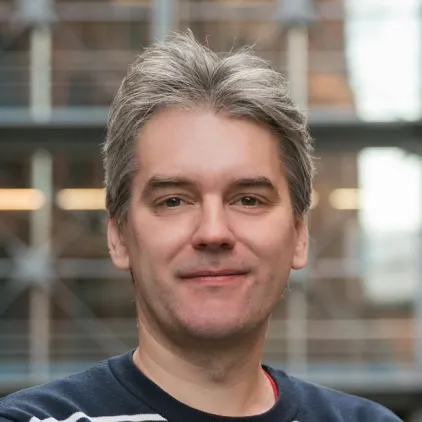
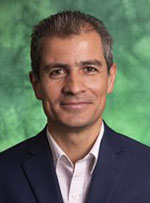
Prof. Dmitry Vetrov is a Professor of Computer Science at Constructor University Bremen, affiliated with the School of Computer Science and Engineering. His research focuses on integrating Bayesian methodologies with deep learning, particularly in diffusion models, generative adversarial networks (GANs), and domain adaptation. He leads the Bayesian Method Research Group and has contributed to advancements in areas such as neural optimal transport, unsupervised voice restoration, and genetic fine-mapping. Key research interests include probabilistic modeling, generative AI, and optimization techniques for neural networks. Notable work includes innovations in diffusion samplers, adaptive learning rate analysis, and encoder-based approaches for image and audio generation. His publications span top venues like NeurIPS, ICLR, and AAAI. Current projects emphasize scalable diffusion models, thermodynamic views of SGD, and Bayesian approaches in genetic analysis. He collaborates on applied areas like speech enhancement (HIFI++), protein sequence generation, and efficient parameterization of GANs. Labs/Teams: Leads the Bayesian Method Research Group, actively involved in Constructor University's AI and machine learning initiatives.
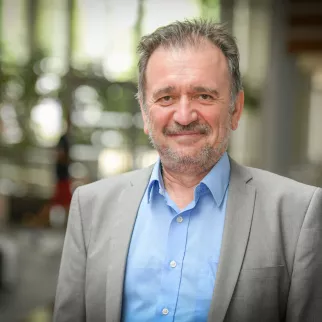
Dr. Max Torres is an Associate Professor at The Catholic University of America's Busch School of Business, specializing in Strategy, Management, and Operations. His research focuses on ethical decision-making, virtue ethics in business, leadership, and Catholic Social Doctrine. He holds a Ph.D. in Business Ethics from the University of Navarra (IESE Business School), a J.D. from Harvard Law School, and degrees from UC Berkeley and City College of San Francisco. Dr. Torres has held academic positions at institutions including IESE Business School, Tuck School of Business, and the Ross School of Business. His work bridges managerial practices with moral philosophy, emphasizing the integration of character and organizational culture. He has received the 2003 Novak Award and contributes to journals like the Journal of Business Ethics Education . His courses include Ethics in Business, Organizational Behavior, and Leadership Theory. Before academia, he worked in financial services, holding roles at Dean Witter Reynolds and Merrill Lynch. His interdisciplinary expertise spans executive education programs in Europe, Asia, and the Americas. He frequently engages with Catholic media platforms like Ave Maria Radio, discussing the spiritual dimensions of business and finance.
Christos APOSTOLAKIS is an Associate Professor of Management at Audencia since 2019, specializing in Entrepreneurship, Strategy & Innovation. He contributes to the joint Bachelor in Business Administration Programme with Southwestern University of Finance and Economics in Chengdu, China. His research focuses on Public Management, Strategic Entrepreneurship, Collaboration, and Local Government, with notable works on urban regeneration partnerships and public-private collaboration in Nigeria and the UK. He has held academic leadership roles, including Framework Leader for the Master’s Programme (2012–2014) and Programme Leader for the undergraduate Business and Management Programme (2017–2018) at Bournemouth University. Dr. APOSTOLAKIS earned a PhD in Strategy and Management from Leicester Business School (2007), alongside advanced degrees in Public Administration (University of York, 2000), International Business (University of Bournemouth, 1999), and a Bachelor’s in Business Administration from the University of West Attica (1996). His non-academic experience includes roles as Tax Manager in Local Administration (Athens, 1992–1997) and Manager of Distribution (Athens, 1981–1992), enriching his academic insights. His research interests span Social Entrepreneurship, Innovation Strategies, and Public Sector Collaboration. He has published extensively on topics like PPP frameworks, urban regeneration, and higher education’s role in fostering innovation. Notable awards include the Quality Research Funding (2018) and ESRC Grant (2016). His editorial contributions include the Nordic Journal of Tourism (2020) and International Journal of Export Marketing (2016). Teaching expertise includes Strategic Management, Marketing, and Qualitative Research Methods. He advocates for integrating technological advancements in pedagogy, having delivered courses since 2002. His work bridges academic theory with practical governance challenges, emphasizing actionable solutions for public and private sector collaboration.
Eldert van Henten is a full professor of Biosystems Engineering at Wageningen University & Research. His research focuses on agro food robotics, precision farming, and optimal control systems in agriculture. He earned his MSc (1987) and PhD (1994) in Agricultural and Environmental Sciences from Wageningen University. He previously led the Farm Technology Group until 2021 and currently leads projects like FlexCRAFT (Cognitive Robots for Flexible Agro Food Technology) and Trimbot2020, developing robotics and automation for agricultural applications. His work emphasizes translating technology to practical environments (TRL 5-6), with contributions to robotic harvesting, precision weed control, and greenhouse climate modeling. Education: MSc (cum laude, 1987), PhD (1994) in Agricultural Sciences at Wageningen University. Key Projects: FlexCRAFT: Generic robotics principles for food processing, packing, and greenhouse operations. Trimbot2020: Outdoor garden trimming robot with 3D path planning. PoultryBot: Autonomous egg collection in poultry farming. Editorial Roles: Member of editorial boards for Biosystems Engineering, Computers and Electronics in Agriculture, and others. Research Themes: Agro food robotics (harvesting, vision systems, machine learning). Optimal control of agricultural processes (greenhouse climate, irrigation). Generic robotics frameworks for agri-food applications. Awards: Not explicitly listed, but recognized via research impact (h-index 31–47 across platforms). His teaching includes courses on greenhouse technology, field robotics, and thesis supervision. He collaborates with industry through user groups and consortia to ensure practical technology transfer.
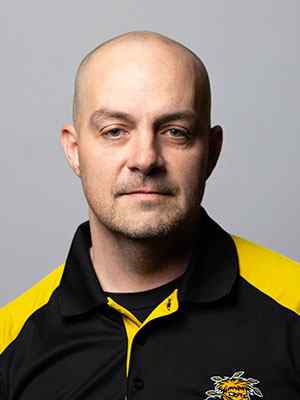
Christopher Stone serves as Chair of the Department of Management and holds the rank of Clinical Associate Professor at Wichita State University. His research focuses on human resource management, veteran workplace integration, and organizational behavior. Notable areas include veteran employment stereotypes, strategic talent allocation, and the application of technology in HR practices. He has also explored historical critiques of organizational studies like the Hawthorne experiments and the impact of servant leadership in fostering workplace reciprocity. Stone's work spans experimental investigations into HR manager perceptions of veterans, uncovering biases and proposing policy interventions. His contributions to doctoral education emphasize structured methods for preparing academics to teach in business programs. Recent studies address the digital transformation of HR through big data and AI, while earlier research examined emotional intelligence's role in job performance for scientists and engineers. His articles consistently analyze systemic factors affecting workplace dynamics, from political critiques of classic studies to modern challenges like veteran transition and strategic human capital management. While no specific awards are noted, his extensive publication record reflects sustained scholarly engagement with pressing organizational and societal issues.
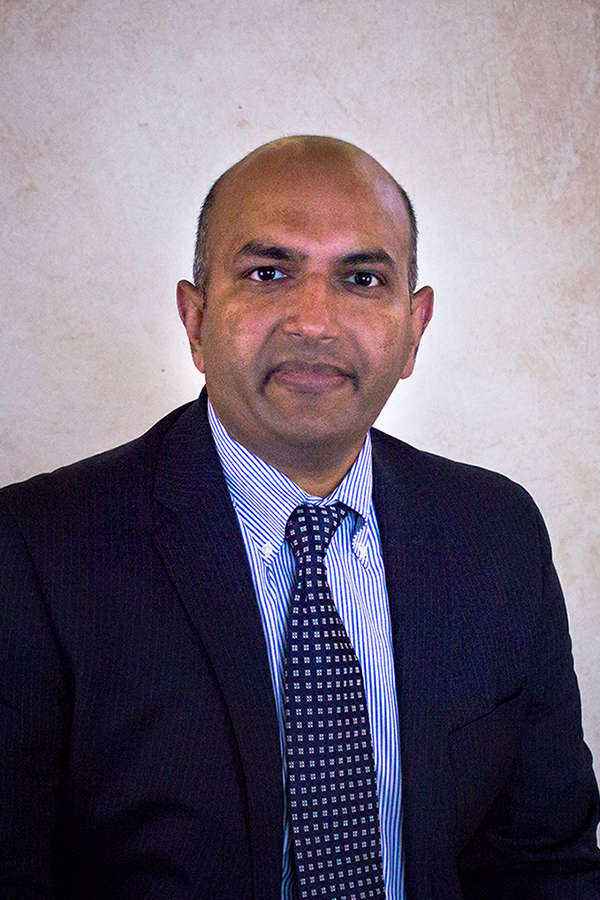
Sreedhar Madhavaram is the Alumni Professor of Marketing and area coordinator for the Marketing and Supply Chain Management Area at the Rawls College of Business , Texas Tech University. His academic journey includes a PhD in Marketing from Texas Tech University, an MS in Marketing, an MBA in Marketing from Osmania University, and a BE in Electronics and Communications from Manipal Institute of Technology. PhD, Texas Tech University MS, Marketing, Texas Tech University MBA, Marketing, Osmania University BE, Electronics and Communications, Manipal Institute of Technology Madhavaram’s research focuses on marketing theory , marketing strategy , capability building , and sales management , with recent work examining AI applications in marketing, sustainable marketing frameworks, and strategic solutions for climate change challenges. His publications appear in top journals like the Journal of the Academy of Marketing Science and Industrial Marketing Management . His 2023-2025 articles reveal trends in AI-enabled marketing capabilities , dynamic resource orchestration , and sustainability-driven strategy . These works span subfields such as digital transformation, ethical AI use, and green supply chains. Madhavaram has presented extensively at national and international conferences, though specific scientific awards are not named in the provided text. He contributes to marketing pedagogy through frameworks for teaching evaluation and curriculum development.
Dr. Fabian Muff is a Senior Researcher at the Department of Informatics, University of Fribourg, within the Interfaculty Informatics unit. He holds a position as Oberassistent (Senior Research Assistant) specializing in Digitalization and Information Systems. His research focuses on the intersection of conceptual modeling with augmented reality (AR) and virtual reality (VR), emphasizing workflow modeling languages, AR application frameworks, and AI integration in modeling tools. He teaches courses on Requirements Engineering, Information Systems Modeling, and Project Development. Dr. Muff's work addresses challenges in hybrid modeling environments, contextual AR applications, and the limitations of large language models in conceptual modeling. His recent projects include developing the M2AR web-based modeling tool and exploring the use of ChatGPT in schema generation. He actively collaborates with academic and industry partners, publishing widely in venues like ER Conference and AAAI workshops. His contributions span technical innovations in AR modeling languages (e.g., ARWFML) and methodological advancements in combining conceptual modeling with emerging technologies. Current research explores AI-augmented visualization, context-aware AR systems, and the ethical implications of digital-physical integration in enterprise systems.
Victoria Fernandez Abrevaya is a post-doctoral researcher at the Max Planck Institute for Intelligent Systems (Perceiving Systems department) in Germany. She holds a PhD from Inria Grenoble (France) under Professors Edmond Boyer and Stefanie Wuhrer, and a MSc in Computer Science from the University of Buenos Aires, Argentina. Her work focuses on 3D reconstruction and understanding of humans from 2D data, with emphasis on facial animation, neural rendering, and generative models. Research interests: 3D computer vision and shape modeling Neural rendering techniques Diffusion models for motion and appearance synthesis Biometric fairness in face analysis Real-time face capture systems Geometry-constrained multi-human rendering Recent work explores occluded face expression reconstruction (OFEr 2025), interactive dynamics modeling (InterDyn 2025), and latent realignment for motion diffusion (Lead 2025). Her SPARK system (2025) enables real-time monocular face capture through self-supervised learning. Prior contributions include FLAME (2023), a popular 3D face model framework, and work on multilinear autoencoders for dynamic facial analysis (2018). She co-developed ImAvatar (2022), an implicit morphable head avatar system from videos.
Serdar Bozdag is an Associate Professor in the Department of Computer Science and Engineering at the University of North Texas, with a joint appointment in Mathematics. He serves as Director of the Center for Computational Life Sciences, focusing on interdisciplinary research at the intersection of computational methods and biological systems. His research expertise spans machine learning applications in bioinformatics, multi-omics data integration, and network biology. Key areas include developing algorithms for disease biomarker discovery, integrating genomic, transcriptomic, and clinical data through graph neural networks, and creating computational tools for precision medicine. Notable contributions include frameworks like CanMod2 for co-regulatory module inference and CTDPathSim for pathway-based similarity analysis. Bozdag’s work bridges computer science and life sciences, addressing challenges in Alzheimer’s disease diagnosis, cancer systems biology, and plant-microbe interactions. He has pioneered methods for analyzing dynamic biological networks and temporal data patterns, with applications in drug response modeling and electronic health record analysis. His lab develops open-source software tools widely used in computational biology research. Current projects emphasize AI-driven approaches for multi-modal healthcare data fusion, predictive modeling of disease progression, and scalable solutions for big biological data. His research has implications for improving diagnostic accuracy, personalized treatment strategies, and understanding complex biological systems.
Professor Robert Morgan holds the prestigious Sir Julian Hodge Chair and serves as Professor of Marketing & Strategy within the Marketing and Strategy Section at Cardiff Business School, Cardiff University. With over twenty years of experience as a Full Professor, he directs the Research, Impact, and Engagement portfolio within his department. Morgan also maintains significant international connections as a Visiting Professor at Copenhagen Business School, Vrije Universiteit Amsterdam, and Universiteit van Amsterdam. His leadership extends to chairing the International Advisory Board at Copenhagen Business School and serving as a Strategic Advisory Board Member at The University of Split. Robert Morgan's research spans the critical intersection between strategic management and marketing, with particular expertise in product and process innovation. His scholarly journey began with a management first degree, followed by a PhD in global market entry strategy. He further developed his academic foundation through post-doctoral training at INSEAD in France and the Rock Center for Entrepreneurship at Harvard Business School. This diverse educational background has informed his distinctive approach that combines theoretical rigor with practical business applications across five continents. Morgan's prolific research output demonstrates remarkable consistency and impact across multiple domains of business scholarship. His recent publications reveal a sophisticated integration of traditional strategic management concepts with emerging digital and sustainability challenges. The pattern shows increasing focus on digital transformation, AI integration in business contexts, circular economy models, and the complex interplay between corporate governance structures and firm performance. His work consistently bridges theoretical development with practical managerial implications, particularly in international business contexts and high-technology ventures. Research, teaching, and education awards from the American Marketing Association Recognition from the Strategic Management Society Honors from the Chartered Management Institute Awards from the Academy of Marketing Ranked in the Top 1% of Scientists Index by Research.com with D-index = 43 Google h-index of 57 and i10-index of 95 Department ranked #2 Marketing Department in the UK, #9 in Europe, and #20 globally in research rankings Professor Morgan has published over two hundred scholarly papers, management articles, books, company cases, and thought leadership white papers for corporations and consulting firms. His research has been cited more than 16,000 times, demonstrating significant academic and practical influence. He directs research within a department positioned as the #2 Marketing Department in the UK according to MKTBig15 Ranking 2023. His international collaborations and visiting professorships reflect his standing as a globally recognized scholar whose work transcends disciplinary boundaries while maintaining focus on the strategic marketing interface. Morgan's leadership extends beyond his immediate institution through his advisory roles at Copenhagen Business School and The University of Split. His research teams consistently produce high-impact work that addresses both theoretical gaps and practical business challenges, particularly in the areas of strategic agility, innovation management, and international business development. His approach emphasizes the importance of grounded research that delivers public value while advancing academic knowledge.
Dr. Nicole Green is a Senior Lecturer in the School of Education at the University of Southern Queensland. She holds a PhD from the University of Alberta and specializes in early childhood education, curriculum studies, and social justice in rural and remote contexts. Her work emphasizes educator professional development, interpretive inquiry, and the role of space and place in learning environments. Nicole teaches courses such as ECF2200 Relating with Families and ECP3200 Early Scientific Thinking and Inquiry. Her research focuses on equity pedagogy, nature-based learning, and fostering communication between families and schools. Notable studies include investigations into social justice in early childhood settings and the impact of rural learning environments. Nicole is a member of the Queensland Early Childhood Teacher Education Network (QECTEN) and actively contributes to educational policy and practice through her publications and professional engagements. With over 33,000 views of her research outputs, Nicole’s work bridges theoretical frameworks with practical applications in early childhood education, particularly addressing challenges faced by marginalized communities and rural educators.
Prof. Giovanni Betti is a Visiting Professor at the Department of Architecture and Urban Design at the University of the Arts Berlin. His research focuses on integrating technology with architectural practice, including sustainable building design, indoor environment quality, and digital tools for collaborative design. He leads projects like the CBE Clima Tool, an open-source platform for climate analysis, and explores human-machine interaction in spaces through generative algorithms and augmented reality. His work spans urban regeneration strategies, view quality assessment frameworks, and modular construction systems. Key research themes include the application of digital tools in architecture, occupant-centric design, and the interplay between technology and spatial communication. He has contributed to exhibitions like the MakeCity Festival with mixed-reality installations. His recent publications analyze workplace analytics, thermal comfort metrics, and parametric urbanism. Betti's interdisciplinary approach bridges architectural theory with practical implementation, emphasizing sustainability and user experience.
Mark V. Brady is an Associate Professor and Policy Officer at Lund University, affiliated with the Centre for Environmental and Climate Science (CEC) and serving as a Principal Investigator for BECC: Biodiversity and Ecosystem services in a Changing Climate. His work focuses on integrating economic and environmental modeling to understand land-use decisions and their impacts on ecosystem services. Dr. Brady's research centers on integrated modeling of the relationships between land-use, biodiversity and ecosystem services. He specializes in incorporating the decisions of land managers, particularly farmers, into models that assess the consequences of these decisions on ecosystem services. His work is conducted within multidisciplinary projects at Lund University's Centre for Environmental and Climate Research, where ecological research informs biophysical relationships between land-use and ecosystem services. This integration allows for evaluation of how changing conditions (such as climate change and biomass demands) and policies (like the Common Agricultural Policy) affect land management decisions. His recent publications demonstrate a strong focus on agricultural policy analysis, biodiversity conservation, and sustainable land management. Using advanced modeling techniques like agent-based approaches and life cycle assessment, his work bridges economic and environmental considerations to inform policy development. Key research themes include the acceptability of agri-environment-climate measures to farmers, motivations for biomass production, and the modeling of forests as social-ecological systems. Dr. Brady actively contributes to UN Sustainable Development Goals related to sustainable agriculture, climate action, and life on land. His work spans Economics, Environmental Sciences, Agricultural Economics and Management, and Rural Development. Dr. Brady is involved in multiple research projects including VALOR: VALues and dependence of society on pollinators (European Commission - Horizon Europe, 2025-2028), FORCE - Center for food resilience and competitiveness (2024-2028), and A view across fields - Interdisciplinary perspectives for bees in agricultural landscapes (2023-2027). He supervises graduate students and participates in media engagements, workshops, and conferences, including the ClimBEco mentoring programme and BECC annual meetings. As a member of the Centre for Environmental and Climate Science and BECC research environments, Dr. Brady collaborates with interdisciplinary teams to advance understanding of biodiversity, ecosystem services, and sustainable land management in the context of climate change.
Dr. Jacqueline Galica is an Associate Professor in the School of Nursing at Queen’s University, affiliated with the Faculty of Health Sciences. She holds a cross-appointment in the Queen’s Cancer Research Institute and is a core collaborator at Queen’s Kaleidoscope Institute. Her research focuses on psychosocial needs of cancer survivors, particularly in clinical nursing and transitional care contexts. She teaches Nursing Research (NURS 324) and Quantitative Research Design (NURS 803), emphasizing practical applications of research in healthcare settings. Education: Dr. Galica earned a PhD in Nursing Science from the University of Toronto (2016), a Master of Science in Psychosocial Oncology from the University of Windsor (2008), and a Bachelor of Science in Nursing from Ryerson University (2000). She completed a Postdoctoral Fellowship in Psychosocial Oncology at McGill University (2018). Research Interests: Her work explores fear of cancer recurrence, knowledge translation strategies, and patient engagement in healthcare. She investigates mindfulness-based interventions for breast/colorectal cancer survivors and uses mixed-methods approaches. Her research aligns with Queen’s Nursing Research Clusters in Practice Environments and Populations with Complex Health Conditions. Awards & Service: While no specific awards are listed, Dr. Galica actively contributes to professional organizations including the Canadian Association of Nurses in Oncology (CANO/ACIO) and Cancer Care Ontario’s Colorectal Cancer Survivorship Guideline Development Group. She co-leads the Frontenac Lennox and Addington Ontario Health Team’s Working Group. Teaching & Mentorship: Dr. Galica views mentorship as central to her role, aiming to instill research’s practical utility in students. She emphasizes active learning strategies to foster critical appraisal and clinical relevance in nursing education.
Taewon Kang is a researcher at Korea University's Department of Computer Science, specializing in artificial intelligence, computer vision, and AI's intersection with digital art. His work includes novel view synthesis, GAN-based image translation, and emotion recognition systems. Key projects: Vender (AI vending machine with emotion analysis), Text2Story (text-guided video narratives), and GLEAN-ID (identity-preserving super-resolution). Collaborated with Prof. Ming-Hsuan Yang at UC Merced (2022–2023) and participated in workshops like ICCV 2019. Research focuses on: Generative AI (diffusion models, GANs) Human-AI interaction (emotion detection, empathy-driven systems) Creative applications of AI in art and education Recent article trends include: 3D priors for single-image synthesis (2024) Score-based stochastic modeling in Hilbert spaces (2023) Interactive AI for real-time translation (2020–2021) Scientific awards: Multiple competition wins (2014–2023) Two Korean patents (2016, 2018) 2017 Intel ISEF Finalist Part of the Temporary Artists team for the Play on AI exhibition (2020–2021), creating AI-driven artworks exploring empathy and connection.