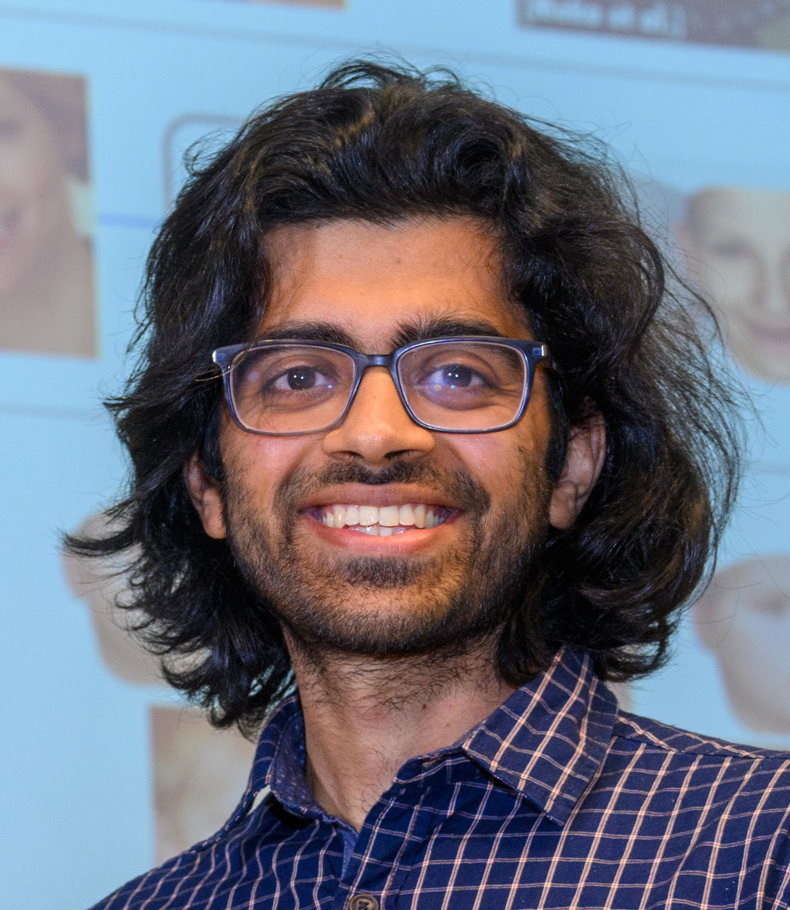
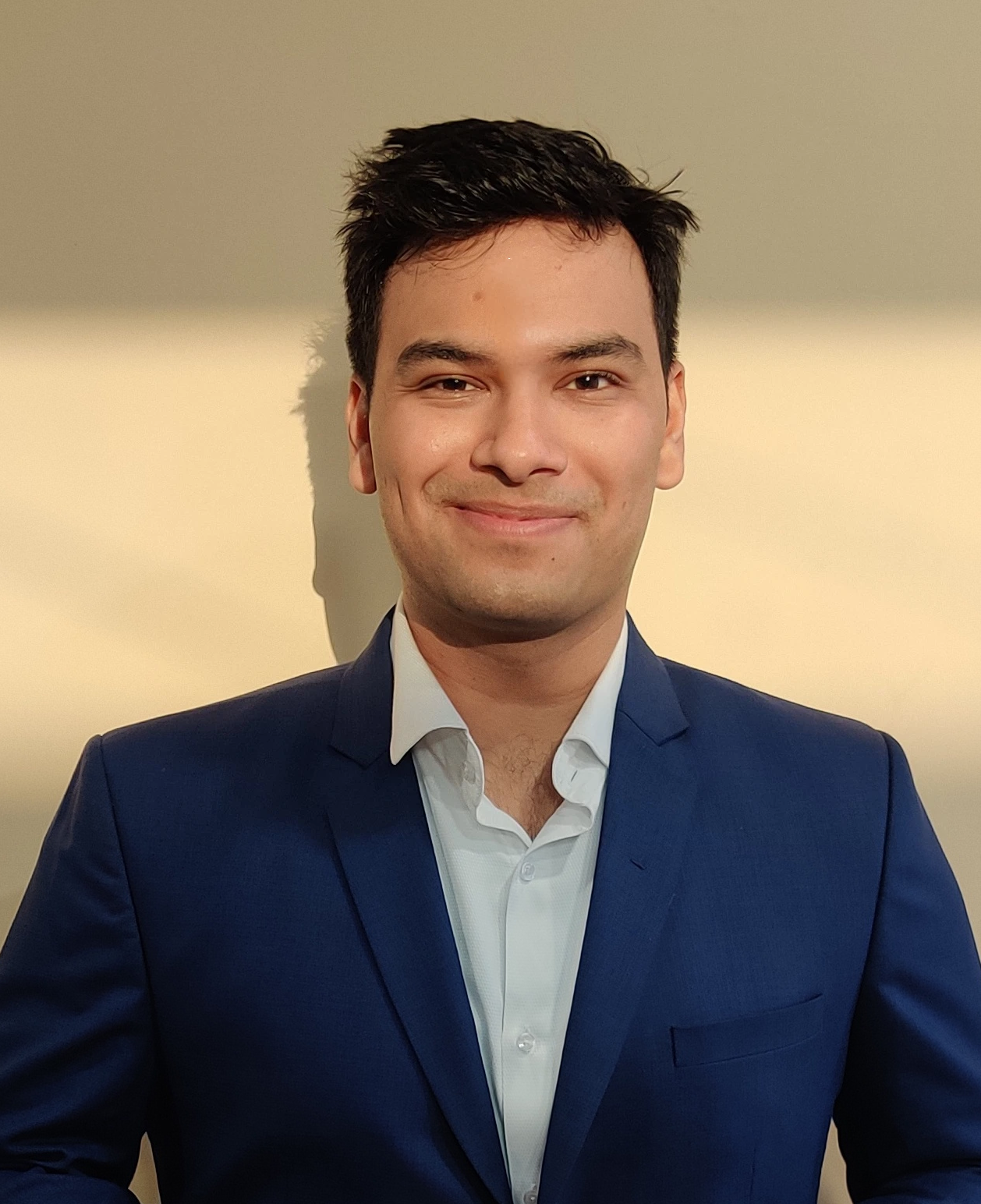
Ayush Tewari is an Assistant Professor at the University of Cambridge. Previously, he was a postdoctoral researcher at MIT CSAIL under Bill Freeman, Josh Tenenbaum, and Vincent Sitzmann, and completed his Ph.D. at the Max Planck Institute for Informatics under Christian Theobalt. His research focuses on visual perception, developing methods to infer 3D structured representations from images and videos, aiming to bridge the gap between human perceptual capabilities and machine learning systems. Key research interests include neural rendering, inverse rendering, 3D reconstruction, and generative models. Notable contributions include advancements in Neural Radiance Fields (NeRF), diffusion models for inverse problems, and human-centric perception studies. His work has been published in top venues such as SIGGRAPH, CVPR, ICCV, and NeurIPS. Recent research trends emphasize ambiguity-aware inverse rendering, stochastic inverse problem solving using diffusion models, and integrating forward models for 3D scene inference. His work on Diffusion with Forward Models (NeurIPS 2023) proposes a novel framework for solving inverse problems without direct supervision. Awards: Best Paper Honorable Mention at BMVC 2022 (VoRF: Volumetric Relightable Faces). Labs/Projects: Core contributor to the DFM (Diffusion with Forward Models) project, advancing 3D scene understanding via probabilistic methods.
Iliyan Georgiev is a research scientist at Adobe, specializing in advanced computer graphics and physically based rendering. He holds a Bachelor's degree in Computer Science from Sofia University, Bulgaria, and a Master's degree from Saarland University, Germany, supported by a fellowship from the Max-Planck Institute. His work focuses on improving rendering efficiency through Monte Carlo methods, light transport simulation, and neural rendering techniques. Georgiev's research bridges the gap between theoretical and applied graphics, with contributions to bidirectional rendering algorithms, importance sampling, and 3D scene modeling. His publications highlight innovations in variance reduction, path sampling, and material-aware rendering. He has collaborated with leading institutions and companies, including Intel Visual Computing Institute, Disney Research Zürich, Weta Digital, Chaos Group, and Autodesk. Notable scientific awards include the Best Student Paper Award at ICPRAM 2025 and the Best Paper Award at EGSR 2024.
Dr Guy Kahane is an Associate Professor at the Faculty of Philosophy , University of Oxford, and a faculty member at the Oxford Uehiro Centre for Practical Ethics . His research bridges philosophy of neuroscience , moral psychology , metaethics , and applied ethics . Research Interests Kahane explores how neuroscience informs moral judgment, challenges utilitarianism through multidimensional models, and critiques speciesism in moral prioritization. He investigates axiological debates around theism and evolutionary suffering, arguing against simplistic views of cosmic indifference and species-based moral hierarchies. His work includes empirical studies on public perceptions of harm to animals versus humans, co-developing the Oxford Utilitarianism Scale to dissociate moral dimensions. Recent publications focus on individuality, cosmic importance, and historical significance. Notable Contributions Argued that sacrificial dilemmas fail to capture the altruistic core of utilitarianism. Challenged speciesism in moral psychology through cross-species prioritization studies. Developed a framework for understanding the axiological implications of evolution and theism.
Liang Hu is a Professor at De Montfort University's School of Computer Science and Informatics, with extensive research in machine learning, feature selection, and Internet of Things applications. His work bridges theoretical advancements in multi-label learning with practical implementations in IoT security and edge computing. PhD from Jilin University (1999) Active researcher with 178 publications (2005-2025) Key collaborator with Hongtu Li, Feng Wang, and Wanfu Gao His research focuses on multi-label feature selection , graph neural networks , and IoT security , developing novel frameworks for heterogeneous information networks, privacy-preserving federated learning, and threat detection in smart environments. His recent work integrates large language models with trigger-action programming systems. Analysis of his 15 most recent publications reveals strong emphasis on multi-view learning (40% of papers), IoT security applications (33%), and graph-based representation learning (27%), demonstrating consistent innovation in handling complex label correlations and heterogeneous data structures. His scientific contributions include novel feature selection methodologies that balance personalized and shared features while minimizing redundancy across multiple views and labels. Liang Hu leads research in edge intelligence and secure IoT programming, with recent projects developing conflict detection frameworks (CCDF-TAP) and privacy-preserving federated graph learning for smart home ecosystems. His work bridges theoretical machine learning with practical cybersecurity implementations.
Thomas D. C. Little is a Professor at Boston University, USA, specializing in Visible Light Communication (VLC), Optical Wireless Communication, and Mobile Ad Hoc Networks. His research focuses on hybrid RF/VLC systems, interference mitigation, and dynamic network optimization under illumination constraints. Recent work includes 3D localization via zone-based positioning Dynamic FOV receiver optimization Multi-tier transmission for 5G Li-Fi Security-aware OFDM modulation Research interests center on integrating optical wireless with traditional RF networks, developing energy-efficient communication protocols, and creating positioning systems for smart spaces. Publications analyze spectral efficiency, channel modeling, and coexistence strategies in dense optical environments. Collaborations span institutions in the USA and Germany, with applications in Industry 4.0 and coastal monitoring systems. His team has contributed to ns-3 simulator extensions for VLC, beam control in FSO systems, and interference analysis in optical networks. Current projects address reconciling SNR models and optimizing handover parameters via Q-learning for heterogeneous deployments.
Rishabh Dabral is a Research Group Leader at the Max Planck Institute for Informatics since August 2024, leading the "3D Visual Intelligence" group. He is also affiliated with the Research Training Group on Neuro-Explicit Models of Language, Vision, and Action at Saarland University. Expertise: 3D computer vision, computer graphics, human-object interaction modeling, and motion synthesis. Leadership: Conducts cutting-edge research on 3D human performance capture and physical plausibility in motion. His research focuses on: 3D human pose estimation under gravity constraints Multi-modal gesture synthesis using neural architectures Quantum auto-encoding for 3D representations Wearable robotics informed by human behavior Temporal dynamics in human-object interaction Recent publications at top venues like SIGGRAPH , CVPR , and ICCV demonstrate his work on: Music-driven motion synthesis Egocentric motion capture systems Reactive two-person interaction models Diffusion-based gesture generation Object-aware motion prediction Wearable robotic limb design
Daxin Tian is a prominent professor at Beihang University's School of Transportation Science and Engineering, specializing in intelligent transportation systems and vehicular networks. With over 170 publications spanning from 2006 to 2025, his research has significantly contributed to the advancement of connected and autonomous vehicle technologies. His work appears consistently in top-tier IEEE journals including IEEE Transactions on Intelligent Transportation Systems, IEEE Transactions on Intelligent Vehicles, and IEEE Internet of Things Journal, establishing him as a leading authority in the field. Professor Tian's research interests encompass several critical areas in modern transportation technology: Connected and Autonomous Vehicle Systems Vehicular Networking and Communication Protocols Vehicle Platooning and Cooperative Driving Algorithms Edge Computing Applications for Transportation Computer Vision for Autonomous Driving Perception Traffic Flow Optimization and Prediction Models Resource Allocation in Vehicular Networks His recent publications demonstrate an increasing sophistication in addressing complex multi-vehicle scenarios while maintaining practical considerations like communication reliability, energy efficiency, and safety constraints. The research trajectory shows a clear evolution from foundational networking and control problems toward more integrated AI-driven solutions that combine computer vision, natural language processing, and advanced control theory for next-generation transportation systems. Professor Tian maintains extensive international collaborations, particularly with researchers at Canadian institutions including Victor C. M. Leung's group, while leading a substantial research team at Beihang University. His work frequently bridges theoretical advances with practical transportation challenges, resulting in numerous high-impact publications that address real-world implementation barriers in intelligent transportation systems.
Dr. Marc Habermann is a Tenured Senior Researcher and Scientific Manager of the Real Virtual Lab at the Max Planck Institute for Informatics (Department 6: Visual Computing and Artificial Intelligence). He leads the Graphics and Vision for Digital Humans research group, focusing on cutting-edge technologies in Computer Vision, Computer Graphics, and Machine Learning. His work emphasizes real-time human performance capture, photorealistic animation synthesis, and generative 3D human models derived from video data. Research Interests: Computer Vision, Computer Graphics, Machine Learning, Human Performance Capture, Non-Rigid Deformation Reconstruction, Neural Rendering, and Motion Capture. His contributions span topics like Gaussian splats optimization, sparse-view avatar synthesis, and physics-based cloth simulation. Awards: Saarland University Associate Fellow (2025) Key Publications (2025): Second-order Optimization of Gaussian Splats with Importance Sampling (arXiv) GIGA: Generalizable Sparse Image-driven Gaussian Avatars (arXiv) EVA: Expressive Virtual Avatars from Multi-view Videos (Siggraph 2025) Labs & Projects: Manages the Real Virtual Lab and heads the Graphics and Vision for Digital Humans group, advancing technologies for digital human avatars and immersive telepresence systems.
Yang Cao is a Professor at the University of Science and Technology of China , Department of Automation, Hefei, China. He holds a PhD from Northeastern University (2004, Shenyang, China) and has active affiliations with institutions like Virginia Tech and Huazhong University of Science and Technology. Research Focus: Spatiotemporal modeling, event-based vision, 3D human-object interaction, and industrial defect detection. Publications: 15 recent articles highlight his work in diffusion models, transformers, and state-space networks for tasks like traffic emission imputation, eye tracking, and PCB defect detection. Collaborative Work: Co-authored with Zheng-Jun Zha, Wei Zhai, Yu Kang, and others in journals like IEEE Transactions on Neural Networks and CVPR Workshops. Scientific Contributions: His research bridges computer vision, machine learning, and industrial applications, emphasizing real-world challenges such as low-light enhancement and sensor fusion.
Riccardo Marin is a Postdoctoral Researcher at the Technical University of Munich (TUM), affiliated with the School of Computation, Information and Technology and the Computer Vision Group . His research focuses on Spectral Shape Analysis , 3D Shape Matching , Geometric Deep Learning , and Virtual Humans . PhD from University of Verona Postdoctoral experience at GLADIA (Sapienza University of Rome) and Tuebingen University's AI Center His work bridges geometric modeling and deep learning, with notable contributions to neural surface fields, diffusion-based avatar creation, and scalable 3D human registration. He has authored publications in top venues like CVPR, ECCV, and NeurIPS, with a focus on geometric consistency and implicit representations in 3D vision. Scientific awards : Humboldt Research Fellowship Marie-Curie Postdoctoral Fellowship ELLIS Membership His research often involves collaboration with institutions such as MPI-INF and Tuebingen AI Center, with GitHub repositories like NICP, Diff-FMAPs-PyTorch, and FARM demonstrating his technical contributions in spectral analysis and 3D reconstruction.
Dr. Torsten Sattler is a computer vision researcher at RWTH Aachen University, Germany, specializing in image-based localization and 3D scene reconstruction. His work focuses on developing efficient algorithms for camera pose estimation relative to large 3D models, with significant contributions to mobile localization systems and scalable reconstruction techniques. His primary research interests include: Image-based localization and pose estimation Large-scale 3D scene reconstruction Structure-from-Motion techniques Efficient correspondence search algorithms Mobile vision applications Point cloud processing and rendering Dr. Sattler's publication record shows a clear progression from fundamental algorithm improvements to practical systems for real-world applications. His research demonstrates particular expertise in optimizing RANSAC implementations, developing direct 2D-to-3D matching techniques, and creating memory-efficient solutions for mobile devices. The trend in his work moves toward increasingly complex systems that address practical challenges in urban-scale localization and reconstruction. Award: Best Paper Award at the ICCV Workshop on Big Data in 3D Computer Vision (2013) Dr. Sattler has maintained strong collaborations with researchers including Bastian Leibe and Leif Kobbelt. His work bridges theoretical computer vision with practical applications in augmented reality, robotics, and mobile navigation systems, often providing publicly available source code and project pages to support reproducibility and further research.
Elena Simperl is a Professor at King's College London, UK, with former affiliations at the University of Southampton and Karlsruhe Institute of Technology. Her work focuses on knowledge graphs, semantic web technologies, and AI-driven data management. She leads research in collaborative knowledge engineering, dataset search, and AI ethics, contributing to projects like the TheyBuyForYou platform for public procurement transparency. Her research interests span knowledge representation, crowdsourcing, and human-AI collaboration. Notable contributions include advancing methods for knowledge graph construction, improving data quality via crowdsourced and automated approaches, and exploring the societal impact of AI systems. She has co-edited major conferences such as ISWC and ESWC, and her work bridges technical innovation with practical applications in public policy and information systems. Key projects include developing frameworks for dataset usability, AI-ready data infrastructure, and systems for fact-checking visual content. Her collaborations span academia and industry, addressing challenges in data governance, misinformation detection, and ethical AI deployment.
Fumio Okura is a professor at Osaka University , specializing in Computer Vision and 3D Reconstruction . His work bridges Photometric Stereo , Neural Rendering , and Medical Imaging , with a focus on cognitive decline prediction and plant modeling . He collaborates extensively with researchers like Hiroaki Santo and Yasuyuki Matsushita . Education: Ph.D. in Computer Science (Osaka University) Research Interests span Computer Vision , Photometric Stereo , 3D Reconstruction , and Biomedical Applications . His recent work includes HoGS for object reconstruction and TreeFormer for botanical structure estimation. Publications trend toward neural rendering , reflectance modeling , and augmented reality . Notable contributions include PPGCN for cognitive detection and MVCPS-NeuS for multi-view photometric stereo. Labs & Collaborations include the Osaka University Computer Vision Lab , working with teams on photometric analysis and medical imaging .
Mohammed Lamine Kherfi is a researcher affiliated with Université de Ouargla, Algeria. His work focuses on machine learning, image retrieval, and data clustering with applications in computer vision and optimization. He has collaborated extensively with researchers like Oussama Aiadi, Mebarka Allaoui, and Djemel Ziou. His research bridges theoretical advancements in machine learning with practical applications in areas such as fruit classification, semantic image retrieval, and deep learning models. Key research areas include optimization algorithms (e.g., PSO integration with t-SNE), multi-view learning, and Bayesian methods for image representation. He has contributed to improving clustering techniques, feature extraction, and the development of lightweight neural network architectures. His work often emphasizes efficient and energy-aware solutions for real-world problems. Over 30 publications span prestigious venues like Expert Systems with Applications, IEEE Access, and Multimed Tools Appl. His collaborative network includes institutions in Algeria and international partners, reflecting a global impact in computational intelligence and computer vision.
Dan Casas is a Senior Applied Scientist at Amazon in Seattle and an Associate Professor (Profesor Titular) on leave from King Juan Carlos University in Spain. His research spans the intersection of Computer Graphics, Computer Vision, and Machine Learning with a focus on 3D reconstruction, modeling, and animation of virtual humans and clothing. He has authored over 40 high-impact publications in top venues including SIGGRAPH, CVPR, and NeurIPS, and holds 3 international patents. Dr. Casas received his M.Sc. degree (2009) from Universitat Autònoma de Barcelona (Spain), including a research visit at Carnegie Mellon University. He earned his Ph.D. in Computer Graphics (2014) from the University of Surrey (UK), supervised by Prof. Adrian Hilton. He completed postdoctoral research at the University of Southern California's Institute for Creative Technology (2014-2015) and the Max Planck Institute in Saarbrücken (2015-2016). His research interests center on creating realistic virtual humans and digital clothing through advanced techniques in computer vision and machine learning. Casas has pioneered methods for 3D reconstruction of humans and garments from video input, physics-based simulation of soft-tissue deformations, and data-driven approaches to character animation. His work bridges the gap between theoretical computer graphics and practical applications in virtual reality, digital fashion, and immersive communication. Analysis of his recent publications reveals a consistent focus on human digitization, with increasing emphasis on machine learning approaches. His work has evolved from traditional computer graphics techniques toward neural representations and diffusion models, particularly in the areas of 3D garment simulation and human avatar creation. The trend shows growing integration of physics-based modeling with data-driven approaches to achieve both realism and computational efficiency. Marie Skłodowska-Curie Individual Fellowship (2015) FBBVA Leonardo Fellowship (2021) Medal from the Royal Academy of Engineering of Spain for Young Researcher Award (2023) i3 certification (outstanding researcher) from Spanish Ministry of Universities (2022) Winner of 2021 IEEE Retail Digital Transformation Grand Challenge Multiple Outstanding Reviewer Awards at top conferences (CVPR, BMVC, 3DV) Dan Casas has successfully advised multiple PhD students including Suzanne Sorli, Cristian Romero, Raquel Vidaurre, and Igor Santesteban (now at Meta Reality Labs), with several ongoing students including Melania Prieto-Martin, Gonzalo Gómez-Nogales, and Andrés Casado-Elvira. He has secured significant research funding as Principal Investigator, totaling over €1.2 million from Spanish Ministry of Science projects, EU H2020 programs, and industry fellowships including the FBBVA Leonardo Fellowship. His leadership extends to conference organization as Area Chair for ICCV 2023 and General Chair for ACM i3D 2020. Dr. Casas leads research in digital human modeling with applications in virtual reality, fashion technology, and immersive communication. His team develops advanced techniques for creating personalized 3D avatars from minimal input (like smartphone videos), addressing challenges in geometry, appearance, and physical simulation of virtual humans and their clothing.