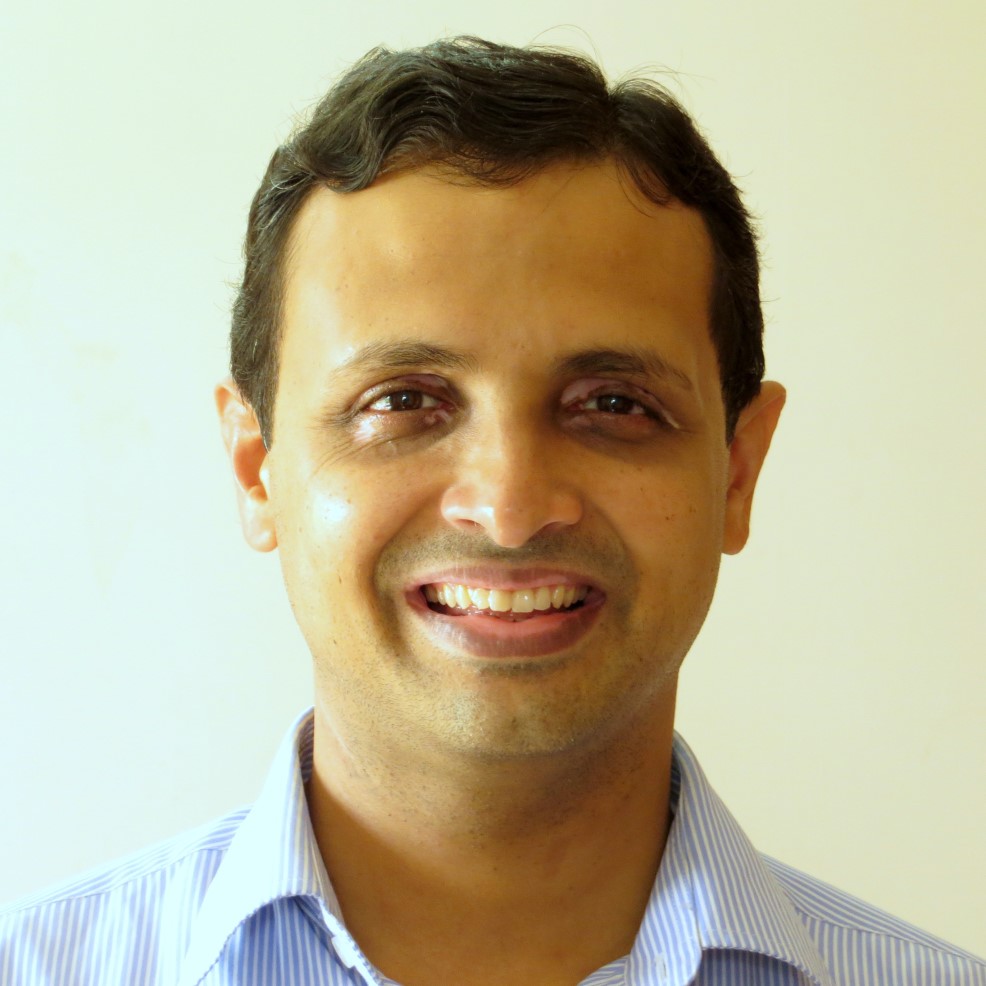
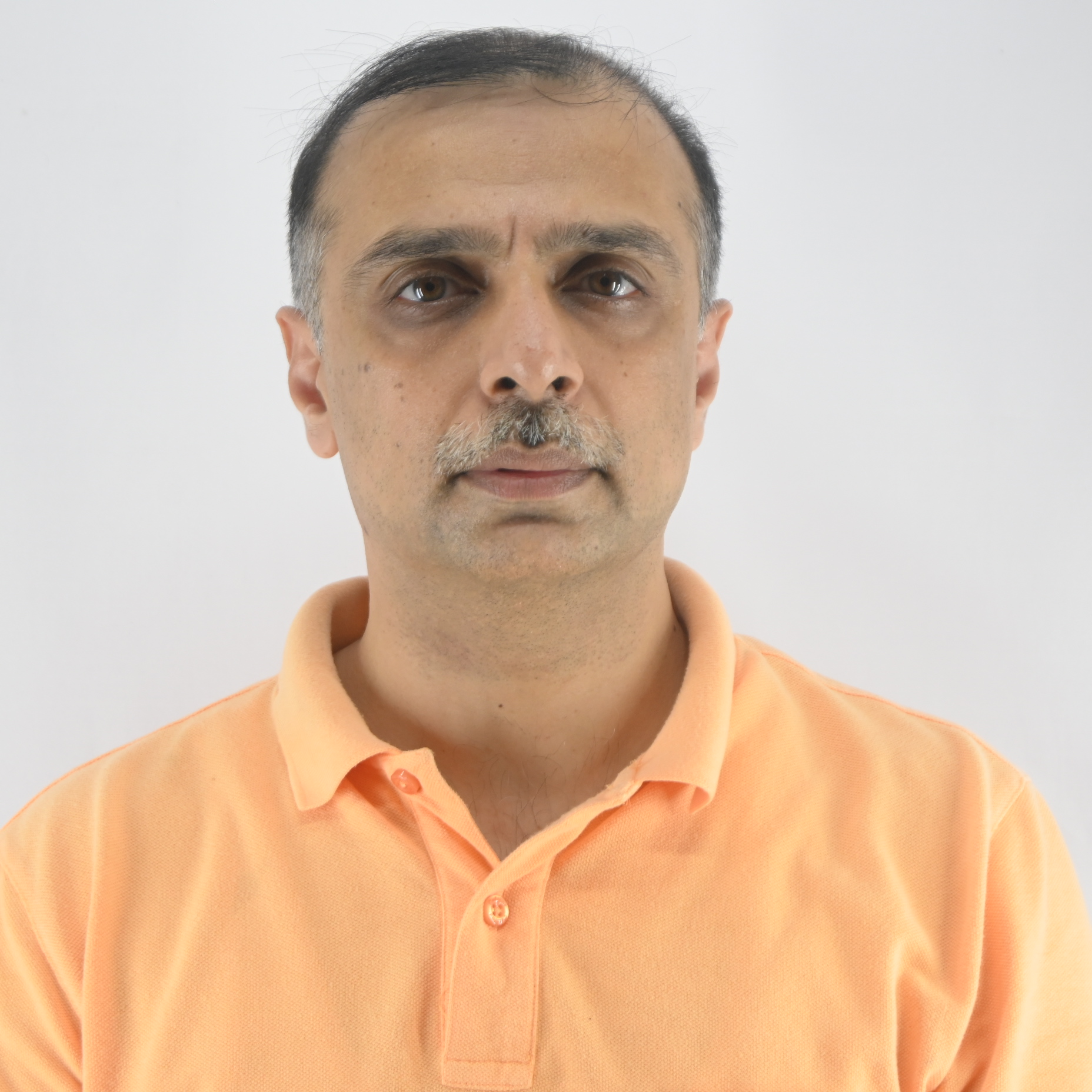
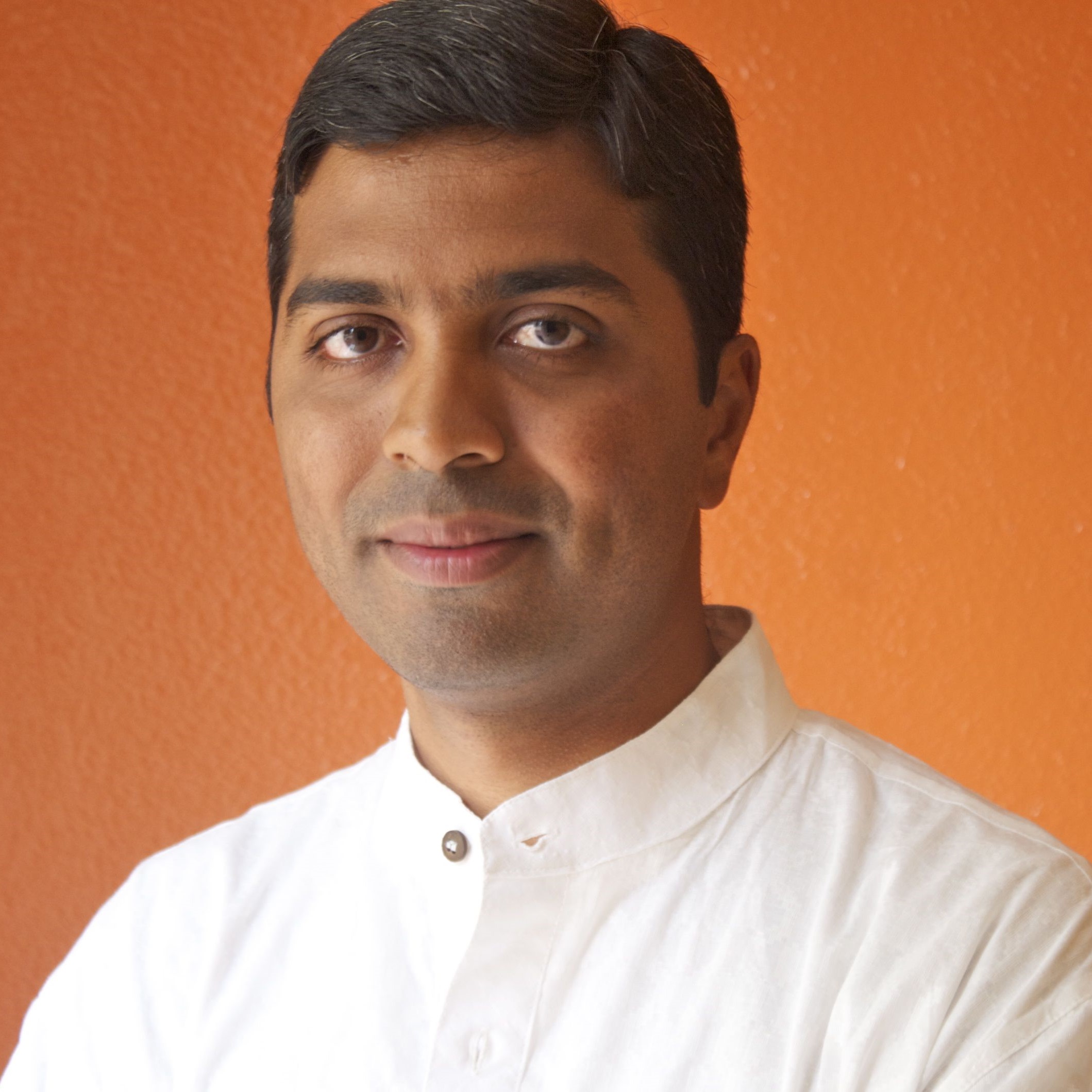
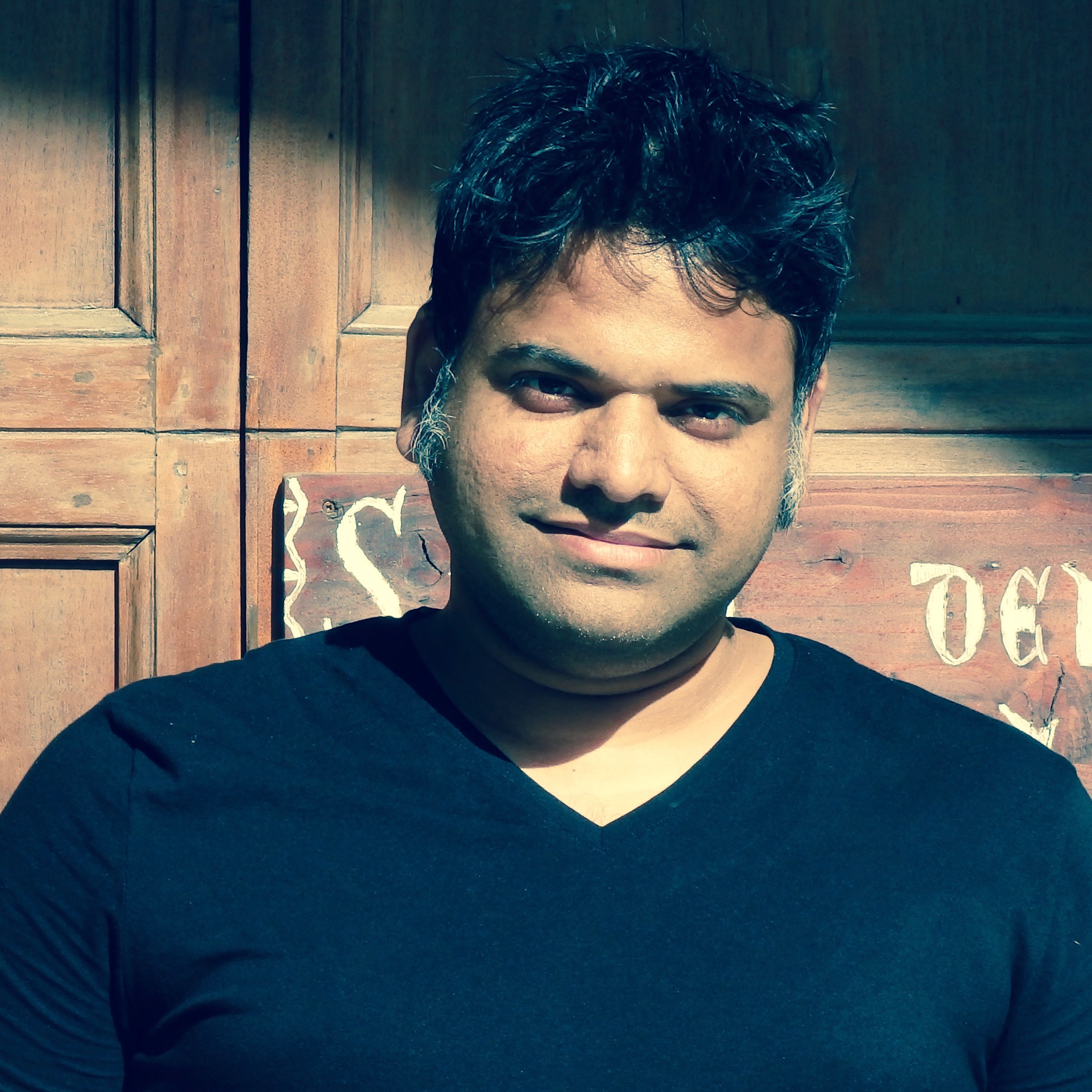
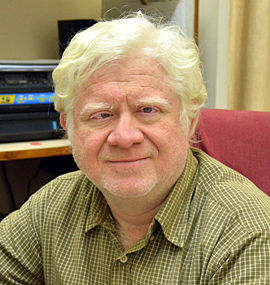
Vineeth N Balasubramanian is a Professor in the Department of Computer Science & Engineering at the Indian Institute of Technology Hyderabad, with affiliate faculty status in the Department of Artificial Intelligence. His research focuses on the intersection of deep learning, machine learning, and computer vision, emphasizing explainability, robustness, and real-world applications. He leads Lab 1055, which investigates problems such as Explainable and robust AI/ML systems Lifelong learning in evolving environments Multimodal vision-language models Applications in agriculture, autonomous navigation, and human behavior analysis His recent work includes causal reasoning in transformers, vision-language model capabilities, and drone-based object detection. Funded by organizations like Google, Microsoft, Intel, and DST, he has received multiple awards including the World's Top 2% Scientists (2022-23), INSA/INAE Fellowships, and Best Paper recognitions. Lab 1055 collaborates with institutions like CMU, UBC, and Monash University, contributing to cutting-edge advancements in AI.
Ajit Rajwade is a Professor at the Department of Computer Science and Engineering , Indian Institute of Technology Bombay. His research spans Artificial Intelligence , Compressed Sensing , and Medical Imaging , with affiliations to the Centre for Machine Intelligence and Data Science and the Koita Centre for Digital Health . Education : PhD in Computer and Information Science and Engineering, University of Florida (2010) MSc in Computer Science, McGill University (2004) BTech in Computer Engineering, University of Pune (2002) His research interests focus on intelligent data acquisition, particularly in neural network analysis , graph signal processing , and medical imaging . He develops compressed sensing algorithms for inverse problems like tomography and MRI reconstruction , alongside applying group testing to pandemic response. Scientific awards include the Prof. S. P. Sukhatme Award (2024) and Departmental Teaching Excellence (2019). His publications demonstrate expertise in image restoration , noise modeling , and epidemiological algorithms . He has advised PhD students like Sabyasachi Ghosh and Jerin Geo James , with a focus on computationally efficient methods in medical imaging and machine learning .
Govind Sharma is a Professor in the Department of Electrical Engineering at the Indian Institute of Technology Kanpur. He holds a PhD from the University of Southern California, Los Angeles, and completed both his M.Tech. (1984) and B.Tech. (1979) in Electrical Engineering from IIT Kanpur. His research interests span multiple areas of signal processing and communications, with a focus on: Signal Processing Communication Systems Video signal processing Medical image processing Professor Sharma has published numerous research papers in prestigious journals and conferences. His work primarily focuses on signal processing techniques, including time delay estimation in acoustic channels, direction of arrival estimation, adaptive filtering algorithms, wavelet transforms, and spectrum estimation. His research has contributed significantly to both theoretical foundations and practical applications in these fields, with publications spanning from 1986 to 2011. He can be reached at his office in ACES-205A, Department of Electrical Engineering, Indian Institute of Technology, Kanpur, UP, India-208016, or by phone at 0512-259-7922.
Sumohana S Channappayya is a Professor in the Department of Electrical Engineering at Indian Institute of Technology Hyderabad, leading the Lab for Video and Image Analysis (LFOVIA). His research focuses on image/video quality assessment, biomedical image processing, and machine learning applications. Education Ph.D., Electrical Engineering, The University of Texas Research Interests His work addresses critical challenges in AI-driven image/video analysis, with applications in biomedical imaging and quality assessment. Recent research trends highlight advancements in training-free neural network adapters for multimodal image matching , spanning disciplines like Computer Science , Biomedical Engineering , and Video Analytics . Advising & Collaborations He has co-advised PhD graduate Suresh Kumar Amalapuram and supervised PhD scholar Anuradha Uggi. His lab supports students like Lokesh Badisa, who received the IndiaAI Fellowship. Labs & Teams As founder of the Lab for Video and Image Analysis (LFOVIA), he drives interdisciplinary research in video/image analytics and AI/ML technologies. Contact Office: EE605, Department of Electrical Engineering, IIT Hyderabad Email: firstname@ee.iith.ac.in Phone: (040) 2301 - 6463
Soma Biswas is an Associate Professor at the Indian Institute of Science (IISc), with office location Room C 320 and contact phone +91 80 2293 3538. Her research focuses on computational imaging and pattern analysis methodologies. Education: Ph.D. from University of Maryland, College Park, USA (2009) M.Tech from Indian Institute of Technology, Kanpur (2004) B.E. from Jadavpur University, Kolkata (2001) Research Interests: Her work spans computer vision fundamentals, multidimensional signal analysis, and video processing techniques, with applications in image enhancement and pattern recognition systems. Recent courses taught include Digital Signal Processing (E9 201) and Advanced Image Processing (E9 246). Awards and Honors: IEEE Senior Member recognition Graduate Fellowship at University of Maryland Multiple medals from Jadavpur University for academic excellence
Vijayalaxmi serves as Associate Professor - Senior Scale in the Department of Electrical and Electronics Engineering at Manipal Institute of Technology, Manipal Academy of Higher Education. With an h-index of 66 and 12 research outputs since 2012, her recent scholarly activity shows significant acceleration with five publications in 2023-2024 alone. Her research program bridges artificial intelligence with critical real-world applications: Developing deep learning frameworks for agricultural disease detection (e.g., LeafSpotNet for jasmine plants) Creating computational techniques for poultry health management through machine learning Applying natural language processing to analyze pandemic mental health impacts Designing embedded systems for smartphone sensor stabilization Publication trends from 2023-2024 reveal concentrated expertise in agricultural AI, with four of five papers focusing on plant and poultry disease detection systems. Her work consistently employs computer vision and deep learning methodologies to solve practical problems in sustainable farming, demonstrating strong interdisciplinary impact across electrical engineering and agricultural technology domains. No scientific awards are documented in the available profile information. While her advisory activities and grant funding remain unspecified in the provided materials, her collaborative publication patterns suggest active engagement with researchers across computer science and agricultural domains. Laboratory or team affiliations are not explicitly mentioned in the current profile.
Ashutosh Trivedi is an Associate Professor of Computer Science at the University of Colorado Boulder, currently on leave from his position as Assistant Professor in the Department of Computer Science and Engineering at the Indian Institute of Technology Bombay. He is affiliated with multiple research initiatives including the Centre for Formal Design and Verification of Software (CFDVS) at IIT Bombay, Free and Open Source Software for Education (FOSSEE), and the Indo-French project on Algorithmic Verification of Real-Time Systems (AVeRTS). At CU Boulder, he leads the Programming Languages and Verification (CUPLV) research group focusing on trustworthy AI systems. Trivedi's research centers on bridging formal methods with artificial intelligence to create more trustworthy systems. His work spans formal verification of cyber-physical systems, reinforcement learning with formal guarantees, and developing techniques for ensuring software fairness and accountability. He specializes in using formal languages, automata, and logic to transform vague natural-language instructions into precise specifications for AI systems. His recent projects include developing reinforcement learning algorithms for cardiac pacemaker design based on formal safety requirements, using SAT solvers to ground large language model outputs in logical reasoning, and encoding state representations in reinforcement learning using formal languages. His publication trends reveal a strong focus on neurosymbolic approaches that combine neural networks with symbolic reasoning, particularly for safety-critical applications. Recent work demonstrates increasing integration of formal methods with reinforcement learning, with applications spanning medical devices, tax preparation software, and puzzle-solving AI. His research shows a clear trajectory toward making AI systems more explainable, accountable, and verifiable through principled mathematical frameworks. Distinguished Paper Award at CAV for Regular Reinforcement Learning (2024) NeuS 2025 Disruptive Idea Award for Stochastic Neural Simulation Relations for Transferring Control under Uncertainty ACM Senior Member recognition (2024) Royal Society Wolfson Visiting Fellowship (2024) Trivedi has successfully advised multiple PhD students to completion, including Shadi Tasdighi Kalat (2025), Mateo Perez (2025), John Komp (2024), Vishnu Murali (2024), and Taylor Dohmen (2024). His teaching portfolio includes foundational courses in automata theory, digital logic design, and cyber-physical systems at both IIT Bombay and CU Boulder. He has served on program committees for major conferences including FSTTCS, HSCC, and FORMATS, and organized workshops such as ICLA 2015 and ALC 2015. As leader of the CUPLV research group, Trivedi directs projects focused on formal verification of AI systems, reinforcement learning with safety guarantees, and software fairness. His group collaborates with medical researchers on cardiac device verification and with legal scholars on tax software accountability, reflecting his commitment to applying formal methods to real-world problems with significant societal impact.
K S Venkatesh is a Professor in the Department of Electrical Engineering at Indian Institute of Technology Kanpur (IIT Kanpur). His research spans multiple areas of signal and image processing with applications in computer vision and robotics. Education: PhD from IIT Kanpur M.Tech from IIT Kanpur B.E. from Bangalore University Professor Venkatesh's research focuses on signal processing, image and video processing, computer vision with applications in robotics, and signal and system theory . His work bridges theoretical foundations with practical applications, particularly in the domain of visual perception systems. He has made significant contributions to areas such as object occlusion handling, gesture recognition under challenging lighting conditions, image enhancement techniques, and efficient stereo depth computation. His recent publications demonstrate a strong focus on computer vision problems with practical applications. The research shows progression from fundamental signal processing techniques to more complex vision systems capable of operating in real-world conditions. Several of his papers have received recognition, including Best Paper Awards at prominent conferences. Scientific Awards: Best Paper Award at Second Michael Faraday IET India Summit 2013 Best Paper Award at IEEE INDICON, IIT Bombay, December 2013 Professor Venkatesh maintains active research collaborations, as evidenced by his co-authored publications with researchers from various institutions. His work appears in prestigious international conferences including IJCAI, IEEE INDICON, and specialized computer vision conferences. His office is located in room 207-A/ACES at the Department of Electrical Engineering, IIT Kanpur, where he leads research activities in signal and image processing.