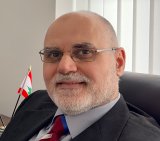
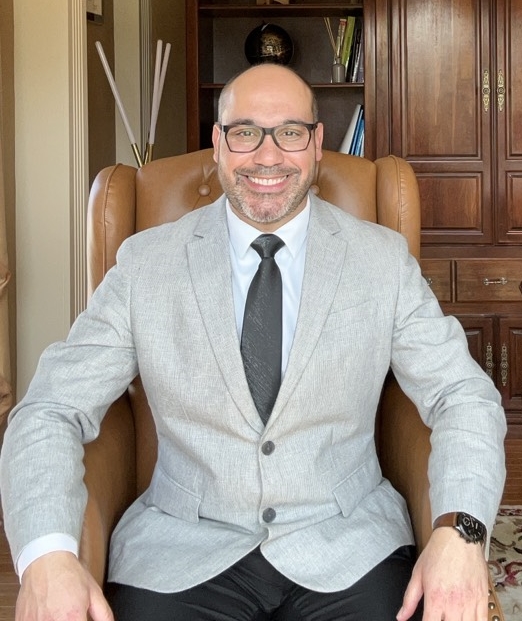
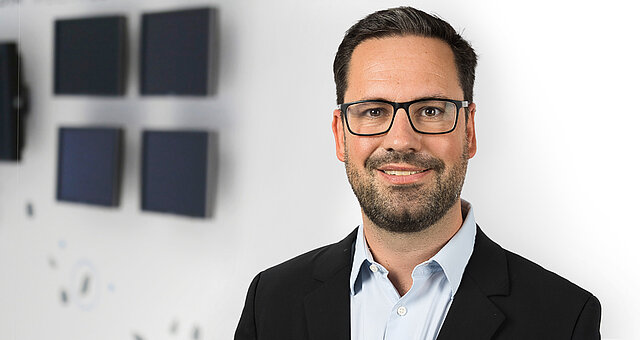
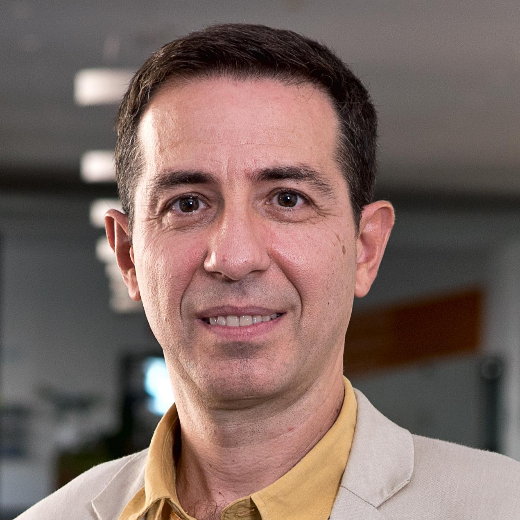
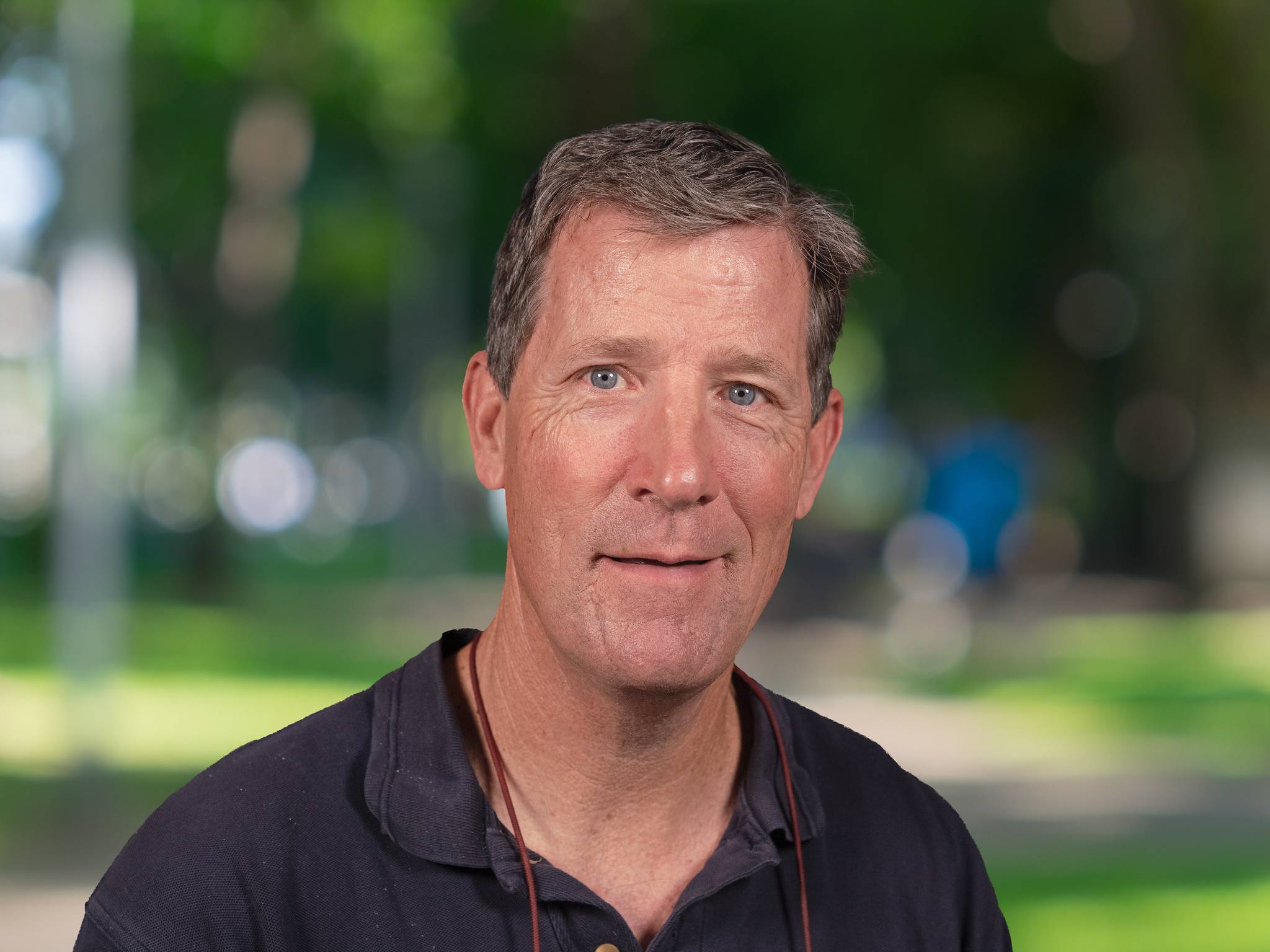
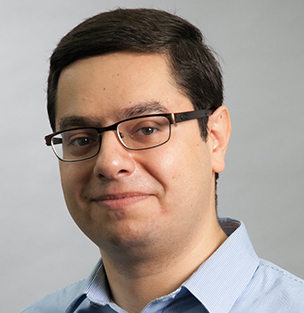
Polychronis Koutsakis is an Associate Professor in the School of Information Technology at Murdoch University's College of Science, Technology, Engineering and Mathematics. His research spans computer networks, wireless resource allocation, data science, and computational linguistics. He has received significant recognition including the Pro Vice Chancellor Education Citation for Excellence and multiple Exemplary Editor awards from IEEE. His research interests focus on network performance evaluation, e-health applications, traffic modeling, and mobile development. Recent publications demonstrate strong interdisciplinary work combining AI with network management, medical diagnostics, and urban infrastructure. Koutsakis has been honored with: Pro Vice Chancellor Education Citation for Excellence (2021) IEEE Exemplary Editor awards (2012, 2013, 2015, 2021-2023)
Professor Abdul Sadka is a Professor and founding Director of the Aston Digital Futures Institute at Aston University's College of Engineering and Physical Sciences. His roles include leadership in digital innovation, strategic research, and industry collaboration. He previously directed Brunel University London's Institute of Digital Futures and led multiple research centers. His expertise spans AI-enabled visual media, 3D visualization, and cultural heritage preservation. Sadka has secured over £15m in research funding, supervised 50+ PhD students, and published 300+ papers. Research interests focus on AI-driven visual technologies, medical imaging applications, and immersive XR systems. His work bridges academia and industry, with ventures in health tech and real estate. Notable contributions include the textbook Compressed Video Communications (2002) and patents in digital media. His recent articles explore 3D cultural heritage frameworks, multi-sensor fusion techniques, and social media-based mental health analysis. Awards include HEA, IET, and BCS Fellowships. Advising spans synthetic data generation and digital twin development. Active in policy roles, he chairs UK digital industry partnerships and shaped European research agendas through NEM platform steering.
Eric Wang is a Senior Lecturer in Electronic Systems and IoT Engineering at James Cook University. He holds a PhD in Telecommunications Engineering from the University of South Queensland, following B.Eng (Mechanical Engineering) and M.Eng (Mechatronic Engineering) degrees from the University of Science and Technology in Beijing. His research focuses on IoT applications for smart grids, precision agriculture, and multimedia systems, with over 20 peer-reviewed publications and significant contributions to projects like the IoT-integrated irrigation system for sugarcane farms. Key research areas include: IoT infrastructure for energy and agricultural systems Machine learning in environmental monitoring Light field video compression and streaming Smart grid state estimation Wireless communication networks He leads projects such as the 'Vacuum solution with an IoT-integrated management system' (2020-2021) and the 'GBRF Burdekin Irrigation Project' (2020-2024). His work integrates IoT sensors, AI models, and telecommunications innovations to address challenges in sustainable agriculture and energy systems. Awards include the 2011 IEEE Best Paper Award for contributions to wireless networking and the 2006 ABU Robocon contest runner-up for robotic innovation. His research outputs span journals like IEEE Transactions on Geoscience and Remote Sensing, Multimedia Tools and Applications, and IEEE Access.
Khaled Elleithy is the Dean of the College of Engineering, Business & Education, Associate Vice President for Graduate Studies and Research, and Professor of Computer Science and Engineering at the University of Bridgeport. He holds multiple administrative roles in addition to his academic responsibilities. Dr. Elleithy has extensive experience in teaching and research, having developed courses and laboratories in quantum computing, network security, and embedded systems design. He holds a B.Sc. in Computer Science and Automatic Control from Alexandria University (1983), an M.S. in Computer Networks from the same institution (1986), and subsequent M.S. and Ph.D. degrees in Computer Science from the University of Louisiana at Lafayette (1988 and 1990). His research focuses on wireless sensor networks, mobile communications, quantum computing, and formal design verification. He has published over 350 papers and edited 12 Springer books, showcasing his expertise in these areas. Notable research topics include quantum cryptography protocols, energy-efficient robotics algorithms, and assistive technologies for visually impaired individuals. Dr. Elleithy has received prestigious awards such as the 2015 Connecticut Quality Improvement Award (CQIA) Gold Innovation Prize and the 2006-2007 Distinguished Professor of the Year. His students have won over 20 awards from IEEE, ACM, and ASEE for their work in steganography, robotics, and network security. He has secured grants totaling over $2.5 million as Principal Investigator or Co-Investigator, including projects on hybrid projectiles, mobile content management, and enterprise network security. His work often bridges theoretical computer science with practical applications like defense systems and healthcare technologies. Elleithy has established multiple teaching/research laboratories and contributed to the development of hybrid educational conferences like the Annual International Joint Conferences on Computer, Information, and Systems Sciences. He is a Senior Member of the IEEE Computer Society and has held leadership roles in organizing major international conferences since 2005.
Mahmoud Darwich is Assistant Professor of Computer Science at the University of Mount Union, specializing in cloud-based video streaming solutions. His research integrates machine learning with distributed systems to optimize quality, storage, and delivery costs. Key innovations include AI-driven resource allocation models and edge computing frameworks for low-latency streaming. Publications focus on ARIMA prediction models, neural network-based caching, and federated learning approaches. Educational background includes a Ph.D. in Computer Engineering from University of Louisiana Lafayette. Teaching covers film aesthetics and production, connecting technical foundations with applied media creation.
Cornelius Hellge is the Head of the Multimedia Communications Group at Fraunhofer Heinrich Hertz Institute since 2015. He holds a Dipl.-Ing. in Media Technology from Ilmenau University of Technology (2006) and a Dr.-Ing. (summa cum laude) from Berlin University of Technology (2013). He was a Visiting Researcher at MIT's Network Coding and Reliable Communications Group in 2014. His work focuses on video communication, 5G evolution, volumetric video formats, and VVC system integration. He contributes to standards bodies like 3GPP, MPEG, and IETF. He has authored over 60 publications and holds 40+ patents in video and mobile networks. Research interests include volumetric video for mixed reality, scalable video coding, and low-latency 5G enhancements. Awards include the IEEE ICCE’14 Best Paper Award. His team develops advanced video coding concepts, including neural network-based compression and efficient random access mechanisms. Projects involve 5G-XR, immersive media, and network optimization for vehicular communication (V2X). Publications span topics like NR-U wideband enhancements, sidelink feedback, and entropy coding. He oversees labs advancing video communication protocols and hardware-software integration for next-gen networks.
Antonio Liotta is a Tenured Full Professor at the Faculty of Engineering of the Free University of Bozen-Bolzano, Italy. His research focuses on machine learning, intelligent systems, and network science with applications to smart cities, IoT, and cyber-physical systems. He leads an international team advancing micro-edge intelligence and miniaturized ML, contributing breakthroughs in neural networks and network science intersections. Education details are not explicitly provided in the text, but his academic roles and publications suggest significant expertise in computer science and data science. Research Interests: Intelligent systems and networks Data-driven smart sensing Embedded machine learning Network science applications Human-in-the-loop systems Publications reflect a focus on ML for IoT, edge computing, and environmental modeling. Notable contributions include hybrid surrogate models for hydrological prediction and federated learning for healthcare. He serves as Editor-in-Chief for Springer's IoT book series. Grants and collaborations are implied through his leadership roles and international projects but not explicitly listed. His lab works on AI-driven solutions for urban science and resilient systems.
Abhinav Shrivastava is an Associate Professor in the Department of Computer Science at the University of Maryland, College Park, with a joint appointment in the Institute for Advanced Computer Studies (UMIACS). His research focuses on AI, particularly computer vision, machine learning, and robotics, with applications in graphics, natural language processing, and cognitive neuroscience. He holds a Ph.D. from Carnegie Mellon University (2017) and an M.S. from the same institution (2011). Research Interests: His work emphasizes temporal understanding, visual perception, and open-world learning. He explores how machines can analyze temporal phenomena like human actions in videos and develop robust models for dynamic environments. Key Projects: Recipient of the NSF CAREER Award (2023) to advance computers' ability to understand temporal phenomena. His research includes developing computational frameworks for video understanding, object discovery, and neural representations for videos. Awards: NSF CAREER (2023), Best Paper Award (WACV 2020), Microsoft Research PhD Fellowship (2014-16), and recognition in media outlets like Wired and Forbes for contributions to AI and computer vision. Labs/Teams: Leads research in the Vision & Learning Center and contributes to the Institute for Trustworthy AI in Law & Society. Active in organizing workshops on open-world vision and novelty handling in AI systems.
Fiona Fang is an Assistant Professor in the Department of Electrical and Computer Engineering and Department of Computer Science at Western University, Canada. She holds a Ph.D. from the University of British Columbia (2017) and has prior academic experience at Durham University (2020–2022) and the University of Manchester (2018–2020). Her research focuses on machine learning for intelligent wireless communications, NOMA, RIS, MEC, and Edge AI. She serves as an editor for IEEE Transactions on Wireless Communications and has received awards including the IEEE SPCC Early Achievement Award (2023) and the 2024 Junior Faculty Award of Excellence in Research. Education: Ph.D. (UBC), M.Sc. and B.Sc. (Lanzhou University). Research emphasizes interdisciplinary applications of machine learning in wireless systems, with contributions to energy-efficient resource allocation and network design. Key publications include surveys on multi-access edge computing and RIS-assisted NOMA networks. She actively organizes conferences like IEEE Globecom and ICC, and her work bridges theoretical advancements with practical network implementations.
Kyle A. Caudle is a Professor of Mathematics at the South Dakota School of Mines and Technology, holding a Ph.D. from George Mason University, an M.S. from Salve Regina University, and a B.A. from Western State College. His research spans forecasting, tensor analysis, and anomaly detection, with applications in engineering and data science. Caudle develops computational tools for time series forecasting, tensor decomposition, and graph representation learning. He created software packages like Flow Field, rTensor2, and LTAR, published on CRAN. His interdisciplinary projects include collaborations with NIST and Naval Surface Warfare Centers on surface ship maintenance and anomaly detection. Publications emphasize multilinear algebra, temporal forecasting, and machine learning. Recent work advances tensor factorization for high-dimensional data, hierarchical graph networks, and deep generative models. Awards include the 2015 Peter Holmes Prize for innovative statistics teaching and accreditation as a Professional Statistician (ASA, 2013). He mentors graduate students and co-developed the Ph.D. in Data Science.
Randy C. Hoover is a Professor and Assistant Department Head in the Computer Science and Engineering department at South Dakota Mines. He directs the Mines Machine Learning and Intelligent Systems Lab (MMLIS-L), focusing on multilinear systems theory, forecasting methods, and subspace learning. His research bridges machine learning, tensor analysis, and dynamical systems. Research expertise includes high-dimensional data modeling, time-series forecasting, and pattern recognition, with applications spanning computer vision, cybersecurity, and fluid dynamics. His work frequently employs tensor decomposition and advanced statistical methods to solve complex multidimensional problems. Articles demonstrate consistent focus on tensor-based machine learning innovations, with recent emphasis on time-series forecasting and anomaly detection. Earlier works establish foundations in multilinear algebra applications for pattern recognition. Teaching covers signal processing, embedded systems, and dynamic systems. Education includes a BS and MS from Idaho State University and a PhD from Colorado State University.
Thomas Marrinan is an Assistant Professor of Computer & Information Science at the University of St. Thomas, College of Arts and Sciences. His expertise spans computer graphics, visualization, human-computer interaction, and high-performance computing. He specializes in developing interactive tools for large-scale data analysis, including multi-platform visualization applications like VisAnywhere and immersive virtual reality experiences. His research focuses on bridging gaps between simulation analysis and user interaction through novel interfaces and algorithms. He has pioneered work in 3D Gaussian splatting, real-time image compression, and collaborative environments using 360 panoramas. Marrinan teaches courses such as Intro to Programming & Problem Solving and Web Development, emphasizing practical application of computational concepts. In 2024, his team won the IEEE Scientific Visualization Contest for VisAnywhere, a tool enabling cross-platform scientific visualization. His work spans over two decades, with contributions to scalable resolution displays (SAGE2), GPU-based rendering optimizations, and AI-driven audio generation for video games. He holds a strong commitment to data-intensive collaboration and immersive technologies. Recent projects include developing omnidirectional stereo imaging techniques for VR exploration of large datasets and leveraging AI to enhance user-generated content in interactive media. His research addresses challenges in distributed rendering, real-time data transmission, and improving accessibility to complex scientific datasets.
Dr. Faisal Qureshi is a Professor of Computer Science in the Faculty of Science at Ontario Tech University, where he leads the Visual Computing Lab. He holds a concurrent role as Guest Professor at Mid Sweden University. His research focuses on visual sensor networks, computer vision, and deep learning, with applications in smart camera networks, video surveillance, and hyperspectral imaging. He earned his PhD in Computer Science from the University of Toronto (2007), following degrees from Punjab University (BSc 1993) and Quaid-e-Azam University (MSc Electronics 1995). Key research areas include multicamera tracking, graphics for vision, and neural networks for computer vision. He has pioneered work on self-organizing visual sensor networks and developed computational models for autonomous visual perception. His teaching includes courses on computer graphics, algorithms, and advanced computer vision. He has authored over 100 peer-reviewed publications, including a Best Paper Award at CRV 2017 for optical flow estimation research. Dr. Qureshi’s lab develops innovative solutions for video summarization, optical flow estimation, and activity analysis. His work bridges theoretical computer science with real-world applications in robotics, aerospace, and environmental monitoring. Recent projects explore adversarial machine learning for satellite communications security and hyperspectral image compression using neural representations.
Peter Keir McMaster is a Professor in the Department of Kinesiology at McMaster University, specializing in biomechanics and human movement science. His research spans musculoskeletal health, carpal tunnel syndrome, rehabilitation engineering, and workplace ergonomics.
Mohammad Alizadeh is an Associate Professor in the Department of Electrical Engineering and Computer Science (EECS) at MIT, affiliated with the Computer Science and Artificial Intelligence Laboratory (CSAIL). He holds additional roles as Director of the 6-A MEng Thesis Program and Industry Officer for EECS, overseeing the EECS Alliance industry outreach program. His research focuses on computer networks, systems, and their applications in datacenters, cloud computing, and edge computing. Notable areas include machine learning for systems, congestion control, and network protocols. Education: PhD (Stanford University), MS in Electrical Engineering (Stanford), BS (Sharif University of Technology). Industry Experience: Former roles at Microsoft Research, Insieme Networks, and Cisco Systems. Research Interests: Alizadeh’s work emphasizes improving network performance, robustness, and management in large-scale systems. Key projects include DCTCP, CONGA, and Pensieve (adaptive video streaming with reinforcement learning). His contributions span network architecture, programmable switches, and learning-based systems. Awards: NSF CAREER Award Alfred P. Sloan Research Fellowship SIGCOMM Rising Star Award Microsoft Research Faculty Fellowship Teaching: Courses include 6.888 (Advanced Topics in Networking), 6.829 (Computer Networks), and 6.02 (Digital Communication Systems). His teaching emphasizes cutting-edge networking research and practical system design. Labs/Teams: Active member of CSAIL, leading projects in distributed systems, network protocols, and cloud computing.